
Region
Tuscany
The towns
84 of 84 towns
84 of 84 towns
- Written about. No. 71.
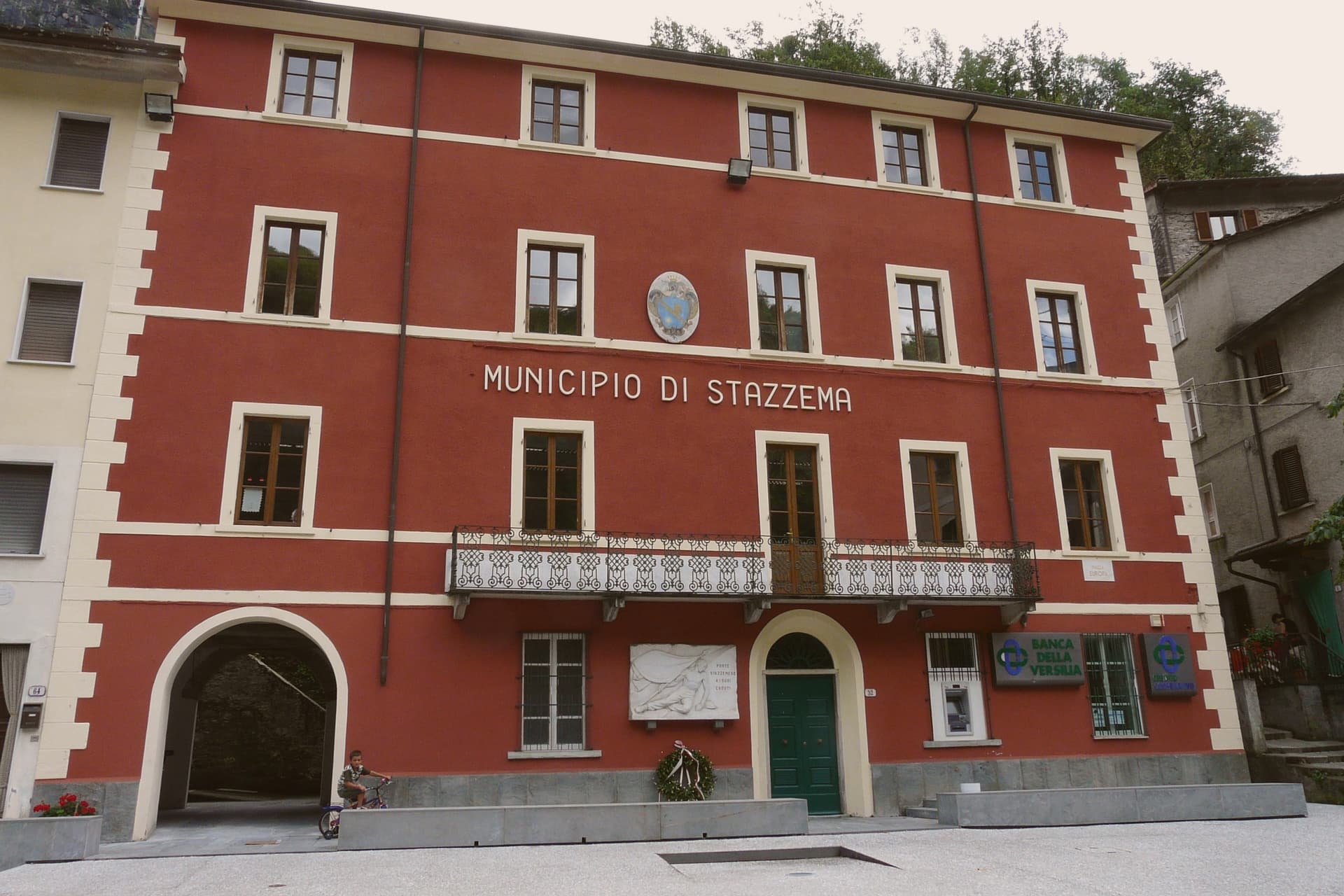
Stazzema
Province: Lucca
A mountain commune of seventeen hamlets in the Apuan Alps, site of the August 1944 Sant'Anna massacre and Italy's National Park of Peace.
- Written about. No. 70.
Seravezza
Province: Lucca
The Versilia town where Michelangelo opened the Pope's marble quarries and Cosimo I built his summer palace.
- Written about. No. 69.
Peccioli
Province: Pisa
Borgo dei Borghi 2024 in the Valdera hills, a medieval village that funded a public contemporary-art program with revenue from its landfill plant.
- Written about. No. 52.
Orbetello
Province: Grosseto
A town on a narrow isthmus at the center of its own lagoon, fortified by Spain in 1557.
- Written about. No. 51.
Monte Argentario
Province: Grosseto
A 635-meter peninsula tied to the mainland by three sand spits, ringed by Spanish forts and marked by Caravaggio's death in 1610.
- Written about. No. 50.
Manciano
Province: Grosseto
A market town at 444 meters in the southern Maremma, with a Sienese fortress of 1424 and the thermal frazione of Saturnia in its territory.
- Written about. No. 49.
Grosseto
Province: Grosseto
The Maremma capital on the Ombrone river, ringed by hexagonal Medici walls of 1564 that now serve as the city's public park.
- Written about. No. 48.
Castiglione della Pescaia
Province: Grosseto
A Maremma seaside town under an Aragonese castle, with the Vetulonia necropolis behind it and Italo Calvino buried on the hill.
- Written about. No. 47.
Capalbio
Province: Grosseto
A walled hilltop borgo at 217 meters in the southern Maremma, donated to the Abbey of Tre Fontane by Charlemagne.
- Written about. No. 46.
San Quirico d'Orcia
Province: Siena
A walled stop on the Via Francigena at 409 meters in the UNESCO Val d'Orcia, where a twelfth-century Collegiata, a Renaissance garden and the Bagno Vignoni thermal pool sit within fifteen kilometers of each other.
- Written about. No. 45.
Radicofani
Province: Siena
The Val d'Orcia's basalt watchtower: a 1,044-resident UNESCO-inscribed borgo at 814m on a volcanic outcrop visible across half of southern Tuscany, crowned by an outlaw's fortress that Dante and Boccaccio both wrote into their pages.
- Written about. No. 44.
Pienza
Province: Siena
The first Renaissance ideal city, built from 1459 on the Val d'Orcia ridge.
- Written about. No. 43.
Montepulciano
Province: Siena
A Renaissance hill town at 605 meters on a limestone ridge, aging its Sangiovese-based red in vaulted cellars beneath the palazzi.
- Written about. No. 42.
Montalcino
Province: Siena
A walled hill town at 564 meters above the Val d'Orcia, the last fortress to hold out for the Sienese Republic and the birthplace of Brunello.
- Written about. No. 41.
Castiglione d'Orcia
Province: Siena
A stone borgo at 540 meters in the UNESCO Val d'Orcia, with two fortresses guarding the road from Amiata to the Via Francigena.
- Written about. No. 40.
Suvereto
Province: Livorno
A stone borgo at 127 meters above the Val di Cornia, named for the cork oaks of its forests and first recorded in 973, under a twelfth-century Aldobrandeschi fortress.
- Written about. No. 39.
Piombino
Province: Livorno
A promontory port facing Elba across the channel, founded by refugees from Etruscan Populonia and now the Tuscan archipelago's ferry capital.
- Written about. No. 38.
Campiglia Marittima
Province: Livorno
A walled hilltop borgo above the Val di Cornia, where the Rocca tower watches a mining landscape worked from the Etruscans to 1976.
- Written about. No. 37.
Castagneto Carducci
Province: Livorno
A hilltop borgo at 194 meters above the Costa degli Etruschi, renamed for the poet Carducci in 1907 and the home of Bolgheri and Sassicaia.
- Written about. No. 36.
Arezzo
Province: Arezzo
Tuscany's other set-piece: a 96,000-resident Etruscan-Roman-medieval hilltop city 80 km southeast of Florence.
- Written about. No. 35.
Siena
Province: Siena
The medieval rival of Florence at 322 meters on three hills, with a shell-shaped piazza where seventeen contrade race bareback horses twice a year.
- Written about. No. 34.
Volterra
Province: Pisa
The Etruscan acropolis of Velathri at 531 meters, the alabaster town that has been carving the same stone for three thousand years.
- Written about. No. 33.
Monteriggioni
Province: Siena
A circular Sienese fortress built between 1213 and 1219 on a natural hill, fourteen towers on a 570-meter wall, intact and unbroken.
- Written about. No. 32.
Greve in Chianti
Province: Firenze
The market town on the Greve river, with a triangular piazza arcaded since the sixteenth century.
- Written about. No. 31.
Castelnuovo Berardenga
Province: Siena
A commune of 351 meters, the last castle Siena built against Florence, in 1366.
- Written about. No. 30.
Castellina in Chianti
Province: Siena
A Chianti hill town at 578 meters on the watershed between the Arno and the Ombrone, with an Etruscan tumulus, a Brunelleschi-reinforced wall and a covered medieval walkway around its edge.
- Written about. No. 29.
San Gimignano
Province: Siena
A walled hill town at 334 meters with 14 surviving medieval towers, UNESCO listed since 1990 and the home of Vernaccia.
- Written about. No. 23.
San Miniato
Province: Pisa
The hilltop town between Pisa and Florence that produces a quarter of Tuscany's white truffles and once held the imperial seat of Otto I.
- Written about. No. 22.
Pontedera
Province: Pisa
The Valdera's working capital on the Pisa–Florence line, where Piaggio turned a bombed aircraft plant into the birthplace of the Vespa in 1946.
- Written about. No. 21.
Pistoia
Province: Pistoia
Italy's nursery capital and the medieval Tuscan rival that gave its name to the pistol, a quietly extraordinary centro storico 30 minutes from Florence by train and Italy's Capital of Culture 2017.
- Written about. No. 16.
Livorno
Province: Livorno
Tuscany's working port and Medici-planned 'New City', a 16th-century planned town built on reclaimed coast, with a Venice-like canal quarter, the Quattro Mori monument, and a 1.5-km seafront promenade that locals call the world's most beautiful balcony.
- Written about. No. 15.
San Giuliano Terme
Province: Pisa
A thermal spa ten kilometers from Pisa, where the springs were bathed since the Romans called them Aquae Pisanae.
- Written about. No. 14.
Montecatini-Terme
Province: Pistoia
Eleven thermal springs in a Liberty-style park at the foot of the Apennines.
- Written about. No. 13.
Pisa
Province: Pisa
Maritime republic on the Arno, twelve kilometers from the Ligurian Sea, with the leaning bell tower at the center of a single UNESCO-listed walled compound.
- Written about. No. 12.
Lucca
Province: Lucca
The provincial capital ringed by four kilometers of intact sixteenth-century walls, birthplace of Puccini and the only fully walled Italian city of its scale.
- Written about. No. 11.
Abetone Cutigliano
Province: Pistoia
The Apennine ski pass at 1,388 meters where the Granduca's two stone pyramids of 1778 mark the old Tuscan-Modenese border.
- Written about. No. 10.
Castiglione di Garfagnana
Province: Lucca
A walled medieval town at 540 meters in the Garfagnana, the Lucca outpost that refused to submit to the Este and held the pass to San Pellegrino.
- Written about. No. 9.
Castelnuovo di Garfagnana
Province: Lucca
The Garfagnana capital where the fortified medieval borgo sits at the confluence of the Serchio and the Turrite, where the Tuscan Apennines meet the Alpi Apuane.
- Written about. No. 8.
Fosdinovo
Province: Massa-Carrara
The southern Lunigiana stronghold at 500 meters, the Malaspina castle where Dante took shelter in 1306 and later set a Purgatorio canto.
- Written about. No. 7.
Fivizzano
Province: Massa-Carrara
The draw here is not the capoluogo but its 92 mountain frazioni, scattered across a Lunigiana commune where a thermal gorge, an intact fortress and a ridge-top hamlet each stand as their own destination.
- Written about. No. 6.
Carrara
Province: Massa-Carrara
The marble town at the foot of the Apuan Alps, with over 650 quarry sites in the valleys above and the stone that built the Pantheon and the Pietà.
- Written about. No. 5.
Forte dei Marmi
Province: Lucca
The Versilia luxury beach built around an eighteenth-century marble-loading fort, with 99 bagni concessions and a Wednesday market that draws Milan.
- Written about. No. 4.
Viareggio
Province: Lucca
The Versilia capital, a Carnival city on the Tuscan coast that turned into a Belle Époque resort when the railway arrived.
- Written about. No. 3.
Pietrasanta
Province: Lucca
The marble-processing town under the Apuan Alps, worked by Michelangelo, Henry Moore, Joan Miró and Fernando Botero.
- Written about. No. 2.
Camaiore
Province: Lucca
The Versilia commune that runs from the mountains to the sea, a Roman Campus Maior on the Via Francigena with a beach at its western end.
- Written about. No. 1.
Barga
Province: Lucca
A medieval hilltop town at 410 meters in the Serchio valley, where Giovanni Pascoli wrote his last poems and the August festival serves fish and chips.
Anghiari
Province: Arezzo
A walled medieval town at 430 meters over the upper Tiber valley, where Florence beat Milan in 1440 and Leonardo started the fresco he never finished.
Barberino di Mugello
Province: Firenze
The Mugello gateway at 272 meters where the Medici family kept its first country villas, with Michelozzo's Cafaggiolo and the artificial Lago di Bilancino below.
Bibbona
Province: Livorno
An Etruscan-origin hill village above the Costa degli Etruschi, with a Romanesque parish church and a Lorraine-built coastal fort eight kilometers down the road at Marina di Bibbona.
Buonconvento
Province: Siena
The walled brick borgo in the Crete Senesi where Emperor Henry VII died in 1313, on the Via Cassia at the confluence of the Arbia and Ombrone.
Capoliveri
Province: Livorno
A medieval hill town at 167 meters on the eastern lobe of Elba, with 35 kilometers of coast below.
Capraia Isola
Province: Livorno
A volcanic island of 358 residents and one village, a penal colony from 1873 to 1986 and a national park since.
Carmignano
Province: Prato
A Medici village at 189 meters on the Montalbano slopes, where Etruscan tumuli sit below the Renaissance villas.
Casale Marittimo
Province: Pisa
A concentric stone borgo at 214 meters above the Val di Cecina, built where a seventh-century BC Etruscan outpost of Volterra once stood.
Castelnuovo di Val di Cecina
Province: Pisa
A copper and geothermal borgo at 576 meters in the Cecina valley, where natural steam vents and medieval towers sit on the same hill.
Castiglion Fiorentino
Province: Arezzo
A walled hill town at 342 meters between Arezzo and Cortona, where Etruscan walls support the medieval Cassero.
Cerreto Guidi
Province: Firenze
The Medici hunting villa above the Padule di Fucecchio, where Cosimo I sent his court for the marshland game and Buontalenti built four ramps of stairs.
Certaldo
Province: Firenze
The brick-built upper town in the Valdelsa where Boccaccio spent his last years, twenty-five kilometers from Florence on the medieval road to Siena.
Cetona
Province: Siena
A medieval borgo at 384 meters, sold by Cosimo I to the Vitelli in 1556 and the centro storico still shaped by their fortress reconstruction.
Chiusdino
Province: Siena
A medieval village at 564 meters in the Val di Merse, above a roofless Cistercian abbey.
Chiusi
Province: Siena
The Etruscan city of King Porsenna at 398 meters above the Val di Chiana, with one of Italy's major Etruscan museums and tunnels carved beneath the streets.
Cortona
Province: Arezzo
An Etruscan lucumonia at 494 meters, with two kilometers of walls older than Rome.
Fiesole
Province: Firenze
An Etruscan hilltop above Florence, still looking down on what later replaced it.
Isola del Giglio
Province: Grosseto
A granite island in the Tyrrhenian Archipelago, walled village on the ridge, port below, where the Costa Concordia ran aground in January 2012.
Licciana Nardi
Province: Massa-Carrara
A Lunigiana Malaspina village at 215 meters in the Apennine Tosco-Emiliano park, named in 1933 for the Risorgimento patriot Anacarsi Nardi.
Loro Ciuffenna
Province: Arezzo
A Valdarno village at 330 meters straddling the Ciuffenna torrent, with the oldest working water mill in Tuscany and a Lombard pulpit two kilometers up the road.
Lucignano
Province: Arezzo
A walled elliptical hill town at 400 meters between Siena and Arezzo, planned in medieval concentric rings around the goldsmith's reliquary called the Tree of Life.
Massa Marittima
Province: Grosseto
A medieval mining town at 380 meters, free commune from 1225 to 1337, whose cathedral holds the relics of San Cerbone.
Montaione
Province: Firenze
A medieval glassmaking and truffle borgo at 341 meters above the Valdelsa, with a Franciscan replica of Jerusalem in the woods nearby.
Montecarlo
Province: Lucca
A walled hill village at 163 meters above the Lucca plain, founded by Emperor Charles IV in 1333 and named for him, surrounded by twenty wineries.
Montescudaio
Province: Pisa
A fortified hill borgo at 242 meters, named for a mountain of shields, with DOC wine since 1977 and bread, oil and grape all stamped in its identity.
Montignoso
Province: Massa-Carrara
A Riviera Apuana commune split between the Cinquale coastal frazione, the Castello Aghinolfi on the hill, and the Lago di Porta wetland on the Versilia plain.
Mulazzo
Province: Massa-Carrara
A Malaspina fief in the Lunigiana hills where Dante stayed in 1306, with a frazione of booksellers who walked their wares across Italy.
Murlo
Province: Siena
A medieval bishops' fief twenty kilometers south of Siena, with an Etruscan princely palace on Poggio Civitate and the Cappellone statue as its symbol.
Piancastagnaio
Province: Siena
A chestnut-belt borgo at 772 meters on the southern slope, where four contrade still race horses for the Palio every 18 August.
Pitigliano
Province: Grosseto
The Little Jerusalem of southern Tuscany, carved into a tuff spur in the Maremma, where the houses, the synagogue and the streets are all cut from the same volcanic rock.
Pontremoli
Province: Massa-Carrara
The capital of Lunigiana at the confluence of the Magra and Verde, holding the prehistoric stele statues and the oldest book prize in Italy.
Poppi
Province: Arezzo
The Casentino borgo at 437 meters above the field where Dante fought at Campaldino in June 1289.
Rapolano Terme
Province: Siena
A Sienese thermal town of 38-degree calcium-sulphur waters and travertine quarries feeding facades beyond its borders.
San Casciano dei Bagni
Province: Siena
A hilltop borgo at 582 meters above 42 hot springs that produced the largest Etruscan bronze hoard of the last fifty years.
Santa Fiora
Province: Grosseto
An Aldobrandeschi and Sforza mountain borgo on Monte Amiata at 687 meters, holding one of the world's largest collections of Della Robbia terracotta.
Trequanda
Province: Siena
A village of 1,137 in three hilltop borghi between Crete Senesi and Val di Chiana, with the terracotta workshops of Petroio holding to a five-hundred-year craft.
Vicopisano
Province: Pisa
A medieval river port rebuilt by Brunelleschi in 1434 after Florence took the town from Pisa.
Vinci
Province: Firenze
The hill town on Montalbano where Leonardo was born in 1452, with a ship-shaped castle that now holds his machines.
More in Tuscany
Month by month: January · February · March · April · May · June · July · August · September · October · November · December
Ways in: Versilia guide · Tuscan Mainland guide · Arno Corridor guide · Apuan Alps guide · Day trips from Florence · By train · Where to eat well · What is on in the next thirty days
By landscape: Hill towns · Mountain towns · Coastal towns
By designation: Borghi più belli d'Italia (23) · Bandiera Arancione (31) · Parco Regionale (11) · Città dell'Olio (33) · Città del Vino (26) · Parco Nazionale (8) · Bandiera Blu (13) · Riserva Naturale (17) · UNESCO (12) · Spighe Verdi (7) · Terme (16) · Cittaslow (11) · Via Francigena (19) · Comuni Virtuosi (5) · Bandiera Lilla (3) · Città del Tartufo (4) · Comuni Termali (7) · Città del Miele (4)