
Tuscany · Grosseto
Monte Argentario
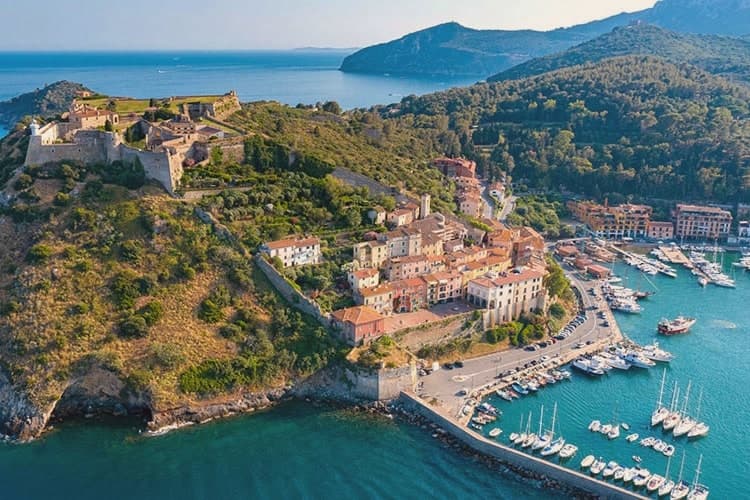
A 635-meter peninsula tied to the mainland by three sand spits, ringed by Spanish forts and marked by Caravaggio's death in 1610.
- Best time
- May–Sep
- By car
- 2 h from Siena
- By train
- Station in the comune
- Population
- 11,888
Known for
SPANISH FORTS
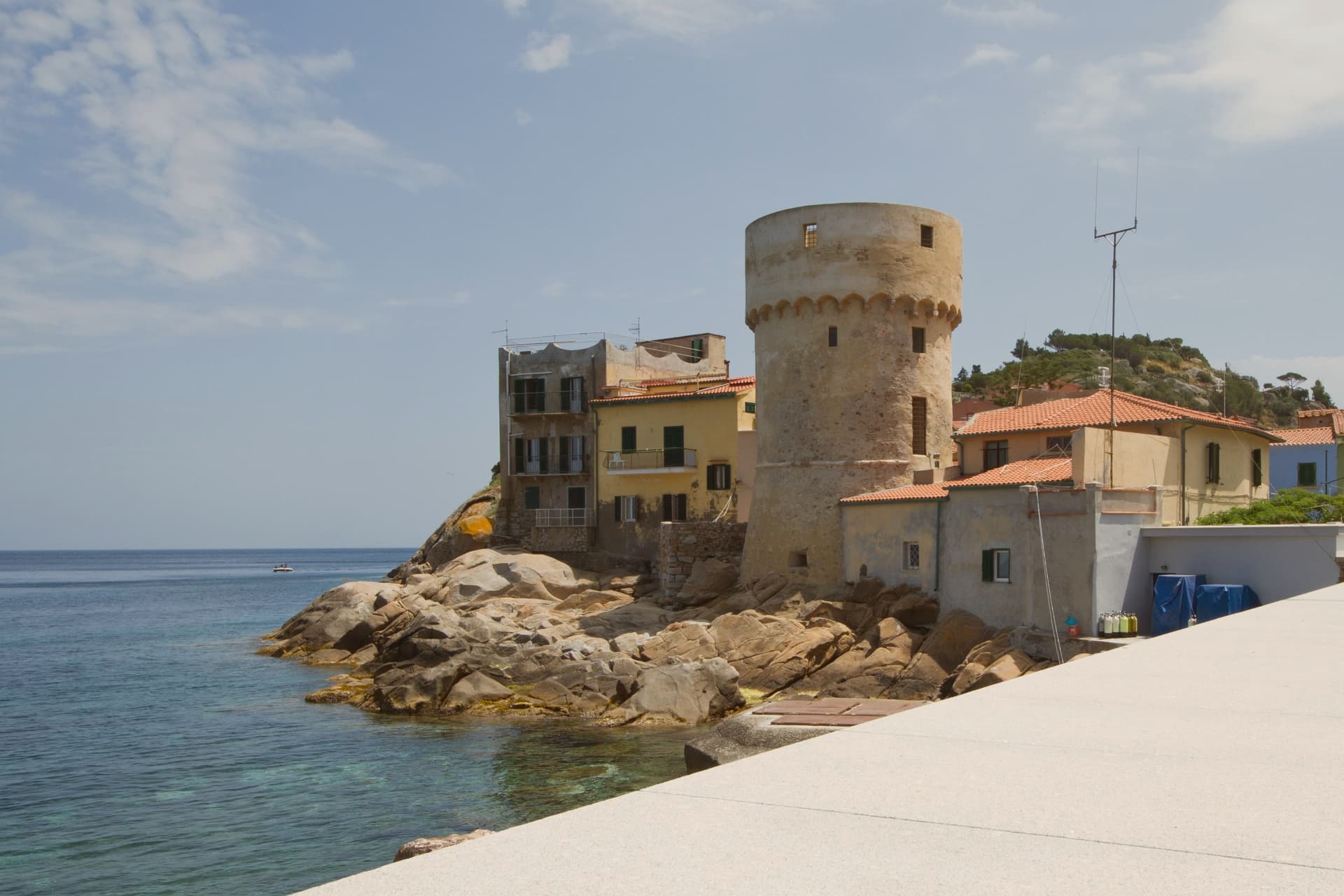
Nearly twenty forts and watchtowers ring the peninsula, built by the Spanish crown between 1557 and the early 1700s for the Stato dei Presidi.
CARAVAGGIO
Michelangelo Merisi died of fever in Porto Ercole on July 18, 1610, en route to Rome to seek papal pardon, and was buried in the local cemetery.
PALIO MARINARO
Four-neighborhood rowing race in the harbor of Porto Santo Stefano every August 15, between Pilarella, Valle, Croce and Fortezza.
When to visit
Best · May–Sep
- J13°
- F15°
- M16°
- A18°
- M22°
- J27°
- J31°
- A31°
- S27°
- O22°
- N18°
- D14°
- Best
- Hot or crowded
- Quiet
- Mostly closed
Daytime averages, 2020–2024. The sea is warmest in August at 27° and coldest in February at 15°. Weather data by Open-Meteo.com.
Why come
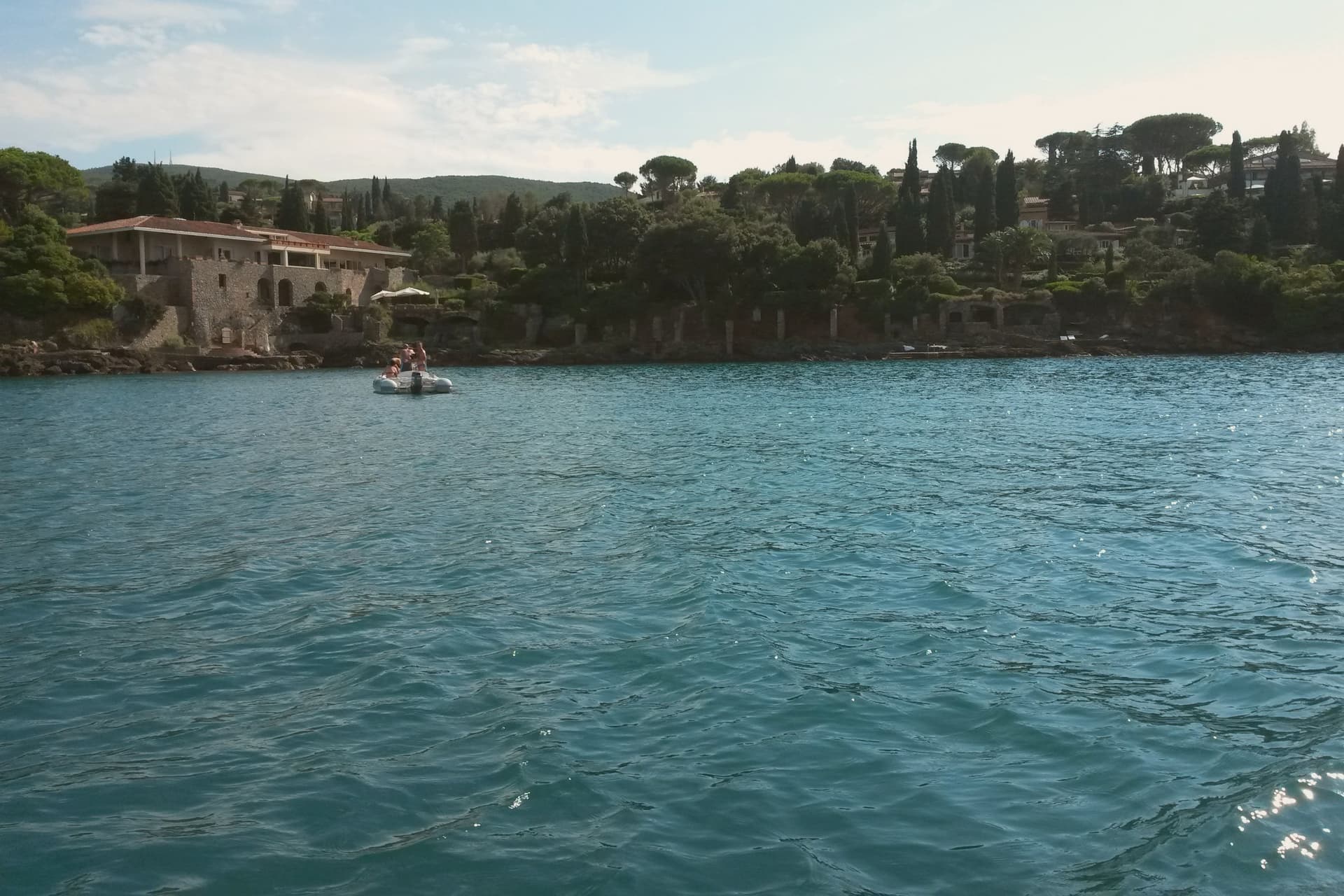
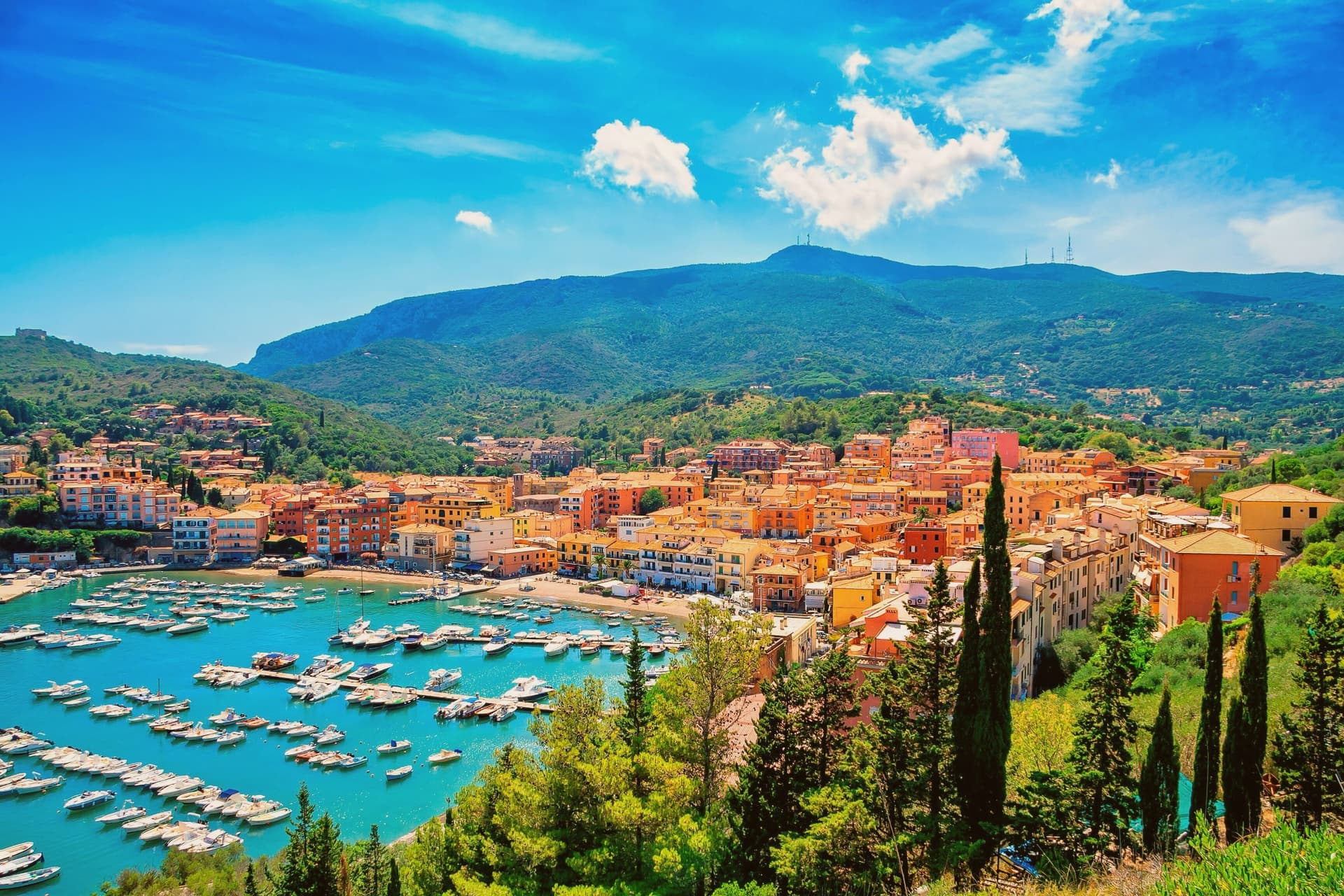
Monte Argentario is a peninsula on the southern Tuscan coast, 35 kilometers south of Grosseto, connected to the mainland by three sand spits that enclose the lagoons of Orbetello. The mountain at its center rises to 635 meters, and the two seats of the comune sit at sea level on opposite sides of it, the northern harbor facing toward Grosseto, the southern one turned toward the open coast below. The history of the peninsula splits from the rest of Tuscany after 1557, when the territory was carved out of Sienese land and handed to the Spanish crown, which spent the next century and a half fortifying the coastline against corsair raids rather than building the kind of inland towns found elsewhere in the region.
The result is a place organized around its edges rather than a center: two ports facing different waters, a mountain of forts between them, and a coastal road that ties the whole shape together for anyone crossing from one harbor to the other. What the peninsula adds up to is a piece of Tuscany that spent its formative centuries as a Spanish military frontier, and still wears that history in its two-harbor shape and the ring of stone above them.
Read on
Monte Argentario in our articles
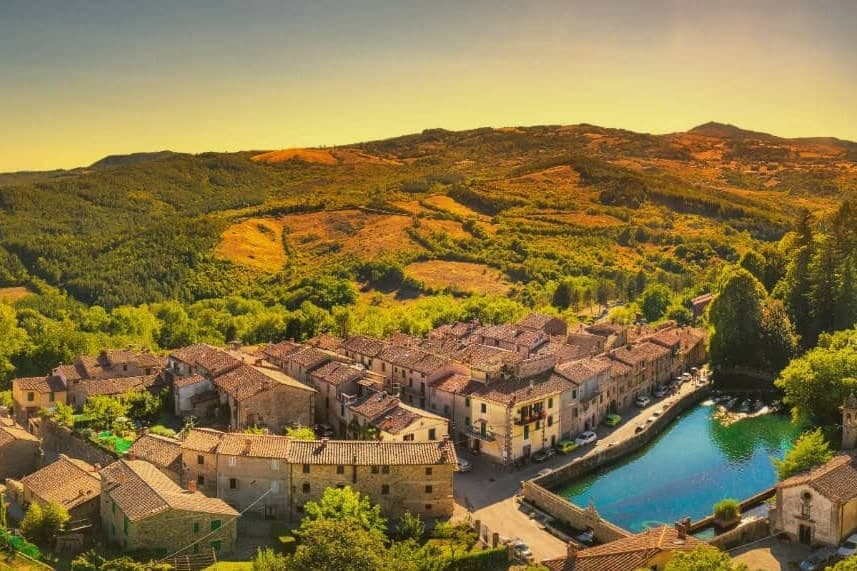
 The best coastal towns in the province of Grosseto6 towns, Monte Argentario among them.
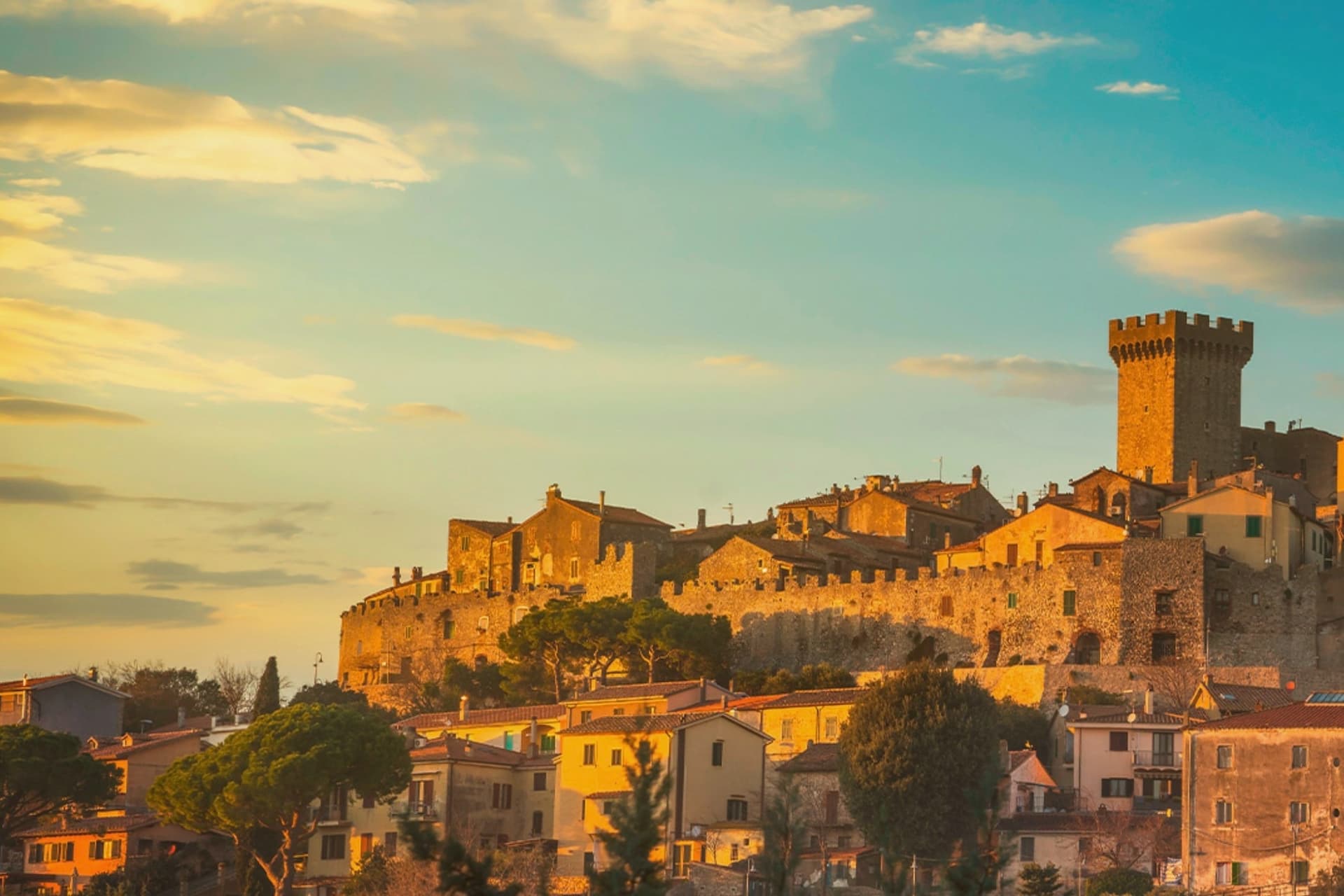
 The prettiest villages in the province of Grosseto6 towns, Monte Argentario among them.
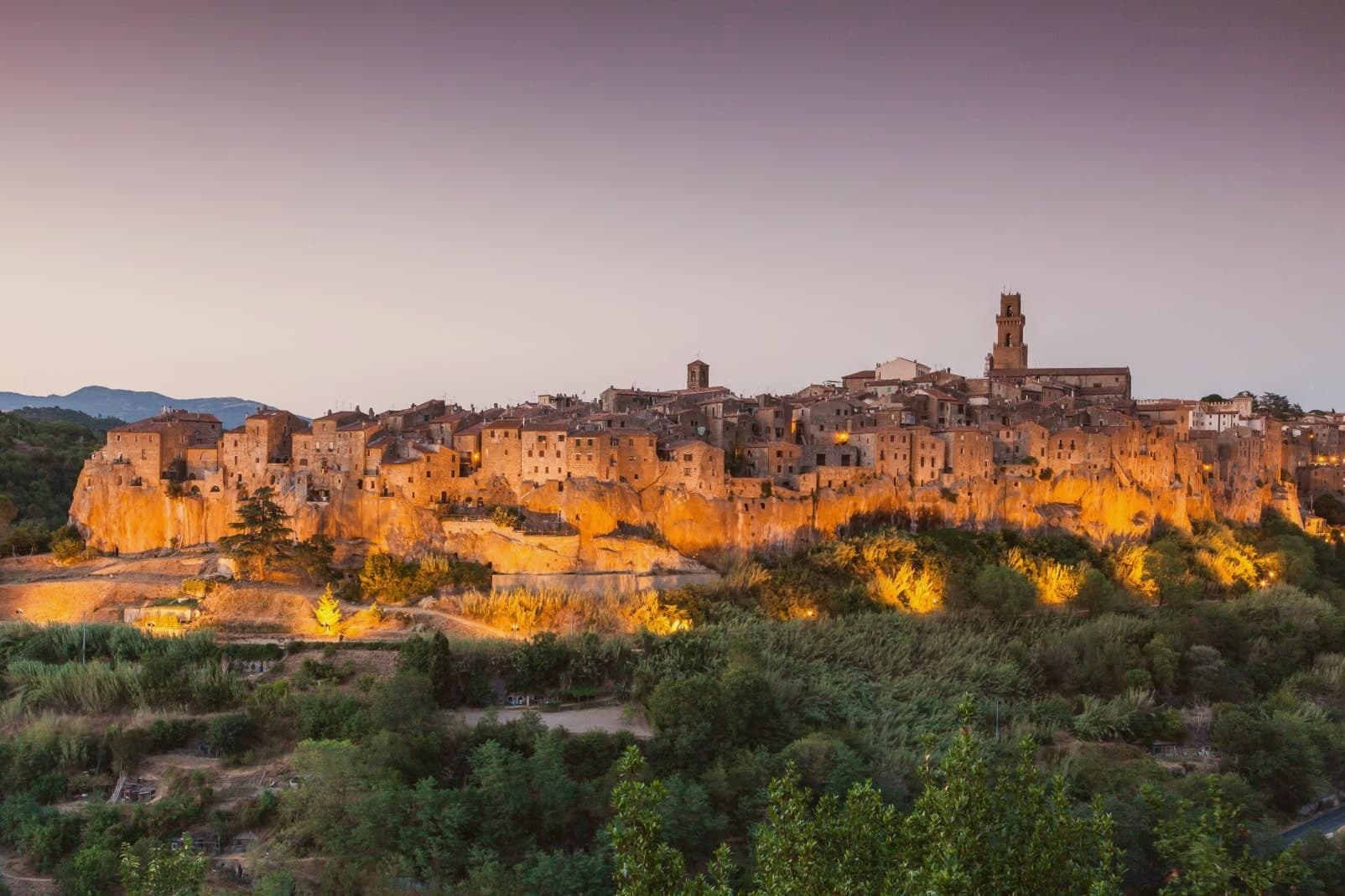
 The best coastal towns worth staying overnight in Toscana7 towns, Monte Argentario among them.
 The best towns with a serious restaurant in the province of Grosseto7 towns, Monte Argentario among them.
How to get there
From Rome (FCO), about 2h 23m by car.
Florence / Pisa (PSA) is about 2h 52m away.
By car from the centre of Siena 2 hours or Pisa 2h 45m.
There is a railway station in the comune, so you can arrive without a car.
Coming from Rome?
What to see
Forte Stella
Six-pointed star fort above Porto Ercole, designed for the Spanish by Buontalenti and Camerini and completed in the mid-1600s as part of the Presidi defense system.
Forte Filippo
Spanish bastioned fortress above Porto Ercole, named for Philip II and built in the late 16th century to protect the Stato dei Presidi from corsair raids.
Rocca Aldobrandesca, Porto Ercole
Earlier Aldobrandeschi fortress incorporated into the Spanish defense system, dominating the harbor and the old town of Porto Ercole.
Convento dei Frati Passionisti
1737 convent on the slopes of the mountain, founded by Paul of the Cross after a vision; still home to a dozen Passionists.
Strada Panoramica
Coastal road circling the peninsula, with views over the Tuscan Archipelago and the island of Giglio.
Porto Santo Stefano
Main port and seat of the comune, with the 16th-century Rocca Spagnola above the harbor and the Palio Marinaro held every August 15.
The slow-trip planner
Building a trip? Find where Monte Argentario fits in a slow Italy circuit.
Answer five questions. We will shape a geographically coherent slow trip from the 1,000 Italian towns most travelers skip. Yours to save and share.
We recommend
Where to eat and stay
Not our picks, but places the guides put their name to: a Michelin star, a Gambero Rosso fork, a Slow Food snail, a Michelin Key for the hotels. Worth a table, a counter, or a night when you pass through.
Alicina sul portoRistorante
Alicina sul porto has one Gambero Rosso fork (79/100) to its name.
Il PellicanoRistorante
Il Pellicano carries one Michelin star.
Molo26Ristorante
Molo26 holds one Gambero Rosso fork (76/100).
Ristorante Dama DamaRistorante
Ristorante Dama Dama holds one Gambero Rosso fork (79/100).
Hotel Il PellicanoHotel
One Michelin Key for Hotel Il Pellicano, along with a La Liste score of 99 and a Leading Hotels of the World listing, among other nods.
LA ROQQAHotel
LA ROQQA holds one Michelin Key.
Through the year
What happens here
Feasts and festivals that come back year after year. We give the month rather than the date, because the date moves and the month rarely does. Check with the source before you plan a journey around one.
Palio Marinaro dell'Argentariohistorical re-enactment
usually held in August. Visit Tuscany - Calendario Ufficiale Eventi
The Sunday letter
Monte Argentario got its letter. One town every Sunday, free. The photo, the food, the festa.
Living here
- Population 11,888
- Remotei
- Pharmacy in town
- High school within a 30-minute drive
- Train station in the comune
- Nearest airport Rome, 2 h 23 min drive
- Regional capital Firenze, 3 h 1 min drive
Common questions
- What is Monte Argentario known for?
- Monte Argentario is a 635-meter peninsula tied to the mainland by three sand spits, ringed by Spanish forts and marked by Caravaggio's death in 1610.
- Where is Monte Argentario?
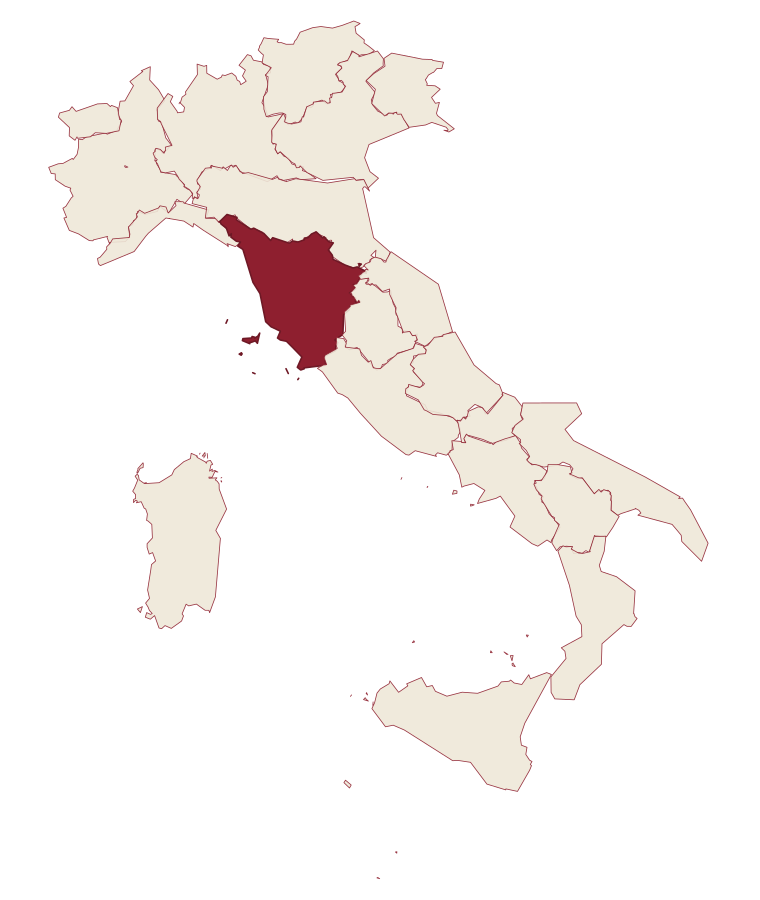
- Monte Argentario is a comune in the province of Grosseto, in Tuscany, at 5 meters above sea level.
- What is the nearest airport to Monte Argentario?
- Rome (FCO), about 2h 23m by car.
- Can you get to Monte Argentario without a car?
- Yes. There is a railway station in the comune, so you can arrive by train.
- How long is the drive from Siena to Monte Argentario?
- About 2 hours by car.
- When is the best time to visit Monte Argentario?
- Best in May–Sep. July is the warmest month, averaging 31 degrees, and December the wettest, with about 12 rain days.
- Is there a sagra or a festival in Monte Argentario?
- Yes. Palio Marinaro dell'Argentario. August is when the first of them falls.
- Which other towns are like Monte Argentario?
- Piombino, Agropoli and Orbetello.
- How many people live in Monte Argentario?
- 11,888 at the 2023 count.
Tags & datadesignations · numbers · sources
Recognised as
The numbers
- Elevation: 5 m
- Population: 11,888
- Surface area: 60.4 km²
These figures were compiled from public directories: ISTAT, OpenStreetMap and Wikidata, and from the official listings of the guides named on this page. Town details change; verify with official sources before you travel.
Similar
Towns like Monte Argentario
Piombino
Province: Livorno
both on the Tyrrhenian coast · both over 10,000 people
Agropoli
Province: Salerno
both on the Tyrrhenian coast · both over 10,000 people
Orbetello
Province: Grosseto
both on the Tyrrhenian coast · both over 10,000 people
Cerveteri
Province: Roma
both on the Tyrrhenian coast · both over 10,000 people
Nettuno
Province: Roma
both on the Tyrrhenian coast · both over 10,000 people
Seravezza
Province: Lucca
both on the Tyrrhenian coast · both over 10,000 people
🎨 Borghi più belli d'Italia
More Borghi più belli d'Italia towns in Tuscany
Anghiari
Province: Arezzo
A walled medieval town at 430 meters over the upper Tiber valley, where Florence beat Milan in 1440 and Leonardo started the fresco he never finished.
Barga
Province: Lucca
A medieval hilltop town at 410 meters in the Serchio valley, where Giovanni Pascoli wrote his last poems and the August festival serves fish and chips.
Buonconvento
Province: Siena
The walled brick borgo in the Crete Senesi where Emperor Henry VII died in 1313, on the Via Cassia at the confluence of the Arbia and Ombrone.
Campiglia Marittima
Province: Livorno
A walled hilltop borgo above the Val di Cornia, where the Rocca tower watches a mining landscape worked from the Etruscans to 1976.
Capalbio
Province: Grosseto
A walled hilltop borgo at 217 meters in the southern Maremma, donated to the Abbey of Tre Fontane by Charlemagne.