
Tuscany · Massa-Carrara
Carrara
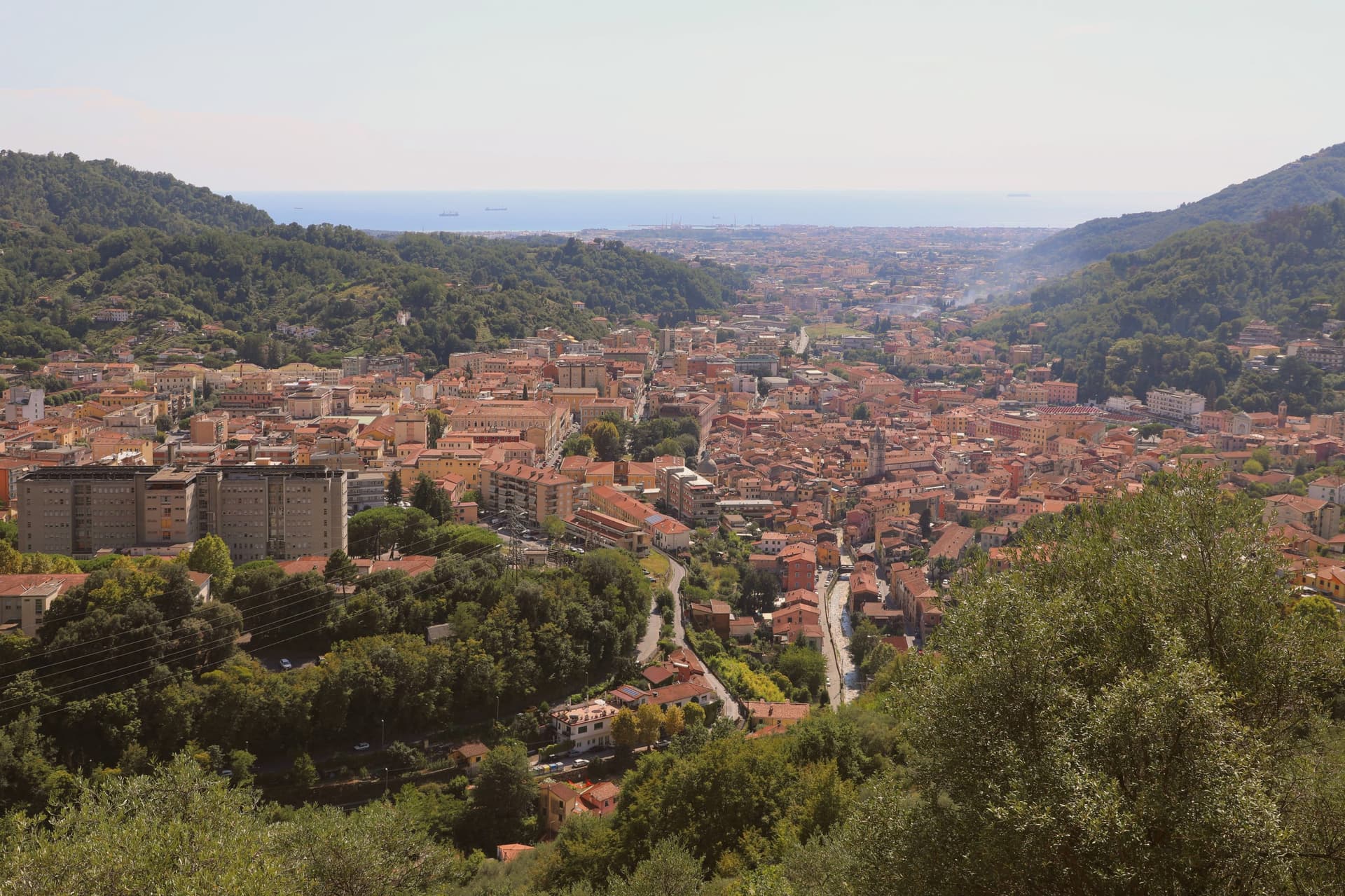
The marble town at the foot of the Apuan Alps, with over 650 quarry sites in the valleys above and the stone that built the Pantheon and the Pietà.
By Peter Benei
Written about. No. 6.
We’ve tried
What we got up to
Restaurants, walks, swims: the things we actually did in Carrara, each with the piece we wrote about it.
Lardo di Colonnata, the pork fat aged in marble that needs nothing but bread.
The letter
Carrara got its letter. One town at a time, free. The photo, the food, the festa.
Visiting
- Best time
- May–Sep
- By car
- 55 min from Pisa
- By train
- Station in the comune
- Population
- 59,662
- J11°
- F13°
- M14°
- A17°
- M21°
- J25°
- J28°
- A29°
- S25°
- O20°
- N16°
- D12°
- Best
- Hot or crowded
- Quiet
- Mostly closed
Daytime air temperature, averages for 2020–2024. The sea is warmest in August at 28° and coldest in February at 13°. Weather data by Open-Meteo.com.
Going to the sea? How to find the free beaches in Italy.
Why come
Carrara sits in the narrow plain where the Apuan Alps drop to the Tyrrhenian. The 650-plus marble quarry sites, working and abandoned, in the three valleys above the town, Torano, Fantiscritti and Colonnata, form one of the largest marble districts on earth, worked since Roman times. The white and blue-grey stone went into the Pantheon and Trajan's Column.
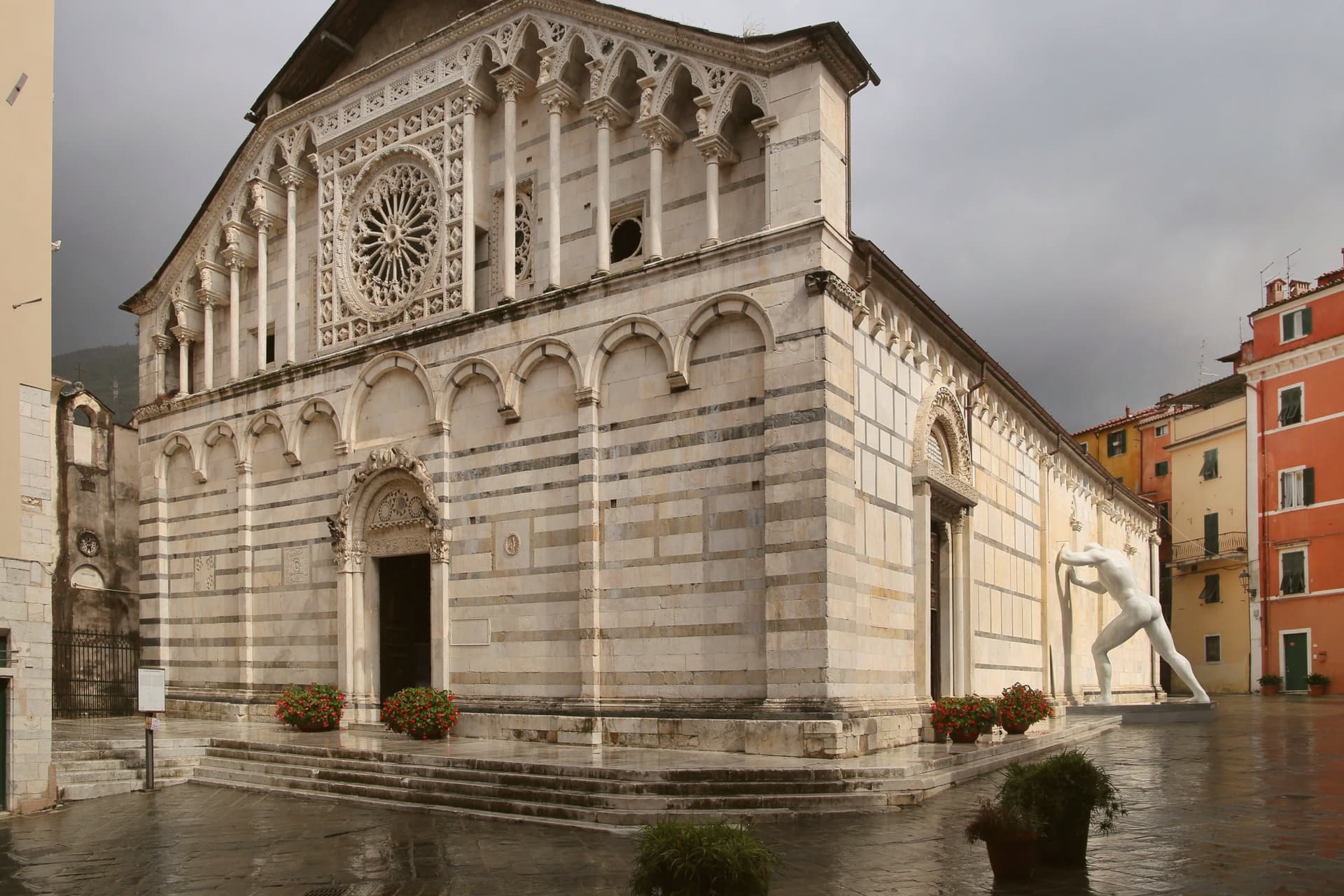
Michelangelo first came in 1497 to find marble for his Pietà and kept returning until he opened his own quarry in the Polvaccio above Torano, still called Cava di Michelangelo. The Duomo di Sant'Andrea, recorded from 1035 and built of the local marble, has a bichrome façade whose lower order dates from the first half of the twelfth century. The city's Accademia di Belle Arti has trained sculptors since 1769 and the surrounding studi still work commissions for sculptors who never set foot in Italy.
How to get there
From Pisa (PSA), about 1 h 4 min by car.
Genoa (GOA) is about 1 h 49 min away.
By car from the center of Pisa 55 min or Florence 1 h 41 min.
There is a railway station in the comune, so you can arrive without a car.
Coming from Pisa, Genoa or Florence?
Coming by train into Livorno Centrale? Carrara is about 56 min away by road.
Every town within reach of Pisa airport.
First time driving in Italy? Read our complete manual.
What to see
Duomo di Sant'Andrea
Cathedral recorded from 1035, built of Apuan marble, with a Romanesque-Gothic bichrome façade finished in the fourteenth century.
Cave di Marmo
Over 650 quarry sites in the Torano, Fantiscritti and Colonnata valleys, worked since Roman times and visible on cave tours from the town.
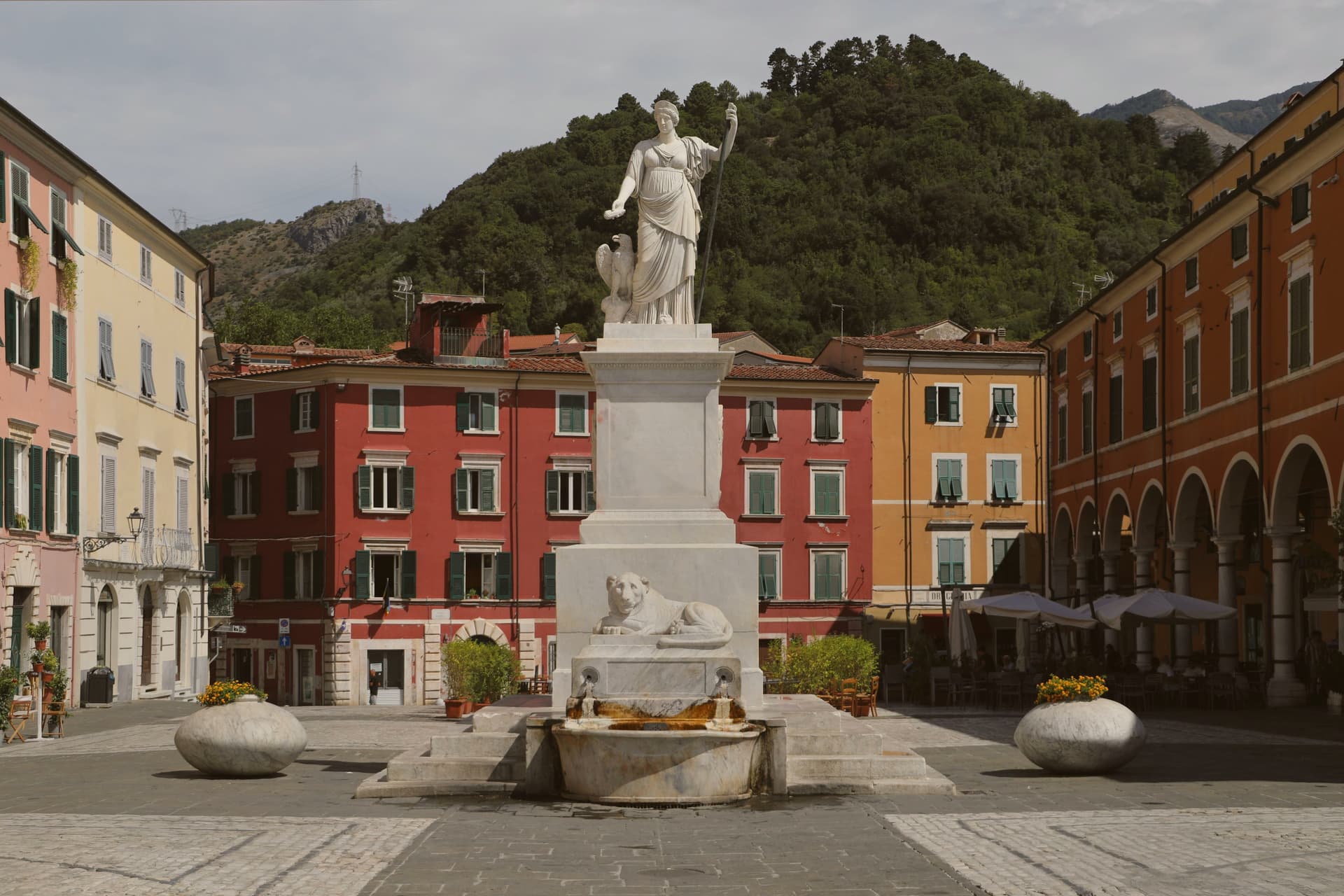
Piazza Alberica
Sixteenth-century square built by Alberico I Cybo Malaspina inside the expanded city walls, ringed by marble façades and a central statue of Maria Beatrice d'Este.
Castello Malaspina
Medieval-into-Renaissance Malaspina seat, home of the Accademia di Belle Arti since 1806.
Museo Civico del Marmo
Civic museum documenting two thousand years of quarrying, with Roman tools, geological samples and modern sculpture.
From the guides
Where to eat
Not our picks, but places the guides put their name to: a Michelin star, a Gambero Rosso fork, a Slow Food snail, a Michelin Key for the hotels. Worth a table, a counter, or a night when you pass through.
ExtraRistorante
A Gambero Rosso listing for Extra, and a spot in the Michelin Guide.
Enoteca VeliaWine Bar
Enoteca Velia holds two Gambero Rosso bottles.
Il NarcisoRistorante
Il Narciso has a spot in the Michelin Guide to its name.
Before you sit down: how to order at a restaurant, how to spot a tourist trap, what aperitivo is and how the Italian bar works.
Living here
Could you live here?
Carrara is a city.
- A city of 59,662 people, and a provincial capital: the services are here, not a drive away.
- A station of its own, so the rest of Italy is a train ride away.
The rules come from our series Where to Move in Italy, written from the places we have lived: Part 1, The End of the Road · Part 2, The Small Town · Part 3, The City · Part 4, The Postcard · Part 5, The Other Half. The towns we would pick are in Part 6, The Best Towns.
- Population 59,662, down 6.4% since 2015
- Train station in the comune
- Nearest national health service hospital Massa, 6 km as the crow flies · how healthcare works in Italy
- Homes in the center: €1,100 to €1,550 per m² to buy, €6.00 to €8.30 per m² a month to rent
All the numbers Common questions, designations, lists and sources.
More about living here
- Commuter belt
- Pharmacy in town
- High school within a 30-minute drive
- Full fibre reaches 89% of homes
- Primary school in the comune
- Earthquake zone 3, low hazard
- Pisa airport (PSA), 1 h 4 min drive, the nearest with scheduled flights
- Regional capital Florence, 1 h 41 min drive
If you are moving here
Who lives here
9% of residents are foreign citizens, most often from Romania, Morocco and Senegal, against 9% across Italy. 103 of them come from English-speaking countries or western and northern Europe, mostly France, the United Kingdom and the United States. There are 305 people over 65 for every 100 children under 15, against 216 across Italy. 24% of homes have no resident, holiday homes and empty ones counted together, against 27% across Italy. Massa-Carrara province ranks 64th of 107 in Il Sole 24 Ore's quality of life ranking for 2025.
Health and schools
There is an emergency room in the comune. The nearest major one is in Pisa, 50 km away. The nearest children's emergency room is in La Spezia, 22 km away. The nearest IB school is International School of Modena, 85 km as the crow flies. The nearest school listed as international is Bilingual School Lucca, 43 km away.
Information, not medical advice. Confirm with a professional.
Taxes
A home that is not your main one pays 1.06% a year in property tax, charged on the cadastral value rather than the price. A main home pays none unless it is in a luxury category. The town adds 0.8% to your income tax, with nothing due on income under €10,000. 7% pensioner tax: this town is not in a qualifying area.
Information, not tax advice. Confirm with a professional.
What it costs
The average household in Tuscany spends about €2,410 a month, €540 of it on food, against about €2,170 across Italy. A family of three pays about €770 a year for water, on the Tuscany average.
Climate and risk
It is in climate zone D, on a scale from A, the warmest, to F, the coldest, and heating may run from November 1 to April 15, up to 12 hours a day, unless the mayor changes it. 11% of residents live in a zone the national maps rate high for floods, 31% in a high or medium one. 6% live in a zone rated high or very high for landslides.
These shares cover the whole comune, not any one street. Check an address on IdroGEO.
Moving from abroad? Which visa you need. Sources: ISTAT, the Ministry of Health, ISPRA, the Finance Ministry, the Ministry of Enterprise, Poste Italiane, the comuni, the IB, International Schools Database, Il Sole 24 Ore, Cittadinanzattiva.
Known for
MARBLE QUARRIES
650+ quarry sites, working and abandoned, in Torano, Fantiscritti and Colonnata, one of the great marble sources of the world since Roman times.
MICHELANGELO
Came to Carrara in 1497 to choose the stone for the Pietà; tradition links him to the Polvaccio quarry above Torano.
ACCADEMIA DI BELLE ARTI
Founded 1769 by Maria Teresa Cybo-Malaspina, still training sculptors who work the surrounding marble studios.
TOSCANO
The commune also lies inside the Toscano IGP production zone.
Common questions
- What is Carrara known for?
- Carrara is the marble town at the foot of the Apuan Alps, with over 650 quarry sites in the valleys above and the stone that built the Pantheon and the Pietà.
- Where is Carrara?
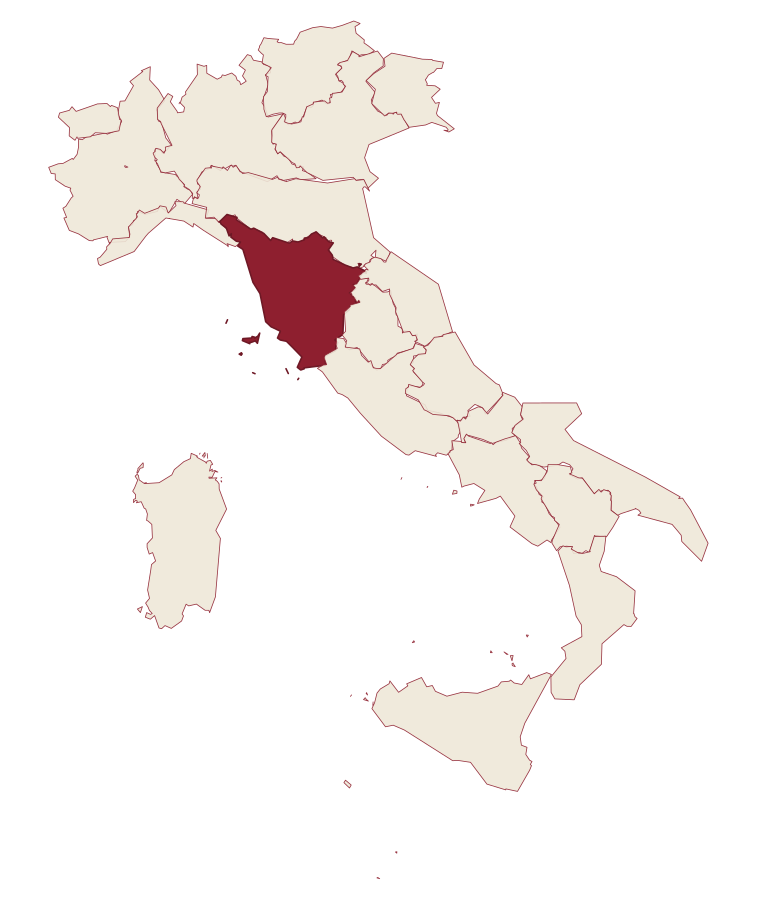
- Carrara is a comune in the province of Massa-Carrara, in Tuscany, at 80 meters above sea level.
- What is the nearest airport to Carrara?
- The nearest airport with scheduled flights is Pisa (PSA), about 1 h 4 min by car.
- Can you get to Carrara without a car?
- Yes. There is a railway station in the comune, so you can arrive by train.
- How long is the drive from Pisa to Carrara?
- About 55 min by car.
- When is the best time to visit Carrara?
- Best in May–Sep. August is the warmest month, averaging 29 degrees, and December the wettest, with about 15 rain days.
- Which other towns are like Carrara?
- Pietrasanta, Seravezza and Nettuno.
- How many people live in Carrara?
- 59,662 residents, by ISTAT's count on 1 January 2025.
- Is Carrara a good place to live?
- Carrara is a city of 59,662 people, the kind of place Part 3 of our Where to Move in Italy series is about. The nearest national health service hospital is in Massa, 6 km as the crow flies. Full fibre reaches 89% of homes.
Tags & data designations · numbers · sources
Recognized as
Landscape
The numbers
- Elevation: 80 m
- Population: 59,662
- Surface area: 71.01 km²
These figures were compiled from public directories: ISTAT, OpenStreetMap and Wikidata, and from the official listings of the guides named on this page. Town details change; verify with official sources before you travel.
The ranked lists
Lists Carrara appears in
- The best beach towns within 90 minutes of PisaNear Pisaclean beachwithin 90 min6 towns · smallest 6,666 residents · closest 29 min away
- The best olive oil towns within 90 minutes of PisaNear Pisawithin 90 minolive oil zone6 towns · smallest 4,592 residents · closest 52 min away
- The best towns with a serious restaurant that sit on a walking route within 90 minutes of PisaNear Pisaon a walking routewithin 90 minserious restaurant6 towns · smallest 21,768 residents · closest 34 min away
- The best coastal towns you can reach by train within 90 minutes of PisaNear Pisacoastalby trainwithin 90 min7 towns · smallest 1,287 residents · closest 29 min away
- The best towns you can reach by train that have a serious restaurant within 90 minutes of PisaNear Pisaby trainwithin 90 minserious restaurant9 towns · smallest 1,287 residents · closest 8 min away
- The best coastal towns that eat well within 90 minutes of PisaNear Pisacoastalwithin 90 mineats well10 towns · smallest 1,287 residents · closest 38 min away
Near here, with a letter
- Written about. No. 19.
Castelnuovo Magra
Province: La Spezia
A ridge village on the Liguria-Tuscany border where a marquisate treaty ended decades of conflict with the bishops of Luni.
19 min by car
- Written about. No. 70.
Seravezza
Province: Lucca
The Versilia town where Michelangelo opened the Pope's marble quarries and Cosimo I built his summer palace.
14 km away
- Written about. No. 18.
Ameglia
Province: La Spezia
A hilltop borgo at 89 meters above the mouth of the Magra, the Lunigiana edge of Liguria where the river meets the Gulf of Poets.
22 min by car
The letter
Carrara got its letter. One town at a time, free. The photo, the food, the festa.
Paid plans, the moving year and the books are on the membership page.