
Tuscany · Grosseto
Massa Marittima
A medieval mining town, free commune from 1255 to 1337, whose cathedral holds the relics of San Cerbone.
- Best time
- Apr–Oct
- By car
- 1 h 28 min from Siena
- By train
- Station in the comune
- Population
- 8,139
Known for
ALBERO DELLA FECONDITÀ
Thirteenth-century fresco at the Fonti dell'Abbondanza, a tree hung with phalluses, rediscovered in 2000 and unique in medieval Italian art.
SAN CERBONE
The patron saint, buried in the Duomo, whose marble shrine was carved by Goro di Gregorio in 1324.
BALESTRO DEL GIRIFALCO
Crossbow contest in fifteenth-century costume between the three terzieri of the town, run every May and August.
When to visit
Best · Apr–Oct
- J10°
- F12°
- M14°
- A16°
- M21°
- J26°
- J31°
- A30°
- S25°
- O20°
- N15°
- D11°
- Best
- Hot or crowded
- Quiet
- Mostly closed
Daytime averages, 2020–2024. Weather data by Open-Meteo.com.
The festa: Cerbone di Populonia, 10 October
Why come
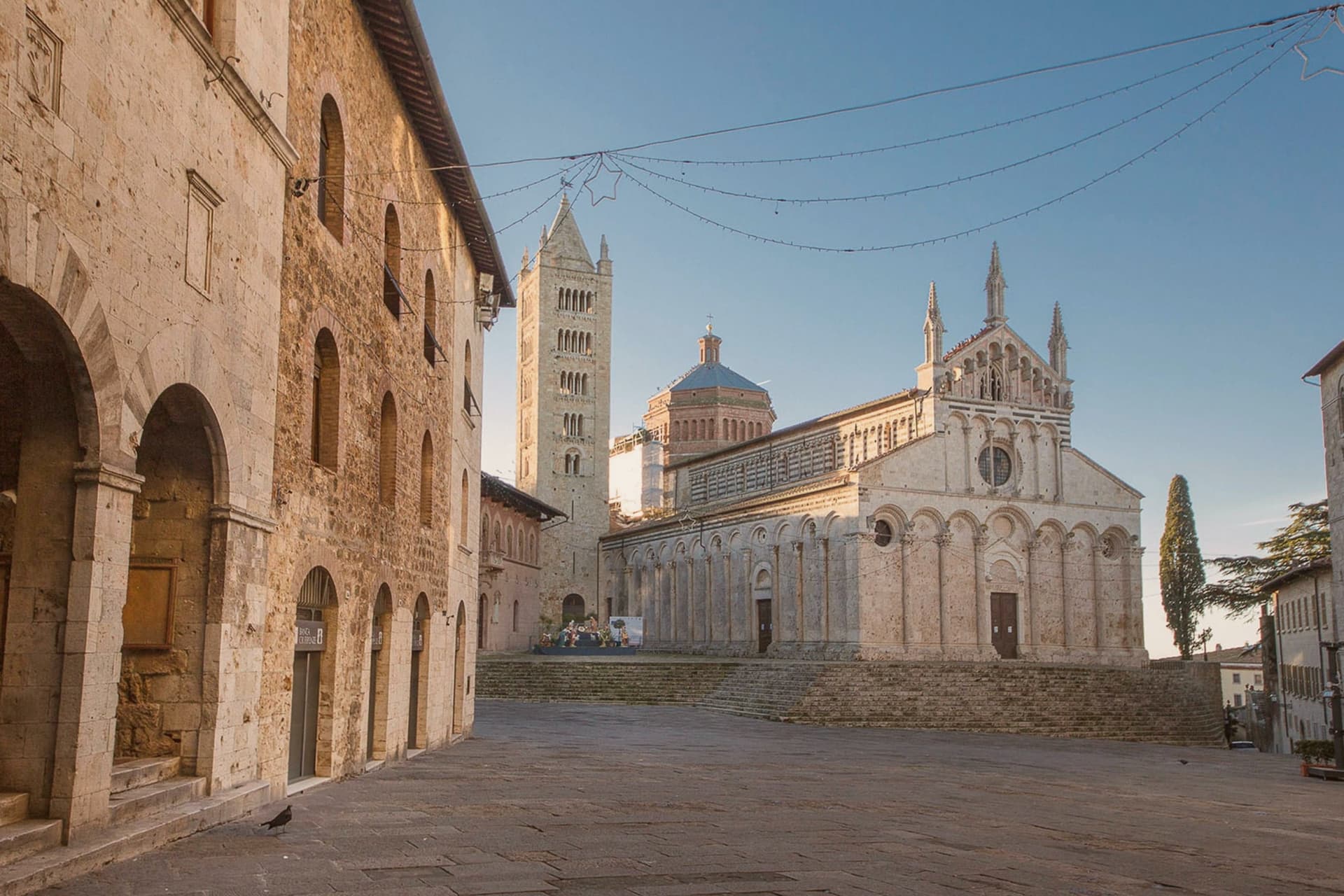
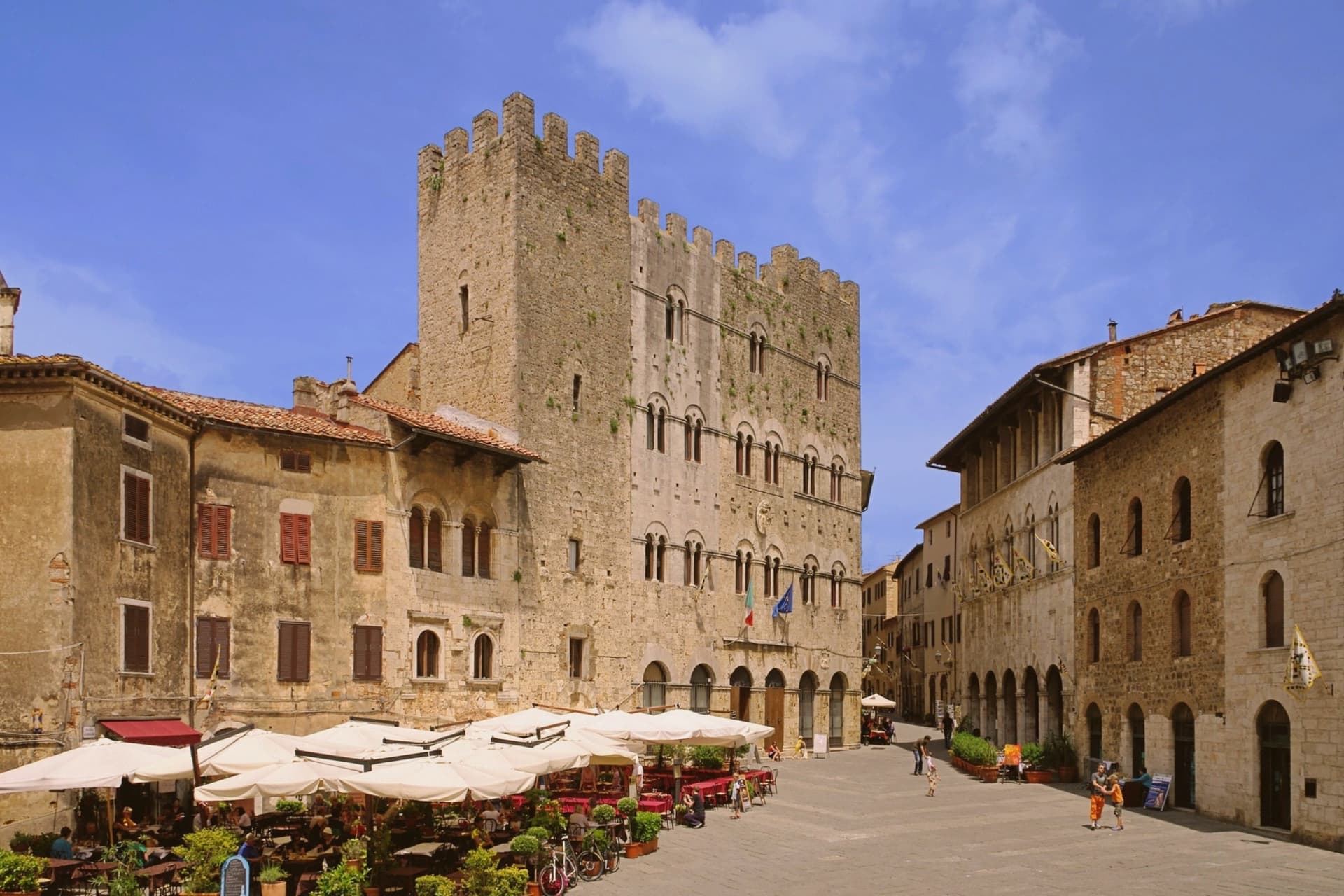
Massa Marittima sits on an isolated hill in the Colline Metallifere, the Tuscan hills that supplied copper and silver from Etruscan times. Despite the name, the sea is roughly twenty kilometers away. The town's wealth as a free commune was built on that ore, and the buildings on Piazza Garibaldi still date from the century of its independence: the cathedral, the communal palace, the Palazzo Comunale, all raised while the mines were active.
The old center keeps a medieval grid, with the Città Nuova rising above it and the watchtower marking the join between the two. Mining gave way to tourism after the seams ran out, but the layout never had to be redrawn for cars or commerce: what stands today is largely what stood when the terzieri divided the town for its crossbow contest. The hill, the ore beneath it and the thirteenth-century square form one continuous fact: the town's shape was set by what it dug out of the ground, and its history stopped adding new layers once the ground stopped paying.
The Sunday letter
Massa Marittima is on our list. Its letter is still to come.
We are writing about all 1,000 of these towns, one at a time, in a free letter every Sunday: the photo, the food, the festa. That is our mission. Sign up and you will be there when Massa Marittima comes up. By Peter & Sophia, from Pietrasanta.
Read on
Massa Marittima in our articles
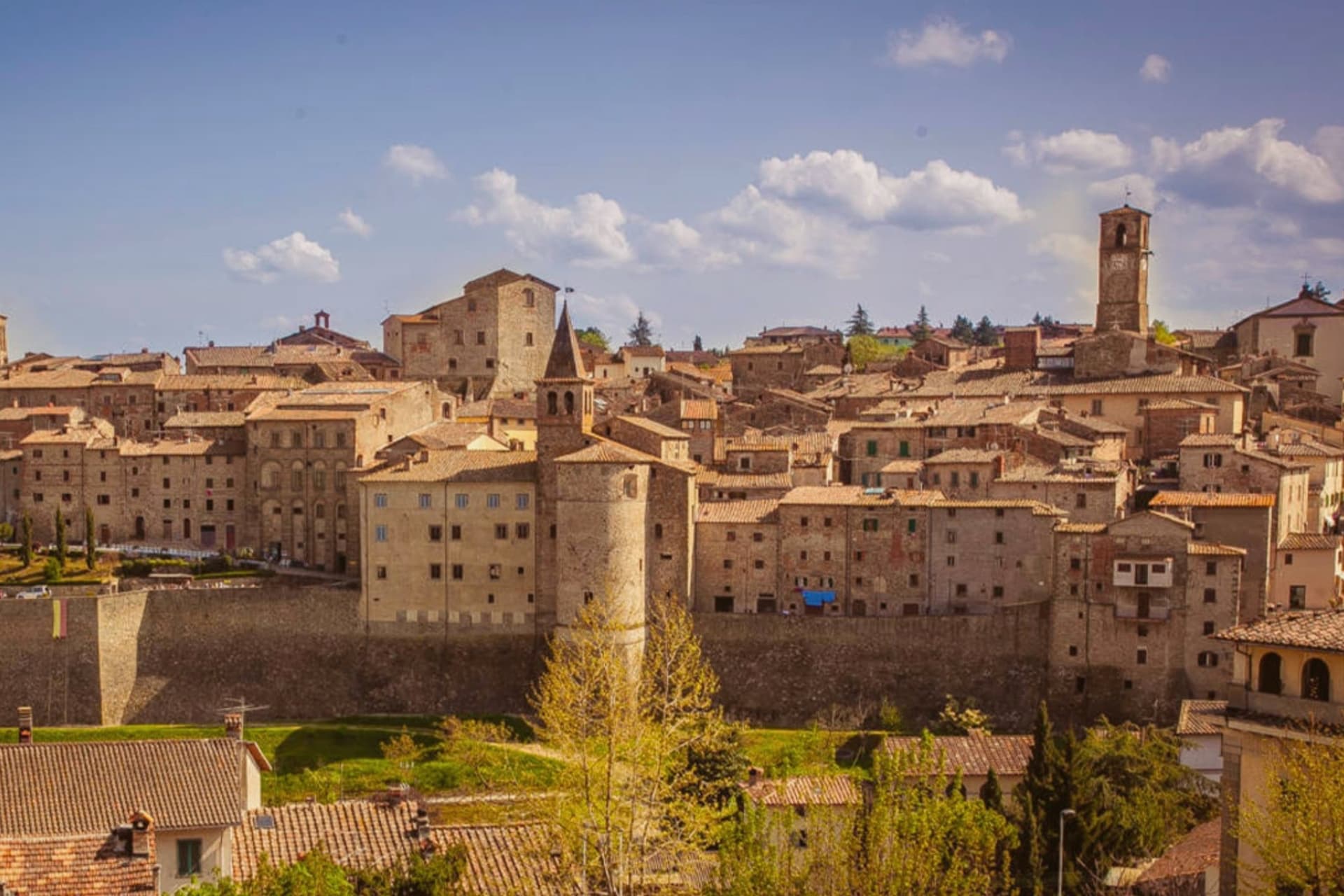
 The 6 best hidden towns inside a nature park in Toscana6 towns, Massa Marittima among them.
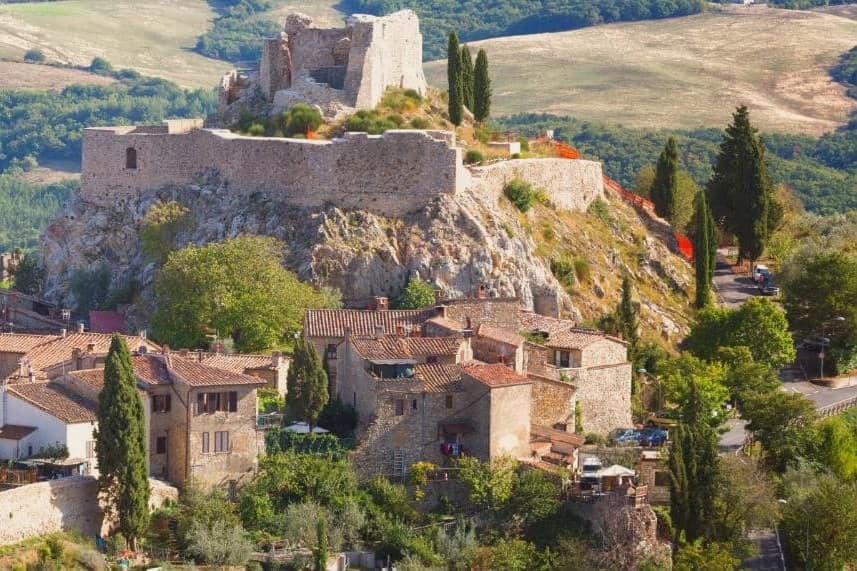
 The best towns with a serious restaurant that live slowly in Toscana6 towns, Massa Marittima among them.
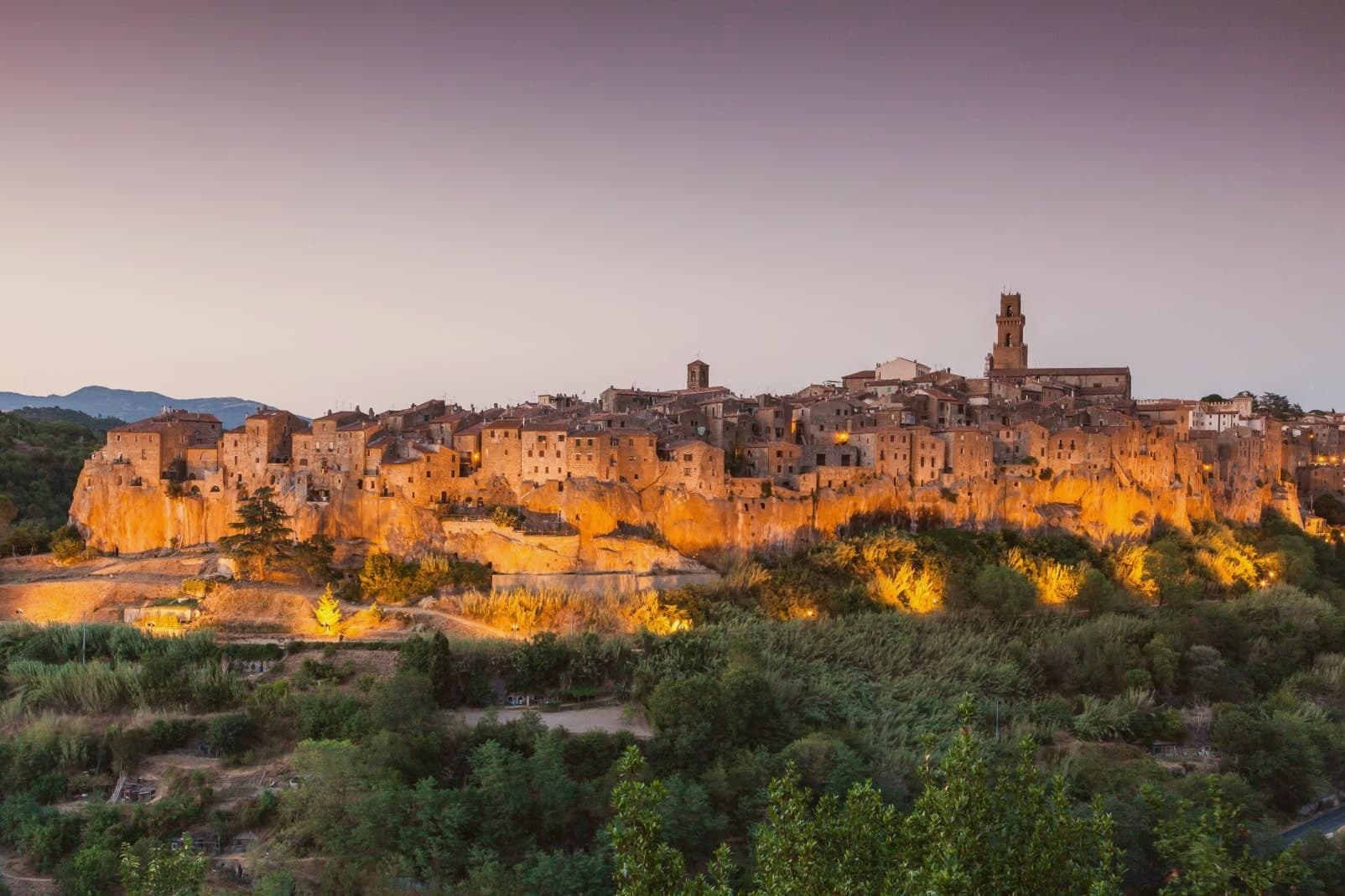
 The 7 best towns inside a nature park that have a serious restaurant in Toscana7 towns, Massa Marittima among them.
 The best towns with a serious restaurant in the province of Grosseto7 towns, Massa Marittima among them.
How to get there
From Florence / Pisa (PSA), about 1h 48m by car.
Bologna (BLQ) is about 3h 10m away.
By car from the centre of Siena 1h 28m, Pisa 1h 42m or Florence 2h 18m.
There is a railway station in the comune, so you can arrive without a car.
What to see
Duomo di San Cerbone
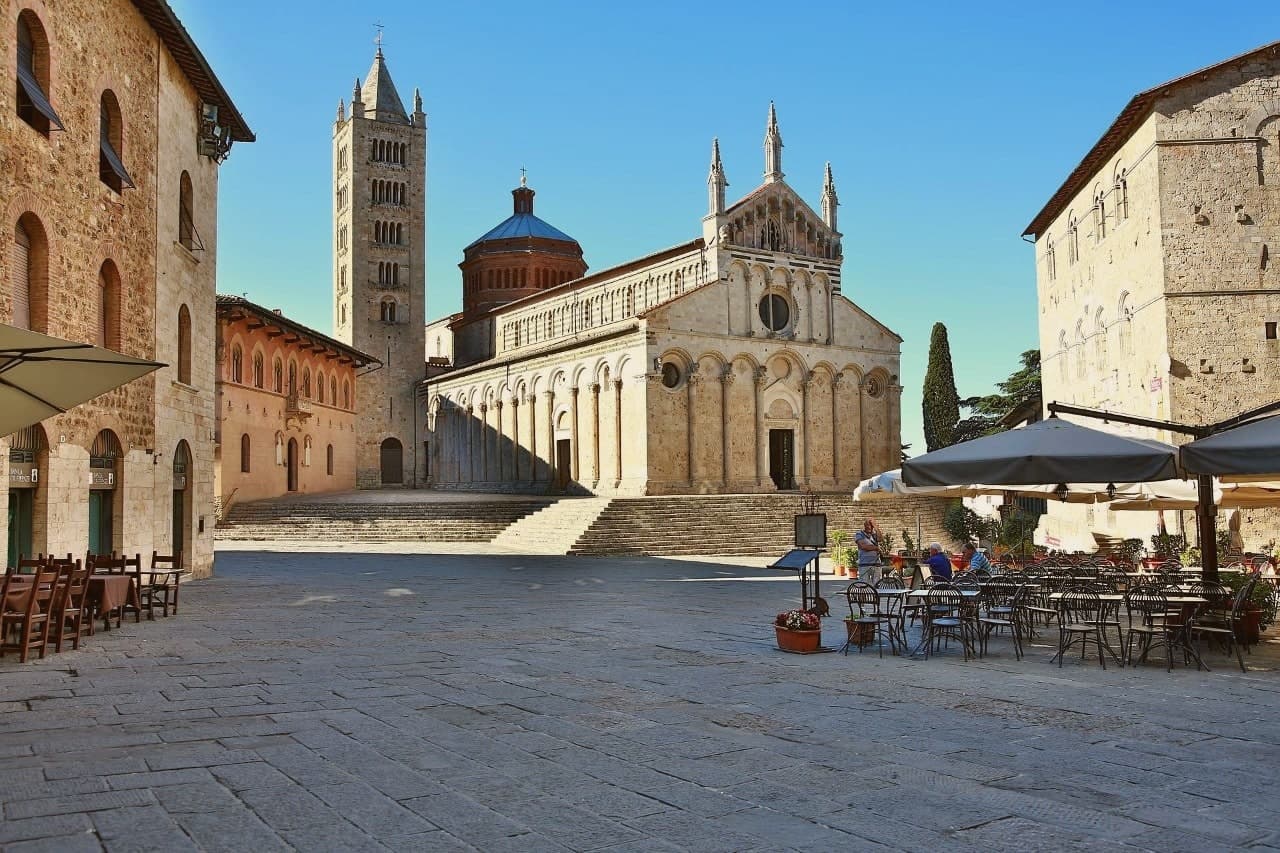
Pisan Romanesque cathedral on Piazza Garibaldi, its facade rising in tiers above the square. The Arca inside holds the saint's remains beneath carved marble figures.
Fonti dell'Abbondanza
The vaulted fountain building where the fresco survives on the interior wall, plaster and pigment exposed after centuries hidden under whitewash.
Palazzo del Podestà
Communal palace on Piazza Garibaldi, now housing the Museo Archeologico, with the Maestà by Ambrogio Lorenzetti among its rooms.
Torre del Candeliere
Watchtower above the Città Nuova, linked to the old walls by a flying arch. The climb opens onto a panorama across the Maremma and the Colline Metallifere.
Museo della Miniera
Reconstructed tunnels documenting the extraction of copper, silver and pyrite from the surrounding hills, the industry the town was built on.
The slow-trip planner
Building a trip? Find where Massa Marittima fits in a slow Italy circuit.
Answer five questions. We will shape a geographically coherent slow trip from the 1,000 Italian towns most travelers skip. Yours to save and share.
We recommend
Where to eat
Not our picks, but places the guides put their name to: a Michelin star, a Gambero Rosso fork, a Slow Food snail, a Michelin Key for the hotels. Worth a table, a counter, or a night when you pass through.
BracaliRistorante
One Michelin star for Bracali, along with two Gambero Rosso forks (86/100) and a place in L'Espresso's Top 300.
Through the year
What happens here
Feasts and festivals that come back year after year. We give the month rather than the date, because the date moves and the month rarely does. Check with the source before you plan a journey around one.
Balestro del Girifalco di Agosto a Massa Marittimahistorical re-enactment
usually held in August. Borghi Toscana - Eventi
Living here
- Population 8,139
- In-betweeni
- Pharmacy in town
- High school within a 30-minute drive
- Train station in the comune
- Nearest airport Florence / Pisa, 1 h 48 min drive
- Regional capital Firenze, 2 h 18 min drive
Common questions
- What is Massa Marittima known for?
- Massa Marittima is a medieval mining town at 380 meters, free commune from 1255 to 1337, whose cathedral holds the relics of San Cerbone.
- Where is Massa Marittima?
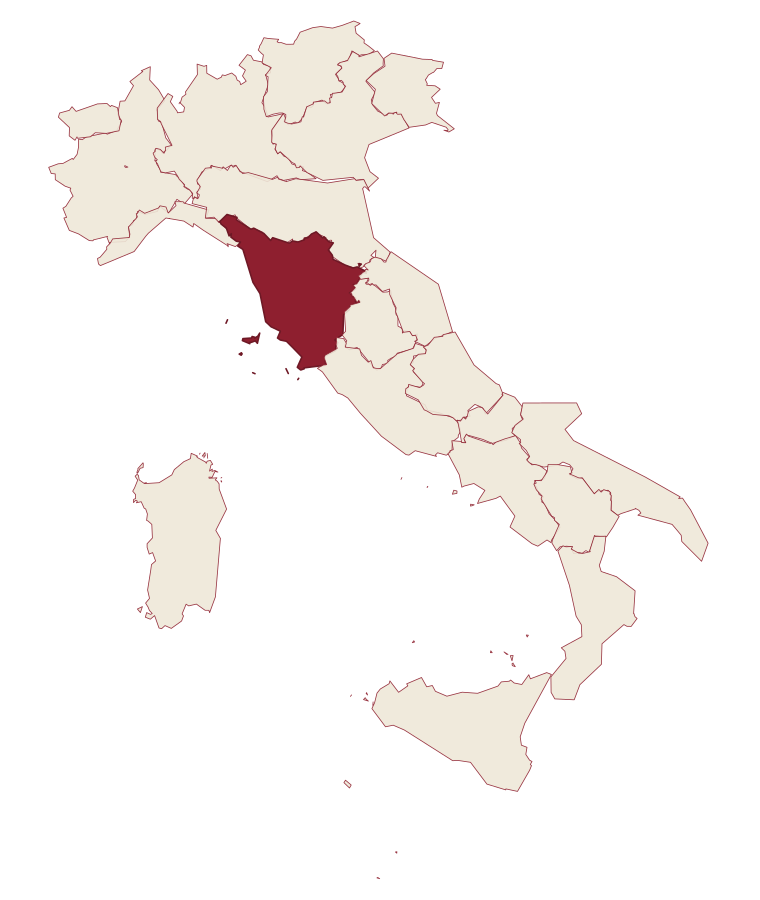
- Massa Marittima is a comune in the province of Grosseto, in Tuscany.
- What is the nearest airport to Massa Marittima?
- Florence / Pisa (PSA), about 1h 48m by car.
- Can you get to Massa Marittima without a car?
- Yes. There is a railway station in the comune, so you can arrive by train.
- How long is the drive from Siena to Massa Marittima?
- About 1h 28m by car.
- When is the best time to visit Massa Marittima?
- Best in Apr–Oct. July is the warmest month, averaging 31 degrees, and December the wettest, with about 13 rain days.
- Is there a sagra or a festival in Massa Marittima?
- Yes. Balestro del Girifalco di Agosto a Massa Marittima. August is when the first of them falls.
- Which other towns are like Massa Marittima?
- Pontremoli, Chiusi and Poppi.
- How many people live in Massa Marittima?
- 8,139 at the 2023 count.
Tags & datadesignations · numbers · sources
Recognised as
The numbers
- Elevation: 380 m
- Population: 8,139
- Surface area: 283.45 km²
These figures were compiled from public directories: ISTAT, OpenStreetMap and Wikidata, and from the official listings of the guides named on this page. Town details change; verify with official sources before you travel.
Similar
Towns like Massa Marittima
Pontremoli
Province: Massa-Carrara
both inland, away from the coast · both between 3,000 and 10,000 people
Chiusi
Province: Siena
both inland, away from the coast · both between 3,000 and 10,000 people
Poppi
Province: Arezzo
both inland, away from the coast · both between 3,000 and 10,000 people
Lucignano
Province: Arezzo
both inland, away from the coast · both between 3,000 and 10,000 people
Borgo Valsugana
Province: Trento
both inland, away from the coast · both between 3,000 and 10,000 people
Capranica
Province: Viterbo
both inland, away from the coast · both between 3,000 and 10,000 people
🟠 Bandiera Arancione
More Bandiera Arancione towns in Tuscany
Abetone Cutigliano
Province: Pistoia
The Apennine ski pass at 1,388 meters where the Granduca's two stone pyramids of 1778 mark the old Tuscan-Modenese border.
Anghiari
Province: Arezzo
A walled medieval town at 430 meters over the upper Tiber valley, where Florence beat Milan in 1440 and Leonardo started the fresco he never finished.
Barga
Province: Lucca
A medieval hilltop town at 410 meters in the Serchio valley, where Giovanni Pascoli wrote his last poems and the August festival serves fish and chips.
Casale Marittimo
Province: Pisa
A concentric stone borgo at 214 meters above the Val di Cecina, built where a seventh-century BC Etruscan outpost of Volterra once stood.
Castelnuovo Berardenga
Province: Siena
A commune of 351 meters, the last castle Siena built against Florence, in 1366.