
Tuscany · Siena
Piancastagnaio
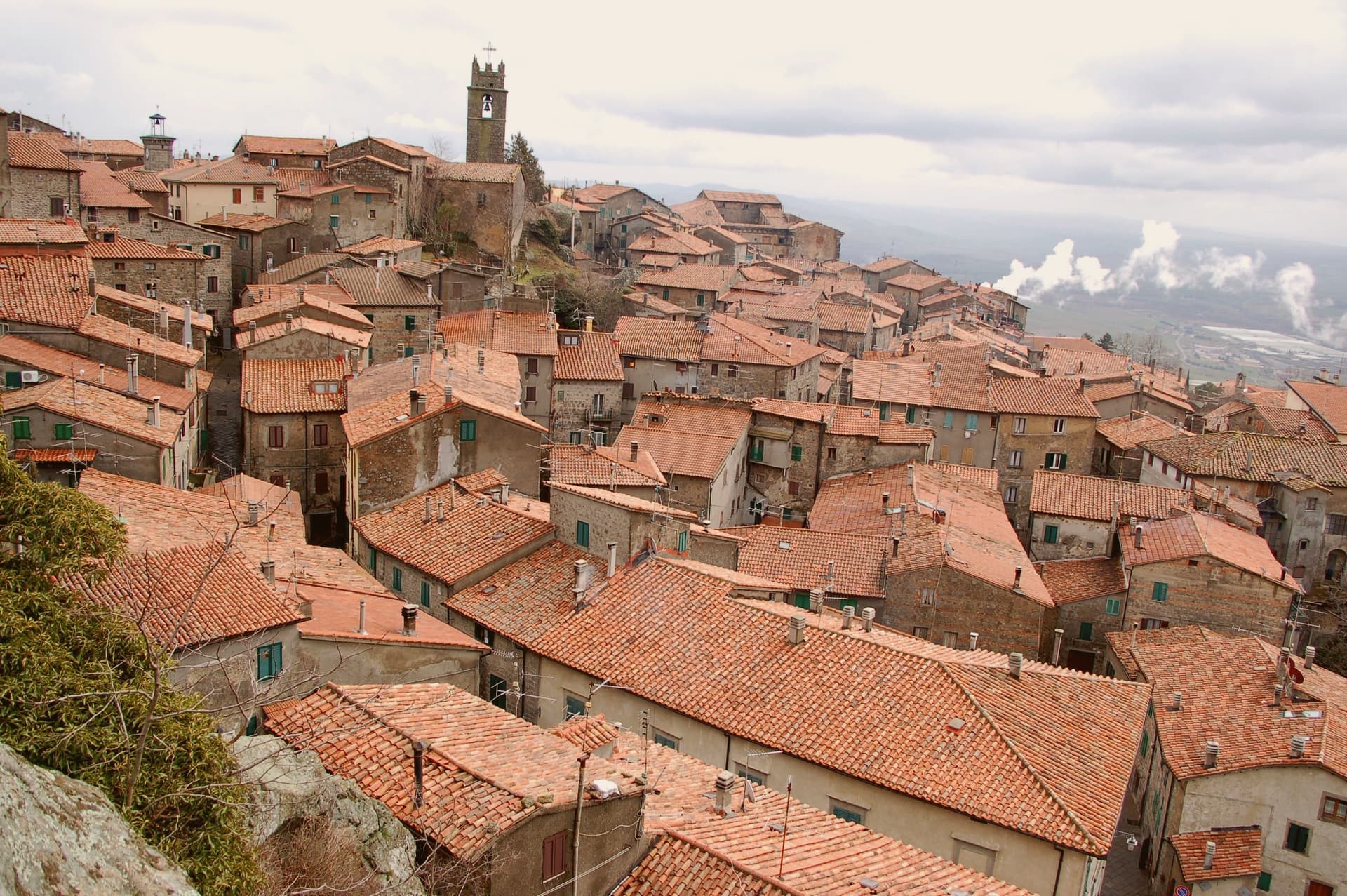
A chestnut-belt borgo at 772 meters on the southern slope, where four contrade still race for the Palio delle Contrade each August.
- Best time
- May–Oct
- By car
- 2 h 9 min from Siena
- Population
- 3,871
Known for
PALIO DELLE CONTRADE
Costumed race run every 18 August between four contrade through the centro storico, dating to the eighteenth century.
MARRONI
Sweet chestnut harvested across the Monte Amiata slopes, celebrated each All Saints weekend at the Crastatone festival.
MERCURY MINES
Cinnabar and mercury extraction active on Monte Amiata from the Etruscans until 1982, documented in the Sant'Anna museum.
When to visit
Best · May–Oct
- J7°
- F10°
- M11°
- A14°
- M19°
- J24°
- J29°
- A28°
- S22°
- O18°
- N12°
- D9°
- Best
- Hot or crowded
- Quiet
- Mostly closed
Daytime averages, 2020–2024. Weather data by Open-Meteo.com.
Why come
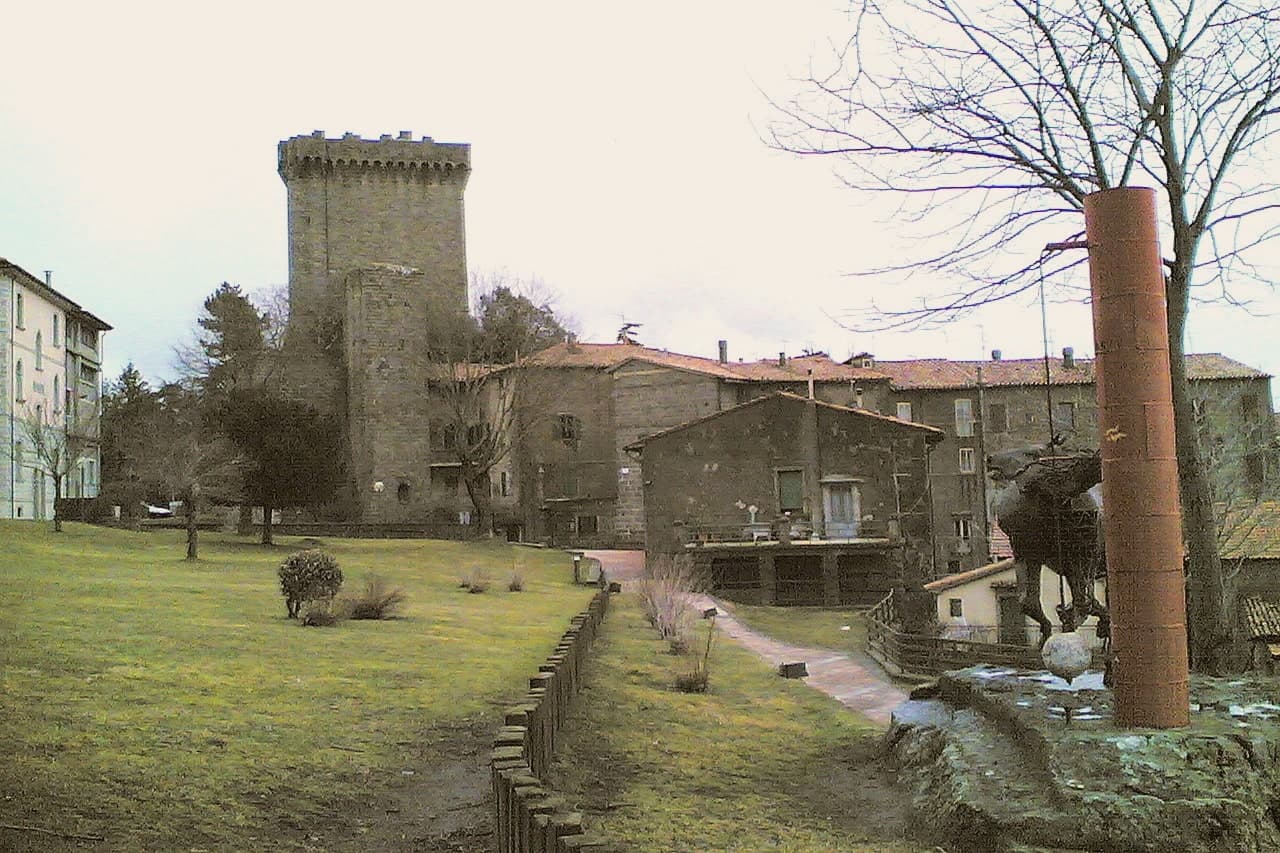
The name means plain of the chestnut, and the forest that still climbs the slope above the town is what fed it for most of its history: sweet chestnut, sessile oak, beech. The town itself sits at 772 meters, built around a twelfth-century keep that passed to Siena in 1418 and to the Medici in 1559, and the palazzo built into its old defenses in the sixteenth century reads as the Medici layer set directly against the Aldobrandeschi one. Contrade named Borgo, Castello, Coro and Voltaia divide the centro storico for the August race, while the mining museum keeps the record of an industry, cinnabar and mercury, that ran on the mountain from Etruscan times until it closed in 1982 and that has otherwise left the town to the chestnut trade. What Piancastagnaio adds up to is a place where a volcano's slope has supplied, in turn, timber and food, ore, and a festival calendar, and where the built town still carries each of those histories as a separate, legible layer rather than a single blended one.
The Sunday letter
Piancastagnaio is on our list. Its letter is still to come.
We are writing about all 1,000 of these towns, one at a time, in a free letter every Sunday: the photo, the food, the festa. That is our mission. Sign up and you will be there when Piancastagnaio comes up. By Peter & Sophia, from Pietrasanta.
Read on
Piancastagnaio in our articles
 The best mountain towns in Toscana6 towns, Piancastagnaio among them.
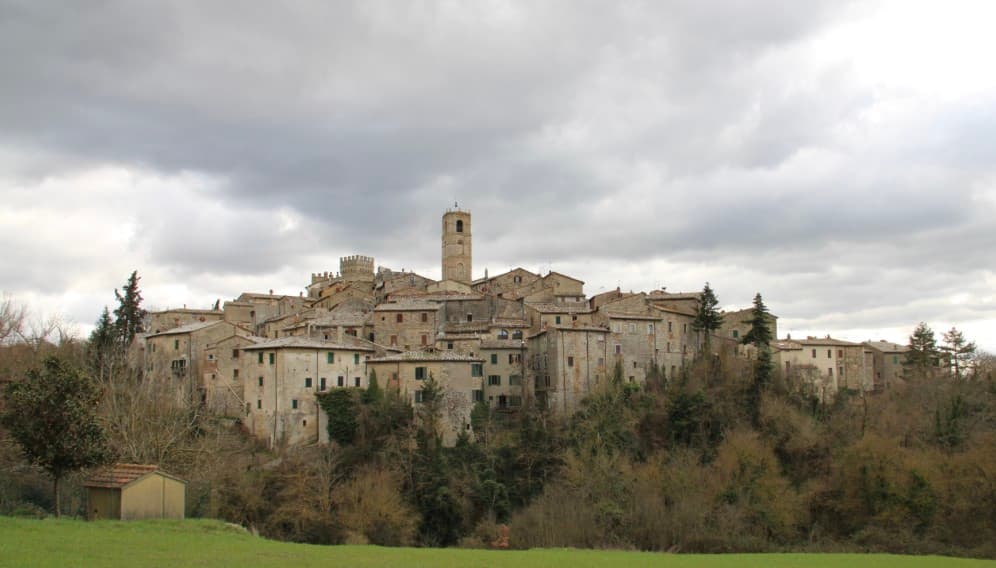 The best small towns on a walking route in the province of Siena6 towns, Piancastagnaio among them.
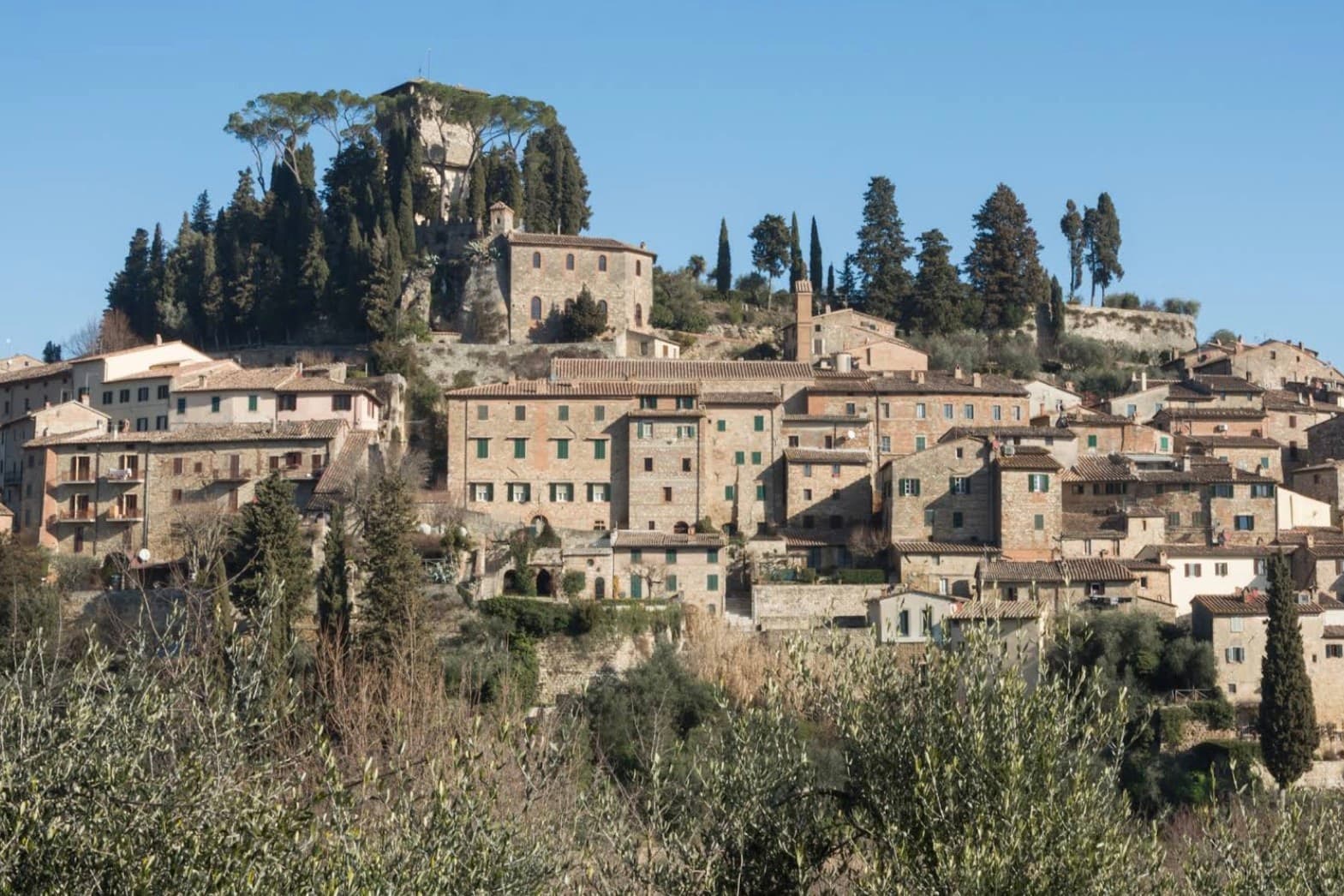 The best towns with a food festival in the province of Siena8 towns, Piancastagnaio among them.
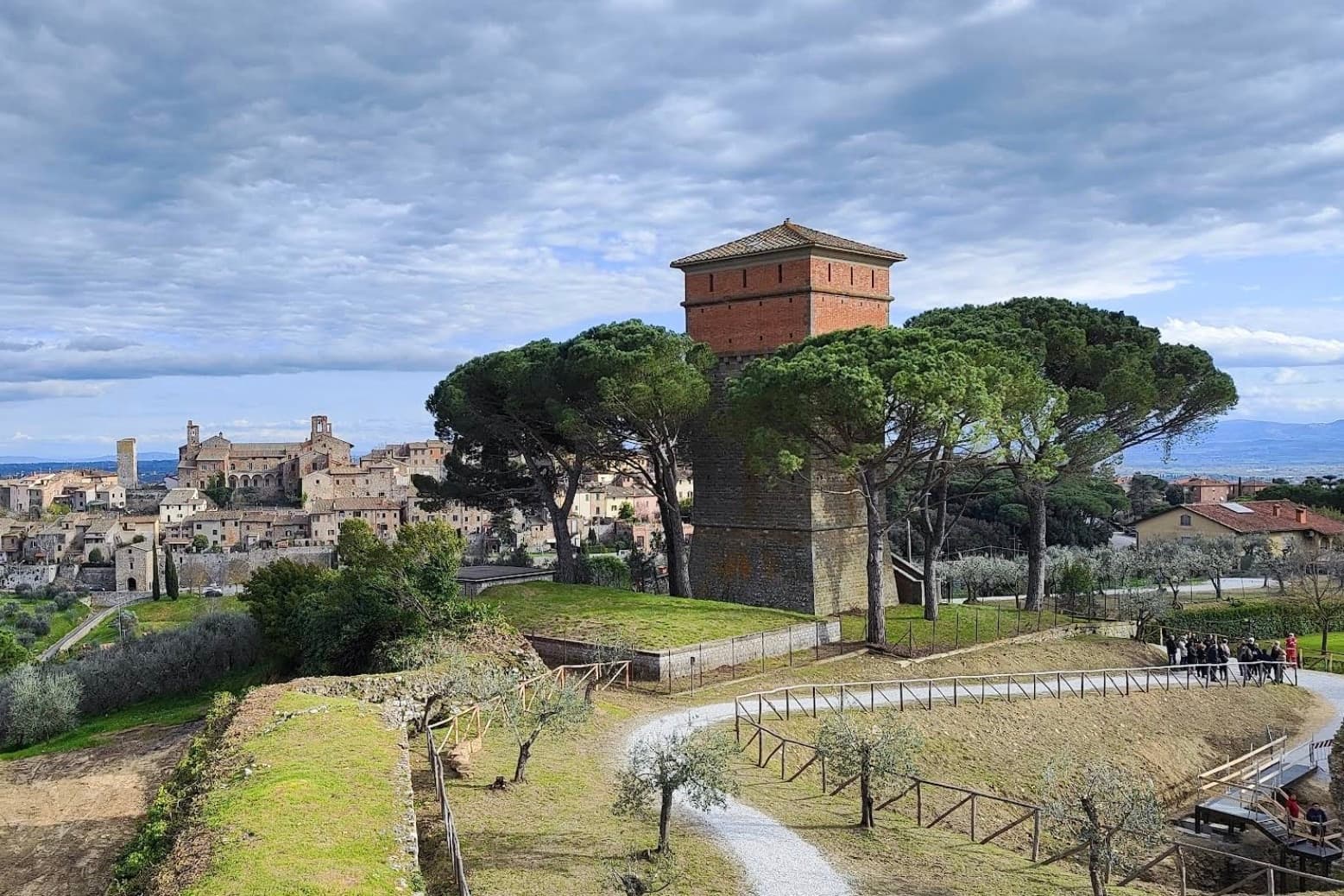 The best small towns with a medieval festival in Toscana9 towns, Piancastagnaio among them.
How to get there
From Rome (FCO), about 3h 25m by car.
Florence / Pisa (PSA) is about 3h 31m away.
By car from the centre of Siena 2h 9m, Perugia 2h 12m or Florence 2h 49m.
What to see
Rocca Aldobrandesca
Twelfth-century Aldobrandeschi keep at the heart of the centro storico, with a square tower and surviving curtain wall.
Palazzo Bourbon del Monte
Sixteenth-century Medici-era palazzo built into the medieval defenses, with a courtyard loggia and ceremonial hall.
Museo Minerario di Sant'Anna
Mining museum on the cinnabar and mercury extraction of Monte Amiata, active from the Etruscans until the mine closed in 1982.
Pieve di Santa Maria Assunta
Romanesque parish church in the centro storico, with a stone façade and later baroque interior.
Bosco del Monte Amiata
Sweet chestnut, sessile oak and beech forest on the southern slope of the volcano, with trails leading to the summit at 1,738 meters.
The slow-trip planner
Building a trip? Find where Piancastagnaio fits in a slow Italy circuit.
Answer five questions. We will shape a geographically coherent slow trip from the 1,000 Italian towns most travelers skip. Yours to save and share.
Through the year
What happens here
Feasts and festivals that come back year after year. We give the month rather than the date, because the date moves and the month rarely does. Check with the source before you plan a journey around one.
Crastatone di Piancastagnaiofood festival
Sagra Estiva di Piancastagnaiofood festival
Palio delle Contrade di Piancastagnaiohistorical re-enactment
usually held in August. Borghi Toscana - Eventi
Il Crastatone a Piancastagnaiopatron saint's feast
usually held across October and November. Borghi Toscana - Eventi
Living here
- Population 3,871
- Remotei
- Pharmacy in town
- Nearest high school over ~30 minutes away
- Nearest airport Rome, 3 h 25 min drive
- Regional capital Firenze, 2 h 49 min drive
Common questions
- What is Piancastagnaio known for?
- Piancastagnaio is a chestnut-belt borgo at 772 meters on the southern slope, where four contrade still race for the Palio delle Contrade each August.
- Where is Piancastagnaio?
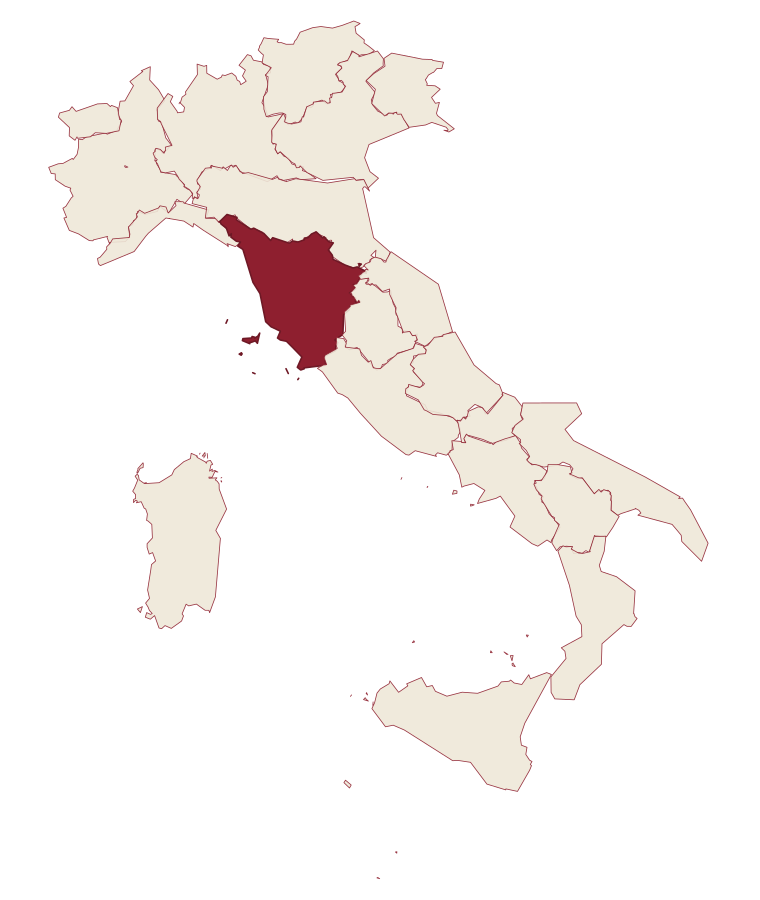
- Piancastagnaio is a comune in the province of Siena, in Tuscany.
- What is the nearest airport to Piancastagnaio?
- Rome (FCO), about 3h 25m by car.
- How long is the drive from Siena to Piancastagnaio?
- About 2h 9m by car.
- When is the best time to visit Piancastagnaio?
- Best in May–Oct. July is the warmest month, averaging 29 degrees, and May the wettest, with about 13 rain days.
- Is there a sagra or a festival in Piancastagnaio?
- Yes. Crastatone di Piancastagnaio, Sagra Estiva di Piancastagnaio and Palio delle Contrade di Piancastagnaio, and 1 more we hold a source for.
- Which other towns are like Piancastagnaio?
- Morano Calabro, Pinzolo and Agnone.
- How many people live in Piancastagnaio?
- 3,871 at the 2023 count.
Tags & datadesignations · numbers · sources
Recognised as
The numbers
- Elevation: 772 m
- Population: 3,871
- Surface area: 69.63 km²
These figures were compiled from public directories: ISTAT, OpenStreetMap and Wikidata, and from the official listings of the guides named on this page. Town details change; verify with official sources before you travel.
Similar
Towns like Piancastagnaio
Morano Calabro
Province: Cosenza
both mountain-valley towns · both between 3,000 and 10,000 people
Pinzolo
Province: Trento
both mountain-valley towns · both between 3,000 and 10,000 people
Agnone
Province: Isernia
both mountain-valley towns · both between 3,000 and 10,000 people
Castione della Presolana
Province: Bergamo
both mountain-valley towns · both between 3,000 and 10,000 people
Padula
Province: Salerno
both mountain-valley towns · both between 3,000 and 10,000 people
Auronzo di Cadore
Province: Belluno
both mountain-valley towns · both between 3,000 and 10,000 people
🫒 Città dell'Olio
More Città dell'Olio towns in Tuscany
Capalbio
Province: Grosseto
A walled hilltop borgo at 217 meters in the southern Maremma, donated to the Abbey of Tre Fontane by Charlemagne.
Castagneto Carducci
Province: Livorno
A hilltop borgo at 194 meters above the Costa degli Etruschi, renamed for the poet Carducci in 1907 and the home of Bolgheri and Sassicaia.
Castellina in Chianti
Province: Siena
A Chianti hill town at 578 meters on the watershed between the Arno and the Ombrone, with an Etruscan tumulus, a Brunelleschi-reinforced wall and a covered medieval walkway around its edge.
Castelnuovo Berardenga
Province: Siena
A commune of 351 meters, the last castle Siena built against Florence, in 1366.
Castiglion Fiorentino
Province: Arezzo
A walled hill town at 342 meters between Arezzo and Cortona, where Etruscan walls support the medieval Cassero.