
Tuscany · Siena
Chiusi
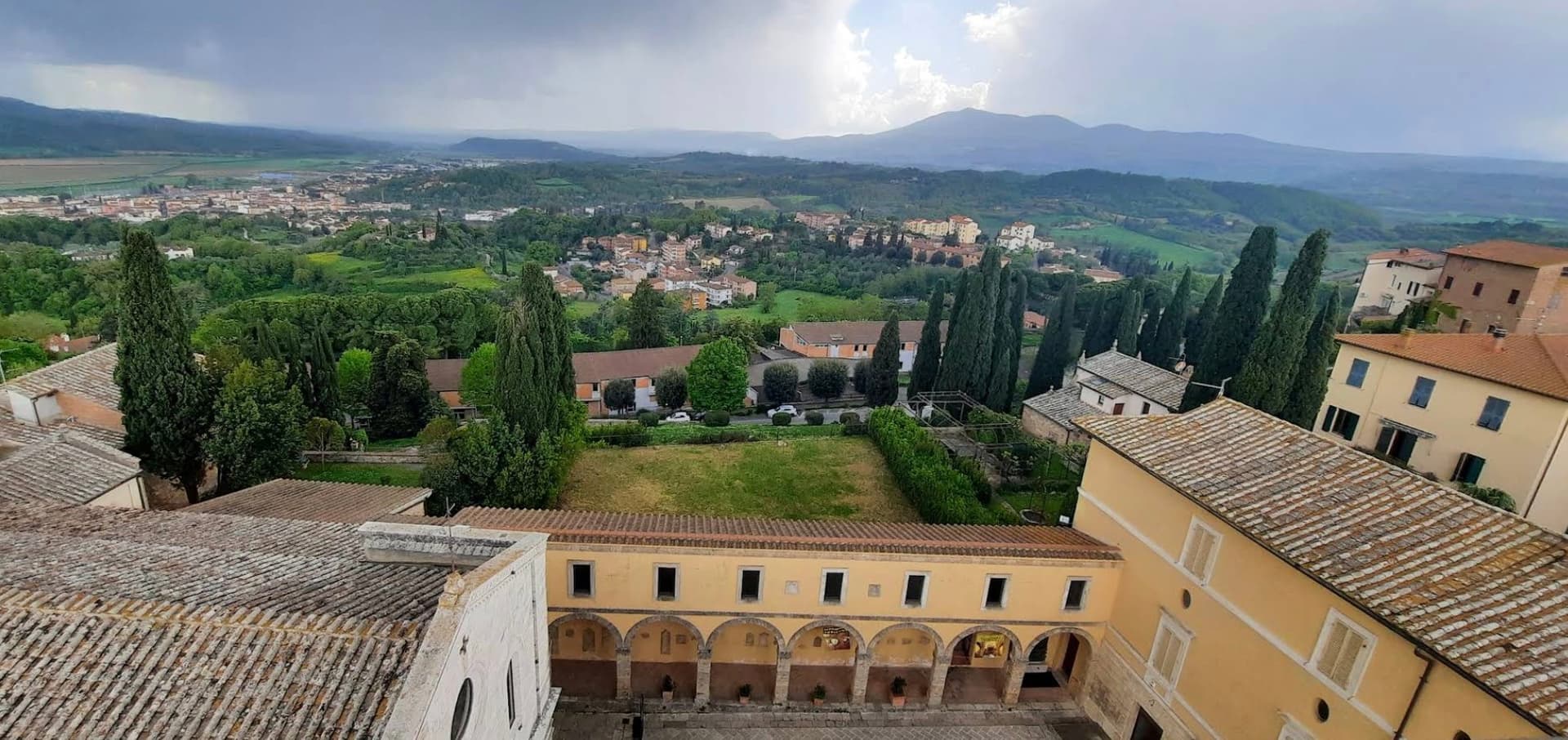
The Etruscan city of King Porsenna above the Val di Chiana, with one of Italy's major Etruscan museums and tunnels carved beneath the streets.
- Best time
- Apr–Oct
- By car
- 56 min from Perugia
- By train
- Station in the comune
- Population
- 8,093
Known for
ETRUSCAN CAPITAL
One of the twelve cities of the Etruscan League, ruled at its sixth-century BC peak by Lars Porsenna who led the alliance against Rome around 508 BC.
MUSEO NAZIONALE
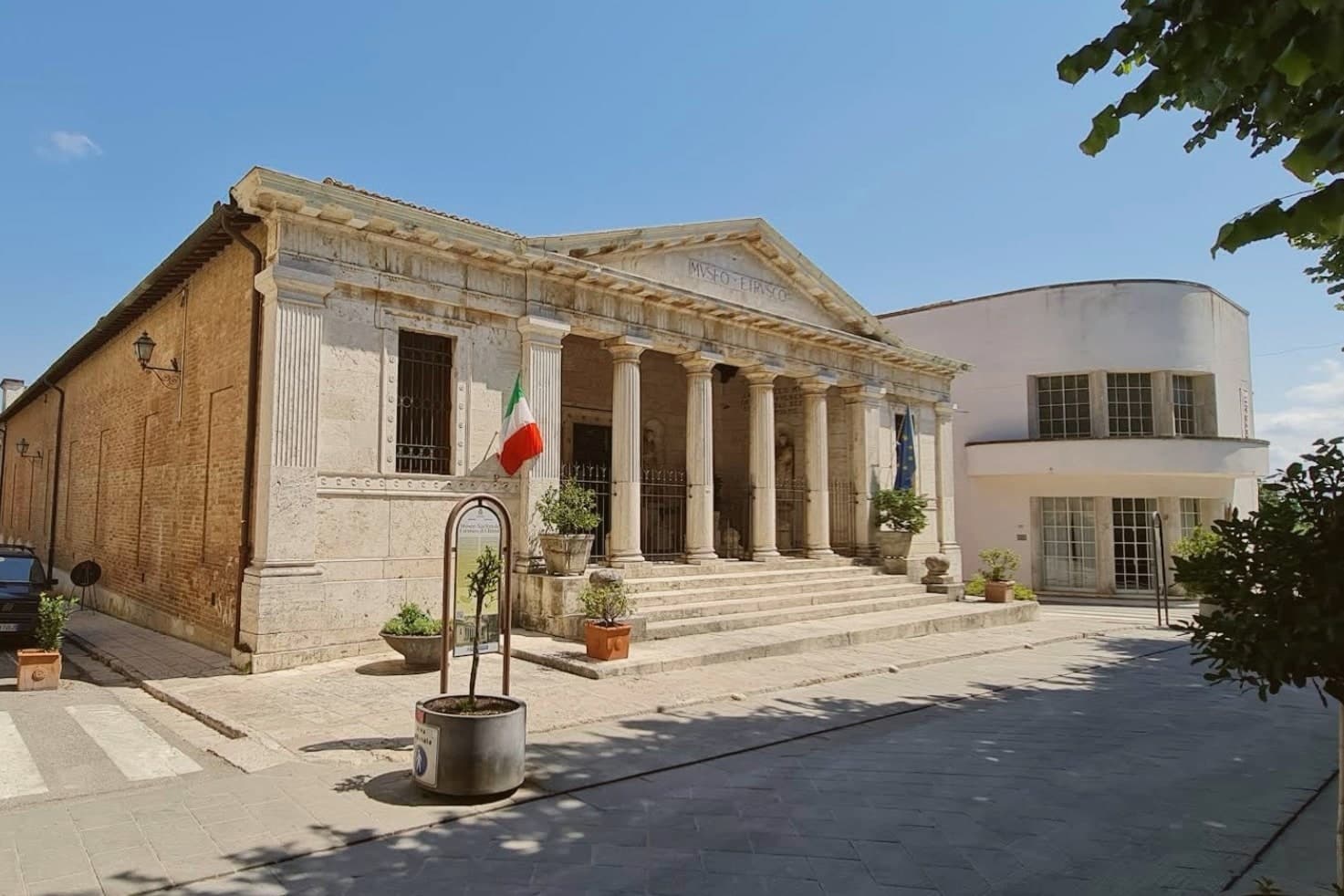
National Etruscan Museum since 1963, founded 1871, one of the most important repositories of Etruscan material in Italy, with painted tombs in the Poggio Renzo necropolis.
LABIRINTO DI PORSENNA
Network of sixth and fifth-century BC tunnels under the town, originally drainage works, claimed by Pliny the Elder as part of the king's sepulchre.
When to visit
Best · Apr–Oct
- J10°
- F13°
- M14°
- A17°
- M23°
- J28°
- J33°
- A32°
- S26°
- O21°
- N15°
- D11°
- Best
- Hot or crowded
- Quiet
- Mostly closed
Daytime averages, 2020–2024. Weather data by Open-Meteo.com.
The festa: Santa Mustiola, 3 July
Why come
The hilltop stands above the Val di Chiana, the valley floor visible from the town at a height that made it defensible and gave it command of the surrounding farmland. The cathedral, the museums and the tunnel network are close enough to walk between within the old center, while the painted necropolis and the lake lie outside it, a few kilometers apart in different directions, one inland toward the tombs and the other north toward open water. The tunnels themselves connect the upper town to what lies beneath it: built as drainage, later folded into legend by Pliny the Elder, who took them for part of a king's tomb. The cathedral's own columns, lifted from earlier Roman buildings, make the same point in stone that the tombs make in paint and the museum makes in bucchero and alabaster: this is a town built repeatedly on top of itself, each layer reusing what the last one left behind.
The Sunday letter
Chiusi is on our list. Its letter is still to come.
We are writing about all 1,000 of these towns, one at a time, in a free letter every Sunday: the photo, the food, the festa. That is our mission. Sign up and you will be there when Chiusi comes up. By Peter & Sophia, from Pietrasanta.
Read on
Chiusi in our articles
 The 6 best hidden towns with a serious restaurant that you can reach by train within 90 minutes of Perugia6 towns, Chiusi among them.
 The best hidden wine towns you can reach by train in the province of Siena6 towns, Chiusi among them.
 The best towns with a food festival in the province of Siena8 towns, Chiusi among them.
 The 9 best wine towns that eat well within 90 minutes of Perugia9 towns, Chiusi among them.
How to get there
From Bologna (BLQ), about 2h 22m by car.
Rome (FCO) is about 2h 27m away.
By car from the centre of Perugia 56 minutes, Siena 1h 9m or Florence 1h 23m.
There is a railway station in the comune, so you can arrive without a car.
Coming from Florence, Rome or Bologna?
Coming by train into Perugia? Chiusi is about 53 minutes away by road.
What to see
Museo Nazionale Etrusco
Holds canopic urns, alabaster sarcophagi, bucchero pottery and grave goods pulled from the necropolises around the town.
Duomo di San Secondiano
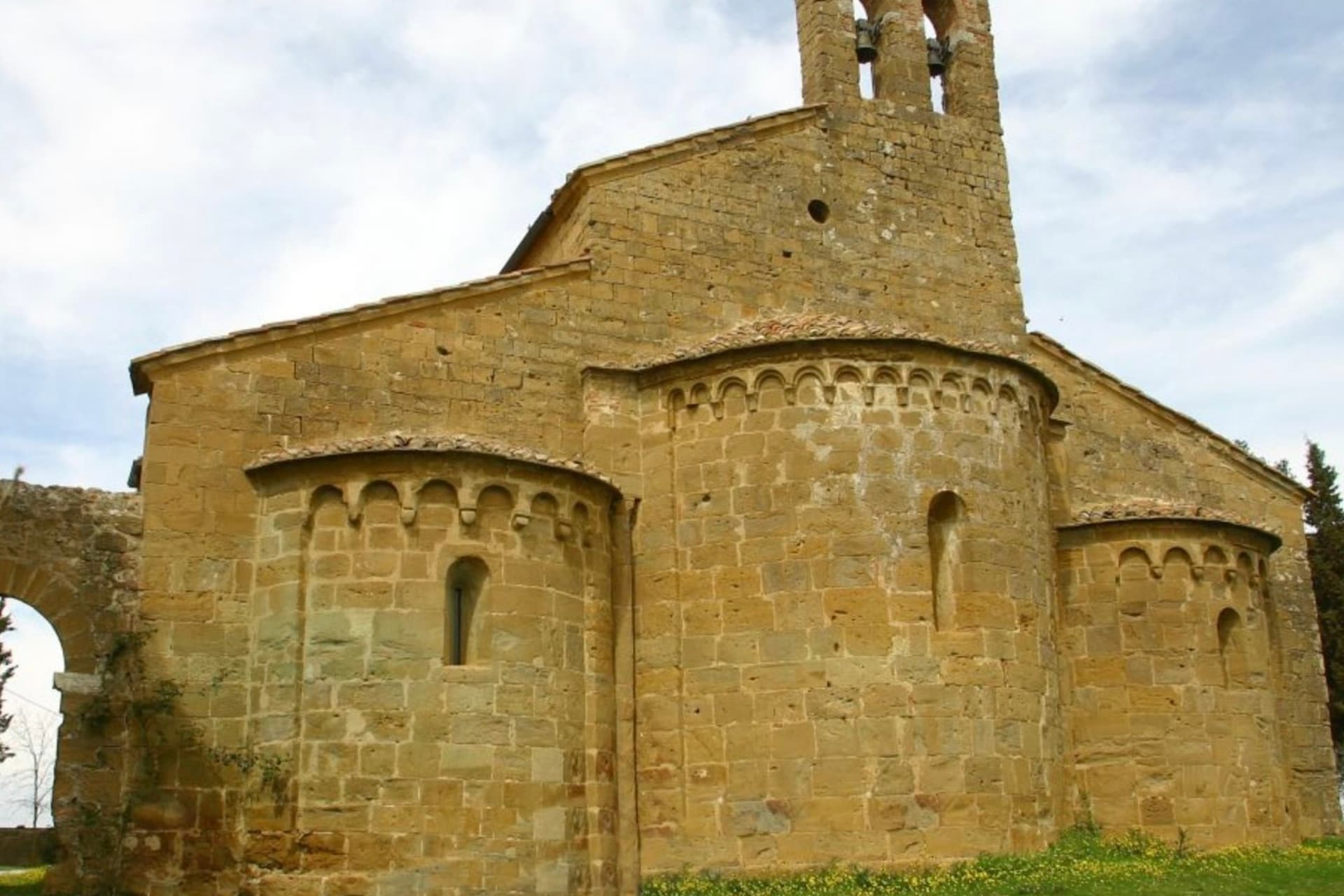
Cathedral built around 560 AD over an earlier basilica, renovated in the thirteenth century, nave and two aisles on antique marble columns from Roman buildings.
Labirinto di Porsenna
Visited from the Museo della Cattedrale, the tunnels run beneath the streets at a scale that still reads as engineering rather than legend, whatever Pliny made of them.
Tomba della Scimmia
Painted Etruscan tomb in the Poggio Renzo necropolis dated 480-470 BC, found by Alessandro François in 1846, with funeral games and a monkey on the walls.
Museo della Cattedrale
Diocesan museum with Romanesque sculpture and illuminated choir books from Monte Oliveto Maggiore, with access to the tunnel network and bell tower.
Lago di Chiusi
Small natural lake five kilometers north of town, a reed-fringed basin used since Etruscan times, with traditional fishing in flat-bottomed barchini.
The slow-trip planner
Building a trip? Find where Chiusi fits in a slow Italy circuit.
Answer five questions. We will shape a geographically coherent slow trip from the 1,000 Italian towns most travelers skip. Yours to save and share.
We recommend
Where to eat
Not our picks, but places the guides put their name to: a Michelin star, a Gambero Rosso fork, a Slow Food snail, a Michelin Key for the hotels. Worth a table, a counter, or a night when you pass through.
La Solita ZuppaRistorante
A Michelin Bib Gourmand for La Solita Zuppa, and a Slow Food snail.
I SalottiRistorante
I Salotti holds a spot in the Michelin Guide.
Il Grillo è BuoncantoreRistorante
Il Grillo è Buoncantore carries a Slow Food snail.
Through the year
What happens here
Feasts and festivals that come back year after year. We give the month rather than the date, because the date moves and the month rarely does. Check with the source before you plan a journey around one.
Tria Turris Medioevo e Palio delle Torri di Chiusihistorical re-enactment
usually held in June. Borghi Toscana - Eventi
Grape and Wine Festivalfood festival
usually held in September. sagritaly.com
Living here
- Population 8,093
- In-betweeni
- Pharmacy in town
- High school within a 30-minute drive
- Train station in the comune
- Nearest airport Bologna, 2 h 22 min drive
- Regional capital Firenze, 1 h 23 min drive
Common questions
- What is Chiusi known for?
- Chiusi is the Etruscan city of King Porsenna at 398 meters above the Val di Chiana, with one of Italy's major Etruscan museums and tunnels carved beneath the streets.
- Where is Chiusi?
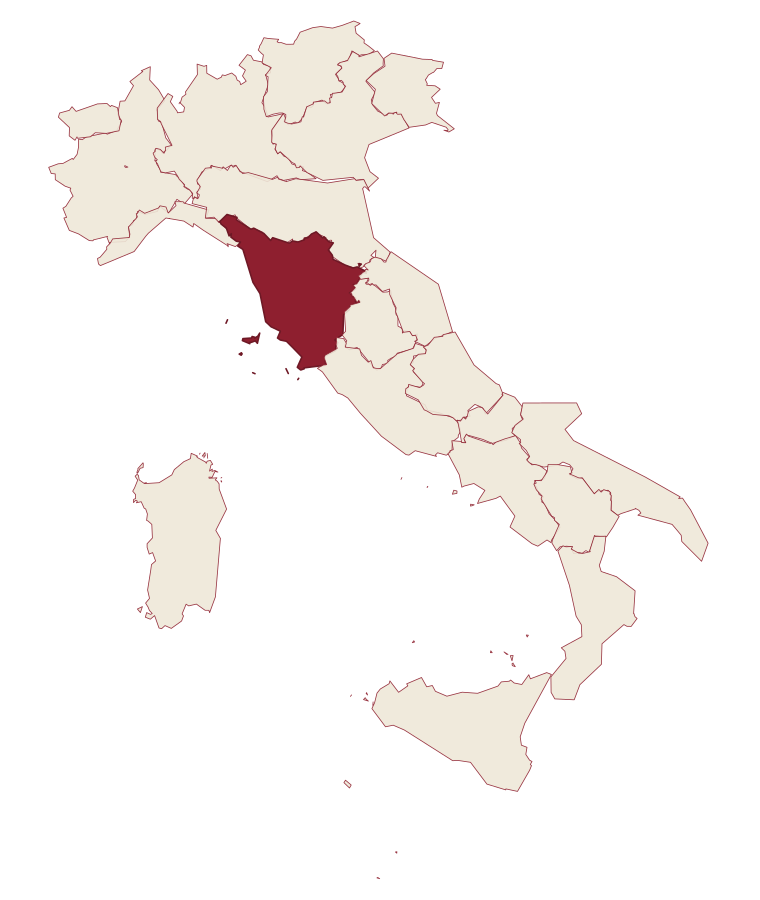
- Chiusi is a comune in the province of Siena, in Tuscany.
- What is the nearest airport to Chiusi?
- Bologna (BLQ), about 2h 22m by car.
- Can you get to Chiusi without a car?
- Yes. There is a railway station in the comune, so you can arrive by train.
- How long is the drive from Perugia to Chiusi?
- About 56 minutes by car.
- When is the best time to visit Chiusi?
- Best in Apr–Oct. July is the warmest month, averaging 33 degrees, and May the wettest, with about 11 rain days.
- Is there a sagra or a festival in Chiusi?
- Yes. Tria Turris Medioevo e Palio delle Torri di Chiusi and Grape and Wine Festival. June is when the first of them falls.
- Which other towns are like Chiusi?
- Poppi, Lucignano and Massa Marittima.
- How many people live in Chiusi?
- 8,093 at the 2023 count.
Tags & datadesignations · numbers · sources
Recognised as
The numbers
- Elevation: 398 m
- Population: 8,093
- Surface area: 58.15 km²
These figures were compiled from public directories: ISTAT, OpenStreetMap and Wikidata, and from the official listings of the guides named on this page. Town details change; verify with official sources before you travel.
Similar
Towns like Chiusi
Poppi
Province: Arezzo
both inland, away from the coast · both between 3,000 and 10,000 people
Lucignano
Province: Arezzo
both inland, away from the coast · both between 3,000 and 10,000 people
Massa Marittima
Province: Grosseto
both inland, away from the coast · both between 3,000 and 10,000 people
Pontremoli
Province: Massa-Carrara
both inland, away from the coast · both between 3,000 and 10,000 people
Borgo Valsugana
Province: Trento
both inland, away from the coast · both between 3,000 and 10,000 people
Capranica
Province: Viterbo
both inland, away from the coast · both between 3,000 and 10,000 people
🟠 Bandiera Arancione
More Bandiera Arancione towns in Tuscany
Abetone Cutigliano
Province: Pistoia
The Apennine ski pass at 1,388 meters where the Granduca's two stone pyramids of 1778 mark the old Tuscan-Modenese border.
Anghiari
Province: Arezzo
A walled medieval town at 430 meters over the upper Tiber valley, where Florence beat Milan in 1440 and Leonardo started the fresco he never finished.
Barga
Province: Lucca
A medieval hilltop town at 410 meters in the Serchio valley, where Giovanni Pascoli wrote his last poems and the August festival serves fish and chips.
Casale Marittimo
Province: Pisa
A concentric stone borgo at 214 meters above the Val di Cecina, built where a seventh-century BC Etruscan outpost of Volterra once stood.
Castelnuovo Berardenga
Province: Siena
A commune of 351 meters, the last castle Siena built against Florence, in 1366.