
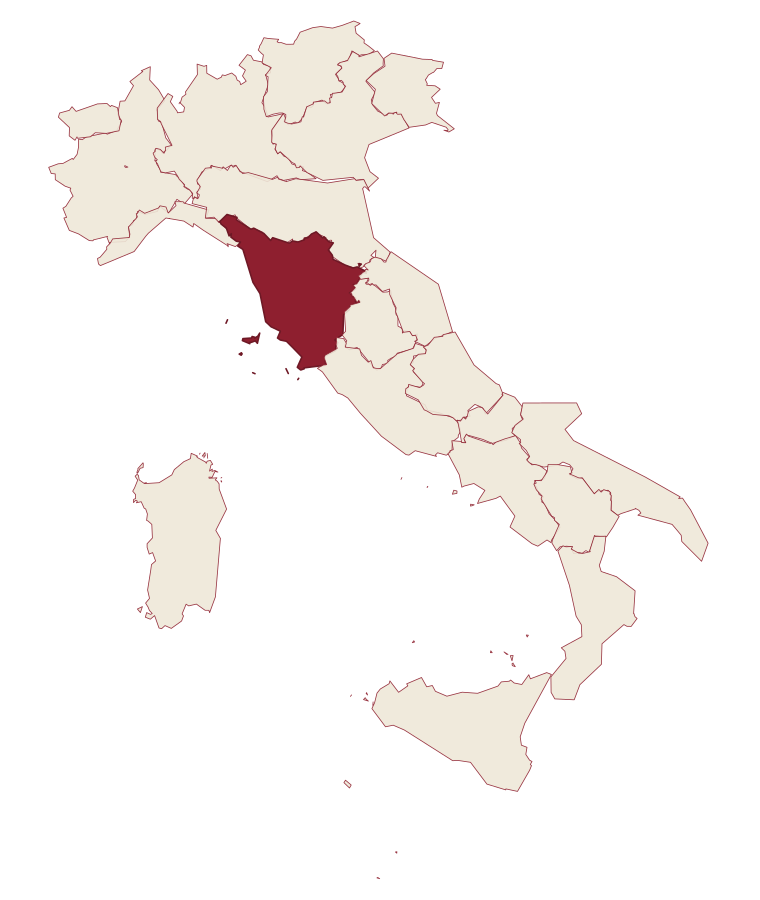
Tuscany · Siena
Pienza
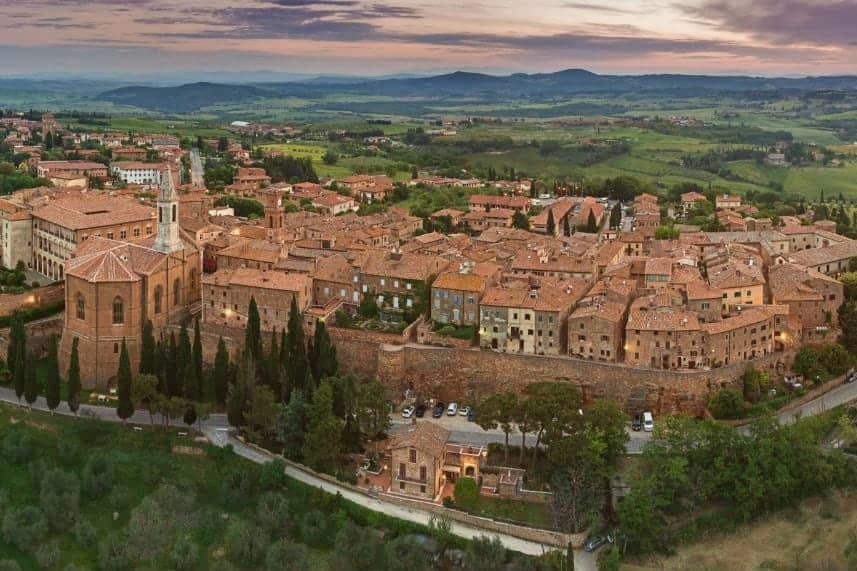
The first Renaissance ideal city, built from 1459 on the Val d'Orcia ridge.
- Best time
- Apr–Oct
- By car
- 1 h 35 min from Siena
- Population
- 1,976
Known for
RENAISSANCE IDEAL CITY
Rebuilt from 1459 for Pope Pius II as a single architectural composition, the first applied example of Alberti's urban theory.
UNESCO
Historic center inscribed in 1996, surrounding Val d'Orcia landscape inscribed in 2004, both still managed under the original Renaissance plan.
PECORINO
Sheep's milk cheese aged in straw, hay or walnut leaves, the contemporary export of the Pienza ridge and its surrounding flocks.
When to visit
Best · Apr–Oct
- J10°
- F12°
- M14°
- A17°
- M22°
- J28°
- J32°
- A31°
- S25°
- O20°
- N14°
- D11°
- Best
- Hot or crowded
- Quiet
- Mostly closed
Daytime averages, 2020–2024. Weather data by Open-Meteo.com.
The festa: Andrea, 30 November
Why come
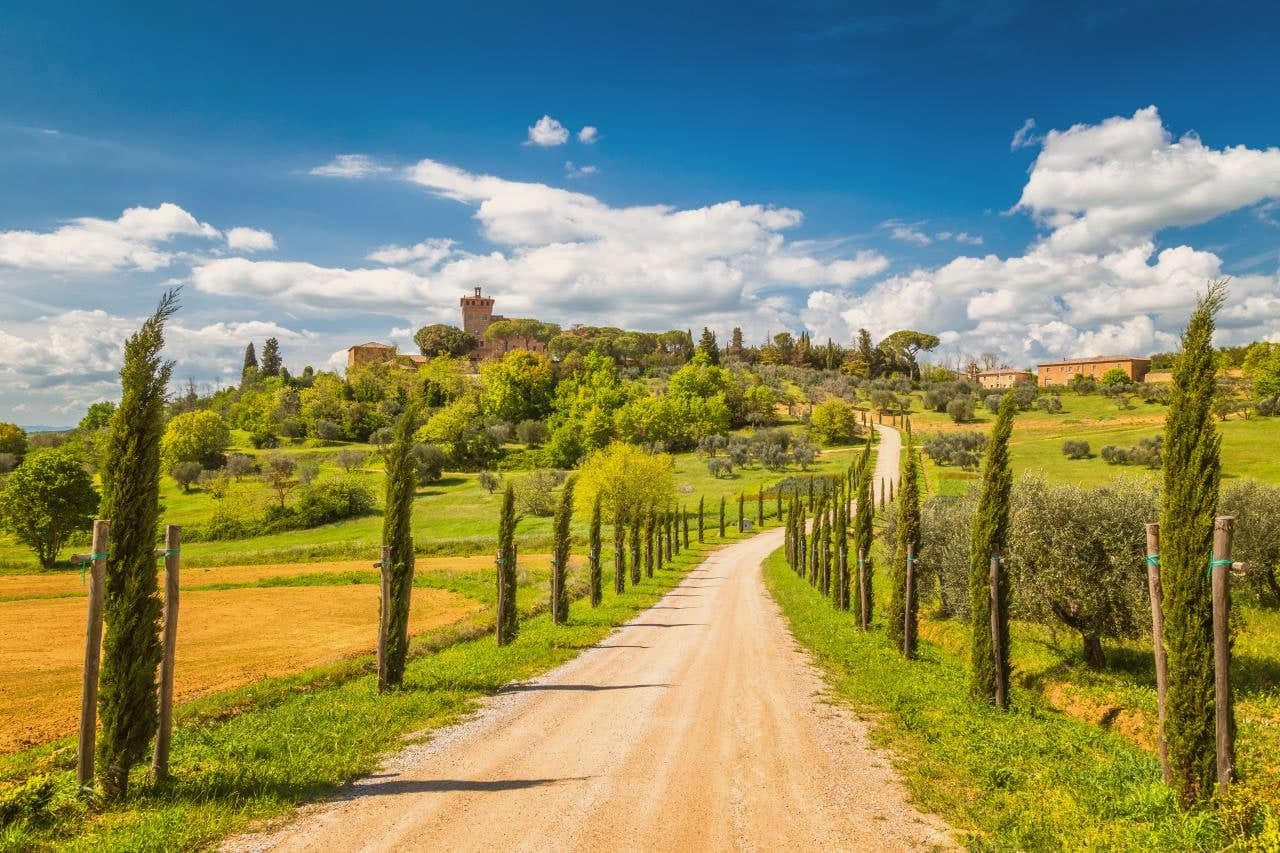
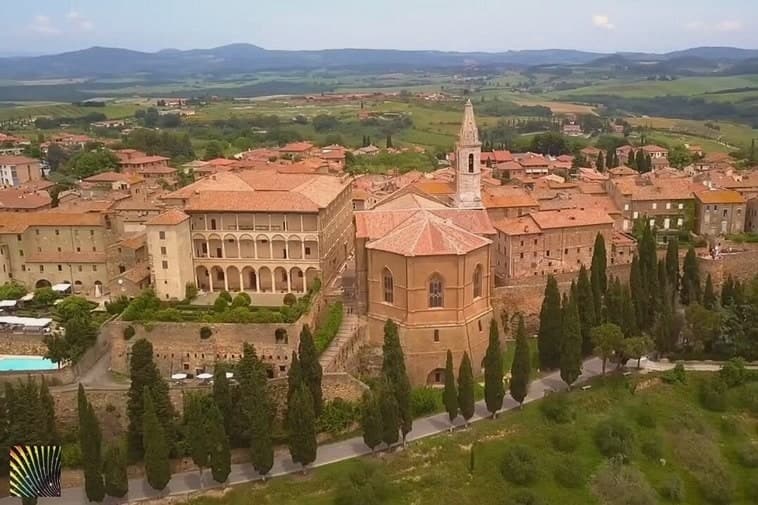
Pienza sits on a long ridge in the Val d'Orcia, an hour and a half south of Siena. The village was called Corsignano until 1462. Enea Silvio Piccolomini was born here in 1405 and became Pope Pius II in 1458; the following year he ordered the Florentine architect Bernardo Rossellino to rebuild his birthplace as a Renaissance ideal city.
The work took three years. The square at the center, the cathedral on the cliff side, the palace built for the pope's family, the cardinal's palace facing it, and the town hall opposite the cathedral were all designed and built as a single composition rather than assembled piece by piece over time. Pius consecrated the cathedral on 29 August 1462, two years before his death, and the whole arrangement has survived almost unchanged since. What stands in Pienza today is less a collection of monuments than the physical record of one commission carried out in one stretch of years.
Read on
Pienza in our articles
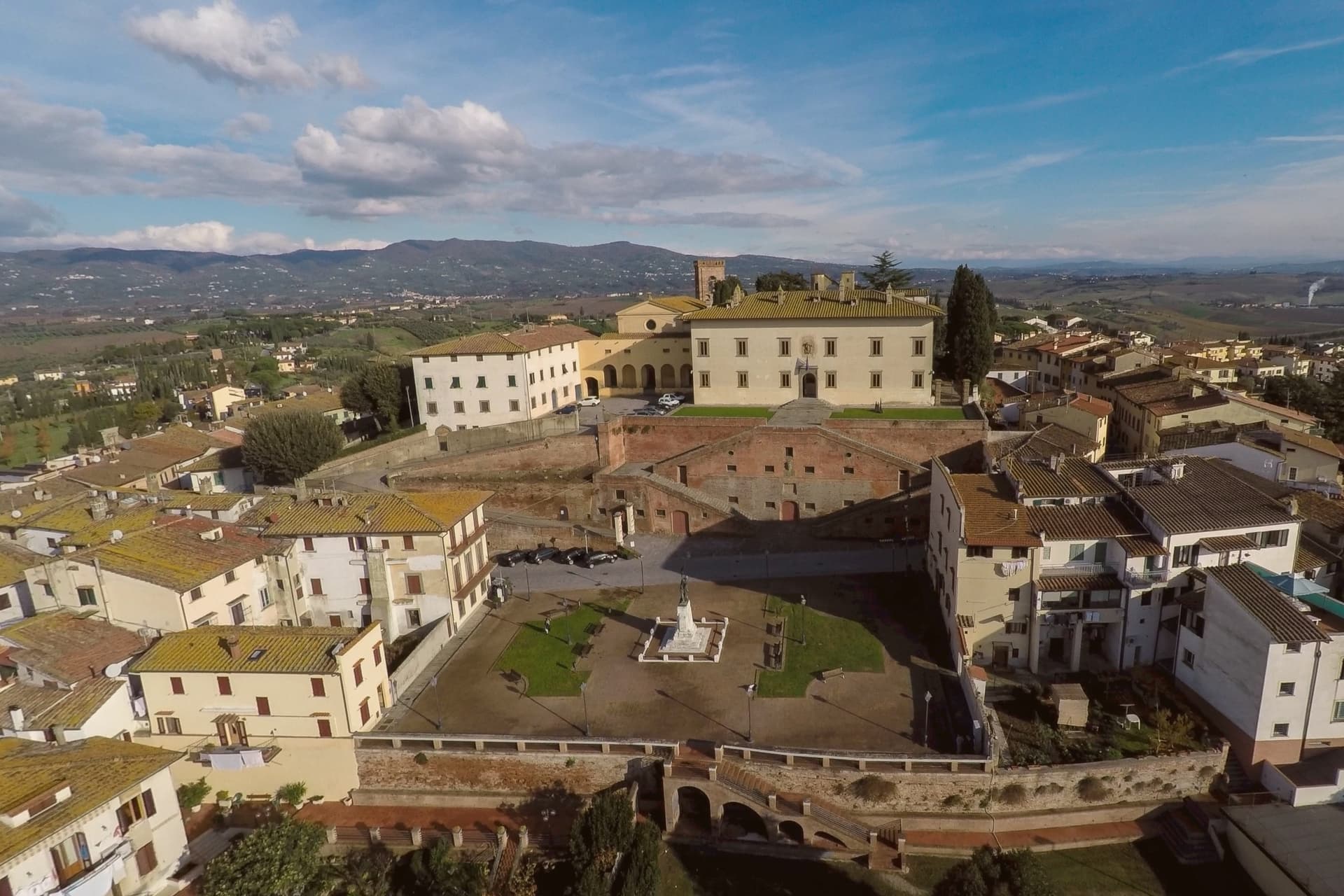
 The best towns with a World Heritage site in the province of Siena6 towns, Pienza among them.
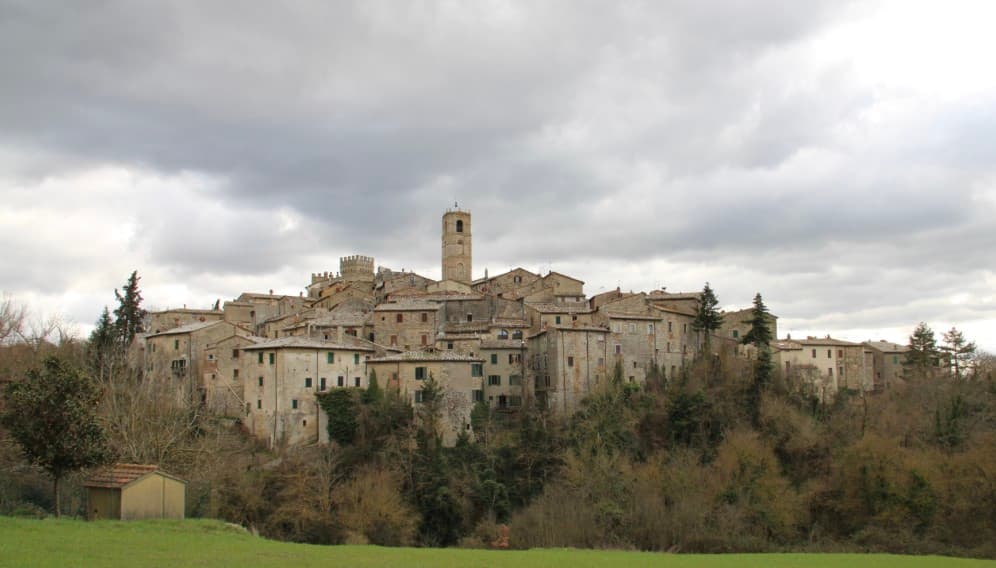
 The best towns with a medieval festival that hold a World Heritage site in Toscana7 towns, Pienza among them.
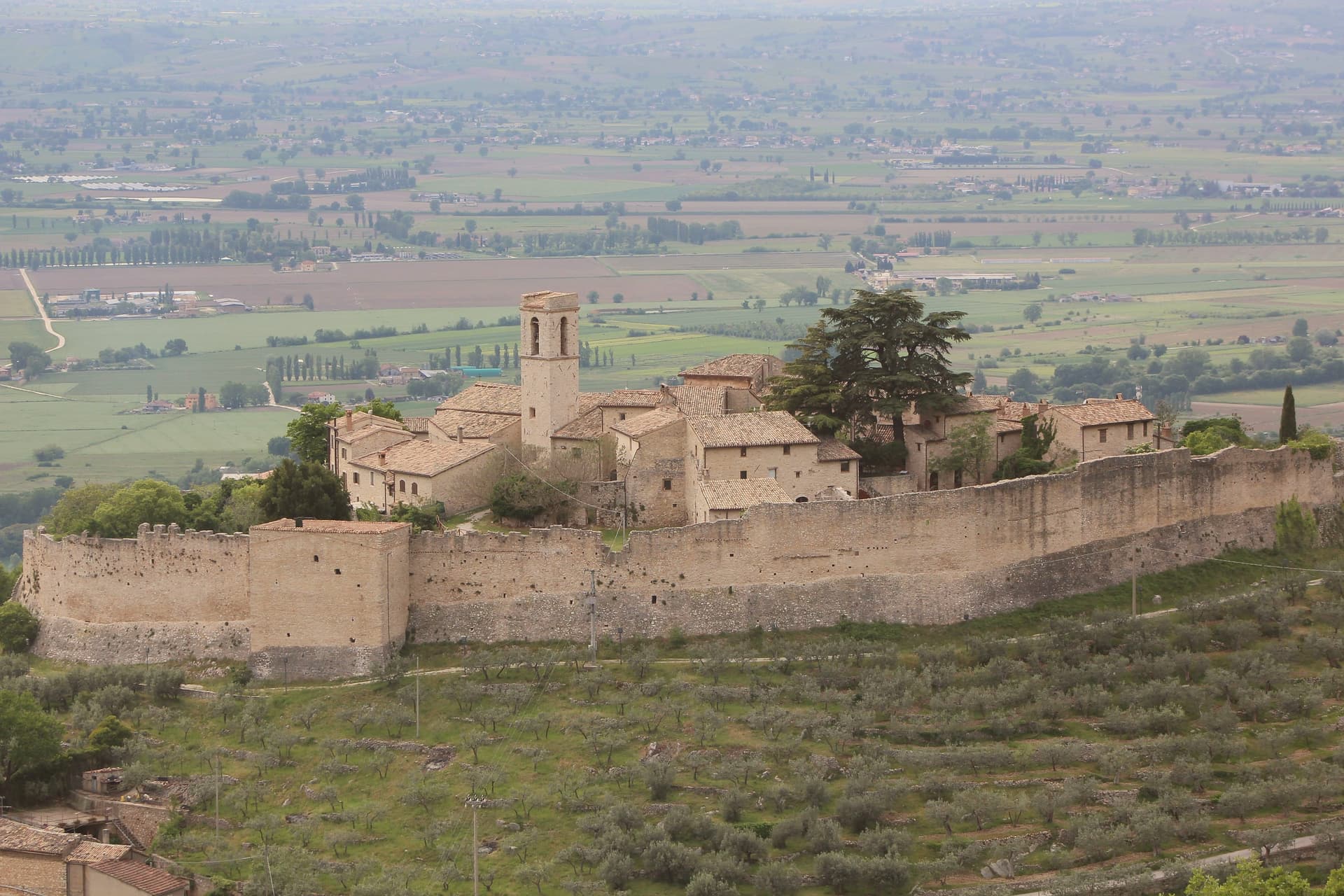
 The best towns with a food festival in the province of Siena8 towns, Pienza among them.
 The best towns with a World Heritage site within two hours of Perugia8 towns, Pienza among them.
How to get there
From Bologna (BLQ), about 3 hours by car.
Ancona / Pescara (AOI) is about 3h 10m away.
By car from the centre of Siena 1h 35m, Perugia 1h 35m or Florence 2 hours.
What to see
Piazza Pio II
Trapezoidal Renaissance square laid out by Bernardo Rossellino, with the Duomo, Palazzo Piccolomini, Palazzo Borgia and Palazzo Comunale facing each other.
Duomo di Pienza
Latin-cross cathedral with three apsidal chapels, built on the cliff edge, its Renaissance façade also by Rossellino.
Palazzo Piccolomini
Renaissance palace for the pope's family, begun 1459, with an internal courtyard and a hanging garden overlooking the Val d'Orcia.
Palazzo Borgia
Cardinal Borgia's palace opposite Palazzo Piccolomini, now the diocesan museum with works from Pienza and the surrounding villages.
Corso il Rossellino
The main street of the centro storico, pedestrian, running between Piazza Pio II and the medieval gate, lined with pecorino shops and wine bars.
Belvedere sulla Val d'Orcia
Cliff-edge terraces behind the Duomo and the palace, with views over the cypress-lined hills that form the UNESCO Val d'Orcia landscape.
The slow-trip planner
Building a trip? Find where Pienza fits in a slow Italy circuit.
Answer five questions. We will shape a geographically coherent slow trip from the 1,000 Italian towns most travelers skip. Yours to save and share.
We recommend
Where to eat and stay
Not our picks, but places the guides put their name to: a Michelin star, a Gambero Rosso fork, a Slow Food snail, a Michelin Key for the hotels. Worth a table, a counter, or a night when you pass through.
Dopolavoro La FoceTrattoria
Dopolavoro La Foce holds a Gambero Rosso listing.
Osteria Fra PaolinoRistorante
A Gambero Rosso listing, at Osteria Fra Paolino.
Podere Il CasaleAgriturismo
Podere Il Casale has a Gambero Rosso listing to its name.
Casa NewtonHotel
Casa Newton holds one Michelin Key.
La Bandita TownhouseHotel
La Bandita Townhouse carries a place in the Michelin hotel guide.
Through the year
What happens here
Feasts and festivals that come back year after year. We give the month rather than the date, because the date moves and the month rarely does. Check with the source before you plan a journey around one.
Festa del Cacio di Pienzafood festival
usually held in September. Borghi Toscana - Eventi
Festa rinascimentale e corsa di Pio a Pienzahistorical re-enactment
usually held in September. Borghi Toscana - Eventi
The Sunday letter
Pienza got its letter. One town every Sunday, free. The photo, the food, the festa.
Living here
- Population 1,976
- Remotei
- Pharmacy in town
- Nearest high school over ~30 minutes away
- Nearest airport Bologna, 2 h 58 min drive
- Regional capital Firenze, 1 h 58 min drive
Common questions
- What is Pienza known for?
- Pienza is the first Renaissance ideal city, built from 1459 on the Val d'Orcia ridge.
- Where is Pienza?
- Pienza is a comune in the province of Siena, in Tuscany, at 491 meters above sea level.
- What is the nearest airport to Pienza?
- Bologna (BLQ), about 3 hours by car.
- How long is the drive from Siena to Pienza?
- About 1h 35m by car.
- When is the best time to visit Pienza?
- Best in Apr–Oct. July is the warmest month, averaging 32 degrees, and May the wettest, with about 12 rain days.
- Is there a sagra or a festival in Pienza?
- Yes. Festa del Cacio di Pienza and Festa rinascimentale e corsa di Pio a Pienza. September is when the first of them falls.
- Which other towns are like Pienza?
- San Quirico d'Orcia, Cetona and Trequanda.
- How many people live in Pienza?
- 1,976 at the 2023 count.
Tags & datadesignations · numbers · sources
The numbers
- Elevation: 491 m
- Population: 1,976
- Surface area: 122.96 km²
These figures were compiled from public directories: ISTAT, OpenStreetMap and Wikidata, and from the official listings of the guides named on this page. Town details change; verify with official sources before you travel.
Similar
Towns like Pienza
San Quirico d'Orcia
Province: Siena
both inland, away from the coast · both under 3,000 people
Cetona
Province: Siena
both inland, away from the coast · both under 3,000 people
Trequanda
Province: Siena
both inland, away from the coast · both under 3,000 people
Castiglione d'Orcia
Province: Siena
both inland, away from the coast · both under 3,000 people
Tenno
Province: Trento
both inland, away from the coast · both under 3,000 people
Pietralunga
Province: Perugia
both inland, away from the coast · both under 3,000 people
🏛️ UNESCO
More UNESCO towns in Tuscany
Barberino di Mugello
Province: Firenze
The Mugello gateway at 272 meters where the Medici family kept its first country villas, with Michelozzo's Cafaggiolo and the artificial Lago di Bilancino below.
Carmignano
Province: Prato
A Medici village at 189 meters on the Montalbano slopes, where Etruscan tumuli sit below the Renaissance villas.
Castiglione d'Orcia
Province: Siena
A stone borgo at 540 meters in the UNESCO Val d'Orcia, with two fortresses guarding the road from Amiata to the Via Francigena.
Cerreto Guidi
Province: Firenze
The Medici hunting villa above the Padule di Fucecchio, where Cosimo I sent his court for the marshland game and Buontalenti built four ramps of stairs.
Montalcino
Province: Siena
A walled hill town at 564 meters above the Val d'Orcia, the last fortress to hold out for the Sienese Republic and the birthplace of Brunello.