
Tuscany · Massa-Carrara
Montignoso
A Riviera Apuana commune split between the Cinquale coastal frazione, the Castello Aghinolfi on the hill, and the Lago di Porta wetland on the Versilia plain.
- Best time
- May–Sep
- By car
- 52 min from Pisa
- By train
- Station in the comune
- Population
- 10,015
Known for
CASTELLO AGHINOLFI
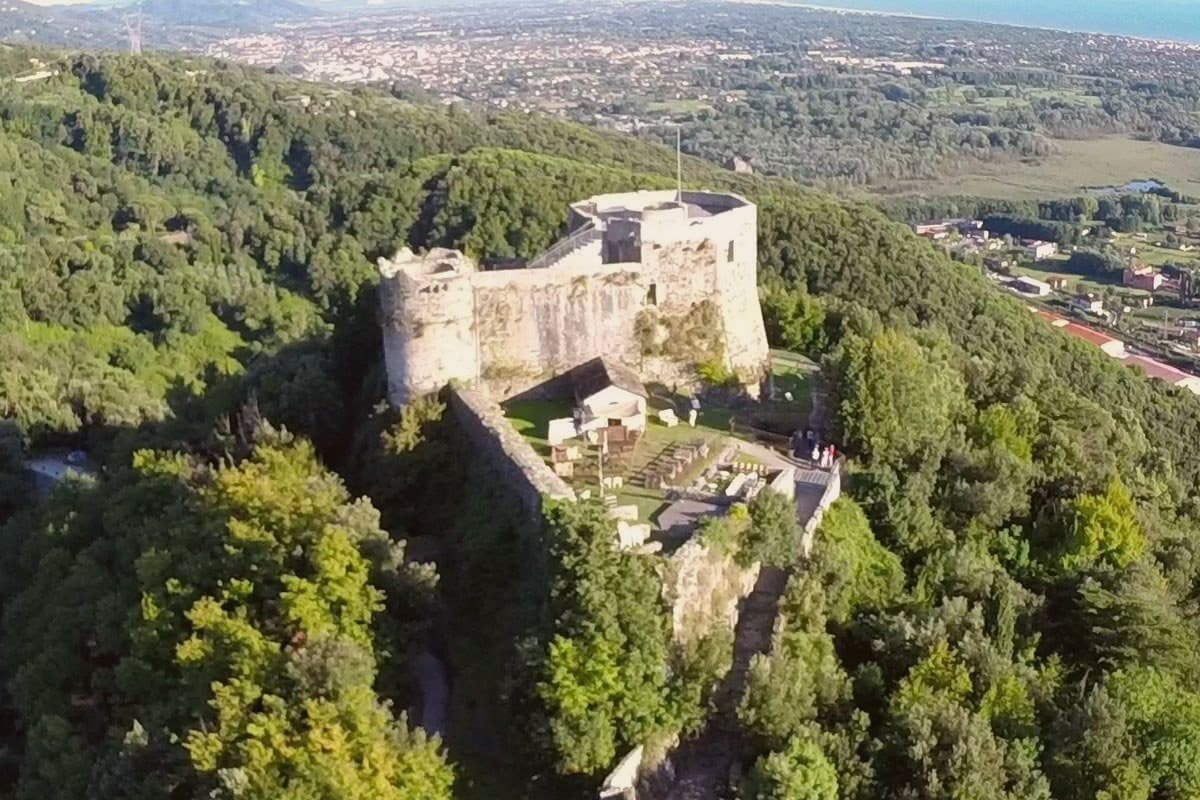
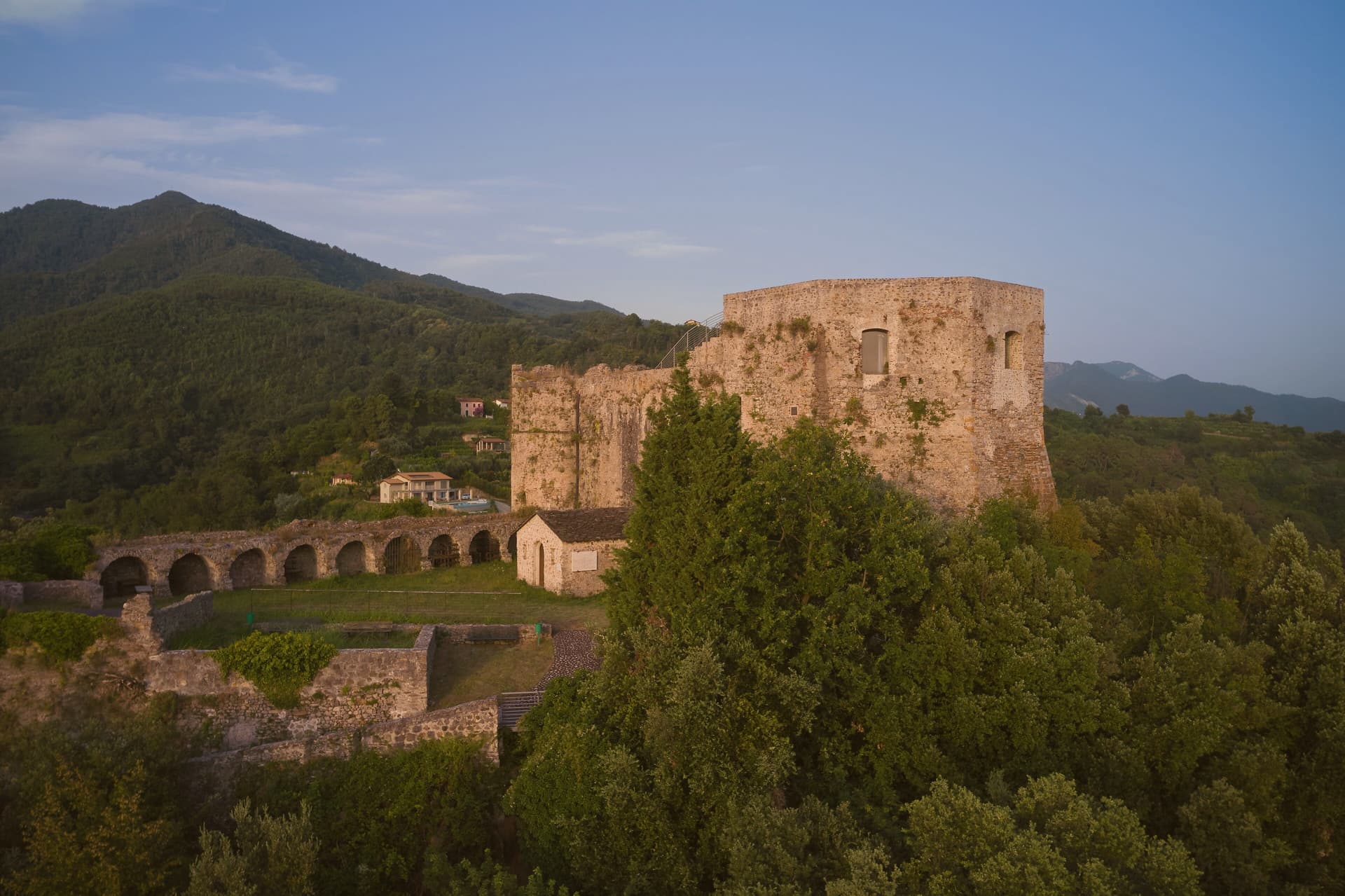
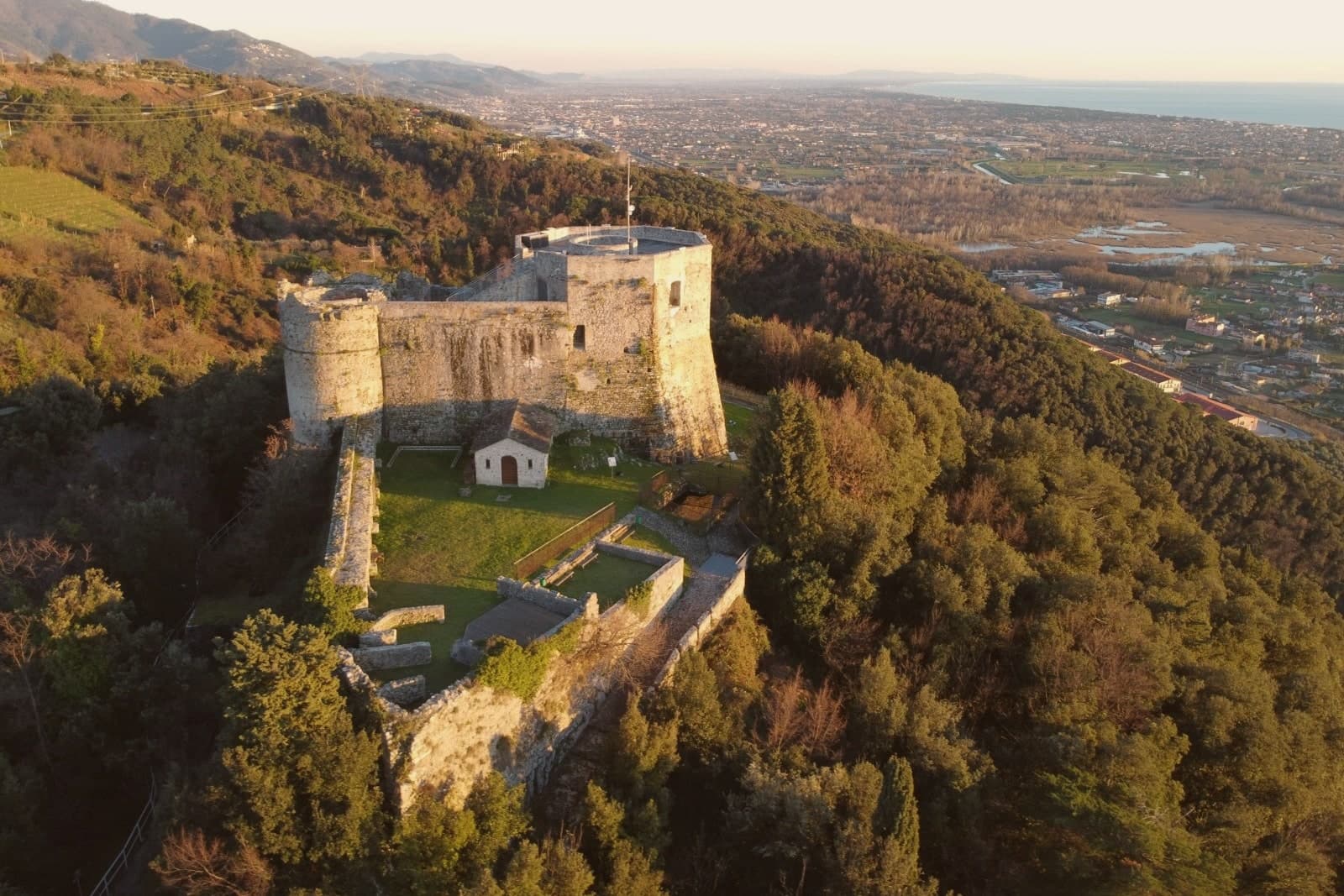
Lombard-origin castle documented from 753, a Via Francigena strongpoint disputed by Lucca and Pisa, abandoned in 1799.
LAGO DI PORTA
Tuscany's northernmost wetland, named for an eleventh-century gate on the Francigena, now a protected coastal-plain reserve.
CINQUALE
Coastal frazione on the Versilia beach, between Forte dei Marmi and Marina di Massa, with a small marina and fine-sand seafront.
TOSCANO
The commune lies inside the Toscano IGP production zone.
When to visit
Best · May–Sep
- J11°
- F12°
- M14°
- A16°
- M20°
- J25°
- J28°
- A28°
- S24°
- O20°
- N15°
- D12°
- Best
- Hot or crowded
- Quiet
- Mostly closed
Daytime averages, 2020–2024. The sea is warmest in August at 28° and coldest in February at 13°. Weather data by Open-Meteo.com.
The festa: San Vito, 15 June
Why come
Montignoso sits at the foot of the Apuan Alps, between Massa and Pietrasanta, in the corner where Massa-Carrara province meets Versilia. Inland, the hill village stands under the castle's rise; the coastal frazione lies well apart from it, opening onto the Versilia beach, so the commune is really two settlements, one on the slope and one on the sand, with the wetland reserve filling the plain between them. The town declined through the sixteenth century because of coastal malaria, which explains the gap between the fortified hill and the later life of the shore: the two halves of Montignoso grew up in different centuries for the same reason, one retreating from the coast, the other only possible once that reason had passed.
The thermal signal comes from a small spring on the Pasquilio side of the commune. Read together, Montignoso is a place defined less by any single site than by the line running from mountain to marsh to sea, each part settled on its own schedule.
The Sunday letter
Montignoso is on our list. Its letter is still to come.
We are writing about all 1,000 of these towns, one at a time, in a free letter every Sunday: the photo, the food, the festa. That is our mission. Sign up and you will be there when Montignoso comes up. By Peter & Sophia, from Pietrasanta.
Read on
Montignoso in our articles
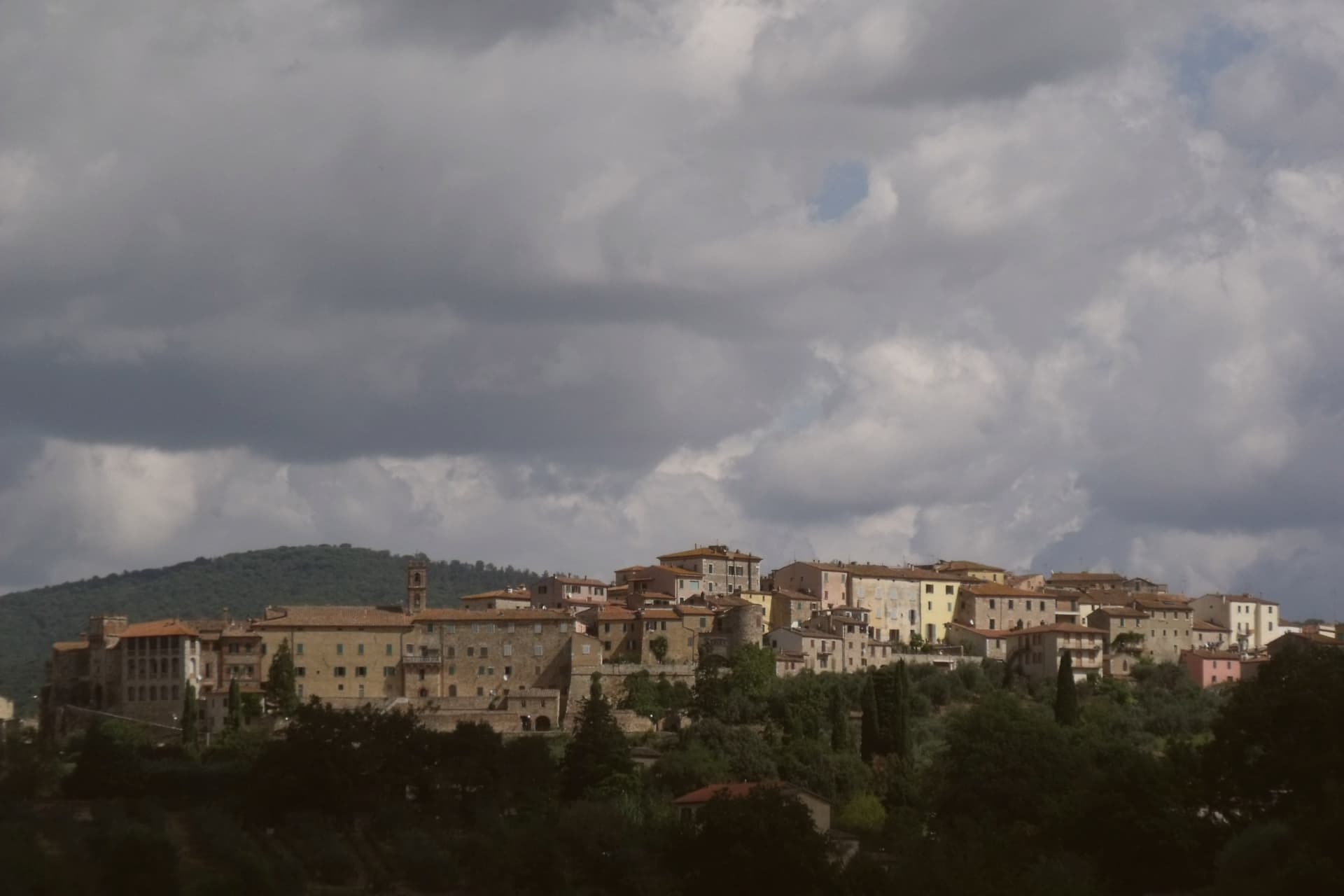
 The 6 best hidden coastal towns within 90 minutes of Pisa6 towns, Montignoso among them.
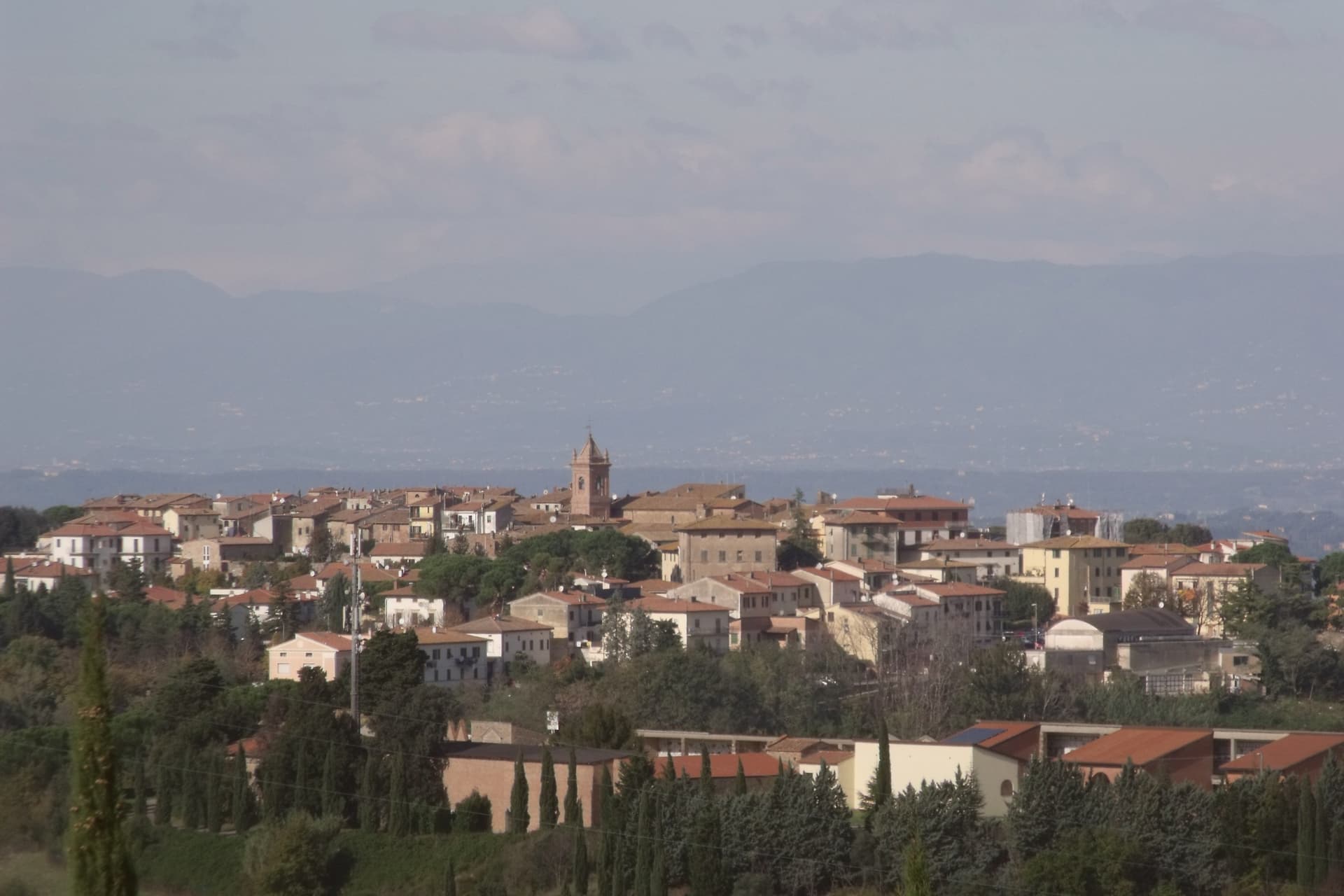
 The best hidden hot spring towns you can reach by train in Toscana6 towns, Montignoso among them.
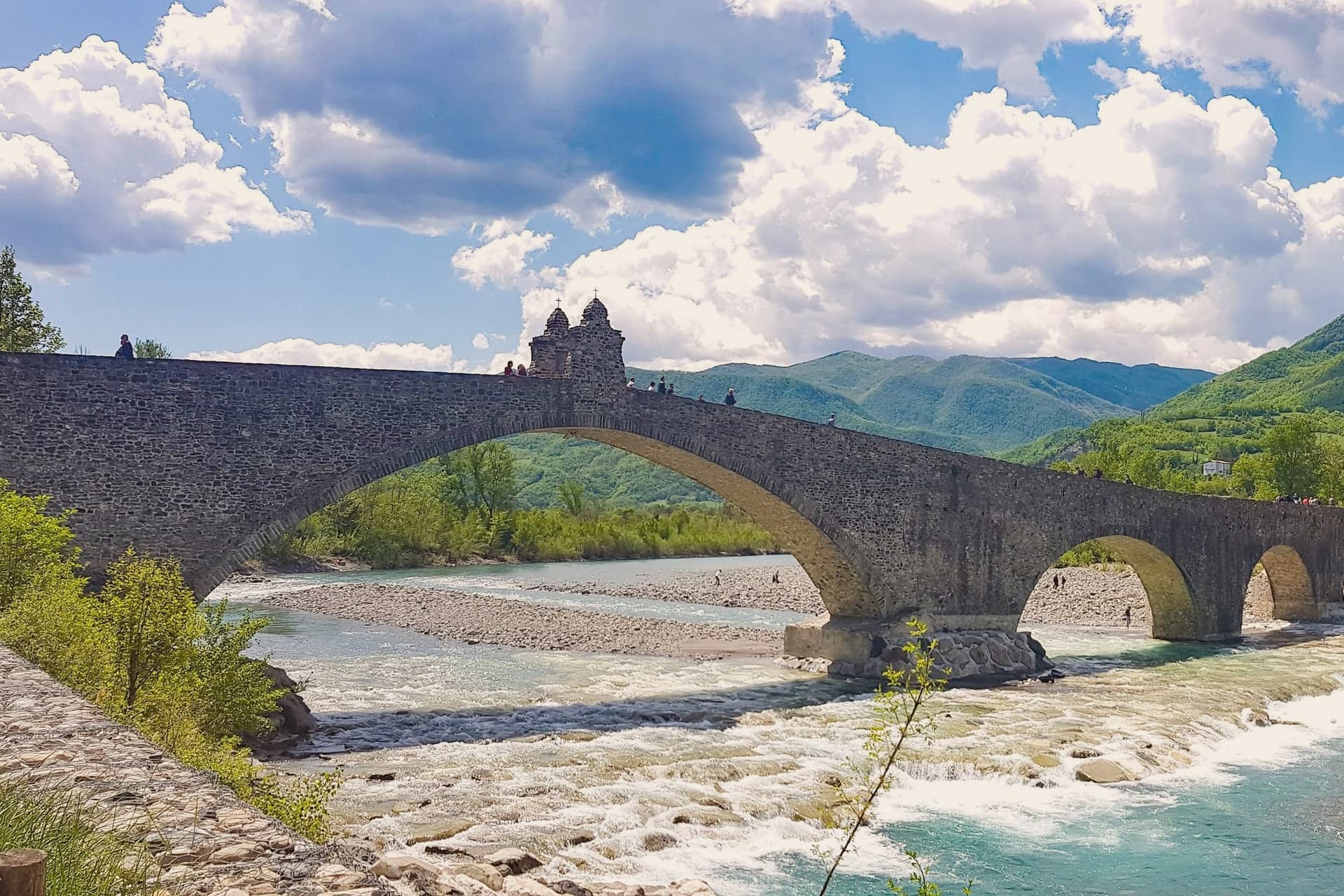
 The best hot-spring towns within 75 minutes of Pisa6 towns, Montignoso among them.
 The best hot-spring towns within two hours of Parma6 towns, Montignoso among them.
How to get there
From Florence / Pisa (PSA), about 1 hour by car.
Genoa (GOA) is about 1h 51m away.
By car from the centre of Pisa 52 minutes or Florence 1h 38m.
There is a railway station in the comune, so you can arrive without a car.
Coming from Pisa, Florence or Genoa?
Coming by train into Livorno Centrale? Montignoso is about 52 minutes away by road.
What to see
Castello Aghinolfi
The castle stands on an isolated rise above the village. What remains is the strongpoint that once taxed and watched the road below, not a ruin left to itself but a position, still legible as one.
Lago di Porta
The reserve covers the coastal plain, flat water against the line of the Apuan Alps. The gate it is named for is gone; the wetland it left behind is not.
Cinquale
Fine sand with the Apuan Alps rising directly behind it, a seafront quieter than its better-known neighbor and shaped by that comparison rather than by its own crowds.
Via Francigena
The route runs through the commune from Massa toward Pietrasanta, with the Aghinolfi castle standing where it once controlled the crossing as a toll point.
Pieve di Santi Vito e Modesto
Romanesque parish church in the centro of Montignoso, with a single nave and Romanesque bell tower.
The slow-trip planner
Building a trip? Find where Montignoso fits in a slow Italy circuit.
Answer five questions. We will shape a geographically coherent slow trip from the 1,000 Italian towns most travelers skip. Yours to save and share.
Living here
- Population 10,015
- Commuter belti
- Pharmacy in town
- High school within a 30-minute drive
- Train station in the comune
- Nearest airport Florence / Pisa, 1 h 1 min drive
- Regional capital Firenze, 1 h 38 min drive
This is a thermal town: terme operate here.
Common questions
- What is Montignoso known for?
- Montignoso is a Riviera Apuana commune split between the Cinquale coastal frazione, the Castello Aghinolfi on the hill, and the Lago di Porta wetland on the Versilia plain.
- Where is Montignoso?
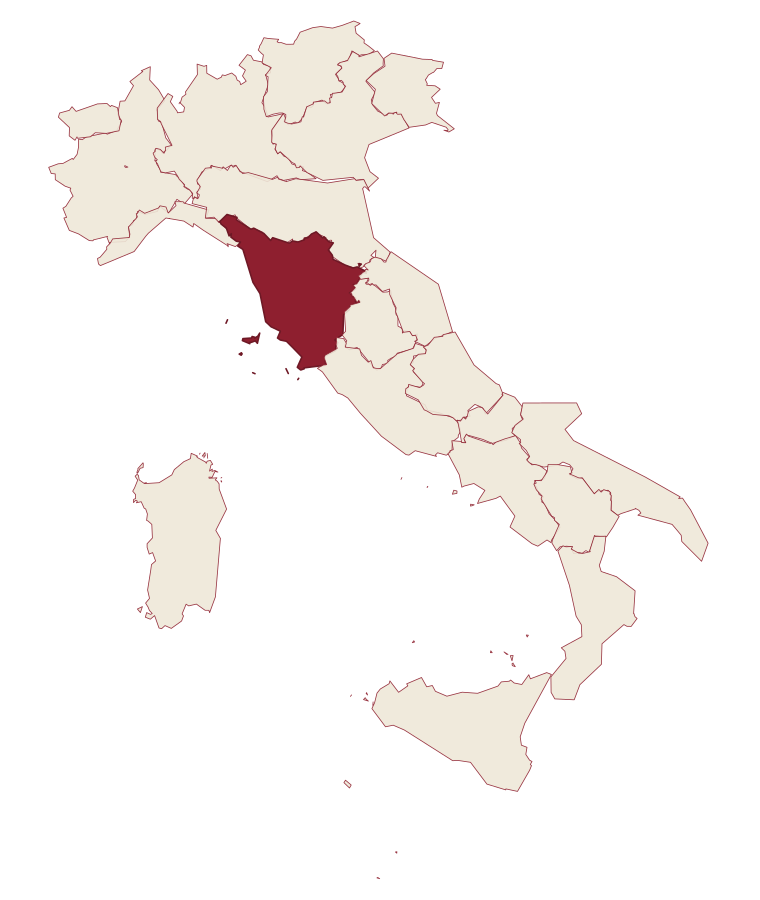
- Montignoso is a comune in the province of Massa-Carrara, in Tuscany, at 132 meters above sea level.
- What is the nearest airport to Montignoso?
- Florence / Pisa (PSA), about 1 hour by car.
- Can you get to Montignoso without a car?
- Yes. There is a railway station in the comune, so you can arrive by train.
- How long is the drive from Pisa to Montignoso?
- About 52 minutes by car.
- When is the best time to visit Montignoso?
- Best in May–Sep. August is the warmest month, averaging 28 degrees, and May the wettest, with about 16 rain days.
- Is there a sagra or a festival in Montignoso?
- The town keeps its patron saint's day: San Vito, 15 June.
- Which other towns are like Montignoso?
- Seravezza, Pietrasanta and Carrara.
- How many people live in Montignoso?
- 10,015 at the 2023 count.
Tags & datadesignations · numbers · sources
Recognised as
The numbers
- Elevation: 132 m
- Population: 10,015
- Surface area: 16.74 km²
These figures were compiled from public directories: ISTAT, OpenStreetMap and Wikidata, and from the official listings of the guides named on this page. Town details change; verify with official sources before you travel.
Similar
Towns like Montignoso
Seravezza
Province: Lucca
both on the Tyrrhenian coast · both over 10,000 people
Pietrasanta
Province: Lucca
both on the Tyrrhenian coast · both over 10,000 people
Carrara
Province: Massa-Carrara
both on the Tyrrhenian coast · both over 10,000 people
Piano di Sorrento
Province: Napoli
both on the Tyrrhenian coast · both over 10,000 people
Minturno
Province: Latina
both on the Tyrrhenian coast · both over 10,000 people
Vico Equense
Province: Napoli
both on the Tyrrhenian coast · both over 10,000 people
♨️ Comuni Termali
More Comuni Termali towns in Tuscany
Campiglia Marittima
Province: Livorno
A walled hilltop borgo above the Val di Cornia, where the Rocca tower watches a mining landscape worked from the Etruscans to 1976.
Montecatini-Terme
Province: Pistoia
Eleven thermal springs in a Liberty-style park at the foot of the Apennines.
Montepulciano
Province: Siena
A Renaissance hill town at 605 meters on a limestone ridge, aging its Sangiovese-based red in vaulted cellars beneath the palazzi.
Rapolano Terme
Province: Siena
A Sienese thermal town of 38-degree calcium-sulphur waters and travertine quarries feeding facades beyond its borders.
San Giuliano Terme
Province: Pisa
A thermal spa ten kilometers from Pisa, where the springs were bathed since the Romans called them Aquae Pisanae.