
Tuscany · Lucca
Seravezza
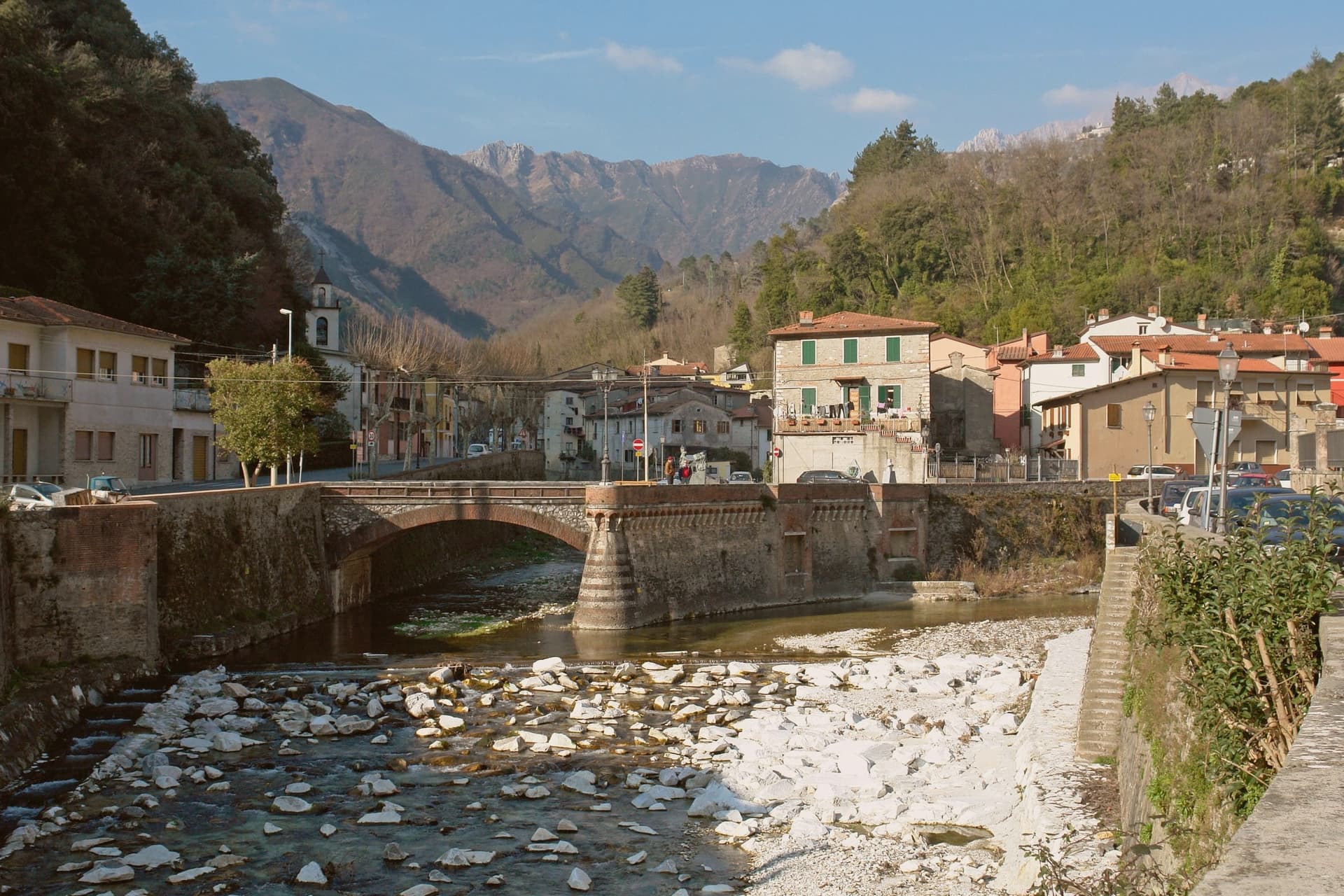
The Versilia town where Michelangelo opened the Pope's marble quarries and Cosimo I built his summer palace.
- Best time
- May–Sep
- By car
- 1 h from Pisa
- By train
- Station in the comune
- Population
- 12,364
Known for
MICHELANGELO QUARRIES
Leo X sent Michelangelo to Monte Altissimo in 1518 to open the marble quarries for the San Lorenzo façade, never completed.
PALAZZO MEDICEO
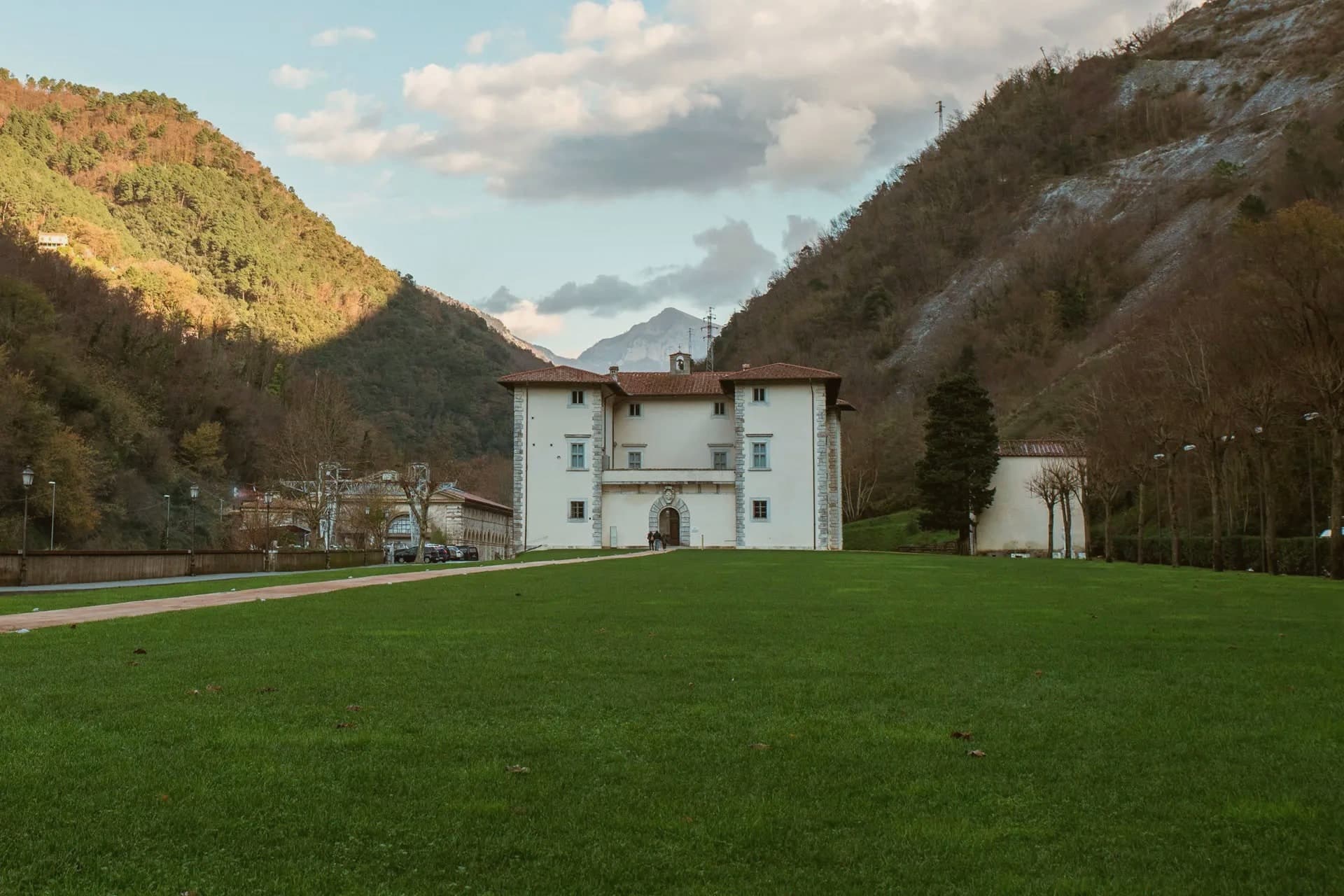
Cosimo I's summer residence built between 1560 and 1564, attributed to Ammannati and Buontalenti, UNESCO World Heritage since 2013.
APUAN MARBLE
Statuario, Ceragliola, Arabescato and the breccia di Seravezza, the marble varieties extracted from Monte Altissimo and the surrounding ridges.
When to visit
Best · May–Sep
- J11°
- F13°
- M14°
- A17°
- M21°
- J25°
- J29°
- A29°
- S25°
- O20°
- N16°
- D12°
- Best
- Hot or crowded
- Quiet
- Mostly closed
Daytime averages, 2020–2024. The sea is warmest in August at 28° and coldest in February at 12°. Weather data by Open-Meteo.com.
The festa: San Lorenzo, 10 August
Why come
Seravezza sits where the Vezza and Serra streams meet, in Versilia Storica, between the Apuan Alps and the Tyrrhenian. The territory was contested between Pisa, Lucca, Genoa and Florence for centuries before passing to the Medici, and the town's position at the junction of the two watercourses, with the mountains at its back and the coast within reach, explains why it mattered enough for all four to want it. Michelangelo spent three years on Monte Altissimo behind the town, found his veins of white stone, and built a road to take it down toward the sea.
Half a century later Cosimo I commissioned the Palazzo Mediceo here, a summer residence rather than a fortress, which says something about how settled Medici rule had become by the time it was built. The two episodes, a papal quarry and a ducal villa, sit one above the other on the same small territory: the mountain supplied the stone that Florence wanted, and the valley below became a place worth building a palace in once the stone trade had made the route familiar.
The Sunday letter
Seravezza is on our list. Its letter is still to come.
We are writing about all 1,000 of these towns, one at a time, in a free letter every Sunday: the photo, the food, the festa. That is our mission. Sign up and you will be there when Seravezza comes up. By Peter & Sophia, from Pietrasanta.
Read on
Seravezza in our articles
 The 6 best coastal towns inside a nature park in Toscana6 towns, Seravezza among them.
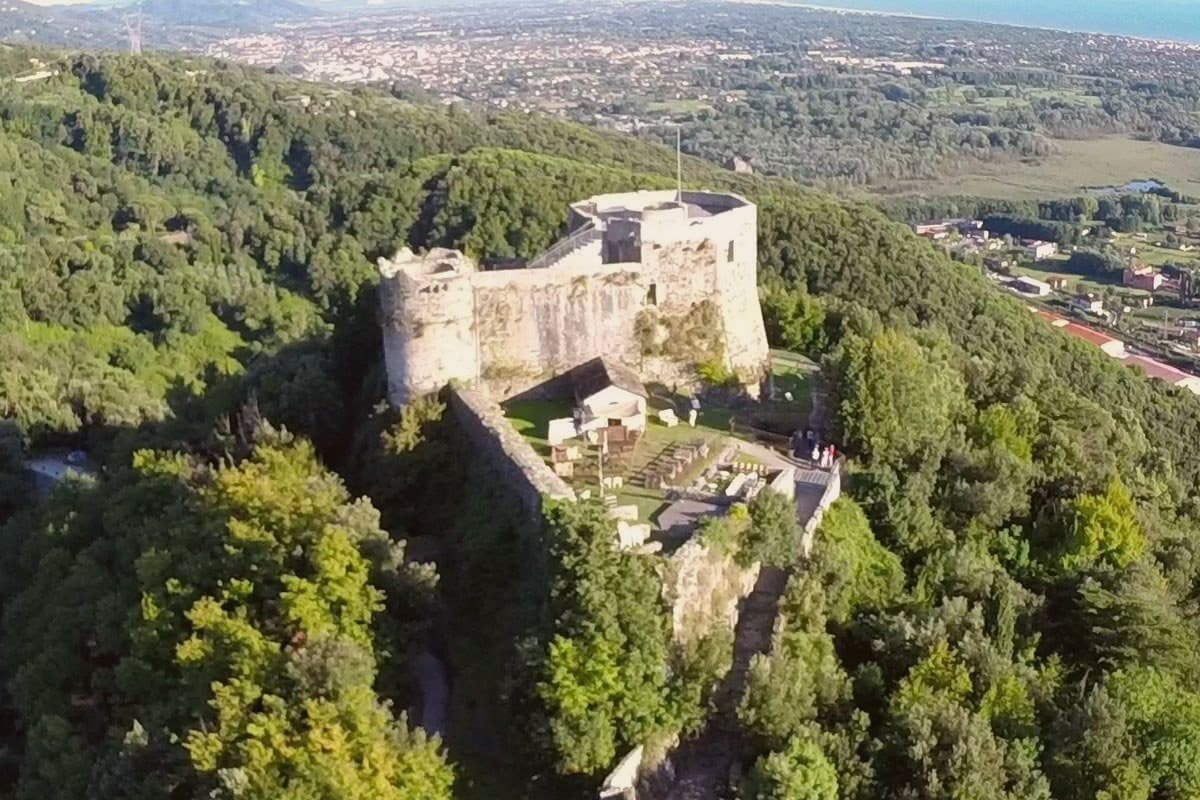 The 6 best hidden coastal towns within 90 minutes of Pisa6 towns, Seravezza among them.
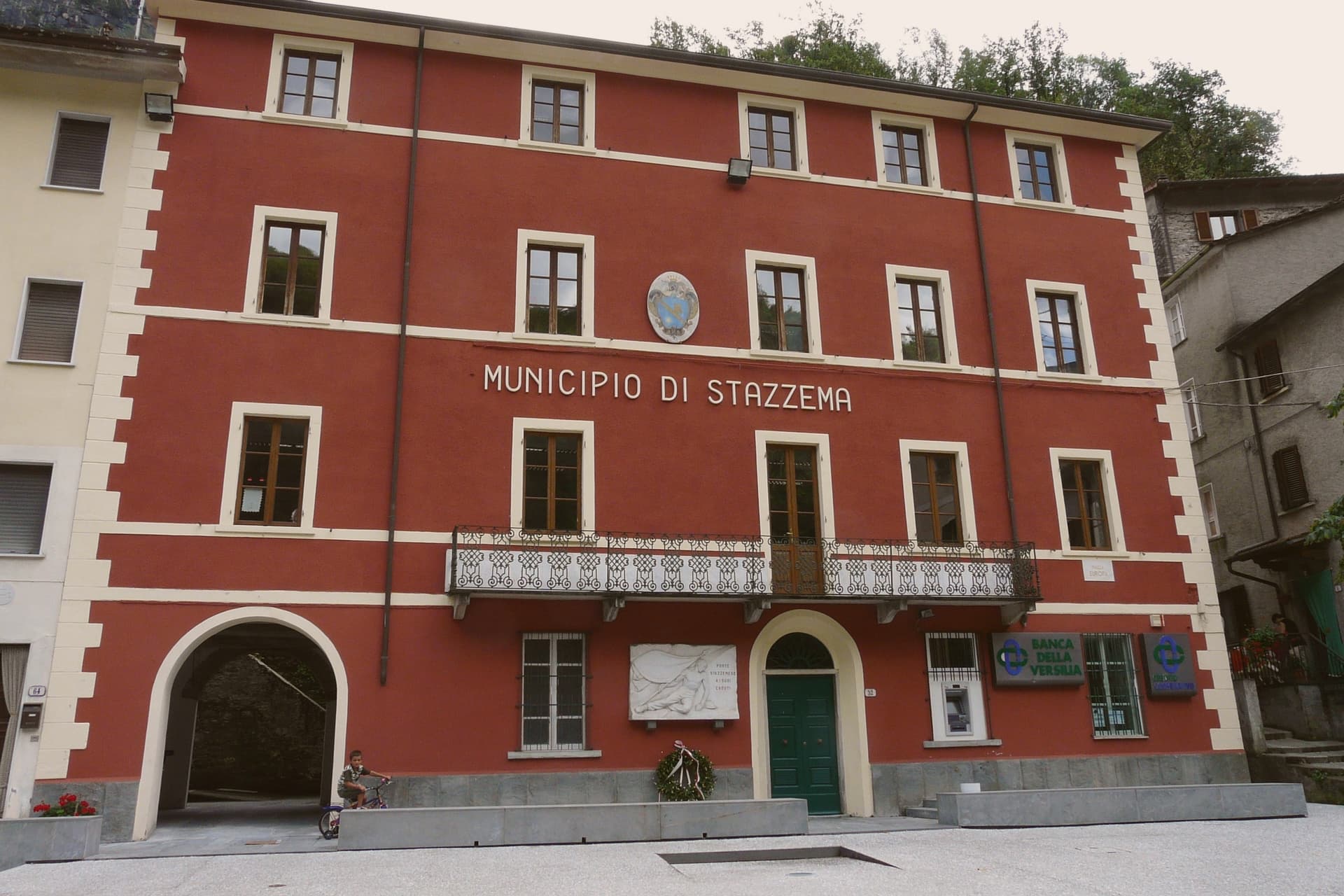 The 6 best hidden towns inside a nature park in Toscana6 towns, Seravezza among them.
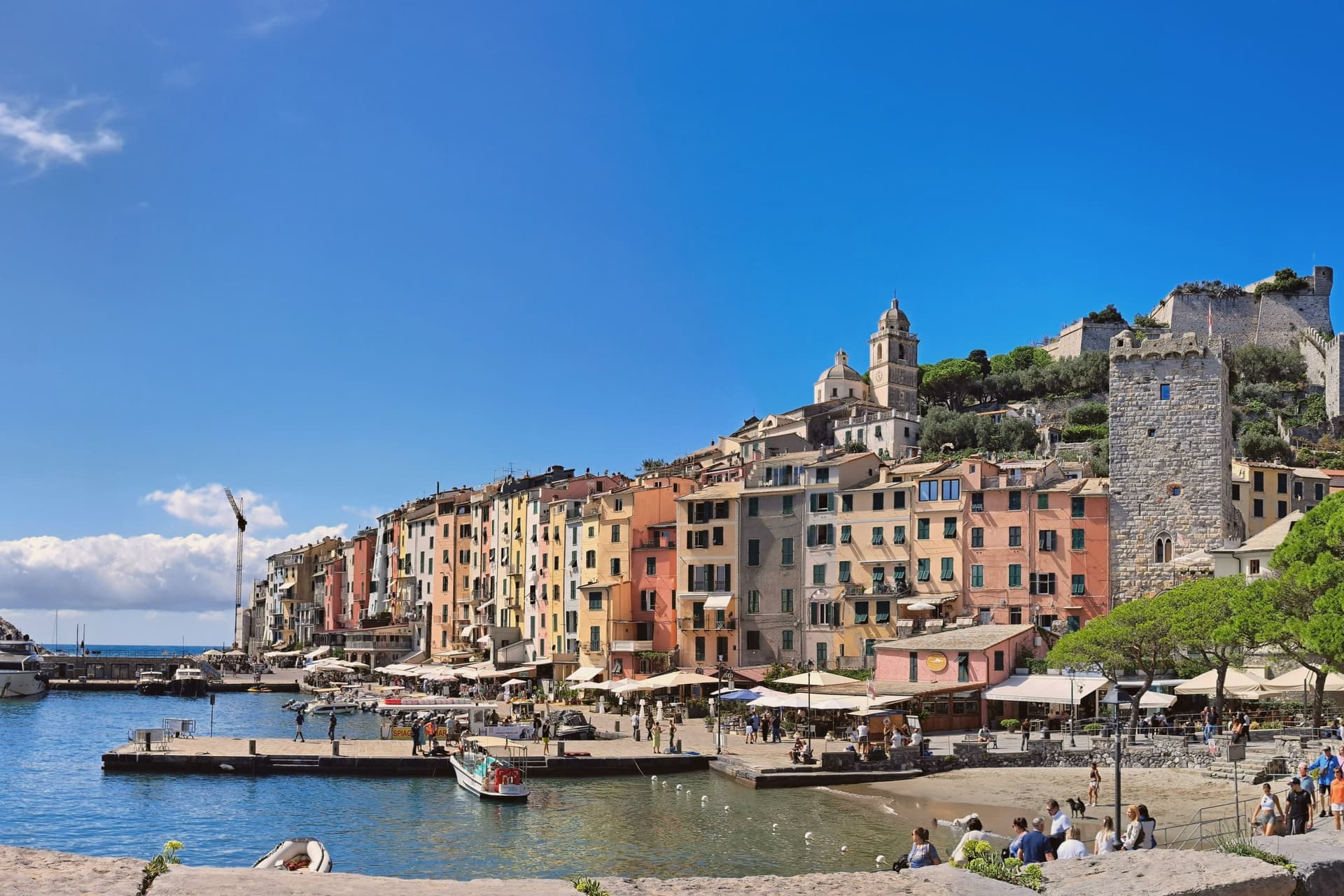 The best coastal towns inside a nature park within 90 minutes of Pisa6 towns, Seravezza among them.
How to get there
From Florence / Pisa (PSA), about 1h 12m by car.
Genoa (GOA) is about 2h 11m away.
By car from the centre of Pisa 1 hour or Florence 1h 49m.
There is a railway station in the comune, so you can arrive without a car.
Coming from Pisa, Florence or Genoa?
Coming by train into Livorno Centrale? Seravezza is about 1 hour away by road.
What to see
Palazzo Mediceo
The residence stands in the centro, its design passed from one architect to the next as the project went on. It carries the UNESCO listing among the Medici Villas.
Pieve di San Martino alla Cappella
Eleventh-century Romanesque parish church between Seravezza and Azzano, with the ruined Annunziata Oratory alongside.
Monte Altissimo
The peak rises behind the town at 1,589 meters. The road Michelangelo built to bring the stone down still marks the route from quarry to valley, and the mountain is worked as a quarry to this day.
Duomo di Seravezza
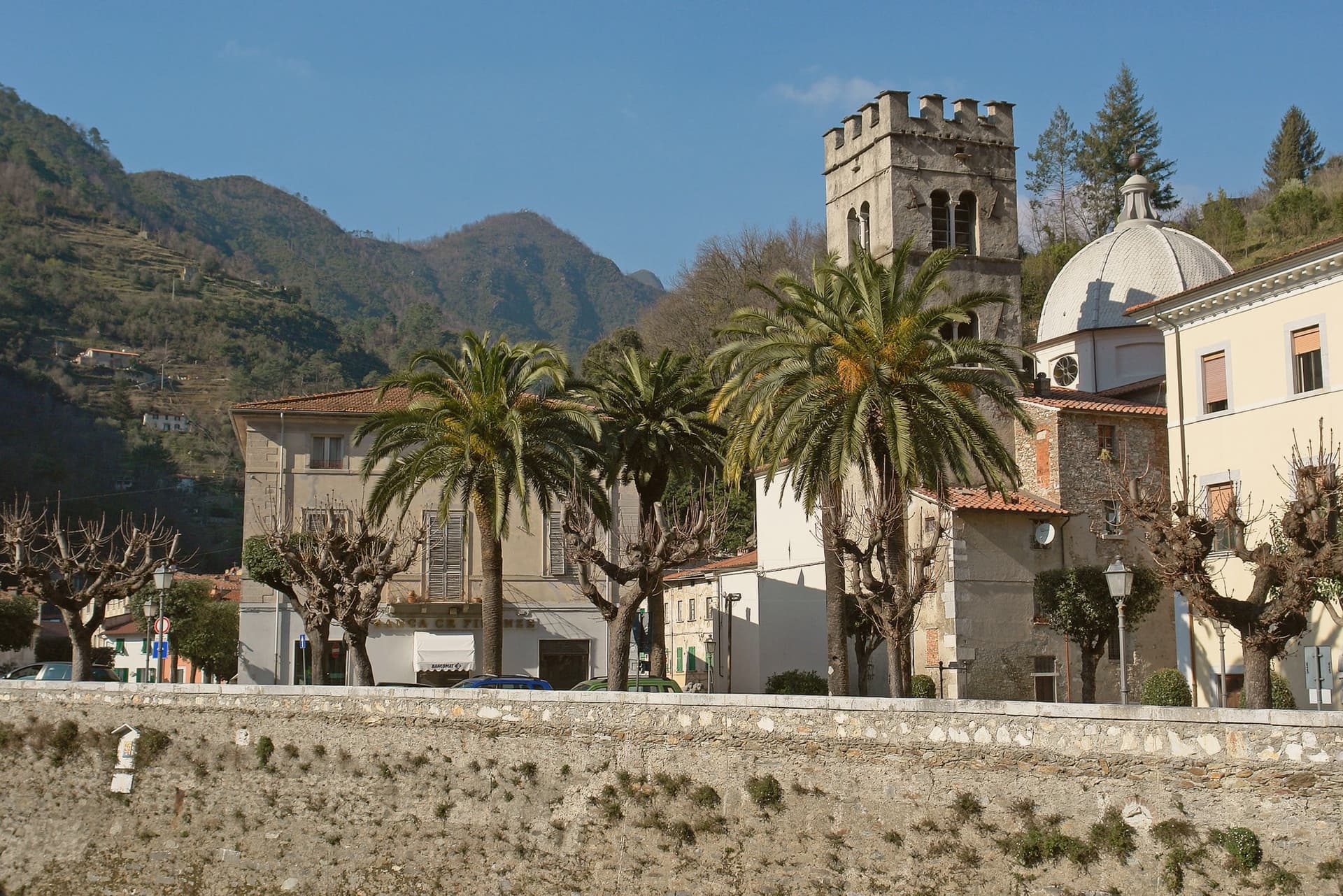
Sixteenth-century collegiate church in the centro, dedicated to Saints Lorenzo and Barbara, with a tall stone bell tower.
The slow-trip planner
Building a trip? Find where Seravezza fits in a slow Italy circuit.
Answer five questions. We will shape a geographically coherent slow trip from the 1,000 Italian towns most travelers skip. Yours to save and share.
We’ve tried
What we got up to
Restaurants, walks, swims — the things we actually did in Seravezza, each with the piece we wrote about it.
A porcini tasting menu that opens with a plate of raw mushrooms at Ristorante Ulisse.
The tordello, the meat-stuffed pasta that is Versilia telling you it isn't Lucca.
We recommend
Where to eat
Not our picks, but places the guides put their name to: a Michelin star, a Gambero Rosso fork, a Slow Food snail, a Michelin Key for the hotels. Worth a table, a counter, or a night when you pass through.
Il Pozzo di BugiaTrattoria
A Gambero Rosso listing, at Il Pozzo di Bugia.
Through the year
What happens here
Feasts and festivals that come back year after year. We give the month rather than the date, because the date moves and the month rarely does. Check with the source before you plan a journey around one.
Sagra di Fine Estatefood festival
usually held in August. TrovaSagre
Living here
- Population 12,364
- Commuter belti
- Pharmacy in town
- High school within a 30-minute drive
- Train station in the comune
- Nearest airport Florence / Pisa, 1 h 12 min drive
- Regional capital Firenze, 1 h 49 min drive
Common questions
- What is Seravezza known for?
- Seravezza is the Versilia town where Michelangelo opened the Pope's marble quarries and Cosimo I built his summer palace.
- Where is Seravezza?
- Seravezza is a comune in the province of Lucca, in Tuscany, at 100 meters above sea level.
- What is the nearest airport to Seravezza?
- Florence / Pisa (PSA), about 1h 12m by car.
- Can you get to Seravezza without a car?
- Yes. There is a railway station in the comune, so you can arrive by train.
- How long is the drive from Pisa to Seravezza?
- About 1 hour by car.
- When is the best time to visit Seravezza?
- Best in May–Sep. August is the warmest month, averaging 29 degrees, and May the wettest, with about 17 rain days.
- Is there a sagra or a festival in Seravezza?
- Yes. Sagra di Fine Estate. August is when the first of them falls.
- Which other towns are like Seravezza?
- Montignoso, Pietrasanta and Carrara.
- How many people live in Seravezza?
- 12,364 at the 2023 count.
Tags & datadesignations · numbers · sources
Recognised as
The numbers
- Elevation: 100 m
- Population: 12,364
- Surface area: 39.55 km²
These figures were compiled from public directories: ISTAT, OpenStreetMap and Wikidata, and from the official listings of the guides named on this page. Town details change; verify with official sources before you travel.
Similar
Towns like Seravezza
Montignoso
Province: Massa-Carrara
both on the Tyrrhenian coast · both over 10,000 people
Pietrasanta
Province: Lucca
both on the Tyrrhenian coast · both over 10,000 people
Carrara
Province: Massa-Carrara
both on the Tyrrhenian coast · both over 10,000 people
Piano di Sorrento
Province: Napoli
both on the Tyrrhenian coast · both over 10,000 people
Vico Equense
Province: Napoli
both on the Tyrrhenian coast · both over 10,000 people
Minturno
Province: Latina
both on the Tyrrhenian coast · both over 10,000 people
🏛️ UNESCO
More UNESCO towns in Tuscany
Barberino di Mugello
Province: Firenze
The Mugello gateway at 272 meters where the Medici family kept its first country villas, with Michelozzo's Cafaggiolo and the artificial Lago di Bilancino below.
Carmignano
Province: Prato
A Medici village at 189 meters on the Montalbano slopes, where Etruscan tumuli sit below the Renaissance villas.
Castiglione d'Orcia
Province: Siena
A stone borgo at 540 meters in the UNESCO Val d'Orcia, with two fortresses guarding the road from Amiata to the Via Francigena.
Cerreto Guidi
Province: Firenze
The Medici hunting villa above the Padule di Fucecchio, where Cosimo I sent his court for the marshland game and Buontalenti built four ramps of stairs.
Montalcino
Province: Siena
A walled hill town at 564 meters above the Val d'Orcia, the last fortress to hold out for the Sienese Republic and the birthplace of Brunello.