
Tuscany · Lucca
Barga
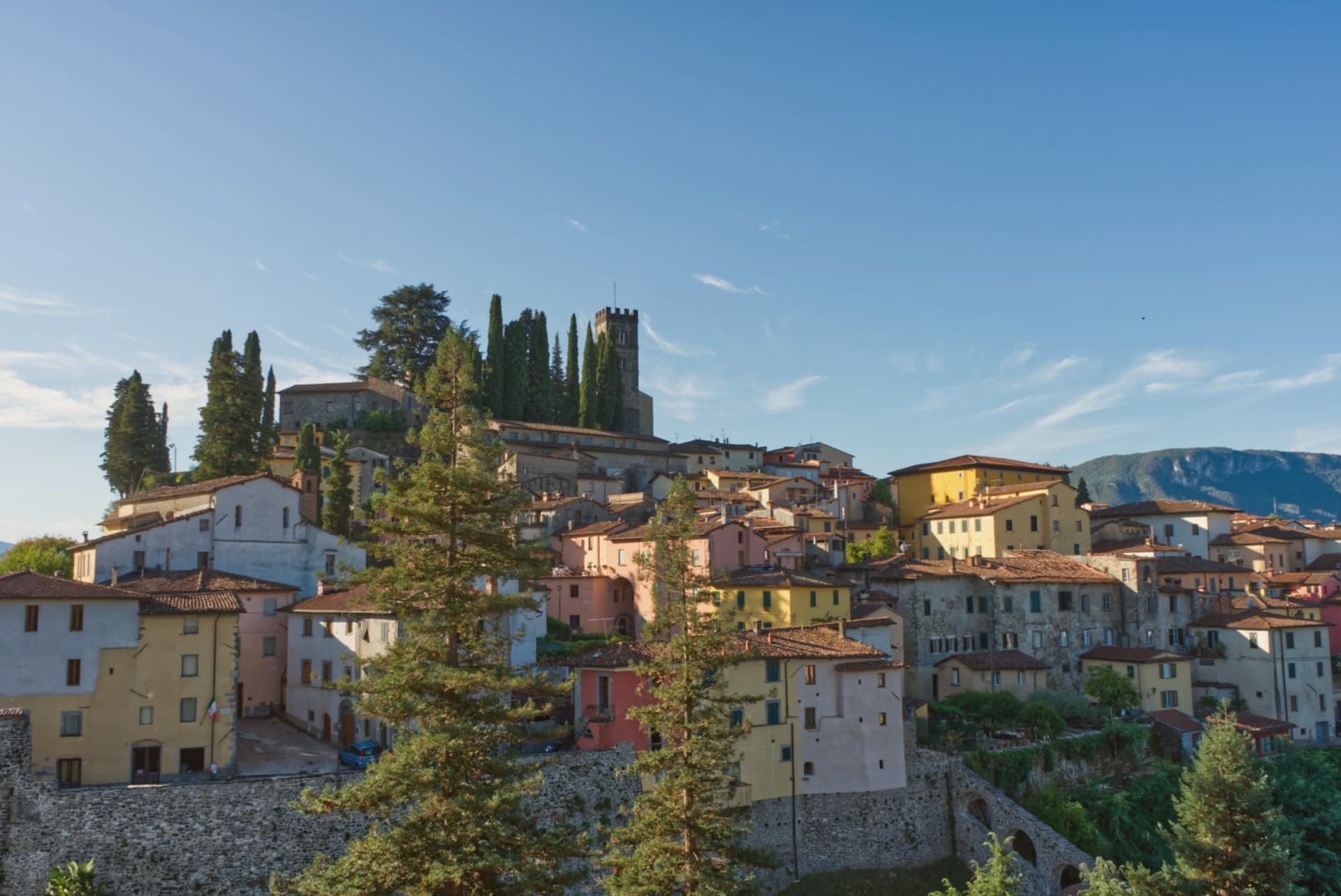
A medieval hilltop town in the Serchio valley, where Giovanni Pascoli wrote his last poems and the August festival serves fish and chips.
- Best time
- Apr–Oct
- By car
- 1 h 14 min from Pisa
- By train
- Station in the comune
- Population
- 9,415
Known for
GIOVANNI PASCOLI
The poet lived in Barga from 1895 to 1912, wrote his last collections here, and is buried beside his Casa Museo on the Colle di Caprona.
FISH AND CHIPS
The Sagra del Pesce e Patate has run every August since the early 1980s, the legacy of late nineteenth-century emigration to Glasgow's chip shops.
DUOMO ROMANICO
Eleventh-century collegiate church with Guido Bigarelli's red marble pulpit, the 3.5-meter wooden Saint Christopher, and Apuan Alps view from the terrace.
FARINA DI NECCIO DELLA GARFAGNANA
The commune lies inside the Farina di Neccio della Garfagnana DOP production zone.
When to visit
Best · Apr–Oct
- J9°
- F12°
- M13°
- A16°
- M20°
- J25°
- J29°
- A28°
- S23°
- O19°
- N14°
- D10°
- Best
- Hot or crowded
- Quiet
- Mostly closed
Daytime averages, 2020–2024. Weather data by Open-Meteo.com.
The festa: San Cristoforo, 25 July
Why come
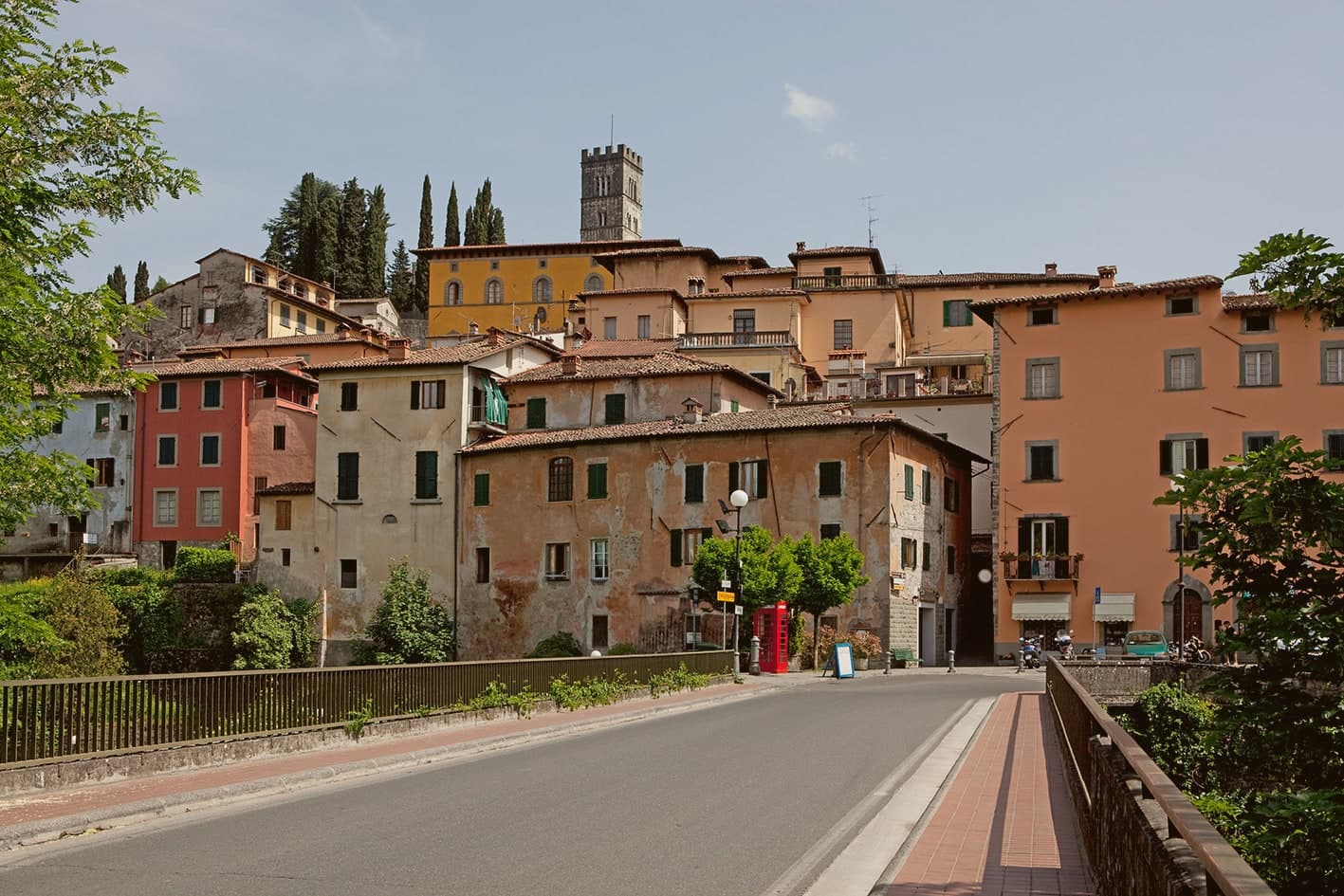
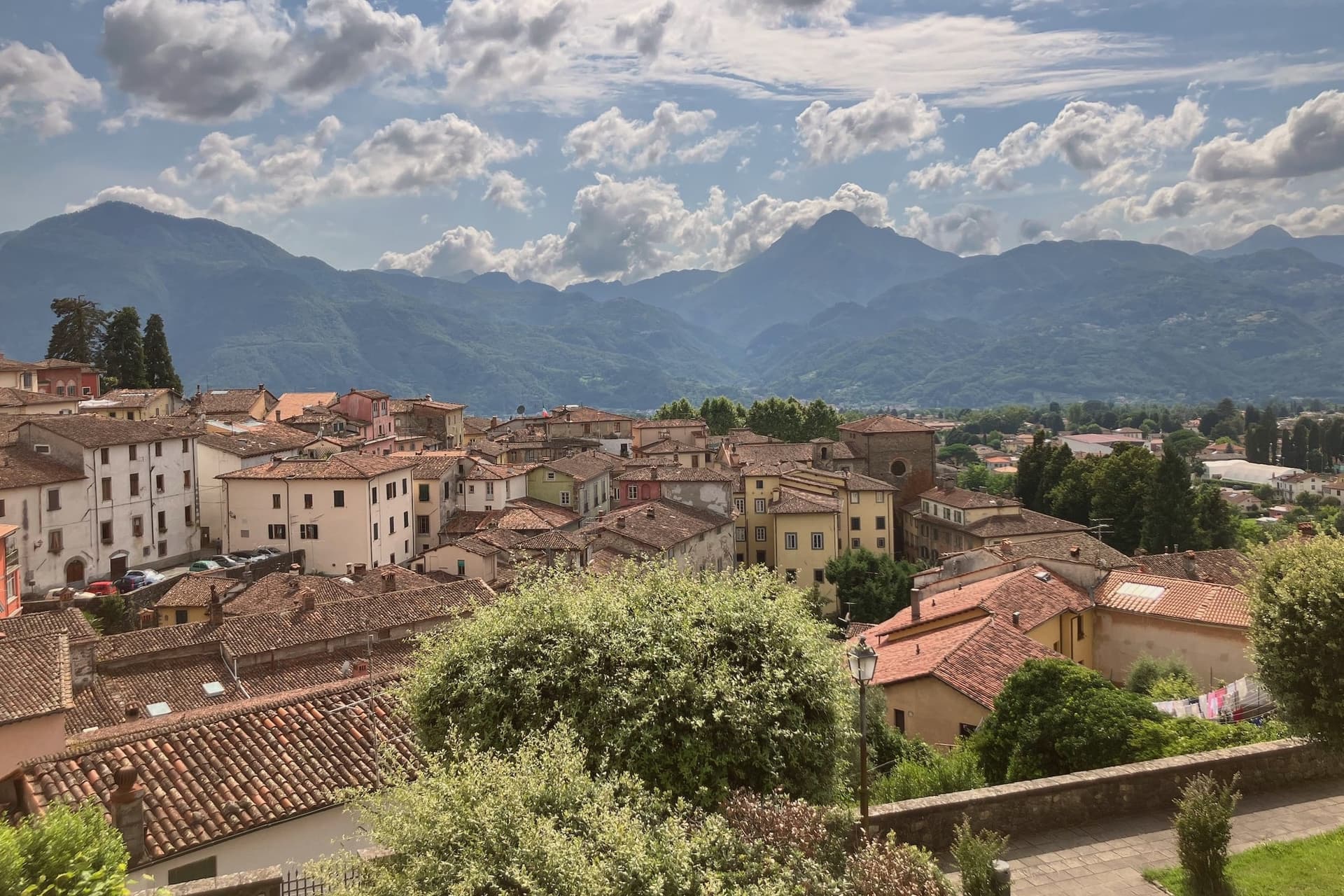
The town sits on the Colle Remeggio above the Serchio river, the Apennine ridge rising to the east as a counterpart to the Apuan Alps on the western side of the valley. The walled centro storico climbs the hill from Porta Reale, its stone houses narrowing as the streets rise toward the highest terrace, where the collegiate church stands. The Colle di Caprona, a separate rise from the walled town itself, holds the house where Pascoli lived out his last years and the chapel where he is buried.
The town also carries a Scottish thread: a wave of late nineteenth-century emigration sent generations of Barga families into the chip shop trade in Glasgow, and their descendants' festival now fills the streets every August with fish and chips rather than any dish more expected of the Tuscan hills. A hill town built in stone around a Romanesque church, with a poet's house on one rise and a Glasgow-born sagra filling its streets each summer, holds more than its size would suggest.
Read on
Barga in our articles
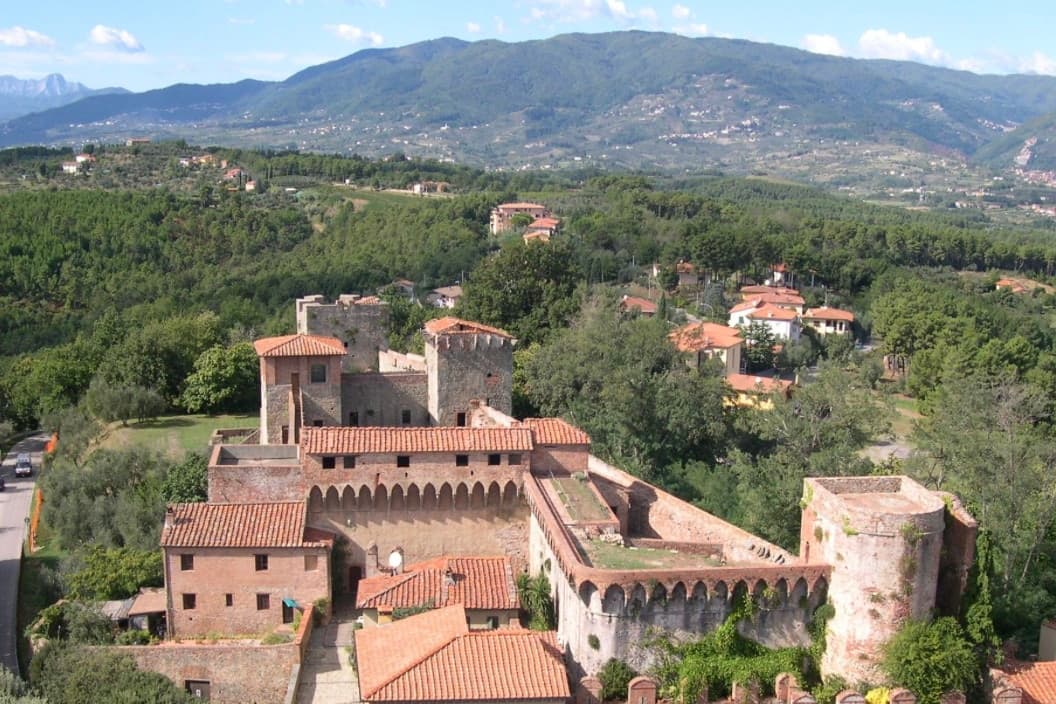
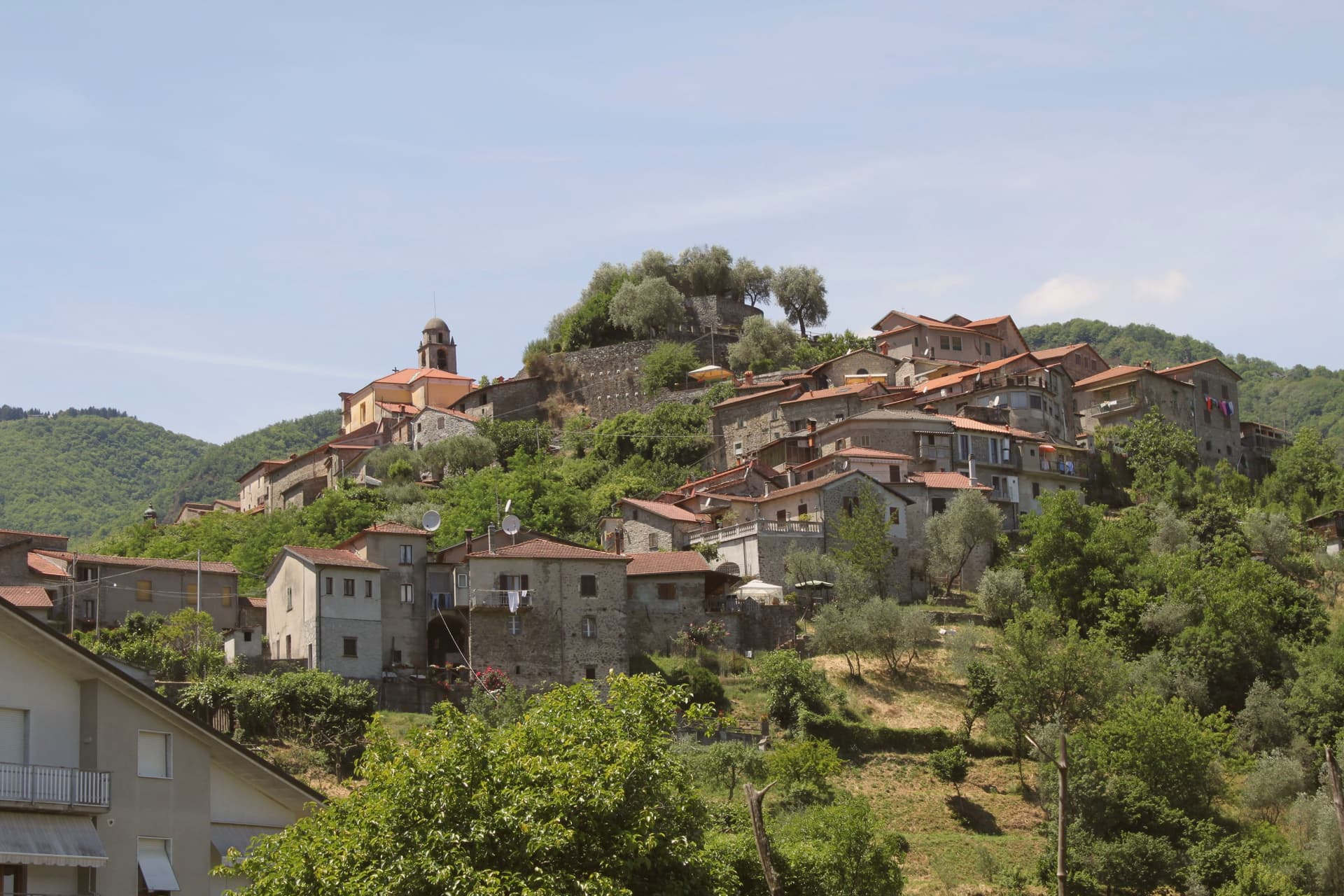 The best towns known for what they grow within two hours of Pisa7 towns, Barga among them.
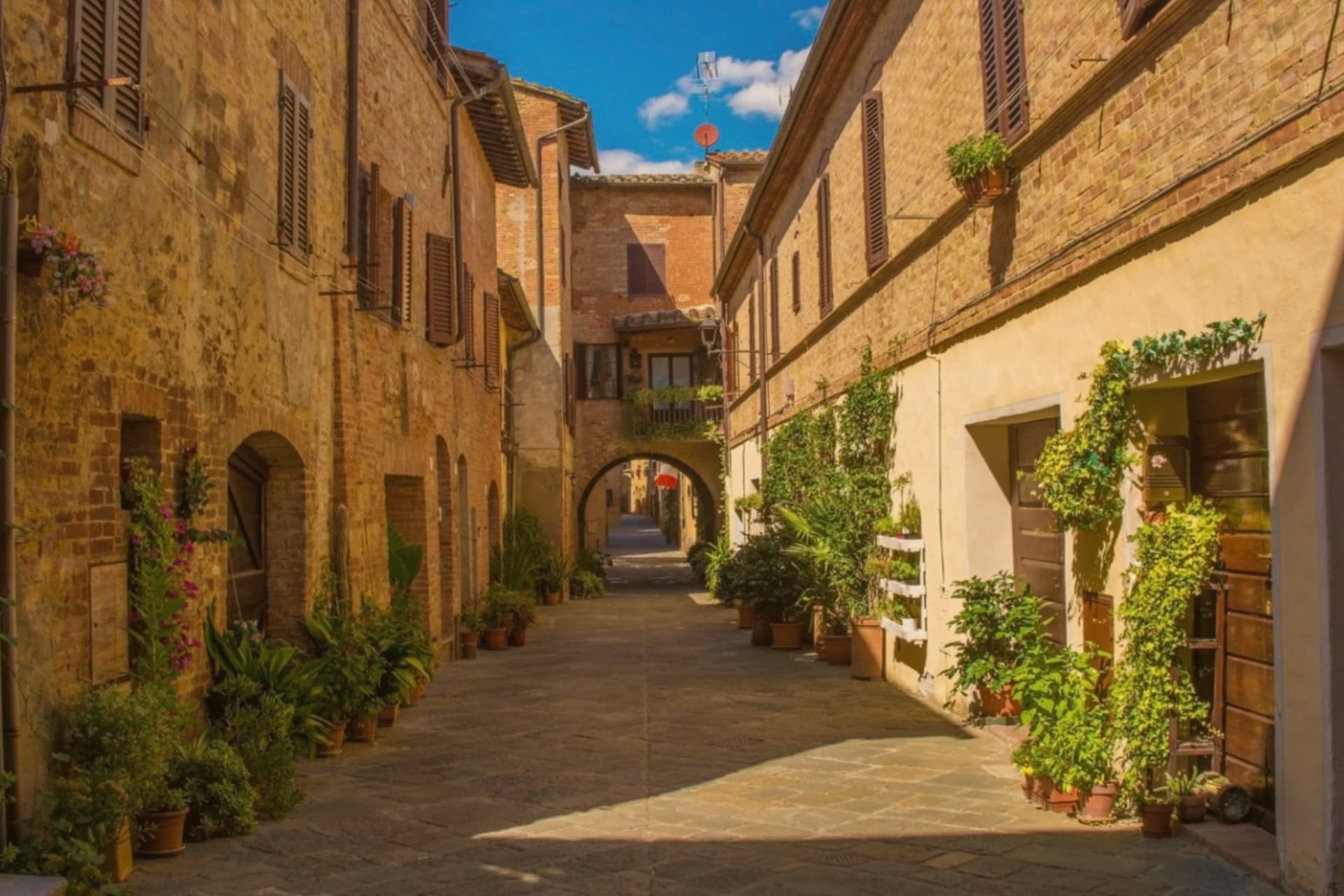
 The 8 best towns you can reach by train in the province of Lucca8 towns, Barga among them.
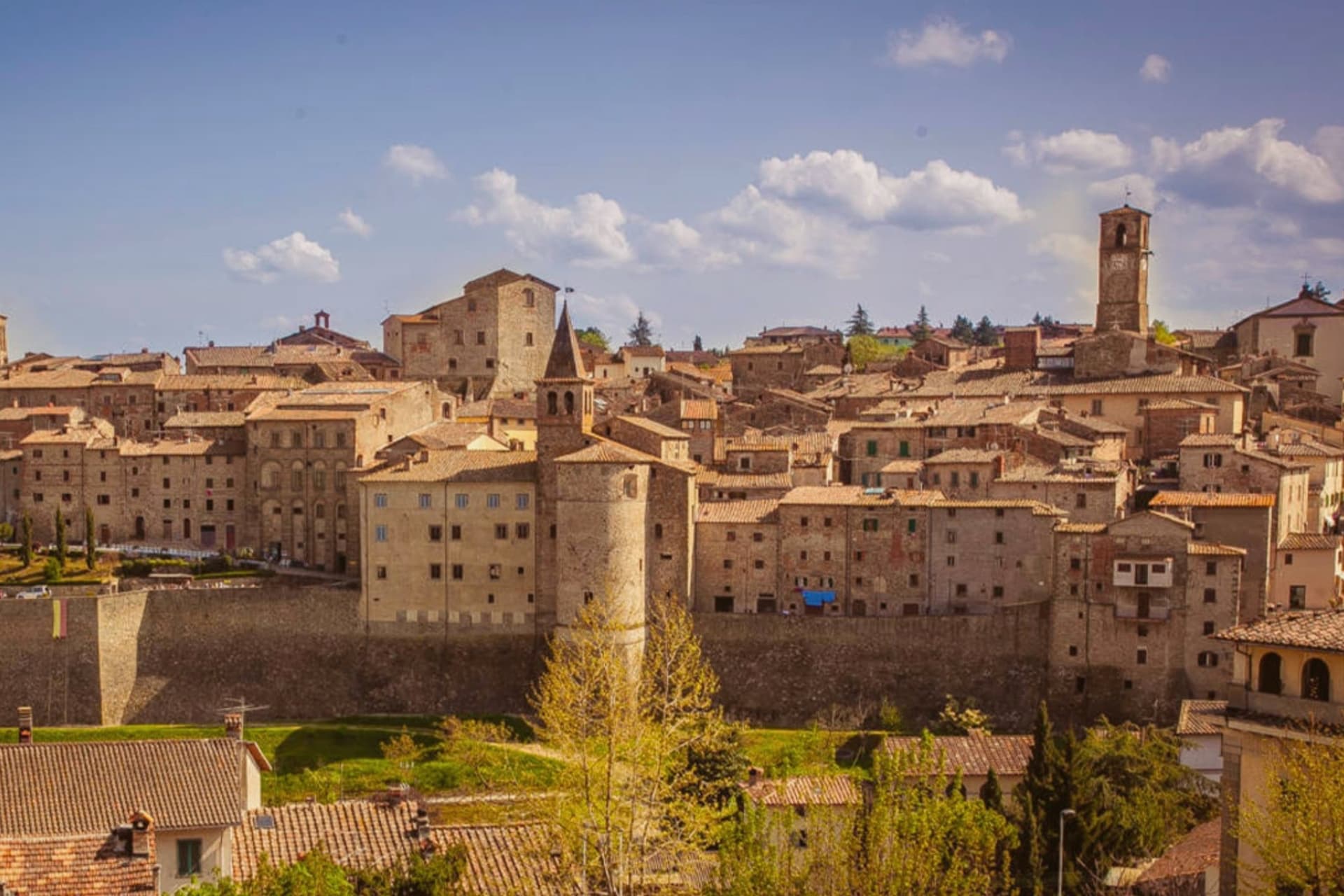
 The prettiest villages you can reach by train in Toscana8 towns, Barga among them.
 The 9 best hill towns that live slowly in Toscana9 towns, Barga among them.
How to get there
From Florence / Pisa (PSA), about 1h 31m by car.
Bologna (BLQ) is about 2h 26m away.
By car from the centre of Pisa 1h 14m or Florence 1h 45m.
There is a railway station in the comune, so you can arrive without a car.
Coming from Pisa, Florence or Bologna?
Coming by train into Livorno Centrale? Barga is about 1h 22m away by road.
What to see
Duomo di San Cristoforo
The church climbs from the eleventh century into the sixteenth, four red marble columns of the pulpit resting on stone lions. It occupies the highest terrace of the town, above the streets that lead up to it.
Casa Museo Giovanni Pascoli
The house is preserved with its original furnishings and library, the chapel next door holding the poet's tomb.
Centro storico
Walled medieval town climbing the hill, narrow streets of stone houses leading from Porta Reale up to the church on the highest terrace.
Alpi Apuane
Marble peaks rising sharply west of the valley, the Pania della Croce visible from the church terrace, the source of Carrara stone.
Teatro dei Differenti
Eighteenth-century horseshoe theater inside the walls, restored in 1795, host to the Opera Barga summer festival of chamber and lyric performances.
The slow-trip planner
Building a trip? Find where Barga fits in a slow Italy circuit.
Answer five questions. We will shape a geographically coherent slow trip from the 1,000 Italian towns most travelers skip. Yours to save and share.
The Sunday letter
Barga got its letter. One town every Sunday, free. The photo, the food, the festa.
Living here
- Population 9,415
- Remotei
- Pharmacy in town
- High school within a 30-minute drive
- Train station in the comune
- Nearest airport Florence / Pisa, 1 h 31 min drive
- Regional capital Firenze, 1 h 45 min drive
Common questions
- What is Barga known for?
- Barga is a medieval hilltop town at 410 meters in the Serchio valley, where Giovanni Pascoli wrote his last poems and the August festival serves fish and chips.
- Where is Barga?
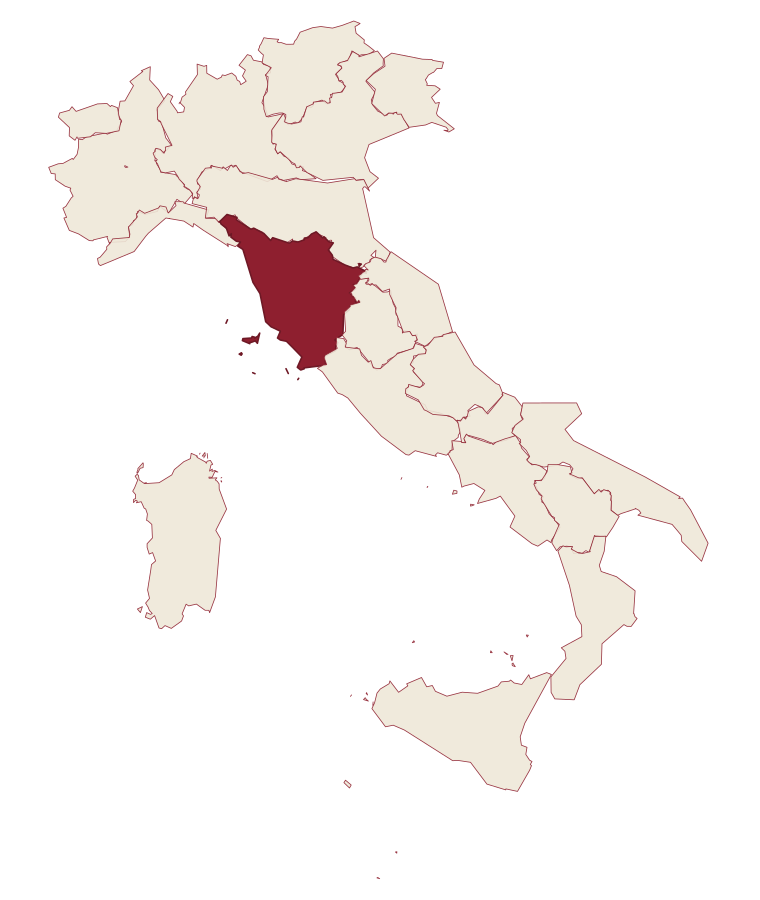
- Barga is a comune in the province of Lucca, in Tuscany.
- What is the nearest airport to Barga?
- Florence / Pisa (PSA), about 1h 31m by car.
- Can you get to Barga without a car?
- Yes. There is a railway station in the comune, so you can arrive by train.
- How long is the drive from Pisa to Barga?
- About 1h 14m by car.
- When is the best time to visit Barga?
- Best in Apr–Oct. July is the warmest month, averaging 29 degrees, and December the wettest, with about 16 rain days.
- Is there a sagra or a festival in Barga?
- The town keeps its patron saint's day: San Cristoforo, 25 July.
- Which other towns are like Barga?
- Montalcino, Subiaco and Matelica.
- How many people live in Barga?
- 9,415 at the 2023 count.
Tags & datadesignations · numbers · sources
Recognised as
The numbers
- Elevation: 410 m
- Population: 9,415
- Surface area: 66.47 km²
These figures were compiled from public directories: ISTAT, OpenStreetMap and Wikidata, and from the official listings of the guides named on this page. Town details change; verify with official sources before you travel.
Similar
Towns like Barga
Montalcino
Province: Siena
both inland, away from the coast · both between 3,000 and 10,000 people
Subiaco
Province: Roma
both inland, away from the coast · both between 3,000 and 10,000 people
Matelica
Province: Macerata
both inland, away from the coast · both between 3,000 and 10,000 people
Varallo
Province: Vercelli
both inland, away from the coast · both between 3,000 and 10,000 people
Urbania
Province: Pesaro e Urbino
both inland, away from the coast · both between 3,000 and 10,000 people
Oriolo Romano
Province: Viterbo
both inland, away from the coast · both between 3,000 and 10,000 people
🎨 Borghi più belli d'Italia
More Borghi più belli d'Italia towns in Tuscany
Anghiari
Province: Arezzo
A walled medieval town at 430 meters over the upper Tiber valley, where Florence beat Milan in 1440 and Leonardo started the fresco he never finished.
Buonconvento
Province: Siena
The walled brick borgo in the Crete Senesi where Emperor Henry VII died in 1313, on the Via Cassia at the confluence of the Arbia and Ombrone.
Campiglia Marittima
Province: Livorno
A walled hilltop borgo above the Val di Cornia, where the Rocca tower watches a mining landscape worked from the Etruscans to 1976.
Capalbio
Province: Grosseto
A walled hilltop borgo at 217 meters in the southern Maremma, donated to the Abbey of Tre Fontane by Charlemagne.
Casale Marittimo
Province: Pisa
A concentric stone borgo at 214 meters above the Val di Cecina, built where a seventh-century BC Etruscan outpost of Volterra once stood.