
Tuscany · Prato
Carmignano
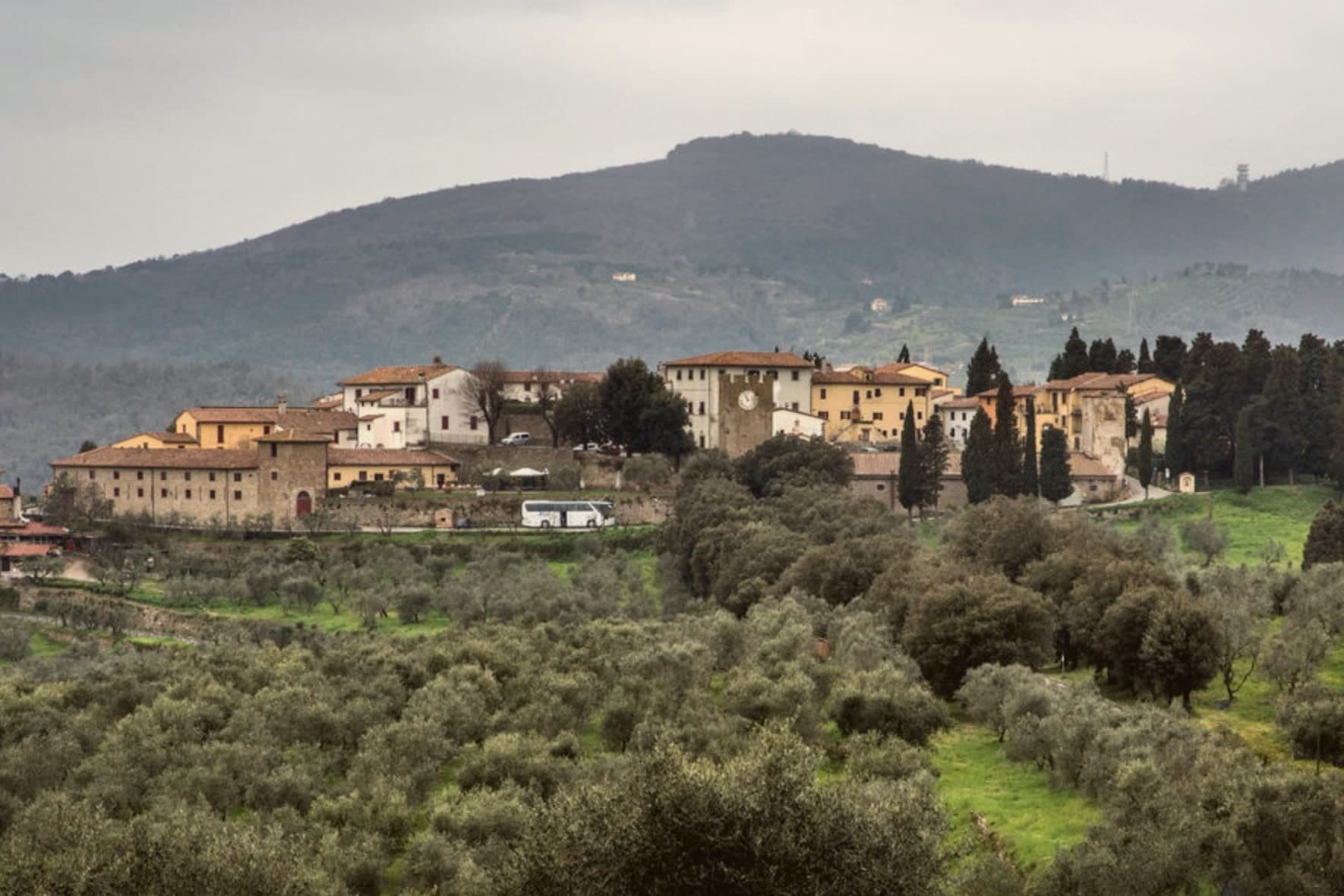
A Medici village on the Montalbano slopes, where Etruscan tumuli sit below the Renaissance villas.
- Best time
- Apr–Oct
- By car
- 39 min from Florence
- Population
- 14,605
Known for
PONTORMO
The Visitation, painted 1528-1529, hangs in the parish church of San Michele e San Francesco, one of the major works of late Florentine Mannerism.
LA FERDINANDA
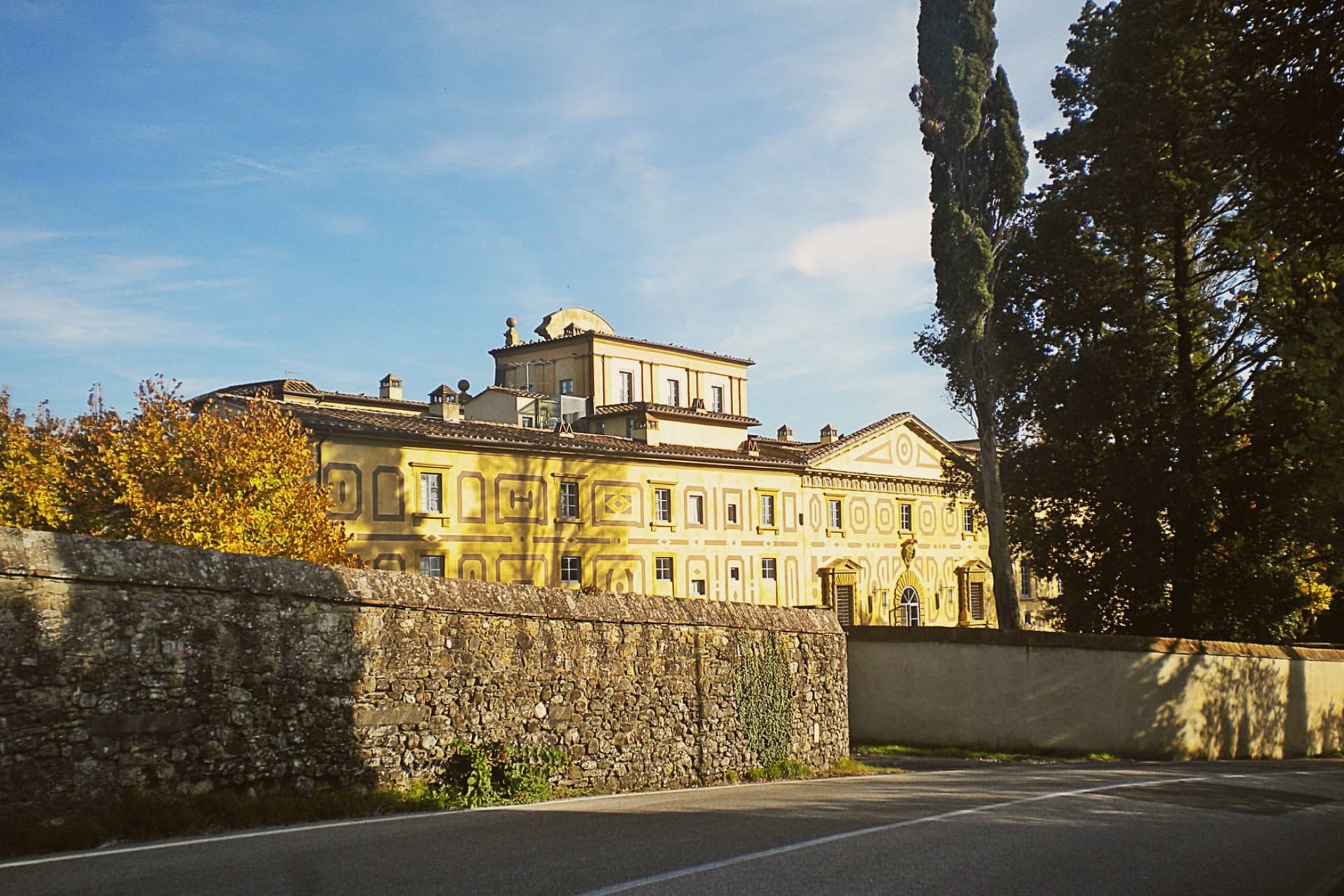
Medici Villa at Artimino, Buontalenti 1596, the Villa of the Hundred Chimneys, UNESCO inscribed in 2013 among the Medici Villas and Gardens.
CARMIGNANO DOCG
Recognized in 1990, the first Italian appellation to allow Cabernet Sauvignon alongside Sangiovese, grown on the same Montalbano slopes since the sixteenth century.
When to visit
Best · Apr–Oct
- J10°
- F12°
- M15°
- A18°
- M22°
- J27°
- J32°
- A32°
- S26°
- O21°
- N15°
- D10°
- Best
- Hot or crowded
- Quiet
- Mostly closed
Daytime averages, 2020–2024. Weather data by Open-Meteo.com.
The festa: Michele, nearest weekend to September 29
Why come
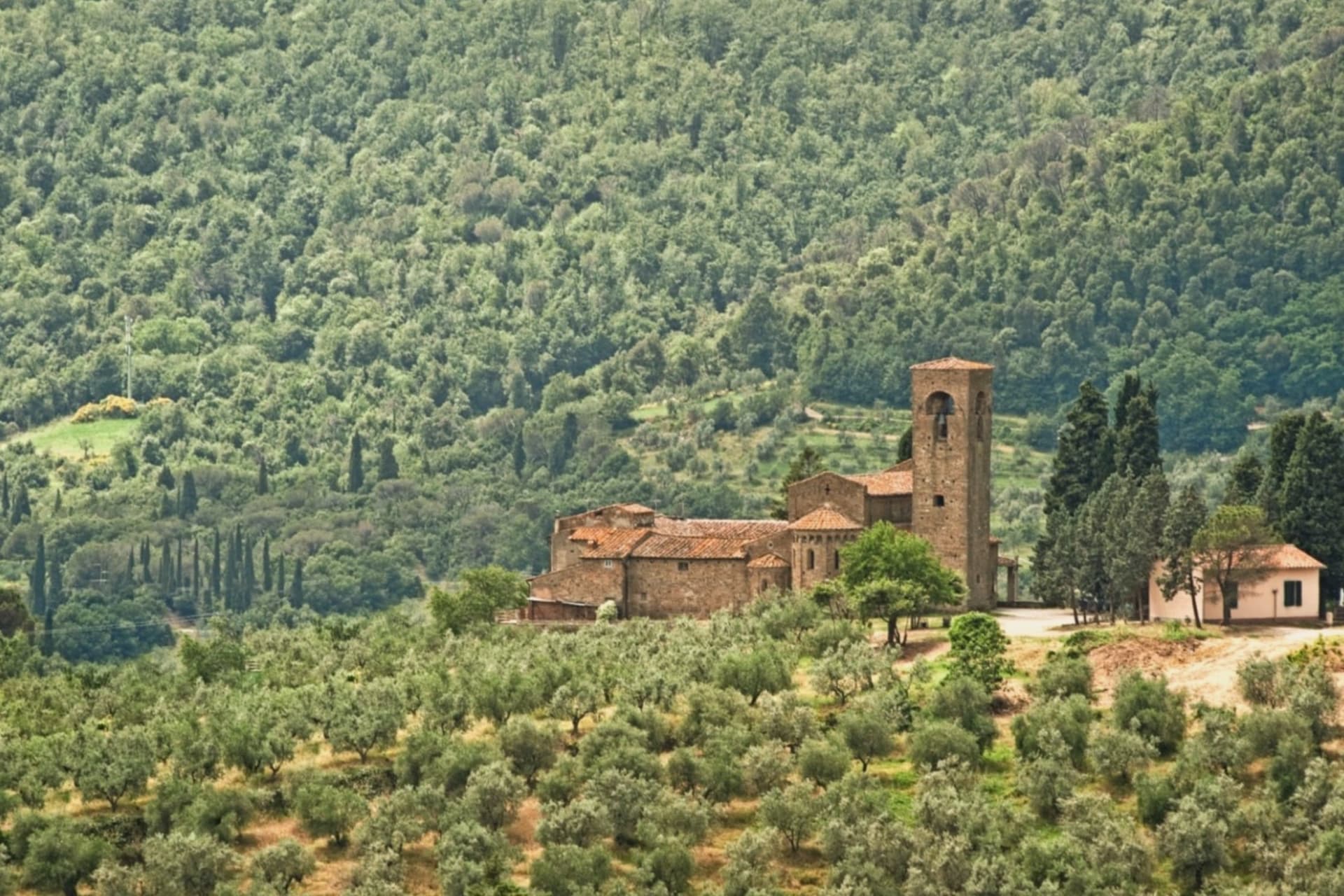
Carmignano sits on the Montalbano hills, twenty kilometers west of Florence and ten southwest of Prato. The commune is built from separate frazioni rather than a single center: Artimino occupies the ridge above, Comeana lies apart with its own tombs, and the town itself holds the parish church at the lower elevation. This layout puts a Renaissance villa, a pair of seventh-century BC tombs and a working wine appellation within the same small commune without any of them sitting next to each other.
The vines of the Carmignano DOCG cover the same Montalbano slopes that were occupied first by the people who built the tombs at Comeana and later by the Medici, so the landscape reads as continuous use of one hillside across the centuries rather than as separate attractions laid on top of it. Few communes this size hold a Medici villa, a seventh-century BC necropolis and a wine appellation across three distinct frazioni, each still doing what it was built or planted for.
The Sunday letter
Carmignano is on our list. Its letter is still to come.
We are writing about all 1,000 of these towns, one at a time, in a free letter every Sunday: the photo, the food, the festa. That is our mission. Sign up and you will be there when Carmignano comes up. By Peter & Sophia, from Pietrasanta.
Read on
Carmignano in our articles
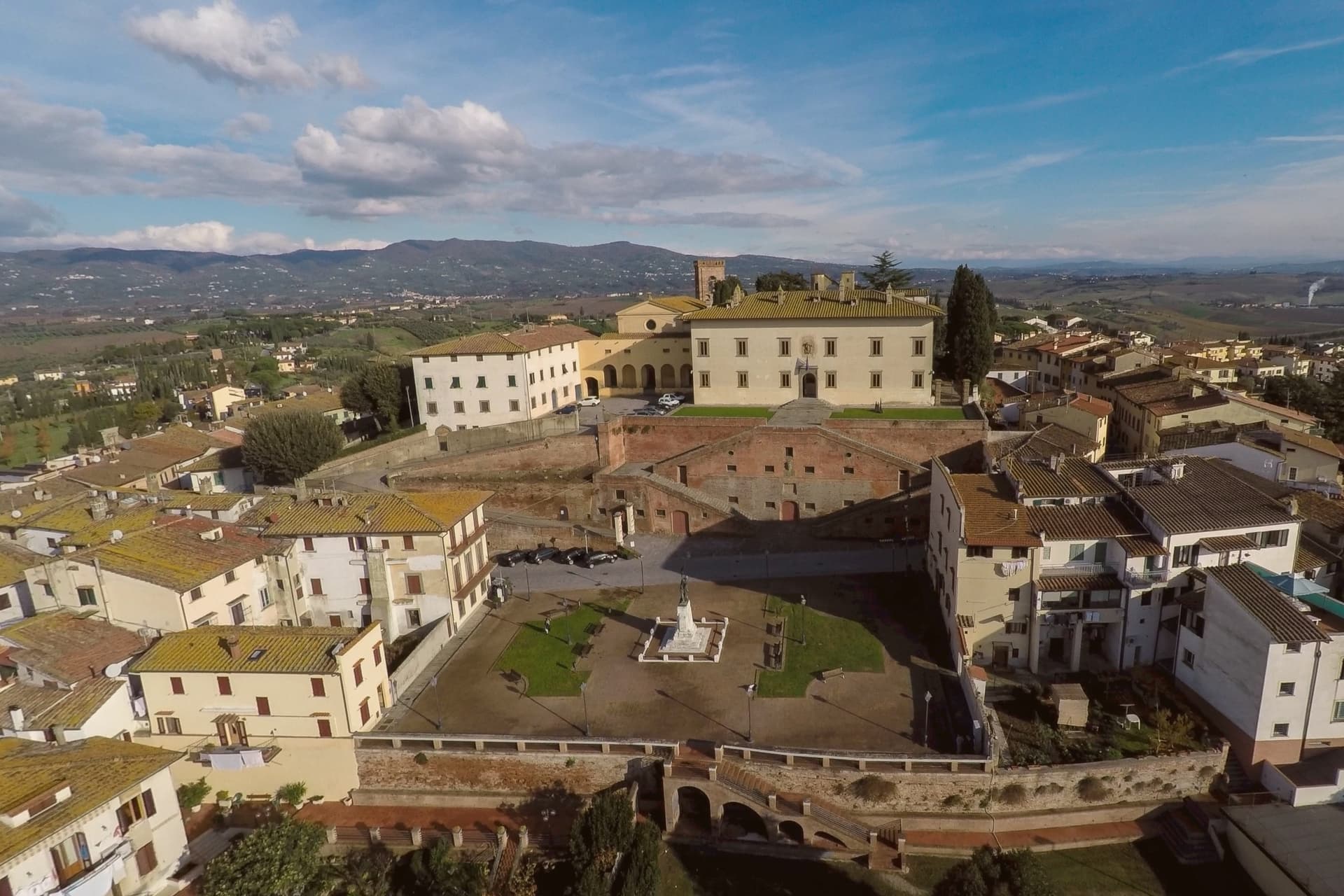
 The best towns with a World Heritage site within 90 minutes of Bologna6 towns, Carmignano among them.
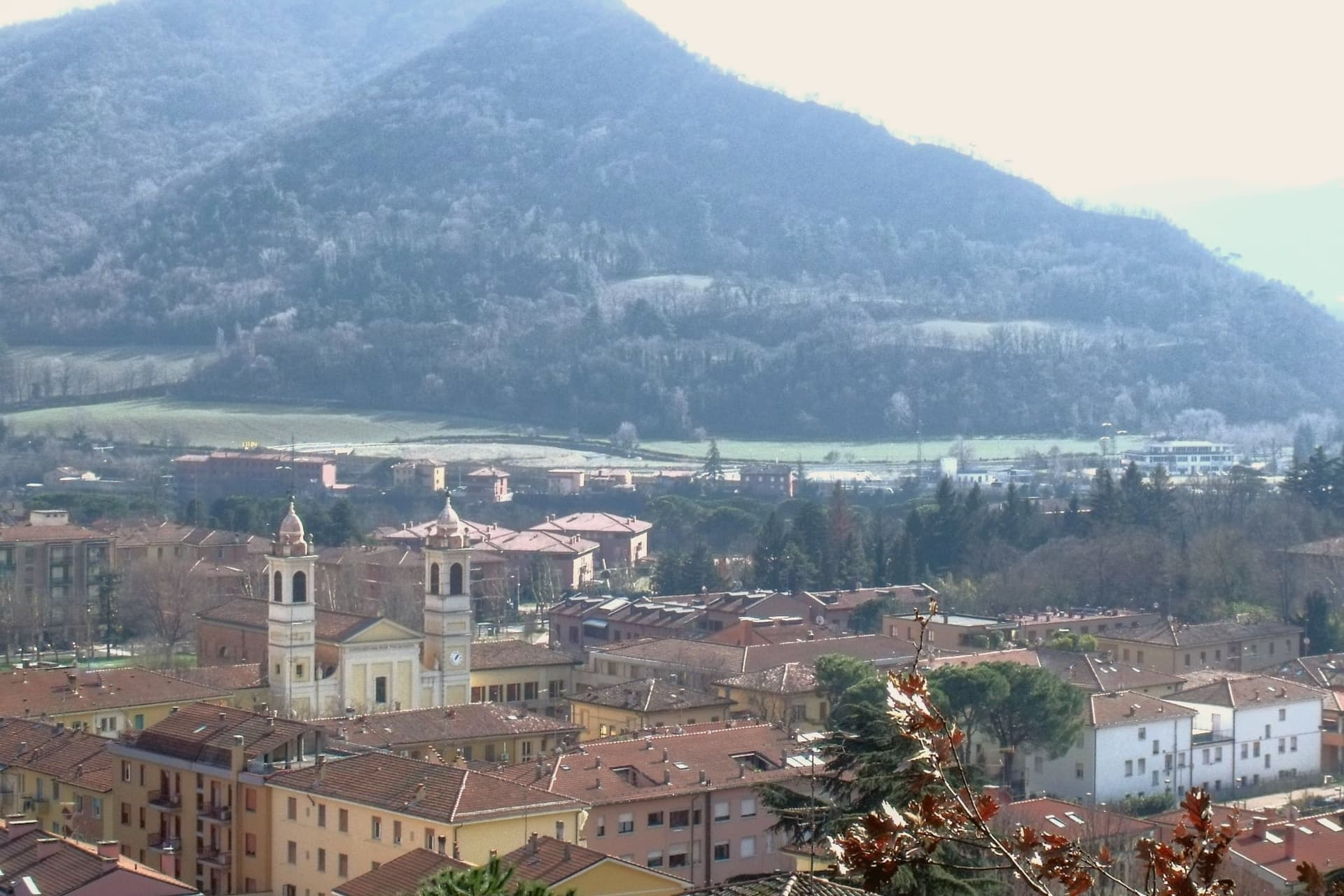
 The best towns with a World Heritage site within 90 minutes of Florence6 towns, Carmignano among them.
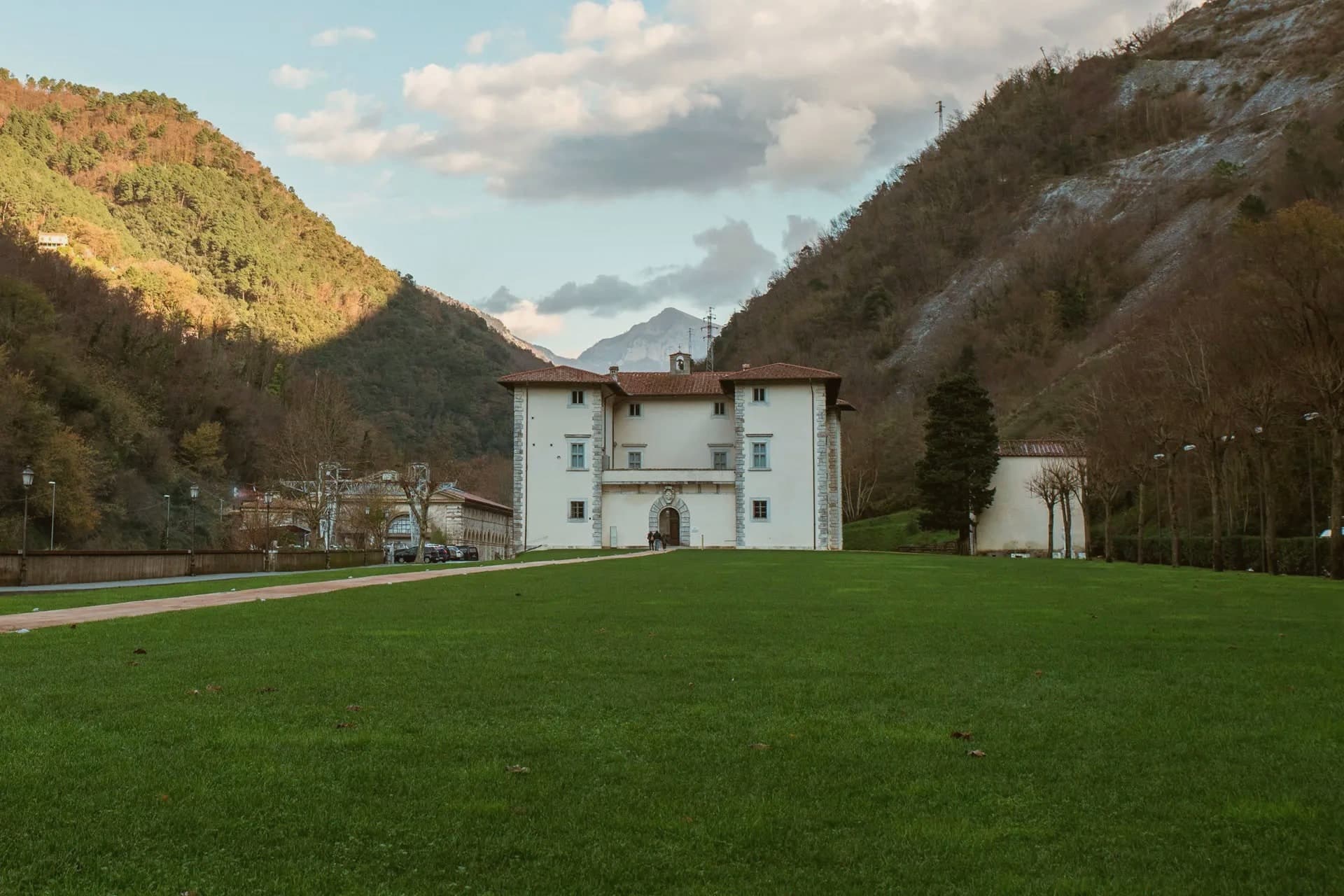
 The best wine towns within 90 minutes of Florence7 towns, Carmignano among them.
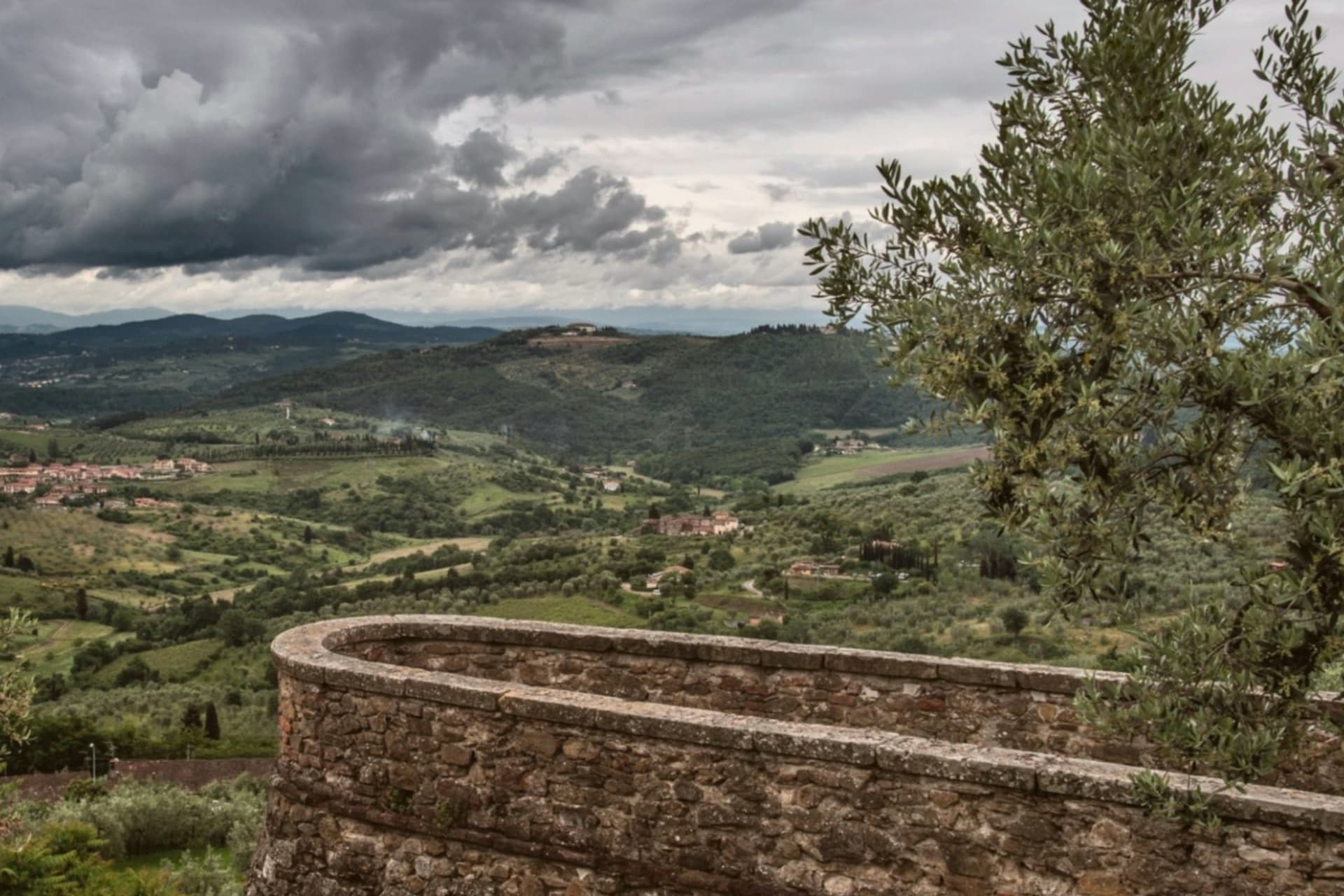
 The best towns with a World Heritage site within 90 minutes of Pisa8 towns, Carmignano among them.
How to get there
From Florence / Pisa (PSA), about 1h 18m by car.
Bologna (BLQ) is about 1h 26m away.
By car from the centre of Florence 39 minutes or Pisa 1h 12m.
Coming by train into Prato Centrale? Carmignano is about 26 minutes away by road.
What to see
Visitazione di Pontormo
Painted for the Pinadori family and still in place in the parish church of San Michele e San Francesco, the panel hangs where it was installed, a late Mannerist work seen in the setting it was made for rather than in a museum.
Villa Medicea La Ferdinanda
The villa sits on the ridge above Artimino, its roofline broken by the chimneys that give it its nickname, looking out over the same slopes planted with vines below.
Tumulo di Montefortini
Monumental Etruscan tomb at Comeana from the seventh century BC, 11 meters high and 60 in diameter, with two intact chambers visited through a corridor.
Tumulo dei Boschetti
Second seventh-century BC Etruscan tomb at Comeana, partially destroyed in antiquity, the surviving chamber visited alongside Montefortini.
Pietramarina
Etruscan archaeological area at 500 meters on the Montalbano ridge above Artimino, with the remains of a sixth-century BC sanctuary and panoramic views.
Parco Archeologico di Carmignano
Network of Etruscan sites including Montefortini, Boschetti, Pietramarina and Prato Rosello, with the Francesco Nicosia Archaeological Museum at Artimino.
The slow-trip planner
Building a trip? Find where Carmignano fits in a slow Italy circuit.
Answer five questions. We will shape a geographically coherent slow trip from the 1,000 Italian towns most travelers skip. Yours to save and share.
We’ve tried
What we got up to
Restaurants, walks, swims — the things we actually did in and around Carmignano, each with the piece we wrote about it.
Erbe, the bitter boiled greens that make a kilo of rare beef sit like a virtue.
The bistecca alla fiorentina, and why everyone who tries to improve it ruins it.
We recommend
Where to eat
Not our picks, but places the guides put their name to: a Michelin star, a Gambero Rosso fork, a Slow Food snail, a Michelin Key for the hotels. Worth a table, a counter, or a night when you pass through.
Da DelfinaTrattoria
Da Delfina has two Gambero Rosso prawns and a place in L'Espresso's Top 300.
Through the year
What happens here
Feasts and festivals that come back year after year. We give the month rather than the date, because the date moves and the month rarely does. Check with the source before you plan a journey around one.
Festa di San Michele a Carmignanopatron saint's feast
usually held in September. Borghi Toscana - Eventi
Sagra del Ficofood festival
usually held in September. SagreToscane.com
Living here
- Population 14,605
- Commuter belti
- Pharmacy in town
- High school within a 30-minute drive
- Nearest airport Florence / Pisa, 1 h 18 min drive
- Regional capital Firenze, 39 min drive
Common questions
- What is Carmignano known for?
- Carmignano is a Medici village at 189 meters on the Montalbano slopes, where Etruscan tumuli sit below the Renaissance villas.
- Where is Carmignano?
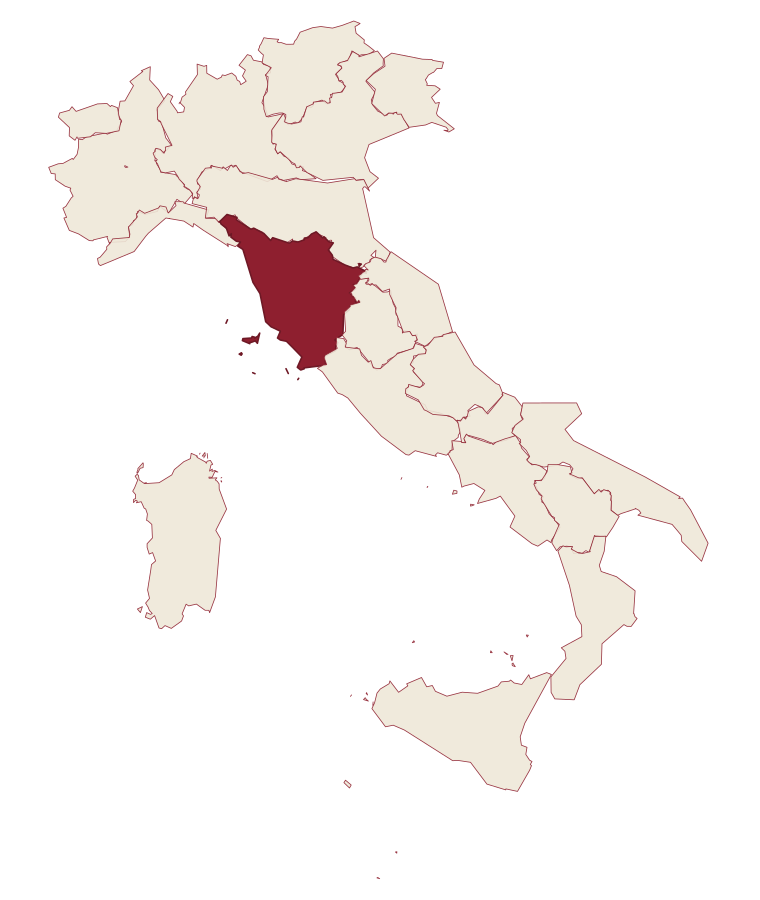
- Carmignano is a comune in the province of Prato, in Tuscany.
- What is the nearest airport to Carmignano?
- Florence / Pisa (PSA), about 1h 18m by car.
- How long is the drive from Florence to Carmignano?
- About 39 minutes by car.
- When is the best time to visit Carmignano?
- Best in Apr–Oct. July is the warmest month, averaging 32 degrees, and December the wettest, with about 16 rain days.
- Is there a sagra or a festival in Carmignano?
- Yes. Festa di San Michele a Carmignano and Sagra del Fico. September is when the first of them falls.
- Which other towns are like Carmignano?
- Vinci, Cerreto Guidi and San Miniato.
- How many people live in Carmignano?
- 14,605 at the 2023 count.
Tags & datadesignations · numbers · sources
Recognised as
The numbers
- Elevation: 189 m
- Population: 14,605
- Surface area: 38.43 km²
These figures were compiled from public directories: ISTAT, OpenStreetMap and Wikidata, and from the official listings of the guides named on this page. Town details change; verify with official sources before you travel.
Featured on
Carmignano appears on this themed pick from our Collections:
Similar
Towns like Carmignano
Vinci
Province: Firenze
both inland, away from the coast · both over 10,000 people
Cerreto Guidi
Province: Firenze
both inland, away from the coast · both over 10,000 people
San Miniato
Province: Pisa
both inland, away from the coast · both over 10,000 people
Tarquinia
Province: Viterbo
both inland, away from the coast · both over 10,000 people
Marostica
Province: Vicenza
both inland, away from the coast · both over 10,000 people
Ovada
Province: Alessandria
both inland, away from the coast · both over 10,000 people
🏛️ UNESCO
More UNESCO towns in Tuscany
Barberino di Mugello
Province: Firenze
The Mugello gateway at 272 meters where the Medici family kept its first country villas, with Michelozzo's Cafaggiolo and the artificial Lago di Bilancino below.
Castiglione d'Orcia
Province: Siena
A stone borgo at 540 meters in the UNESCO Val d'Orcia, with two fortresses guarding the road from Amiata to the Via Francigena.
Cerreto Guidi
Province: Firenze
The Medici hunting villa above the Padule di Fucecchio, where Cosimo I sent his court for the marshland game and Buontalenti built four ramps of stairs.
Montalcino
Province: Siena
A walled hill town at 564 meters above the Val d'Orcia, the last fortress to hold out for the Sienese Republic and the birthplace of Brunello.
Montecatini-Terme
Province: Pistoia
Eleven thermal springs in a Liberty-style park at the foot of the Apennines.