
Apulia · Lecce
Ugento
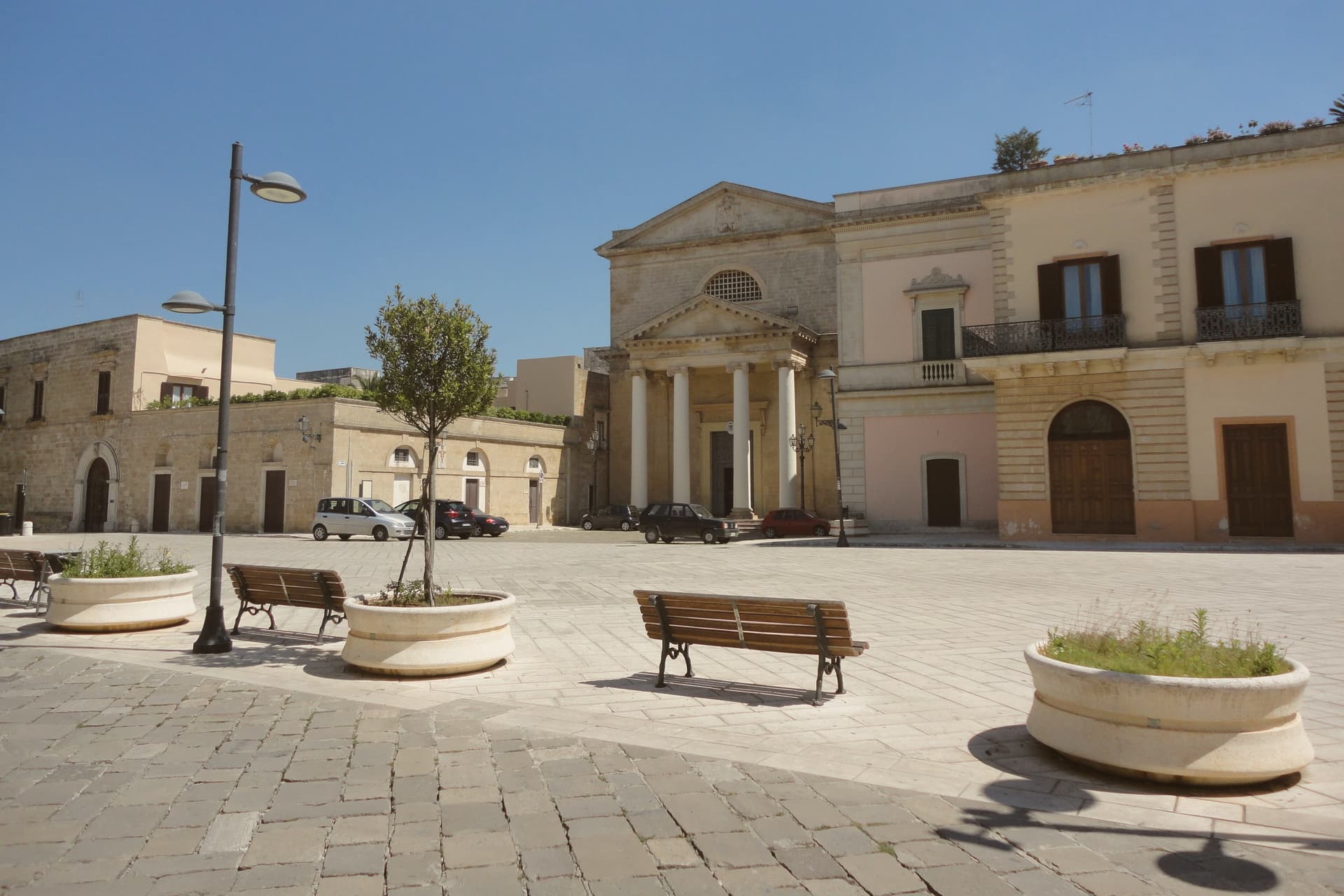
A Messapian-Roman town five kilometers from the Ionian, where a Baroque castle sits on the walls of the ancient city of Ozan.
- Best time
- May–Sep
- By car
- 59 min from Lecce
- By train
- Station in the comune
- Population
- 11,988
Known for
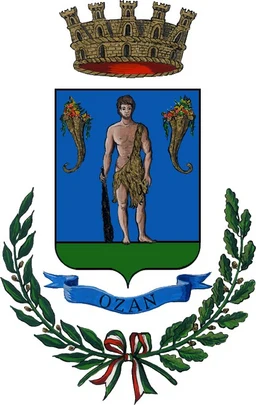
OZAN MESSAPICA
Messapian city named on the fourth-century-BC Soleto Map, with walls and necropolis tombs still traceable on the edge of the modern centro.
ZEUS DI UGENTO
Bronze statue of Zeus cast around 530 BC, found in 1961 in a private cellar, now in the National Archaeological Museum of Taranto.
COSTA IONICA
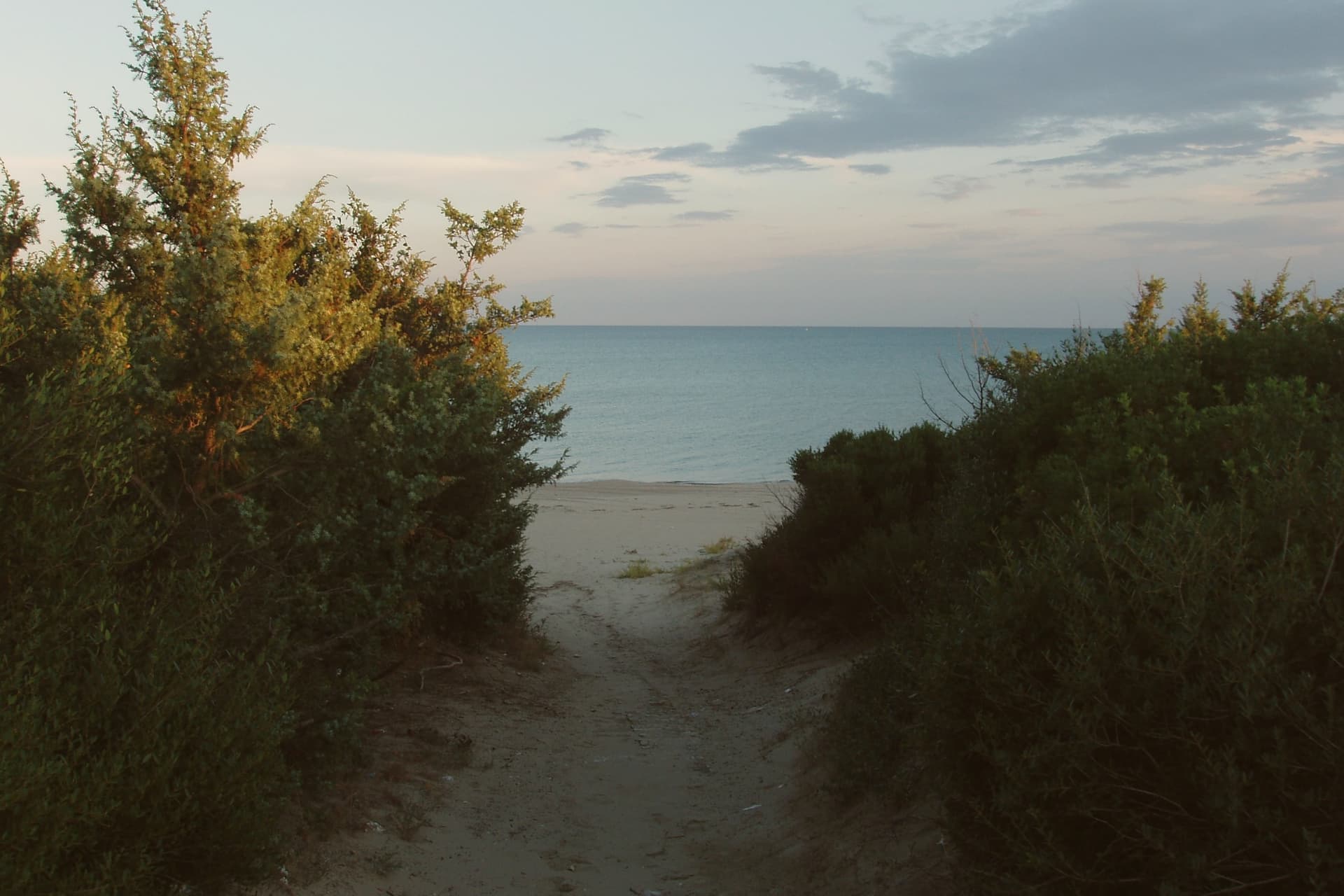
Long Ionian sand strip with the Bandiera Blu marinas of Torre San Giovanni and Lido Marini, the town's summer engine.
When to visit
Best · May–Sep
- J14°
- F15°
- M15°
- A18°
- M23°
- J29°
- J34°
- A33°
- S28°
- O23°
- N19°
- D15°
- Best
- Hot or crowded
- Quiet
- Mostly closed
Daytime averages, 2020–2024. The sea is warmest in August at 28° and coldest in February at 15°. Weather data by Open-Meteo.com.
The festa: Vincenzo di Saragozza, 22 January
Why come
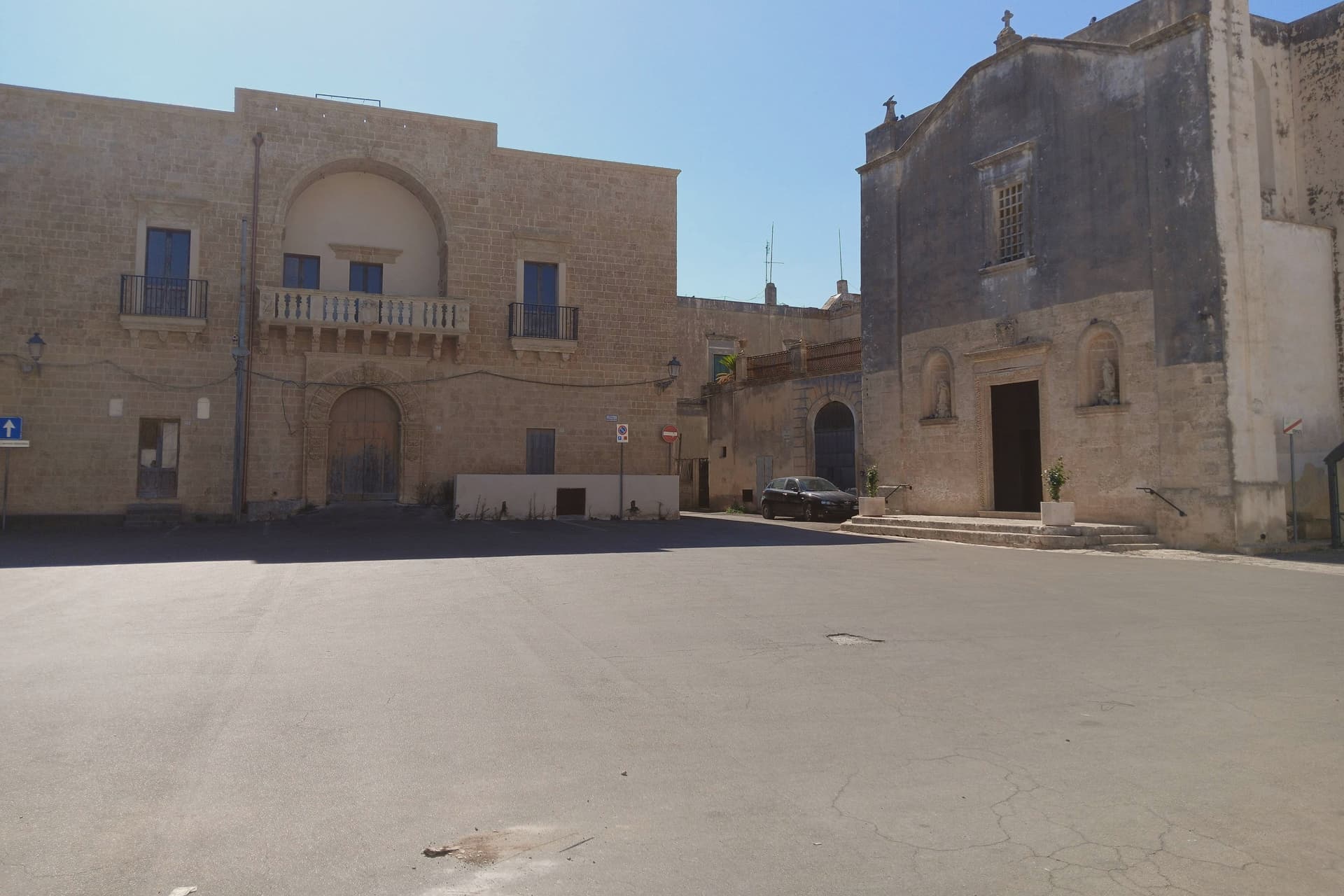
Ugento sits five kilometers inland from the Ionian, its centro built directly over the Messapian city of Ozan, the name recorded on the fourth-century-BC Soleto Map. The walls of that older city and the chamber tombs of its necropolis mark the boundary between the modern town and the ground it grew from, remnants of the civilization that held the lower peninsula between the seventh and third centuries BC. The castle at the center of town began as a Norman motte-and-bailey raised on those same Messapian foundations, later rebuilt as a Baroque palazzo by a family who frescoed its grand salons to record their own history.
A bronze Zeus, cast around 530 BC and found by chance in a cellar in 1961, is now kept in Taranto, with only a copy remaining locally, so the town's oldest and most valuable object is known here mostly by its absence. Inland, the layered town of walls, tombs, castle and cathedral holds the historical weight; on the coast, the frazioni carry the summer crowds. The two halves of Ugento, one built on the memory of Ozan and one facing the sea, run on entirely different clocks.
The Sunday letter
Ugento is on our list. Its letter is still to come.
We are writing about all 1,000 of these towns, one at a time, in a free letter every Sunday: the photo, the food, the festa. That is our mission. Sign up and you will be there when Ugento comes up. By Peter & Sophia, from Pietrasanta.
Read on
Ugento in our articles
How to get there
From Bari / Brindisi (BRI), about 3 hours by car.
Lamezia / Reggio (SUF) is about 5h 46m away.
By car from the centre of Lecce 59 minutes, Bari 2h 50m or Salerno 5h 26m.
There is a railway station in the comune, so you can arrive without a car.
What to see
Castello di Ugento
Norman fort rebuilt as a Baroque palazzo by the d'Amore family in the 1690s, with first-floor grand salons frescoed in 1694 to celebrate family history.
Nuovo Museo Archeologico
Town archaeological museum displaying Messapian finds, the Cozza Petrosa necropolis material and a bronze copy of the Zeus of Ugento.
Mura Messapiche e Necropoli di Cozza Petrosa
Walls and the trullo-shaped chamber tombs of the necropolis sit at the edge of the centro, the oldest layer of the city built over by the modern town.
Cattedrale di Maria Santissima Assunta
Baroque cathedral rebuilt between 1577 and 1855 on earlier foundations, with stuccoes and altars typical of late Salento Baroque.
Marine di Ugento
Coastal frazioni of Torre San Giovanni, Lido Marini, Torre Mozza and Fontanelle, with Bandiera Blu beaches and one of the longest sand strips of the Ionian Salento.
The slow-trip planner
Building a trip? Find where Ugento fits in a slow Italy circuit.
Answer five questions. We will shape a geographically coherent slow trip from the 1,000 Italian towns most travelers skip. Yours to save and share.
We recommend
Where to eat
Not our picks, but places the guides put their name to: a Michelin star, a Gambero Rosso fork, a Slow Food snail, a Michelin Key for the hotels. Worth a table, a counter, or a night when you pass through.
Farnari Unconventional LocandaRistorante
Farnari Unconventional Locanda holds a Gambero Rosso listing.
La Bottega dei SaporiTrattoria
Two Gambero Rosso prawns, at La Bottega dei Sapori.
Living here
- Population 11,988
- Remotei
- Pharmacy in town
- High school within a 30-minute drive
- Train station in the comune
- Nearest airport Bari / Brindisi, 3 h 2 min drive
- Regional capital Bari, 2 h 50 min drive
Common questions
- What is Ugento known for?
- Ugento is a Messapian-Roman town five kilometers from the Ionian, where a Baroque castle sits on the walls of the ancient city of Ozan.
- Where is Ugento?
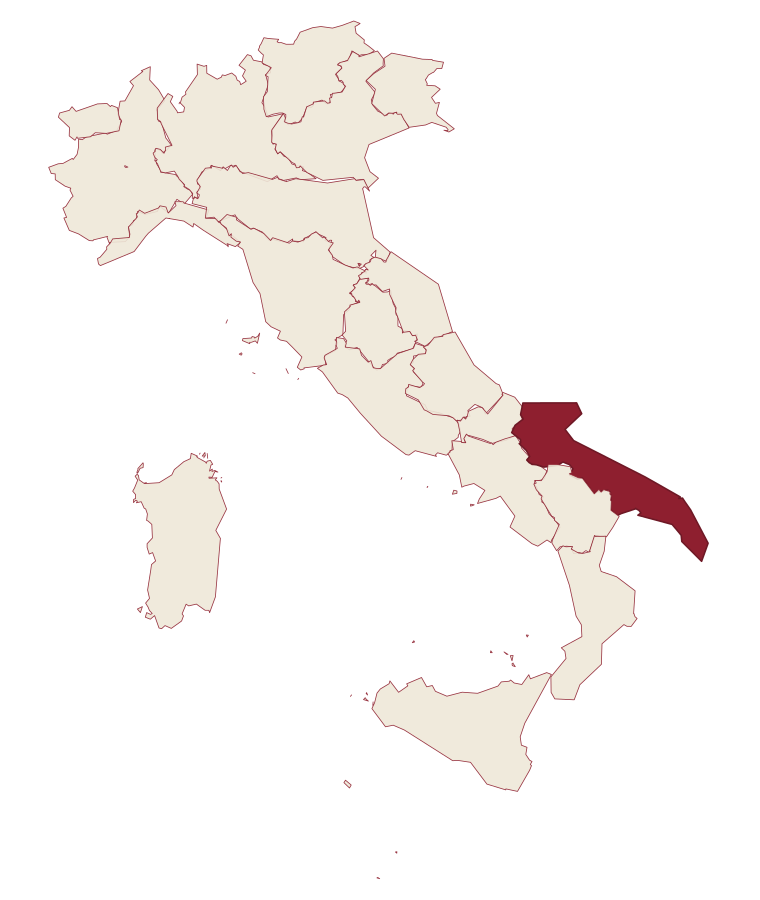
- Ugento is a comune in the province of Lecce, in Apulia, at 108 meters above sea level.
- What is the nearest airport to Ugento?
- Bari / Brindisi (BRI), about 3 hours by car.
- Can you get to Ugento without a car?
- Yes. There is a railway station in the comune, so you can arrive by train.
- How long is the drive from Lecce to Ugento?
- About 59 minutes by car.
- When is the best time to visit Ugento?
- Best in May–Sep. July is the warmest month, averaging 34 degrees, and November the wettest, with about 11 rain days.
- Is there a sagra or a festival in Ugento?
- The town keeps its patron saint's day: Vincenzo di Saragozza, 22 January.
- Which other towns are like Ugento?
- Fasano, Termoli and Vasto.
- How many people live in Ugento?
- 11,988 at the 2023 count.
Tags & datadesignations · numbers · sources
Recognised as
The numbers
- Elevation: 108 m
- Population: 11,988
- Surface area: 100.4 km²
These figures were compiled from public directories: ISTAT, OpenStreetMap and Wikidata, and from the official listings of the guides named on this page. Town details change; verify with official sources before you travel.
Similar
Towns like Ugento
Fasano
Province: Brindisi
both on the Adriatic coast · both over 10,000 people
Termoli
Province: Campobasso
both on the Adriatic coast · both over 10,000 people
Vasto
Province: Chieti
both on the Adriatic coast · both over 10,000 people
Trinitapoli
Province: Barletta-Andria-Trani
both on the Adriatic coast · both over 10,000 people
Carovigno
Province: Brindisi
both on the Adriatic coast · both over 10,000 people
Polignano a Mare
Province: Bari
both on the Adriatic coast · both over 10,000 people
💎 Borghi Autentici
More Borghi Autentici towns in Apulia
Acquaviva delle Fonti
Province: Bari
A Murge town at 300 meters between Bari and the Itria valley, named for its springs and a DOP red onion.
Biccari
Province: Foggia
A Subappennino Dauno borgo at 450 meters under Monte Cornacchia, the highest peak in Puglia at 1,151 meters, with a Byzantine tower at its core.
Campi Salentina
Province: Lecce
A Salento plain town fifteen kilometers north of Lecce, rebuilt after the Saracen raids of 926 and later raised to a marquisate.
Casamassima
Province: Bari
The blue town of the Murge, twenty kilometers south of Bari, its centro storico painted with copper-blue lime after the 1658 plague spared its residents.
Cassano delle Murge
Province: Bari
A Murge foothills town at 341 meters at the gate of the Alta Murgia park, with the 1,300-hectare Foresta Mercadante mostly inside its territory.