
Driving in Italy: The Complete Manual
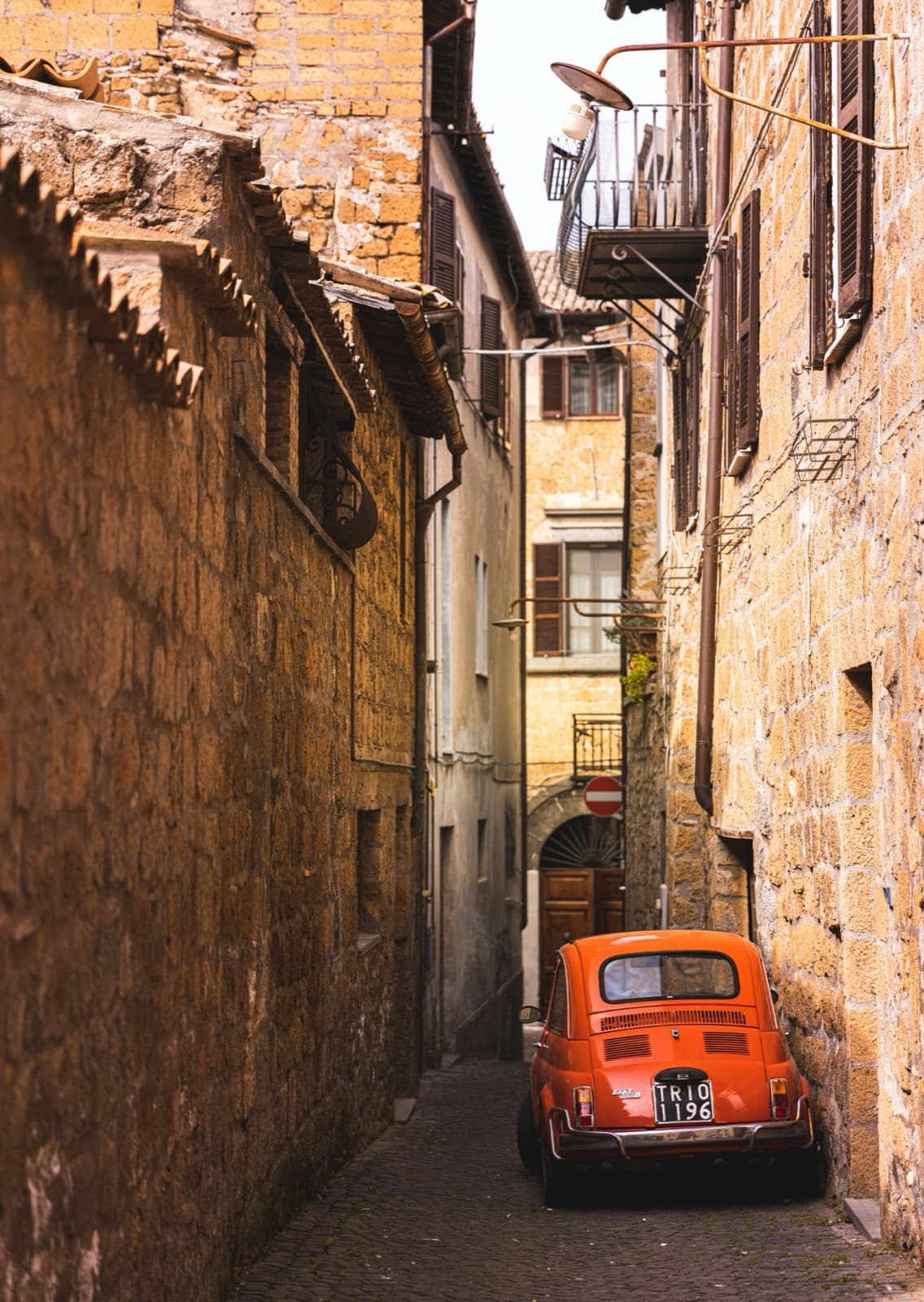
The short answer: Italian driving is calmer than its reputation, and the rules that actually catch foreigners are not the ones they worry about. Use the autostrada to move between regions and the free SS roads to be inside one. Get a Telepass if you're staying more than a month. Never drive into a historic center: the ZTL cameras are the most reliable enforcement system in the country. On the street, white lines are free parking, blue lines are paid, yellow are reserved, and when a faded line could be either, it's blue. Check for market-day signs before parking overnight, hide everything in the car down to the empty backpack, and pay any fine the same day at a tabaccheria. The rest is detail, and the detail is below.
A word on where this comes from. I drive a tenth-generation Honda Civic, bought new, black, barely 180 horsepower, automatic: a microwave with four wheels, serviced once a year, boring beyond argument, and the most reliable driving appliance on the planet. Before it I ran an old Jaguar in British Racing Green that I photographed in parking lots and that consumed the oil reserves of the British Empire weekly, so I understand both ends of the relationship a person can have with a car. The Civic is the right tool for how we use it: day trips on back roads, the weekly shop, and the ten-hour run to Hungary to see family. I drive the country, not a commute, and everything below was learned on Italian asphalt, from the Brenner to Palermo.
The autostrada is the spine
Italian motorways are good, and they are expensive, and the two facts are connected. The network covers the country properly: well-engineered, well-signed, well-maintained, moving you between major cities at a steady 130 km/h without drama.
They cost money by distance. Italy runs no vignette like Switzerland or Austria; it runs tickets. Pull one from the machine on entry, pay on exit, and the longer trips add up, which is why Italians complain about them.
The free alternative is the secondary network: the strade statali (SS) and strade provinciali (SP). Free, and depending on where you are, slow. The SS1 Aurelia runs the Tyrrhenian coast parallel to the A12 and alternates between beautiful and maddening. The further south, the rougher the secondaries get; a Calabrian SS is not a Tuscan SS, and the toll is the price of not being stuck behind a truck doing forty in a Calabrian thunderstorm.
For the slow traveler the split is simple, and it's our standing rule with the car: autostrada for moving between regions, SS and SP roads for being inside one. Time available decides which.
Get a Telepass
If you're in Italy longer than a month and will use the autostrada, get a Telepass: the small radio unit on the dashboard, tied to your plate, that opens the dedicated yellow lanes at toll barriers. No stopping; the charge lands in the app. On a busy Friday the Telepass lane rolls through at twenty while the cash lanes stand still forty cars deep. The device pays for itself in saved hours, and the same unit handles most major airport garages and some city garages with ramps.
Renting? Ask for a car with Telepass included; most major companies offer it for a few euros a day, and it's worth it. Without one, no drama: the cash and card lanes work, machines have taken cards reliably for years, ticket in, pay out, done.
The autogrill is an institution
One of the real pleasures of driving in Italy, ignored by nearly all travel writing about it. The autogrill is the Italian motorway service station: fuel, restaurant, bar, shop, and a free toilet, roughly five hundred of them, most run by the company that gave the institution its generic name.
The food is good. Not extraordinary, good, which at a motorway stop is the whole miracle. The coffee is real, pulled by a person who has been pulling shots for years. Tramezzini and panini made that morning, single-serving bottles of decent wine, fruit, sometimes a hot pasta of the day. Espresso and a cornetto at a small bar table, three euros, five minutes, back in the car.
For contrast: France's aires are unevenly fine, Germany's Raststätten run competent to industrial, and on our family route the Slovenian and Hungarian stations offer, with respect, a melted chocolate bar and a toilet that costs a coin you dig for in the console. The first autogrill past Gorizia on the Italian side of the border is where Sophia and I always stop on the way home from Hungary, and where, after ten hours, the roadside basics start working again. The big ones that bridge the carriageways, Brughiera on the A8 north of Milan, Cantagallo on the A1 above Bologna, are landmarks in their own right. If you need a stop, don't exit hunting for a town; the autogrill is faster and feeds you at least as well as whatever sits off the ramp.
How Italians actually drive
"Italians drive like crazy" opens every English-language piece on the subject, and it is mostly wrong. I learned to drive in Budapest, where the culture is a jungle: politeness reads as weakness and weakness is punished, and I am, without enjoying it, a competent wolf. Italy felt calmer within a week. Italian drivers are gentle, slow, and rarely dramatic about speed. They change lanes the way water moves, in long visible curves you can anticipate. I've sat in catastrophic queues caused by some of the worst maneuvering I've ever witnessed, and the honking stayed minimal; almost nobody rides your bumper or flashes you out of the way. The Eastern European intimidation repertoire simply isn't in use.
Three habits will puzzle you anyway. They aren't character flaws; they're comedies, offered here with the affection of someone from a worse driving culture.
The turn signal is optional or eternal. Either not used at all, or blinking patiently for ten kilometers in the right lane between two exits with no lane change ever intended. I've wondered whether the clicking bothers the driver. Apparently not.
The phone is held in front of the face. The cars have Bluetooth; the drivers have other plans. Standard configuration: phone vertical in front of the wheel, on speaker, driver shouting into it, steering with the free hand, professional version also involves eating. I haven't worked out the mechanics of how the wheel turns. It turns. Nobody crashes.
Trucks race in slow motion. On two-lane stretches, one truck passes another at a closing speed of roughly four kilometers per hour. The pass takes eleven minutes, a queue forms to the horizon, nobody honks, the pass completes, the queue dissolves, life resumes.
Noise on top of a calm signal. That's the whole culture in a sentence.
Driving by region
Italian driving isn't one thing; it splits three ways, roughly along dialect lines, and I know all three from the road.
The north. Turin drives like Vienna: practical, disciplined, signals used correctly, limits observed. Bolzano feels Austrian and is. Milan in traffic is aggressive but rule-following. From Trieste to the French border, a Dutch or German visitor feels at home.
The center. Tuscany, Umbria, the Marche, Lazio: gentler and slower than the north, on windier roads through smaller towns, with Rome as its own obvious exception. The SS roads of central Italy carry the national style at its most patient.
The south. Naples and below runs a different protocol. There are intersections where right of way is negotiated in real time between four cars and a motorino, nobody quite stopping, nobody quite going, settled by a hand wave or a headlight flick. I've driven Palermo and would call it a transcendental experience. These are not bad drivers; they're operating a system that isn't the one in the manual, and it works: you move, they move, everyone moves, nobody hits anybody. The foreigner applying northern rules in central Naples will wait at that intersection forever, because nobody is going to grant a priority the local system doesn't recognize.
First time driving in Italy? Do the trip in the north or center: Tuscany, Umbria, the Veneto, Piedmont, the Dolomites, the lakes. Sicily, Calabria, and Naples are entirely drivable, but budget a few days for your rhythm to arrive. Towns within ninety minutes of each regional capital
The ZTL: the one rule that always catches you
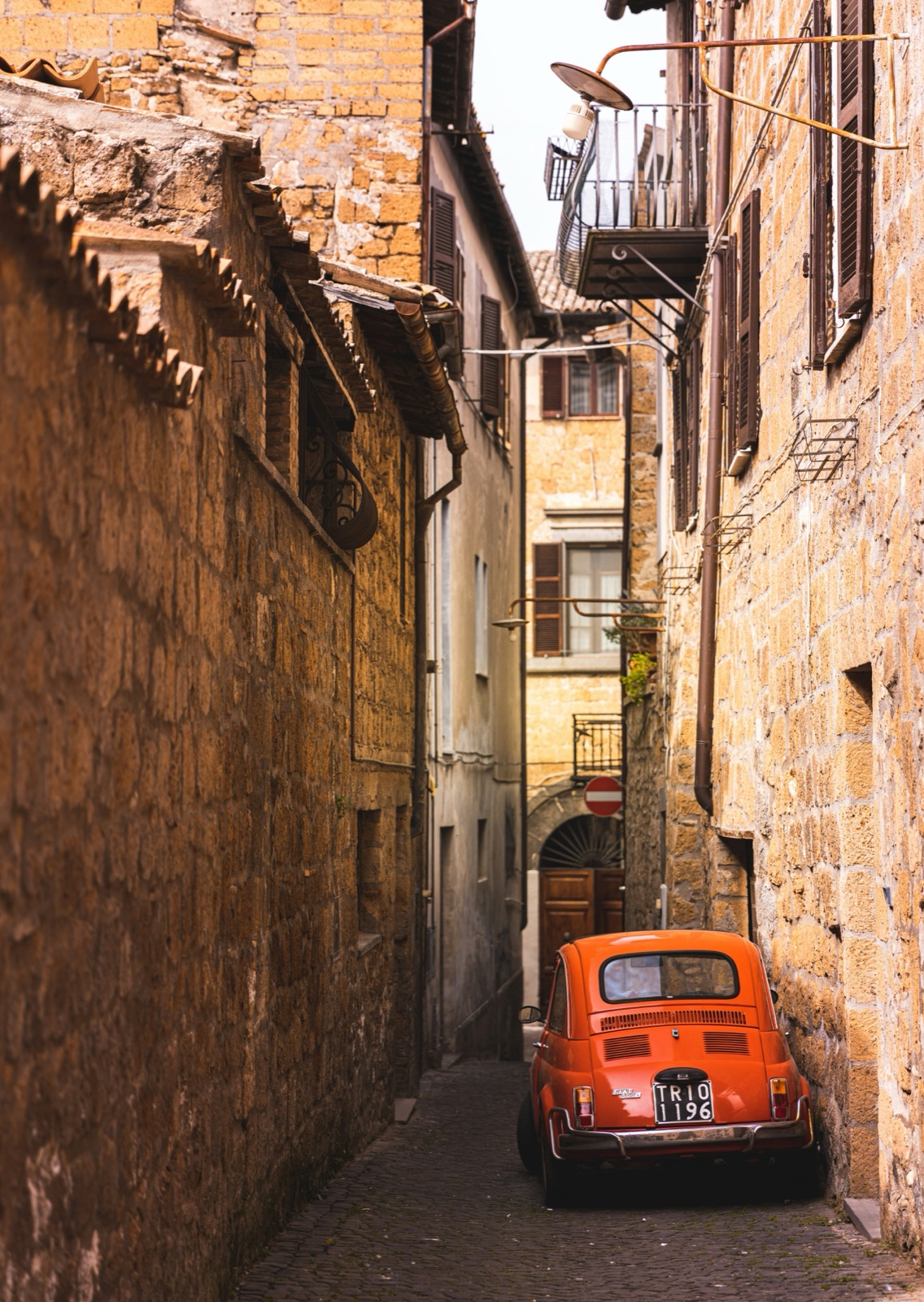
The Zona a Traffico Limitato is the limited-traffic zone at the heart of nearly every Italian town of any age: cameras at the entrances of the historic center reading every plate against a database of authorized vehicles, fining the rest, roughly 80 to 120 euros per camera passed, no officer involved, no judgment, no discretion. Your GPS routing you through it changes nothing. Getting lost changes nothing. Two passes hunting for parking is two fines, arriving by post six to nine months later, in Italian, at the address your rental company has on file.
Foreigners treat the ZTL as a complicated rulebook to master, with timing windows to exploit. Functionally it isn't. Every Italian town has two parts: the modern town, no ZTL, drive normally; and the centro storico inside the old walls, where the ZTL always is. The exceptions on the sign apply to residents, deliveries in narrow windows, taxis, and buses. They do not apply to you. So the entire rule is one sentence: never drive into the centro storico. Park outside the walls and walk in.
This is less a restriction than the town telling you how to use it. The historic center is small; you'll park five minutes from where you're going, and the center was built before cars, for feet, and works best on them. The fine is the city's way of noting you missed the point. One exemption worth knowing: hotels inside ZTL zones can register your plate for your stay, which makes them the single legitimate reason to cross the line, arranged in advance.
Believe the cameras. The autostrada speed-control system has, in my four years, been patchier: I drive at the speed I drive at, sometimes above the limit, and no fine has ever arrived, which I record as an observation and absolutely not as advice. The ZTL camera, by contrast, catches everyone, every time. Weight your caution accordingly.
Parking: the colors on the asphalt
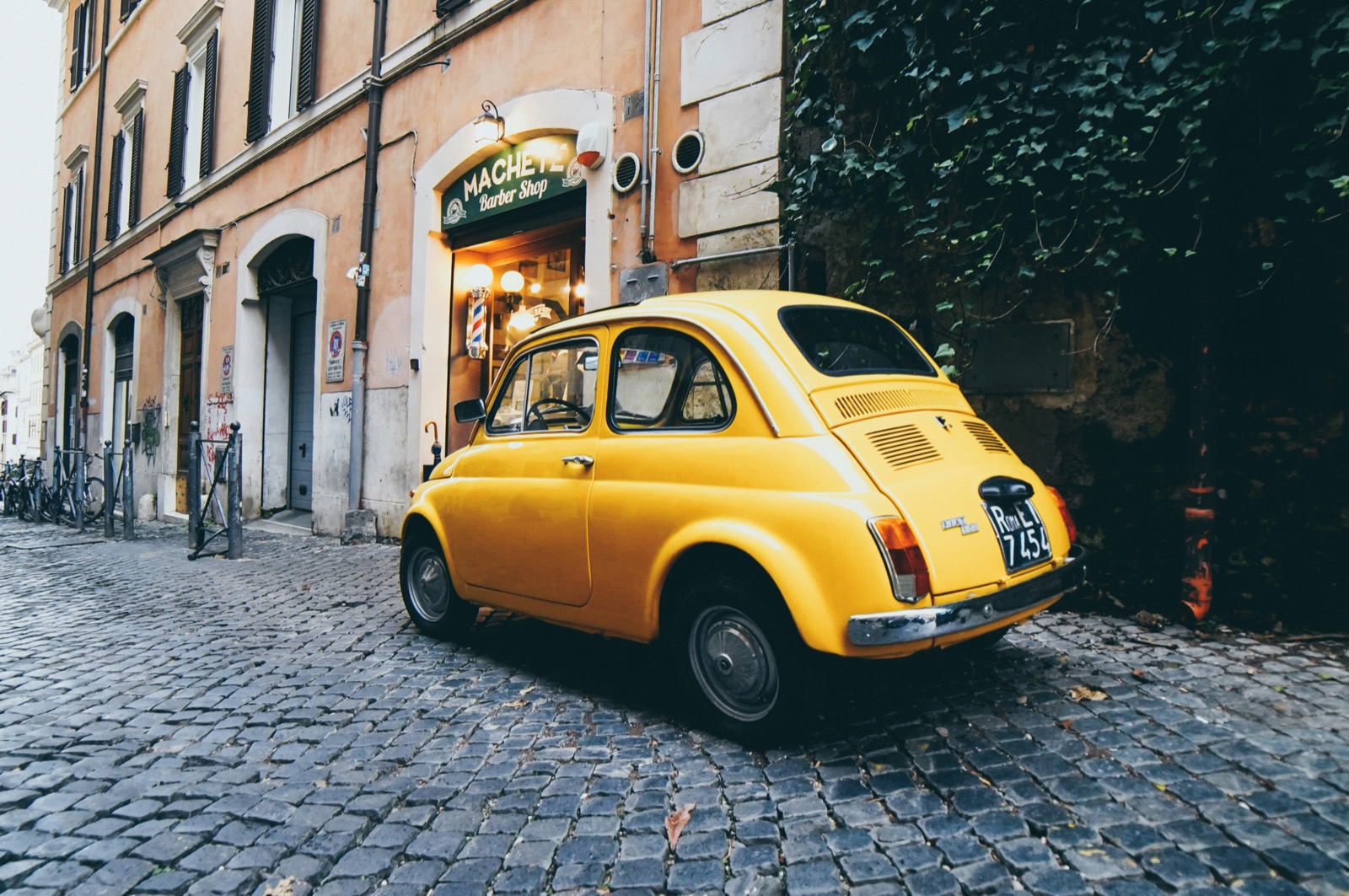
Italian street parking runs on three colors, and the colors do all the work. White lines: free. Blue lines: paid. Yellow lines: reserved, for residents, disabled permits, deliveries, or taxis per the sign above. The scheme holds across the country, which is a small miracle in itself.
The complication is fading. A faded blue line on a hot piazza in July is indistinguishable from a faded white one, and the parking officer arriving at three isn't interested in your interpretation of the asphalt. So the rule: if you can't tell whether a line is blue or white, it's blue. Pay the two euros. The fine costs far more.
Paying: the meter and the apps
The blue zones still keep the small gray meters from the nineties on the corners; they still take coins and still print the paper slip for the dashboard, and they still work. But nearly every Italian under fifty pays by app. EasyPark is the widest-accepted one; Telepass bundles parking with the motorway tolls, convenient on longer trips. Download before you need it, enter the plate once, select the zone code printed on the sign, pay from the phone. The receipt lives in the app; the officer reads your plate and the system answers for you. No paper anywhere.
Read the sign before you pay
Blue zone hours are local, not national. Most run payment from around eight in the morning to eight in the evening, free at night, free Sundays and holidays; some cap the stay at two or three hours no matter what you're willing to pay. All of it is on the sign above the zone, in Italian, in small letters, and the wrench symbol beside a time range marks when payment applies. A blue zone in one town runs different hours from the blue zone an hour up the road, so read the sign in front of you, not the memory of the last one.
Market day: the tow you never saw coming
This trap catches locals too, and the consequences are the worst on this page. Nearly every town has a market day, commonly Saturday or Wednesday, sometimes both, and on it the market streets close to parking from before dawn until the stalls pack away. The signs are clear, small, and often posted only at the street entrance, invisible if you parked at ten the night before in the dark. At six the police arrive; by seven your car rides a flatbed to a fenced lot on the edge of town, and the morning becomes a hundred to three hundred euros of recovery. The rule: parking overnight in a town center on a Friday, walk fifty meters each way first and read every sign. Any mention of a mercato or fiera, move the car.
Garages and the handed-over key
Bigger cities and heavy tourist towns run gated parcheggi that work like garages everywhere in Europe: ticket in, pay at the kiosk, gate up. Underground is the most secure option. Some are tight enough that the attendant asks for your keys and parks the car himself, shuffling three others to slot yours into a corner, keys left in the ignition. This is normal. Hand them over, leave nothing visible inside, and the system works.
Space, and what a bumper is for
Street parking here comes with a moral economy. Leave more space around your car than you would anywhere else: many of the cars on the road belong to drivers in their seventies with no parking sensors, Italians are relaxed about small scratches, and whoever you box in will exit the spot one way or another. If your bumper takes a tap in the process, that is locally understood as a problem you created by parking too close. A meter at each end, or full insurance on the rental and the freedom to stop thinking about it.
The break-in, and looking like a tourist
Car burglary in Italy is neither widespread nor unheard of, and the variable that matters most is whether the car reads as a tourist's. Foreign plate: a tell. Tinted rear windows hiding the back seat: a tell. Suitcases visible through the glass: a confession. I had a rear side window smashed once in the center of Turin, in a paid spot on a well-lit street, with nothing visible inside, but the windows were tinted and the plate was foreign, and someone spent forty seconds with a hammer to learn what was behind the tint. Nothing was taken; the window cost three hundred euros; the police were on scene inside ten minutes and could not have been kinder. The lesson costs nothing: hide everything, every time, including the empty backpack you meant to throw out. The thief only learns it's empty after the glass is gone.
The fine, and the ninety-second fix
A parking ticket arrives as a small paper notice under the wiper. Don't ignore it and don't take it home. Walk into any tabaccheria, the shops with the blue sign and the white T, and hand it over; the woman behind the counter scans the code, takes the money, hands you a receipt, ninety seconds. Fines escalate unpaid, and paying one from abroad six months later is the kind of bureaucratic exercise that turns hair white. Same day, done, forgotten.
When in doubt, ask the bar
The universal solver, standing on a strange street over a strange line you can't read: walk into the nearest bar. Parcheggio libero qui, is parking free here. The man at the espresso machine looks up, looks out the door at your car, looks back, and answers in three words: sì, libero, or no, blu, devi pagare, or most usefully, a gesture across the street, meglio là, better over there. You park over there and the day continues. Italians are extraordinarily helpful about this; they have all parked badly at some point, and they remember how it felt.
The slow road
The autostrada is for getting somewhere; the SS road is for being somewhere, and the slow traveler holds the difference. The SS1 Aurelia between Pisa and Rome is one of the great Italian drives despite the motorway running parallel. The SS12 from Lucca climbs to the Brenner through the Apennines. The SS113 along the Sicilian coast opens views no autostrada will ever offer. None of them is fast, and all of them are in the country. Plan a slow trip by road
The car is how you reach the small towns, and the small towns are why you came. Treat the one as the means and the other as the end, and the country opens.
Last note, for calibration of the author. These tips come from someone who bought a new Civic from a Hungarian dealer, with Hungarian plates, and one week later drove it from Budapest to Palermo, the city some call the hardest driving challenge in Europe. I parked on a street without checking for cameras, without reading the line colors, and left the car there for two weeks. Call it faith, or the fact that it sat in front of a church: no break-in, no theft, no fine, not a scratch. Years on, the parking game has improved considerably, the plates are local, and I'm registered at the municipality, which means I now park wherever I want. You cannot be more local than that.
Frequently asked questions
Is driving in Italy difficult for foreigners?
Less than its reputation. Outside the big southern cities the culture is calm, patient, and predictable, gentler than much of central and eastern Europe. The genuine hazards for a foreigner are administrative, the ZTL cameras and parking rules, not the other drivers. First trip: start in the north or center.
Do I need an International Driving Permit in Italy?
If your license was issued outside the EU, yes, formally: Italy requires an IDP or a sworn translation alongside the license itself. Rental desks often don't ask; a roadside check can, and the fine for driving without one is real. EU licenses need nothing extra.
How do tolls work on the autostrada?
By distance: pull a ticket at the entry barrier, pay by cash or card at exit, or fit a Telepass and roll through the dedicated yellow lanes without stopping while the charge posts to the app. There is no vignette in Italy.
What is a ZTL and how do I avoid the fine?
A camera-enforced limited-traffic zone covering the historic center of nearly every old town, fining unauthorized plates roughly 80 to 120 euros per pass, by post, months later. Avoiding it requires one habit: never drive inside the old walls. Park outside and walk. If your hotel sits inside a ZTL, have it register your plate before you arrive.
What do the blue lines mean for parking in Italy?
Blue is paid, white is free, yellow is reserved. Pay at the meter or by app (EasyPark is accepted most widely), display or digitally register the receipt, and check the sign for hours: most blue zones are free overnight, on Sundays, and on holidays. A line too faded to identify is treated as blue.
What happens if I get a parking fine in Italy?
A notice under the wiper, payable in ninety seconds at any tabaccheria, scan, pay, receipt. Pay it the same day: fines escalate on a timetable, and settling one from abroad later is deliberately painful. Ignoring a rental-car fine means the company forwards your address and adds an admin fee.
Can I park overnight in Italian town centers?
Usually yes on white lines and on blue lines outside paid hours, with one critical check: market day. Streets hosting the weekly mercato clear from early morning and cars left there are towed, at a hundred to three hundred euros to recover. Read every sign within fifty meters before leaving a car overnight.
More from Anywhere Italy
 Themed picks · Turin · Slow Food10 Slow Food comuni near Turin
 Themed picks · Genoa · Coast10 fishing villages near Genoa
 Themed picks · Verona · Wine10 wine towns near Verona
 Themed picks · Pescara · Mountains10 mountain comuni near Pescara
 Themed picks · Bari · White towns10 white towns of Puglia near Bari
 Themed picks · Catania · Baroque10 Baroque towns in Val di Noto near Catania