
Healthcare in Italy, Explained: What It Costs, Where to Go, and Who Pays
The short answer: in an emergency you go to the pronto soccorso or call 112, and you are treated first and asked who you are afterwards. If you hold a European health card you pay what an Italian pays, which is often nothing. If you come from outside the EU you are still treated, and the bill for it arrives later, so travel with insurance. For everything short of an emergency, the first stop is not a hospital at all: it is the pharmacy with the green cross, where a trained pharmacist will sort out most of what goes wrong on a trip. And if you move here, a health card and a family doctor cost little or nothing, and the system is better than its waiting rooms look.
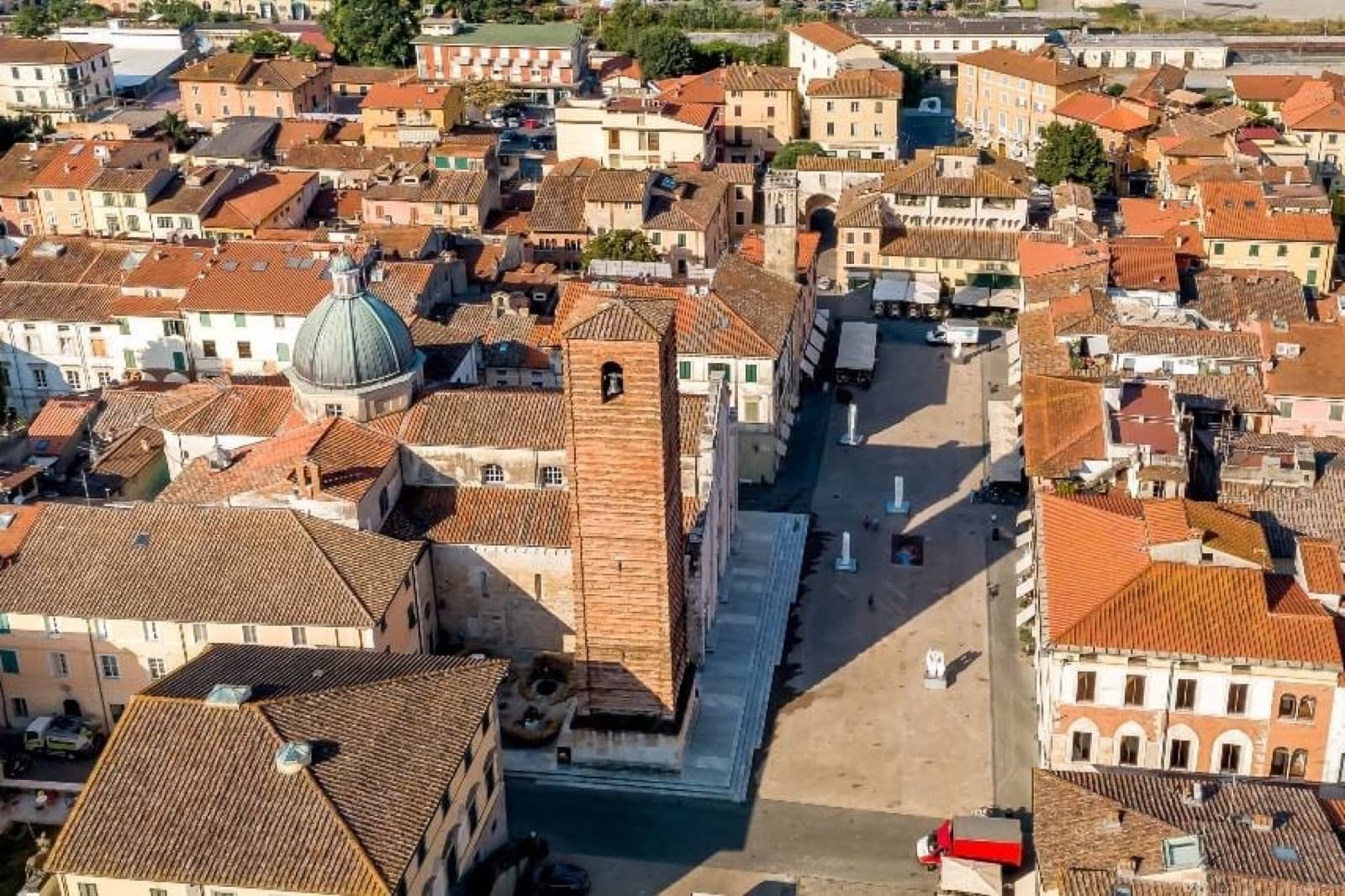
I live in Pietrasanta, I pay my taxes here and I am registered with the Italian health service. Before that I used it as a European visitor on a foreign card, and before that I paid my own way in private clinics in Rome. I have been through the emergency room twice (two different fingers, one Japanese chef's knife), through public hospitals for my heart, and through private clinics for smaller things. What follows is what I learned from the inside, checked against the rules.
If something goes wrong on your trip
Work down this list and stop at the first line that fits.
| What is wrong | Where to go | What it costs a visitor |
|---|---|---|
| Life or limb: chest pain, a bad fall, a deep cut | Call 112, or go to the pronto soccorso (emergency room) of the nearest hospital | EU card: treated like an Italian. Outside the EU: treated, then billed |
| Something that needs a doctor tonight, but is not an emergency | The guardia medica, the after-hours doctor service most towns have | Usually a modest fee for visitors |
| A cold, a rash, a stomach bug, a sting, a forgotten prescription | The farmacia, green cross over the door | The price of what you buy |
| You want a specialist this week, not in three months | A private clinic or private doctor | Out of pocket, and less than you expect |
The emergency room: treated first, questions later
This is the part that surprises Americans most. Walk into an Italian emergency room with a real emergency and they stabilize you first and work out who you are afterwards. Citizen, resident, tourist who slipped on a church step, a person with no papers at all: nobody checks a card at the door. The Servizio Sanitario Nazionale, the SSN, was set up in 1978 on the principle that urgent care is a right and not a purchase, and that principle is what you meet at the door.
What happens to the bill depends on who you are.
If you hold a European Health Insurance Card (or the British GHIC), you are treated on the same terms as an Italian, and your home system settles with Italy. I did exactly this in my first years here. I turned up at the emergency room of one of Rome's biggest hospitals with a finger cut most of the way through, showed the card, was stitched up, and paid nothing at all.
If you come from outside the EU on a short stay, you receive the same urgent care, and you are asked to pay the regional tariff for it afterwards. This is the Ministry of Health's own wording, and regions have been tightening how they collect. Tuscany set out its rules in 2024: visitors repay the drugs and materials used in the emergency room, a short observation stay is charged at 400 euros a day, and an admission is charged at the national tariff. None of that is ruinous by American standards, but it is not free. It is the reason to carry travel insurance.
If you are registered with the SSN, a real emergency costs nothing and neither does being admitted. The one trap is turning up with something that is not an emergency. Triage gives every arrival a colour, and if yours is white, meaning it could have waited for a doctor or a pharmacist, you pay a 25 euro ticket. I know this because after I registered I cut a second finger, went to our local hospital, was treated, and paid the 25 euros. It is the system's polite way of saying that is what the pharmacy is for.
The pharmacy is the front door
In Italy the pharmacy is not only where you collect pills. It is the front door of the whole system, and it is open to everyone, with or without a health card.
You walk in, you describe what is wrong, and the pharmacist, who trained for years, sorts you out on the spot: take this, or no, that one needs a doctor. A good deal of what would need a prescription and an appointment elsewhere is handed over the counter after a short conversation. We have solved more minor problems standing at a pharmacy counter here than we ever did sitting in a waiting room in any other country we have lived in.
There is also always one open. Pharmacies share a night and holiday rota, the farmacia di turno. The name and address of the one on duty is posted on the door of every closed pharmacy and online, so at three in the morning in a small town there is still a pharmacist within reach. Many pharmacies now do more than dispense: vaccinations, simple tests, blood work. It takes a great deal of pressure off the hospitals, and it means you do not go round in circles over a fever or a flu jab.
What to do: look for the green cross. If it is closed, read the notice on the door for the pharmacy on duty. Bring the box or the name of any medicine you take at home; the pharmacist can usually find the Italian equivalent.
You are rarely far from care
I come from Hungary, where serious medicine concentrates in the capital. Italy is the opposite, and that matters if you are travelling to small towns, which is rather the point of this site.
Nearly every small town has a hospital or a guardia medica for nights and weekends. Every university city, and Italy has a lot of them, anchors a large general hospital or policlinico with the full range of specialists. I have walked into general hospitals in towns you have never heard of that run to the size of a decent London one. The system was built to put medicine within reach of everyone, not to make the sick travel to it.
One thing to know before you see it: because the care is public, the buildings do not look like a billion dollars. "Shiny" and "comfortable" sit well below "reachable" and "effective" on the list of priorities, and plenty of hospitals live in old buildings, some of them former palaces. Do not let the lobby fool you. Here in Versilia, with Carrara next door, even the hospital floors are marble, so in a sense it does look like a billion dollars.
The ambulance is probably driven by a volunteer
When you dial 112, the single emergency number, the vehicle that comes may well not belong to the state. Across much of Italy emergency transport runs on volunteers, from two opposite traditions doing the same work.
One is Catholic: the Misericordie, lay confraternities that go back to Florence in 1244, among the oldest volunteer organizations on earth, with over 700 of them still running ambulances. There is a station next to our apartment in Pietrasanta, and my butcher, Angelo, volunteers there. The other is secular: the Pubbliche Assistenze, the green and white crosses gathered under ANPAS, born from workers' mutual-aid societies after unification and often founded in deliberate opposition to the religious ones. There are over 900 of those. Add the Red Cross and local foundations and a startling share of the national safety net is ordinary people who trained in their own time.
It is also why coverage reaches towns the state alone might never staff. The medicine is national and the money regional, but what actually arrives at your door is often local, voluntary, and older than the Republic.
If you move here: the card, the doctor, the ticket
The SSN is national in principle and regional in practice. The rules are set in Rome, but the money, the hospitals and the administration sit with the twenty regions, so you register where you live, you choose your doctor from the local list, and if you move from Toscana to Piemonte you register again.
Getting in is less painful than the reputation suggests, and I will not write you a step-by-step because the details change by comune. The shape is this. If you work and pay taxes here, you are in automatically. If you live here on foreign income, you register voluntarily and pay an annual contribution set by national law and tied to your income. Either way you end up holding a tessera sanitaria, the health card, and that card is the key to everything else.
With the card you pick a medico di base, a family doctor, at no cost. The GP is the gateway: free visits, prescriptions, referrals. Most long-term medication for a chronic condition costs little or nothing.
It is not all free, and the brochures tend to skip this. Specialist visits, tests and other non-urgent care carry a co-payment called the ticket. The honest number is small: a first specialist visit is around 20 to 25 euros, and lab work is charged by the exam. Large groups pay nothing at all, among them young children and older people under an income threshold, the unemployed, pregnant women, and people with recognized chronic conditions or disabilities.
| For a registered resident | What you pay |
|---|---|
| Family doctor | Nothing |
| A real emergency | Nothing |
| A hospital admission | Nothing |
| A first specialist visit | A ticket of about 20 to 25 euros |
| Lab work and scans | A ticket per exam |
| The emergency room for a non-emergency | 25 euros |
The doctor who prescribes a spa
The back end of the system is generous in ways that catch you off guard: post-operative care, rehabilitation and structured elder care are built in. My favourite example, and it is real: with the right back or joint problem, your doctor can prescribe a cycle of thermal treatments, and the SSN covers it at an accredited spa for the price of a ticket. A prescription for the waters.
Italy has been sending the sick to its hot springs since the Romans, and a good number of the towns on this site grew up around one. They are collected on our page of towns with hot springs. There are worse health systems to be stuck with.
The honest weakness, and the private lane beside it
It is not perfect, and pretending otherwise would make everything above harder to believe. The real failing is the wait. Urgent cases are seen fast. A routine specialist appointment can sit in the public queue for months, and how long depends on the exam and on the region. If you are the kind of person who likes to test everything every year with no symptoms, the waiting list will not favour you.
So a private lane runs beside the public one, and using it is no drama. You skip the queue and most of the paperwork and you pay out of pocket, at prices that are a fraction of what the same visit costs in the United States. In our first years in Rome this is exactly what I did: if something was wrong I went private, paid, and got on with my life. I do not earn a New York salary. That is the part Americans struggle to absorb: paying for good private care here is a reasonable Tuesday, not a debt. It is out of reach for many Italians, and it is there for those who want the shortcut.
If you come from the UK, the SSN will feel like a cousin of the NHS, because it was modelled on it. Two things will feel different: Italians use the private lane more readily, because it is cheap and normal rather than a last resort, and the reach into small towns is greater than you are used to.
How good is it, really
People say "best healthcare in the world" loosely, so here is the citation. The last time the World Health Organization ranked national health systems, in its World Health Report of 2000, Italy came second of 191 countries, behind France. The United States, which spends more of its economy on health than anyone, came 37th. The ranking is old and its method was criticized, and the WHO never repeated it. But life expectancy in Italy remains among the highest in Europe, and I would put three reasons behind that.
The first is the reach described above. A system that gets to everyone catches the heart problem or the tumour while it is still a signal. The second is the depth of the tradition. The medical school at Salerno was teaching in the Middle Ages, earlier than any other in Europe, and the University of Bologna dates from 1088; the teaching hospitals in these cities have been training doctors, in one building or another, for the better part of a thousand years. The third is the doctors themselves, who in my experience will take on the hard case that a more defensive system quietly declines. Modern anatomy and pathology were largely worked out in Italian universities, and the tradition did not stop: the first stem-cell gene therapy approved in Europe was developed in Milan.
That is the system. If you are visiting, carry your health card or your insurance, learn the words farmacia and pronto soccorso, and remember 112. If you are moving, get the tessera and a family doctor in your first month. For the rest of how this country works, there is the driving manual and the rules for slow travel.
Frequently asked questions
Is healthcare free in Italy for tourists?
Emergency care is given to everyone without checking a card first. Visitors with a European Health Insurance Card or a British GHIC are treated on the same terms as Italians. Visitors from outside the EU receive the same urgent care and are asked to pay the regional tariff for it afterwards, which is why travel insurance matters.
What number do I call in an emergency in Italy?
112, the single European emergency number. It reaches ambulance, police and fire services. The ambulance that arrives is often run by volunteers from a Misericordia, a Pubblica Assistenza or the Red Cross.
What is a farmacia di turno?
The pharmacy on night and holiday duty. Pharmacies share a rota so that one is always open in each area. The name and address of the one on duty is posted on the door of every closed pharmacy and listed online.
Can a pharmacist in Italy help without a prescription?
Often, yes. Italian pharmacists are trained to assess minor problems and can supply many remedies over the counter after a short conversation. They will also tell you plainly when you need a doctor instead.
What is the ticket in Italian healthcare?
The co-payment residents make for specialist visits, tests and other non-urgent care. A first specialist visit is around 20 to 25 euros. Family doctor visits, real emergencies and hospital admissions carry no ticket, and many groups are exempt altogether.
Why did I pay 25 euros at the emergency room?
Because triage classed your visit as not urgent. Emergency rooms charge a 25 euro ticket when the problem could have been handled by a family doctor, the guardia medica or a pharmacy.
How do expats join the Italian health service?
If you work and pay taxes in Italy you are enrolled automatically. If you live in Italy on foreign income you can register voluntarily and pay an annual contribution set by national law. Either way you receive a tessera sanitaria and choose a family doctor from your region's list.
What is the guardia medica?
The after-hours doctor service, for problems that need a doctor at night, at weekends or on holidays but are not emergencies. Most towns have one.
Can an Italian doctor really prescribe a spa?
Yes. For certain conditions, mostly of the joints, back, skin and airways, a doctor can prescribe a cycle of thermal treatments, and the health service covers it at an accredited spa for the price of a ticket.
Are private doctors in Italy expensive?
Not by American standards. A private specialist visit is paid out of pocket and typically costs a fraction of the same visit in the United States, with little paperwork and a short wait. Many residents use private care to skip public waiting lists for non-urgent appointments.
More from Anywhere Italy
 Themed picks · Rimini · Adriatic coast10 Adriatic seaside towns near Rimini
 Themed picks · Reggio Calabria · Aspromonte10 Aspromonte hill towns near Reggio Calabria
 Themed picks · Florence · Wine10 Tuscan wine towns near Florence
 Themed picks · Turin · Mountains10 mountain comuni near Turin
 Themed picks · Verona · Lake Garda10 Lake Garda towns near Verona
 Themed picks · Rome · Olive oil10 olive oil comuni near Rome