
How to Spot a Tourist Trap Restaurant in Italy
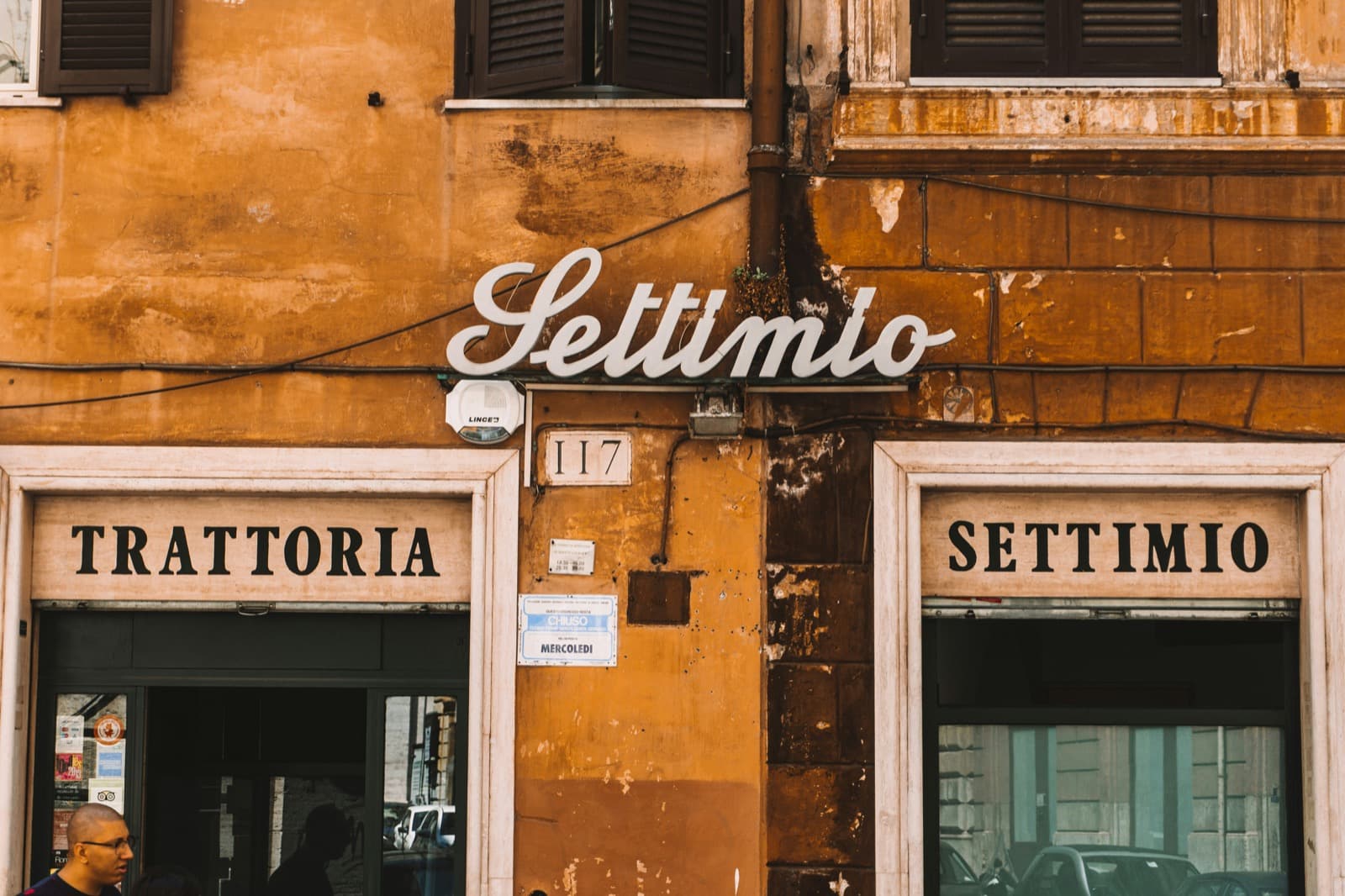
The short answer: the reliable warning signs are a table on the main piazza, a long menu coming out of a small kitchen, dishes from five different regions on one card, a place that closes for the winter, a dining room with free tables at 8pm on a Saturday, and a man in an apron calling to you in the doorway. No single sign condemns a restaurant. Read them together, and when a place trips three or four at once, keep walking. Two streets off the square, the prices drop, the Italians appear, and the kitchen starts cooking for people it knows.
That is the checklist. The rest of this article is how to actually read it, because every one of these signals has exceptions, and the difference between a rule and a signal is the difference between eating adequately and eating well.
Why the room matters more than the food
The first thing to understand about restaurants in Italy is that the trattoria is not, in the American sense, a business serving meals. It is closer to a living room with a kitchen attached. The people who eat in one three times a month are part of the furniture. They get the same table every visit, and the waiter who passes without writing anything down already knows their order.
This is where the big family events happen: the birthdays, the engagement announcements, the lunch after a funeral. I have watched people here keep their standing table through months when money was short, because the table is the social life, and you economize on almost anything before you economize on that. Nobody borrows for a television. The table is different.
Which is why the question of where to eat in an Italian town is not really a question about food. It is a question of whether you are sitting inside the town's social fabric or outside it, paying admission to a version of Italy performed for people who are leaving on Thursday. A tourist trap will feed you. That was never the problem with it.
Signal 1: The address has to be paid for
A restaurant's location is real estate, real estate has a price, and the price comes back out of the kitchen one way or another. There is a reason fast food chains buy the busiest corners in every city on earth: foot traffic is margin you never have to earn twice. A dining room on the main square of a famous commune, with hundreds of people flowing past every hour, pays enormous rent, and that rent is either on your bill or saved somewhere you will taste, in the produce, the wine, the person doing the cooking.
Sometimes the square is worth it. A table facing a thousand-year-old church is a real thing, and you are allowed to pay for the view as long as you know that the view is what you are paying for. What the square should never be is the default. Walk one block off it. Walk two. This works so consistently across the country that it behaves less like advice and more like arithmetic.
Signal 2: Read the room before the menu
Stand in the doorway at one in the afternoon and look at the tables before you look at anything else. Italians at lunch, even casual Saturday lunch, dress in a particular register: long cotton trousers, a proper shirt, leather shoes with some history in them, the women in a dress or a scarf or earrings chosen on purpose. What they are not wearing is a baseball cap. Sandals over white socks are a northern European tell. Cargo shorts with zip-off legs are an American one, and so is the t-shirt with a university name across the chest.
None of this is a judgment about clothes. It is a census. If the room holds more cargo shorts than long trousers on an ordinary weekday, the kitchen is cooking for people who will never come back, and food cooked for people who will never come back tastes exactly like what it is. The version of the dish that gets made when the cook is feeding neighbors is a different dish. That is the one you traveled for.
Signal 3: The opening calendar on the door
Look for the small printed sign with the orari di apertura, the opening hours, and the giorni di chiusura, the closing days. Then check what it says about winter.
A restaurant that locks up from October to April is not a restaurant. It is a seasonal concession, and the two run on different machinery. The year-round place feeds the same regulars through the dead weeks of February, when the streets are empty and the only customers are four men at the back table who have held their Wednesday since the early nineties. That continuity is what keeps a kitchen honest, because the people eating there will notice a shortcut by Thursday.
The seasonal place reopens each spring to a river of strangers. The menu was decided in March, the supply chain runs on a freezer, and you can tell from the first plate: the same dry penne under three different sauces, all arriving at the same temperature. A living kitchen does not produce that plate.
Signal 4: A long menu in a small kitchen
The famous tells here are less reliable than travelers think. An English translation condemns nothing; nearly every restaurant in a town with any visitors carries one, including the excellent ones, out of ordinary courtesy. A waiter who switches between three languages proves even less. Young Italians, especially on the coast, often speak two or three languages well, and it signals nothing about the food.
What you are actually looking for is quieter, and it is about scale. Count the tables, then count the dishes. A tiny room offering forty dishes is making a promise no four-square-meter kitchen can keep from raw ingredients, which means most of that menu travels from freezer to microwave. Suspicious completeness is the giveaway: a little of everything, engineered to lose no customer.
The best menus I know run about ten lines. Eight of them are local. The last one is a fish that came in this morning, handwritten on paper and clipped inside the folder. A menu like that is a kitchen telling you what it can defend.
Signal 5: One region per kitchen
Italian identity is regional before it is national, and nowhere is this more literal than food. A Tuscan eats what Tuscany cooks. So does a Ligurian, a Roman, a Sicilian, each of them eating what a grandmother cooked, who cooked what her grandmother cooked, a chain running back further than most countries' borders.
So read the card geographically. A trattoria on the Tuscan coast offering amatriciana, which is Roman, next to bolognese, which is Emilian, next to a Neapolitan pizza and a Ligurian pesto has not curated the best of Italy for you. It has assessed, correctly, that the people walking past cannot place any of those dishes on a map, and it is selling them the ones they have heard of.
Italians eat across regions constantly, at home and when they travel. Sushi on Friday, Roman food in Rome. But the place they go on a Tuesday in their own town serves what that town has always cooked. When you find the single-region menu, you have found the Tuesday place. What each region actually cooks
Signal 6: The equipment is on display
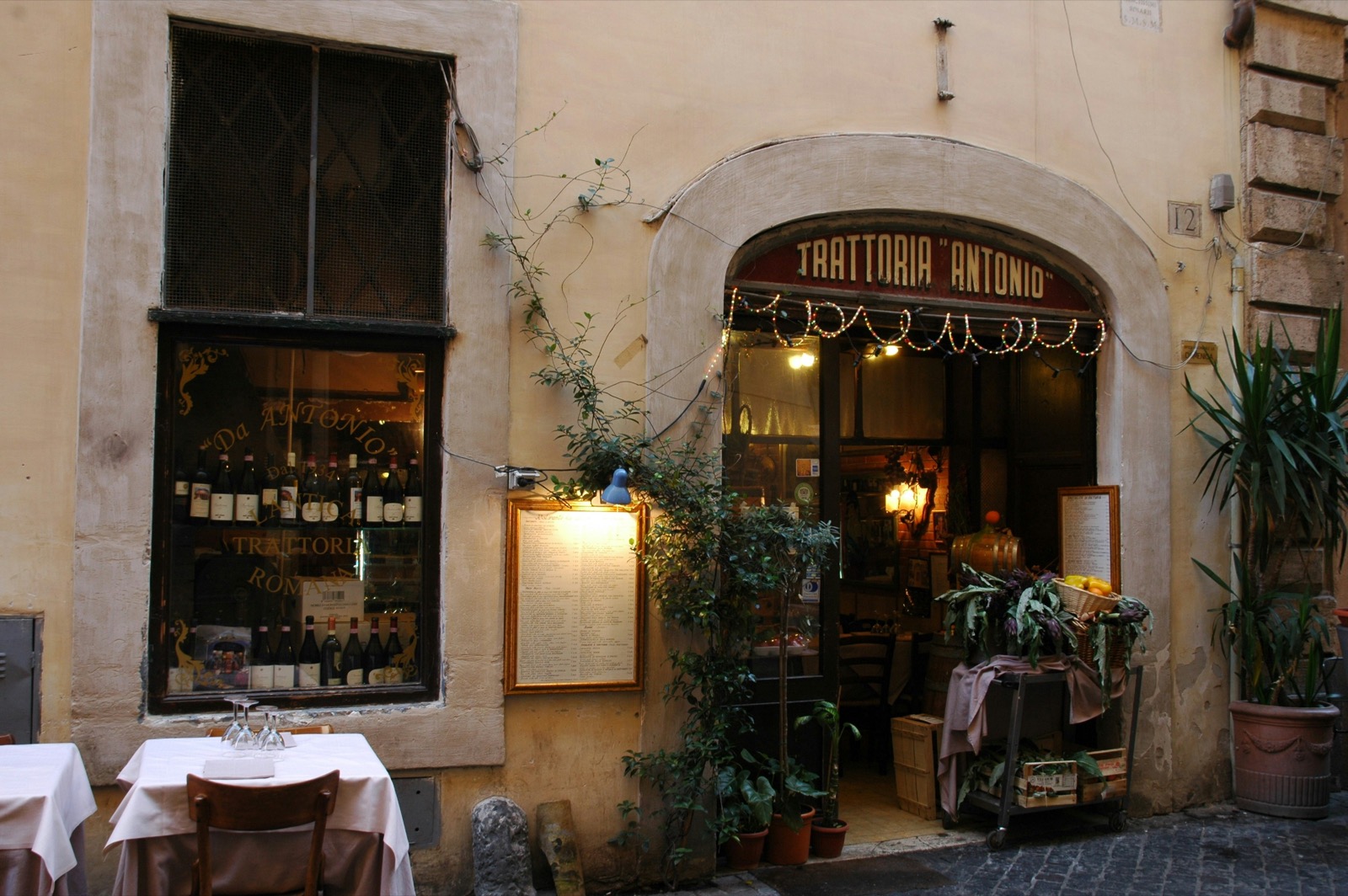
Serious Italian cooks are vain about their tools, and the vanity is useful to you because it is visible from the street. A pizzeria with a wood-fired oven will photograph it for the website, print it on the menu, and position it in your sightline from the door. A place that takes bistecca alla fiorentina seriously grills over wood, stacks the wood where you can see it, and hangs the dry-aged meat in a lit case like jewelry. These are expensive commitments, and no kitchen makes them quietly, because the display is a message to the local clientele: we know how this should be done and we spent the money to do it.
Run the logic in reverse and you have the signal. A pizzeria running only a steel electric oven is not committing to pizza. A steakhouse with no meat in sight is not committing to steak. Nobody is lying to you. They are declining to commit, and you can taste a kitchen's level of commitment more easily than any other single thing about it.
Signal 7: The empty table on Saturday night
If it is eight on a Saturday evening in any commune with a reputation, and you walk in without a booking, and they seat you at once, you have learned everything you came to learn. Italians eat out on weekends, the good rooms filled up by Wednesday when the regulars phoned, and a restaurant holding empty tables on the one night no decent restaurant in town has them is empty for a reason the whole town already knows.
The fix costs you one message. Book a day ahead. Most places answer WhatsApp now, TheFork covers much of the country, a Google booking button works where it appears, and even a phone call in beginner Italian works: Posso prenotare per due, sabato sera, alle otto? Anyone can carry that sentence, and the warmth or confusion on the other end of the line will tell you something about the room before you ever see it.
The confessions: walk past without slowing down
Some places identify themselves outright, and this list catches them by accident. Treat these less as warnings than as signed confessions:
- The menu turistico on a chalkboard outside, with a faded photograph of pasta
- Carbonara at €22 beside water at €5
- Garlic bread offered as an antipasto, which has never been an Italian dish, in the same family as Alfredo and spaghetti with meatballs
- A menu printed in English first, German second, French third, and Italian last, in italics
- The young man in the apron on the corner of the piazza, working passing couples in five languages
None of these requires analysis. You walk past without slowing down.
What the signals are actually for
The point of reading a doorway this carefully is not to avoid being overcharged, although it will do that. The point is to end up at the town's own table: the room where the waiter knows the cook's mother, where the same four men hold the same Wednesday they have held for thirty years, where the plate in front of you is the one the town has been eating since before anyone thought of selling it.
That is the reason to travel at all. Not to consume a culture but to sit down inside it for an hour, order what the man at the next table ordered, pay what he paid, and leave the way he leaves, one hand raised at the door, grazie, ci vediamo. A restaurant was never about the food. It is where a town keeps its life, and for the length of one lunch, a stranger who read the signals correctly gets a seat in it. The towns we have eaten in ourselves
Once you have found the room, there is a second skill, which is using it: how to order at a restaurant in Italy.
Frequently asked questions
How do I know if a restaurant in Italy is a tourist trap?
Count the signals rather than looking for one: main-piazza address, a long multi-region menu from a small kitchen, winter closure, few or no Italians in the room, empty tables on a weekend night, a host recruiting in the doorway. One signal means little. Three or four together mean keep walking, usually no further than a street or two.
Does an English menu mean a restaurant is a tourist trap?
No. Almost every restaurant in a visited town offers a translation, including the best ones, as ordinary courtesy. The reliable menu signals are length relative to kitchen size and geography: a short menu rooted in the region's own dishes is a commitment, forty dishes from five regions is a freezer.
Do I need to reserve restaurants in Italy?
On Friday and Saturday evenings, and for Sunday lunch, yes, treat it as mandatory anywhere with a reputation. Book a day ahead by WhatsApp, TheFork, or phone. A good room that can seat you instantly at 8pm on a Saturday is telling you why it can.
What time do Italians eat lunch and dinner?
Lunch runs roughly 1:00 to 2:30pm and dinner from about 8:00pm, later in the south and in summer. A kitchen serving a full dining room at 6:30pm is serving visitors; many kitchens are not even open then. Eating on the local clock is also the cheapest way to be treated like a local.
What is the coperto on an Italian bill?
A flat cover charge per person, typically one to three euros, covering bread and the table setting. It is legal, normal, and printed on the menu, and it exists in real trattorie and tourist traps alike. A visible coperto is not a warning sign. A €5 bottle of water is.
Is the menu turistico ever worth it?
As food, almost never, and as economics only barely: a fixed-price card designed for people who will not return, built from the cheapest version of each course. The same money spent two streets away, on two dishes from a ten-line local menu, eats better every time.
More from Anywhere Italy
 Themed picks · Bari · White towns10 white towns of Puglia near Bari
 Themed picks · Catania · Baroque10 Baroque towns in Val di Noto near Catania
 Themed picks · Rimini · Adriatic coast10 Adriatic seaside towns near Rimini
 Themed picks · Reggio Calabria · Aspromonte10 Aspromonte hill towns near Reggio Calabria
 Themed picks · Florence · Wine10 Tuscan wine towns near Florence
 Themed picks · Turin · Mountains10 mountain comuni near Turin