
What Is Aperitivo? How Italy's Pre-Dinner Hour Actually Works
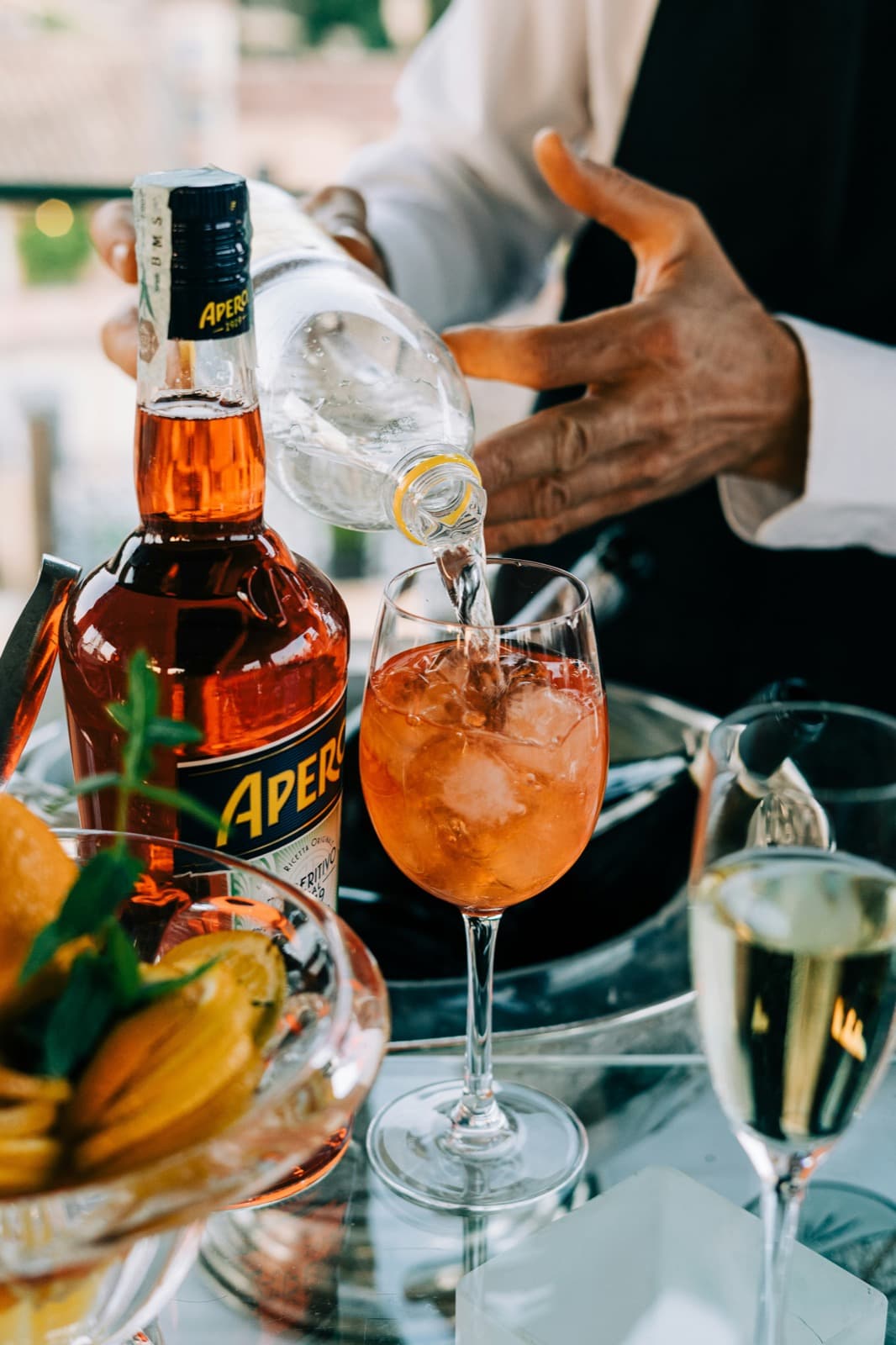
The short answer: aperitivo is the structured hour or two Italians place between the end of work and a late dinner, roughly six-thirty to eight in most of the country: a bitter drink, a sequence of free snacks that arrive with it, and slow conversation, engineered to prime the appetite rather than fill it. It is not happy hour, the food is included in the six-or-seven-euro price of the drink, and if a bar hands you an English menu with aperitivo priced separately, you are in the tourist version. Order a Spritz, sit somewhere with a view, stay ninety minutes, walk to dinner. The wiring underneath is below.
Almost everything you know about the aperitivo is roughly correct and slightly wrong at the same time, which is the situation with all the famous Italian rituals: the headline is right and the wiring underneath is different from what you've been told. Aperitivo sits in the first ten Italian words a foreigner learns, after pizza and pasta and ciao and grazie, so you arrive with a picture already in your head, an afternoon drink, probably an orange one, some olives, friends, outside if the weather holds. The picture is true. It is also missing most of what makes this an institution rather than a beverage.
I have done the aperitivo hundreds of times over four years on this coast, and what I learned, slowly, is that it is not a drink-and-snack ritual. Italians eat dinner late, eight-thirty, sometimes nine, and they do not want to arrive at the table starving and exhausted, so the aperitivo is the deliberate bridge between work and the table. The drink and the snacks are tools inside the hinge. The hinge is the institution, and once you see that, everything else follows.
The hour is locked to dinner, not to the afternoon
The aperitivo hour is fixed to the dinner that follows it, which is why it is not "an afternoon thing." On this coast that means six-thirty to eight. In Milan it can run six to seven-thirty, a working city eating slightly earlier; in Naples and Sicily it can start at eight, because dinner is later still. A Spritz at three in the afternoon is not an aperitivo, it is a Spritz. A Venetian woman once told a writer about ordering an aperitivo in Milan at eleven in the morning and getting, from behind the counter, Aperitivo? You know what time it is? The hour is half the institution.
The food is free, and the free food is the test
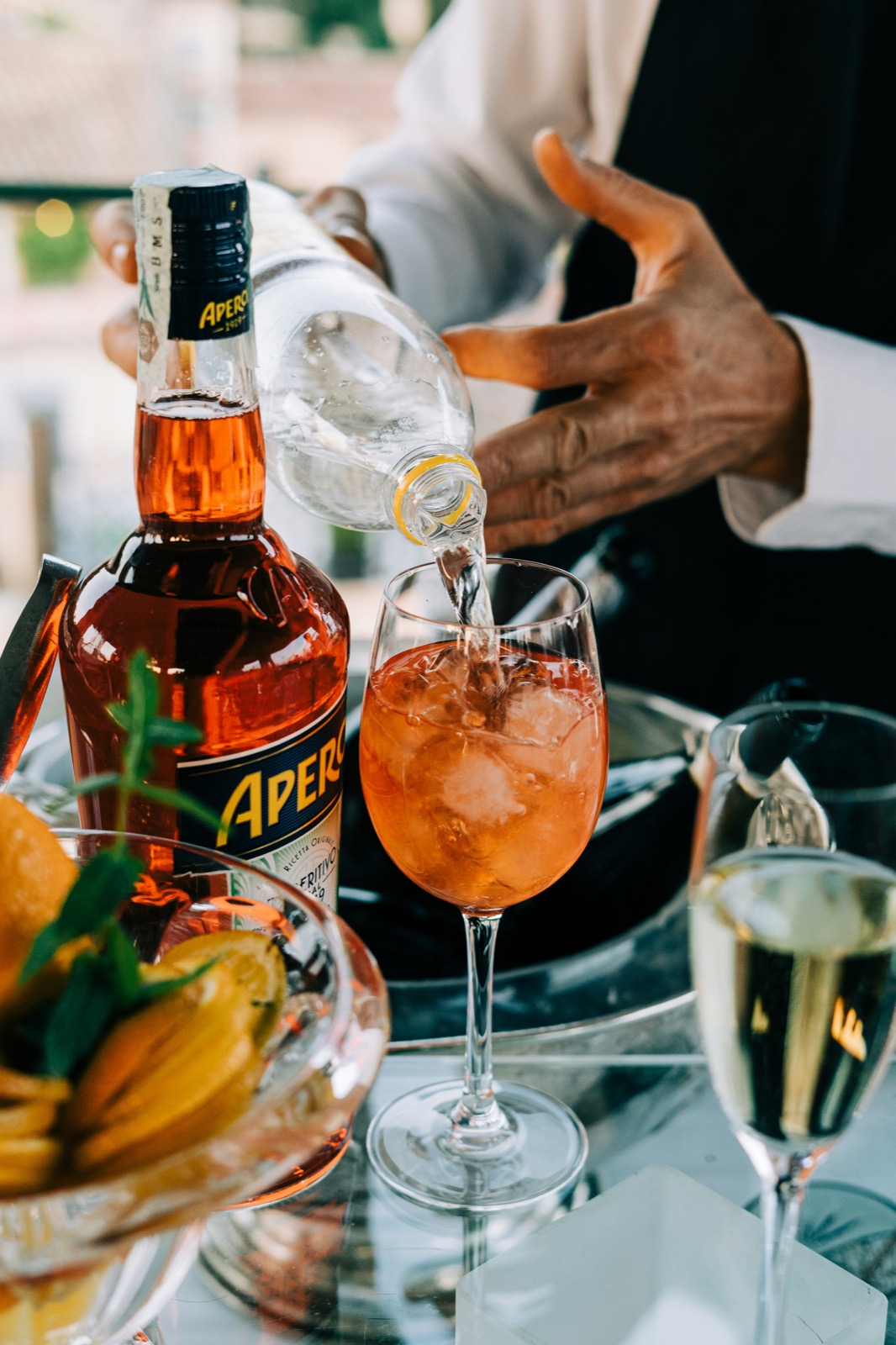
This is the part that breaks every foreign expectation. In most Italian bars, the aperitivo food comes with the drink: you order the six-or-seven-euro Spritz and a bowl of olives appears, then crisps, then focaccia, then maybe a few slices of salame, none of it billed, all of it included, because the bar makes its margin on the cocktail and uses the food to keep you in the seat for ninety minutes.
Which yields the simplest field test in Italian eating: if the aperitivo food is on a menu, in English, at a fixed price, you are in a tourist place. If food appears at your table without your ordering it, you are in a real one.
Apericena: the paid cousin
There is a paid variant with its own name: the apericena, aperitivo and cena fused into one transaction, a fixed ten-to-fifteen euros for a drink plus a buffet or board substantial enough to replace dinner. It is a legitimately different institution, big with students and in Milan, and regularly complained about by Italian food writers for corrupting the original's proportions. Knowing the word keeps the two from blurring: aperitivo precedes dinner; apericena replaces it.
The drinks: wider than the Spritz
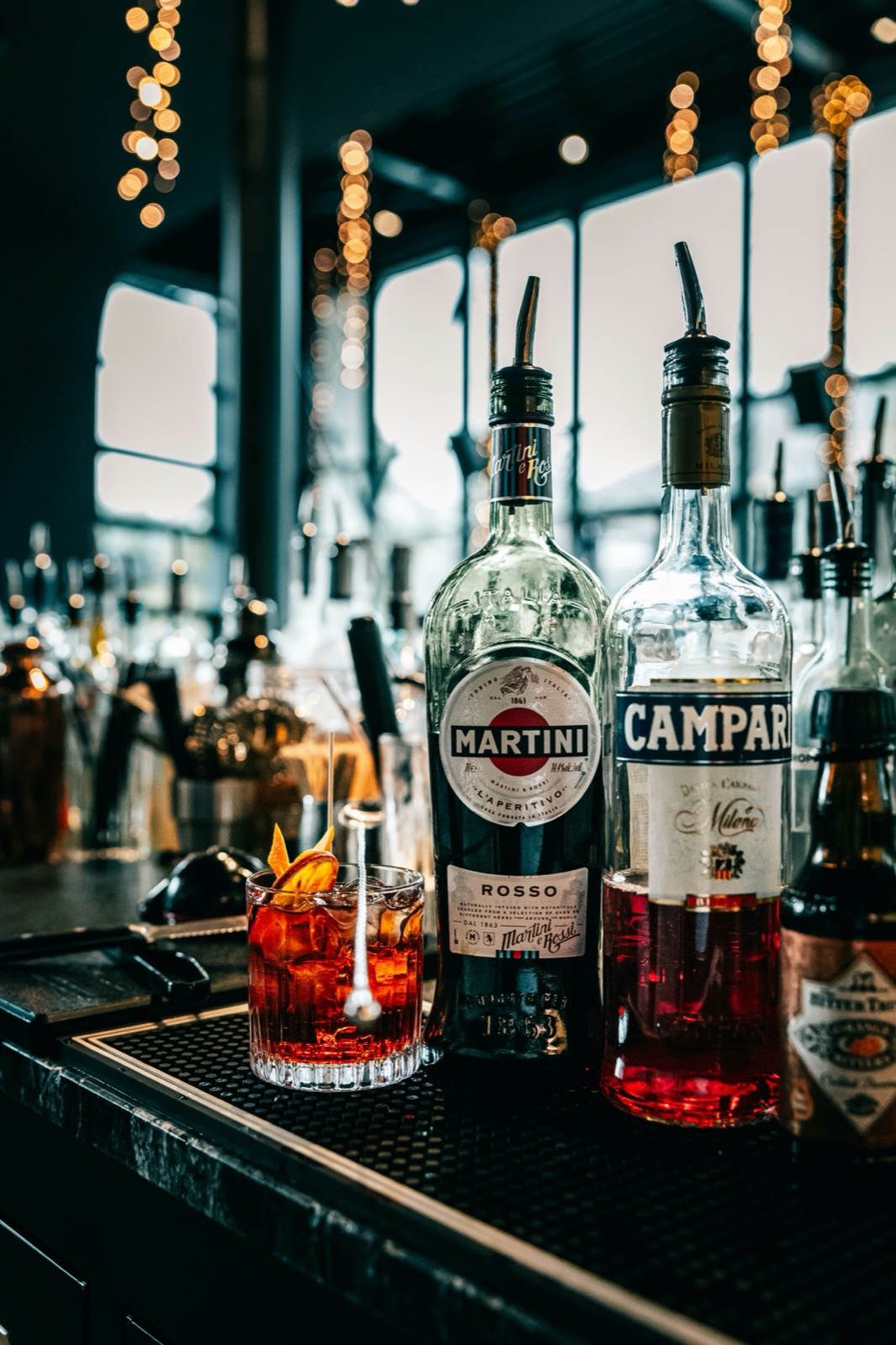
The marketing has made a shortlist famous, and the shortlist is safe everywhere: Aperol Spritz, Campari Spritz, Negroni, Americano, the Hugo up in Alto Adige, a glass of Prosecco anywhere. Every Italian bar pours these correctly.
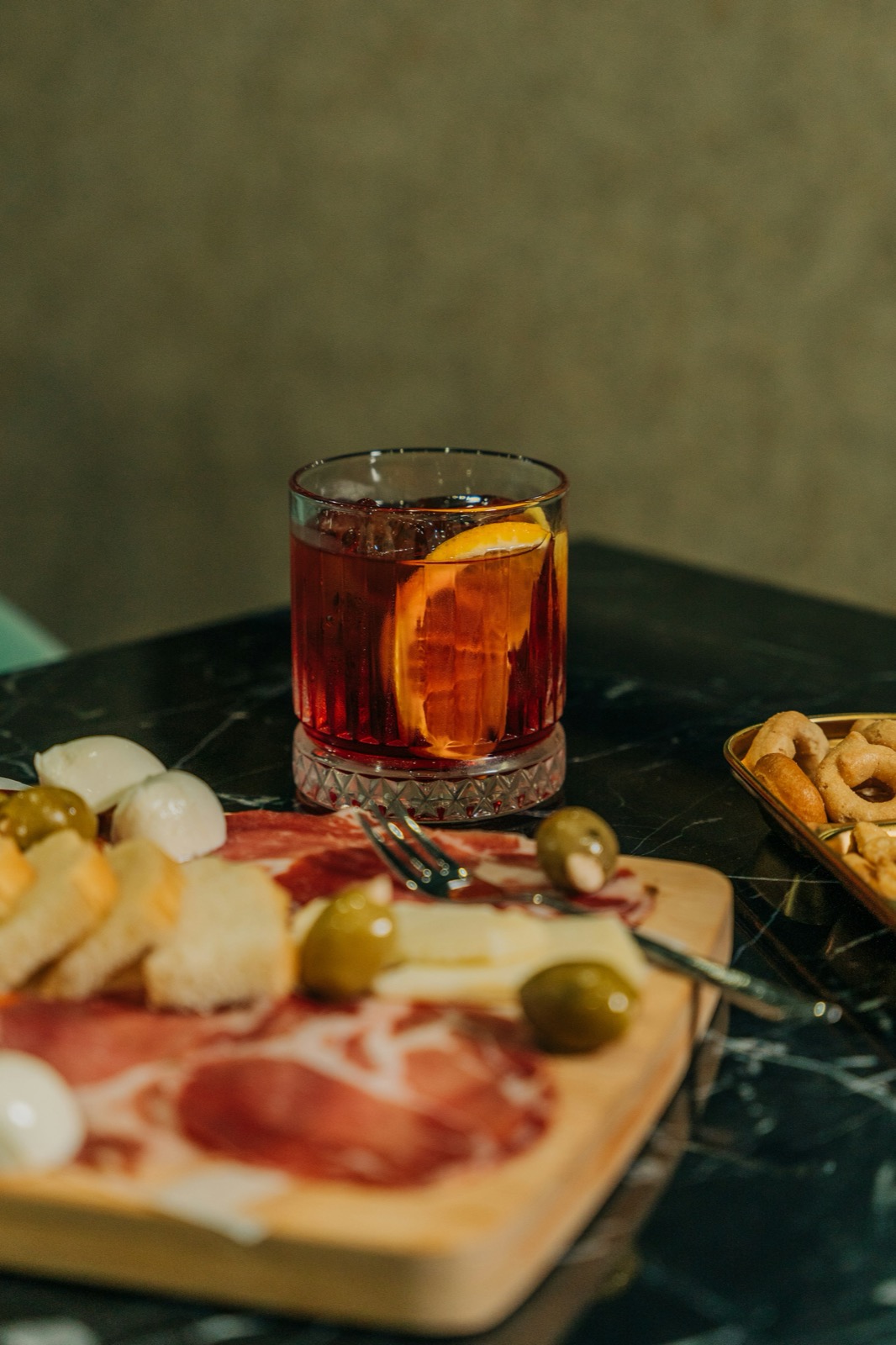
The real range is wider. I have had aperitivo that was a glass of dry white wine and nothing else; a Vermouth on the rocks with an orange peel, which is the original Turin form from the 1780s and still the best one; a small bottle of craft beer at a Tuscan brewery. Aperitivo is whatever you drink slowly with friends in the hour before dinner. The Spritz is the most popular form, not the definition.
One honest limit, learned by ordering: the standard Italian bar makes great Italian cocktails and only those. The bench is short, Campari, Aperol, Cinzano, Prosecco, gin, vermouth, the local amaro, and inside that kit the execution is world-class, correct proportions, right ice, right glass, fresh peel, from a barista who has poured Negronis since before you were born. Outside the kit they are guessing: no Daiquiri, no Old Fashioned, not at the corner bar that opened at seven a.m. For that, Milan, Turin, and Florence keep genuinely serious cocktail rooms built around a forty-bottle bench. Asking the morning b
 ar for one is the same category error as ordering tacos at a trattoria.
Where to go: the evening room beats the morning bar
The place hierarchy is counterintuitive. The simple morning-coffee bars, the ones that are the soul of the town at eight a.m., usually treat the aperitivo hour as a low-effort sideshow: a fine Spritz, a small bowl of crisps, done. The bars that do aperitivo best are the ones that open only in the afternoon and evening, the vinerie and cocktail rooms designed around the drink, because they earn their whole week between five and midnight and compete on what comes out with the glass. A good vineria in Pietrasanta puts down olives, crisps, warm focaccia, a small plate of salumi, a crostino, sometimes pecorino with honey, all free, all good, at the same Spritz price as the morning bar and four times the food. (What the morning bar is for, and why it still matters more, is its own piece: how the Italian bar works.)
The second rule of place is geographic: the closer to the sea, the lighter the spread, olives, crisps, a bruschetta; the higher into the mountains, the heavier, salumi, cheese, a crostino with lardo, sometimes a small bowl of polenta with stew. In an agriturismo in the Garfagnana I have eaten a thirteen-euro aperitivo in a stone room with three tables and a wood stove that was functionally a full meal of cured meats and pickled vegetables, and I did not eat dinner that night.
What the hour is actually for
The Italian dinner is a long undertaking, two and a half hours on average from sitting down to finishing the amaro, multiple courses, real attention, and it does not work if you arrive starved, tired, and still mentally inside the email you sent at six-fifteen. The aperitivo exists to solve exactly this. It is the social airlock: you sit at six-thirty, the bitter botanicals prime the stomach, the olives prime the appetite without filling it, you talk, you watch the light change, and by eight-thirty you are decompressed and ready to start dinner properly. how to order at a restaurant in Italy
This is why good aperitivo bars cluster near good restaurants: the two are designed as a sequence. You do not stay at the bar through dinner; you drink, you talk, you leave, you walk the five minutes to the place you booked, and the walk between rooms is part of the architecture. So is the change of room itself.
The hidden structure: how the bar paces you
From the outside, the hour looks loose. At our bar on the piazza, people drift in around six, take the small round tables, drink, talk, and by eight the room is half empty. What is actually running is a precise sequence: the drink lands within two minutes, the olives arrive with it, always, crisps five minutes later, warm-cut focaccia ten minutes after that, sometimes a crostino at the twenty-minute mark. The food spaces the drink; nothing refills automatically; a second Spritz has to be asked for, and if you don't ask, you finish the one over forty-five minutes, lightly salted, correctly primed, and ready to walk.
The pacing is not an accident. The bar wants you gone toward dinner around eight, partly because the digestivi crowd arrives at eight-thirty, partly because the whole evening ecosystem only works if everyone moves through it on the same clock. On a summer evening at peak, the outside tables have been pushed together, three generations of one family are talking over each other above the spritzes, and the youngest grandchild is asleep against his grandmother's arm. The hinge swings on time, and it carries the whole town on it.
Order a Spritz. Sit somewhere with a view. Stay ninety minutes. Walk to dinner.
That is the whole thing.
Frequently asked questions
What does aperitivo mean?
From the Latin aperire, to open: the drink and hour that open the appetite before dinner. In practice it names the whole institution, the pre-dinner window of roughly six-thirty to eight when Italians drink something bitter, eat the free snacks that come with it, and decompress before a late meal.
What time is aperitivo in Italy?
Locked to local dinner time, so roughly six to eight in the north, six-thirty to eight in the center, and as late as eight in the deep south. It is never an afternoon event; a Spritz at three is just a Spritz.
Is aperitivo food free in Italy?
In the real version, yes: olives, crisps, focaccia, and sometimes salumi arrive with the drink at no charge, funded by the cocktail's margin. Separately priced "aperitivo platters" on an English menu signal the tourist adaptation, and a fixed-price buffet replacing dinner is a different thing with its own name, the apericena.
What is an apericena?
Aperitivo plus cena, dinner, in one fixed-price transaction: a drink and a buffet or board substantial enough to be the evening meal, typically ten to fifteen euros. Popular with students and in Milan, grumbled about by purists, and useful to know so you don't confuse the two institutions.
What do you drink at aperitivo?
The classics are safe everywhere: Aperol or Campari Spritz, Negroni, Americano, Prosecco, Hugo in the northeast, or the original Turin move, vermouth on the rocks with an orange peel. A glass of white wine counts fully. What doesn't belong is the international cocktail list; the standard bar's bench is short and specialized, and the Old Fashioned lives at dedicated cocktail bars in the big cities.
Is aperitivo the same as happy hour?
No. Happy hour discounts drinks to fill a dead time slot; aperitivo is full-price drinks with free food at the most social hour of the day, structured to end at dinner. Nothing is discounted, nothing is hurried, and the point is the transition, not the alcohol.
More from Anywhere Italy
 Themed picks · Turin · Mountains10 mountain comuni near Turin
 Themed picks · Verona · Lake Garda10 Lake Garda towns near Verona
 Themed picks · Rome · Olive oil10 olive oil comuni near Rome
 Themed picks · Florence · Food10 hidden food towns near Florence
 Themed picks · Bologna · Wine10 wine villages near Bologna
 Themed picks · Rome · Hill towns10 hill towns within an hour of Rome