
Abruzzo · Chieti
Vasto
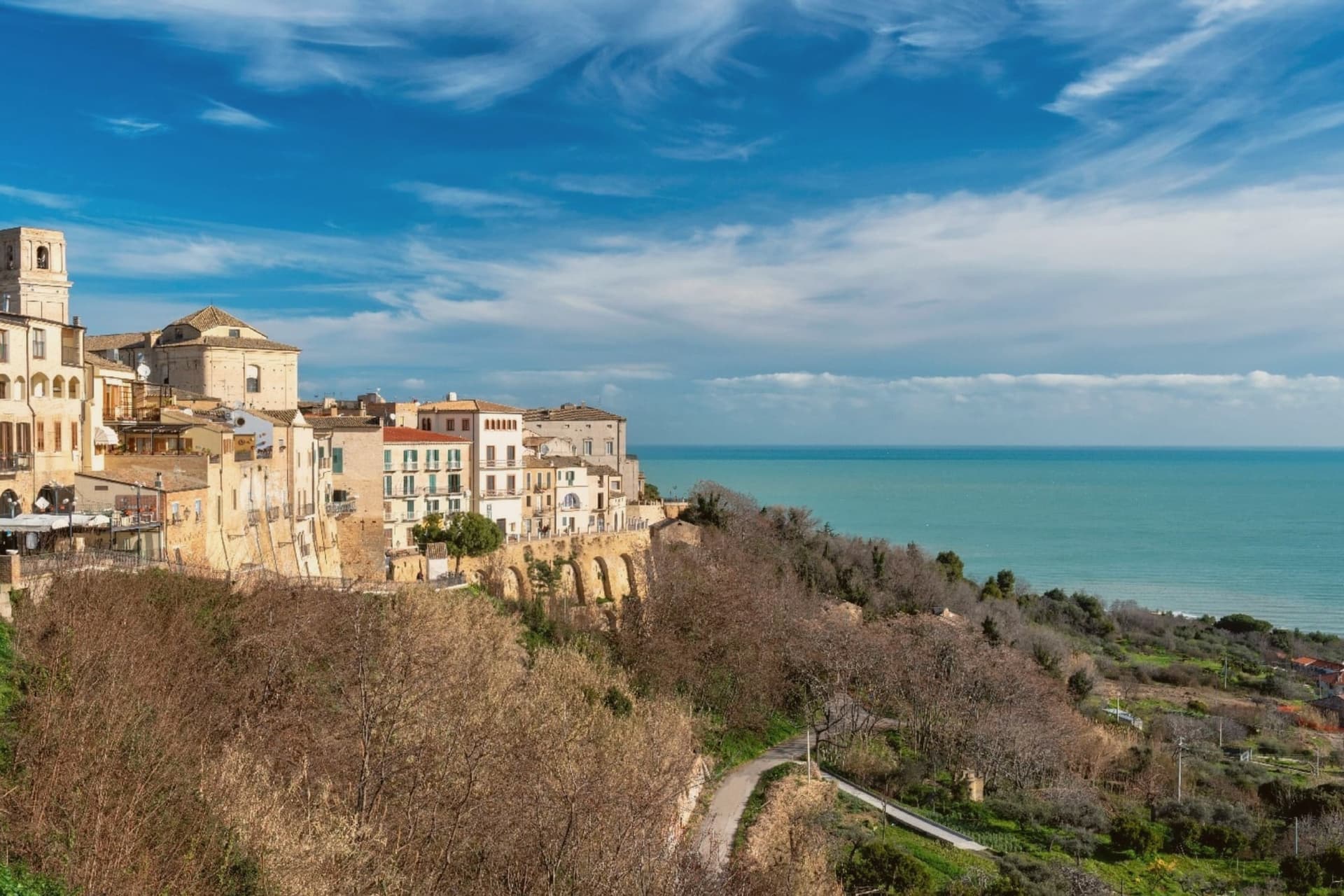
On a hill above the Adriatic, Vasto is home of the brodetto vastese, invented in 1800.
- Best time
- May–Sep
- By car
- 59 min from Pescara
- By train
- Station in the comune
- Population
- 40,692
Known for
BRODETTO
Brodetto alla vastese, the local fish stew traditionally dated to 1800, listed in the 1,000 foods to eat before you die by Mimi Sheraton.
D'AVALOS
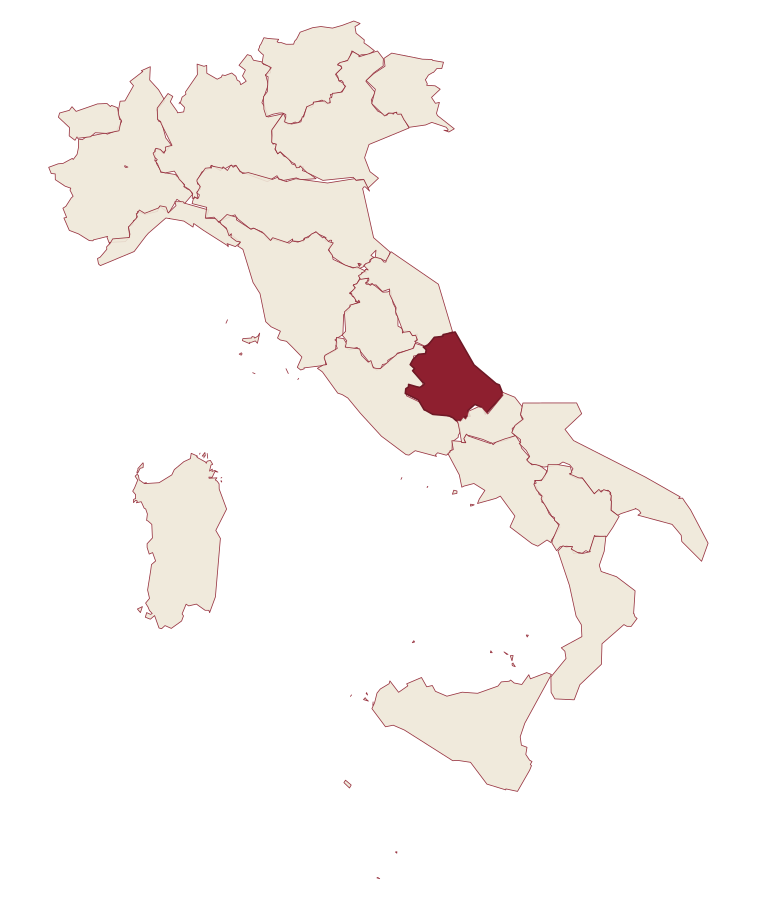
Renaissance palace of the d'Avalos family, with civic museum and poetry library, plus the rebuilt Castello Caldoresco of the upper town.
TRABOCCHI
Southern anchor of the Costa dei Trabocchi, the seventy-kilometer Adriatic stretch with traditional wooden fishing platforms.
When to visit
Best · May–Sep
- J12°
- F14°
- M14°
- A16°
- M21°
- J26°
- J30°
- A30°
- S25°
- O21°
- N16°
- D13°
- Best
- Hot or crowded
- Quiet
- Mostly closed
Daytime averages, 2020–2024. The sea is warmest in August at 29° and coldest in February at 12°. Weather data by Open-Meteo.com.
Why come
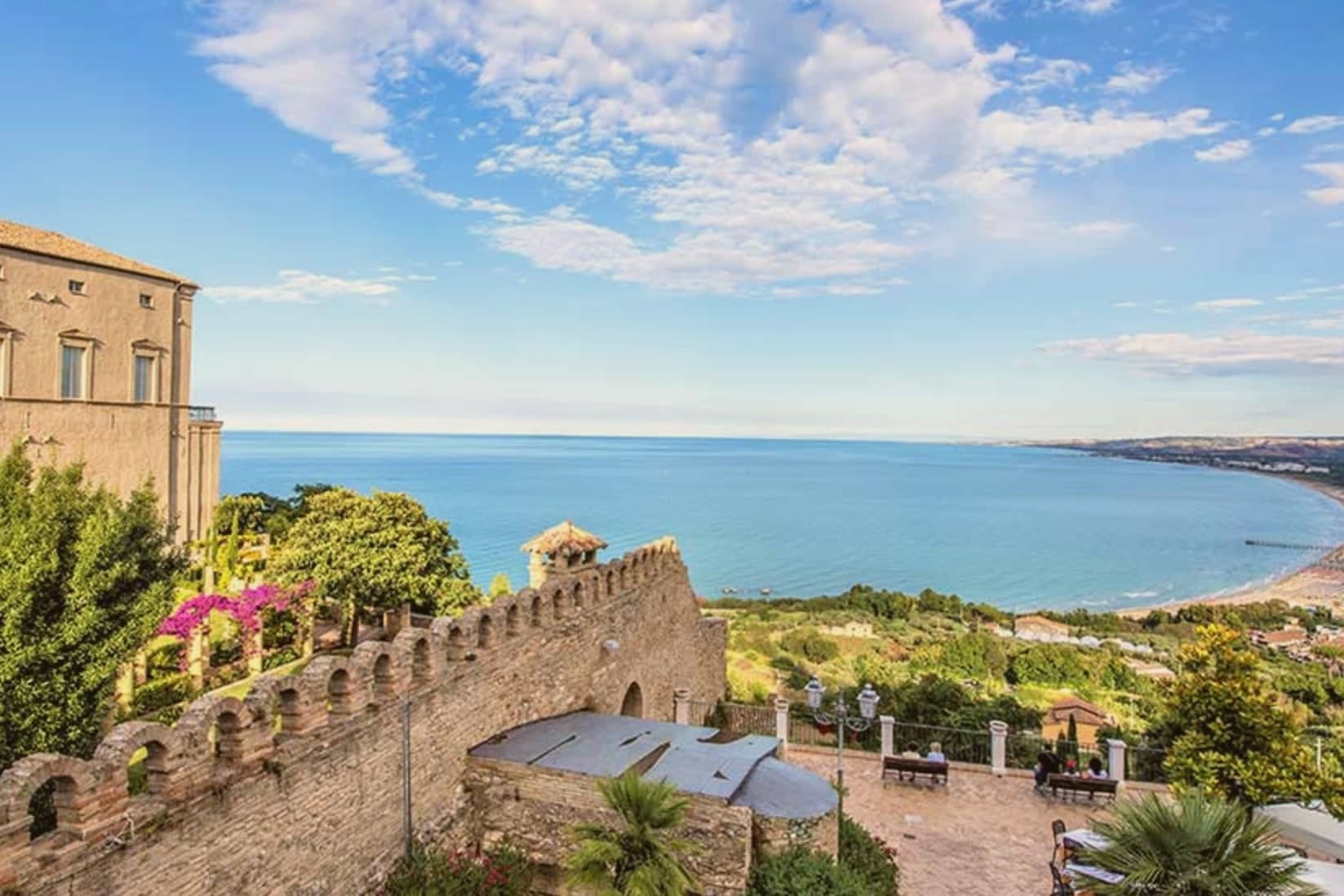
Vasto was the Roman Histonium, a name that predates the hill town's later medieval and Renaissance layers. It sits above the Adriatic, with the upper town, the castle and palace, set above the coast and the Punta Aderci reserve lying below to the north, cliffs and sandy beach against the built hill. The coast running north from here to Ortona is the Costa dei Trabocchi, seventy kilometers of shoreline named for the wooden stilt-fishing platforms that still work its length.
The brodetto alla vastese was invented, by tradition, in 1800 by the wife of a fisherman in the Trave district, who enriched the daily catch with tomato, parsley and garlic from her vegetable garden, a dish born of the same waters the trabocchi work. The summer Capriccio festival fills the city with music in August. Upper town, reserve, and coast read as one arrangement: a hill settlement that has always faced the sea it feeds from and now also draws visitors to.
The Sunday letter
Vasto is on our list. Its letter is still to come.
We are writing about all 1,000 of these towns, one at a time, in a free letter every Sunday: the photo, the food, the festa. That is our mission. Sign up and you will be there when Vasto comes up. By Peter & Sophia, from Pietrasanta.
Read on
Vasto in our articles
 The best coastal towns that eat well within 90 minutes of Pescara8 towns, Vasto among them.
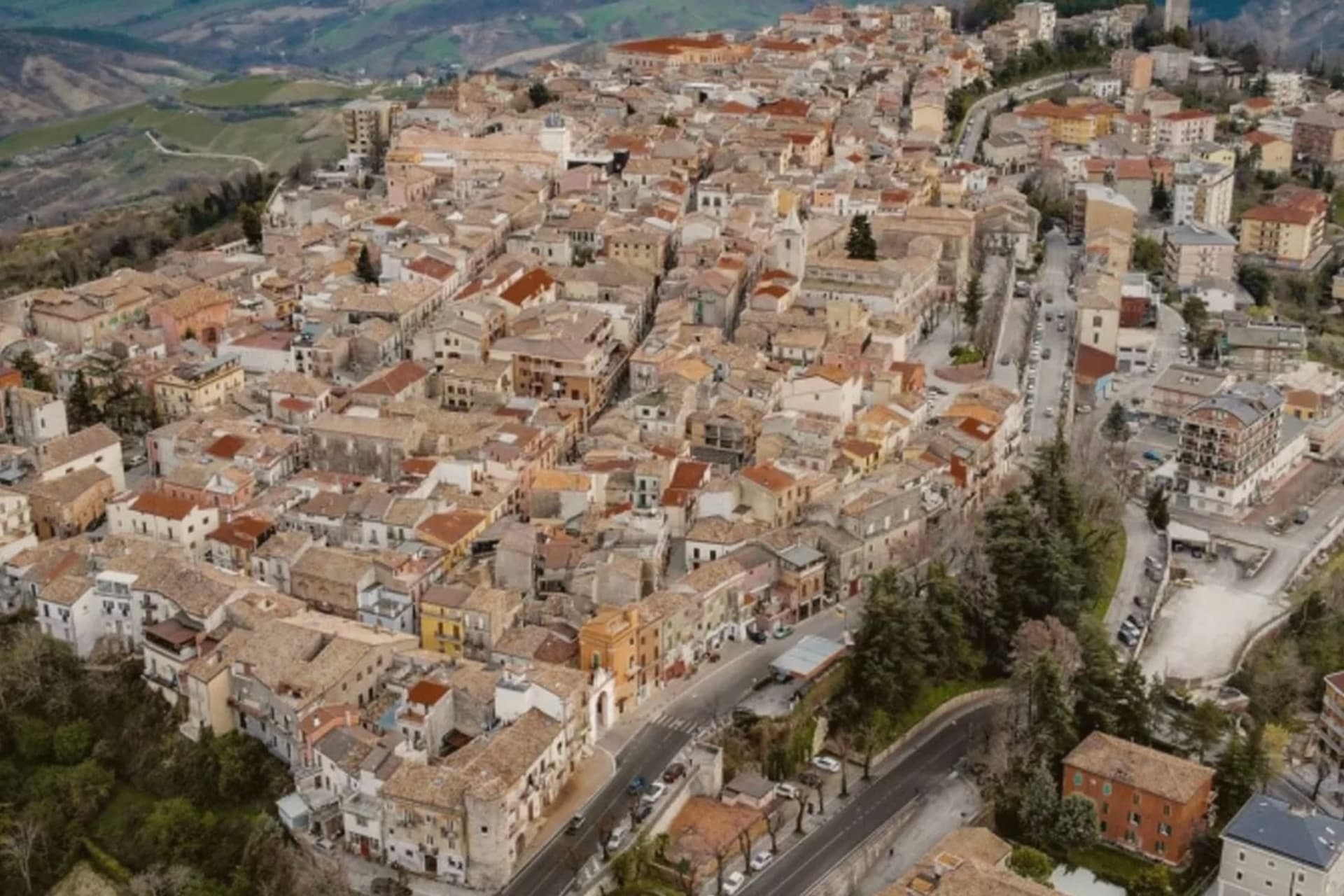 The best towns with a serious restaurant that you can reach by train within 90 minutes of Pescara9 towns, Vasto among them.
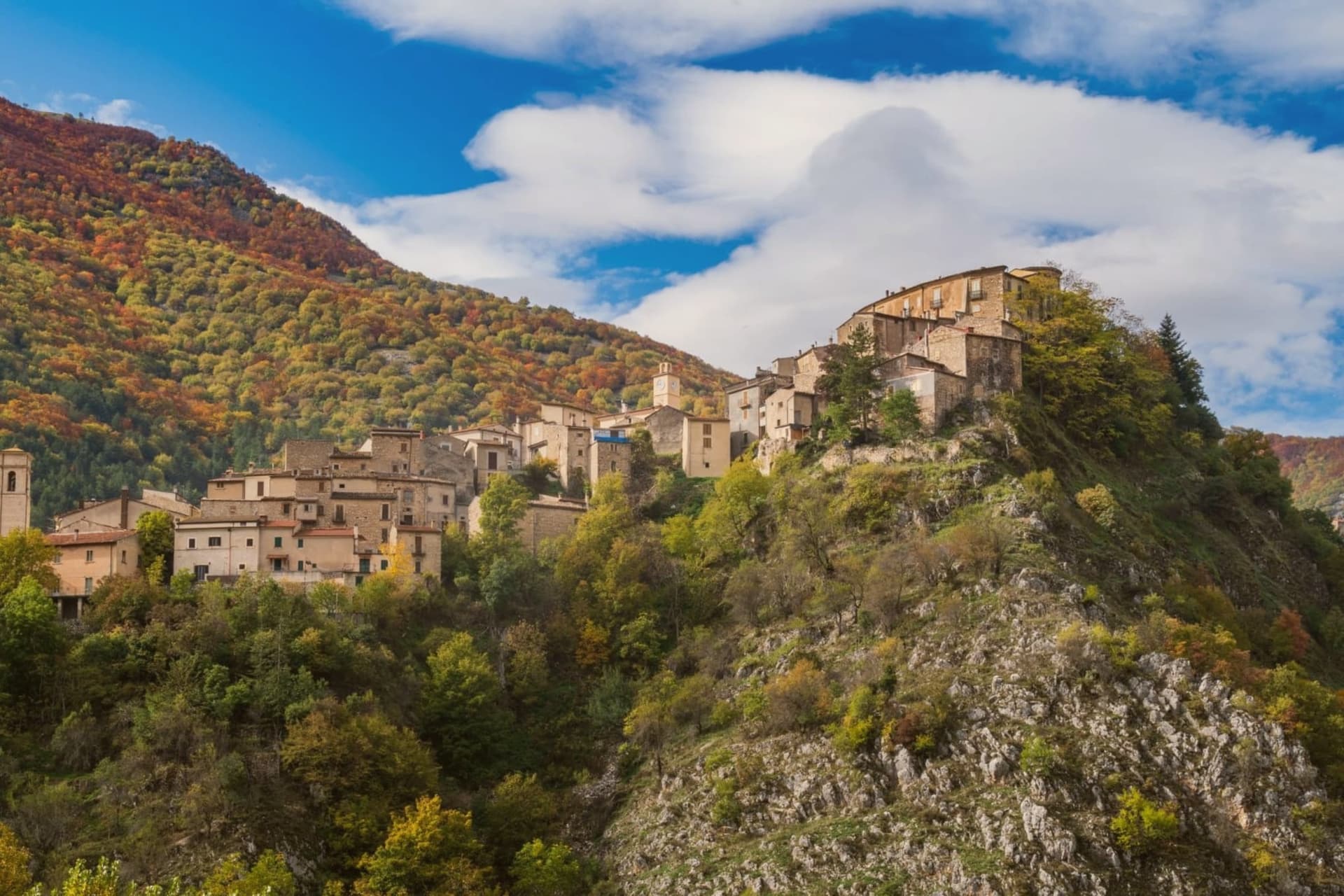 The best beach towns in Abruzzo10 towns, Vasto among them.
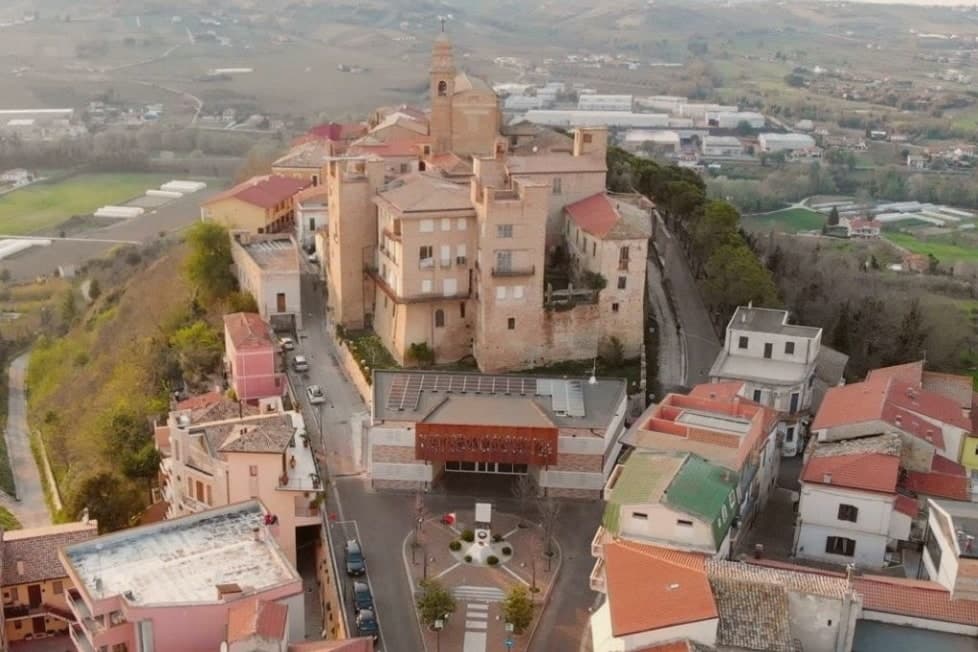 The best coastal towns in Abruzzo10 towns, Vasto among them.
How to get there
From Bari / Brindisi (BRI), about 2h 36m by car.
Ancona / Pescara (AOI) is about 2h 36m away.
By car from the centre of Pescara 59 minutes, Ancona 2h 32m or Bari 2h 40m.
There is a railway station in the comune, so you can arrive without a car.
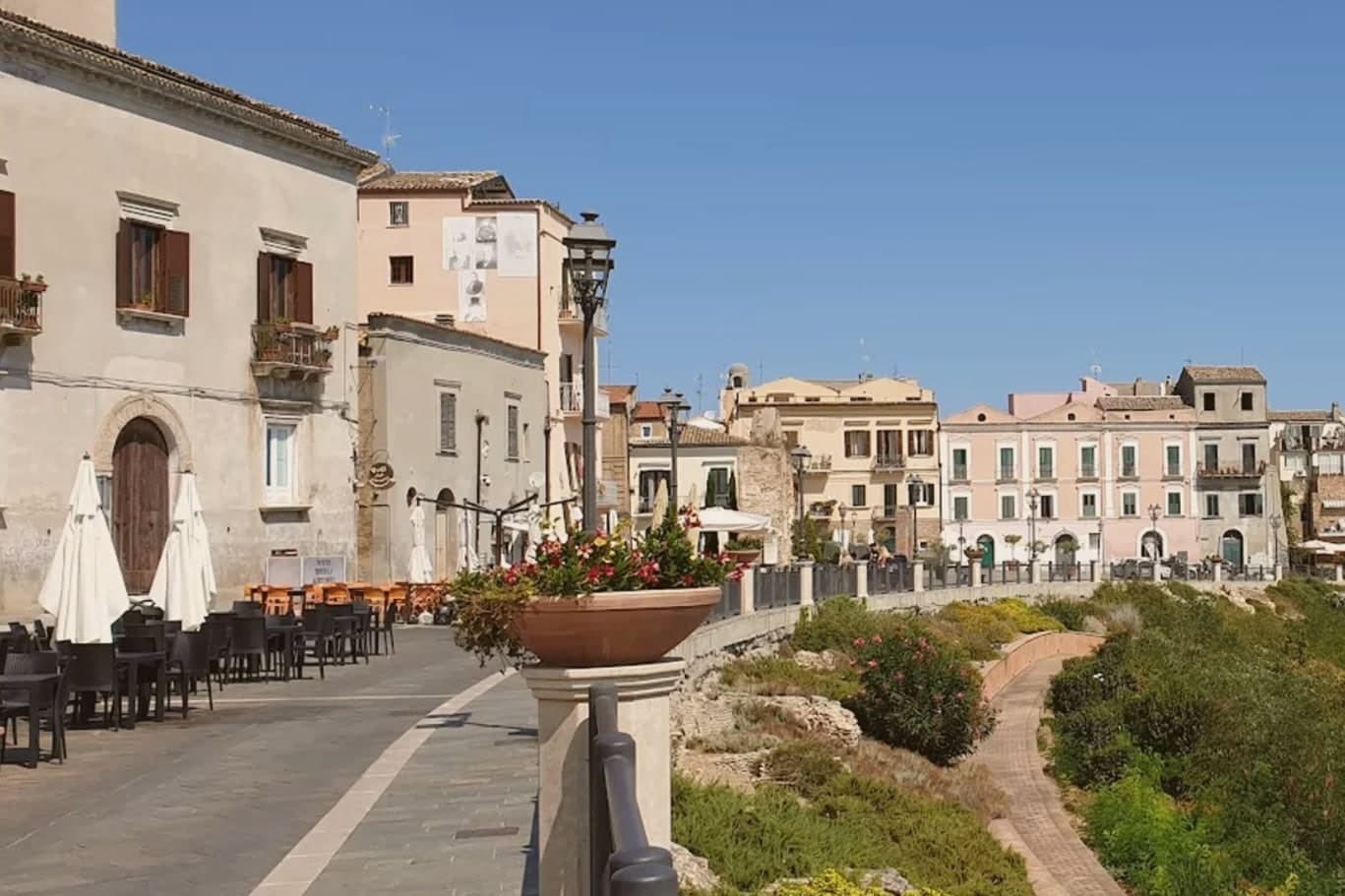
Coming by train into Pescara Centrale? Vasto is about 1 hour away by road.
What to see
Palazzo d'Avalos
The palace now houses the civic archaeological museum and the Gabriele Rossetti poetry library, its rooms given over to collections rather than court life.
Castello Caldoresco
Burned by Ottoman forces in 1566 and rebuilt afterward, the castle still anchors the upper town, a scarred structure standing in place of the one that fell.
Punta Aderci
A nature reserve north of the town with sandy beaches, cliffs, and a migratory bird stopover protected since 1998, lying below the hill the old town sits on.
Cattedrale di San Giuseppe
Romanesque cathedral with later additions, the bishop's seat for the diocese of Chieti-Vasto, on the central Piazza Pudente.
Costa dei Trabocchi
The wooden stilt-fishing platforms still stand along the shore below, working structures rather than reconstructions.
The slow-trip planner
Building a trip? Find where Vasto fits in a slow Italy circuit.
Answer five questions. We will shape a geographically coherent slow trip from the 1,000 Italian towns most travelers skip. Yours to save and share.
We recommend
Where to eat
Not our picks, but places the guides put their name to: a Michelin star, a Gambero Rosso fork, a Slow Food snail, a Michelin Key for the hotels. Worth a table, a counter, or a night when you pass through.
Hostaria del PavoneRistorante
Two Gambero Rosso forks (80/100) for Hostaria del Pavone, and a spot in the Michelin Guide.
Living here
- Population 40,692
- Remotei
- Pharmacy in town
- High school within a 30-minute drive
- Train station in the comune
- Nearest airport Bari / Brindisi, 2 h 36 min drive
- Regional capital L'Aquila, 2 h 11 min drive
Common questions
- What is Vasto known for?
- At 144 meters on a hill above the Adriatic, Vasto is home of the brodetto vastese, invented in 1800.
- Where is Vasto?
- Vasto is a comune in the province of Chieti, in Abruzzo.
- What is the nearest airport to Vasto?
- Bari / Brindisi (BRI), about 2h 36m by car.
- Can you get to Vasto without a car?
- Yes. There is a railway station in the comune, so you can arrive by train.
- How long is the drive from Pescara to Vasto?
- About 59 minutes by car.
- When is the best time to visit Vasto?
- Best in May–Sep. July is the warmest month, averaging 30 degrees, and November the wettest, with about 12 rain days.
- Which other towns are like Vasto?
- Fasano, Termoli and Ugento.
- How many people live in Vasto?
- 40,692 at the 2023 count.
Tags & datadesignations · numbers · sources
Recognised as
The numbers
- Elevation: 144 m
- Population: 40,692
- Surface area: 71.35 km²
These figures were compiled from public directories: ISTAT, OpenStreetMap and Wikidata, and from the official listings of the guides named on this page. Town details change; verify with official sources before you travel.
Similar
Towns like Vasto
Fasano
Province: Brindisi
both on the Adriatic coast · both over 10,000 people
Termoli
Province: Campobasso
both on the Adriatic coast · both over 10,000 people
Ugento
Province: Lecce
both on the Adriatic coast · both over 10,000 people
Monopoli
Province: Bari
both on the Adriatic coast · both over 10,000 people
Bisceglie
Province: Barletta-Andria-Trani
both on the Adriatic coast · both over 10,000 people
Trani
Province: Barletta-Andria-Trani
both on the Adriatic coast · both over 10,000 people
🟦 Bandiera Blu
More Bandiera Blu towns in Abruzzo
Alba Adriatica
Province: Teramo
The northernmost of the Teramo coast's seven sisters, a 1956 spin-off from Tortoreto with a fine-sand beach known as the Spiaggia d'Argento.
Fossacesia
Province: Chieti
A hill town above the Costa dei Trabocchi whose Benedictine abbey, San Giovanni in Venere, stands on the site of a Roman temple and looks straight down the coast.
Giulianova
Province: Teramo
Coastal town split between hilltop Paese at 68 meters and the Lido below, one rebuilt as a Renaissance ideal city, the other grown around a working fishing fleet.
Ortona
Province: Chieti
A working Adriatic port under an Aragonese castle, where the cathedral holds relics venerated as those of the apostle Thomas and the ridge above the harbour was fought over street by street in December 1943.
Pineto
Province: Teramo
A planned twentieth-century beach town named for D'Annunzio's poem, with the sixteenth-century Cerrano tower anchoring Abruzzo's first marine protected area.