
Emilia-Romagna · Ravenna
Ravenna
A 4-meter coastal capital of three successive empires, with eight UNESCO mosaic monuments from the fifth and sixth centuries.
- Best time
- May–Sep
- By car
- 58 min from Rimini
- By train
- Station in the comune
- Population
- 155,751
Known for
UNESCO MOSAICS
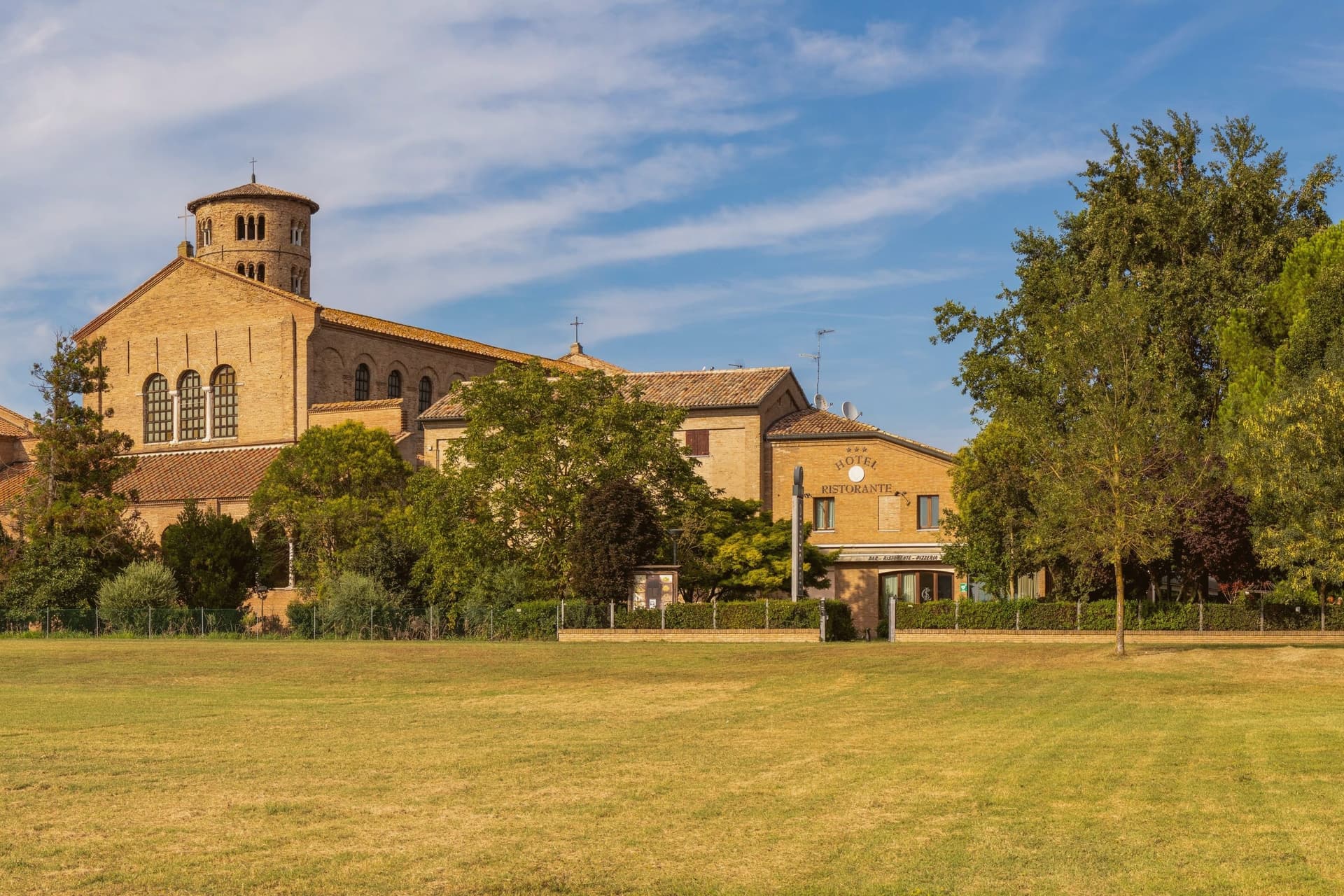
Eight monuments from the fifth and sixth centuries inscribed in 1996, including San Vitale, Galla Placidia and Sant'Apollinare Nuovo.
THREE CAPITALS
Capital of the Western Roman Empire from 402, of Theoderic's Ostrogothic kingdom from 493, and of Byzantine Italy until 751.
DANTE
The poet died here in 1321 in exile from Florence and is buried beside the Basilica of San Francesco, in a neoclassical tomb of 1781.
PESCA E NETTARINA DI ROMAGNA
The commune lies inside the Pesca e Nettarina di Romagna IGP production zone.
When to visit
Best · May–Sep
- J9°
- F13°
- M15°
- A18°
- M23°
- J29°
- J32°
- A31°
- S26°
- O21°
- N14°
- D10°
- Best
- Hot or crowded
- Quiet
- Mostly closed
Daytime averages, 2020–2024. The sea is warmest in August at 29° and coldest in January at 8°. Weather data by Open-Meteo.com.
The festa: Apollinare di Ravenna, 23 July
Why come
Ravenna sits four meters above sea level on the Adriatic coastal plain, ten kilometers from the sea and 105 kilometers east of Modena. Its position, low, flat, and close to the coast but not on it, made it defensible in a way landlocked cities were not: the surrounding marsh and lagoon kept armies at a distance while boats could still reach it. That is why Honorius moved the Western Roman capital here in 402, why Theoderic kept it as his Ostrogothic seat, and why the Byzantine Exarchate held it for Constantinople until 751 as the last piece of imperial territory in northern Italy.
Each of the three regimes built churches and paid for mosaic to decorate them, which is why the city's monuments read as a sequence rather than a single style: Roman, Gothic and Byzantine hands working in the same medium across a century and a half. The municipality itself is split between this historic center and a stretch reaching the Adriatic, where Marina di Ravenna and Punta Marina hold Bandiera Blu beaches, so the same town that holds the fifth-century mausoleums also runs a public coastline. Population is 155,751. What the churches add up to is less a city of monuments than a record of power changing hands, with each occupant leaving its faith in glass and gold on the walls rather than tearing down what came before.
The Sunday letter
Ravenna is on our list. Its letter is still to come.
We are writing about all 1,000 of these towns, one at a time, in a free letter every Sunday: the photo, the food, the festa. That is our mission. Sign up and you will be there when Ravenna comes up. By Peter & Sophia, from Pietrasanta.
Read on
Ravenna in our articles
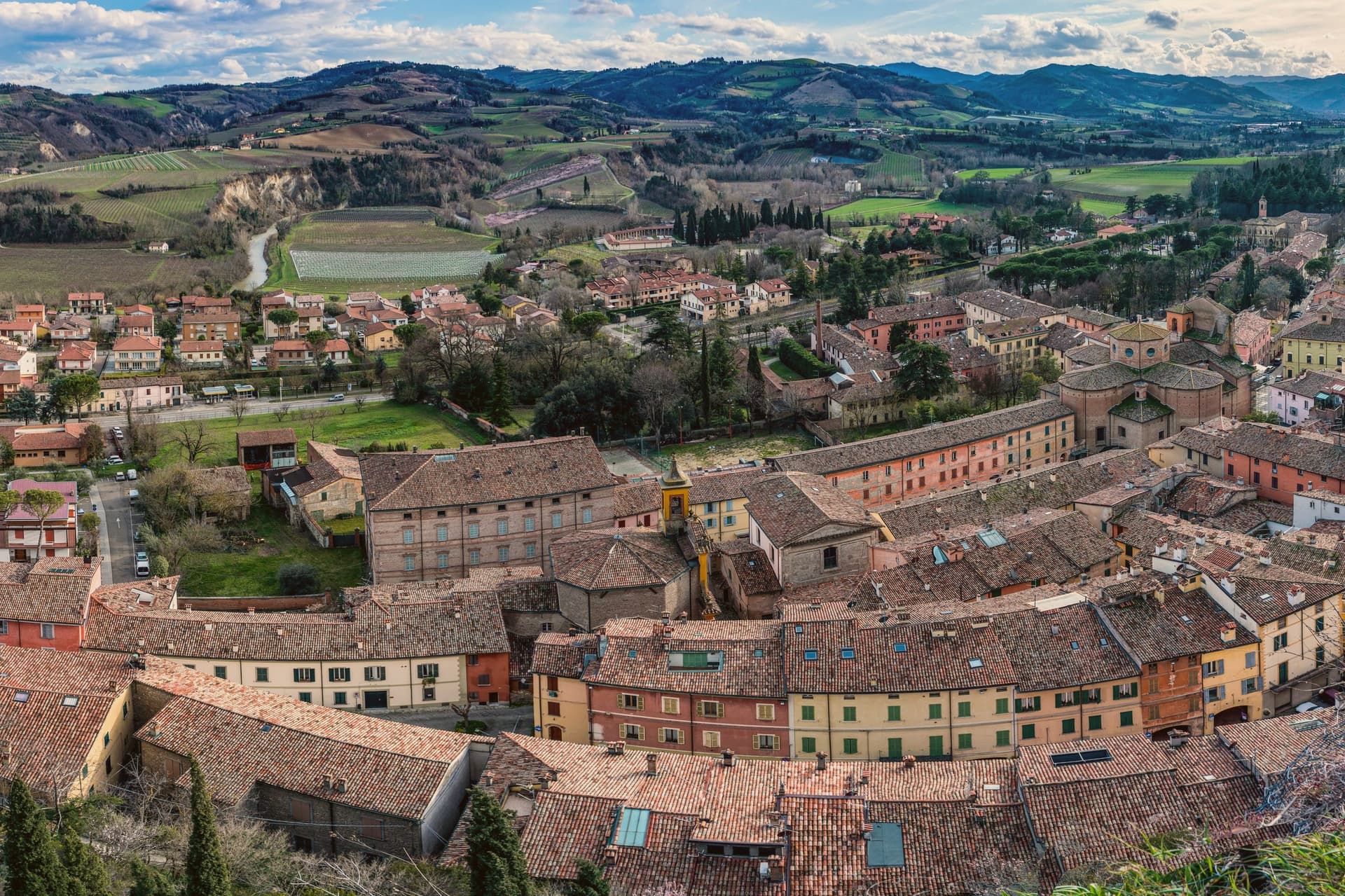
 The best towns with a World Heritage site within 90 minutes of Bologna6 towns, Ravenna among them.
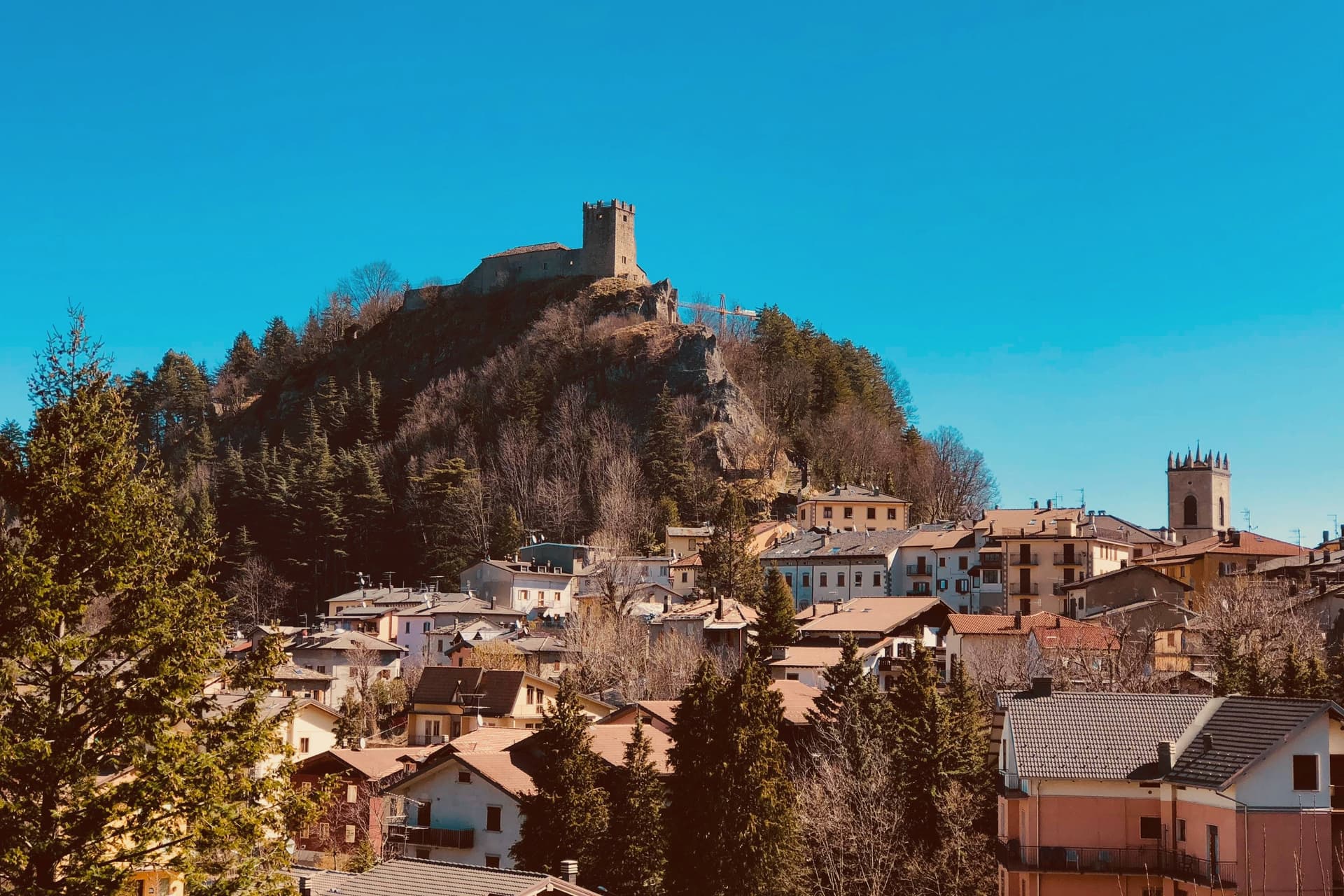
 The 7 best towns inside a nature park that you can reach by train in Emilia-Romagna7 towns, Ravenna among them.
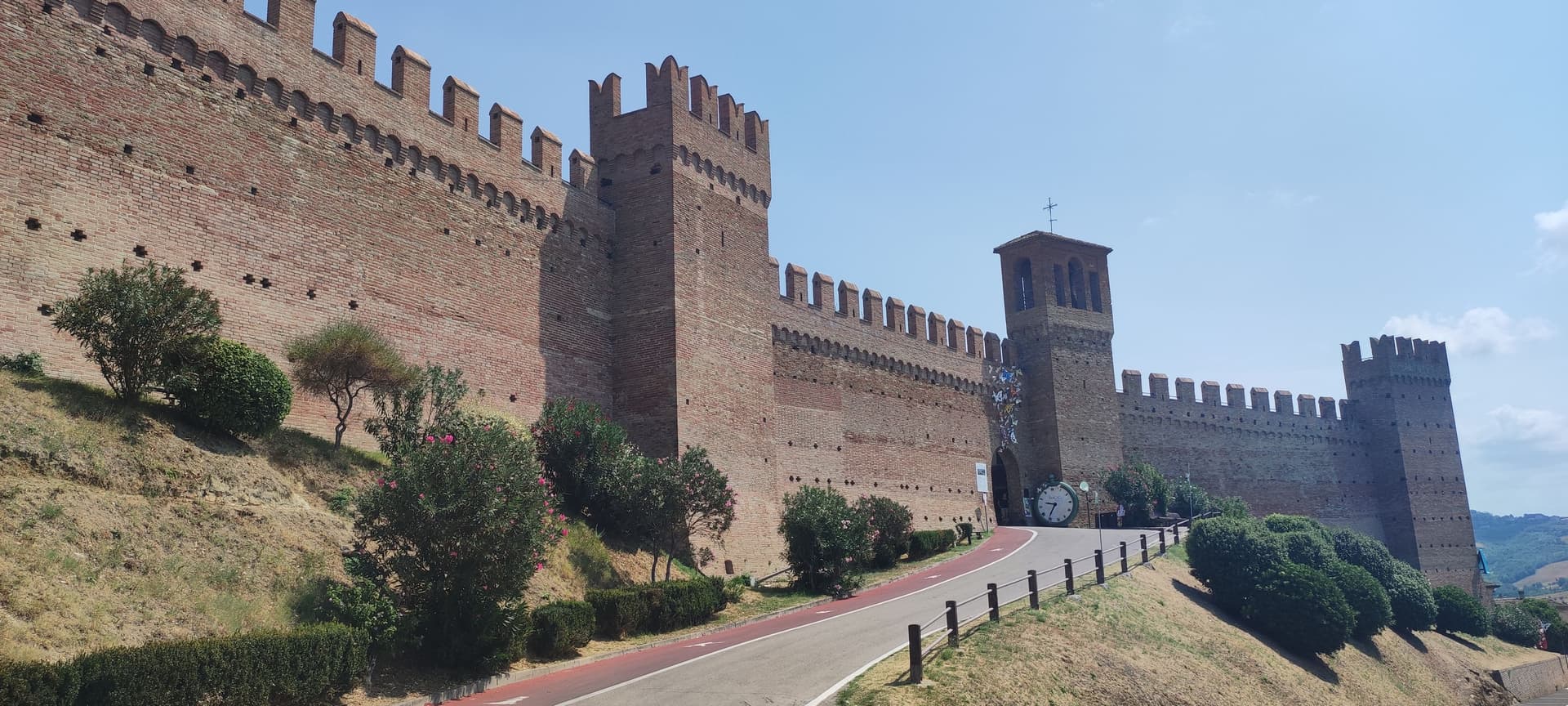
 The best towns inside a nature park that eat well in Emilia-Romagna7 towns, Ravenna among them.
 The best coastal towns within two hours of Bologna9 towns, Ravenna among them.
How to get there
From Bologna (BLQ), about 1 hour by car.
Rimini (RMI) is about 1h 15m away.
By car from the centre of Parma 2 hours.
There is a railway station in the comune, so you can arrive without a car.
Coming from Bologna, Florence or Verona?
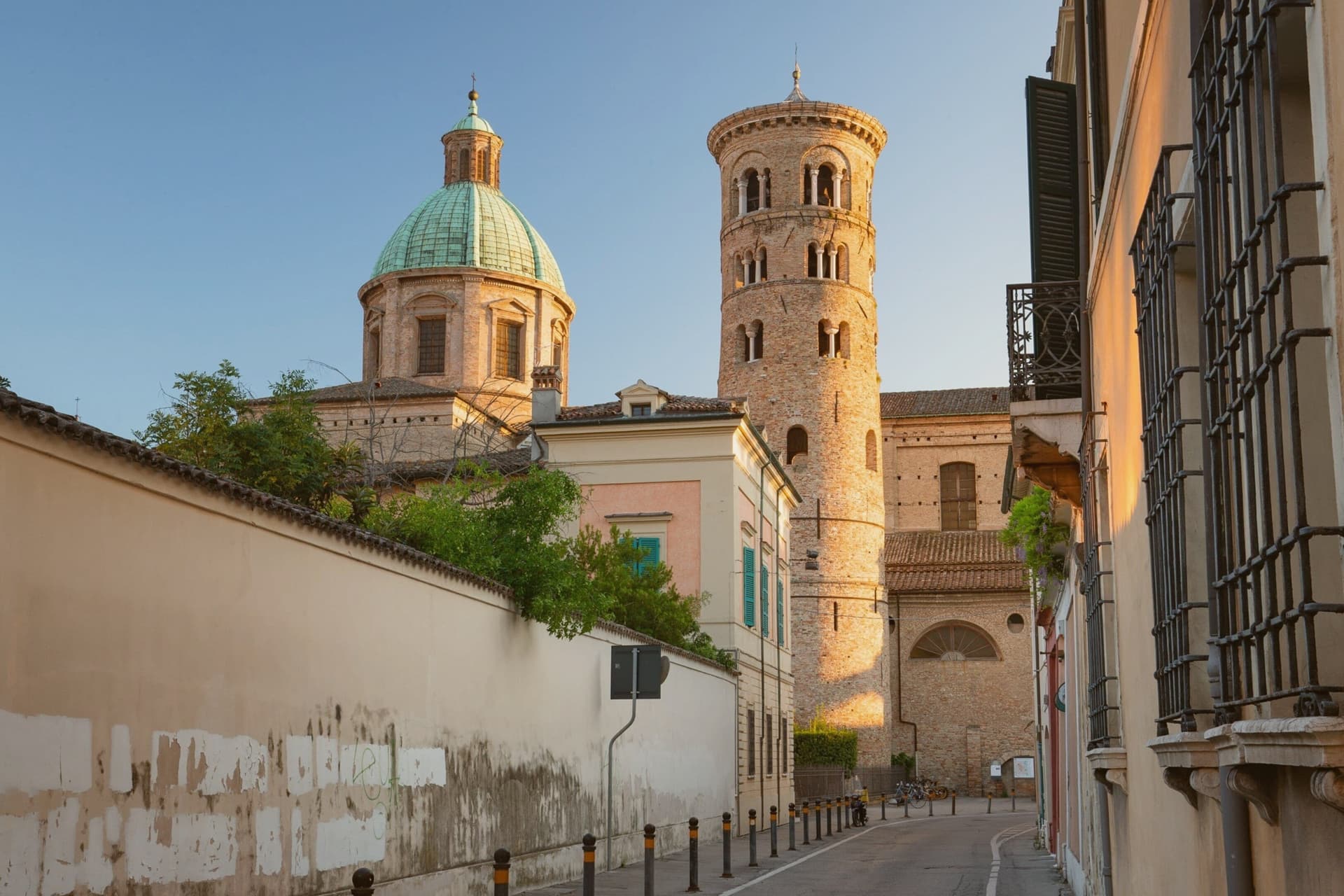
Coming by train into Ravenna? Ravenna is about 5 minutes away by road.
What to see
Basilica di San Vitale
Octagonal basilica holding the imperial mosaics of Justinian and Theodora in the presbytery and apse, the throne room of the sequence in gold and purple.
Mausoleo di Galla Placidia
Small mausoleum next to the basilica, vaulted in a starry blue mosaic sky with gold cross and the symbols of the Evangelists, dim enough that the gold seems to generate its own light.
Basilica di Sant'Apollinare Nuovo
Built by Theoderic as his palace chapel, the nave walls lined with continuous mosaic processions of saints and martyrs facing each other the full length of the church.
Basilica di Sant'Apollinare in Classe
Set at the ancient port of Classe, five kilometers south of the center, with a luminous green apse mosaic of the Transfiguration lit through plain clerestory windows.
Battistero Neoniano
Built by Bishop Neon over an earlier bath house, the dome mosaic showing the Baptism of Christ encircled by the twelve apostles, directly above the font.
Mausoleo di Teodorico
Gothic tomb capped by a single 230-tonne Istrian limestone monolith ten meters across, cut and set without mortar or mosaic, unlike everything else in the city.
Tomba di Dante
Small standalone chapel beside the Basilica of San Francesco, its neoclassical front at odds with the age of what it holds.
The slow-trip planner
Building a trip? Find where Ravenna fits in a slow Italy circuit.
Answer five questions. We will shape a geographically coherent slow trip from the 1,000 Italian towns most travelers skip. Yours to save and share.
We recommend
Where to eat
Not our picks, but places the guides put their name to: a Michelin star, a Gambero Rosso fork, a Slow Food snail, a Michelin Key for the hotels. Worth a table, a counter, or a night when you pass through.
Antica Trattoria al Gallo 1909Ristorante
Antica Trattoria al Gallo 1909 holds a place on Italy's historic-locali register and a spot in the Michelin Guide.
L'AcciugaRistorante
A spot in the Michelin Guide, at L'Acciuga.
Osteria dei BattibecchiTrattoria
Osteria dei Battibecchi holds one Gambero Rosso prawn.
Osteria del Tempo PersoRistorante
A spot in the Michelin Guide, at Osteria del Tempo Perso.
Osteria della ZabarionaTrattoria
Osteria della Zabariona carries two Gambero Rosso prawns.
Through the year
What happens here
Feasts and festivals that come back year after year. We give the month rather than the date, because the date moves and the month rarely does. Check with the source before you plan a journey around one.
Antica Sagra del Monticinofood festival
usually held in September. TrovaSagre
GiovinBacco. Sangiovese in Festafood festival
usually held in October. sagritaly.com
Living here
- Population 155,751
- A local hubi
- Pharmacy in town
- High school within a 30-minute drive
- Train station in the comune
- Nearest airport Bologna, 1 h 0 min drive
- Regional capital Bologna, 1 h 2 min drive
Common questions
- What is Ravenna known for?
- Ravenna is a 4-meter coastal capital of three successive empires, with eight UNESCO mosaic monuments from the fifth and sixth centuries.
- Where is Ravenna?
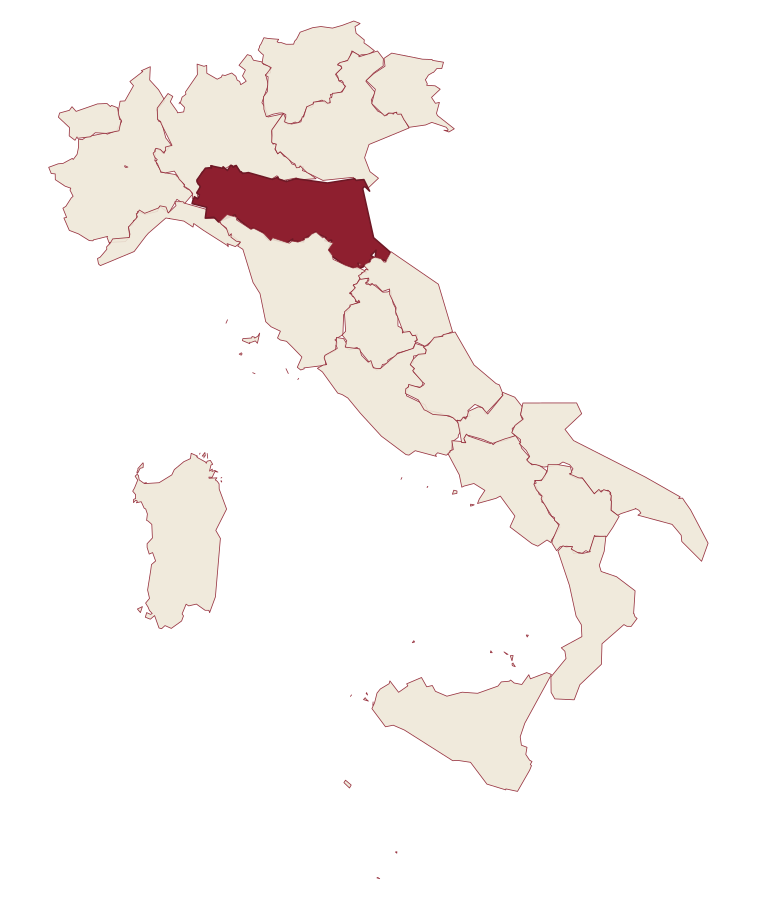
- Ravenna is a comune in the province of Ravenna, in Emilia-Romagna, at 4 meters above sea level.
- What is the nearest airport to Ravenna?
- Bologna (BLQ), about 1 hour by car.
- Can you get to Ravenna without a car?
- Yes. There is a railway station in the comune, so you can arrive by train.
- How long is the drive from Parma to Ravenna?
- About 2 hours by car.
- When is the best time to visit Ravenna?
- Best in May–Sep. July is the warmest month, averaging 32 degrees, and May the wettest, with about 11 rain days.
- Is there a sagra or a festival in Ravenna?
- Yes. Antica Sagra del Monticino and GiovinBacco. Sangiovese in Festa. September is when the first of them falls.
- Which other towns are like Ravenna?
- Trieste, Pesaro and Senigallia.
- How many people live in Ravenna?
- 155,751 at the 2023 count.
Tags & datadesignations · numbers · sources
Recognised as
The numbers
- Elevation: 4 m
- Population: 155,751
- Surface area: 653.82 km²
These figures were compiled from public directories: ISTAT, OpenStreetMap and Wikidata, and from the official listings of the guides named on this page. Town details change; verify with official sources before you travel.
Featured on
Ravenna appears on this themed pick from our Collections:
Similar
Towns like Ravenna
Trieste
Province: Trieste
both on the Adriatic coast · both over 10,000 people
Pesaro
Province: Pesaro e Urbino
both on the Adriatic coast · both over 10,000 people
Senigallia
Province: Ancona
both on the Adriatic coast · both over 10,000 people
Cervia
Province: Ravenna
both on the Adriatic coast · both over 10,000 people
Cesenatico
Province: Forlì-Cesena
both on the Adriatic coast · both over 10,000 people
Trani
Province: Barletta-Andria-Trani
both on the Adriatic coast · both over 10,000 people
🏛️ UNESCO
More UNESCO towns
Matera
Province: Matera
Cave dwellings carved into limestone since the Paleolithic, called the shame of Italy in the 1950s and made European Capital of Culture in 2019.
Amalfi
Province: Salerno
The first Italian maritime republic and the coast it named, six meters above the sea between cliffs that close around the duomo's steps.
Ascea
Province: Salerno
Two villages, a hilltown at 230 meters and a Cilento marina, with Parmenides and Zeno's Eleatic school in the ruins of Greek Velia below.
Atrani
Province: Salerno
The smallest commune in Italy by area, twelve hectares of stacked houses where the Amalfi Coast pinches shut around a single piazza.
Benevento
Province: Benevento
Sannio capital at the Calore-Sabato confluence, with a 114 AD Trajan arch and a Lombard rotunda on the UNESCO list.