
Emilia-Romagna · Ravenna
Cervia
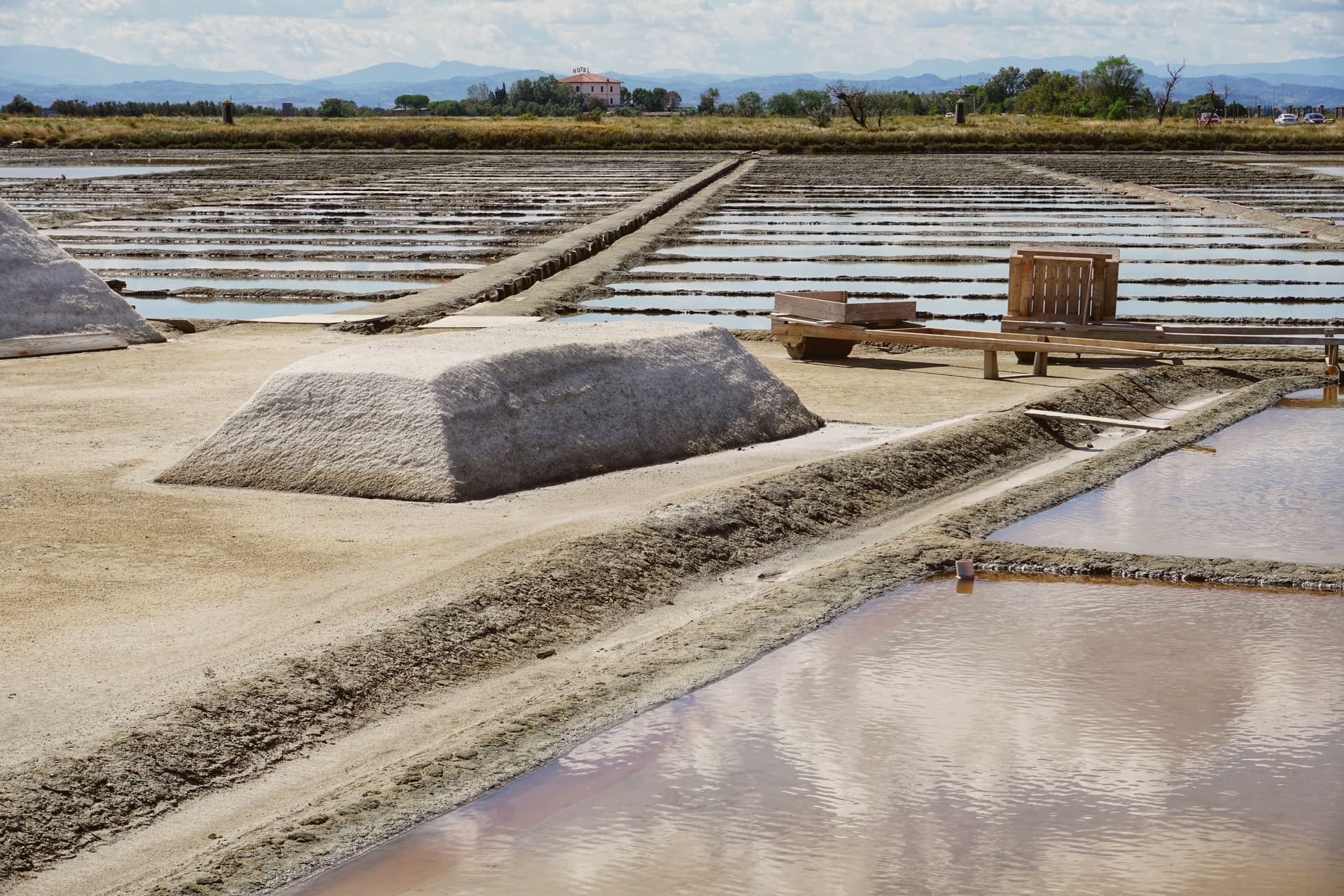
The Adriatic salt town with 827 hectares of working saline, planned in 1697 around a grid of salt workers' houses.
- Best time
- May–Sep
- By car
- 34 min from Rimini
- By train
- Station in the comune
- Population
- 28,983
Known for
SWEET SALT
Cervia's sale dolce, lower in bitter chlorides than other sea salts, harvested from 827 hectares of saline still in operation.
PLANNED 1697 TOWN
Built from scratch in a square grid by order of Pope Innocent XII, with identical houses for salt workers around a central piazza.
MILANO MARITTIMA
Garden-city seaside resort planned in 1912 inside the Cervia pine forest, now the northern half of the municipality.
PESCA E NETTARINA DI ROMAGNA
The commune lies inside the Pesca e Nettarina di Romagna IGP production zone.
When to visit
Best · May–Sep
- J9°
- F12°
- M14°
- A17°
- M22°
- J28°
- J30°
- A30°
- S26°
- O21°
- N14°
- D10°
- Best
- Hot or crowded
- Quiet
- Mostly closed
Daytime averages, 2020–2024. The sea is warmest in August at 29° and coldest in January at 8°. Weather data by Open-Meteo.com.
The festa: San Paterniano, 13 November
Why come
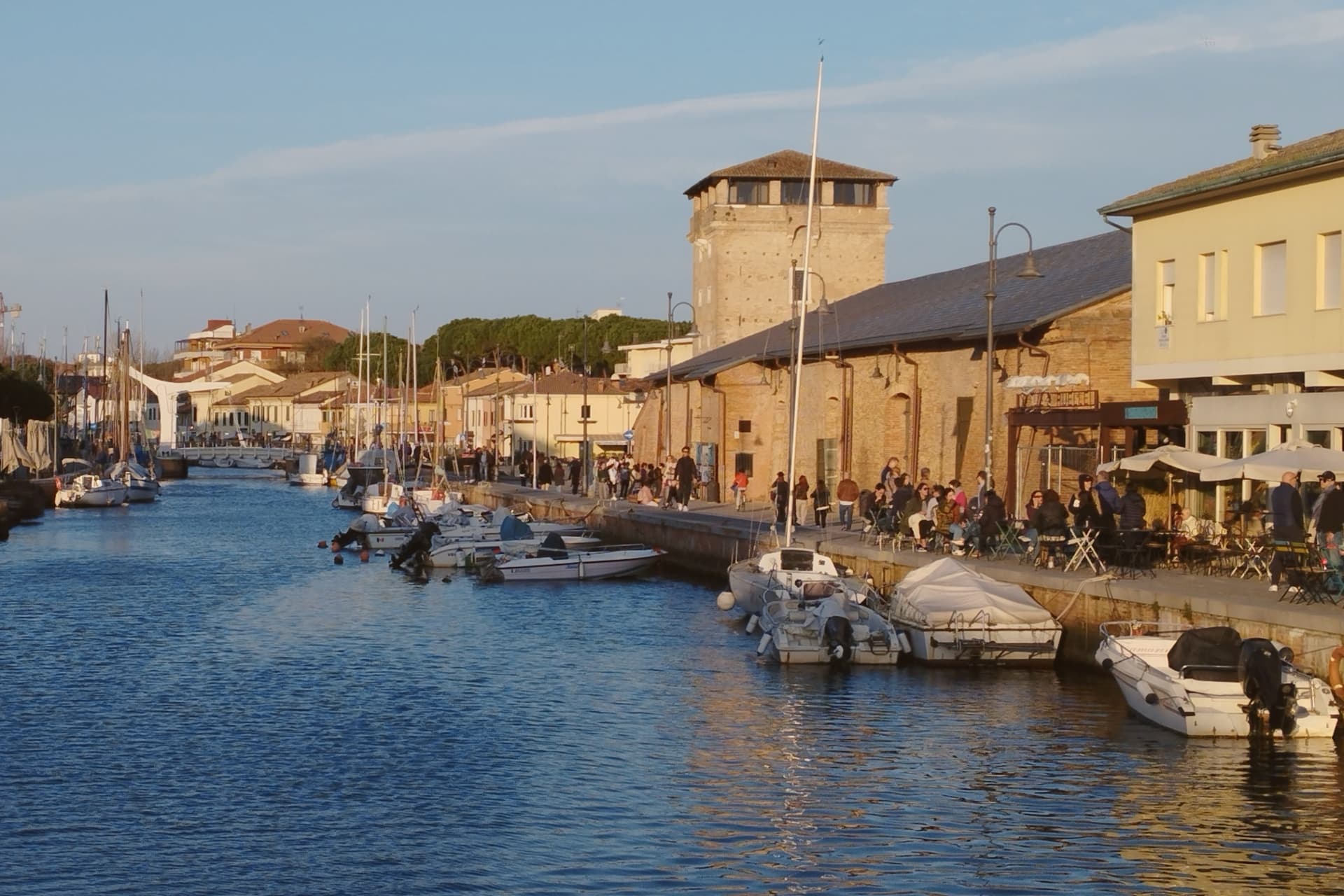
Cervia sits at sea level on the Adriatic, twenty kilometers south of Ravenna, between the pine forest of Milano Marittima and the salt pans that have given the town its identity since Roman times. The original settlement, Ficocle, stood inside the saline itself; the move to the coast in 1697 put the grid of workers' housing where it now stands, closer to the water and to the canal port that the tower on its north side was built to guard. The two halves of the municipality read as a pairing of extraction and leisure: the saline and the old grid town to the south, worked continuously and still yielding salt by hand at one basin, and the planted pine forest to the north, laid out as a garden-city resort in the following century.
The museum inside the old salt warehouse holds two thousand years of the tools and records that connect the two eras. The beach carries Bandiera Blu recognition along nine kilometers of coast. What holds the town together is that its shape was dictated by salt long before tourism arrived: the grid, the tower, the canal and even the forest to the north all trace back to the working of the saline, with the resort at Milano Marittima grown from land the salt industry had left standing.
The Sunday letter
Cervia is on our list. Its letter is still to come.
We are writing about all 1,000 of these towns, one at a time, in a free letter every Sunday: the photo, the food, the festa. That is our mission. Sign up and you will be there when Cervia comes up. By Peter & Sophia, from Pietrasanta.
Read on
Cervia in our articles
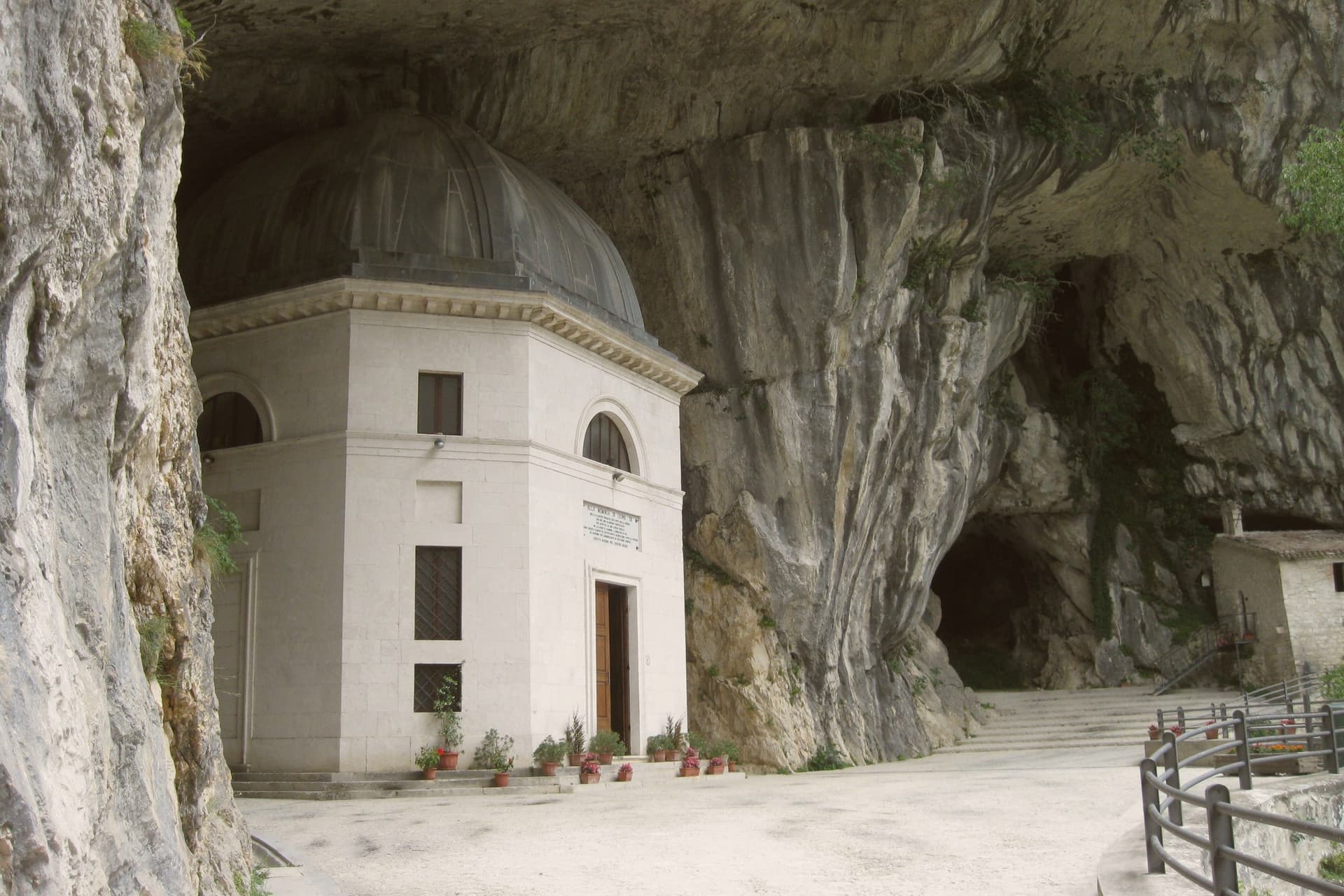
 The 7 best towns inside a nature park that you can reach by train in Emilia-Romagna7 towns, Cervia among them.
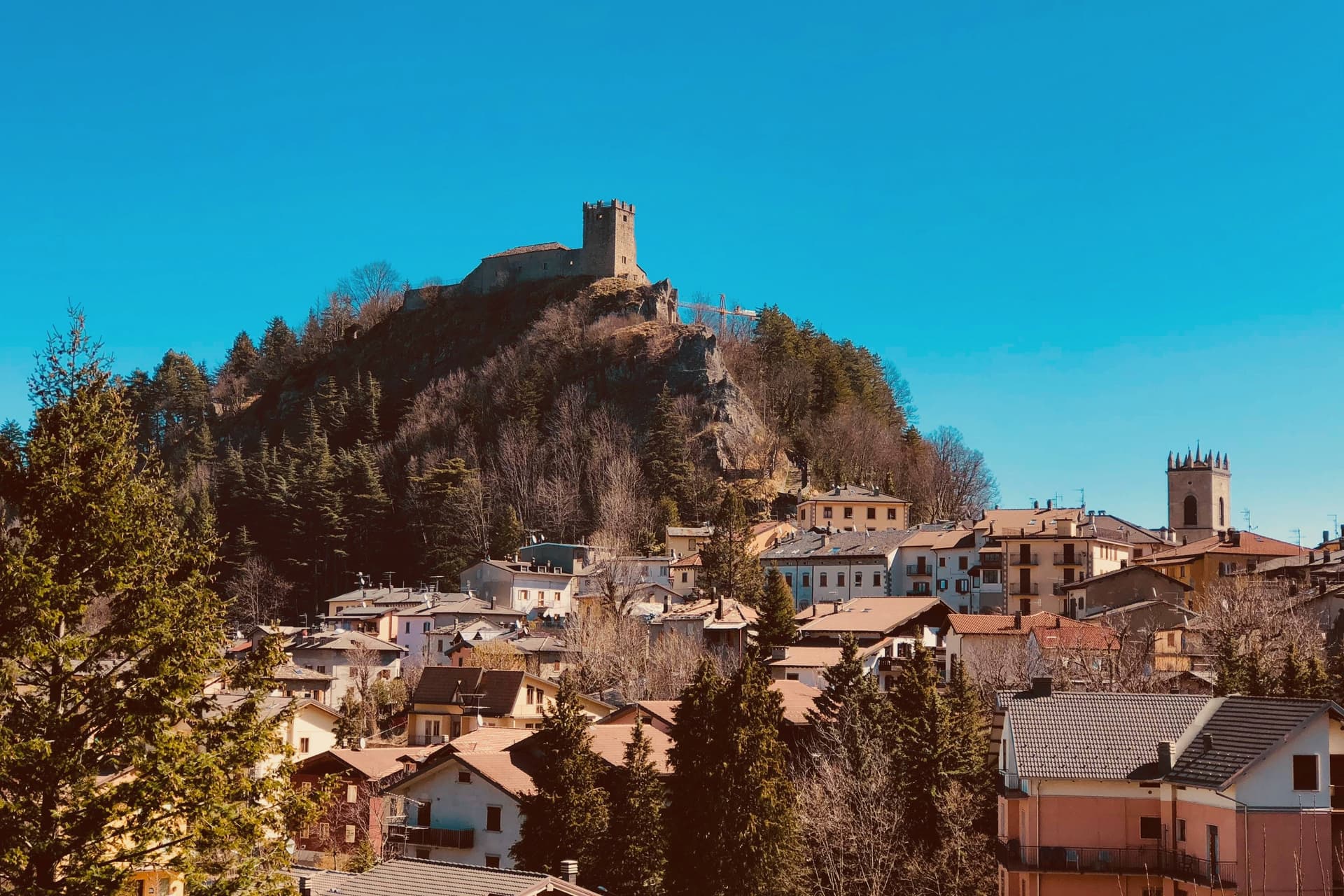
 The best hot-spring towns within two hours of Rimini7 towns, Cervia among them.
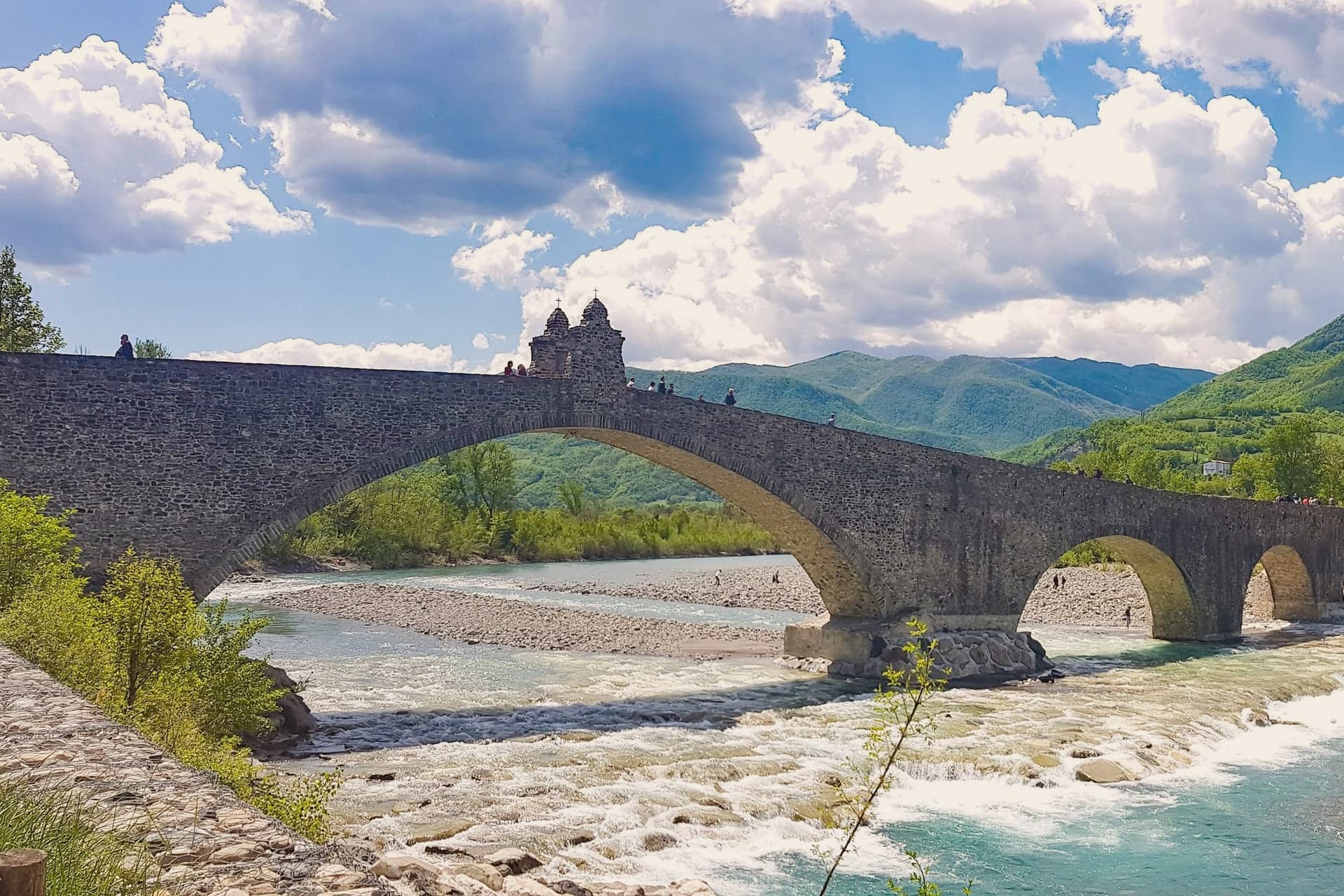
 The best towns inside a nature park that eat well in Emilia-Romagna7 towns, Cervia among them.
 The best hot spring towns in Emilia-Romagna8 towns, Cervia among them.
How to get there
From Rimini (RMI), about 59 minutes by car.
Bologna (BLQ) is about 1h 14m away.
By car from the centre of Ancona 1h 47m.
There is a railway station in the comune, so you can arrive without a car.
Coming from Bologna or Florence?
Coming by train into Forlì? Cervia is about 28 minutes away by road.
What to see
Saline di Cervia
Working salt pans covering 827 hectares, the northernmost in Italy, with the Camillone basin still harvested by hand using nineteenth-century methods.
Torre San Michele
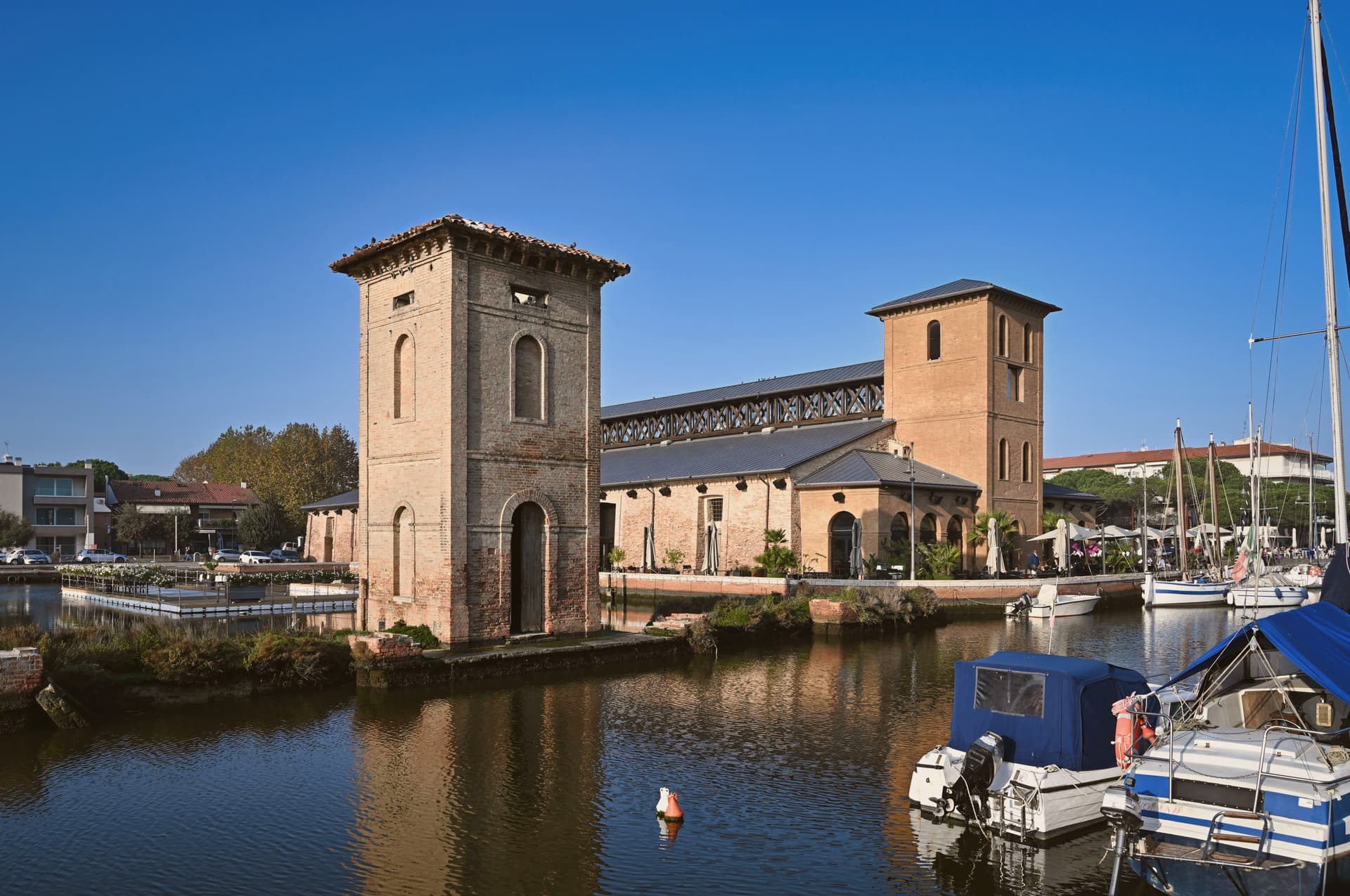
Defensive tower built in 1691 to protect the salt warehouses and control the canal port, on the north side of the harbor.
MUSA - Museo del Sale
Salt museum inside the Magazzino del Sale Torre, with tools, documents and photographs gathered from former salt workers.
Quadrilatero
Grid of identical salt workers' houses built from 1697 after Pope Innocent XII ordered Cervia moved from the saline closer to the sea.
Pineta di Milano Marittima
Coastal pine forest planted in 1882, shaping the northern half of the municipality and the 1912 garden-city plan of Milano Marittima.
The slow-trip planner
Building a trip? Find where Cervia fits in a slow Italy circuit.
Answer five questions. We will shape a geographically coherent slow trip from the 1,000 Italian towns most travelers skip. Yours to save and share.
We recommend
Where to eat and stay
Not our picks, but places the guides put their name to: a Michelin star, a Gambero Rosso fork, a Slow Food snail, a Michelin Key for the hotels. Worth a table, a counter, or a night when you pass through.
Le GhiaineRistorante
Le Ghiaine has one Gambero Rosso fork (76/100) to its name.
Locanda dei SalinariRistorante
Locanda dei Salinari carries a spot in the Michelin Guide.
MicroBistrot
Micro has one Gambero Rosso table to its name.
Osteria BartoliniRistorante
Osteria Bartolini carries a Michelin Bib Gourmand.
Uni RestaurantGiapponese
Two Gambero Rosso Mappamondi, at Uni Restaurant.
Hotel WaldorfHotel
A place in the Michelin hotel guide, at Hotel Waldorf.
Through the year
What happens here
Feasts and festivals that come back year after year. We give the month rather than the date, because the date moves and the month rarely does. Check with the source before you plan a journey around one.
Festa di San Lorenzopatron saint's feast
usually held in August. TrovaSagre
Living here
- Population 28,983
- Commuter belti
- Pharmacy in town
- High school within a 30-minute drive
- Train station in the comune
- Nearest airport Rimini, 59 min drive
- Regional capital Bologna, 1 h 16 min drive
Thermal baths in town: Terme di Cervia.
Common questions
- What is Cervia known for?
- Cervia is the Adriatic salt town with 827 hectares of working saline, planned in 1697 around a grid of salt workers' houses.
- Where is Cervia?
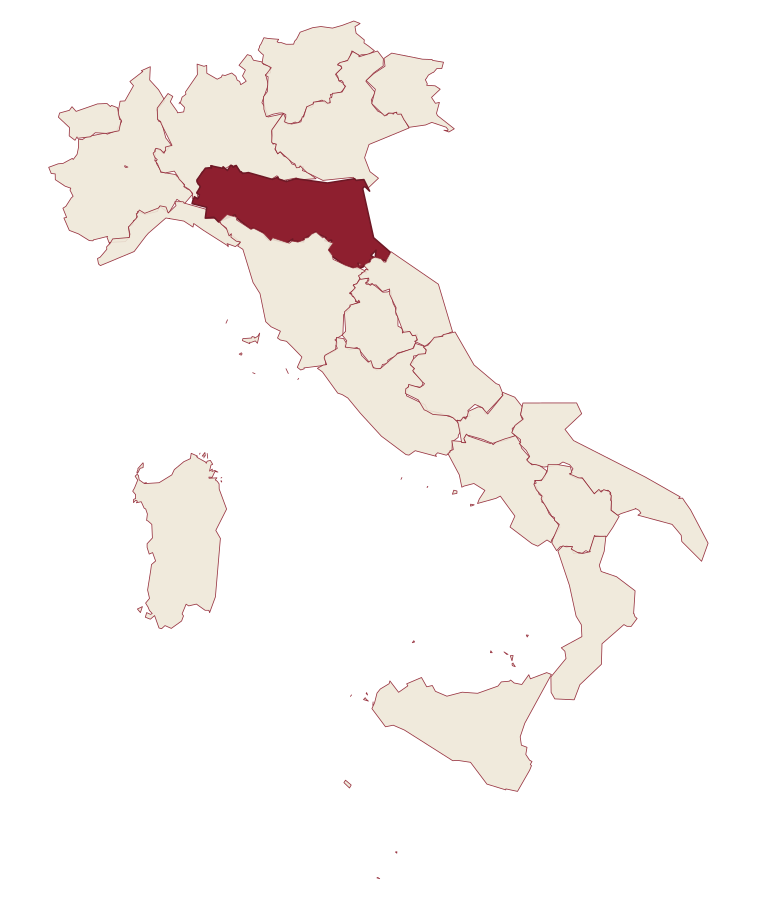
- Cervia is a comune in the province of Ravenna, in Emilia-Romagna, at 2 meters above sea level.
- What is the nearest airport to Cervia?
- Rimini (RMI), about 59 minutes by car.
- Can you get to Cervia without a car?
- Yes. There is a railway station in the comune, so you can arrive by train.
- How long is the drive from Ancona to Cervia?
- About 1h 47m by car.
- When is the best time to visit Cervia?
- Best in May–Sep. July is the warmest month, averaging 30 degrees, and December the wettest, with about 11 rain days.
- Is there a sagra or a festival in Cervia?
- Yes. Festa di San Lorenzo. August is when the first of them falls.
- Which other towns are like Cervia?
- Cesenatico, Giulianova and Giovinazzo.
- How many people live in Cervia?
- 28,983 at the 2023 count.
Tags & datadesignations · numbers · sources
Recognised as
The numbers
- Elevation: 2 m
- Population: 28,983
- Surface area: 82.27 km²
These figures were compiled from public directories: ISTAT, OpenStreetMap and Wikidata, and from the official listings of the guides named on this page. Town details change; verify with official sources before you travel.
Featured on
Cervia appears on this themed pick from our Collections:
Similar
Towns like Cervia
Cesenatico
Province: Forlì-Cesena
both on the Adriatic coast · both over 10,000 people
Giulianova
Province: Teramo
both on the Adriatic coast · both over 10,000 people
Giovinazzo
Province: Bari
both on the Adriatic coast · both over 10,000 people
Grottammare
Province: Ascoli Piceno
both on the Adriatic coast · both over 10,000 people
Bisceglie
Province: Barletta-Andria-Trani
both on the Adriatic coast · both over 10,000 people
Trinitapoli
Province: Barletta-Andria-Trani
both on the Adriatic coast · both over 10,000 people
🟦 Bandiera Blu
More Bandiera Blu towns in Emilia-Romagna
Cesenatico
Province: Forlì-Cesena
An Adriatic fishing port whose canal was redrawn on commission from a Borgia patron, with ten historic sailboats moored as a floating museum.
Comacchio
Province: Ferrara
A canal town on thirteen islets, with brackish lagoons that hold three hundred bird species.
Ravenna
Province: Ravenna
A 4-meter coastal capital of three successive empires, with eight UNESCO mosaic monuments from the fifth and sixth centuries.