
The best towns inside a nature park that eat well in Emilia-Romagna
Emilia-Romagna is usually described from the plain, but the good eating sits at the edges of it, where the land tilts. The regional nature parks cover chestnut and beech woods on the Apennine ridge, sandstone gorges, badland clay, pine forest and salt pan behind the Adriatic dunes. Villages up here are built in grey sandstone and river cobble, with stone roof slabs on the older houses and vineyards running to the treeline. Autumn is the season that pays best: porcini, chestnut flour, new wine, wild boar, and the cold months that follow bring culatello fog to the Po and hand-rolled pasta to every kitchen worth booking.
Most people eat their way through the region in Bologna, and it is not a mistake. The porticoes, the Quadrilatero market stalls, the tagliatelle and tortellini in brodo and mortadella are all as good as promised, which is why the lunch service in the centre now runs at capacity most weekends of the year and the queue outside the better-known trattorie starts before the doors open. The city has become the default answer to what to eat in Emilia-Romagna, and the crowd has followed the answer.
The same larder continues past the ring road, into hills and coast that happen to be protected land. The parks are working landscapes: pigs, vines, salt, woodland, and restaurants that a dining guide has picked out one by one. The towns here sit inside those park boundaries, fewer people book them, and they are worth the drive out of the plain.
Of the 45 communes we have mapped in Emilia-Romagna, 7 qualify as towns inside a nature park that eat well: each sits inside a regional nature park, and a dining guide has named a table in each. The smallest, Sestola, has 2,410 residents.
Two more lists worth reading alongside this one: The best hidden towns inside a nature park in Emilia-Romagna and The 7 best towns inside a nature park that you can reach by train in Emilia-Romagna.
Sestola
Why visit Sestola
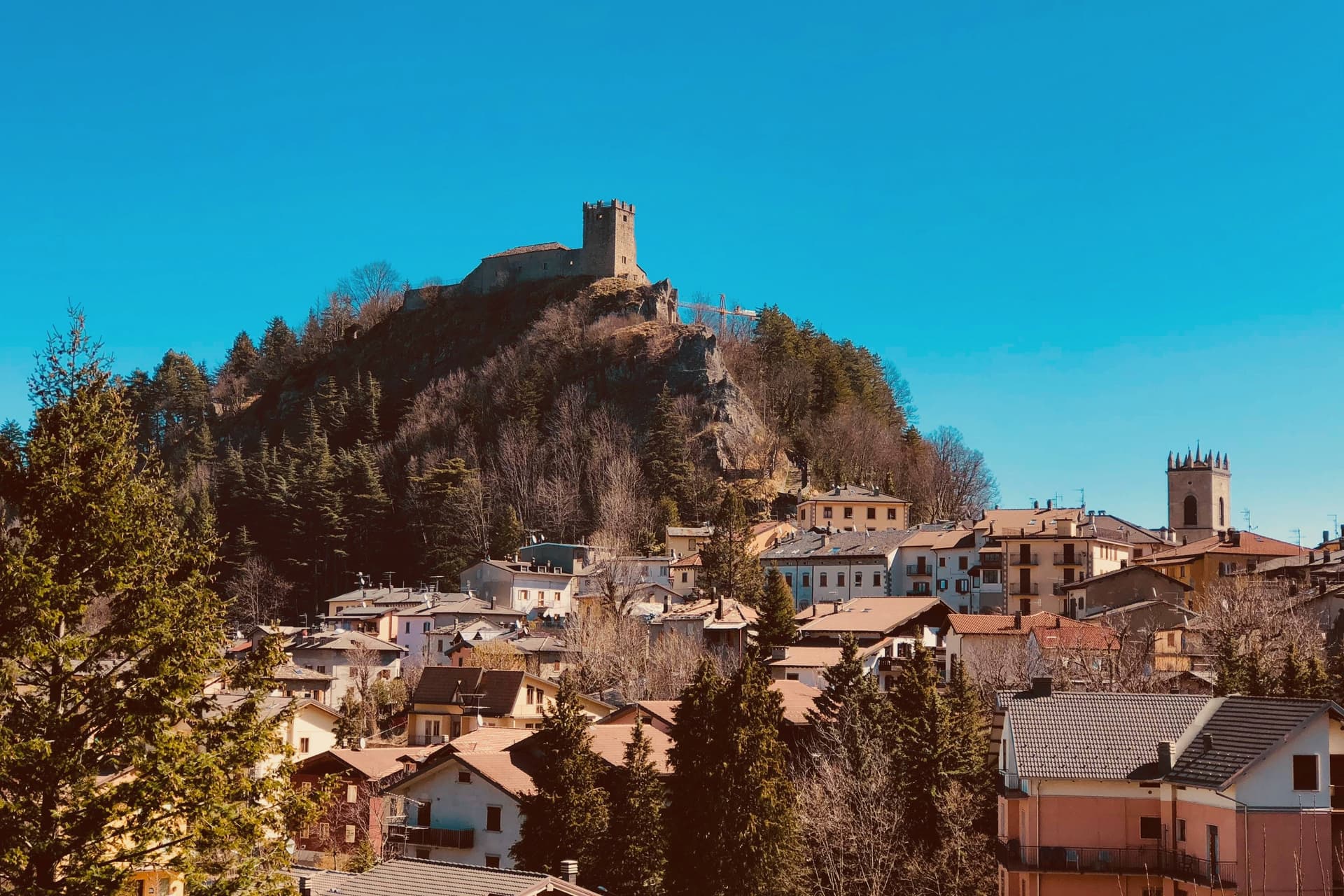
Sestola sits fifty kilometers southwest of Bologna, at the head of the Scoltenna valley, on the southern slope of the mountain that dominates the Frignano. The castle above the town began as a donation, made by the Lombard king Astolfo to the Abbey of Nonantola, before passing to the Este of Modena, who turned it into their most important garrison in the district.
That layered ownership, monastic then military, is why the same rock now holds museums of mechanical instruments, local civilisation and military history under one roof. The mountain itself is shared ground, its slopes and the ski domain across them spilling over into the neighboring communes rather than belonging to Sestola alone.
Below the peak, the character of the place shifts with the season: the same slopes that carry skiers in winter turn over to hikers in summer, and the small glacial lake above town trades snowshoe trails for paddle-boats. The town, in effect, is a fixed point of stone and governance at the foot of a mountain whose use keeps changing with the calendar.
San Rocco have been named by a guide.
What to see in Sestola
- Rocca di Sestola. Castle first documented in 753, granted to Nonantola by King Astolfo, taken by the Este in 1337 and held as their main military garrison in the Frignano. It still rises above the centro storico.
- Museo degli Strumenti Musicali Meccanici. Collection of mechanical music instruments inside the castle, from barrel organs to early phonographs, one of three small museums housed there.
- Monte Cimone. Highest peak of the northern Apennines at 2,165 meters, shared with Fanano, Fiumalbo and Riolunato.
How to get to Sestola
Modena is roughly 79 minutes away by road.
Our tip
Sestola runs on two seasons. December through March is ski country: the Cimone lifts open around late November and run to mid-April depending on snow, and the centro storico fills on weekends with visitors from Bologna and Modena. June through September is hiking season, with Lago della Ninfa accessible by chairlift from town and the trails to the Cimone summit open into October.
Pennabilli
Why visit Pennabilli
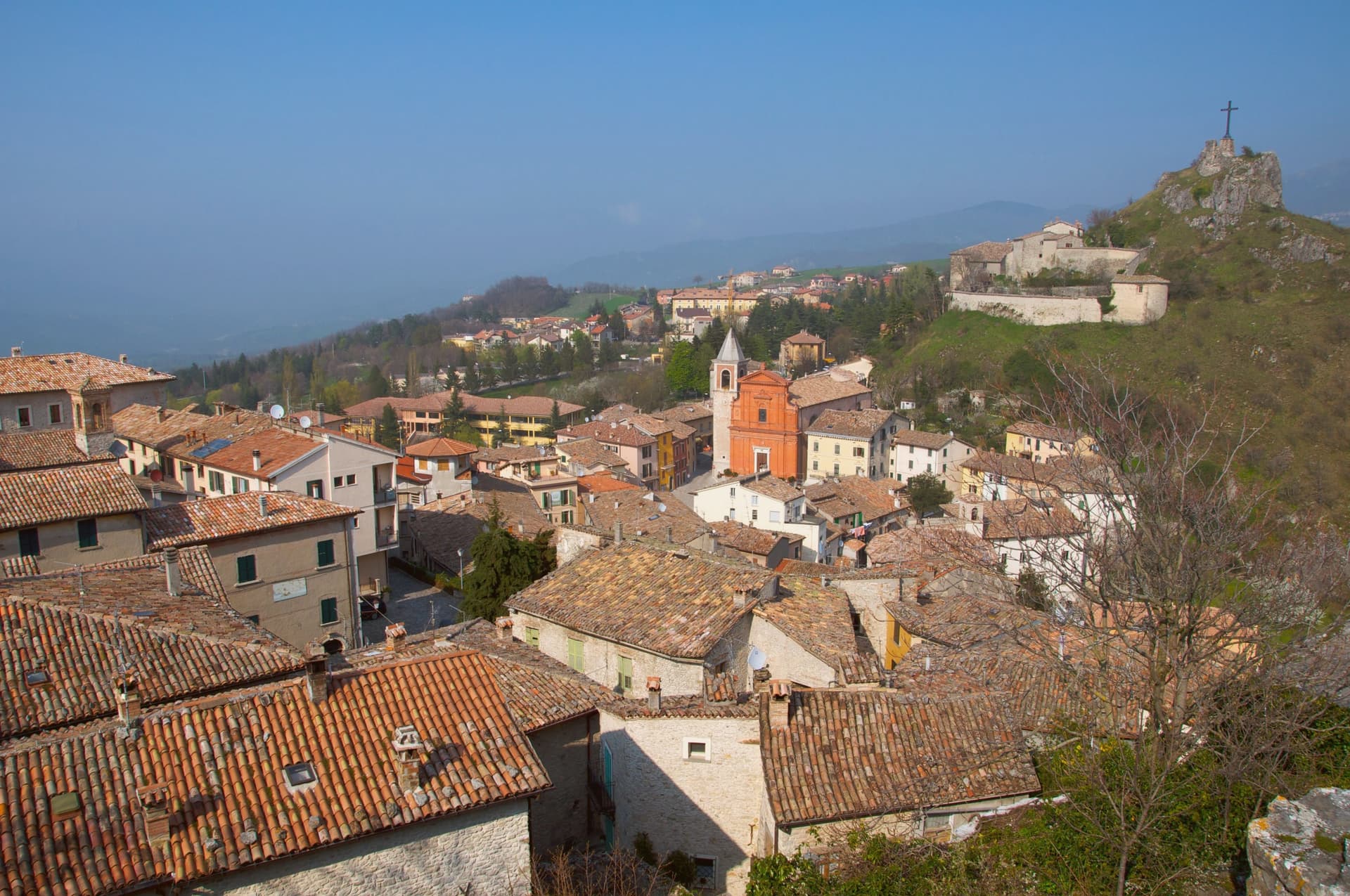
Pennabilli sits at 629 meters on the western slope of Monte Carpegna, at the head of the upper Marecchia valley, forty-five kilometers south of Rimini, inside the historic Montefeltro region. The town grew from the union of two hilltop castles, Penna on the Roccione and Billi on the Rupe, formally joined in 1350 by a stone of peace placed in the marketplace between them.
It has been the episcopal seat of the Diocese of Montefeltro since 1572, a status transferred from the older seat of San Leo. Tonino Guerra, long-time collaborator of Fellini, Antonioni and Tarkovsky, settled here in 1989 and spread his outdoor museum, I Luoghi dell'Anima, across both the town and the valley below it, linking the two former castles and their surroundings into a single walked route.
The garden of forgotten fruits opened the following year, and the antiques fair has continued each July since 1970, older than either. What the place adds up to is a town built twice: once by the stone that joined two castles into one commune, and once by the poet who joined the whole valley into a single museum without walls.
Il Piastrino have been named by a guide.
What to see in Pennabilli
- Orto dei Frutti Dimenticati. Walled garden below the Roccione, its paths lined with sculptures and installations set among the rescued fruit varieties.
- I Luoghi dell'Anima. Network of seven outdoor installations across Pennabilli and the Marecchia valley, conceived by Tonino Guerra between 1989 and 2012.
- Roccione and Rupe. Two rocky outcrops that carried the medieval castles of Penna and Billi, joined into a single commune in 1350.
How to get to Pennabilli
Rimini is roughly 55 minutes away by road.
Our tip
May through October is the open season in Pennabilli. The Marecchia valley turns green in late spring; the air at 629 meters stays cooler than the Rimini coast forty-five kilometers downstream. July is the busiest month, with the Mostra Mercato d'Antiquariato pulling crowds into the centro storico and the Carpegna trails open for hikers. Food Garden falls in August.
Castell'Arquato
Why visit Castell'Arquato
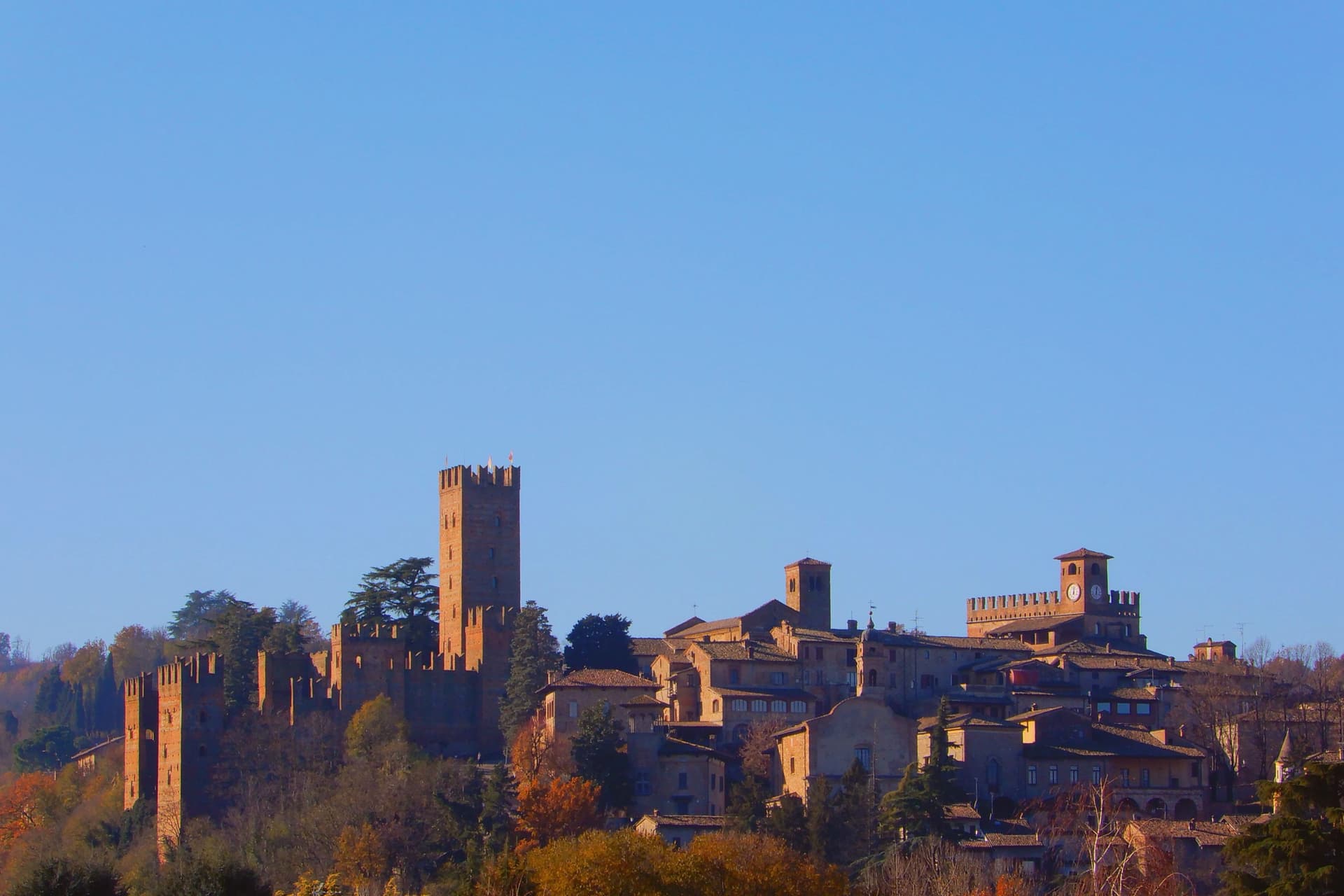
Castell'Arquato sits on the first hills of the Val d'Arda at 224 meters, thirty kilometers from Piacenza, the medieval borgo arranged in tight concentric levels around the old rock. The Collegiata di Santa Maria, founded by the noble Magnus in the eighth century, was rebuilt in 1122 after the 1117 earthquake destroyed the earlier church and is one of the finest Romanesque buildings in the Piacentino.
The Rocca Viscontea, with its thirty-five-meter tower, was begun in 1342 by Luchino Visconti, lord of Milan, to lock down the valley for Piacenza. The Palazzo del Podestà next door dates from 1292 and still anchors the Piazza Monumentale.
Luigi Illica, the librettist of Tosca, Madama Butterfly, La bohème and Andrea Chénier, was born in town in 1857; the museum dedicated to him sits in the house next to his birthplace. The Val d'Arda hills around the town produce the white wines that earned Castell'Arquato Città del Vino status.
Da Faccini have been named by a guide.
What to see in Castell'Arquato
- Rocca Viscontea. Fortress begun in 1342 by Luchino Visconti for the municipality of Piacenza, with a thirty-five-meter tower at the highest point of the borgo.
- Collegiata di Santa Maria Assunta. Romanesque collegiate church, founded in the eighth century and rebuilt in 1122 after the 1117 earthquake destroyed the earlier structure.
- Palazzo del Podestà. Civic palace from 1292 facing the Collegiata, with the original ghibelline merlons and a fourteenth-century loggia along its lower level.
How to get to Castell'Arquato
Piacenza is roughly 38 minutes away by road.
Our tip
April through June is the best season for the Val d'Arda hills: the vineyards on the slopes below the borgo are green and the air clear enough to see across to the Appennino Piacentino. September and October bring the white-wine harvest and the chestnut weeks. July and August touch thirty-three degrees and the unshaded Piazza Monumentale becomes uncomfortable between noon and four.
Castelvetro di Modena
Why visit Castelvetro di Modena
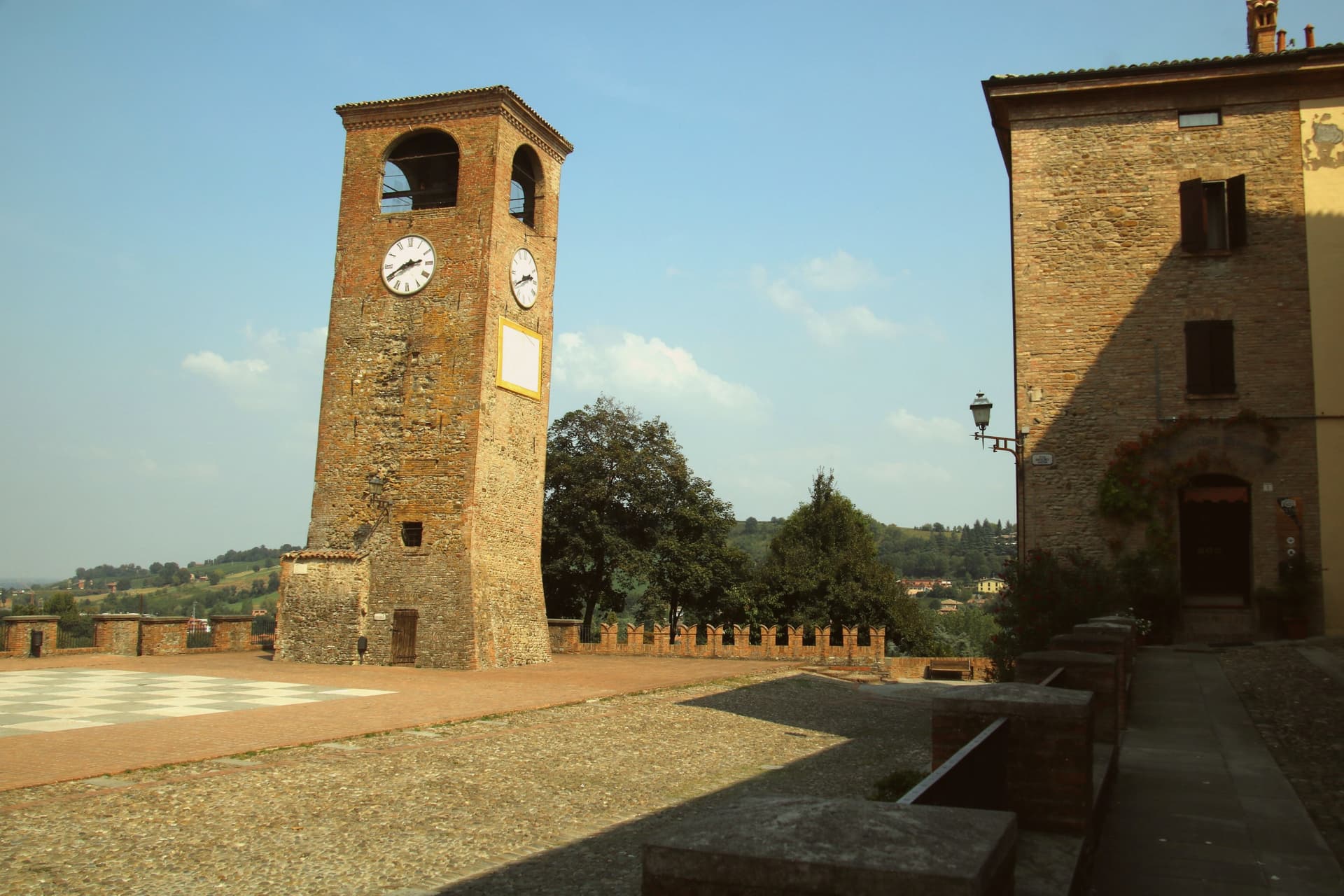
Castelvetro di Modena sits on a hill at 152 meters, eighteen kilometers southeast of Modena and at the northern edge of the Apennine foothills. The medieval centro storico rises around the Piazza Roma, paved in alternating white and black stones that earned it the name Piazza della Dama, the checkerboard piazza, framed by the four surviving towers of the old castle.
The Grasparossa grape grows on the clay slopes around the town, the sandy soil and the south-facing aspect producing the deepest, most tannic of the three main Lambruschi; Lambrusco Grasparossa di Castelvetro received DOC status in 1970. Above the piazza, the Palazzo Rinaldi houses the Museo del Vino and the Museo dell'Aceto Balsamico, the second tracing the same Modenese tradition that nearby Spilamberto codifies.
The municipality holds three institutional signals: Borghi più belli, Bandiera Arancione, Città del Vino. The Sagra dell'Uva e del Lambrusco runs the last weekend of September, when the streets fill with the chess players from the surrounding Lambrusco towns dressed as living pieces on the piazza.
Locanda del Feudo, Opera|02 have been named by a guide.
What to see in Castelvetro di Modena
- Piazza Roma. Checkerboard piazza paved in alternating white and black stones, framed by the four surviving towers of the medieval castle.
- Castello di Levizzano Rangone. Tenth-century fortified frazione four kilometers north, with a tower built in the 990s and a fully preserved medieval village.
- Museo del Vino. Wine museum inside the Palazzo Rinaldi, tracing the Grasparossa production cycle and the DOC zone established in 1970.
How to get to Castelvetro di Modena
There is a railway station in the town, so you can arrive without a car and never need one while you are here. Modena is roughly 28 minutes away by road.
Our tip
April through June and September through October are the Castelvetro months. The hills around the borgo turn green in spring and red in autumn when the Grasparossa vines colour up before the harvest. July and August are hot, thirty-five degrees in the valley, less in the hills above, and the cantine slow down. Sagra dell'Uva e del Lambrusco Grasparossa di Castelvetro falls in September.
Cervia
Why visit Cervia
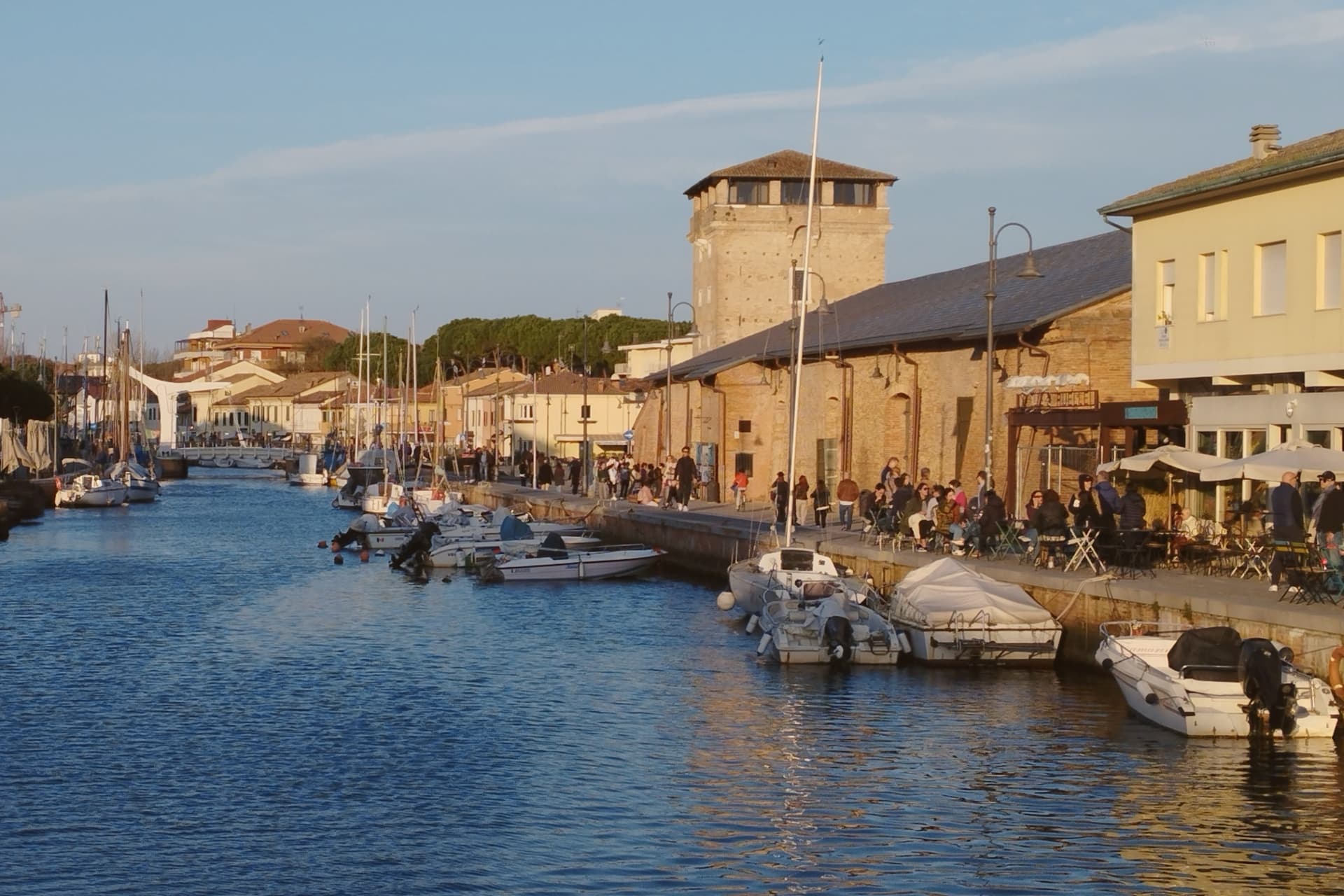
Cervia sits at sea level on the Adriatic, twenty kilometers south of Ravenna, between the pine forest of Milano Marittima and the salt pans that have given the town its identity since Roman times. The original settlement, Ficocle, stood inside the saline itself; the move to the coast in 1697 put the grid of workers' housing where it now stands, closer to the water and to the canal port that the tower on its north side was built to guard.
The two halves of the municipality read as a pairing of extraction and leisure: the saline and the old grid town to the south, worked continuously and still yielding salt by hand at one basin, and the planted pine forest to the north, laid out as a garden-city resort in the following century. The museum inside the old salt warehouse holds two thousand years of the tools and records that connect the two eras.
The beach carries Bandiera Blu recognition along nine kilometers of coast. What holds the town together is that its shape was dictated by salt long before tourism arrived: the grid, the tower, the canal and even the forest to the north all trace back to the working of the saline, with the resort at Milano Marittima grown from land the salt industry had left standing.
Osteria Bartolini, Locanda dei Salinari, Le Ghiaine and 2 more have been named by a guide.
What to see in Cervia
- Saline di Cervia. Working salt pans covering 827 hectares, the northernmost in Italy, with the Camillone basin still harvested by hand using nineteenth-century methods.
- Torre San Michele. Defensive tower built in 1691 to protect the salt warehouses and control the canal port, on the north side of the harbor.
- MUSA - Museo del Sale. Salt museum inside the Magazzino del Sale Torre, with tools, documents and photographs gathered from former salt workers.
How to get to Cervia
There is a railway station in the town, so you can arrive without a car and never need one while you are here. Forlì is roughly 29 minutes away by road.
Our tip
May through September is the Cervia season. Late May and June hold the best balance of warm sea and quiet beach, before the Italian holiday peak. July and August bring full beach and full pine forest, with thirty-degree afternoons broken by the evening sea breeze. Festa di San Lorenzo falls in August.
Ravenna
Why visit Ravenna
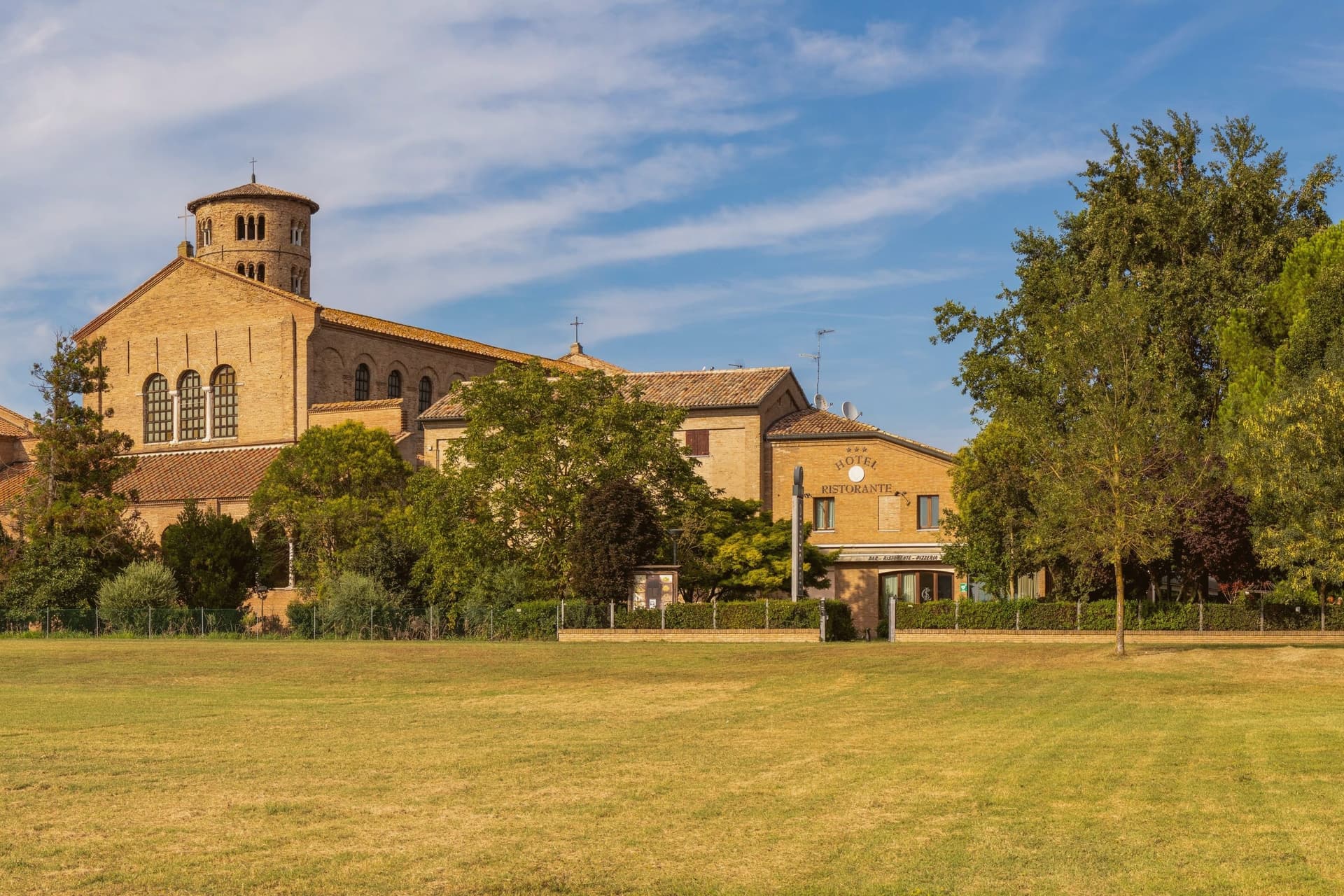
Ravenna sits four meters above sea level on the Adriatic coastal plain, ten kilometers from the sea and 105 kilometers east of Modena. Its position, low, flat, and close to the coast but not on it, made it defensible in a way landlocked cities were not: the surrounding marsh and lagoon kept armies at a distance while boats could still reach it.
That is why Honorius moved the Western Roman capital here in 402, why Theoderic kept it as his Ostrogothic seat, and why the Byzantine Exarchate held it for Constantinople until 751 as the last piece of imperial territory in northern Italy. Each of the three regimes built churches and paid for mosaic to decorate them, which is why the city's monuments read as a sequence rather than a single style: Roman, Gothic and Byzantine hands working in the same medium across a century and a half.
The municipality itself is split between this historic center and a stretch reaching the Adriatic, where Marina di Ravenna and Punta Marina hold Bandiera Blu beaches, so the same town that holds the fifth-century mausoleums also runs a public coastline. Population is 155,751.
What the churches add up to is less a city of monuments than a record of power changing hands, with each occupant leaving its faith in glass and gold on the walls rather than tearing down what came before.
L'Acciuga, Antica Trattoria al Gallo 1909, Osteria del Tempo Perso and 2 more have been named by a guide.
What to see in Ravenna
- Basilica di San Vitale. Octagonal basilica holding the imperial mosaics of Justinian and Theodora in the presbytery and apse, the throne room of the sequence in gold and purple.
- Mausoleo di Galla Placidia. Small mausoleum next to the basilica, vaulted in a starry blue mosaic sky with gold cross and the symbols of the Evangelists, dim enough that the gold seems to generate its own light.
- Basilica di Sant'Apollinare Nuovo. Built by Theoderic as his palace chapel, the nave walls lined with continuous mosaic processions of saints and martyrs facing each other the full length of the church.
How to get to Ravenna
There is a railway station in the town, so you can arrive without a car and never need one while you are here. Ravenna is roughly 3 minutes away by road.
Our tip
May through September is the working window for Ravenna. The Adriatic warms enough for the beaches at Marina di Ravenna and Punta Marina to fill from late May through August, and the centro storico stays open for the Ravenna Festival in June and July. The mosaics need no weather, but July and August touch thirty-three degrees and the basilica interiors hold their heat. Antica Sagra del Monticino falls in September.
Parma
Why visit Parma
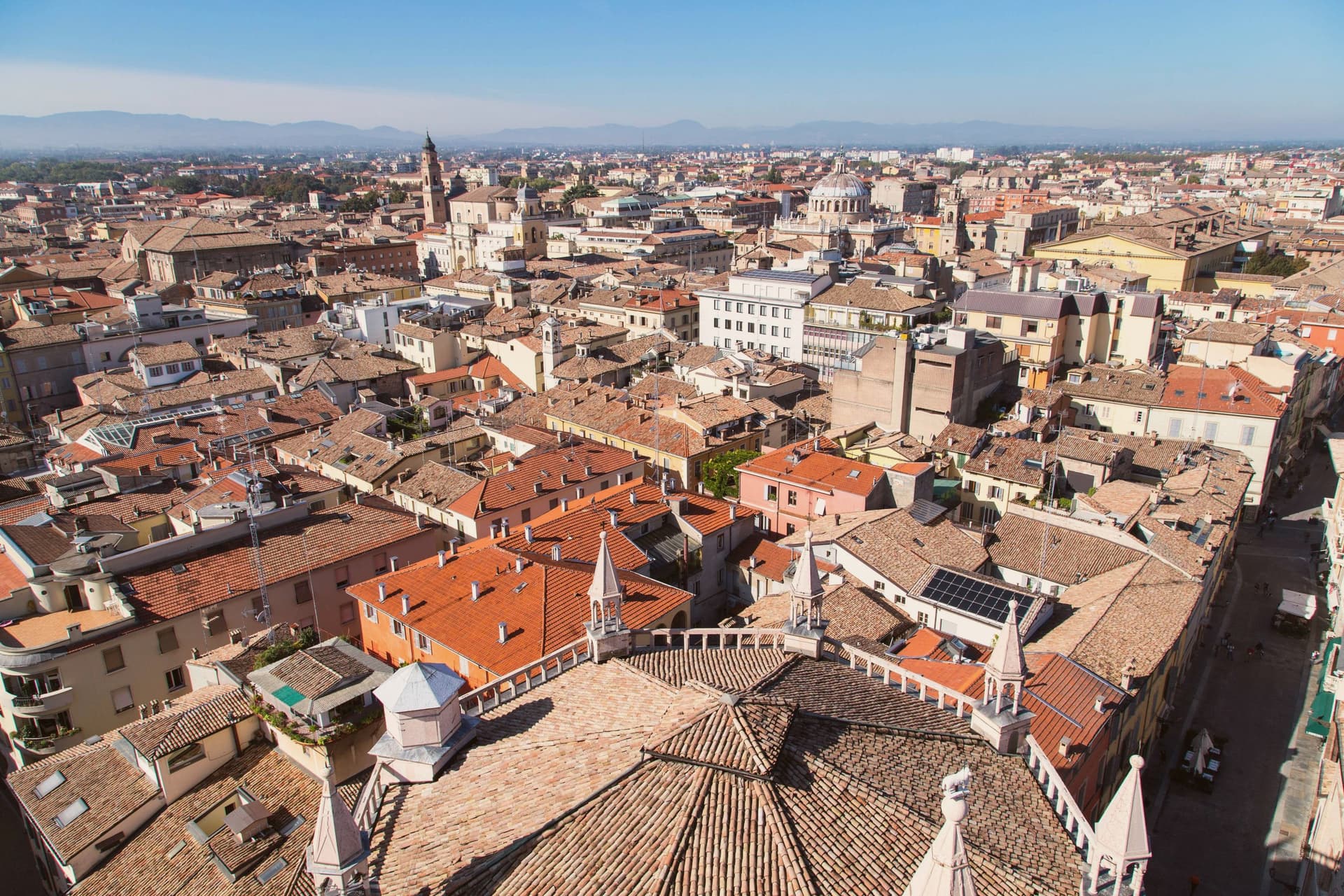
Parma sits on the Via Emilia at 57 meters, halfway between Bologna and Piacenza, the Po Valley reaching north and the Apennine foothills closing in fifteen kilometers south. Under the Farnese in the sixteenth century and Marie Louise of Habsburg in the nineteenth, the city ran its own duchy and built the institutions that still define it: the Palazzo della Pilotta, the Teatro Farnese, the Teatro Regio of 1829.
The Cathedral of Santa Maria Assunta, consecrated in 1106, holds Correggio's Assumption fresco in the dome, painted between 1526 and 1530 with a vortex of figures that read as a single rotating body. The Battistero, octagonal in pink Veronese marble, was designed and carved by Benedetto Antelami from 1196.
Arturo Toscanini was born here in 1867; the Teatro Regio still treats his recordings as house standard. The city's two food appellations, Parmigiano Reggiano and Prosciutto di Parma, carry European protected status; UNESCO named the city a Creative City of Gastronomy in 2015.
The population is 196,764.
Inkiostro, Trattoria Antichi Sapori, I Tri Siochètt and 15 more have been named by a guide.
What to see in Parma
- Duomo di Parma. Cathedral consecrated 1106, holding Correggio's Assumption fresco in the dome, painted 1526 to 1530 as a single rotating vortex of figures.
- Battistero. Octagonal baptistery in pink Veronese marble, 35 meters tall, designed and sculpted by Benedetto Antelami from 1196, completed in 1270.
- Palazzo della Pilotta. Sixteenth-century Farnese palace housing the National Gallery, the Archaeological Museum and the wooden Teatro Farnese of 1618.
How to get to Parma
There is a railway station in the town, so you can arrive without a car and never need one while you are here. Parma is roughly 4 minutes away by road.
Our tip
April through June and September through October are the working months in Parma. The Po Valley clears, the colonnaded streets behind the Pilotta hold their light, and the food calendar lines up: asparagus in May, prosciutto festivals in June, Parmigiano openings into the autumn. July and August bring thirty-five degrees and the humidity that comes with the plain; the city empties in the second half of August. Palio di Parma falls in September.
More from Anywhere Italy
 The best hidden towns inside a nature park in Emilia-Romagna
 The 7 best towns inside a nature park that you can reach by train in Emilia-Romagna
 The best small towns that eat well in Emilia-Romagna
- The best hill towns that eat well in Emilia-Romagna
 The prettiest villages that eat well in Emilia-Romagna
- The best towns that eat well within 75 minutes of Parma