
Campania · Napoli
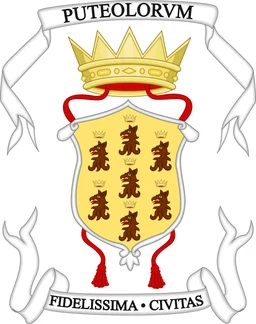
Pozzuoli
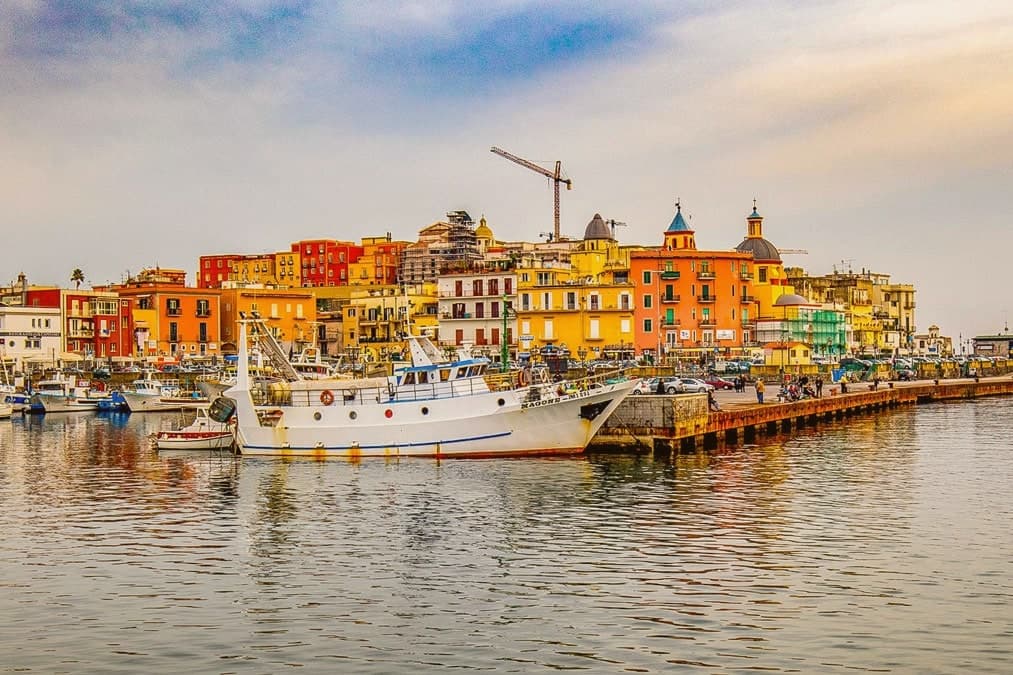
A Roman port on a volcanic caldera, the Greek Dicearchia and the Roman Puteoli, where a market's columns first proved that the ground itself rises and falls.
- Best time
- May–Sep
- By car
- 25 min from Naples
- By train
- Station in the comune
- Population
- 76,331
Known for
ANFITEATRO FLAVIO
Third-largest Roman amphitheater in Italy at 147 by 117 meters, begun under Vespasian and finished under Titus, with intact underground machinery.
BRADYSEISM
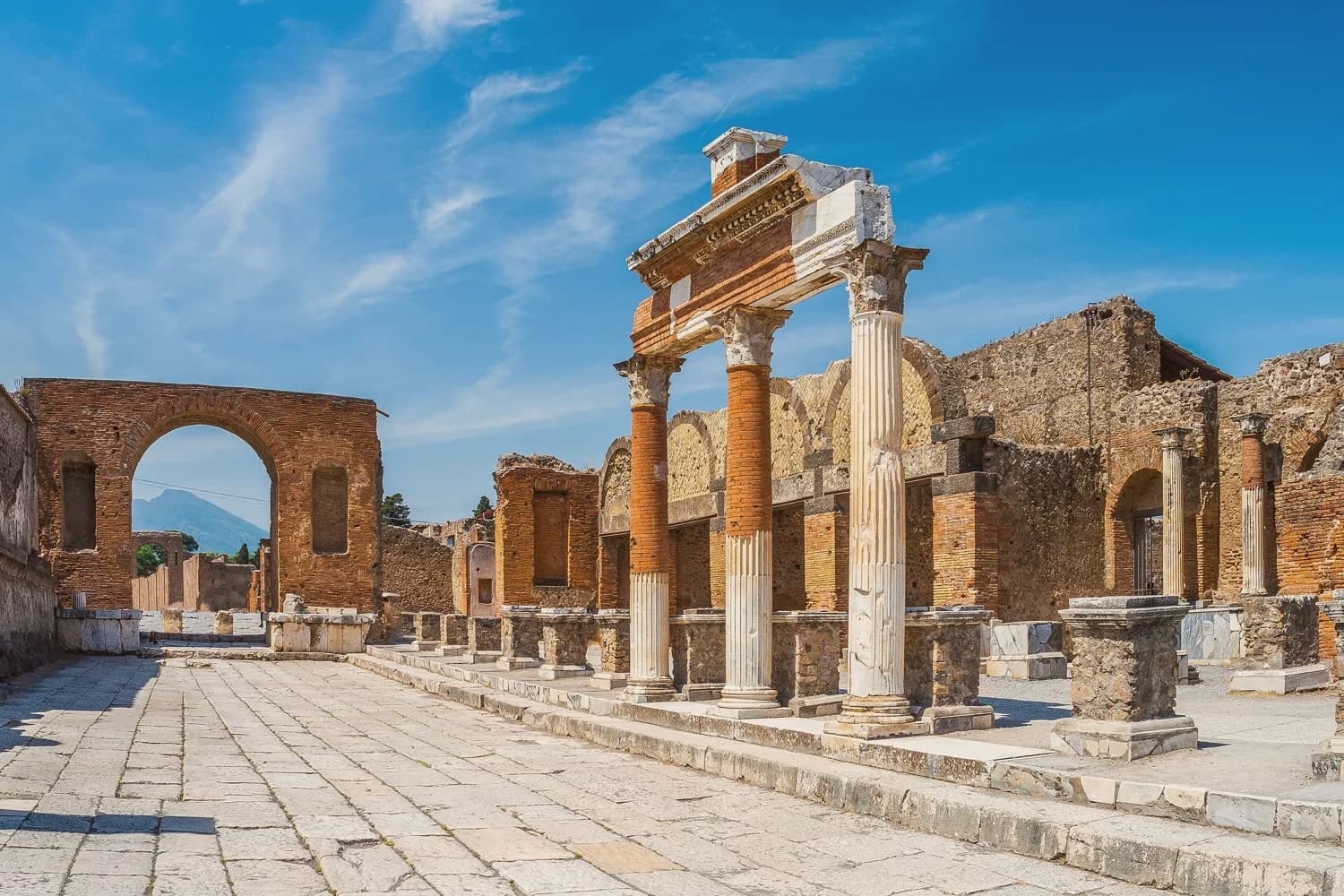
Slow ground-level shifts of the Campi Flegrei caldera, first proven by mollusc borings on the Macellum columns; alert level raised in 2023.
ROMAN PUTEOLI
Largest commercial port of imperial Rome despite being 150 miles distant; the Apostle Paul landed here on his way north.
When to visit
Best · May–Sep
- J13°
- F14°
- M15°
- A17°
- M22°
- J27°
- J31°
- A30°
- S27°
- O22°
- N18°
- D15°
- Best
- Hot or crowded
- Quiet
- Mostly closed
Daytime averages, 2020–2024. The sea is warmest in August at 28° and coldest in February at 15°. Weather data by Open-Meteo.com.
Why come
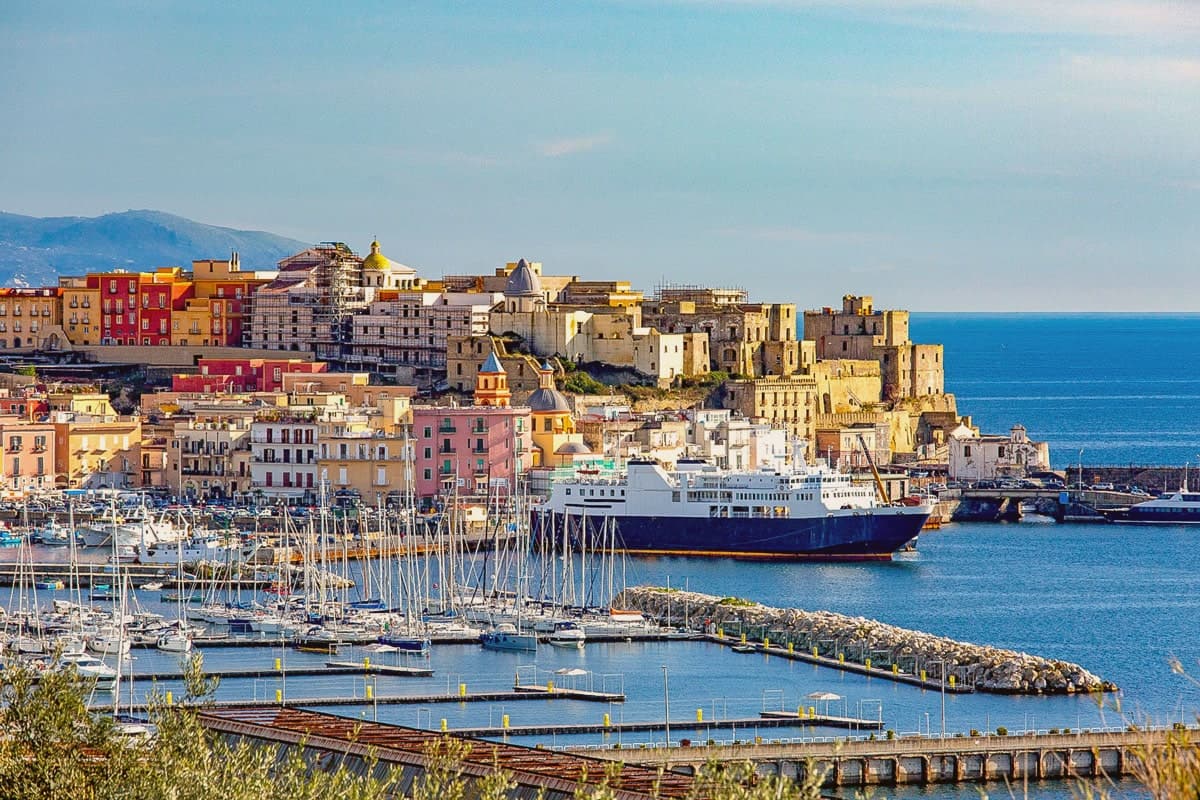
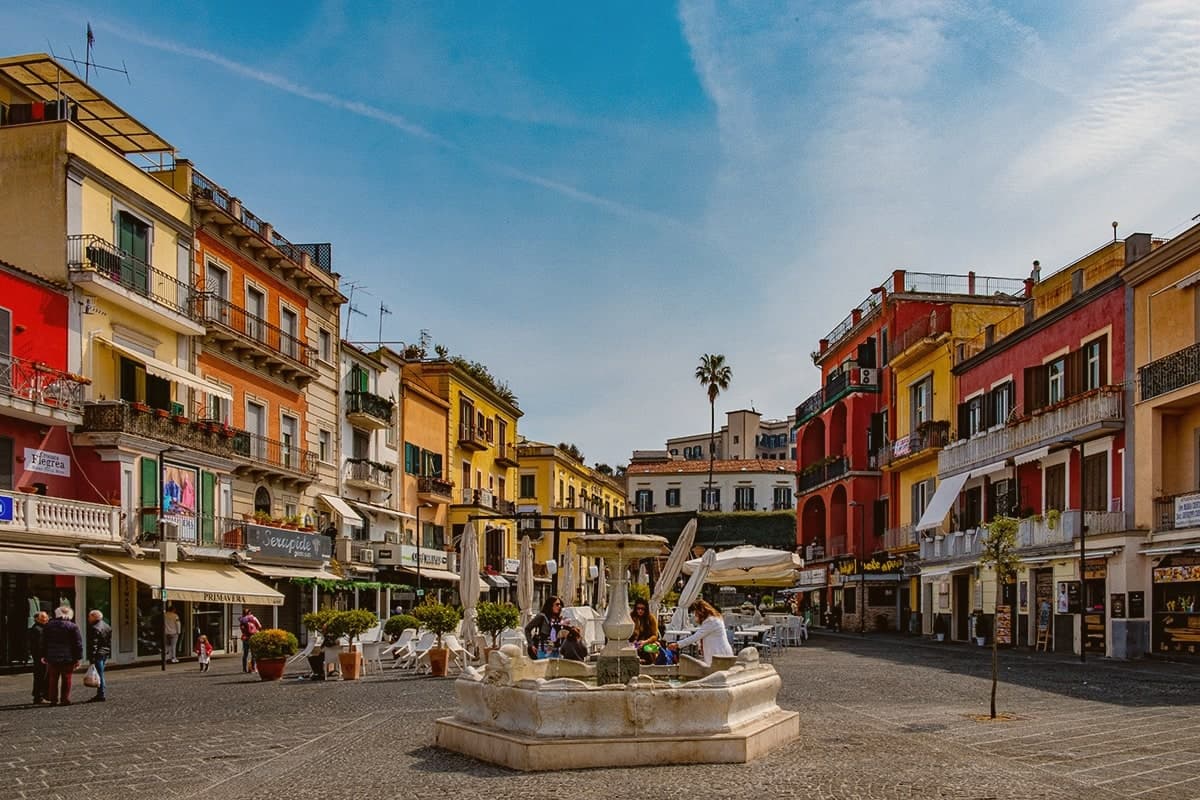
Pozzuoli sits at twenty-eight meters on the rim of the Campi Flegrei caldera, fifteen kilometers west of Napoli. Greek refugees from Samos founded the city in 531 BC as Dicearchia; Rome took it in 195 BC and renamed it Puteoli, a name the port kept through its centuries as Rome's busiest gateway by sea. The old town and the working town are not the same ground.
Rione Terra, the headland acropolis, was the city center for both the Greek and Roman settlements before it was evacuated in 1970 and reopened only piece by piece since. The rest of Pozzuoli has grown around and below it, on a caldera that does not hold still: the crater above town still vents sulfur, and the crust beneath the whole area continues its slow rise and fall, watched closely enough that the alert level was raised again in 2023. A port city built its wealth on ground that was always going to move under it, and the town's oldest quarter has spent the last half century learning to live with that fact rather than escape it.
The Sunday letter
Pozzuoli is on our list. Its letter is still to come.
We are writing about all 1,000 of these towns, one at a time, in a free letter every Sunday: the photo, the food, the festa. That is our mission. Sign up and you will be there when Pozzuoli comes up. By Peter & Sophia, from Pietrasanta.
Read on
Pozzuoli in our articles
 The best towns that eat well within 45 minutes of Naples6 towns, Pozzuoli among them.
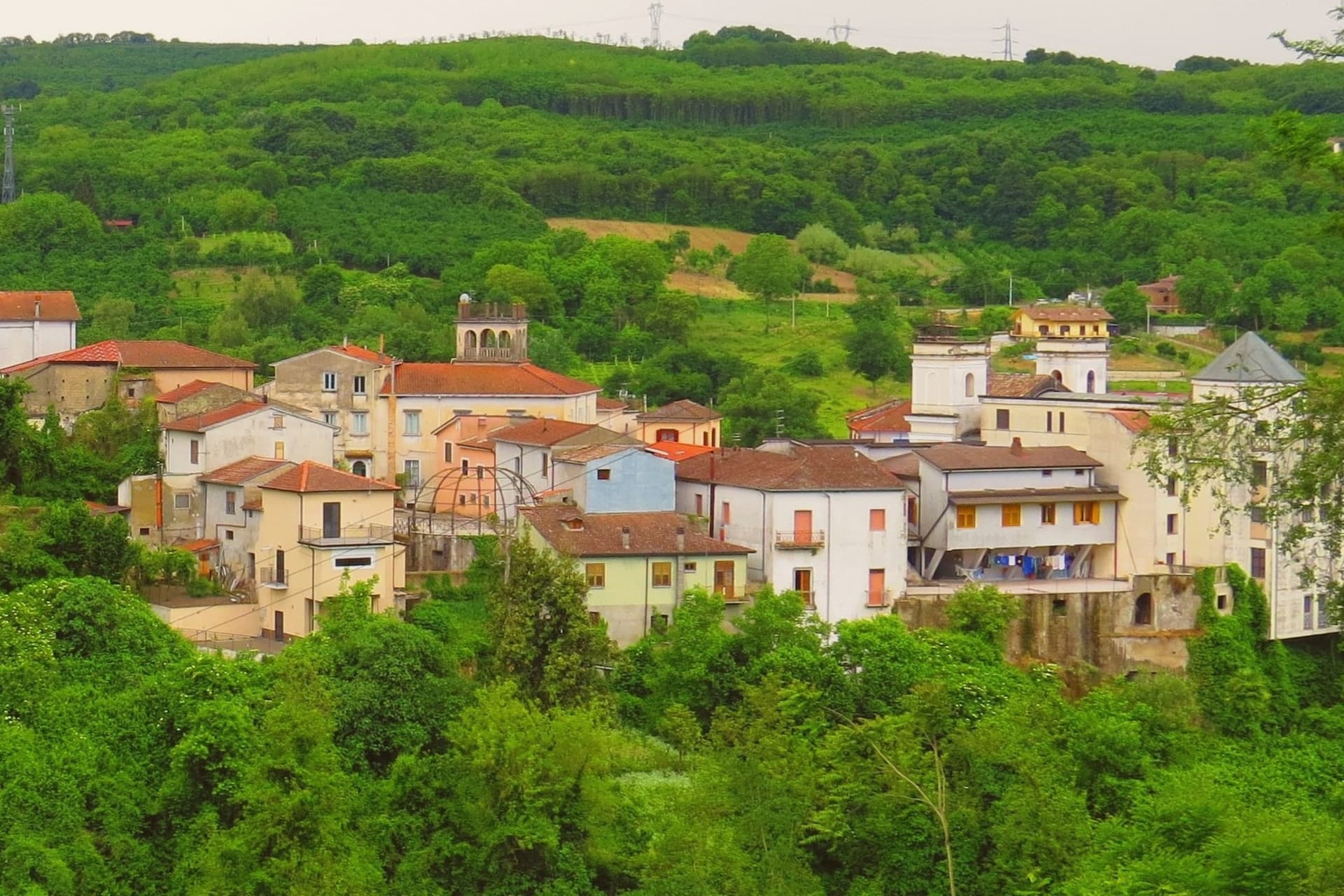 The 7 best wine towns you can reach by train in Campania7 towns, Pozzuoli among them.
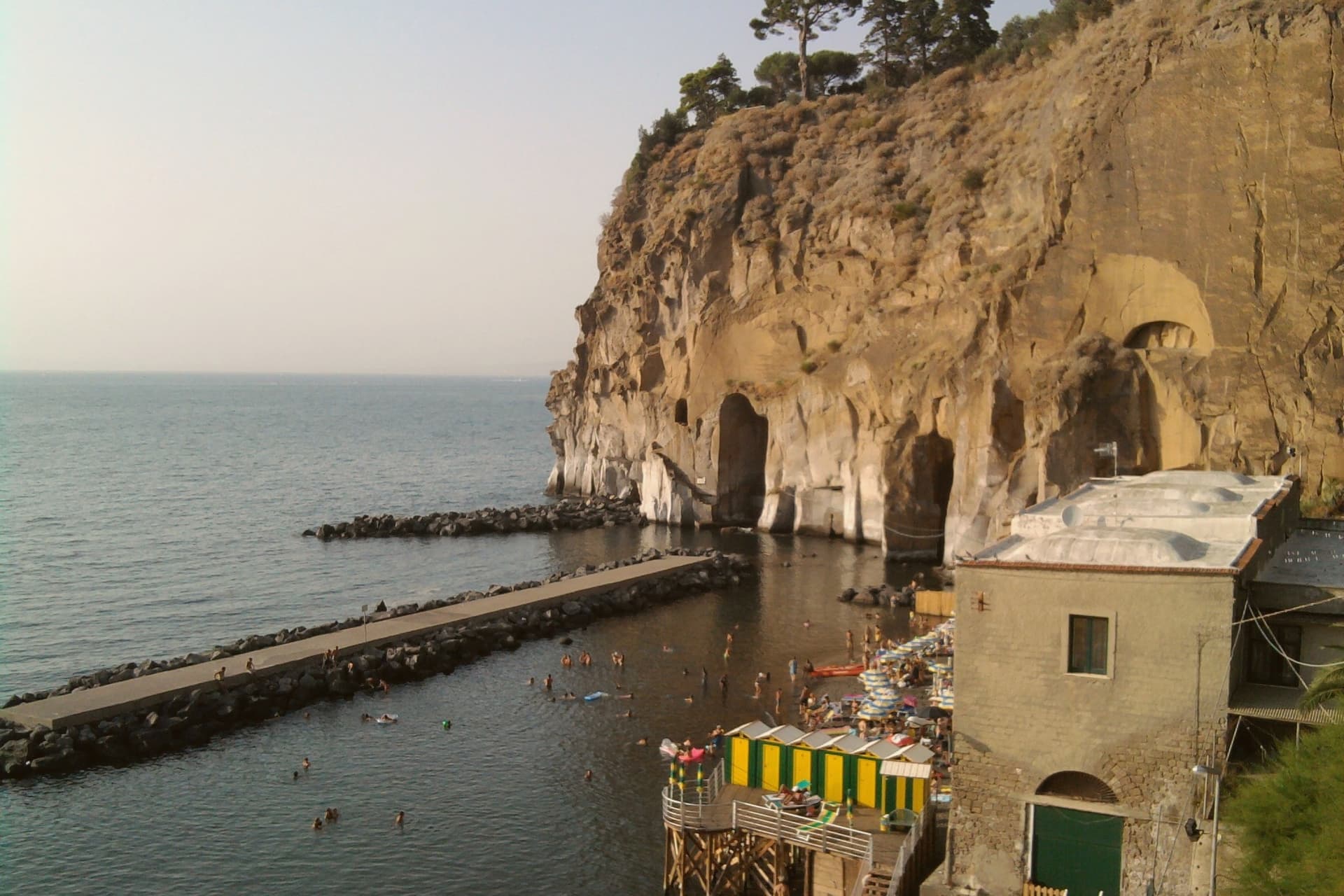 The best towns inside a nature park that eat well in the province of Napoli7 towns, Pozzuoli among them.
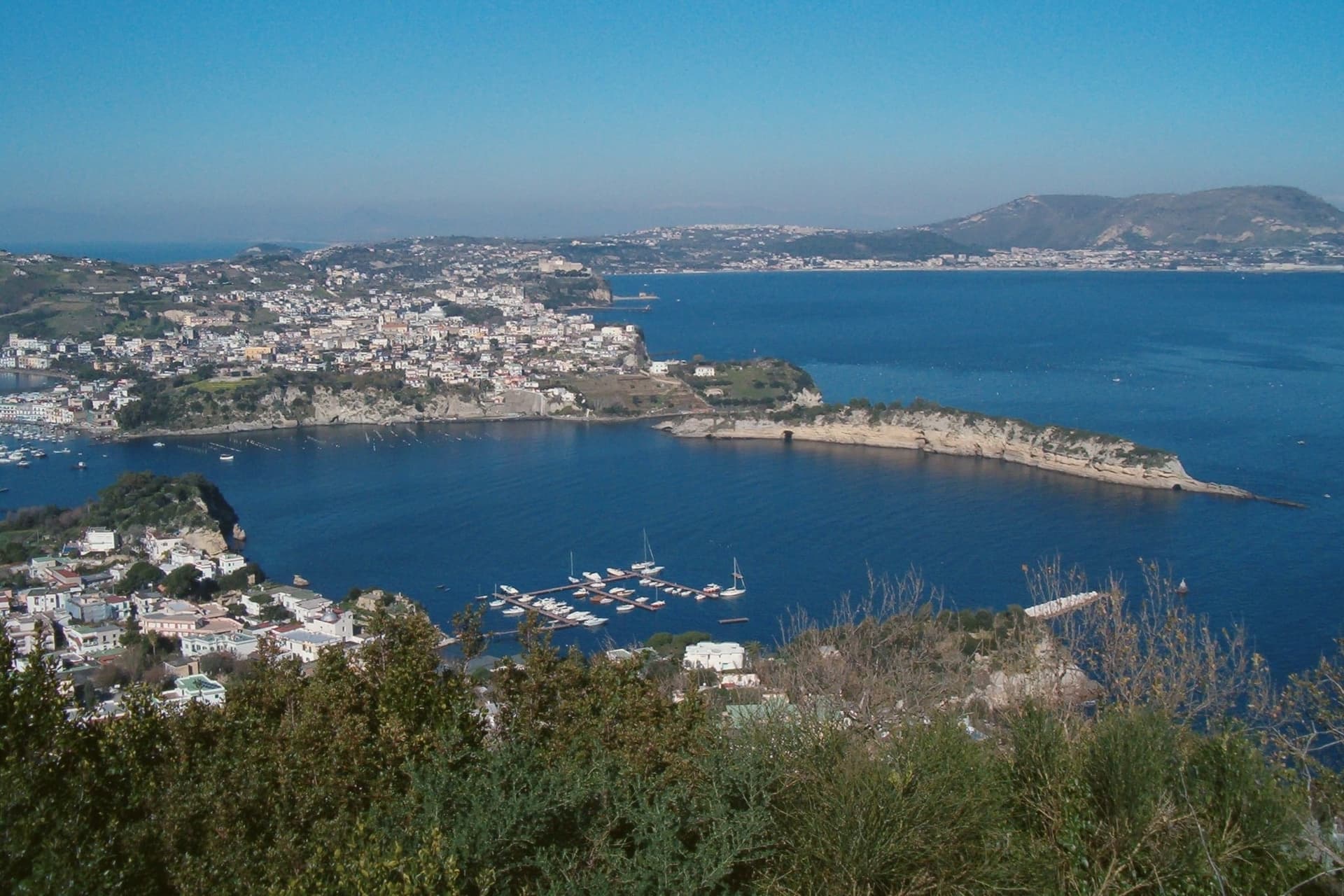 The best towns you can reach by train within 45 minutes of Naples7 towns, Pozzuoli among them.
How to get there
From Naples / Salerno (NAP), about 29 minutes by car.
Rome (FCO) is about 3h 20m away.
By car from the centre of Naples 25 minutes or Salerno 1h 11m.
There is a railway station in the comune, so you can arrive without a car.
Coming from Naples?
Coming by train into Napoli Centrale? Pozzuoli is about 26 minutes away by road.
What to see
Anfiteatro Flavio
The cage chambers and lift machinery beneath the arena floor survive largely intact, giving a rare view of how the underground works of a Roman amphitheater actually functioned.
Macellum (Tempio di Serapide)
A market building long misread as a temple to Serapis. The three marked columns still stand at the center of the floor, close enough to touch.
Rione Terra
The headland acropolis and original old town, evacuated in 1970 after a bradyseismic crisis and reopened only in stages since.
Solfatara
A crater above town venting sulfurous steam, mud pools and fumaroles, closed to visitors since an accident in 2017.
Castello Aragonese di Baia
A late-fifteenth-century fortress on the next promontory toward Bacoli, holding the Museo Archeologico dei Campi Flegrei since 1993.
The slow-trip planner
Building a trip? Find where Pozzuoli fits in a slow Italy circuit.
Answer five questions. We will shape a geographically coherent slow trip from the 1,000 Italian towns most travelers skip. Yours to save and share.
We recommend
Where to eat
Not our picks, but places the guides put their name to: a Michelin star, a Gambero Rosso fork, a Slow Food snail, a Michelin Key for the hotels. Worth a table, a counter, or a night when you pass through.
AbraxasTrattoria
Abraxas holds two Gambero Rosso prawns and a Slow Food snail.
A 30 Passi D'acquaRistorante
A 30 Passi D'acqua has a Gambero Rosso listing to its name.
La Fattoria del CampiglioneGriglieria
La Fattoria del Campiglione holds a Gambero Rosso listing.
Punto NaveRistorante
Punto Nave holds two Gambero Rosso forks (80/100).
Living here
- Population 76,331
- A local hubi
- Pharmacy in town
- High school within a 30-minute drive
- Train station in the comune
- Nearest airport Naples / Salerno, 29 min drive
- Regional capital Napoli, 25 min drive
Thermal baths in town: Stufe Antiche, Bocca Grande.
Common questions
- What is Pozzuoli known for?
- Pozzuoli is a Roman port on a volcanic caldera, the Greek Dicearchia and the Roman Puteoli, where a market's columns first proved that the ground itself rises and falls.
- Where is Pozzuoli?
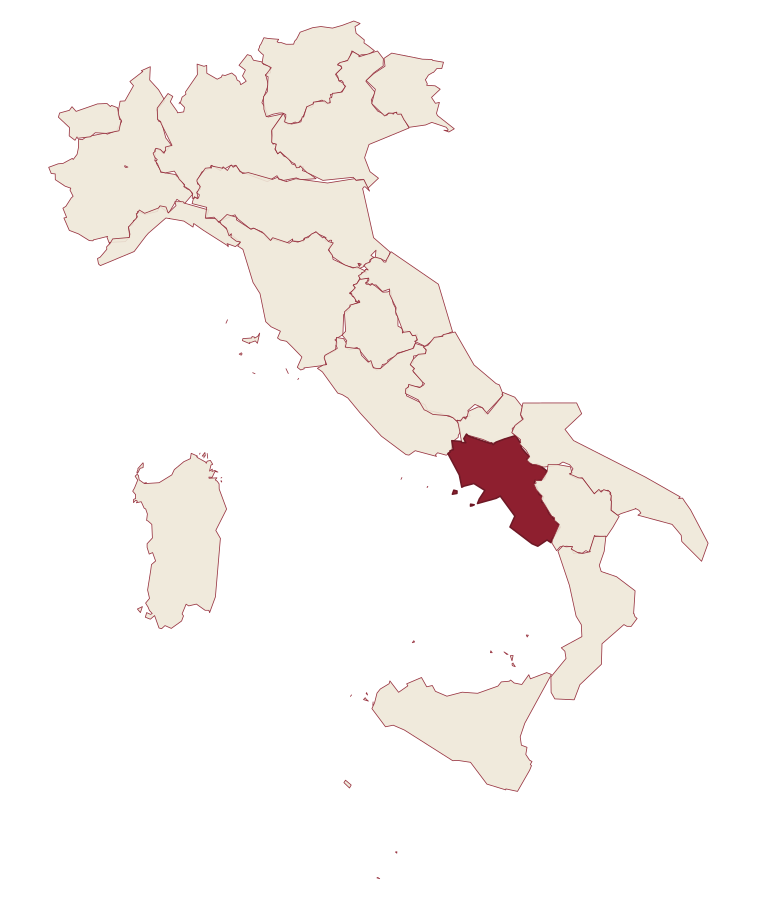
- Pozzuoli is a comune in the province of Napoli, in Campania, at 28 meters above sea level.
- What is the nearest airport to Pozzuoli?
- Naples / Salerno (NAP), about 29 minutes by car.
- Can you get to Pozzuoli without a car?
- Yes. There is a railway station in the comune, so you can arrive by train.
- How long is the drive from Naples to Pozzuoli?
- About 25 minutes by car.
- When is the best time to visit Pozzuoli?
- Best in May–Sep. July is the warmest month, averaging 31 degrees, and November the wettest, with about 16 rain days.
- Which other towns are like Pozzuoli?
- Grosseto, Pisa and Livorno.
- How many people live in Pozzuoli?
- 76,331 at the 2023 count.
Tags & datadesignations · numbers · sources
Recognised as
The numbers
- Elevation: 28 m
- Population: 76,331
- Surface area: 43.44 km²
These figures were compiled from public directories: ISTAT, OpenStreetMap and Wikidata, and from the official listings of the guides named on this page. Town details change; verify with official sources before you travel.
Similar
Towns like Pozzuoli
Grosseto
Province: Grosseto
both on the Tyrrhenian coast · both over 10,000 people
Pisa
Province: Pisa
both on the Tyrrhenian coast · both over 10,000 people
Livorno
Province: Livorno
both on the Tyrrhenian coast · both over 10,000 people
Torre Annunziata
Province: Napoli
both on the Tyrrhenian coast · both over 10,000 people
Bacoli
Province: Napoli
both on the Tyrrhenian coast · both over 10,000 people
Pompei
Province: Napoli
both on the Tyrrhenian coast · both over 10,000 people
🌳 Parco Regionale
More Parco Regionale towns in Campania
Amalfi
Province: Salerno
The first Italian maritime republic and the coast it named, six meters above the sea between cliffs that close around the duomo's steps.
Atrani
Province: Salerno
The smallest commune in Italy by area, twelve hectares of stacked houses where the Amalfi Coast pinches shut around a single piazza.
Bacoli
Province: Napoli
A town twenty kilometers west of Napoli, the Roman Bauli, where a cistern fed the imperial fleet at Miseno.
Cetara
Province: Salerno
The Amalfi Coast's working tuna and anchovy port, where colatura di alici is still aged in chestnut barrels in the cellars behind the marina.
Conca dei Marini
Province: Salerno
A coastal hamlet of 664 people on the Amalfi Coast, home to a monastery pastry and a sea cave that glows green.