
Campania · Napoli
Bacoli
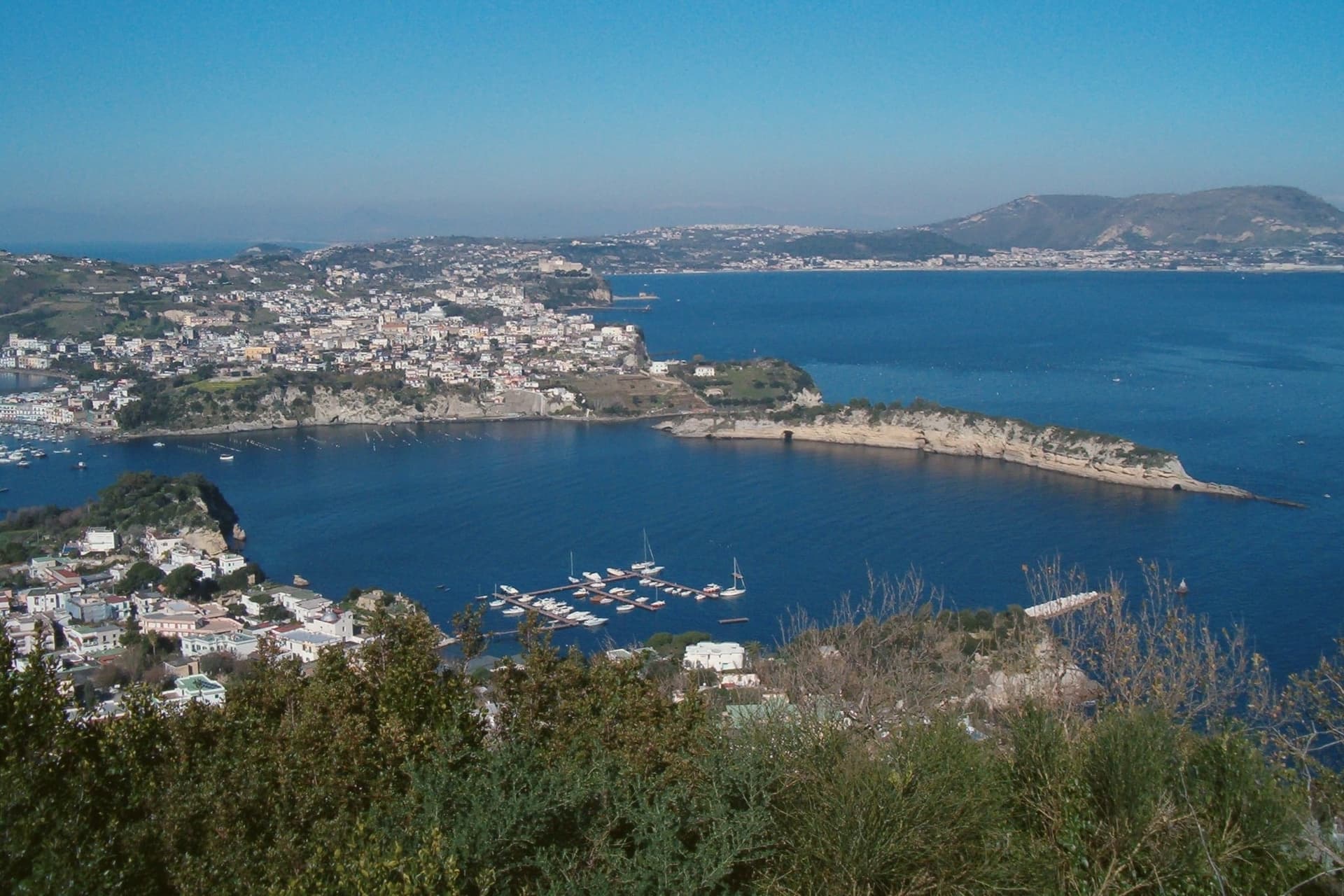
A town twenty kilometers west of Napoli, the Roman Bauli, where a cistern fed the imperial fleet at Miseno.
- Best time
- May–Sep
- By car
- 31 min from Naples
- By train
- Station in the comune
- Population
- 25,230
Known for
PISCINA MIRABILIS
Largest Roman cistern in the western Empire, seventy by twenty-five by fifteen meters, built to supply fresh water to the imperial fleet at Misenum.
MISENUM
Base of the Classis Misenensis, the largest Roman fleet in the Mediterranean, now a frazione of Bacoli with a natural harbor and Roman ruins.
BRADYSEISM
Active geothermal phenomenon raising and lowering the Campi Flegrei coastline; underwater Roman ruins at Baia are the visible result.
When to visit
Best · May–Sep
- J13°
- F14°
- M15°
- A18°
- M22°
- J27°
- J31°
- A31°
- S27°
- O22°
- N18°
- D15°
- Best
- Hot or crowded
- Quiet
- Mostly closed
Daytime averages, 2020–2024. The sea is warmest in August at 28° and coldest in February at 15°. Weather data by Open-Meteo.com.
The festa: Sant'Anna, 26 July
Why come
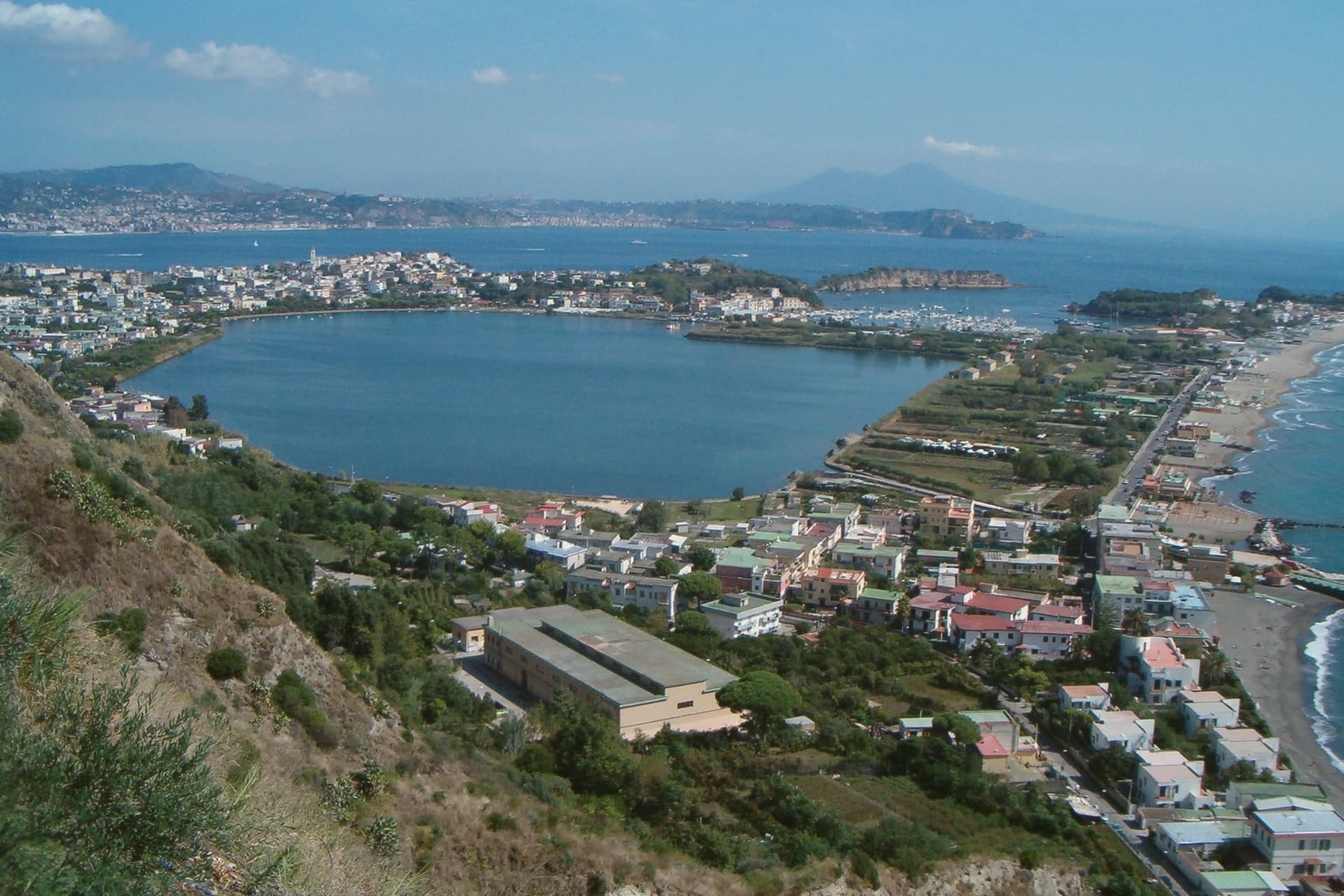
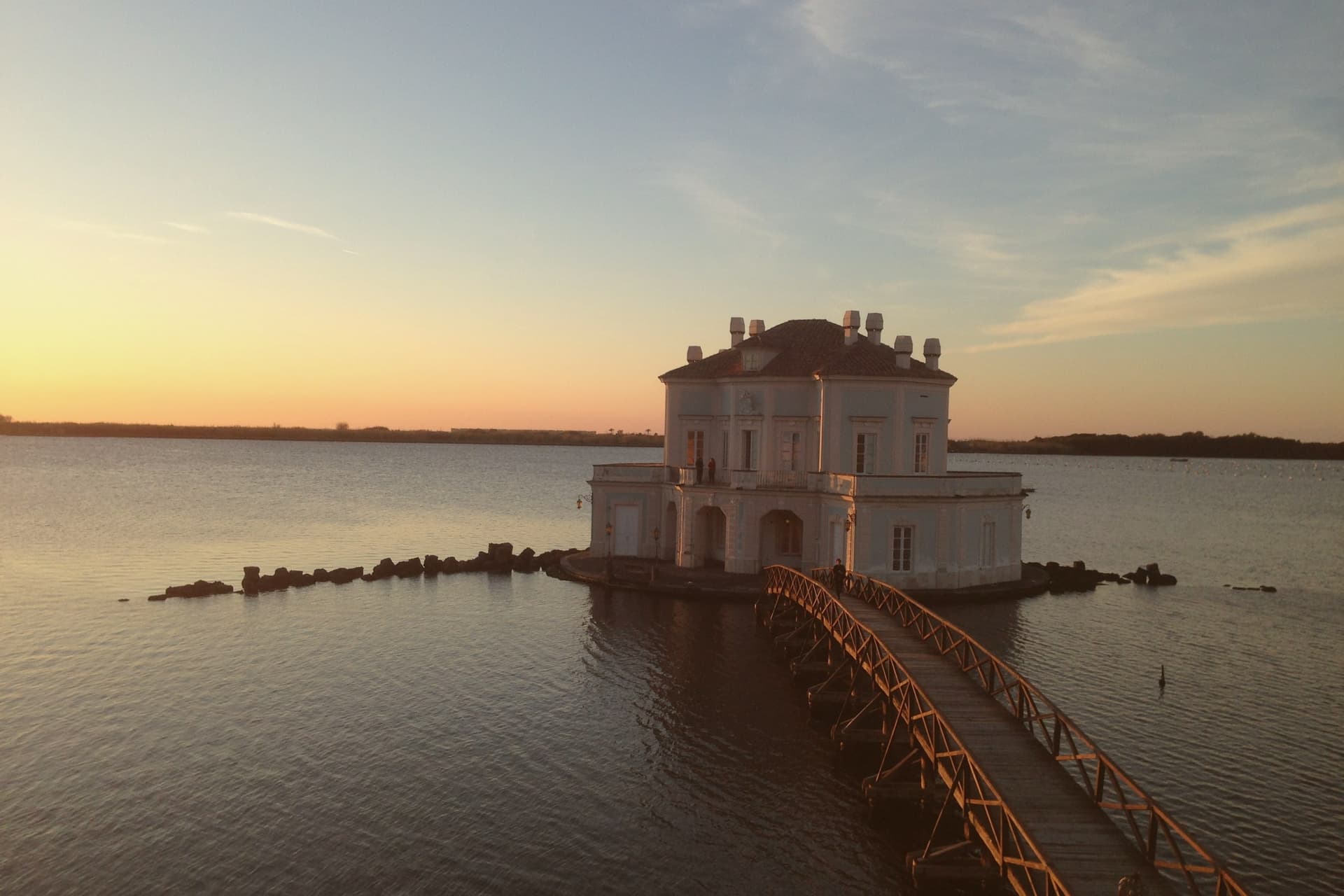
Bacoli sits at thirty meters on the western lobe of the Campi Flegrei, looking onto Lake Miseno and its headland across the Bay of Pozzuoli. The Romans called it Bauli. In the late Republic and early Empire it was a resort lined with the villas of senators and emperors, and the fleet base nearby, the Classis Misenensis, was the largest in the Mediterranean.
Most of that infrastructure is still here, scattered through the residential blocks that now fill the town, so that a cistern or a cistern complex turns up between apartment buildings rather than in an isolated park. The town's two promontories divide its Roman past between them: the harbor side toward Miseno, where the fleet and its water supply were based, and the Baia side, where the villas and the later Aragonese castle stand. Bacoli is also an active geothermal zone, and bradyseism, the slow rise and fall of the Campi Flegrei coastline, is still measurable here, the same force that put the Roman villas at Baia underwater. What survives above ground and what has sunk below the sea are the same story of ground that will not stay still.
The Sunday letter
Bacoli is on our list. Its letter is still to come.
We are writing about all 1,000 of these towns, one at a time, in a free letter every Sunday: the photo, the food, the festa. That is our mission. Sign up and you will be there when Bacoli comes up. By Peter & Sophia, from Pietrasanta.
Read on
Bacoli in our articles
 The best towns that eat well within 45 minutes of Naples6 towns, Bacoli among them.
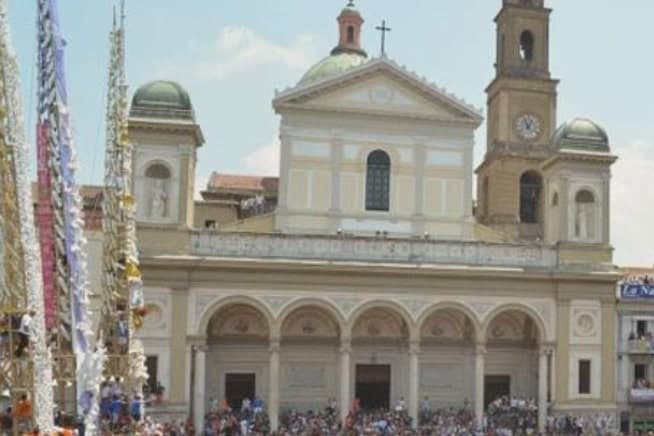
 The best towns inside a nature park that eat well in the province of Napoli7 towns, Bacoli among them.
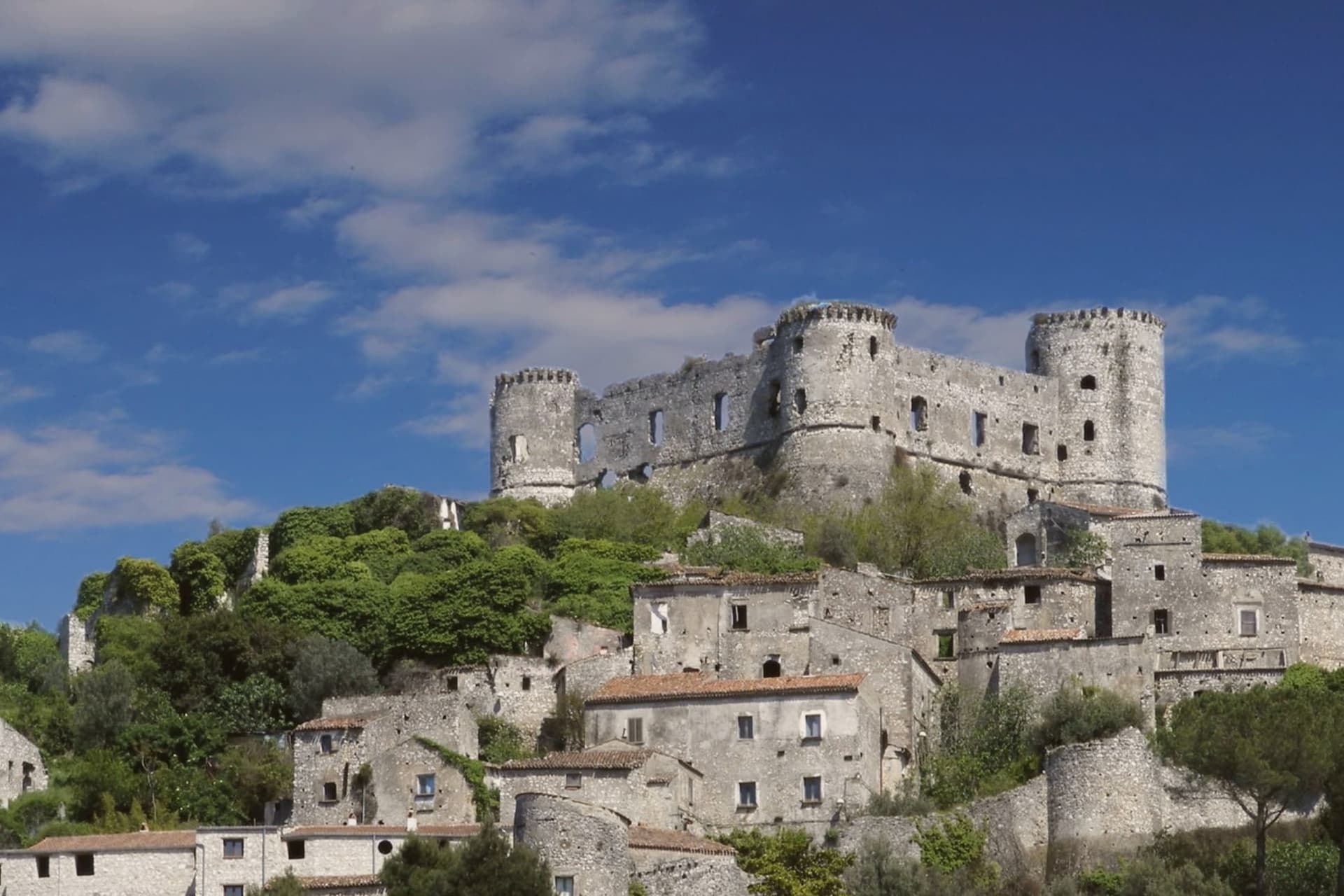
 The best towns you can reach by train within 45 minutes of Naples7 towns, Bacoli among them.
 The best towns with a serious restaurant that eat well within 90 minutes of Napoli8 towns, Bacoli among them.
How to get there
From Naples / Salerno (NAP), about 35 minutes by car.
Rome (FCO) is about 3h 26m away.
By car from the centre of Naples 31 minutes or Salerno 1h 17m.
There is a railway station in the comune, so you can arrive without a car.
Coming from Naples?
Coming by train into Napoli Centrale? Bacoli is about 32 minutes away by road.
What to see
Piscina Mirabilis
Forty-eight cross-shaped pillars hold up the roof in rows, the scale meant to be walked through rather than read about, still standing among the residential blocks that have grown up around it.
Cento Camerelle
Second cistern complex four hundred meters from the Piscina Mirabilis, on two superimposed levels, locally called the Prisons of Nero.
Castello Aragonese di Baia
Late-fifteenth-century Aragonese fortress on the Baia promontory, since 1993 the seat of the Museo Archeologico dei Campi Flegrei.
Capo Miseno
Headland on the western tip of the Bay of Napoli, with the natural harbor below it and a panoramic walk out to the lighthouse.
Parco Archeologico Sommerso di Baia
Submerged Roman villas visited by glass-bottom boat or snorkel tour, sunk beneath the water over centuries rather than built there.
The slow-trip planner
Building a trip? Find where Bacoli fits in a slow Italy circuit.
Answer five questions. We will shape a geographically coherent slow trip from the 1,000 Italian towns most travelers skip. Yours to save and share.
We recommend
Where to eat
Not our picks, but places the guides put their name to: a Michelin star, a Gambero Rosso fork, a Slow Food snail, a Michelin Key for the hotels. Worth a table, a counter, or a night when you pass through.
CaracolRistorante
One Michelin star for Caracol, along with two Gambero Rosso forks (83/100) and a place in L'Espresso's Top 300.
Aguglia osteria di mare 2021Ristorante
Aguglia osteria di mare 2021 has a Gambero Rosso listing to its name.
Hosteria BugiardaRistorante
Hosteria Bugiarda has one Gambero Rosso fork (78/100) to its name.
Il Testardo - Locanda AtipicaRistorante
A Gambero Rosso listing, at Il Testardo - Locanda Atipica.
Riccio RestaurantRistorante
Riccio Restaurant holds a spot in the Michelin Guide.
Living here
- Population 25,230
- Commuter belti
- Pharmacy in town
- High school within a 30-minute drive
- Train station in the comune
- Nearest airport Naples / Salerno, 35 min drive
- Regional capital Napoli, 31 min drive
This is a thermal town: terme operate here.
Common questions
- What is Bacoli known for?
- Bacoli is a town twenty kilometers west of Napoli, the Roman Bauli, where a cistern fed the imperial fleet at Miseno.
- Where is Bacoli?
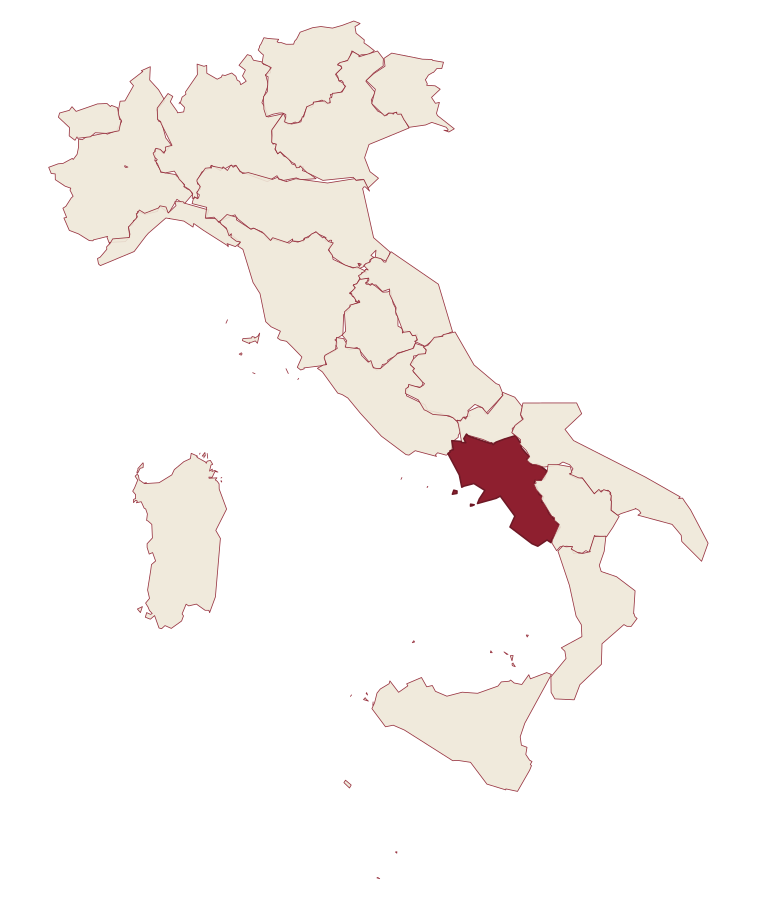
- Bacoli is a comune in the province of Napoli, in Campania, at 30 meters above sea level.
- What is the nearest airport to Bacoli?
- Naples / Salerno (NAP), about 35 minutes by car.
- Can you get to Bacoli without a car?
- Yes. There is a railway station in the comune, so you can arrive by train.
- How long is the drive from Naples to Bacoli?
- About 31 minutes by car.
- When is the best time to visit Bacoli?
- Best in May–Sep. July is the warmest month, averaging 31 degrees, and November the wettest, with about 16 rain days.
- Is there a sagra or a festival in Bacoli?
- The town keeps its patron saint's day: Sant'Anna, 26 July.
- Which other towns are like Bacoli?
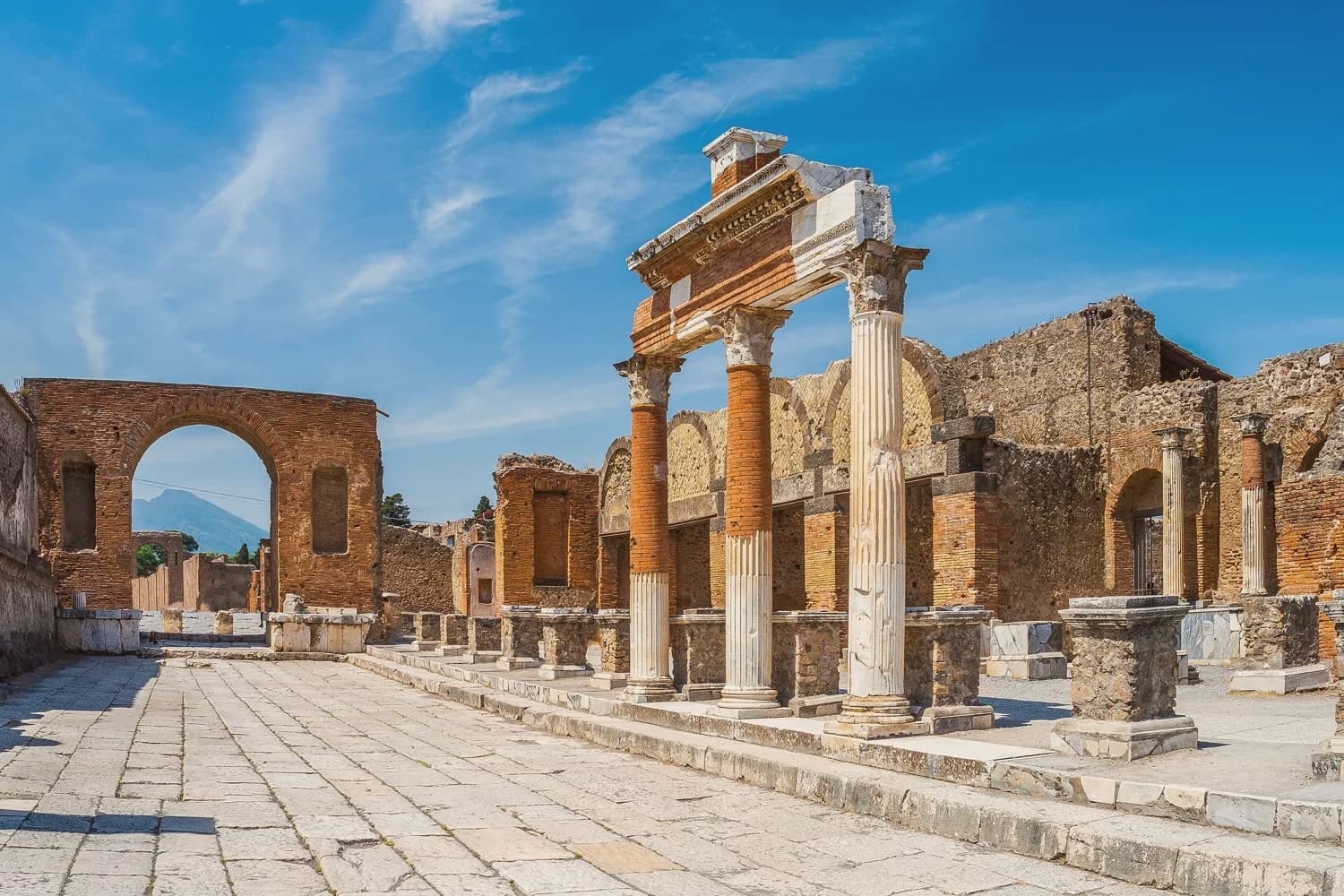
- Pompei, Vico Equense and Piano di Sorrento.
- How many people live in Bacoli?
- 25,230 at the 2023 count.
Tags & datadesignations · numbers · sources
Recognised as
The numbers
- Elevation: 30 m
- Population: 25,230
- Surface area: 13.47 km²
These figures were compiled from public directories: ISTAT, OpenStreetMap and Wikidata, and from the official listings of the guides named on this page. Town details change; verify with official sources before you travel.
Similar
Towns like Bacoli
Pompei
Province: Napoli
both on the Tyrrhenian coast · both over 10,000 people
Vico Equense
Province: Napoli
both on the Tyrrhenian coast · both over 10,000 people
Piano di Sorrento
Province: Napoli
both on the Tyrrhenian coast · both over 10,000 people
Gaeta
Province: Latina
both on the Tyrrhenian coast · both over 10,000 people
Fondi
Province: Latina
both on the Tyrrhenian coast · both over 10,000 people
Minturno
Province: Latina
both on the Tyrrhenian coast · both over 10,000 people
♨️ Comuni Termali
More Comuni Termali towns
Caramanico Terme
Province: Pescara
A 650-meter Majella spa village at the confluence of the Orfento and Orta rivers.
Latronico
Province: Potenza
A mountain town at 888 meters on the northern edge of the Pollino, with two prehistoric thermal springs at the Calda hamlet below.
Cerchiara di Calabria
Province: Cosenza
A village at 650 meters below a mountain rock sanctuary, with a sulphurous cave feeding the thermal springs beneath it.
Casamicciola Terme
Province: Napoli
Ischia's thermal town on the flank of Monte Epomeo, levelled by the 1883 earthquake and again in 2017, rebuilt on the Gurgitello springs.
Fiuggi
Province: Frosinone
The Ernici-mountain thermal town where Boniface VIII and Michelangelo both came to dissolve kidney stones with the oligomineral spring water.