
The 7 best wine towns you can reach by train in Campania
Inland Campania smells of wet volcanic soil in October, when the Aglianico comes in late and the fires start in the stone farmhouses of the Sabato valley. The hills here are yellow tufa cut into cellars, some of them dug under the houses themselves, and the vines climb terraces that give way to chestnut woods and pasture. Food follows the wine: buffalo mozzarella from the Volturno plain, pork cooked slowly with peppers, the sharp mountain pecorino they sell in the Saturday markets. Spring is green and quiet, autumn is the harvest, and winter is when the trattorie fill with people who work the land.
Most visitors to Campania go straight down the coast, to Positano and the Amalfi road, where the summer traffic backs up along the cliffs and the tables above the water are booked weeks ahead. It is a great coastline and the crowds are earned. But the buses are full, the parking is impossible, and the wine on the list has usually travelled in from somewhere else.
That somewhere else is inland, an hour or so by rail from Naples, and the trains still stop there. The same volcanic geology that built the coast produced the tufa cellars and the vineyards of Irpinia and the Caudine valley, and the towns on those lines belong to the national association of wine towns. Fewer people go, which mostly means the cellar doors are easier to knock on.
Of the 66 communes we have mapped in Campania, 7 qualify as wine towns you can reach by train: each belongs to the national association of wine towns, and we have confirmed each is reachable without a car. The smallest, Tufo, has 772 residents.
Elsewhere in the catalogue: The best hidden hill towns you can reach by train in Campania and The best hill towns you can reach by train in Campania.
Tufo
Why visit Tufo
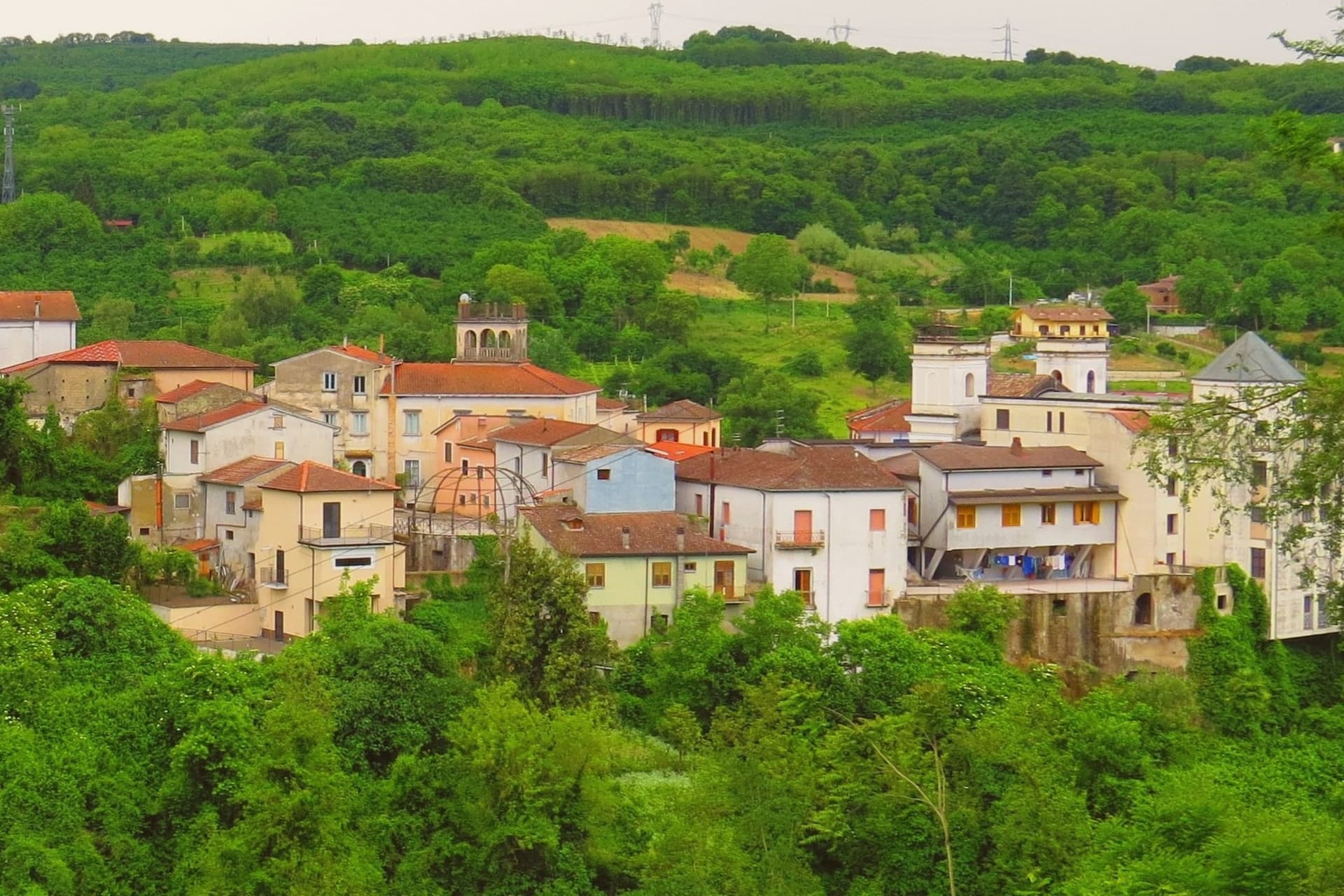
The name Tufo comes from the volcanic tuff stone the hill is built on, the same stone that runs through the slopes below and gives the local wine its mineral edge. The village sits on top of that stone at 250 meters, with the cellars at its foot and the vineyards spreading out around both.
Sulfur was mined in shafts cut into the cliffs beneath the village, work that shaped the local economy for over a century before it stopped. Most visitors are wine buyers, not tourists.
They drive in for a tasting, walk the steep main street to the medieval castle on top, and leave by dinner. The village stays quiet after they go.
What the stone gave the place economically it also gave it physically: a hill town built from the same rock that flavors what it grows, mined until the ground itself ran out of use.
We confirmed you can reach this one by train.
What to see in Tufo
- Castello di Tufo. Medieval fortress on the top of the hill, rebuilt after the 1732 and 1980 earthquakes that damaged the village below.
- Cantine di Marzo. The cellars sit at the foot of the village, where Greco di Tufo has been produced commercially since the family took up winemaking here.
- Ex Miniere di Zolfo. Abandoned mines in the cliffs below the village, their shafts left the rock marked with rust-colored scars after closure.
How to get to Tufo
There is a railway station in the town, so you can arrive without a car and never need one while you are here. Salerno is roughly 55 minutes away by road.
Our tip
April through June covers the green months in Irpinia: vine leaves unfurling on the slopes, mild evenings on the main street. September through early October is harvest, when the cellars open more often than usual and the village smells of crushed Greco. July and August get hot in the valley, though 250 meters keeps the worst of it off.
Lapio
Why visit Lapio
The name of the grape behind the local wine, 'Apianum', comes from the Roman word for bee, api, because the grape was said to be sweet enough to draw them. It has been grown across the Irpinia hills east of Avellino since at least the 1st century AD, though it only became a serious modern DOCG from the 1990s onward, thanks to producers here and in Montefredane, Summonte, and the neighbouring villages.
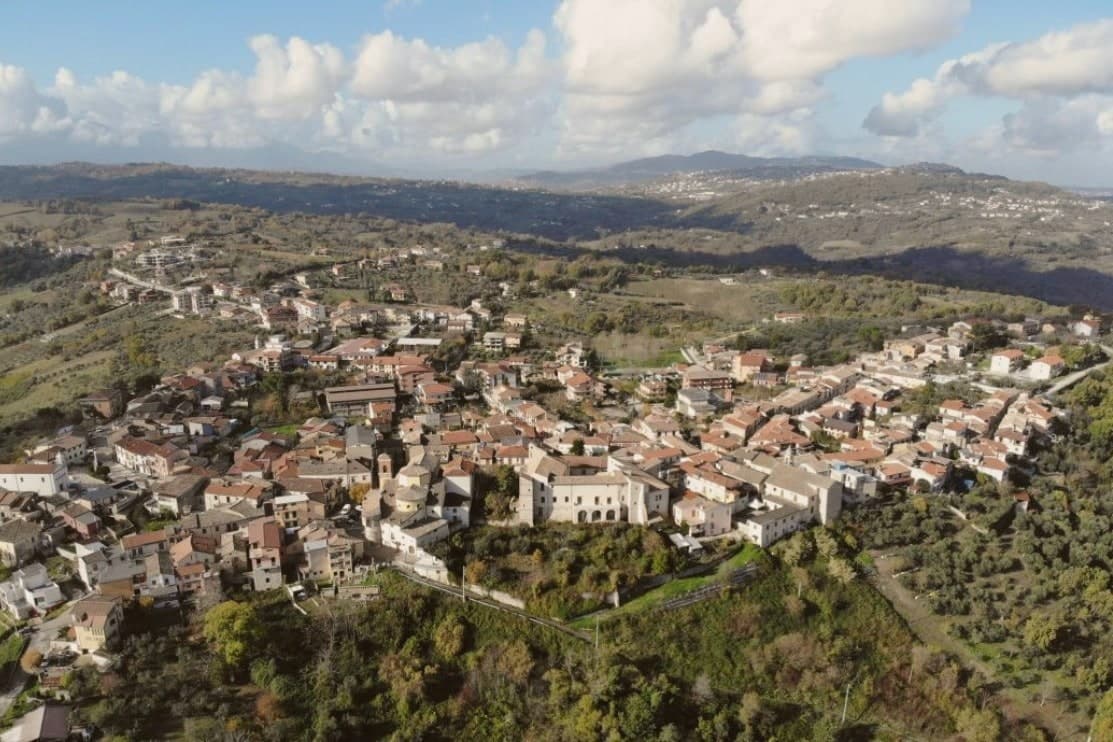
The comune itself sits at 590m on a hilltop, its narrow stone-paved vicoli climbing from the central piazza up to the castle at the high point, past the Chiesa Madre di San Pietro Apostolo and the Convento dei Cappuccini just outside the walls. The four Città designations held here, del Vino, dell'Olio, del Miele, della Nocciola, are not scattered honours but a single picture: Fiano and Aglianico from the vineyards, Irpinia DOP oil from the terraces, chestnut and multifloral honey from the Apennine forests above town, and the hazelnut trade that makes Avellino province the second-largest producer in Italy after Cuneo.
Beyond the comune: Avellino 24 km west, Mirabella Eclano with its Roman Forum and Carro di San Pellegrino procession 15 km north, and the Partenio and Sannio mountains immediately east, whose forests supply both the honey and the local game. The food follows the same logic: pasta al ragù di castrato, brodo di tagliolini con scarola, Caciocavallo Podolico matured 12 or more months on Apennine pastures, torrone tenero made with hazelnuts and honey, and the wine with all of it.
Depopulation has cut the town from 2,400 residents in 1951 to 1,428 today, but the surrounding land, vine, olive, forest, and hazelnut grove, still accounts for nearly everything the place is known for.
We confirmed you can reach this one by train.
What to see in Lapio
- Fiano di Avellino DOCG cellars. Lapio is one of the historic cru villages, 'Apianum' grape since Roman times, modern DOCG only since 1990s. 10+ cellars in the comune + immediate neighbours open for tastings.
- Castello Filangieri. 11th-c Norman castle rebuilt by the Filangieri family in the 16th c. Anchors the high point of the medieval centro with the panoramic view across the Sabato river valley + the Partenio massif.
- Centro storico + Chiesa Madre. Intact stone-paved vicoli climbing from the central piazza to the castle. The 15th-c Chiesa Madre di San Pietro Apostolo + the Convento dei Cappuccini just outside the walls.
How to get to Lapio
There is a railway station in the town, so you can arrive without a car and never need one while you are here. Salerno is roughly 59 minutes away by road.
Our tip
Lapio is best May–June and September–October. The Festa del Fiano in late September is the year's headline. October is harvest in both the Fiano vineyards and the surrounding hazelnut orchards.
Caiazzo
Why visit Caiazzo
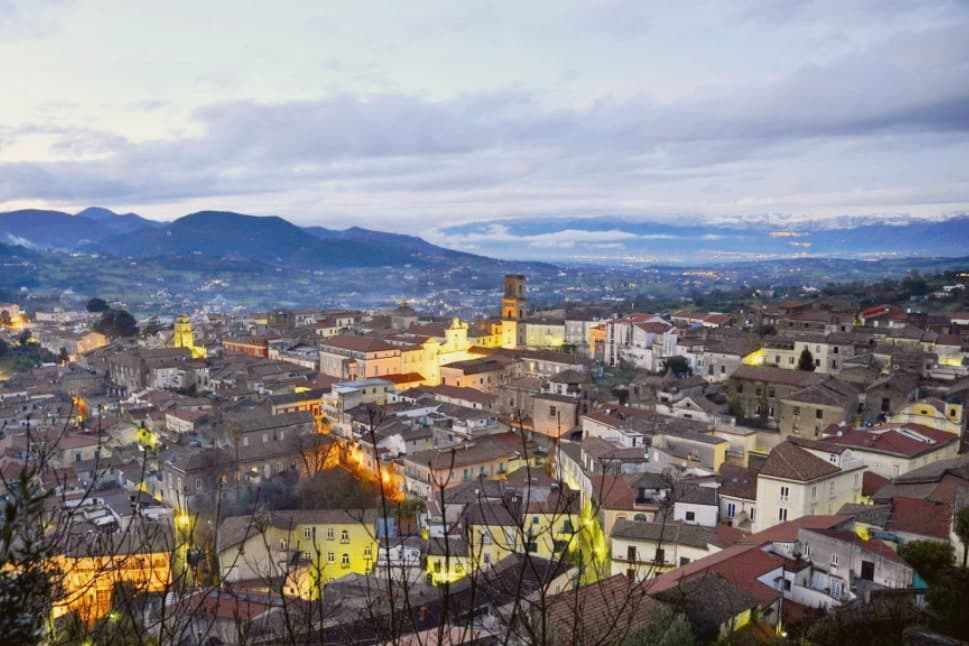
Caiazzo sits at 200 meters on a small hill above the Volturno, forty kilometres north of Naples, between the Matese foothills and the Caserta plain. The town is older than the surrounding province: Caiatia was already a Samnite then Roman centre, and the medieval cathedral preserves a Lombard crypt under its eleventh-century floor.
What pulls visitors today is not the cathedral but a pizzeria. In 2012 Franco Pepe, third-generation baker, opened Pepe in Grani in an eighteenth-century palazzo on Vico San Giovanni Battista, working long-fermented doughs with local Pallagrello flour, Conciato Romano cheese and Caiazzo olive oil.
Tre spicchi from Gambero Rosso for ten straight years and a Michelin world-best ranking in 2018 turned the centro storico into a destination that handles 800 pizzas a day. Caiazzo is a Cittaslow, a Città del Vino for Pallagrello and Casavecchia, and a Città dell'Olio.
We confirmed you can reach this one by train.
What to see in Caiazzo
- Cattedrale di Santa Maria Assunta. Eleventh-century cathedral with a Lombard crypt beneath the floor, baroque interior and the relics of San Stefano Minicillo, patron of Caiazzo.
- Castello di Caiazzo. Medieval castle of Lombard origin on the highest point of the centro storico, remodelled under the Normans and later princes of Caiazzo.
- Pepe in Grani. Franco Pepe's pizzeria in an eighteenth-century palazzo on Vico San Giovanni Battista, ranked best in the world by Michelin in 2018.
How to get to Caiazzo
There is a railway station in the town, so you can arrive without a car and never need one while you are here. Napoli is roughly 53 minutes away by road.
Our tip
April through June and September into October are the cleanest months in Caiazzo, when the Volturno valley is green and the Pepe in Grani tables are easier to book at lunch. July and August push the Caserta plain past thirty-five degrees and the centro storico empties between two and six in the afternoon. Harvest runs September and October for Pallagrello and Casavecchia and pulls weekend wine visitors.
Alife
Why visit Alife
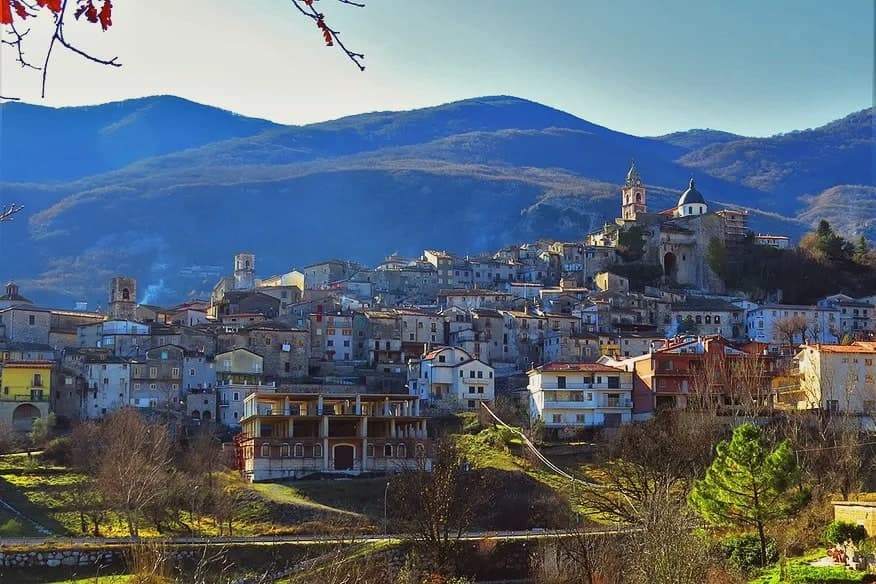
Alife sits at 110 meters at the southern foot of the Matese, the rectangular Roman walls still tracing the original plan of the 326 BC Latin colony founded after the Samnite Wars. The circuit runs 1.9 kilometres, with towers every 39 meters and four monumental gates on the cardo and decumano.
Inside the walls lies the largely buried Roman amphitheatre, 48 by 38 meters, the fourth largest in Italy after Rome, Pompeii and Capua. The Cryptoporticum, a 100-meter underground gallery, has been kept legible by recent excavation.
The town gives its name to the Cipolla di Alife, a heirloom red onion documented locally since Roman times and still cultivated on the irrigated plain along the Volturno. Modern Alife sits inside the Parco Regionale del Matese and along the Via Francigena del Sud, with extra-virgin olive oil and Pallagrello and Casavecchia wines on the surrounding slopes.
We confirmed you can reach this one by train.
What to see in Alife
- Mura romane di Alife. Rectangular Roman walls running 1.9 kilometres, with towers every 39 meters and four monumental gates on the original cardo and decumano of the 326 BC colony.
- Anfiteatro Romano. Largely buried amphitheatre of 48 by 38 meters, the fourth largest in Italy after Rome, Pompeii and Capua, dating to the early imperial period.
- Criptoportico Romano. Underground gallery more than 100 meters long, well preserved beneath the centro storico, kept open after recent archaeological excavation.
How to get to Alife
There is a railway station in the town, so you can arrive without a car and never need one while you are here. Napoli is roughly 76 minutes away by road.
Our tip
April through June and September into October are the open months along the Matese foothills, when the Volturno plain is green and the Roman walls walk at a reasonable temperature. July and August push the inland Caserta past thirty-five degrees and the amphitheatre site closes mid-afternoon to protect visitors and stone. The Sagra della Cipolla di Alife happens in mid-September and pulls weekend visitors from Naples and Caserta. Sagra della pannocchia e dell'agricoltura alifana falls in September.
Montesarchio
Why visit Montesarchio
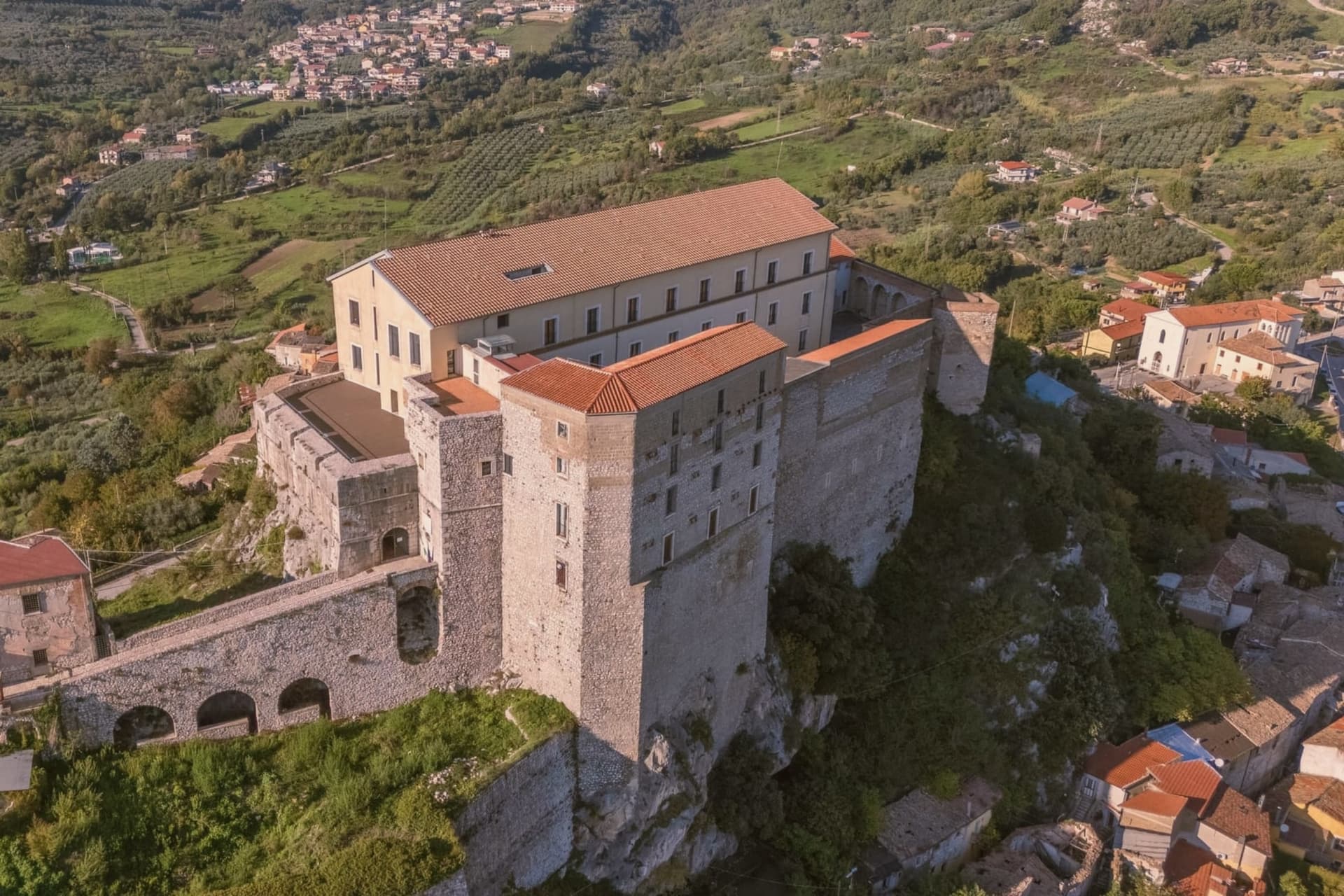
Montesarchio sits at 300 meters at the foot of Monte Taburno, eighteen kilometers southwest of Benevento. The Latin name is Caudium, an ancient Samnite city on the road from Beneventum to Capua, and the surrender at the pass below it was so unprecedented that the Roman Senate refused to ratify the treaty that followed.
The medieval town climbed the hill above the valley around its castle and tower, and that upper cluster still marks the highest and oldest part of the centro, with the newer town spreading below it into the Valle Caudina. The commune is a Borgo più bello d'Italia, a Città del Vino, and a Città della Nocciola.
What holds the place together is the vertical relationship between valley floor and hilltop: a road town and a battle site below, a fortified refuge and lookout above, the second built to guard what the first could not.
We confirmed you can reach this one by train.
What to see in Montesarchio
- Castello di Montesarchio. Medieval fortress on the hill above the town, restored and reopened in 2007 as part of the Museo Archeologico Nazionale del Sannio Caudino.
- Torre di Montesarchio. Cylindrical fifteenth-century tower next to the castle at 420 meters, the highest point of the centro and visible across the Valle Caudina.
- Museo Archeologico Nazionale del Sannio Caudino. Archaeological museum inside the castle, holding the krater as its centerpiece among the wider Samnite and Roman finds of the valley.
How to get to Montesarchio
There is a railway station in the town, so you can arrive without a car and never need one while you are here. Napoli is roughly 68 minutes away by road.
Our tip
April through early June and September into October are the months for Montesarchio. The Valle Caudina greens and the trails up Monte Taburno open without the haze of late summer. July and August can climb past thirty-five degrees on the floor of the valley, though the castle and tower at 420 meters cool earlier in the evening.
Benevento
Why visit Benevento
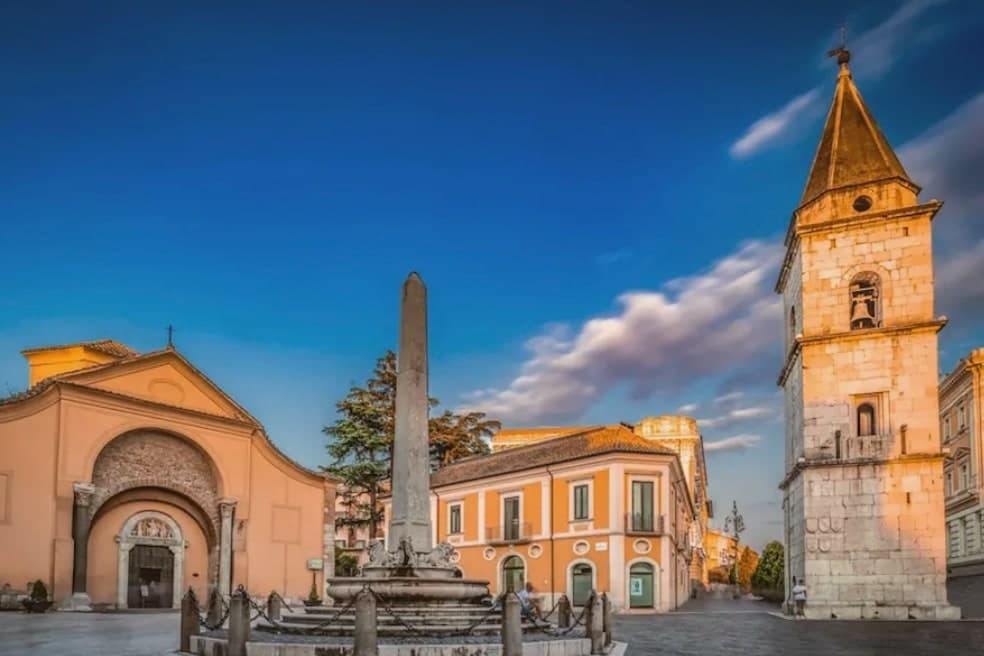
Benevento sits at 130 meters at the confluence of the Calore and Sabato rivers, fifty-five kilometers northeast of Naples, the historic capital of the Sannio. The Lombard Duchy of Benevento was founded in 571, well before the small circular church that survives from around 760, and the city centre still carries that double layer of Roman provincial capital and Lombard duchy seat.
Walking from the cathedral down Corso Garibaldi, past the cloister sculptures set against the medieval wall, ends at the triumphal arch, so the route itself moves from the Lombard and medieval town toward the point where the Roman road left for Brindisi. The countryside around the city is Aglianico del Taburno wine and the herbal liqueur distilled here since 1860.
What holds the city together is this sequence along one line of streets: two civic identities, Roman and Lombard, laid end to end and still walkable in that order.
We confirmed you can reach this one by train.
What to see in Benevento
- Arco di Traiano. The marble reliefs facing the road show Trajan's domestic policy, those facing the town his military campaigns, a pairing read as deliberate rather than decorative. The Via Traiana ran from this point to Brindisi.
- Chiesa di Santa Sofia. The circular plan is unusual for the period, and the interior keeps traces of the original Lombard fabric beneath later additions. It stands apart from the rectangular churches common elsewhere in the city.
- Teatro Romano. Roman theatre begun under Hadrian and completed under Caracalla, capacity for ten thousand spectators, still used for summer performances.
How to get to Benevento
There is a railway station in the town, so you can arrive without a car and never need one while you are here. Salerno is roughly 84 minutes away by road.
Our tip
April through June and September into October are the city's dry months, with mild evenings along the Calore and the Roman amphitheatre's summer programme starting in June. July and August push the inland Sannio past thirty-five degrees, and the old town empties between three and six in the afternoon while the riverbanks become the local refuge. November through March is wet, foggy at dawn, with rain a constant in February.
Pozzuoli
Why visit Pozzuoli
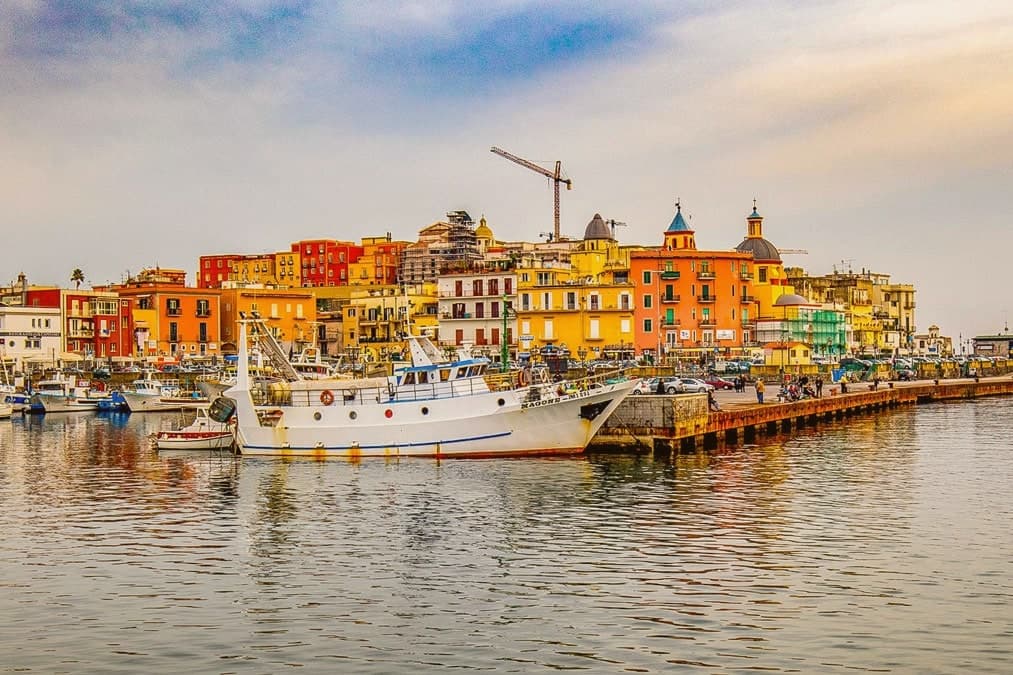
Pozzuoli sits at twenty-eight meters on the rim of the Campi Flegrei caldera, fifteen kilometers west of Napoli. Greek refugees from Samos founded the city in 531 BC as Dicearchia; Rome took it in 195 BC and renamed it Puteoli, a name the port kept through its centuries as Rome's busiest gateway by sea.
The old town and the working town are not the same ground. Rione Terra, the headland acropolis, was the city center for both the Greek and Roman settlements before it was evacuated in 1970 and reopened only piece by piece since.
The rest of Pozzuoli has grown around and below it, on a caldera that does not hold still: the crater above town still vents sulfur, and the crust beneath the whole area continues its slow rise and fall, watched closely enough that the alert level was raised again in 2023. A port city built its wealth on ground that was always going to move under it, and the town's oldest quarter has spent the last half century learning to live with that fact rather than escape it.
We confirmed you can reach this one by train.
What to see in Pozzuoli
- Anfiteatro Flavio. The cage chambers and lift machinery beneath the arena floor survive largely intact, giving a rare view of how the underground works of a Roman amphitheater actually functioned.
- Macellum (Tempio di Serapide). A market building long misread as a temple to Serapis. The three marked columns still stand at the center of the floor, close enough to touch.
- Rione Terra. The headland acropolis and original old town, evacuated in 1970 after a bradyseismic crisis and reopened only in stages since.
How to get to Pozzuoli
There is a railway station in the town, so you can arrive without a car and never need one while you are here. Napoli is roughly 25 minutes away by road.
Our tip
May through September is the working season for Pozzuoli, with June and September the easiest months. Sea temperatures rise into the mid-twenties, and the open-air sites stay accessible without afternoon heat closures. July and August are hot and crowded; the Anfiteatro and Macellum work best in the first morning slots.
More from Anywhere Italy
- The best hidden hill towns you can reach by train in Campania
- The best hill towns you can reach by train in Campania
- The best wine towns within 90 minutes of Naples
 The best wine towns within 90 minutes of Napoli
 The best wine towns that eat well in Campania
- The best hill towns you can reach by train within 90 minutes of Napoli