
Umbria · Perugia
Gubbio
Pre-Roman Ikuvium of the Umbri, where seven bronze tablets carry the longest text of the Umbrian language.
- Best time
- Apr–Oct
- By car
- 46 min from Perugia
- Population
- 30,479
Known for
CORSA DEI CERI
Millennial race held every 15 May, three teams carry wooden statues of Sant'Ubaldo, San Giorgio and Sant'Antonio Abate from Piazza Grande to the basilica on Monte Ingino.
TAVOLE IGUVINE
Seven bronze tablets of the 3rd-1st century BC, the longest text in the Umbrian language, found in 1444 and sold to the commune in 1456 for 40 florins.
CERAMICS
Gubbio is a Città della Ceramica for the gold and ruby lustreware perfected by Mastro Giorgio Andreoli in the early 16th century.
When to visit
Best · Apr–Oct
- J8°
- F11°
- M12°
- A15°
- M20°
- J26°
- J30°
- A29°
- S23°
- O19°
- N13°
- D9°
- Best
- Hot or crowded
- Quiet
- Mostly closed
Daytime averages, 2020–2024. Weather data by Open-Meteo.com.
The festa: Ubaldo Baldassini, 15 May
Why come
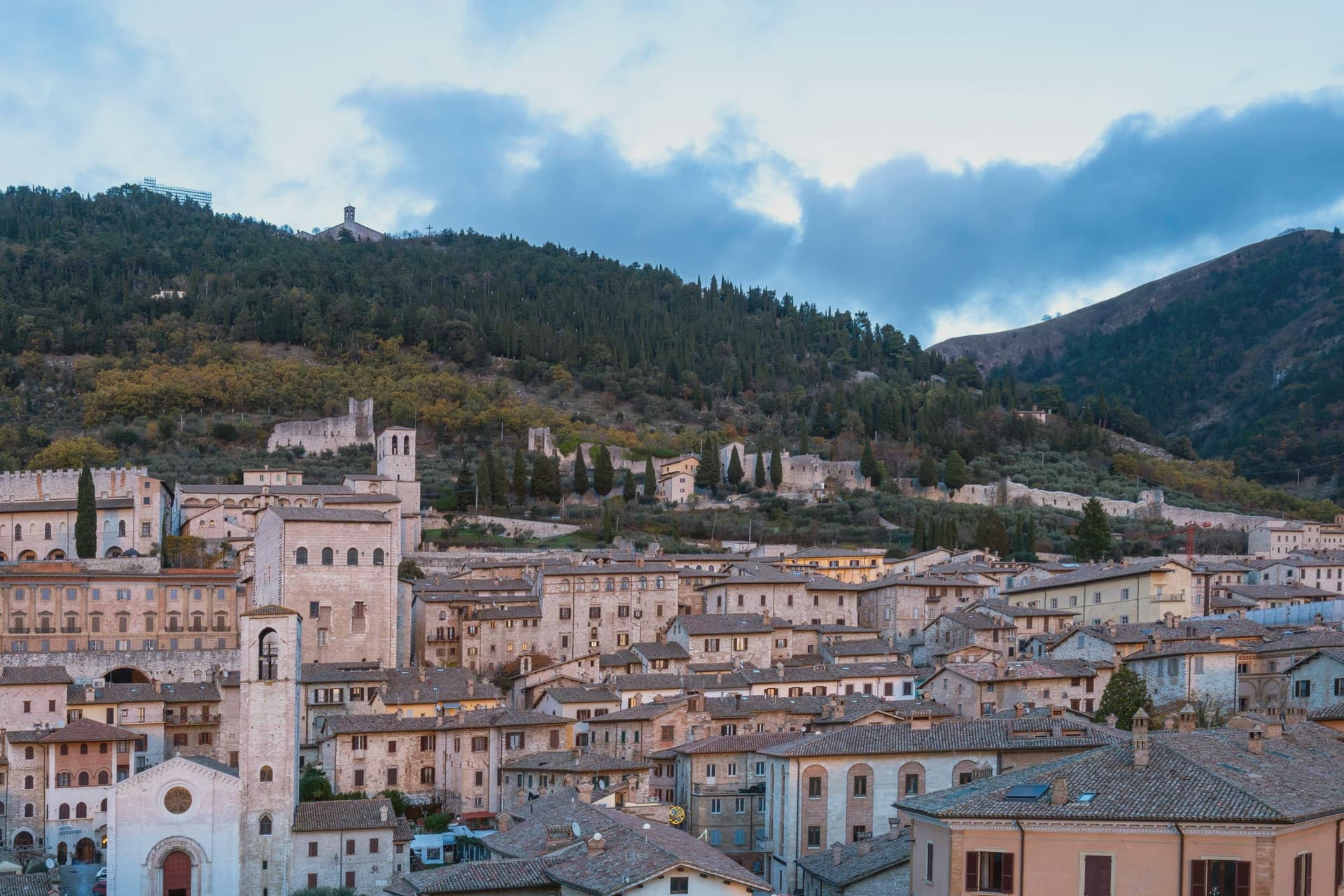
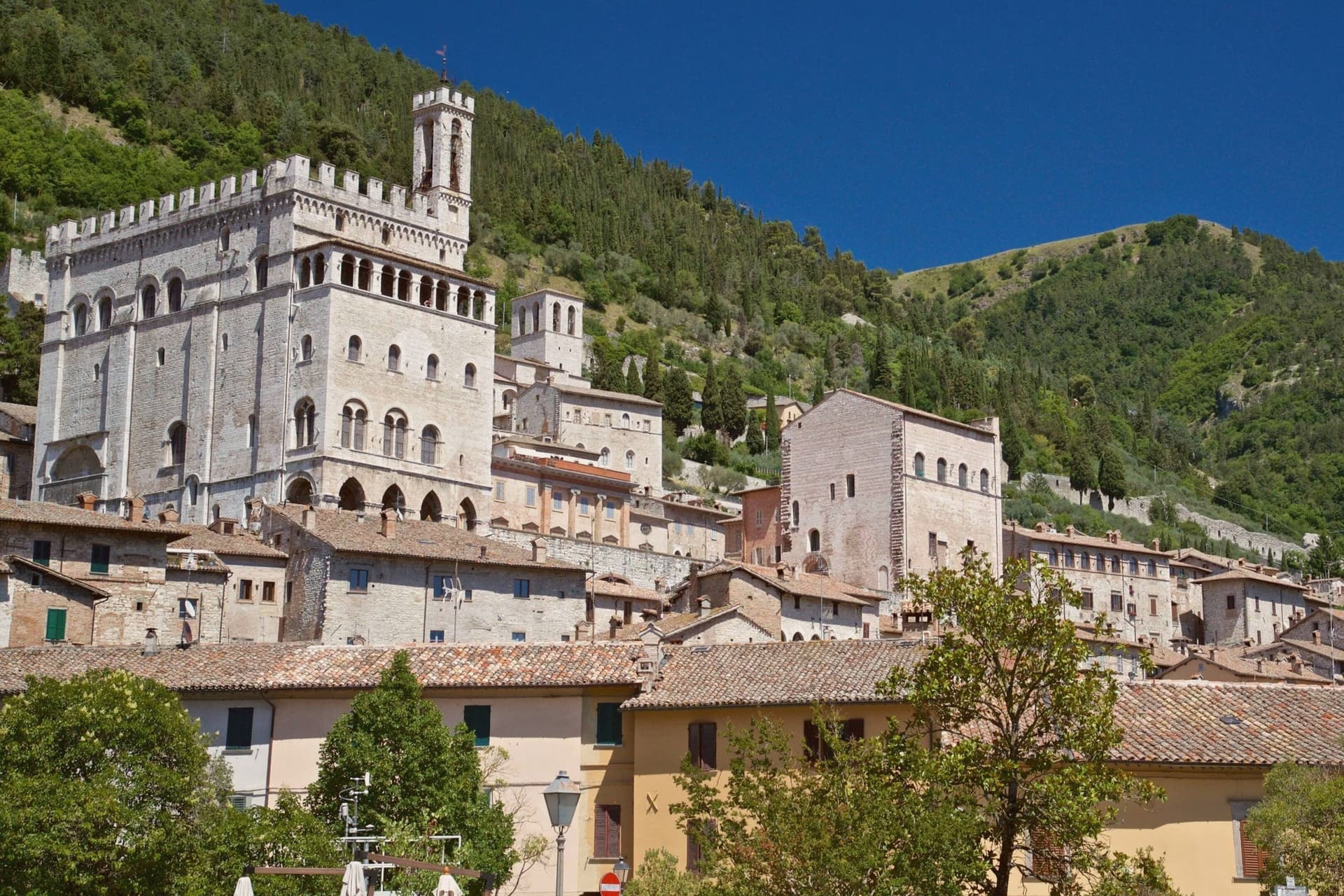
Gubbio sits at 522 meters on the lower slope of the mountain, the old town stacked in four parallel terraces against it. The settlement was Ikuvium, one of the most important towns of the Umbri before Rome arrived. In 1444 a peasant woman named Presentina found the bronze tablets in the area of the Roman theater and sold them to the commune in 1456 for 40 florins, a transaction that kept them in the town where they were unearthed rather than scattered to a museum elsewhere.
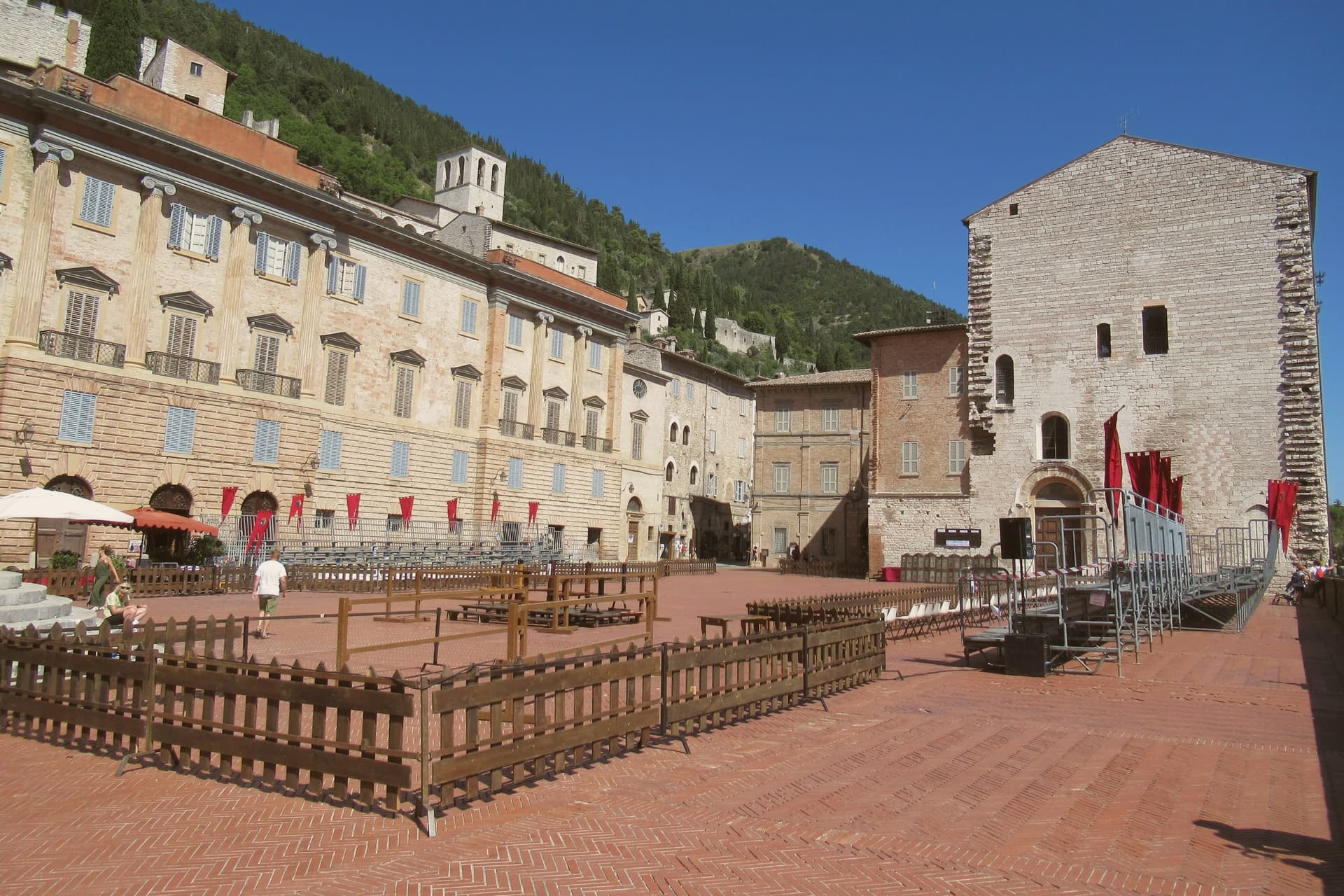
The terraces order the town's life by elevation: the Roman theater and lower ground below, the civic square and cathedral stacked on the upper terraces of the centro storico, the patron saint's basilica set apart on the summit above all of it. The Corsa dei Ceri each 15 May draws that vertical order into motion, three teams carrying wooden statues of Sant'Ubaldo, San Giorgio and Sant'Antonio Abate from the square at the town's center up to the basilica at its height, filling the town from dawn to dusk. The layout is not incidental: a settlement that predates Rome, a civic archive kept where it was found, and a race that each year retraces the climb from town to summit all point to the same fact, that Gubbio's history has stayed stacked on its own mountain rather than dispersed from it.
The Sunday letter
Gubbio is on our list. Its letter is still to come.
We are writing about all 1,000 of these towns, one at a time, in a free letter every Sunday: the photo, the food, the festa. That is our mission. Sign up and you will be there when Gubbio comes up. By Peter & Sophia, from Pietrasanta.
Read on
Gubbio in our articles
 The best towns on a walking route that eat well in the province of Perugia8 towns, Gubbio among them.
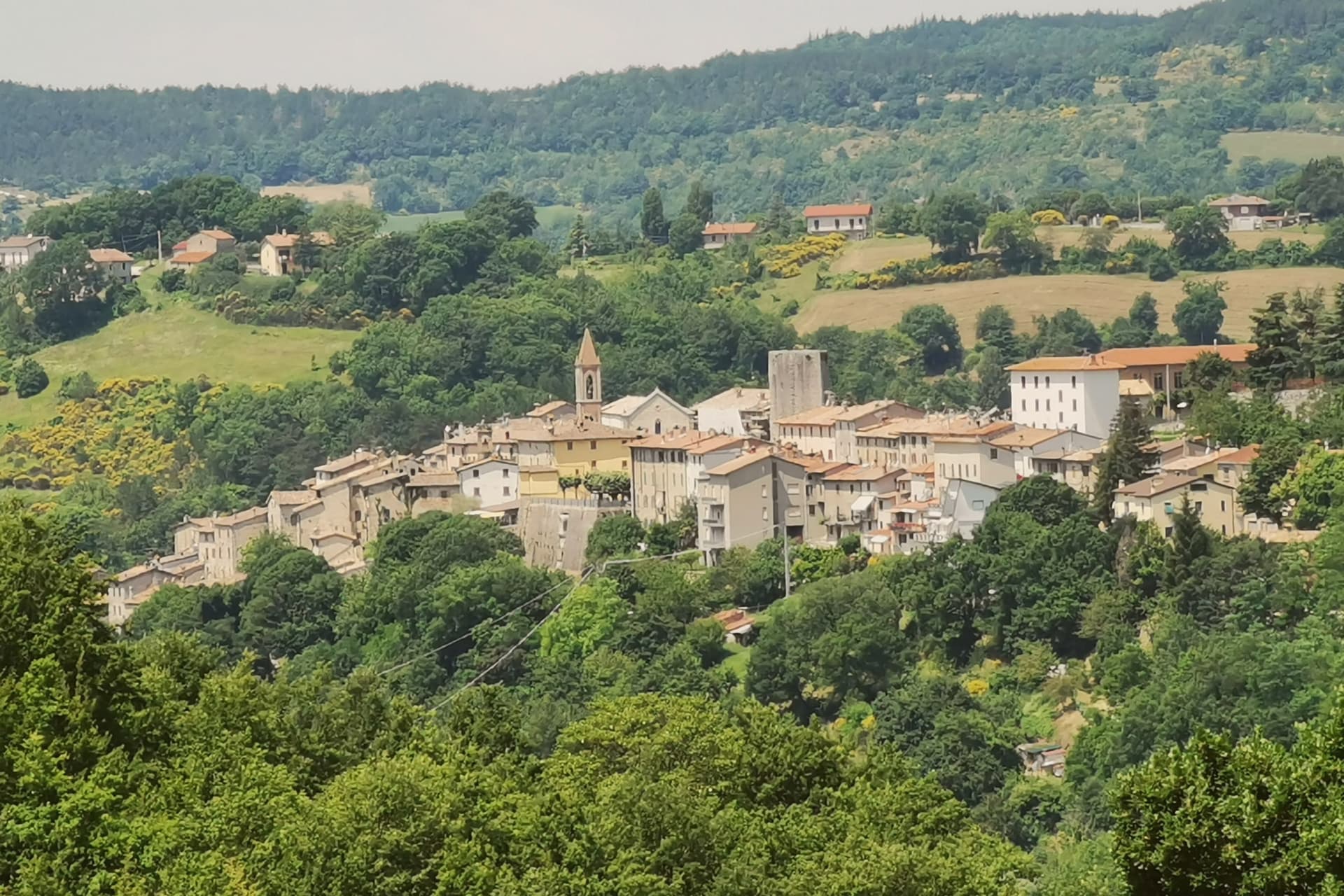 The best hill towns on a walking route within 90 minutes of Perugia9 towns, Gubbio among them.
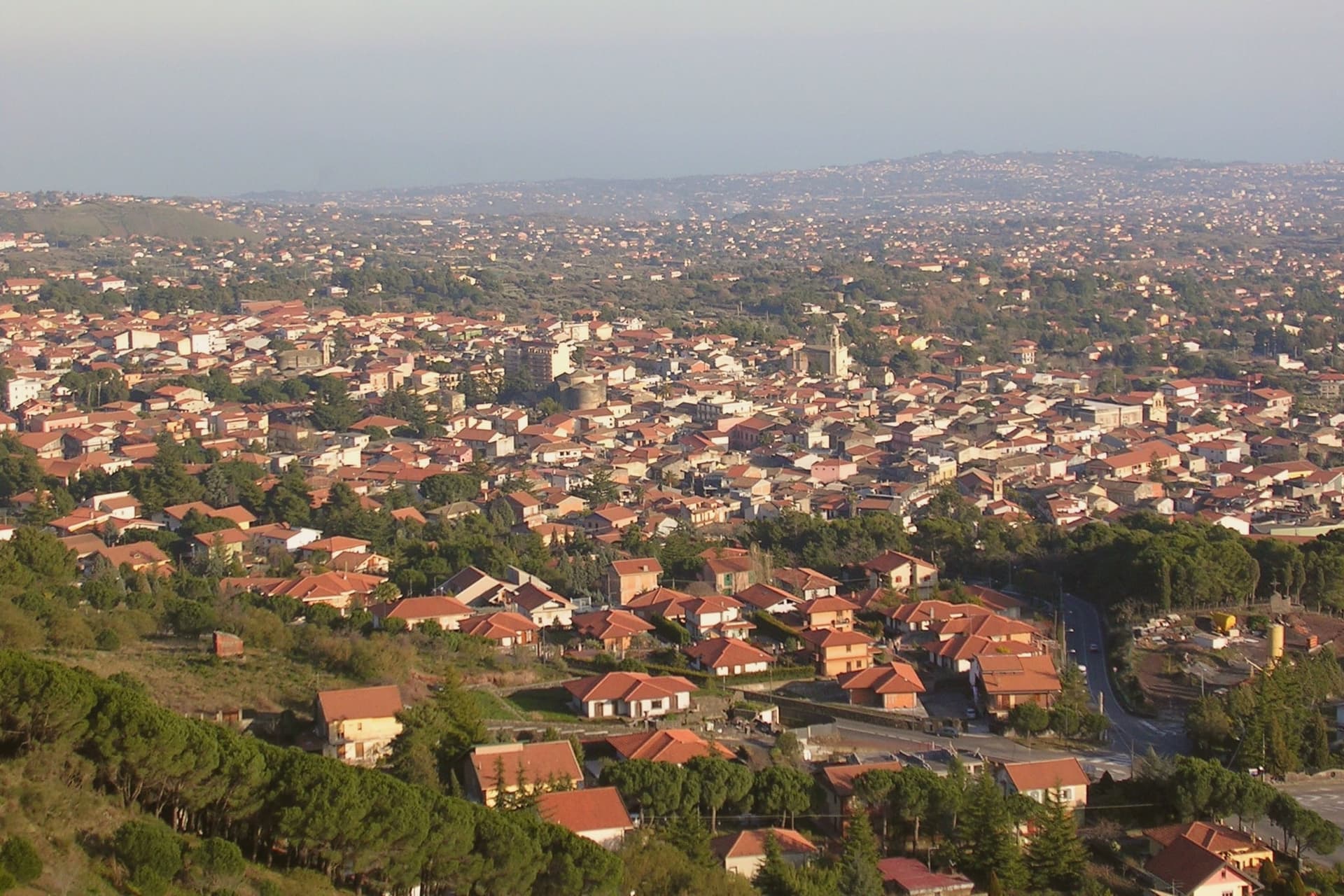 10 comuni that earned their recognition for something other than being pretty10 towns, Gubbio among them.
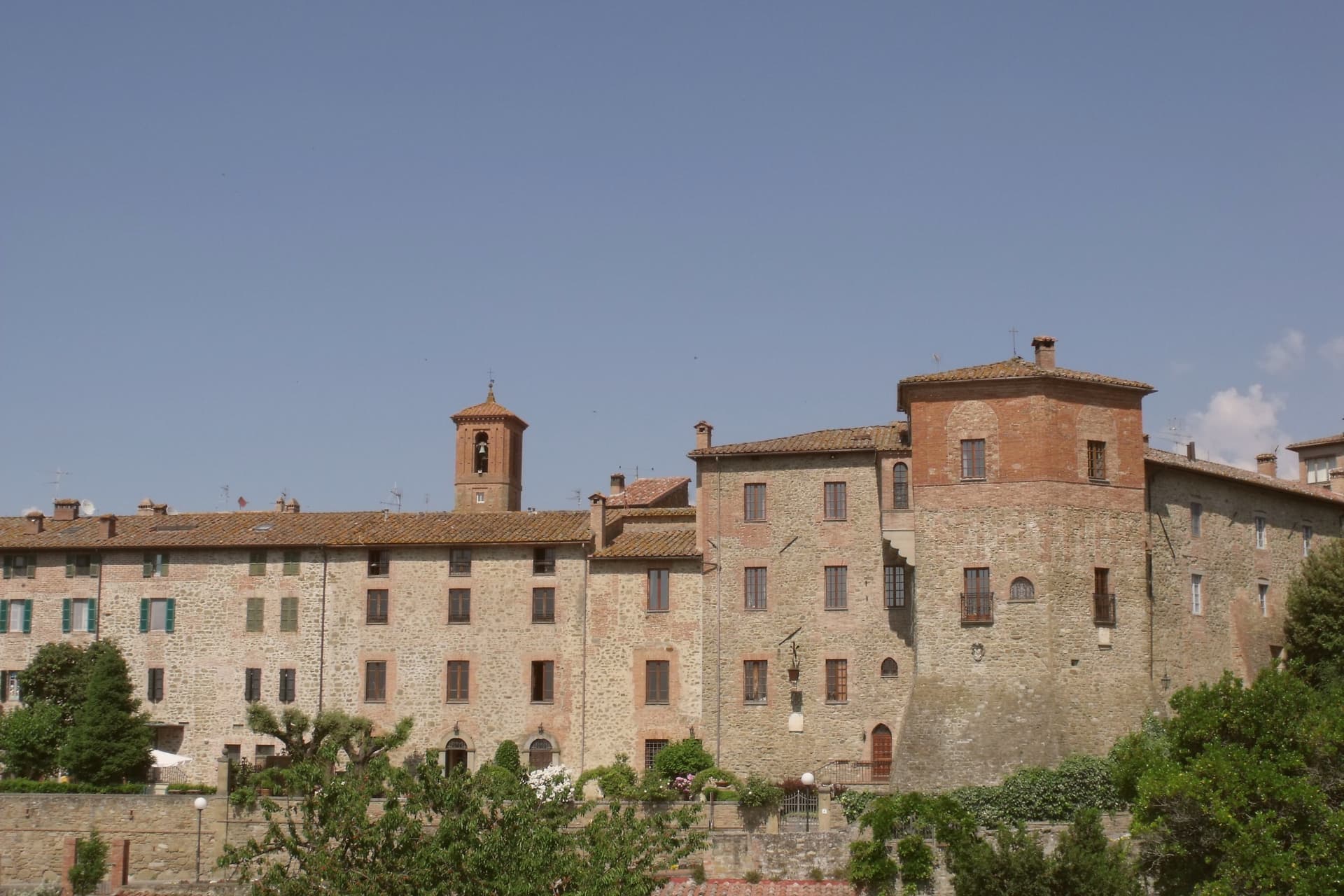 The best hill towns with a food festival in the province of Perugia10 towns, Gubbio among them.
How to get there
From Ancona / Pescara (AOI), about 1h 26m by car.
Rimini (RMI) is about 2 hours away.
By car from the centre of Perugia 46 minutes or Ancona 1h 38m.
Coming by train into Perugia? Gubbio is about 49 minutes away by road.
What to see
Palazzo dei Consoli
Built 1332-1349 by Angelo da Orvieto and Matteo Gattapone, the Gothic civic palace holds the Tavole Iguvine and the civic museum, its vertical pilasters dividing the façade across the square.
Tavole Iguvine
Displayed on the ground floor of the palazzo, the tablets were recovered near the Roman theater and record the religious rites of the pre-Roman western world in detail.
Piazza Grande
Suspended civic square between Palazzo dei Consoli and Palazzo Pretorio, hanging on substructures against the slope of the mountain.
Basilica di Sant'Ubaldo
On the summit of Monte Ingino at 908 meters, reached by cable car, holds the body of the patron saint and the three wooden Ceri after the May race.
Teatro Romano
First-century BC Roman theater in the archaeological area of Guastuglia, rusticated limestone arches of the lower order still standing.
Duomo di Gubbio
Thirteenth-century Gothic cathedral with single nave, on the upper terrace of the centro storico across from the Palazzo Ducale of Federico da Montefeltro.
The slow-trip planner
Building a trip? Find where Gubbio fits in a slow Italy circuit.
Answer five questions. We will shape a geographically coherent slow trip from the 1,000 Italian towns most travelers skip. Yours to save and share.
We recommend
Where to eat
Not our picks, but places the guides put their name to: a Michelin star, a Gambero Rosso fork, a Slow Food snail, a Michelin Key for the hotels. Worth a table, a counter, or a night when you pass through.
La Fornace di Mastro GiorgioRistorante
La Fornace di Mastro Giorgio holds two Gambero Rosso forks (80/100).
Officina dei SaporiRistorante
Officina dei Sapori carries one Gambero Rosso fork (77/100).
Ristorante Taverna del LupoRistorante
A place on Italy's historic-locali register, at Ristorante Taverna del Lupo.
Tenuta Borgo Santa CeciliaAgriturismo
A Gambero Rosso listing, at Tenuta Borgo Santa Cecilia.
Through the year
What happens here
Feasts and festivals that come back year after year. We give the month rather than the date, because the date moves and the month rarely does. Check with the source before you plan a journey around one.
Sagra della Polenta e Salsiccefood festival
usually held across July and August. Sagre Umbre
Festival del Medioevohistorical re-enactment
usually held in September. TrovaSagre
Living here
- Population 30,479
- Remotei
- Pharmacy in town
- High school within a 30-minute drive
- Nearest airport Ancona / Pescara, 1 h 26 min drive
- Regional capital Perugia, 46 min drive
Common questions
- What is Gubbio known for?
- Pre-Roman Ikuvium of the Umbri, where seven bronze tablets carry the longest text of the Umbrian language.
- Where is Gubbio?
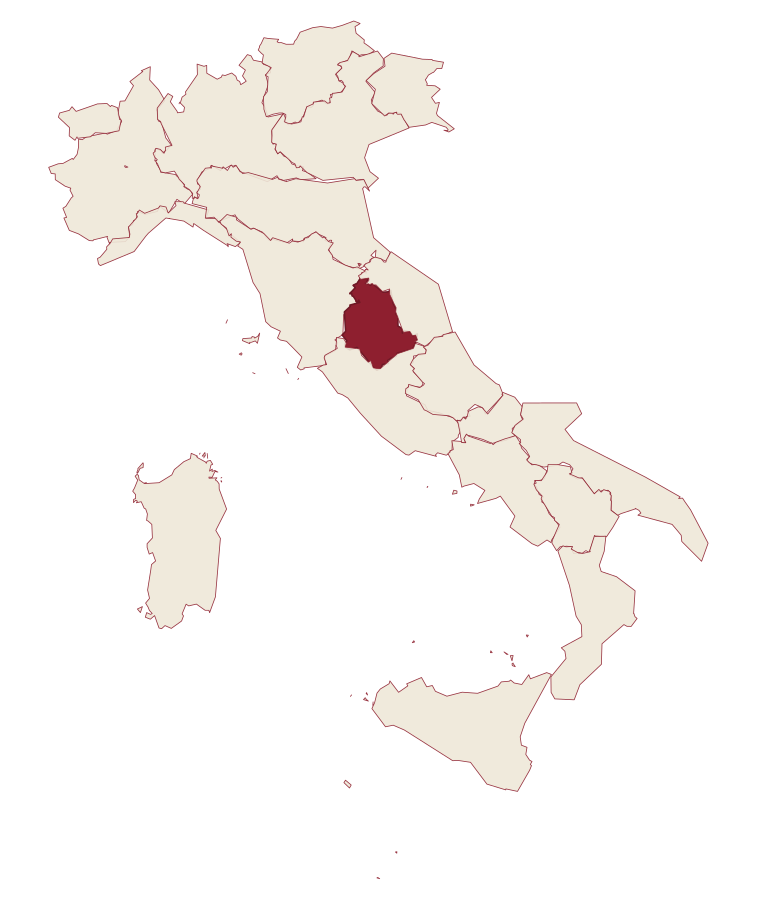
- Gubbio is a comune in the province of Perugia, in Umbria, at 522 meters above sea level.
- What is the nearest airport to Gubbio?
- Ancona / Pescara (AOI), about 1h 26m by car.
- How long is the drive from Perugia to Gubbio?
- About 46 minutes by car.
- When is the best time to visit Gubbio?
- Best in Apr–Oct. July is the warmest month, averaging 30 degrees, and May the wettest, with about 14 rain days.
- Is there a sagra or a festival in Gubbio?
- Yes. Sagra della Polenta e Salsicce and Festival del Medioevo. July is when the first of them falls.
- Which other towns are like Gubbio?
- Cortona, Fabriano and Bressanone.
- How many people live in Gubbio?
- 30,479 at the 2023 count.
Tags & datadesignations · numbers · sources
Recognised as
The numbers
- Elevation: 522 m
- Population: 30,479
- Surface area: 525.78 km²
These figures were compiled from public directories: ISTAT, OpenStreetMap and Wikidata, and from the official listings of the guides named on this page. Town details change; verify with official sources before you travel.
Similar
Towns like Gubbio
Cortona
Province: Arezzo
both inland, away from the coast · both over 10,000 people
Fabriano
Province: Ancona
both inland, away from the coast · both over 10,000 people
Bressanone
Province: Bolzano
both inland, away from the coast · both over 10,000 people
Assisi
Province: Perugia
both inland, away from the coast · both over 10,000 people
Spoleto
Province: Perugia
both inland, away from the coast · both over 10,000 people
Corciano
Province: Perugia
both inland, away from the coast · both over 10,000 people
🌻 Spighe Verdi
More Spighe Verdi towns in Umbria
Deruta
Province: Perugia
A hill town at 218 meters on the left bank of the Tiber, the maiolica capital of central Italy since the late thirteenth century.
Montefalco
Province: Perugia
The hilltop wine capital of Umbria at 472 meters, where Sagrantino is grown almost nowhere else.
Norcia
Province: Perugia
Birthplace of San Benedetto at 604 meters on a Sibillini plateau, leveled by the 2016 earthquake and rebuilt stone by stone.
Scheggino
Province: Perugia
Triangular castle village on the banks of the Nera at 280 meters, where the first commercial Italian truffle company was founded in 1928.
Todi
Province: Perugia
A walled hill town at 398 meters on the Tiber, with Etruscan, Roman, and medieval rings stacked one above the other.