
Umbria · Perugia
Corciano
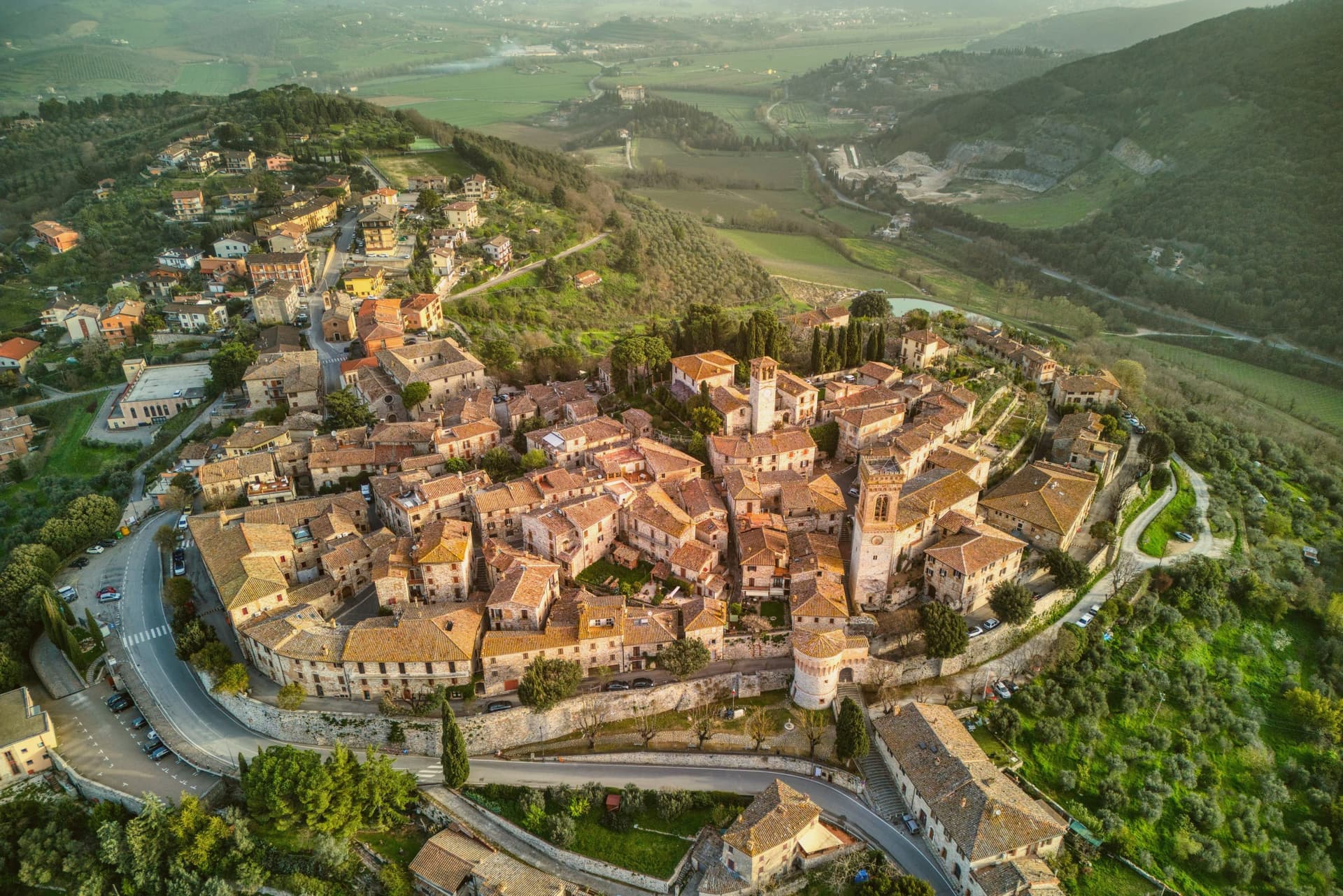
A walled medieval castello eight kilometers west of Perugia, where Saint Francis stopped on his way back from a Lent spent fasting on the island in 1223.
- Best time
- Apr–Oct
- By car
- 16 min from Perugia
- Population
- 21,535
Known for
BONFIGLI'S BANNER
The Gonfalone della Peste, painted by Benedetto Bonfigli in 1472 with the town itself shown at the foot of the Madonna's cloak.
FRANCIS PASSED
Saint Francis stopped here in 1223 on his way back from Lent on Isola Maggiore; the Chiesa di San Francesco was built in memory.
CITTÀ DEL PANE
Carries the bread-town designation; the August Agosto Corcianese festa fills the piazze with choirs and tables of local pane.
When to visit
Best · Apr–Oct
- J10°
- F12°
- M14°
- A17°
- M22°
- J28°
- J32°
- A32°
- S26°
- O21°
- N15°
- D11°
- Best
- Hot or crowded
- Quiet
- Mostly closed
Daytime averages, 2020–2024. Weather data by Open-Meteo.com.
The festa: Michele, 8 May
Why come
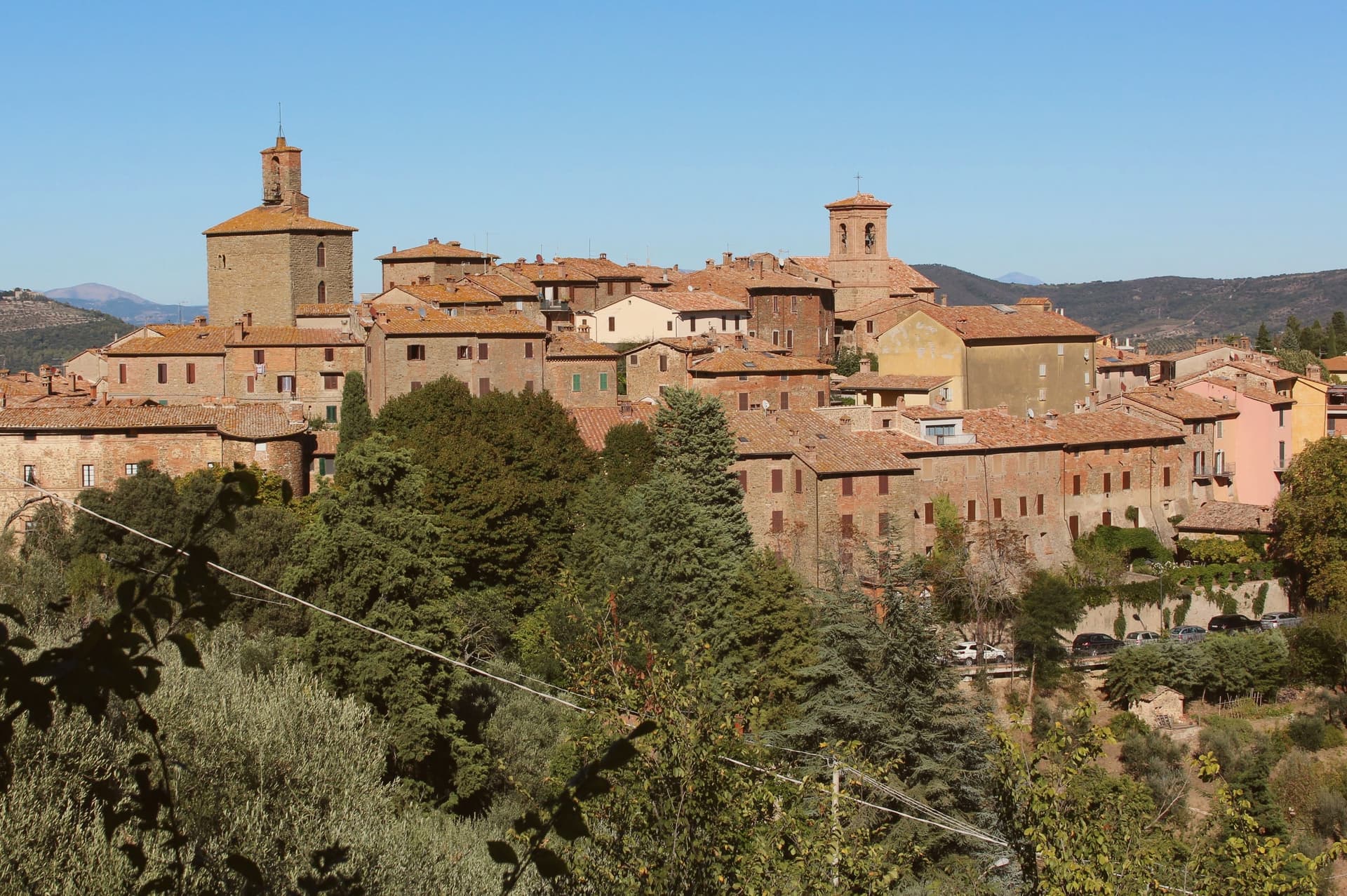
Corciano sits on a low hill, its walls unbroken and its gate towers still marking where the open country ends and the centro storico begins. Settlement here goes back to the Neolithic, and by 1136 the Castrum Corcianum shows up in a papal bull of Innocent II as one of the possessions of the bishop of Perugia. What a visitor walks through is a medieval shell built over much older ground, the streets inside the walls still following the old castello plan rather than any later grid.
The town's two churches read as a pair of responses to the same passage. Francis came through in 1223, back from fasting on the island, and the Franciscan church went up to mark it; the parish church nearby holds the painted record of the plague years, the Madonna's cloak spread over a huddle of rooftops that is Corciano itself. Between them, on Piazza Coragino, the communal palace and its neighbor still face each other as the working center of the old commune. What the walls, the gate, and the two churches add up to is a hill town that kept building on top of itself rather than abandoning what came before, so that centuries of foundations, a medieval circuit, and a fifteenth-century painting of the town's own image all still occupy the same small space.
The Sunday letter
Corciano is on our list. Its letter is still to come.
We are writing about all 1,000 of these towns, one at a time, in a free letter every Sunday: the photo, the food, the festa. That is our mission. Sign up and you will be there when Corciano comes up. By Peter & Sophia, from Pietrasanta.
Read on
Corciano in our articles
 The 7 best towns with a serious restaurant that sit inside a nature park in the province of Perugia7 towns, Corciano among them.
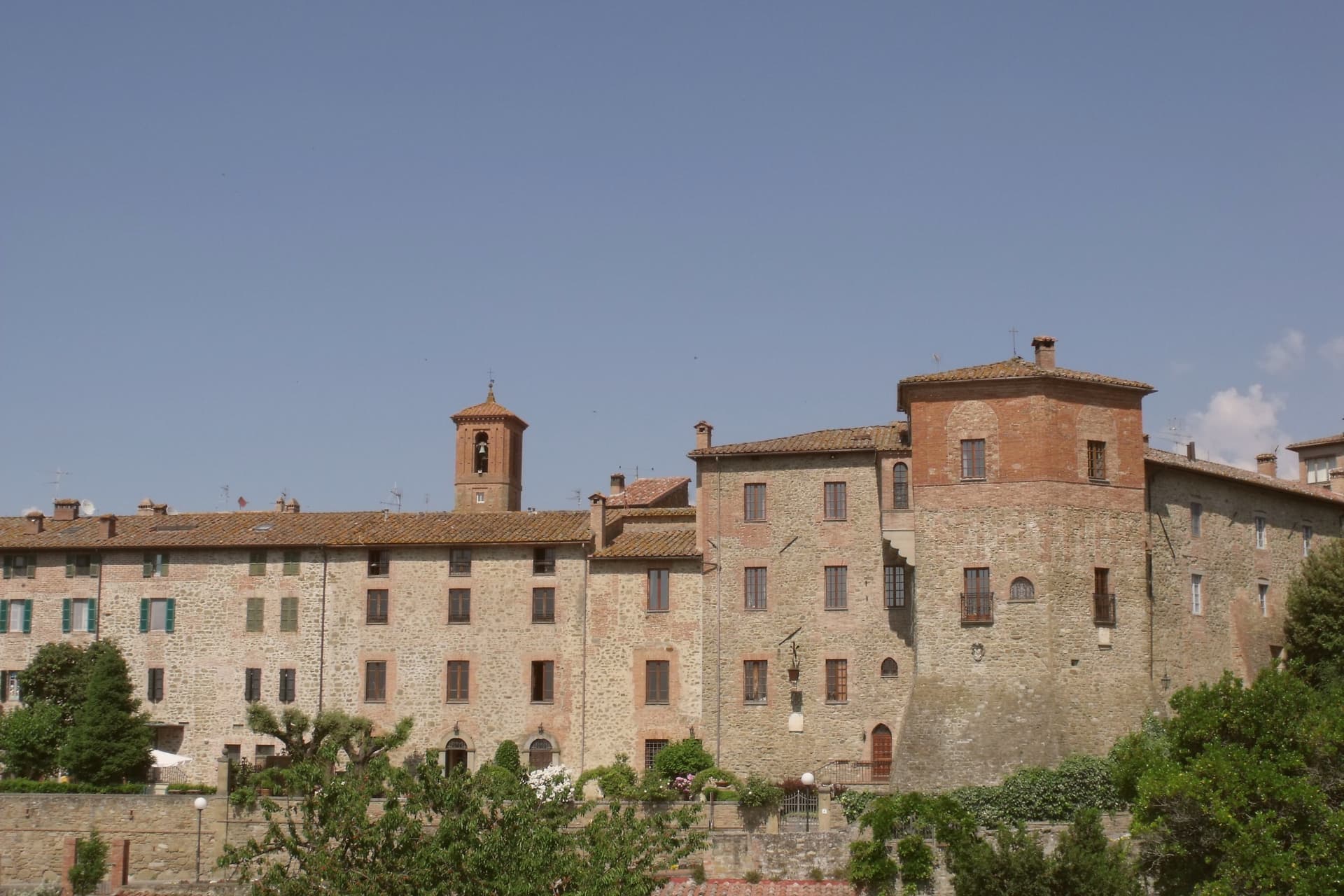 The prettiest villages inside a nature park within 90 minutes of Perugia9 towns, Corciano among them.
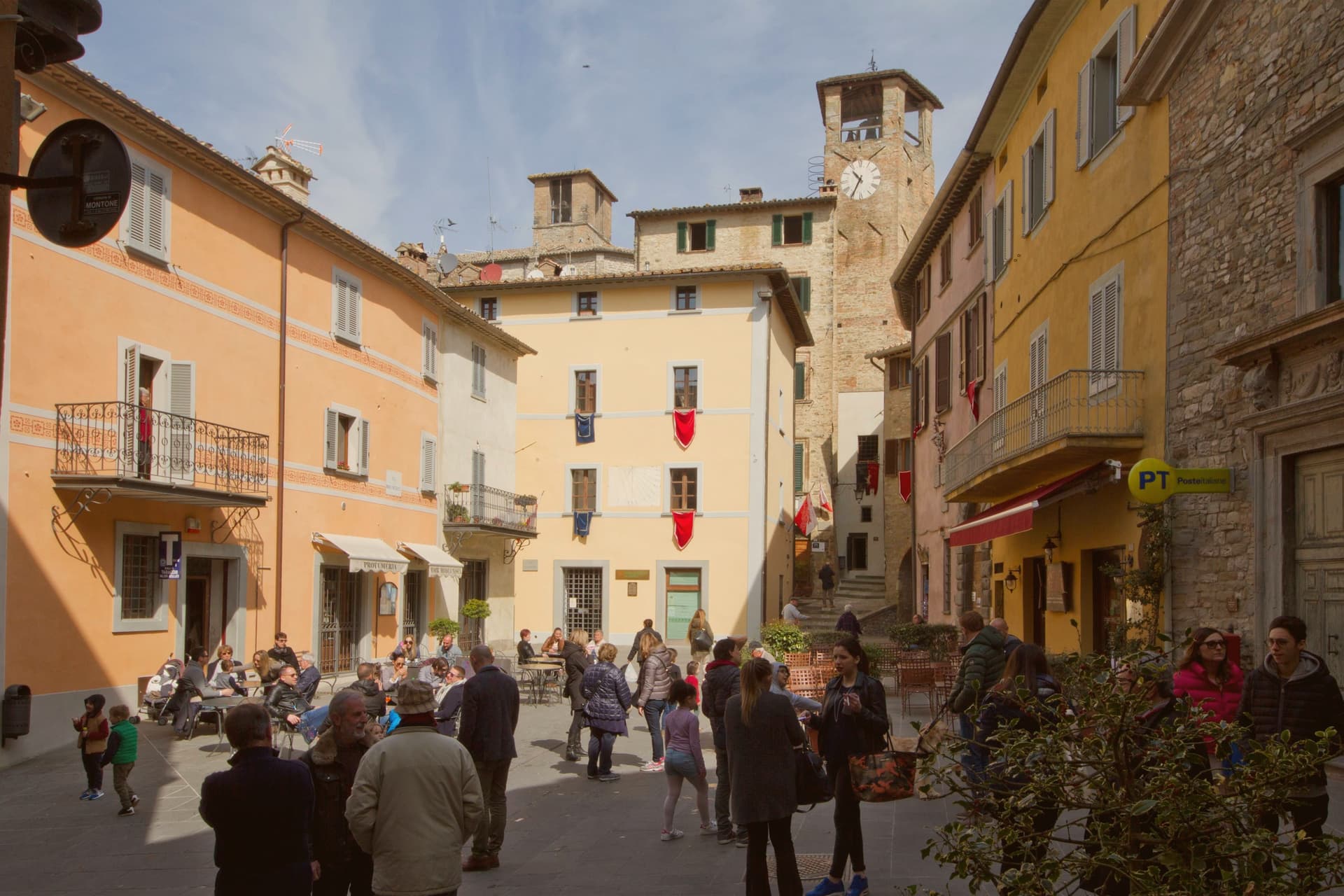 The best hill towns with a serious restaurant in the province of Perugia10 towns, Corciano among them.
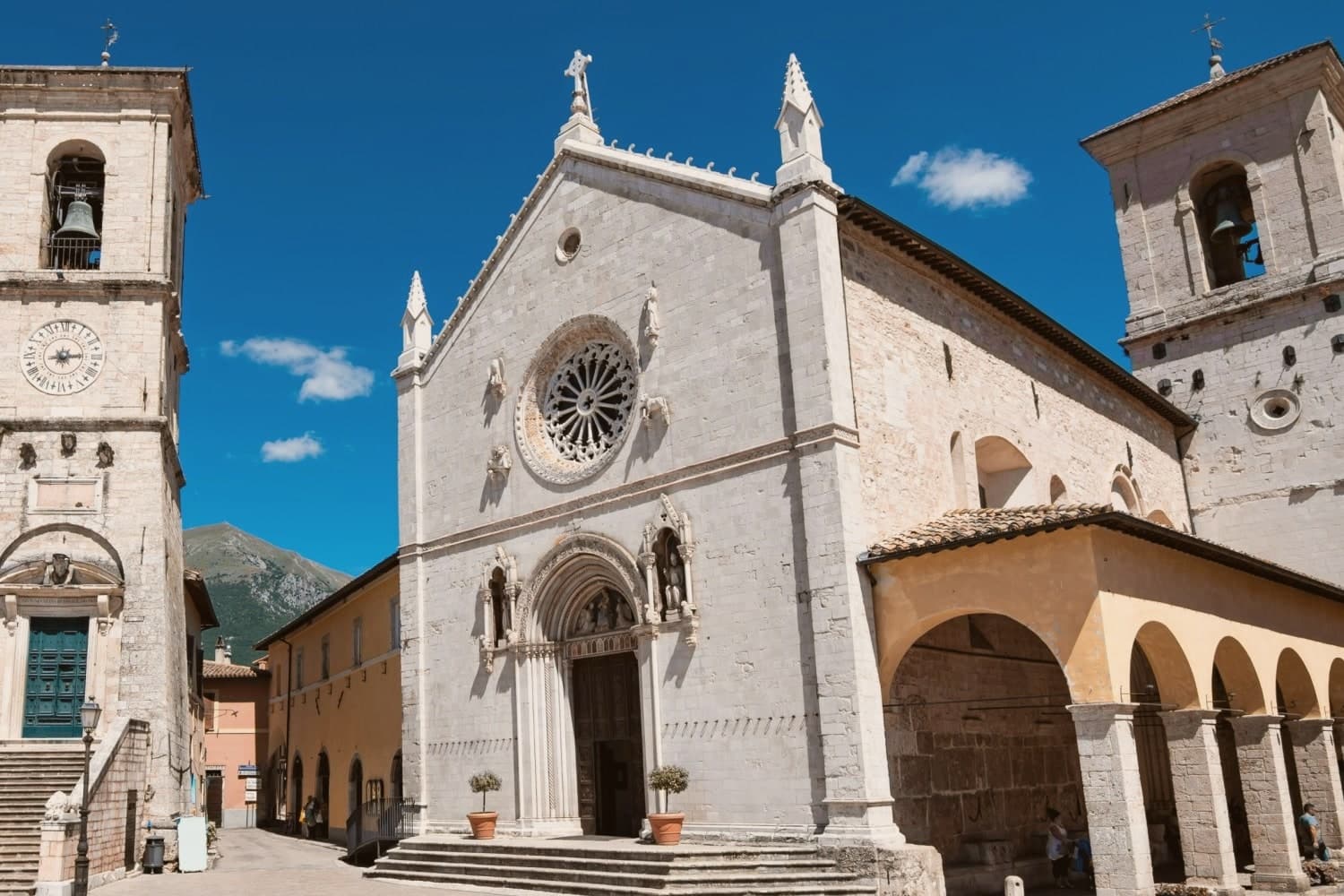 Alternatives to Assisi: every hill town in Umbria, in one list39 towns, Corciano among them.
How to get there
From Ancona / Pescara (AOI), about 1h 50m by car.
Bologna (BLQ) is about 2h 45m away.
By car from the centre of Perugia 16 minutes, Siena 1h 25m or Florence 1h 46m.
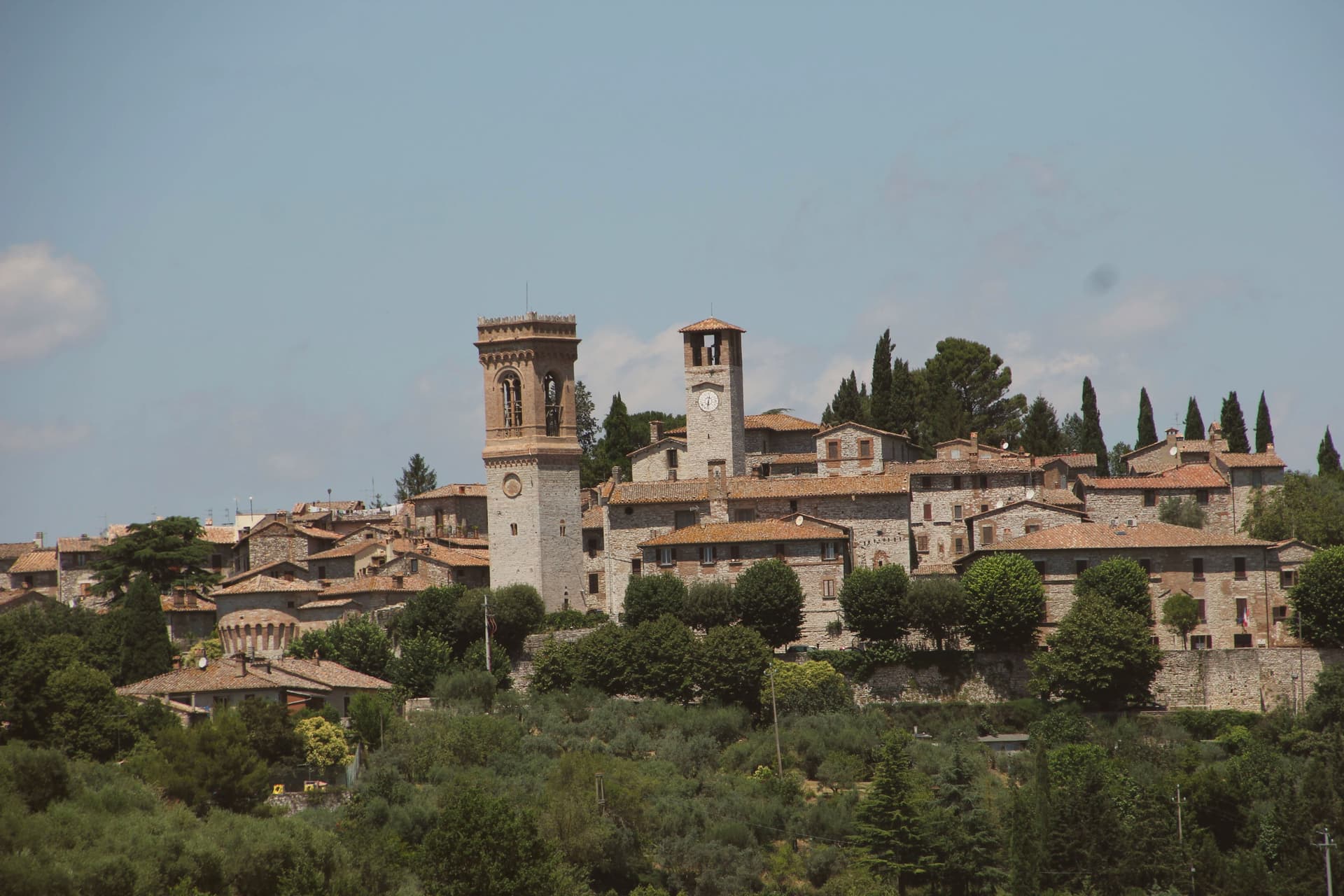
Coming by train into Perugia? Corciano is about 13 minutes away by road.
What to see
Chiesa di Santa Maria Assunta
Thirteenth-century main parish church near the main square, redone in neoclassical style in 1870. Holds the processional banner showing the Madonna sheltering the town's citizens under her cloak.
Gonfalone della Peste
Painted by Bonfigli for the parish church, the panel sets the town at the foot of the composition, a small huddle of roofs and walls beneath the sheltering cloak.
Porta Santa Maria
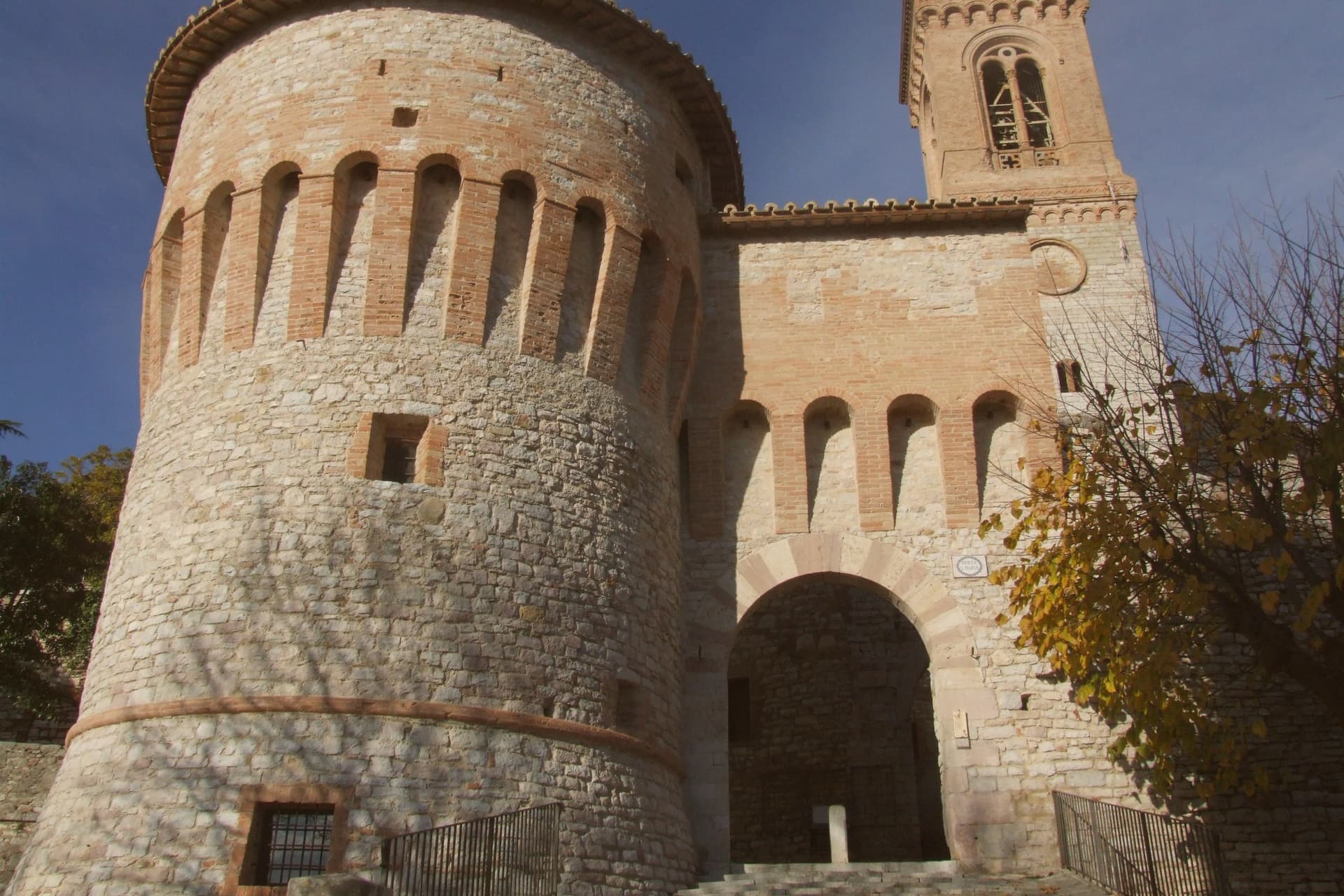
Main gate tower of the medieval walls at the northern entrance to the centro storico, still standing and still the way in.
Palazzo dei Priori
Medieval communal palace on Piazza Coragino, alongside the Palazzo del Capitano del Popolo, the civic centre of the old commune.
Chiesa di San Francesco
Gothic former Franciscan church, deconsecrated and now a museum, its bare stone interior kept plain rather than restored to parish use.
Piazza Coragino
Main square with a sixteenth-century well at its centre, framed by the civic palace on one side and the parish church on the other.
The slow-trip planner
Building a trip? Find where Corciano fits in a slow Italy circuit.
Answer five questions. We will shape a geographically coherent slow trip from the 1,000 Italian towns most travelers skip. Yours to save and share.
We recommend
Where to eat
Not our picks, but places the guides put their name to: a Michelin star, a Gambero Rosso fork, a Slow Food snail, a Michelin Key for the hotels. Worth a table, a counter, or a night when you pass through.
Osteria del PostoRistorante
Osteria del Posto carries one Gambero Rosso fork (78/100), plus a spot in the Michelin Guide.
AldìvinoRistorante
Aldìvino carries two Gambero Rosso forks (81/100).
Annina LocandaRistorante
One Gambero Rosso fork (79/100), at Annina Locanda.
Living here
- Population 21,535
- Commuter belti
- Pharmacy in town
- High school within a 30-minute drive
- Nearest airport Ancona / Pescara, 1 h 50 min drive
- Regional capital Perugia, 16 min drive
Common questions
- What is Corciano known for?
- Corciano is a walled medieval castello at 408 meters eight kilometers west of Perugia, where Saint Francis stopped on his way back from a Lent spent fasting on the island in 1223.
- Where is Corciano?
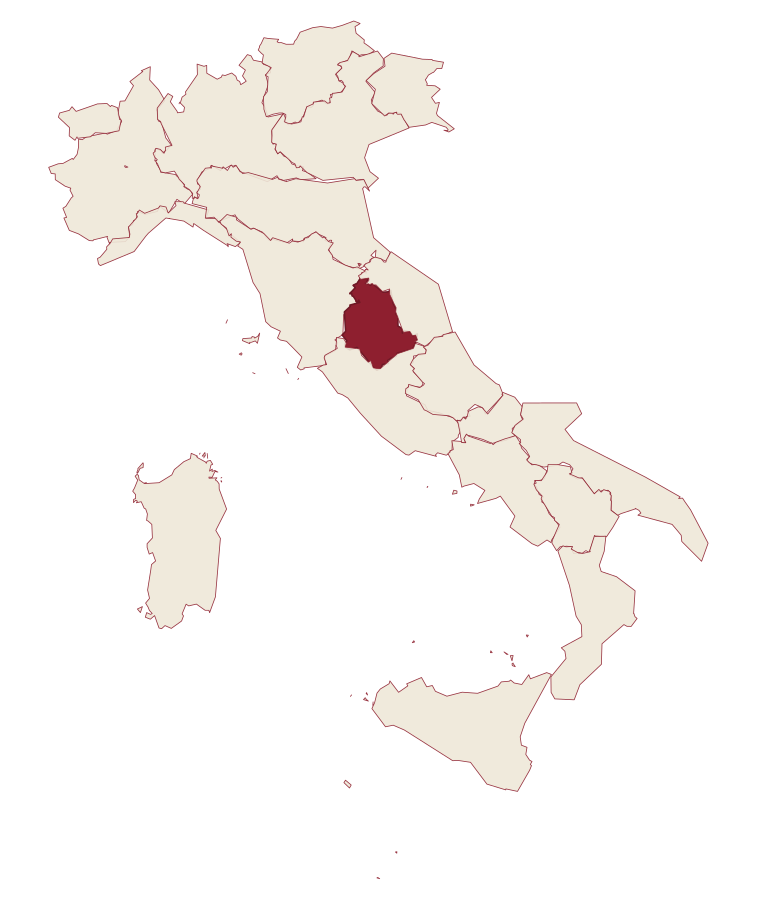
- Corciano is a comune in the province of Perugia, in Umbria.
- What is the nearest airport to Corciano?
- Ancona / Pescara (AOI), about 1h 50m by car.
- How long is the drive from Perugia to Corciano?
- About 16 minutes by car.
- When is the best time to visit Corciano?
- Best in Apr–Oct. July is the warmest month, averaging 32 degrees, and May the wettest, with about 12 rain days.
- Is there a sagra or a festival in Corciano?
- The town keeps its patron saint's day: Michele, 8 May.
- Which other towns are like Corciano?
- Assisi, Magione and Recanati.
- How many people live in Corciano?
- 21,535 at the 2023 count.
Tags & datadesignations · numbers · sources
The numbers
- Elevation: 408 m
- Population: 21,535
- Surface area: 63.72 km²
These figures were compiled from public directories: ISTAT, OpenStreetMap and Wikidata, and from the official listings of the guides named on this page. Town details change; verify with official sources before you travel.
Similar
Towns like Corciano
Assisi
Province: Perugia
both inland, away from the coast · both over 10,000 people
Magione
Province: Perugia
both inland, away from the coast · both over 10,000 people
Recanati
Province: Macerata
both inland, away from the coast · both over 10,000 people
Monteprandone
Province: Ascoli Piceno
both inland, away from the coast · both over 10,000 people
Amelia
Province: Terni
both inland, away from the coast · both over 10,000 people
Avigliana
Province: Torino
both inland, away from the coast · both over 10,000 people
🎨 Borghi più belli d'Italia
More Borghi più belli d'Italia towns in Umbria
Acquasparta
Province: Terni
A hill town at 350 meters above the Naia valley, where a Renaissance duchy briefly became the seat of Europe's first scientific academy.
Allerona
Province: Terni
A stone borgo at 472 meters between the Paglia valley and the Valdichiana, an Orvieto outpost whose Monaldeschi castle fell to Charles V.
Arrone
Province: Terni
Medieval castle village on the left bank of the Nera at 243 meters, upstream from the largest man-made waterfall in the world.
Bettona
Province: Perugia
A hill town at 353 meters between the Topino and Chiascio rivers, the only Etruscan settlement ever built east of the Tiber.
Bevagna
Province: Perugia
Roman Mevania on the Umbrian plain at 225 meters, four medieval quarters that compete every June in a reconstructed market of the 13th century.