
Hill towns
Hill towns in Marche
43 towns
The ridge and hilltop borghi, sitting around 400 metres. Vineyards below, one road up, walkable once you are there. Good in almost any season.
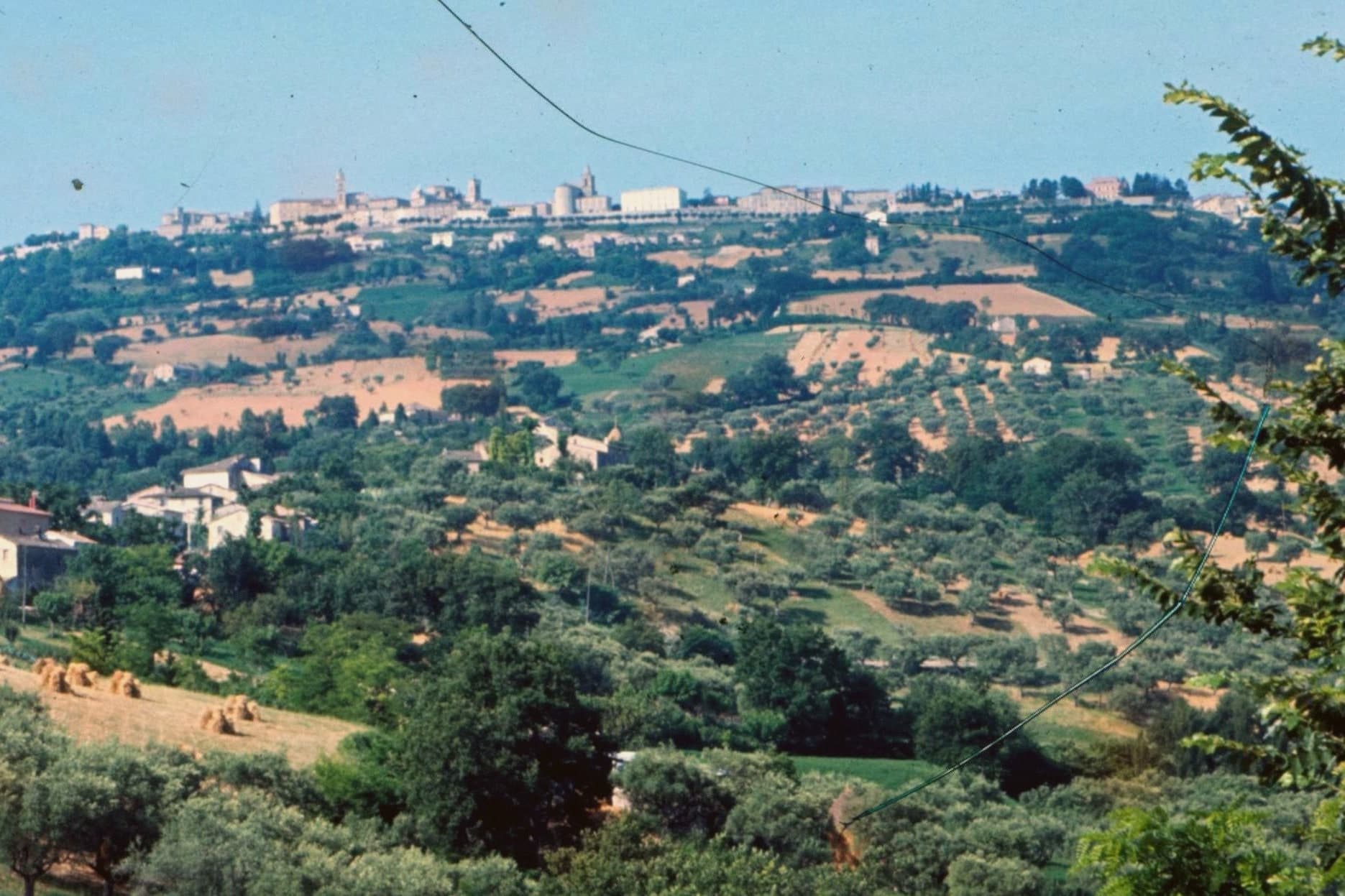
Cingoli
Province: Macerata · 631 m
The Balcone delle Marche at 631 meters, a hilltop borgo where on clear days the view runs from the Sibillini to the Croatian coast.
Amandola
Province: Fermo · 550 m
A Sibillini gateway at 550 meters on three hills above the Tenna valley, founded 1248 and damaged but not levelled in 2016.
Sarnano
Province: Macerata · 539 m
A 539-meter medieval borgo of baked brick at the foot of the Sibillini, with thermal springs that ran for 84 years until the 2016 earthquake.
Monte Grimano Terme
Province: Pesaro e Urbino · 536 m
A small Montefeltro borgo at 536 meters on the Marche-Romagna border, built around alkaline sulphur springs.
Arcevia
Province: Ancona · 535 m
A hilltop borgo at 535 meters above the Misa and Nevola valleys, defended in the Middle Ages by a ring of nine satellite castles.
Ripatransone
Province: Ascoli Piceno · 494 m
The Belvedere del Piceno at 494 meters, ridgetop borgo with views to the Adriatic and the narrowest alley in Italy at 43 centimeters.
Monte Rinaldo
Province: Fermo · 478 m
A 317-resident village on a 478-meter ridge of the Aso valley in the Marche interior, anchored by a 1st-century BC Roman sanctuary, the largest pre-imperial sanctuary excavated in the central Adriatic.
Urbino
Province: Pesaro e Urbino · 451 m
The Montefeltro capital at 451 meters on twin hills, where Federico II built the Renaissance court that produced Raffaello.
Staffolo
Province: Ancona · 442 m
The Verdicchio balcony at 442 meters above three valleys, with a near-circular medieval wall ring and a wine museum carved into the ramparts.
Valfornace
Province: Macerata · 441 m
A 909-resident Sibillini commune at 441 meters in the upper Chienti valley, born in 2017 from the merger of Pievebovigliana and Fiordimonte.
Mercatello sul Metauro
Province: Pesaro e Urbino · 429 m
A walled borgo at 429 meters in the upper Metauro, autonomous since 1235, with a pieve exempt from any bishop.
Montefiore dell'Aso
Province: Ascoli Piceno · 412 m
A hilltop borgo at 412 meters between the Aso and Menocchia valleys, holding six surviving panels of Carlo Crivelli's 1472 polyptych.
Serra San Quirico
Province: Ancona · 409 m
A stone borgo on Monte Murano at the entrance to the Gola della Rossa, ringed by 1300 walls with covered passageways called copertelle.
Moresco
Province: Fermo · 405 m
A 516-person hill borgo at 405 meters above the Aso valley, with a 25-meter seven-sided tower unique in Europe.
Acquasanta Terme
Province: Ascoli Piceno · 392 m
A sulphur-spring spa at 392 meters in the upper Tronto valley, where the water still surfaces at 30 degrees.
Sassoferrato
Province: Ancona · 386 m
A two-level Apennine town above Roman Sentinum, where the consuls Decius Mus and Fabius Maximus defeated four allied tribes in 295 BC.
Cantiano
Province: Pesaro e Urbino · 374 m
A border borgo at 374 meters under Monte Catria, known for the Good Friday Turba and the sour-cherry visciola harvest.
Acquaviva Picena
Province: Ascoli Piceno · 359 m
A walled hill borgo at 359 meters, six kilometers from the Adriatic, anchored by a cylindrical fortress keep and the surviving pajarola craft.
Sant'Angelo in Vado
Province: Pesaro e Urbino · 359 m
A 359-meter terrace town on the upper Metauro, built over Roman Tifernum Mataurense and host of Italy's oldest white truffle fair after Alba.
Esanatoglia
Province: Macerata · 358 m
A medieval village of seven bell towers at 358 meters on the Marche-Umbria border, sitting at the source of the Esino river.
Petritoli
Province: Fermo · 358 m
A hilltop borgo at 358 meters above the Aso valley, formed around the year 1000 from the merger of three castles.
Matelica
Province: Macerata · 354 m
A Verdicchio town at 354 meters in the upper Esino valley, with a Roman marble globe in its archaeological museum.
Treia
Province: Macerata · 342 m
A Macerata hill town at 342 meters, the Roman municipium Trea, renamed by Pope Pius VI in 1790 after centuries as Montecchio.
Fabriano
Province: Ancona · 325 m
The Italian paper town at 325 meters, making fine watermarked sheets since 1264.
Genga
Province: Ancona · 322 m
A small Sentino-valley commune at 322 meters whose territory holds the Frasassi caves, the largest karst show cave in Italy.
Fermo
Province: Fermo · 319 m
The provincial capital on the Sabulo hill at 319 meters, with 2,200 square meters of Augustan Roman cisterns running under the centro storico.
Macerata
Province: Macerata · 315 m
The provincial capital at 315 meters between the Chienti and Potenza, home to Italy's oldest university and the Sferisterio open-air opera arena.
Offagna
Province: Ancona · 309 m
A hilltop borgo at 309 meters between Ancona and Osimo, dominated by a Rocca built in just two years by the Anconitans in 1454-56.
Recanati
Province: Macerata · 296 m
The hill town at 296 meters overlooking the Musone valley toward the Adriatic.
Vallefoglia
Province: Pesaro e Urbino · 295 m
A 2014 merger commune at 295 meters in the Foglia valley, born from Colbordolo, birthplace of Raffaello's father, and Sant'Angelo in Lizzola.
Offida
Province: Ascoli Piceno · 293 m
A hill borgo at 293 meters in the Piceno wine country, with a Romanesque-Gothic cliff church and women still working bobbin lace.
Magliano di Tenna
Province: Fermo · 281 m
A small Fermo-province borgo at 281 meters above the Tenna river, ringed by fourteenth-century walls with two of its six original towers still standing.
Mondavio
Province: Pesaro e Urbino · 280 m
A hill borgo at 280 meters whose fortress never took a cannon shot.
Urbania
Province: Pesaro e Urbino · 273 m
The Montefeltro ceramics town on the upper Metauro, known as Casteldurante until Pope Urban VIII gave it his name in 1636.
Montelupone
Province: Macerata · 272 m
A walled hill borgo at 272 meters above the lower Potenza valley, with a fourteenth-century civic loggia and a 1889 horseshoe theatre.
Montecosaro
Province: Macerata · 267 m
A walled hilltop borgo at 267 meters above the Chienti valley, with a Romanesque basilica rebuilt in 1125 on the river plain below.
Monteprandone
Province: Ascoli Piceno · 266 m
A hilltop borgo at 266 meters above the lower Tronto valley, its walled center climbing toward a summit church with a view to the Adriatic.
Pergola
Province: Pesaro e Urbino · 265 m
A hill town at 265 meters in the upper Cesano valley, holding the only surviving group of Roman gilded bronze statues from antiquity.
Morrovalle
Province: Macerata · 247 m
A hilltop borgo at 247 meters above the Chienti valley, its walled centro storico grown from a medieval castle called Mor-ro.
San Severino Marche
Province: Macerata · 235 m
A two-level town where a 224-meter elliptical piazza in the lower city looks up at a fortified hill crowned by a medieval tower and Salimbeni-painted churches.
Servigliano
Province: Fermo · 215 m
An eighteenth-century ideal city at 215 meters in the Tenna valley, rebuilt by papal commission on a 137-by-144-meter quadrangle after the old hill village collapsed.
Acqualagna
Province: Pesaro e Urbino · 204 m
The Italian truffle capital at 204 meters in the Metauro valley, supplying two-thirds of the country's white truffle harvest from the surrounding limestone woods.
Corinaldo
Province: Ancona · 203 m
A walled hill borgo at 203 meters, ringed by 912 meters of intact medieval walls, and the birthplace of Saint Maria Goretti.
The slow-trip planner
Plan a slow trip across the towns travelers skip.
Answer five questions. We will shape a geographically coherent slow trip from the 1,000 Italian towns most travelers skip. Yours to save and share.
From elsewhere in Italy
Five more towns to discover
Biccari
Province: Foggia
A Subappennino Dauno borgo at 450 meters under Monte Cornacchia, the highest peak in Puglia at 1,151 meters, with a Byzantine tower at its core.
Sirolo
Province: Ancona
A clifftop borgo at 125 meters, above the Due Sorelle sea stacks of the Adriatic.
Penne
Province: Pescara
The brick city at 438 meters between the Tavo and Fino, ancient capital of the Vestini, rebuilt after Allied bombing and awarded the Silver Medal of Civic Merit.
Palazzolo Acreide
Province: Siracusa
An 8,000-resident hilltop town on the Iblei plateau at 670m, rebuilt entirely in late Baroque after the 1693 earthquake and founded over the Greek Akrai colony in 664 BC, with a Greek theatre and a cluster of rock carvings unlike anything else nearby.
Verucchio
Province: Rimini
A spur over the lower Marecchia valley, cradle of the Villanovan civilization and birthplace of the Malatesta lordship of Romagna.