
Marche · Pesaro e Urbino
Acqualagna
The Italian truffle capital in the Metauro valley, supplying two-thirds of the country's white truffle harvest from the surrounding limestone woods.
- Best time
- Apr–Oct
- By car
- 1 h 22 min from Rimini
- By train
- Station in the comune
- Population
- 4,151
Known for
WHITE TRUFFLE
Roughly two-thirds of Italy's white truffle production passes through Acqualagna, traded across three annual fairs from February through November.
GOLA DEL FURLO
Limestone gorge upstream of town, cut by the Candigliano river, where Vespasian's Roman tunnel still carries the old Via Flaminia.
AQUA LANEA
Sixth-century battle between Totila's Ostrogoths and Narses's Byzantines on the plain below the gorge, which gave the town its name.
When to visit
Best · Apr–Oct
- J10°
- F13°
- M14°
- A17°
- M22°
- J28°
- J32°
- A31°
- S26°
- O21°
- N15°
- D11°
- Best
- Hot or crowded
- Quiet
- Mostly closed
Daytime averages, 2020–2024. Weather data by Open-Meteo.com.
The festa: Santa Lucia, 13 December
Why come
Acqualagna sits in the Metauro valley, twelve kilometers from Urbino, on the plain just downstream from the gorge cut by the Candigliano river. The Roman city of Pitinum Mergens stood nearby until Alaric's Goths destroyed it; the survivors founded Montefalcone, the castle from which today's village grew. The name Acqualagna comes from Aqua Lanea, water of slaughter, after the sixth-century battle fought on that same plain.
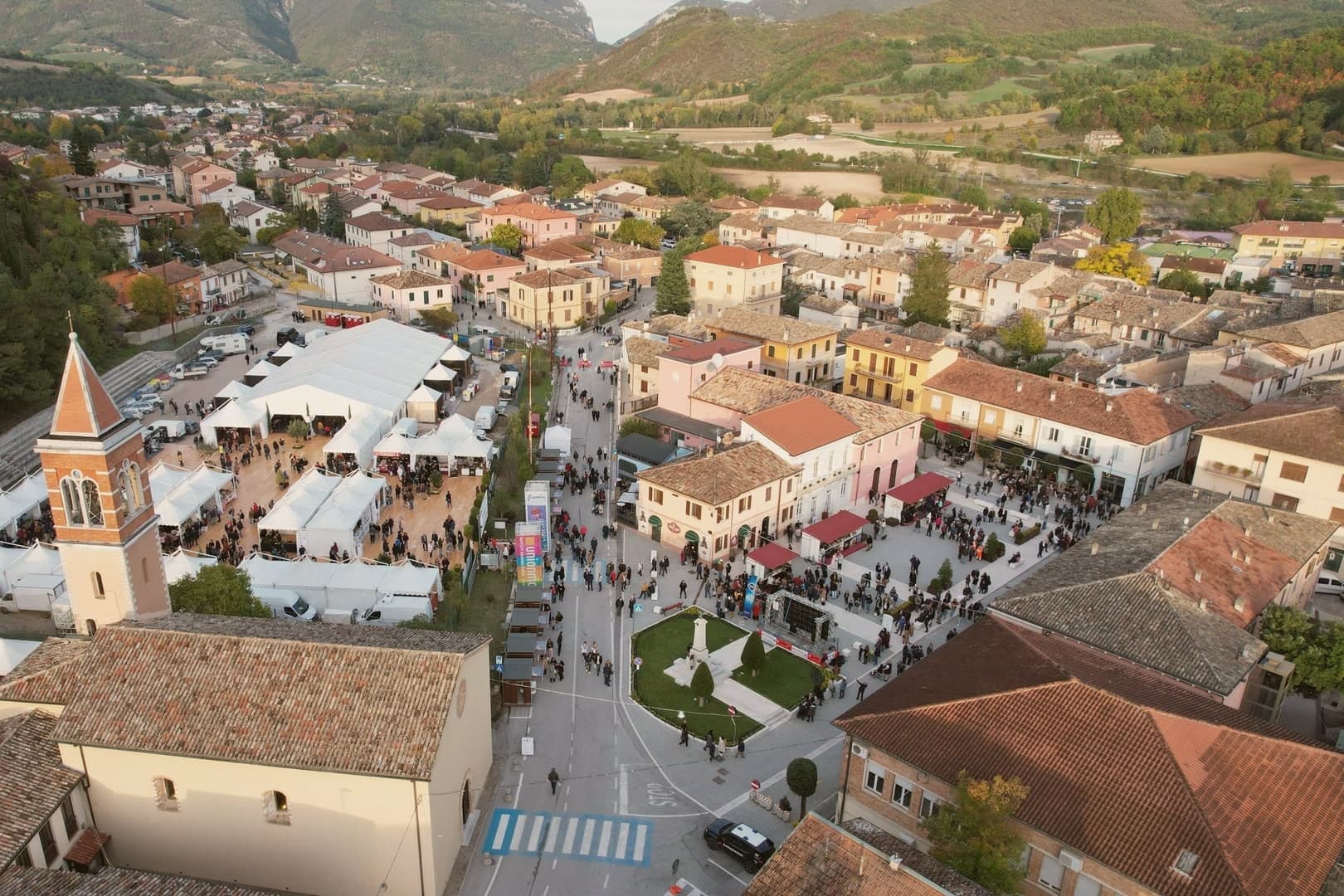
Three fairs anchor the year: black truffle on the last Sunday of February, summer black on the last Sunday of July, white truffle across the last weekend of October and the two that follow. The town below and the gorge above read as one unit, a river valley that has carried Roman road traffic, monastic settlement and truffle trade in turn, each leaving its mark on the ground without erasing what came before.
The Sunday letter
Acqualagna is on our list. Its letter is still to come.
We are writing about all 1,000 of these towns, one at a time, in a free letter every Sunday: the photo, the food, the festa. That is our mission. Sign up and you will be there when Acqualagna comes up. By Peter & Sophia, from Pietrasanta.
Read on
Acqualagna in our articles
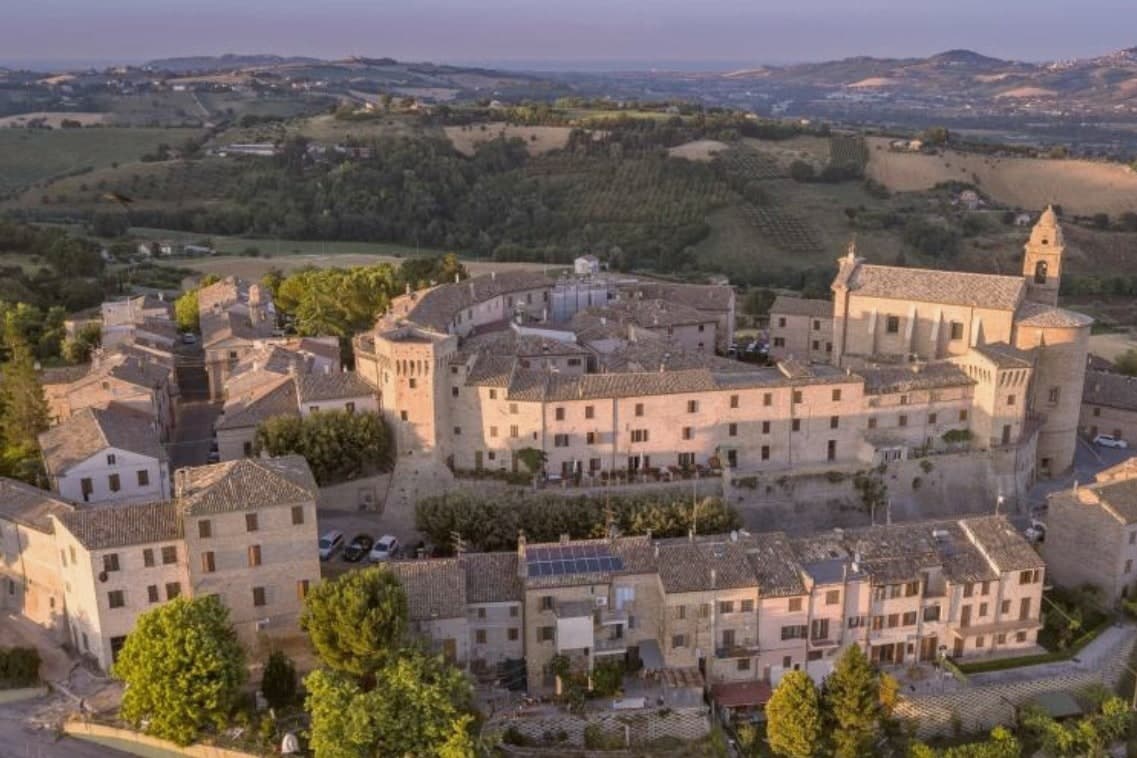
 The 6 best hidden hill towns with a serious restaurant in Marche6 towns, Acqualagna among them.
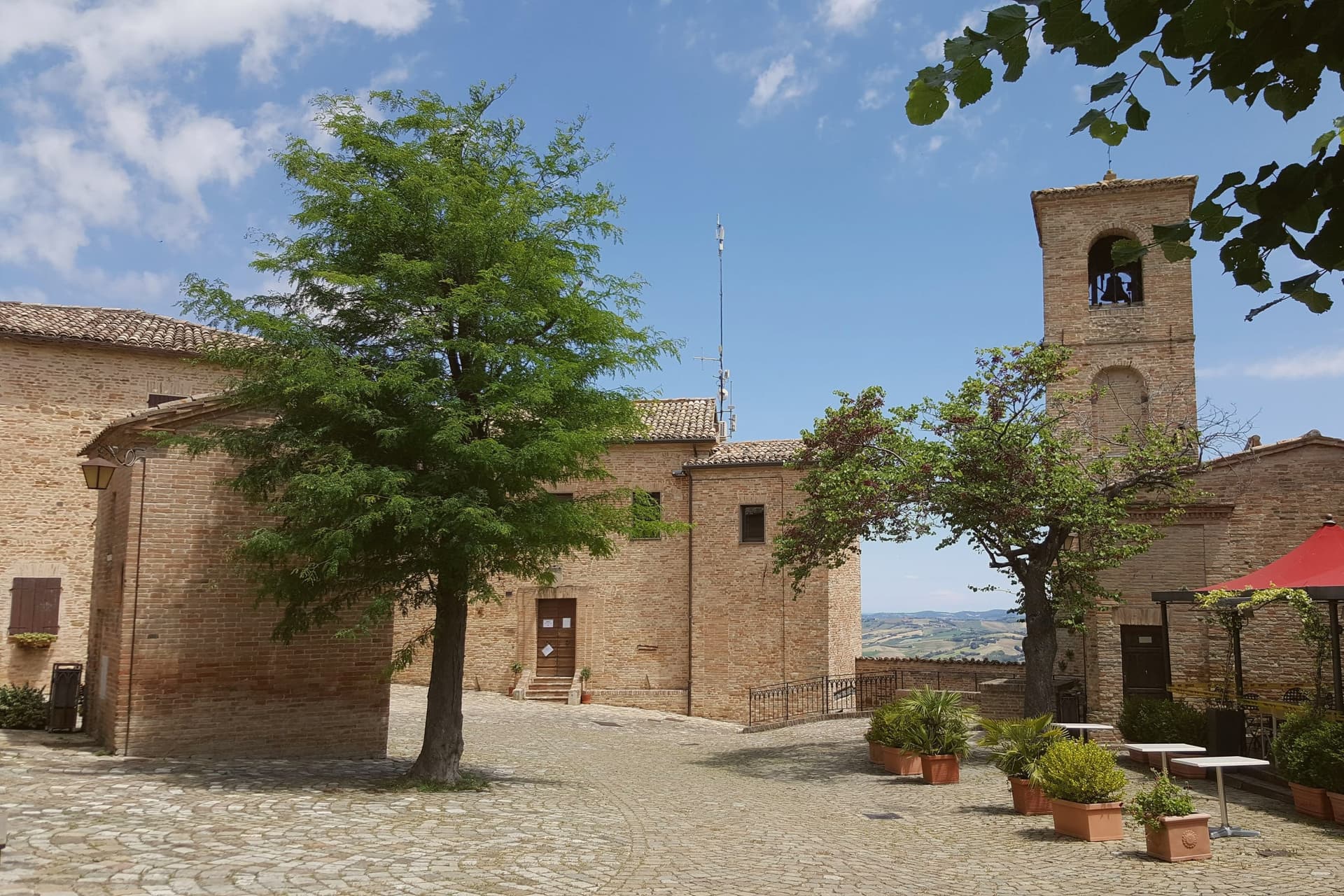
 The 6 best small hill towns that eat well in Marche6 towns, Acqualagna among them.
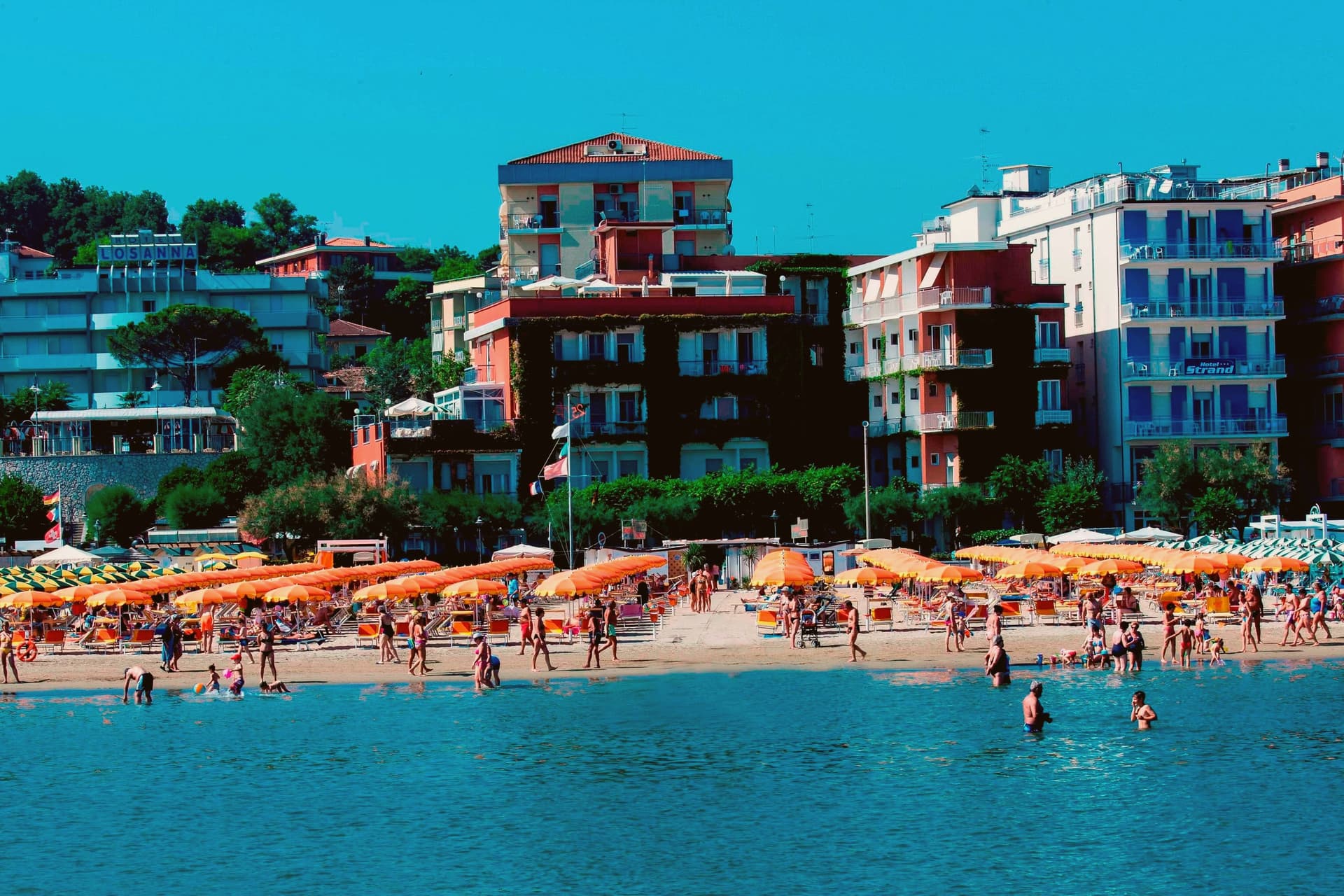
 The best hill towns that eat well within 90 minutes of Rimini6 towns, Acqualagna among them.
 The best towns with a serious restaurant in the province of Pesaro e Urbino6 towns, Acqualagna among them.
How to get there
From Ancona / Pescara (AOI), about 1h 21m by car.
Rimini (RMI) is about 1h 36m away.
By car from the centre of Perugia 1h 30m or Ancona 1h 33m.
There is a railway station in the comune, so you can arrive without a car.
Coming from Florence or Bologna?
Coming by train into Rimini? Acqualagna is about 1h 20m away by road.
What to see
Gola del Furlo
The gorge narrows between Monte Paganuccio (977 m) and Monte Pietralata (888 m); the 38-meter Roman tunnel, cut in 76 AD, is still driven through by the Via Flaminia today.
Abbazia di San Vincenzo al Furlo
Medieval Benedictine monastery set into the slopes above the gorge, counted among the oldest religious foundations in the Metauro valley.
Riserva Naturale Statale Gola del Furlo
Nature reserve established in 2001, covering 3,600 hectares of woodland, grazing land and ridgeline above the river.
Fiera Nazionale del Tartufo Bianco
Held the last weekend of October and the two following, the central event in the Italian white truffle trade.
The slow-trip planner
Building a trip? Find where Acqualagna fits in a slow Italy circuit.
Answer five questions. We will shape a geographically coherent slow trip from the 1,000 Italian towns most travelers skip. Yours to save and share.
We recommend
Where to eat
Not our picks, but places the guides put their name to: a Michelin star, a Gambero Rosso fork, a Slow Food snail, a Michelin Key for the hotels. Worth a table, a counter, or a night when you pass through.
AnticofurloRistorante
Anticofurlo has a spot in the Michelin Guide to its name.
Through the year
What happens here
Feasts and festivals that come back year after year. We give the month rather than the date, because the date moves and the month rarely does. Check with the source before you plan a journey around one.
Fiera Regionale del Tartufo d'Estatemarket
usually held in August. lemarche.it
Mercato Settimanale Di Acqualagnamarket
usually held in October. eventiesagre.it
Living here
- Population 4,151
- In-betweeni
- Pharmacy in town
- High school within a 30-minute drive
- Train station in the comune
- Nearest airport Ancona / Pescara, 1 h 21 min drive
- Regional capital Ancona, 1 h 33 min drive
Common questions
- What is Acqualagna known for?
- Acqualagna is the Italian truffle capital at 204 meters in the Metauro valley, supplying two-thirds of the country's white truffle harvest from the surrounding limestone woods.
- Where is Acqualagna?
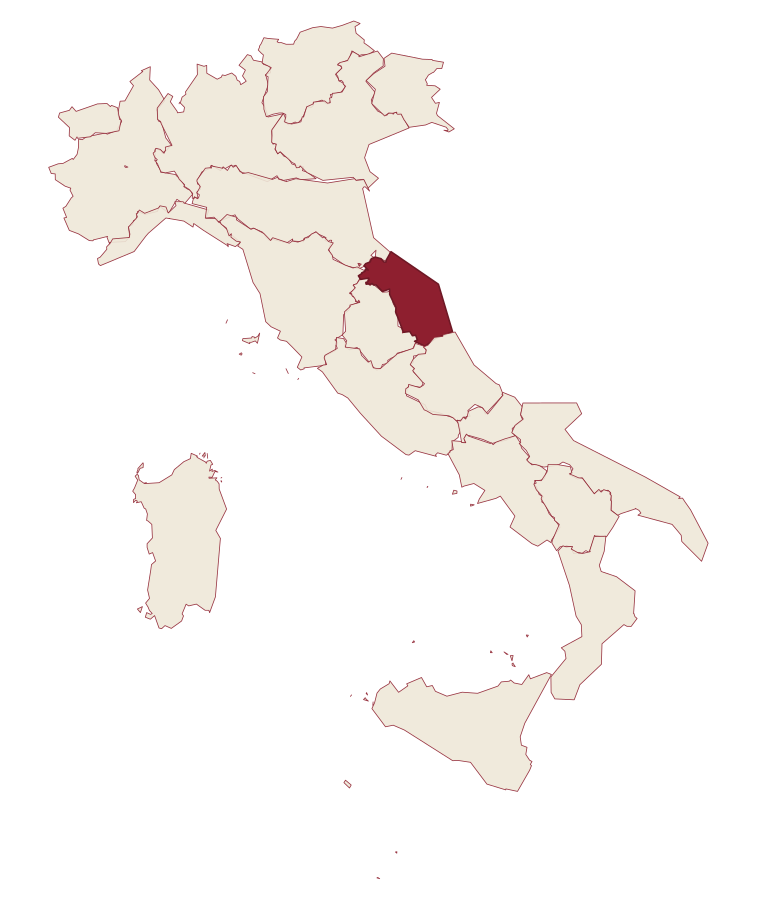
- Acqualagna is a comune in the province of Pesaro e Urbino, in Marche.
- What is the nearest airport to Acqualagna?
- Ancona / Pescara (AOI), about 1h 21m by car.
- Can you get to Acqualagna without a car?
- Yes. There is a railway station in the comune, so you can arrive by train.
- How long is the drive from Perugia to Acqualagna?
- About 1h 30m by car.
- When is the best time to visit Acqualagna?
- Best in Apr–Oct. July is the warmest month, averaging 32 degrees, and May the wettest, with about 12 rain days.
- Is there a sagra or a festival in Acqualagna?
- Yes. Fiera Regionale del Tartufo d'Estate and Mercato Settimanale Di Acqualagna. August is when the first of them falls.
- Which other towns are like Acqualagna?
- Città della Pieve, Magliano Sabina and Castro dei Volsci.
- How many people live in Acqualagna?
- 4,151 at the 2023 count.
Tags & datadesignations · numbers · sources
Recognised as
The numbers
- Elevation: 204 m
- Population: 4,151
- Surface area: 50.69 km²
These figures were compiled from public directories: ISTAT, OpenStreetMap and Wikidata, and from the official listings of the guides named on this page. Town details change; verify with official sources before you travel.
Similar
Towns like Acqualagna
Città della Pieve
Province: Perugia
both inland, away from the coast · both between 3,000 and 10,000 people
Magliano Sabina
Province: Rieti
both inland, away from the coast · both between 3,000 and 10,000 people
Castro dei Volsci
Province: Frosinone
both inland, away from the coast · both between 3,000 and 10,000 people
Pontremoli
Province: Massa-Carrara
both inland, away from the coast · both between 3,000 and 10,000 people
Gattinara
Province: Vercelli
both inland, away from the coast · both between 3,000 and 10,000 people
Lucignano
Province: Arezzo
both inland, away from the coast · both between 3,000 and 10,000 people
🐌 Cittaslow
More Cittaslow towns
Città Sant'Angelo
Province: Pescara
A hilltop borgo at 320 meters between the Vestina hills and the Adriatic, named for the Archangel and known since 1352 as a Collegiata seat.
Controguerra
Province: Teramo
A 267-meter hill village whose name is legal shorthand for a small Montepulciano and Trebbiano-Passerina DOC.
Guardiagrele
Province: Chieti
The 576-meter terrazza d'Abruzzo on the Majella's foothills, hometown of fifteenth-century goldsmith Nicola da Guardiagrele and seat of the Majella park.
Penne
Province: Pescara
The brick city at 438 meters between the Tavo and Fino, ancient capital of the Vestini, rebuilt after Allied bombing and awarded the Silver Medal of Civic Merit.
Pianella
Province: Pescara
A Cittaslow hill town at 236 meters between the Tavo and Pescara rivers, anchor of the Aprutino oil triangle and home of the dritta olive.