
Apulia · Foggia
Bovino
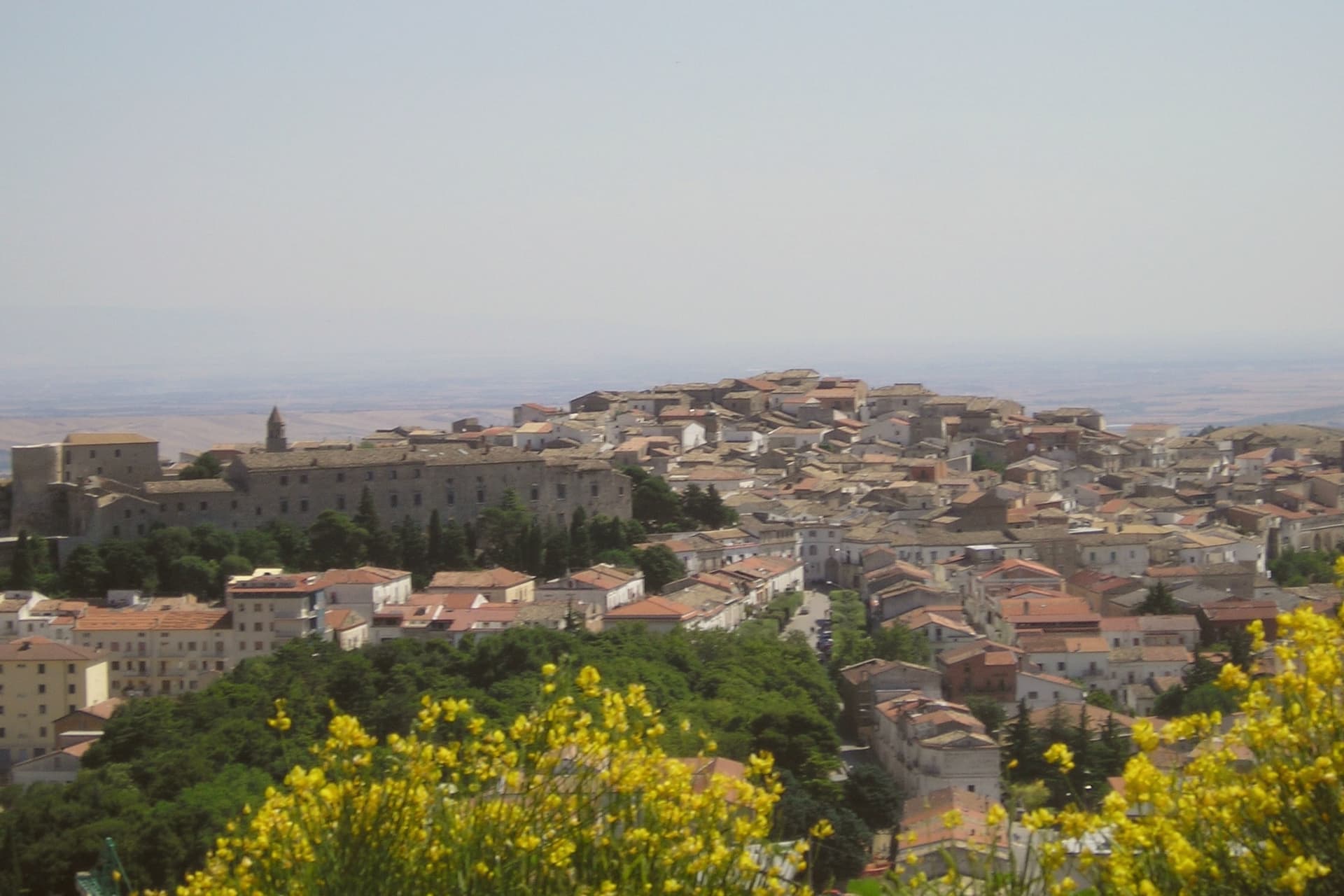
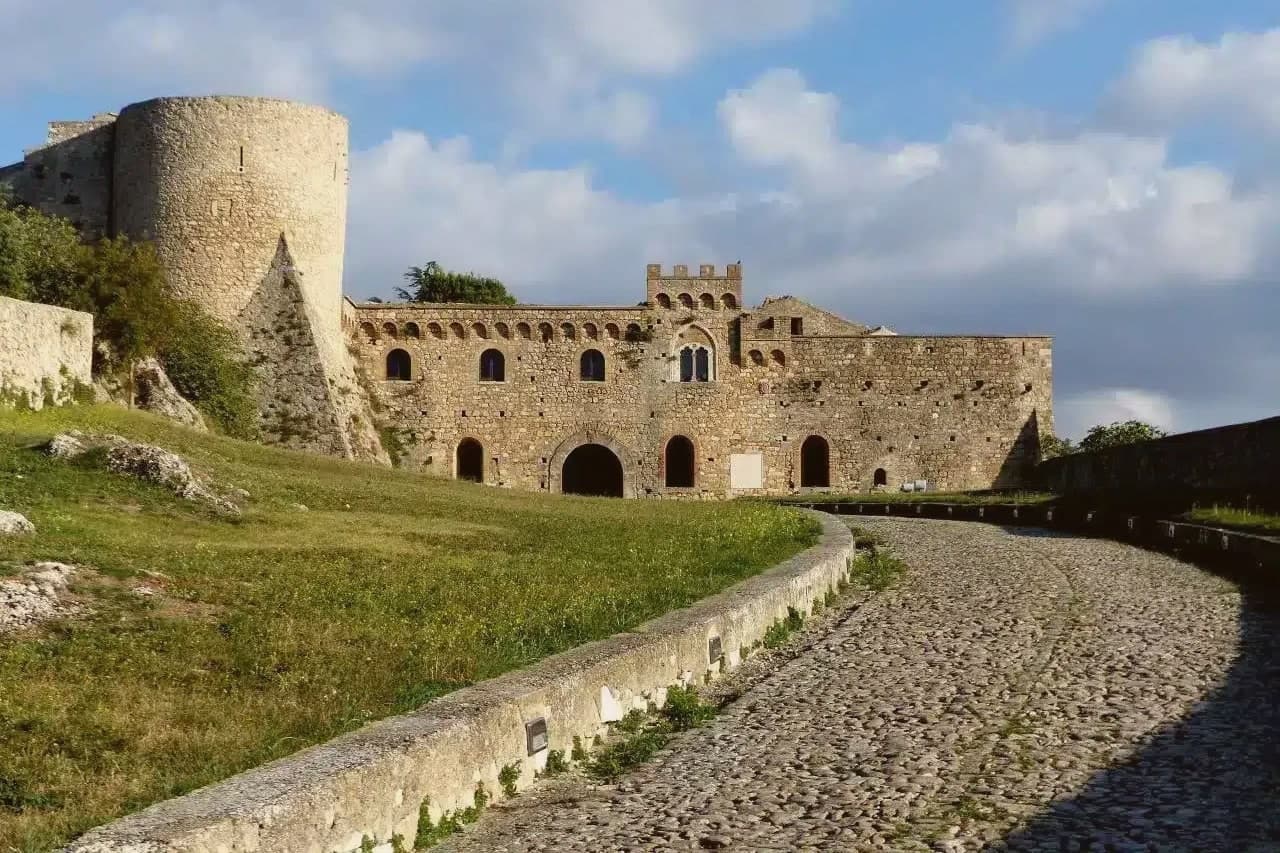
A Daunian Mountains hill town at 646 meters above the Cervaro valley, Roman Vibinum, with a Norman-Swabian castle later turned into a Guevara ducal palace.
- Best time
- May–Oct
- By car
- 1 h 43 min from Bari
- By train
- Station in the comune
- Population
- 2,973
Known for
DUCAL PALACE
Norman-Swabian castle turned Guevara residence, host to Torquato Tasso, Maria Theresa of Austria, and Pope Benedict XIII before 1961.
STONE PORTALS
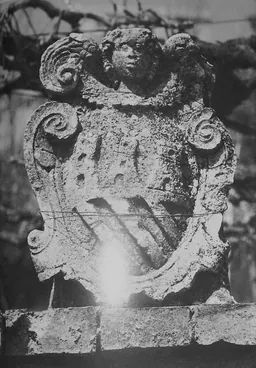
Eight hundred sculpted house portals across the centro storico, carved by local masters, the signature detail of the medieval town.
VIBINUM
Roman town mentioned by Pliny and Polybius, fought the Samnite Wars in 323 BC, two thousand years of continuous occupation.
When to visit
Best · May–Oct
- J9°
- F11°
- M12°
- A15°
- M20°
- J27°
- J31°
- A30°
- S25°
- O20°
- N14°
- D11°
- Best
- Hot or crowded
- Quiet
- Mostly closed
Daytime averages, 2020–2024. Weather data by Open-Meteo.com.
Why come
Bovino sits at 646 meters on a terrace of the Monti Dauni above the Cervaro valley, thirty-five kilometers southwest of Foggia. The Roman name Vibinum is recorded by Pliny and Polybius; in 323 BC the town fought the Samnite Wars on the Roman side. The Norman count Drogo built the castle in the eleventh century, Frederick II expanded it in the thirteenth, and the Guevara dukes turned it into a residential palace in the seventeenth century, inhabited by the family until 1961.
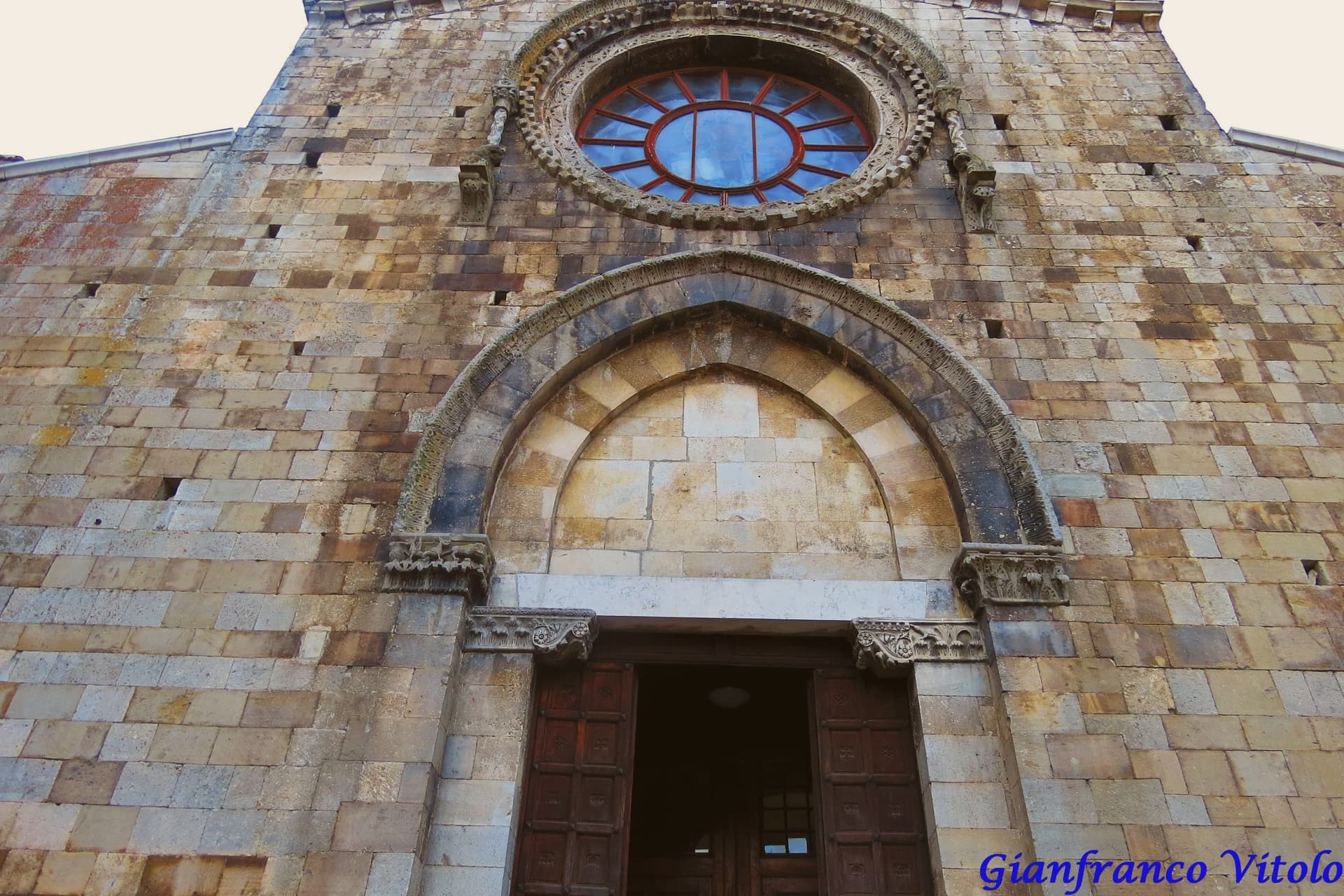
The coffered ceilings and the hanging garden hosted Torquato Tasso, Giovan Battista Marino, Maria Theresa of Austria, and Pope Benedict XIII. The concattedrale of Santa Maria Assunta, originally built in 1231 in Apulian Romanesque style, was destroyed by the 1930 Irpinia earthquake and reconsecrated in 1936. Eight hundred sculpted stone portals across the centro storico are the work of local masters; the town carries both Borghi più belli and Bandiera Arancione signals.
The Sunday letter
Bovino is on our list. Its letter is still to come.
We are writing about all 1,000 of these towns, one at a time, in a free letter every Sunday: the photo, the food, the festa. That is our mission. Sign up and you will be there when Bovino comes up. By Peter & Sophia, from Pietrasanta.
Read on
Bovino in our articles
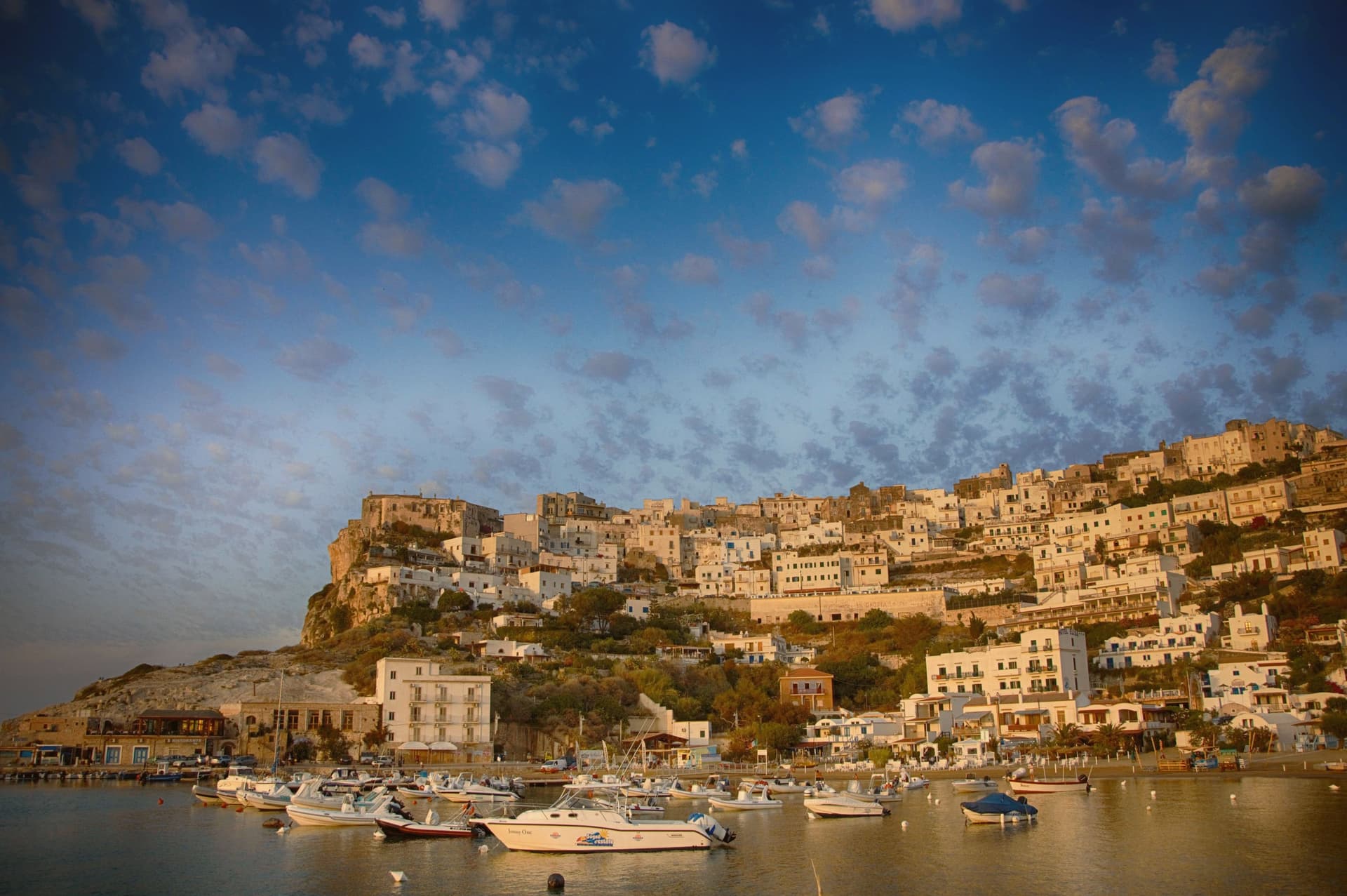
 The prettiest small villages within 90 minutes of Foggia6 towns, Bovino among them.
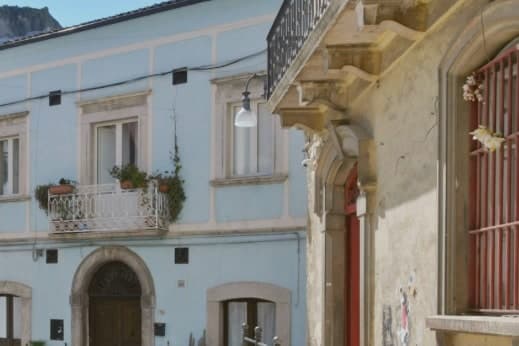
 The best towns that eat well in the province of Foggia7 towns, Bovino among them.
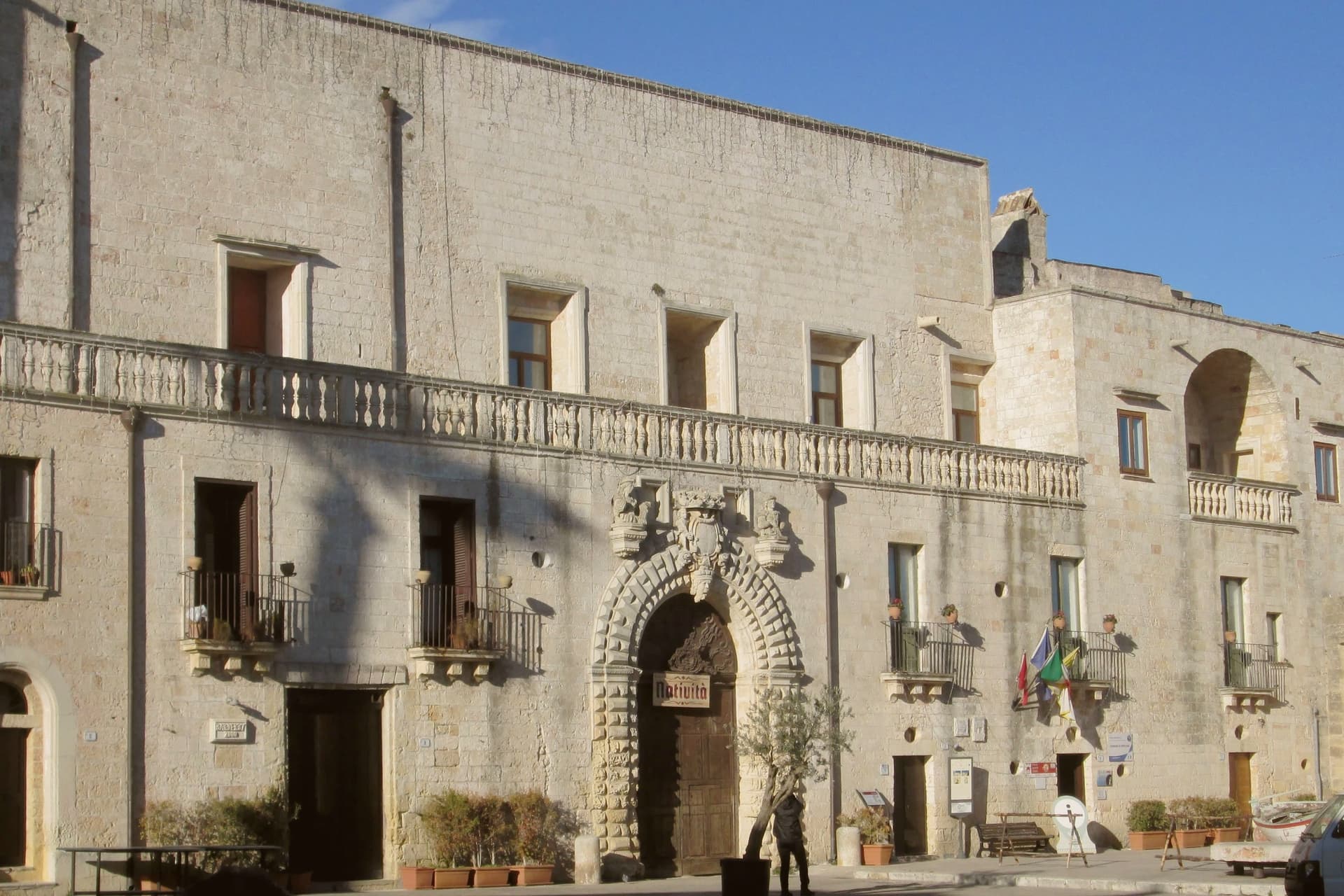
 The best towns you can reach by train that eat well within 90 minutes of Foggia8 towns, Bovino among them.
 The prettiest villages you can reach by train in Puglia8 towns, Bovino among them.
How to get there
From Bari / Brindisi (BRI), about 1h 40m by car.
Naples / Salerno (NAP) is about 2 hours away.
By car from the centre of Bari 1h 43m, Salerno 2 hours or Naples 2 hours.
There is a railway station in the comune, so you can arrive without a car.
Coming by train into Foggia? Bovino is about 38 minutes away by road.
What to see
Castello Ducale (Palazzo dei Guevara)
Norman castle built by Count Drogo, expanded by Frederick II, turned into a Guevara ducal palace in the seventeenth century and inhabited until 1961.
Concattedrale di Santa Maria Assunta
Romanesque cathedral of 1231, destroyed by the 1930 Irpinia earthquake and reconsecrated in 1936, co-cathedral of the Archdiocese of Foggia-Bovino.
Centro storico
Medieval hilltop village with eight hundred sculpted stone portals carved by local masters, ringed by the surviving walls of the castrum.
Belvedere sul Cervaro
Panoramic terrace above the Cervaro valley, the Tavoliere visible to the east and the Daunian peaks rising west.
The slow-trip planner
Building a trip? Find where Bovino fits in a slow Italy circuit.
Answer five questions. We will shape a geographically coherent slow trip from the 1,000 Italian towns most travelers skip. Yours to save and share.
We recommend
Where to eat
Not our picks, but places the guides put their name to: a Michelin star, a Gambero Rosso fork, a Slow Food snail, a Michelin Key for the hotels. Worth a table, a counter, or a night when you pass through.
Agriturismo Piana della MandrieAgriturismo
Agriturismo Piana della Mandrie holds a Gambero Rosso listing.
Living here
- Population 2,973
- In-betweeni
- Pharmacy in town
- High school within a 30-minute drive
- Train station in the comune
- Nearest airport Bari / Brindisi, 1 h 40 min drive
- Market day Saturday
- Regional capital Bari, 1 h 43 min drive
Common questions
- What is Bovino known for?
- Bovino is a Daunian Mountains hill town at 646 meters above the Cervaro valley, Roman Vibinum, with a Norman-Swabian castle later turned into a Guevara ducal palace.
- Where is Bovino?
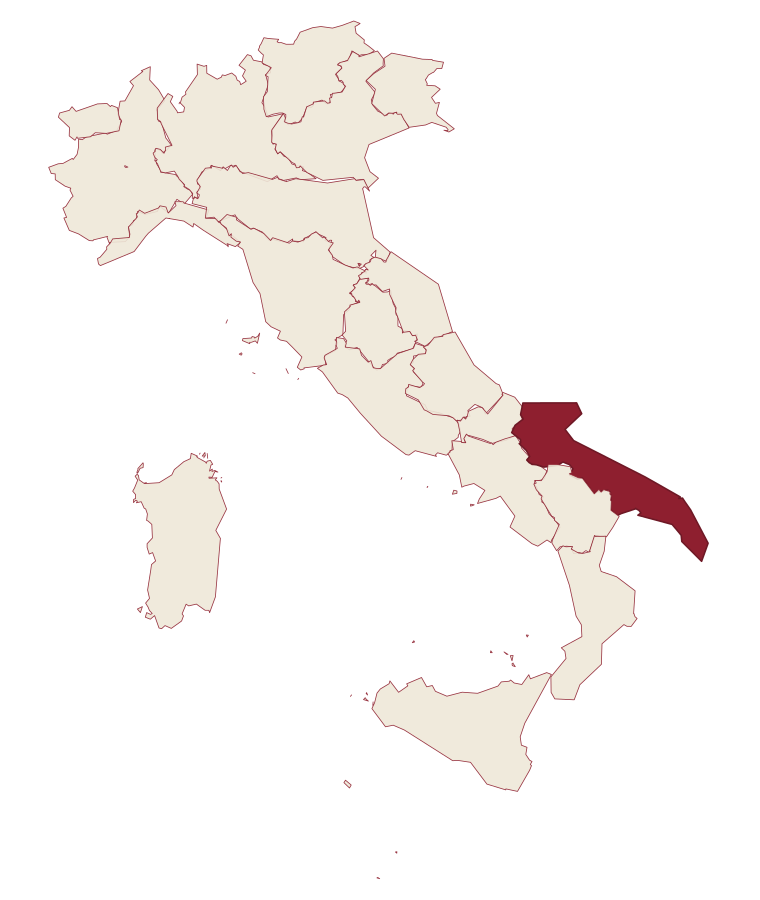
- Bovino is a comune in the province of Foggia, in Apulia.
- What is the nearest airport to Bovino?
- Bari / Brindisi (BRI), about 1h 40m by car.
- Can you get to Bovino without a car?
- Yes. There is a railway station in the comune, so you can arrive by train.
- How long is the drive from Bari to Bovino?
- About 1h 43m by car.
- When is the best time to visit Bovino?
- Best in May–Oct. July is the warmest month, averaging 31 degrees, and November the wettest, with about 14 rain days.
- Which other towns are like Bovino?
- Garessio, Fortezza and Sante Marie.
- How many people live in Bovino?
- 2,973 at the 2023 count.
Tags & datadesignations · numbers · sources
Recognised as
The numbers
- Elevation: 646 m
- Population: 2,973
- Surface area: 84.93 km²
These figures were compiled from public directories: ISTAT, OpenStreetMap and Wikidata, and from the official listings of the guides named on this page. Town details change; verify with official sources before you travel.
Similar
Towns like Bovino
Garessio
Province: Cuneo
both mountain-valley towns · both under 3,000 people
Fortezza
Province: Bolzano
both mountain-valley towns · both under 3,000 people
Sante Marie
Province: L'Aquila
both mountain-valley towns · both under 3,000 people
Acerenza
Province: Potenza
both mountain-valley towns · both under 3,000 people
Castiglione di Sicilia
Province: Catania
both mountain-valley towns · both under 3,000 people
Scurcola Marsicana
Province: L'Aquila
both mountain-valley towns · both under 3,000 people
🎨 Borghi più belli d'Italia
More Borghi più belli d'Italia towns in Apulia
Cisternino
Province: Brindisi
An Itria valley borgo on the southern Murgia at 394 meters, whitewashed and looking down over drystone walls and trulli.
Gravina in Puglia
Province: Bari
Puglia's deepest gravina: a Bari-province town of 42,700 built on the lip of a 100m-deep limestone canyon, its cliffs threaded with rupestrian cave churches.
Locorotondo
Province: Bari
The round white town on the Itria valley ridge at 410 meters, with cummerse roofs the rest of Puglia does not have.
Maruggio
Province: Taranto
A fortified Borghi più Belli borgo on a low Ionian hill in Taranto province, built around a Knights of Malta commanderie that ran the Order's southern Italian affairs for six centuries.
Monte Sant'Angelo
Province: Foggia
The Gargano peak at 843 meters, the oldest western shrine to an archangel, UNESCO since 2011.