
Marche · Pesaro e Urbino
Urbino
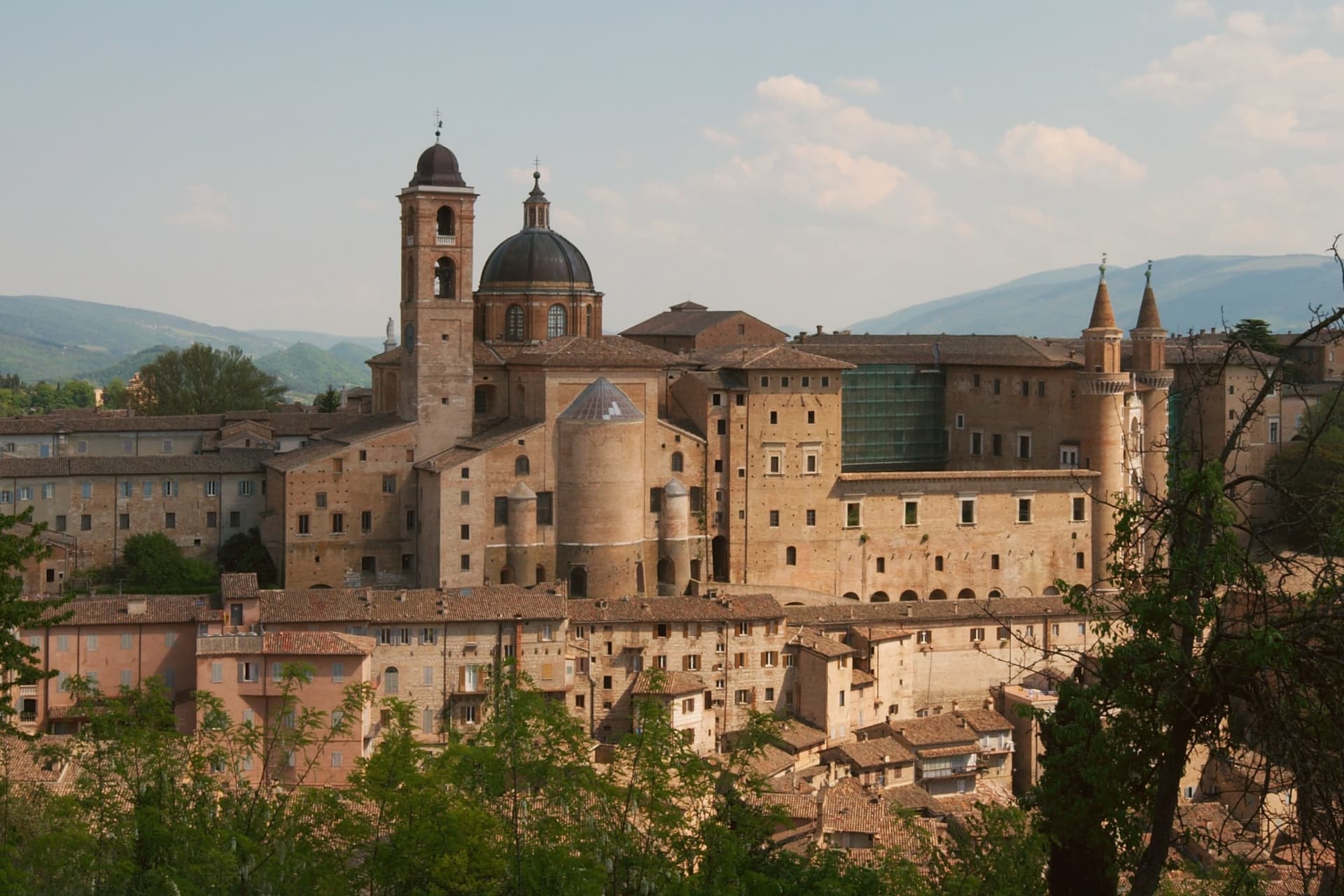
The Montefeltro capital on twin hills, where Federico II built the Renaissance court that produced Raffaello.
- Best time
- Apr–Oct
- By car
- 1 h 6 min from Rimini
- By train
- Station in the comune
- Population
- 13,734
Known for
PALAZZO DUCALE
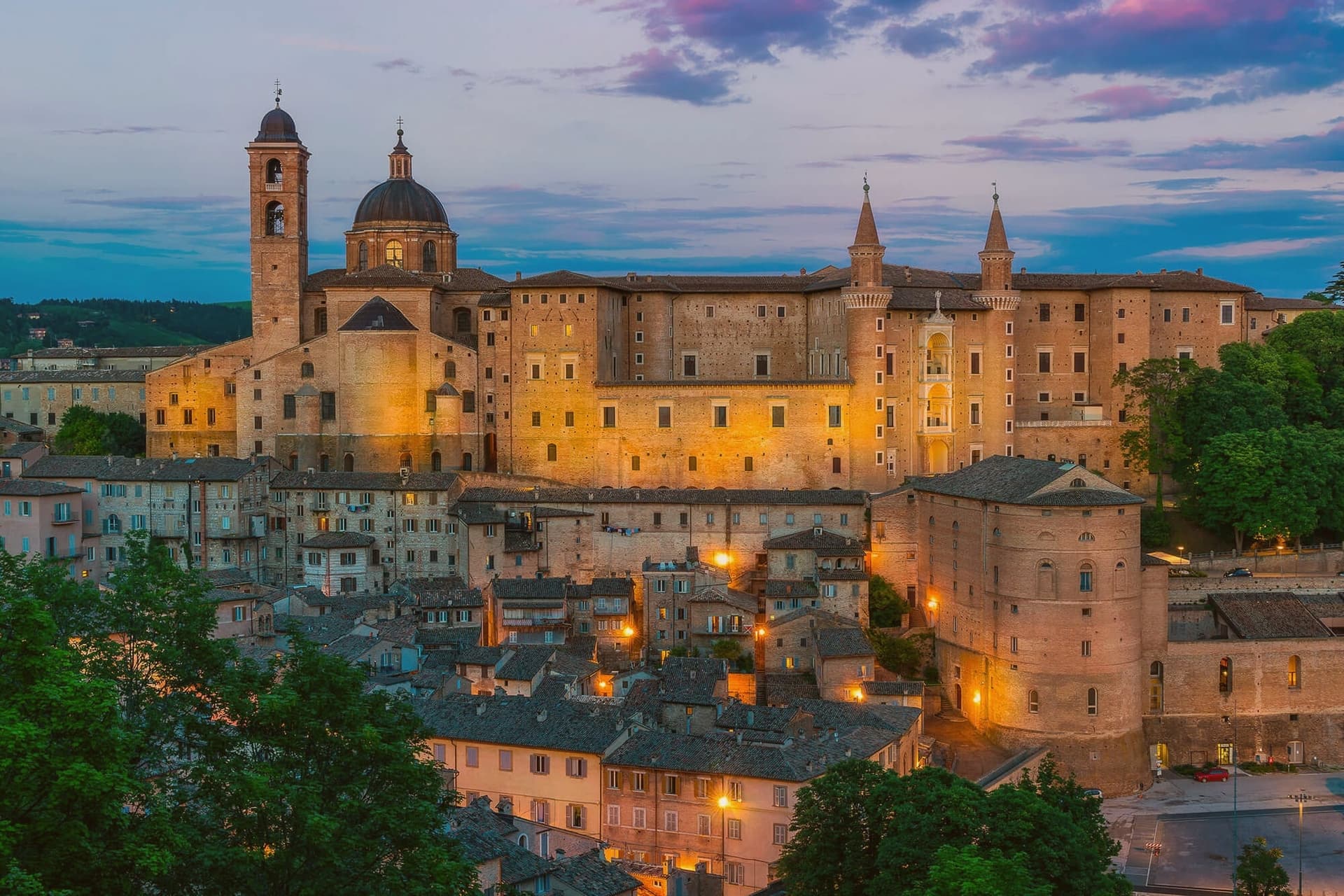
Federico II da Montefeltro's court, completed by Luciano Laurana with the twin torricini facade, now home to the Galleria Nazionale delle Marche.
RAFFAELLO
Born in Urbino in 1483 in the workshop of his father Giovanni Santi; his birthplace on Via Raffaello is now a small museum.
UNESCO 1998
Inscribed for the Renaissance ensemble of Palazzo Ducale, centro storico and the surrounding Montefeltro landscape as a near-intact Quattrocento city.
When to visit
Best · Apr–Oct
- J9°
- F11°
- M13°
- A16°
- M21°
- J27°
- J30°
- A29°
- S24°
- O19°
- N13°
- D10°
- Best
- Hot or crowded
- Quiet
- Mostly closed
Daytime averages, 2020–2024. Weather data by Open-Meteo.com.
The festa: Crescentino di Città di Castello, 1 June
Why come
Urbino sits in the Apennine foothills, seventy kilometers north of Perugia, its historic core spread across twin hills with the fortress on the higher of the two and the palace complex below on the other. Federico II da Montefeltro ruled from 1444 to 1482, and under him the town became one of the central courts of the Italian Renaissance: he was condottiere, diplomat, patron and humanist at once, and the building campaign he set running through the 1450s to the 1470s, first under Maso di Bartolomeo, gave the city the asymmetric silhouette that still defines it from a distance. The university, founded in 1506, keeps that Renaissance investment active in the present rather than fossilized: the centro storico holds roughly 14,000 residents and around 14,000 enrolled students, so the old town runs on a population it did not have in the fifteenth century.
The two hills, the ducal seat and the fortress above it, read as the same civic project seen from two elevations: one built to project a court outward, the other to hold the higher ground behind it. What the 1998 inscription recognizes is that this pairing, court and citadel, survives largely as Federico left it.
The Sunday letter
Urbino is on our list. Its letter is still to come.
We are writing about all 1,000 of these towns, one at a time, in a free letter every Sunday: the photo, the food, the festa. That is our mission. Sign up and you will be there when Urbino comes up. By Peter & Sophia, from Pietrasanta.
Read on
Urbino in our articles
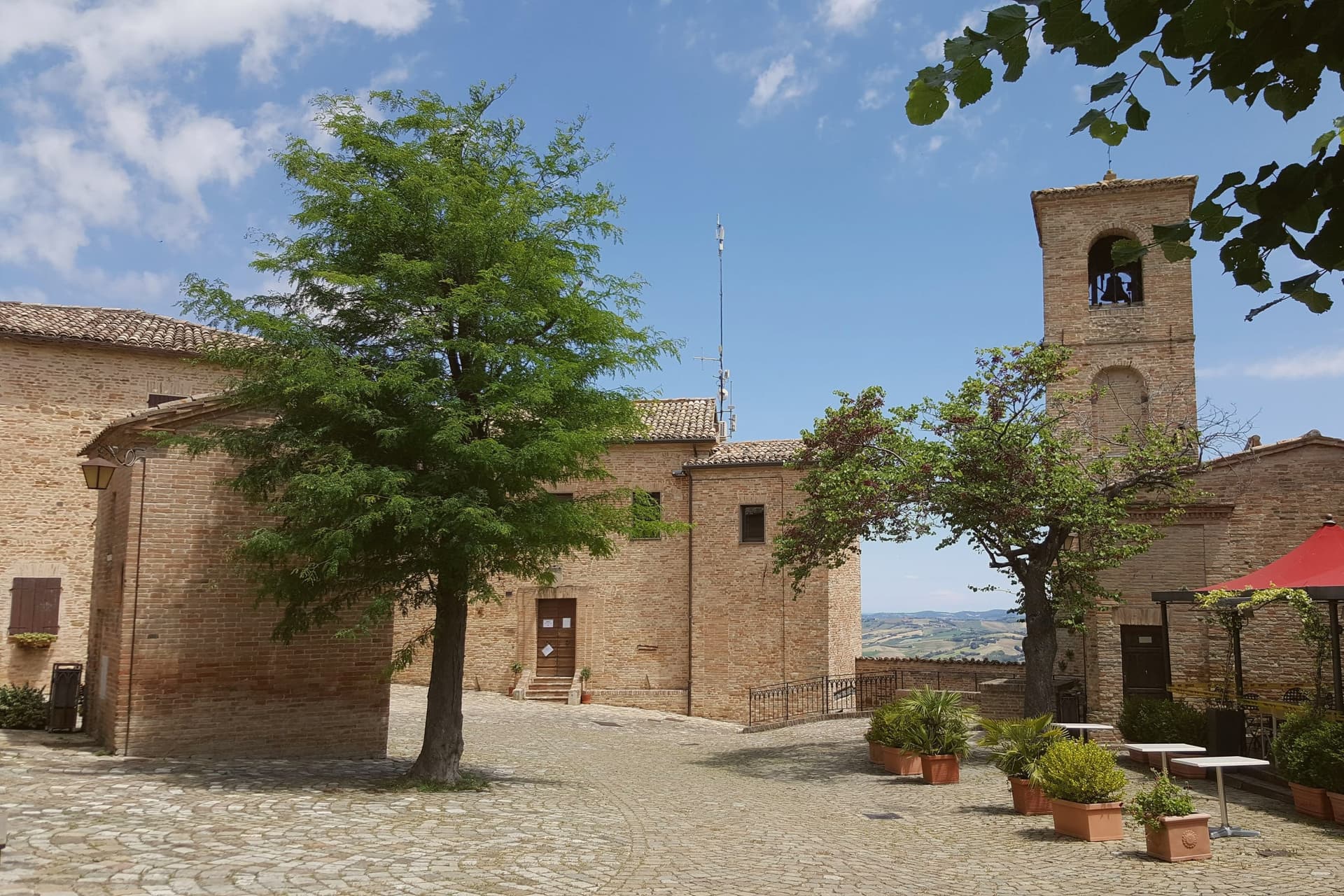
 The 6 best hidden hill towns with a serious restaurant in Marche6 towns, Urbino among them.
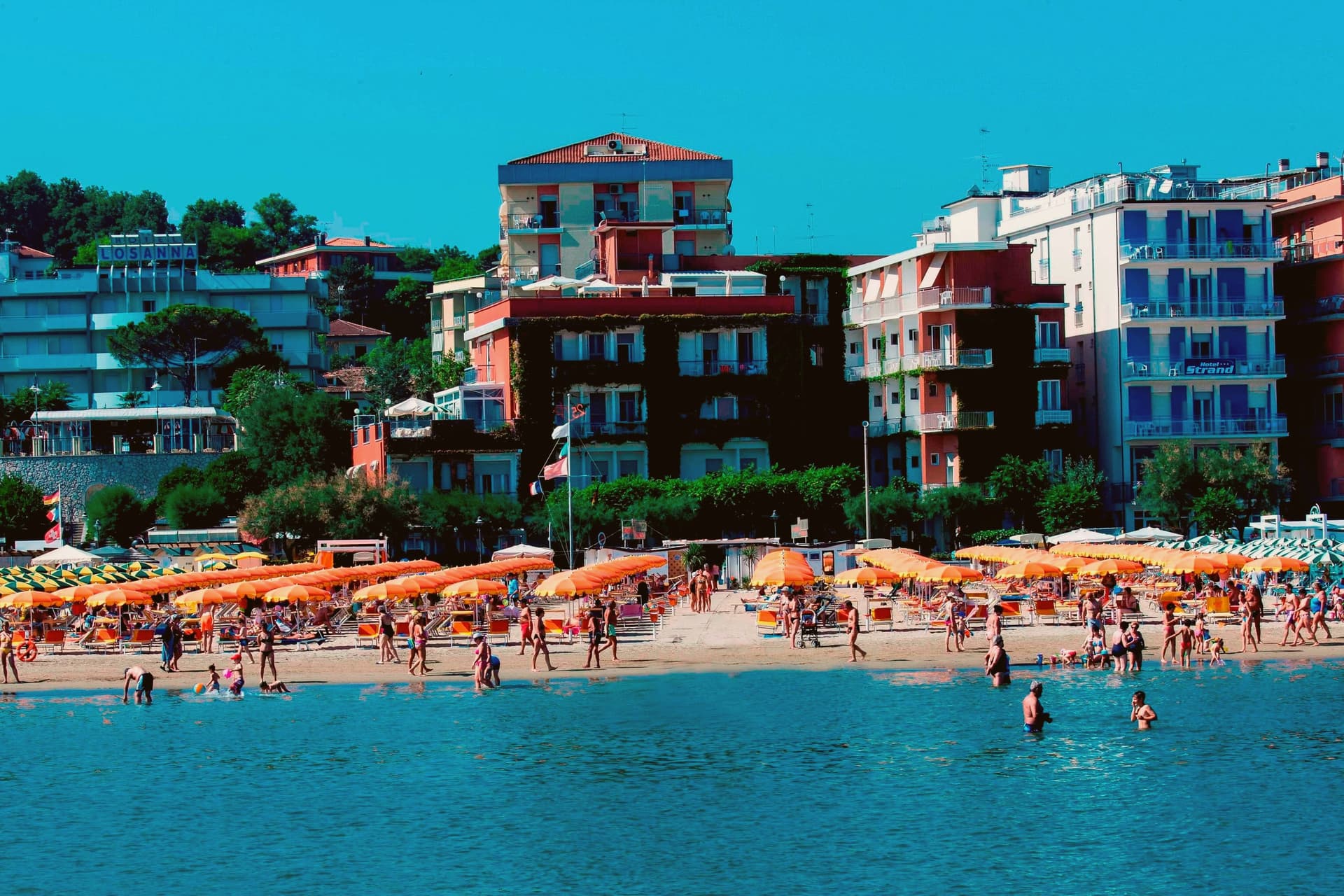
 The best hill towns that eat well within 90 minutes of Rimini6 towns, Urbino among them.
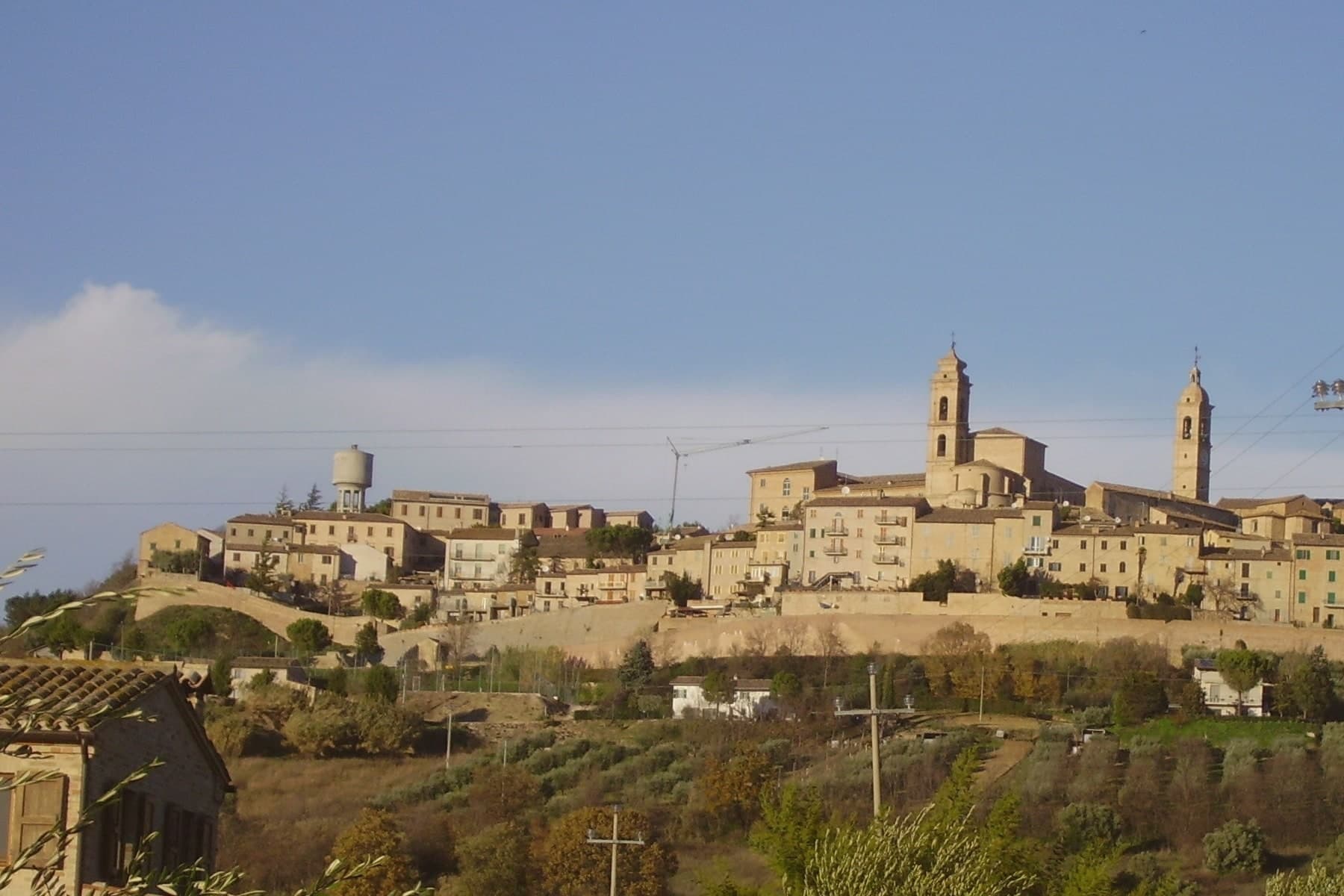
 The best towns with a serious restaurant in the province of Pesaro e Urbino6 towns, Urbino among them.
 The best hidden towns you can reach by train that eat well in Marche8 towns, Urbino among them.
How to get there
From Rimini (RMI), about 1h 20m by car.
Ancona / Pescara (AOI) is about 1h 21m away.
By car from the centre of Ancona 1h 33m or Perugia 1h 45m.
Driving in is restricted: there is a limited traffic zone here (ZTL Urbino). Check the signs and the times before you drive into the centre.
There is a railway station in the comune, so you can arrive without a car.
Coming from Bologna?
Coming by train into Rimini? Urbino is about 1 hour away by road.
What to see
Palazzo Ducale
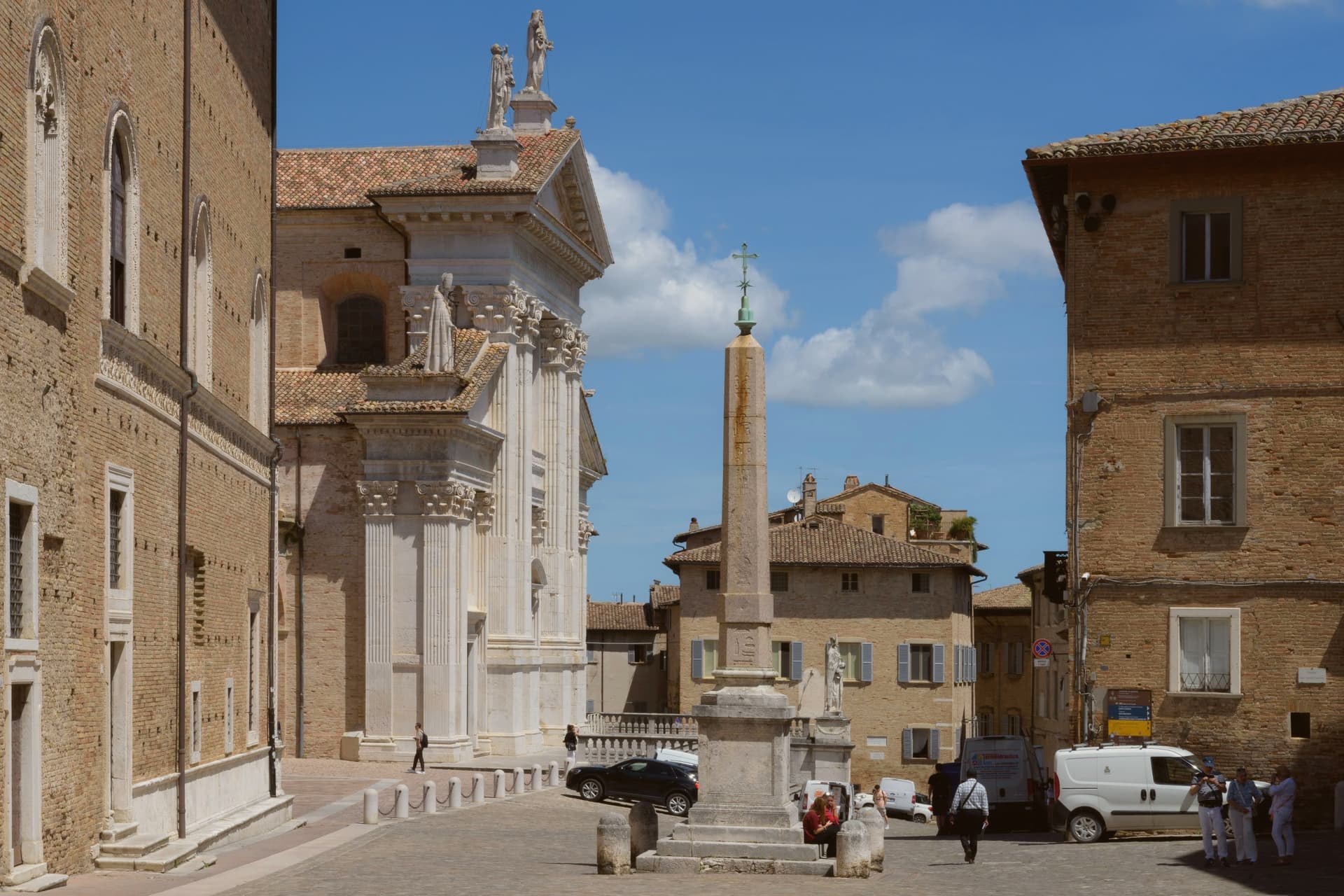
Federico da Montefeltro's Renaissance palace begun 1444, completed by Luciano Laurana with the twin torricini facade, now housing the Galleria Nazionale delle Marche.
Galleria Nazionale delle Marche
One of the most important Renaissance painting collections in Italy, with Raffaello, Piero della Francesca's Flagellazione and Madonna di Senigallia, Paolo Uccello and Tiziano.
Casa Natale di Raffaello
Fifteenth-century house on Via Raffaello where the painter was born in 1483 in the workshop of his father Giovanni Santi, now a museum of the early years.
Duomo di Urbino
Neoclassical cathedral begun in 1789 by Giuseppe Valadier on the site of an earlier church damaged by the 1781 earthquake, standing opposite the ducal palace.
Oratorio di San Giovanni Battista
Small oratory with a complete fresco cycle painted by the brothers Lorenzo and Jacopo Salimbeni in 1416, one of the masterpieces of late Gothic narrative painting.
Fortezza Albornoz
Fourteenth-century fortress on the higher of the two hills, built for Cardinal Albornoz, with a panoramic terrace looking back toward the palace and its towers.
The slow-trip planner
Building a trip? Find where Urbino fits in a slow Italy circuit.
Answer five questions. We will shape a geographically coherent slow trip from the 1,000 Italian towns most travelers skip. Yours to save and share.
We recommend
Where to eat
Not our picks, but places the guides put their name to: a Michelin star, a Gambero Rosso fork, a Slow Food snail, a Michelin Key for the hotels. Worth a table, a counter, or a night when you pass through.
PortanovaRistorante
Portanova carries two Gambero Rosso forks (82/100), plus a spot in the Michelin Guide.
Living here
- Population 13,734
- In-betweeni
- Pharmacy in town
- High school within a 30-minute drive
- Train station in the comune
- Nearest airport Rimini, 1 h 20 min drive
- Regional capital Ancona, 1 h 33 min drive
Common questions
- What is Urbino known for?
- Urbino is the Montefeltro capital at 451 meters on twin hills, where Federico II built the Renaissance court that produced Raffaello.
- Where is Urbino?
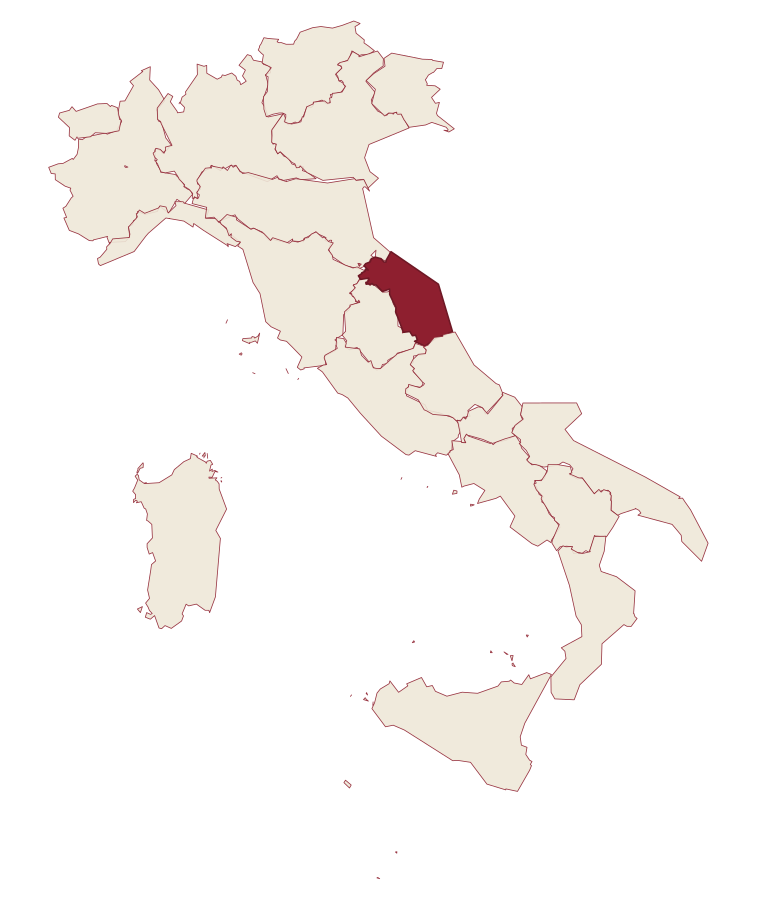
- Urbino is a comune in the province of Pesaro e Urbino, in Marche.
- What is the nearest airport to Urbino?
- Rimini (RMI), about 1h 20m by car.
- Can you get to Urbino without a car?
- Yes. There is a railway station in the comune, so you can arrive by train.
- How long is the drive from Ancona to Urbino?
- About 1h 33m by car.
- When is the best time to visit Urbino?
- Best in Apr–Oct. July is the warmest month, averaging 30 degrees, and May the wettest, with about 13 rain days.
- Is there a sagra or a festival in Urbino?
- The town keeps its patron saint's day: Crescentino di Città di Castello, 1 June.
- Which other towns are like Urbino?
- San Severino Marche, Todi and Castiglion Fiorentino.
- How many people live in Urbino?
- 13,734 at the 2023 count.
Tags & datadesignations · numbers · sources
Recognised as
The numbers
- Elevation: 451 m
- Population: 13,734
- Surface area: 226.5 km²
These figures were compiled from public directories: ISTAT, OpenStreetMap and Wikidata, and from the official listings of the guides named on this page. Town details change; verify with official sources before you travel.
Similar
Towns like Urbino
San Severino Marche
Province: Macerata
both inland, away from the coast · both over 10,000 people
Todi
Province: Perugia
both inland, away from the coast · both over 10,000 people
Castiglion Fiorentino
Province: Arezzo
both inland, away from the coast · both over 10,000 people
Anagni
Province: Frosinone
both inland, away from the coast · both over 10,000 people
Nizza Monferrato
Province: Asti
both inland, away from the coast · both over 10,000 people
Sermoneta
Province: Latina
both inland, away from the coast · both over 10,000 people
🏛️ UNESCO
More UNESCO towns
Matera
Province: Matera
Cave dwellings carved into limestone since the Paleolithic, called the shame of Italy in the 1950s and made European Capital of Culture in 2019.
Amalfi
Province: Salerno
The first Italian maritime republic and the coast it named, six meters above the sea between cliffs that close around the duomo's steps.
Ascea
Province: Salerno
Two villages, a hilltown at 230 meters and a Cilento marina, with Parmenides and Zeno's Eleatic school in the ruins of Greek Velia below.
Atrani
Province: Salerno
The smallest commune in Italy by area, twelve hectares of stacked houses where the Amalfi Coast pinches shut around a single piazza.
Benevento
Province: Benevento
Sannio capital at the Calore-Sabato confluence, with a 114 AD Trajan arch and a Lombard rotunda on the UNESCO list.