
Umbria · Perugia
Spello
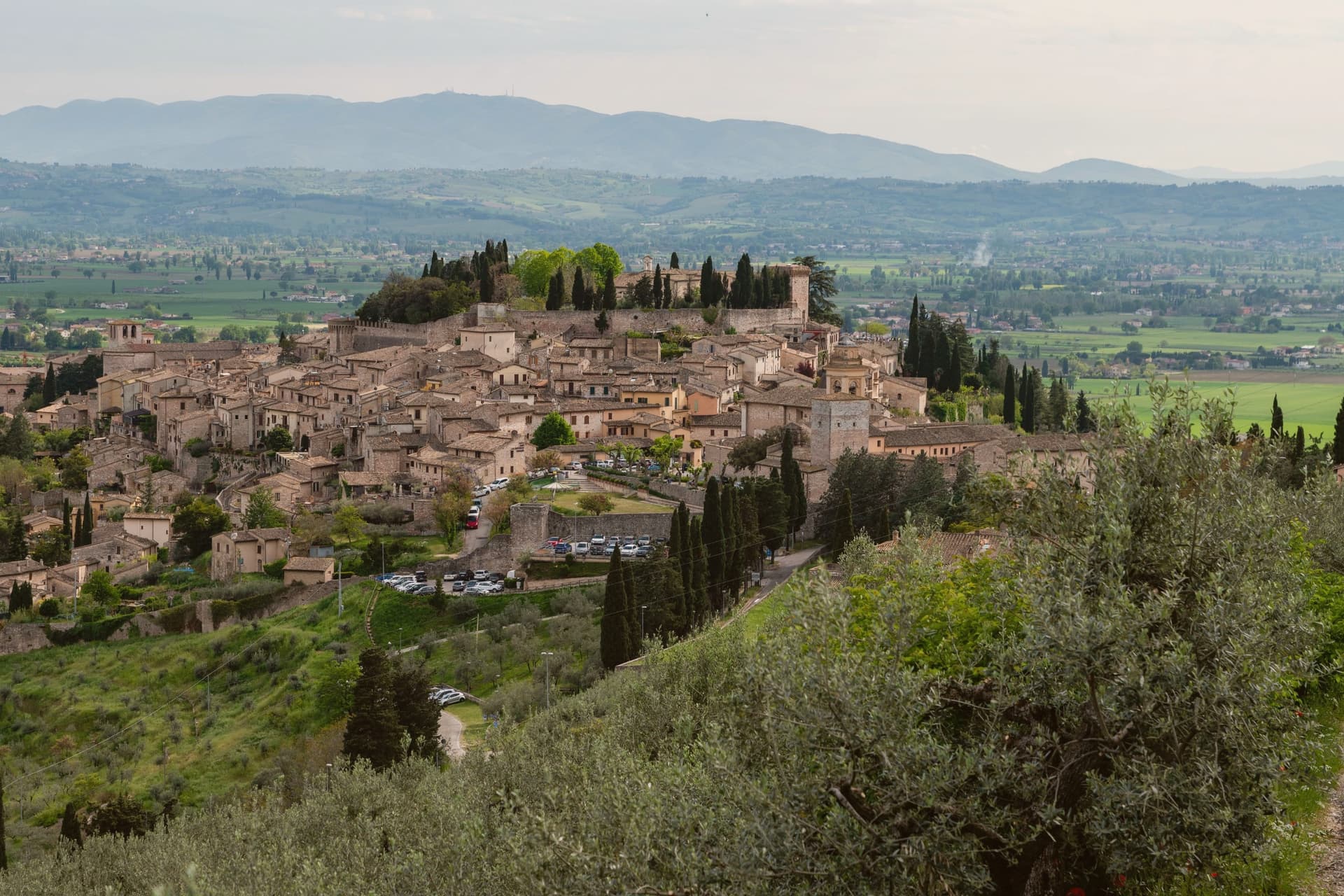
Augustan Hispellum sits on Monte Subasio, its Roman gates still standing over streets that Pinturicchio once painted a chapel for.
- Best time
- Apr–Oct
- By car
- 31 min from Perugia
- By train
- Station in the comune
- Population
- 8,264
Known for
INFIORATA
About two kilometers of flower-petal carpets across the streets each Corpus Domini, walked over by the procession before being swept away.
PINTURICCHIO
Cappella Baglioni inside Santa Maria Maggiore, frescoed 1500-1501, plus the 1508 Madonna and Child panel in the same church.
HISPELLUM
Augustan colony named Splendidissima Colonia Julia, with Roman walls, Porta Venere, the amphitheater and the Villa dei Mosaici.
When to visit
Best · Apr–Oct
- J10°
- F13°
- M14°
- A17°
- M23°
- J28°
- J32°
- A32°
- S26°
- O21°
- N15°
- D11°
- Best
- Hot or crowded
- Quiet
- Mostly closed
Daytime averages, 2020–2024. Weather data by Open-Meteo.com.
The festa: Felice di Massa Martana, 18 May
Why come
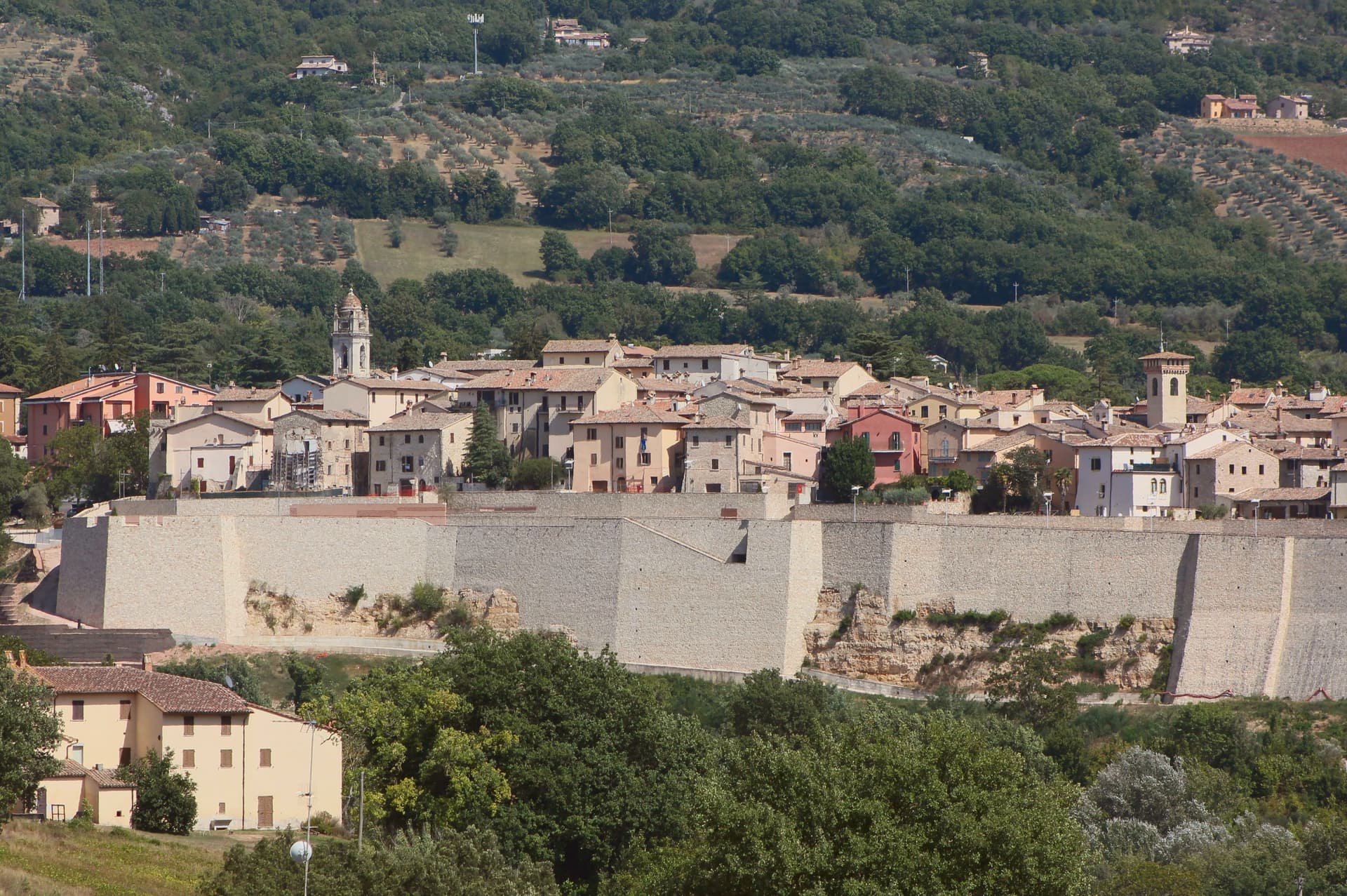
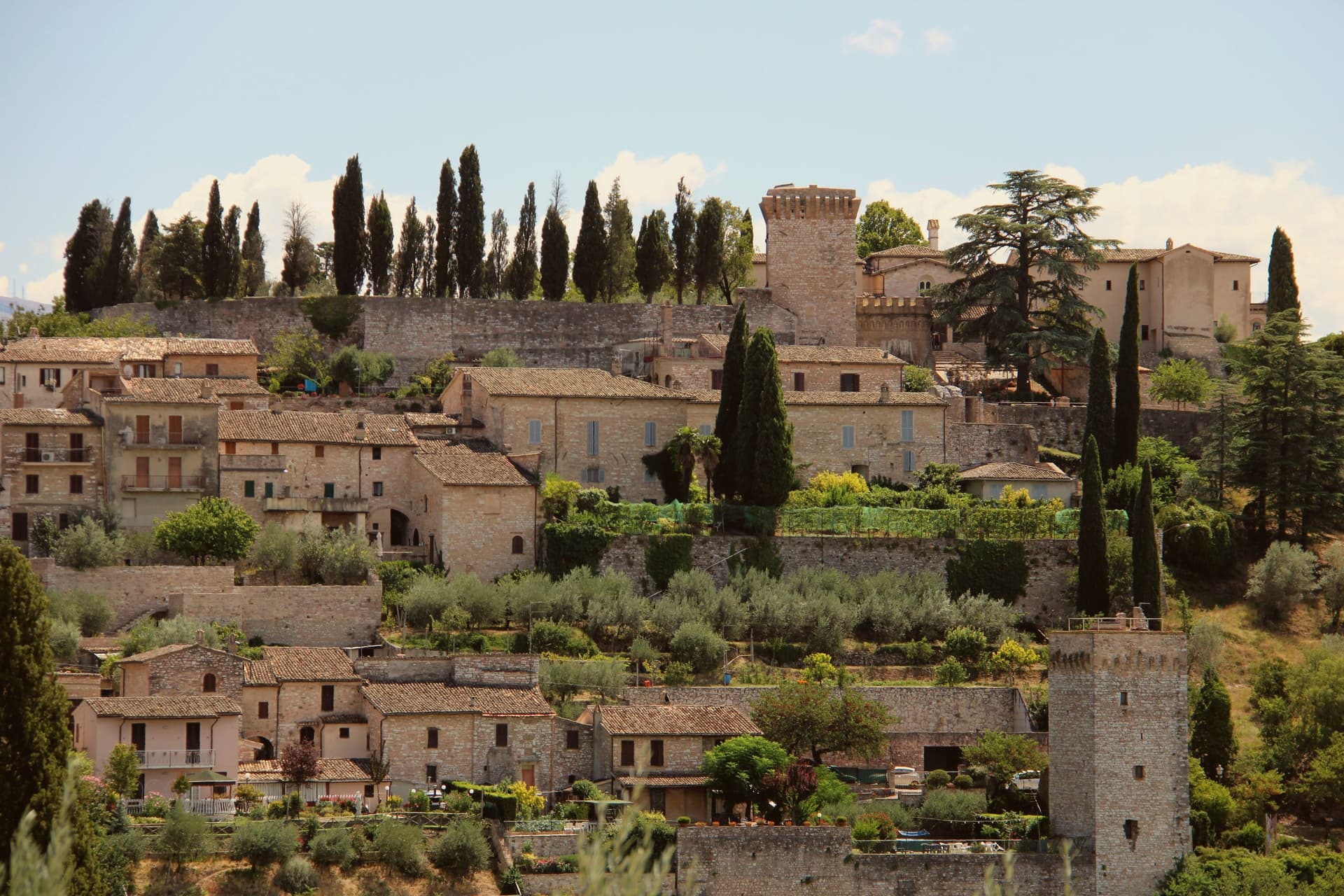
The centro storico climbs the lower southern flank of Monte Subasio, still contained within the circuit of walls raised when the town was renamed Splendidissima Colonia Julia by Augustus. Before that it was Hispellum under the Umbrians. The Roman gates and stretches of wall from the Augustan period were not rebuilt over, so the line of the ancient town is still readable in the streets that climb from them today.
The same streets carry the Infiorata each June and the fresco Pinturicchio completed for the chapel he painted in Santa Maria Maggiore, two things separated by roughly fifteen centuries but occupying the same short stretch of the old town: the chapel's Annunciation, Nativity and Christ Among the Doctors sit near the piazza the petal pictures are laid across. A Roman villa with ten mosaic floors, found only in 2005 and left in place under cover, adds a third layer beneath the town that is still being uncovered rather than one that was always on view. The town's Roman skeleton, its painted chapel, and a floor uncovered within living memory all sit within the same small radius, which is unusual: most places show one era at a time, Spello keeps three in view at once.
The Sunday letter
Spello is on our list. Its letter is still to come.
We are writing about all 1,000 of these towns, one at a time, in a free letter every Sunday: the photo, the food, the festa. That is our mission. Sign up and you will be there when Spello comes up. By Peter & Sophia, from Pietrasanta.
Read on
Spello in our articles
 The best hidden towns you can reach by train that eat well in the province of Perugia6 towns, Spello among them.
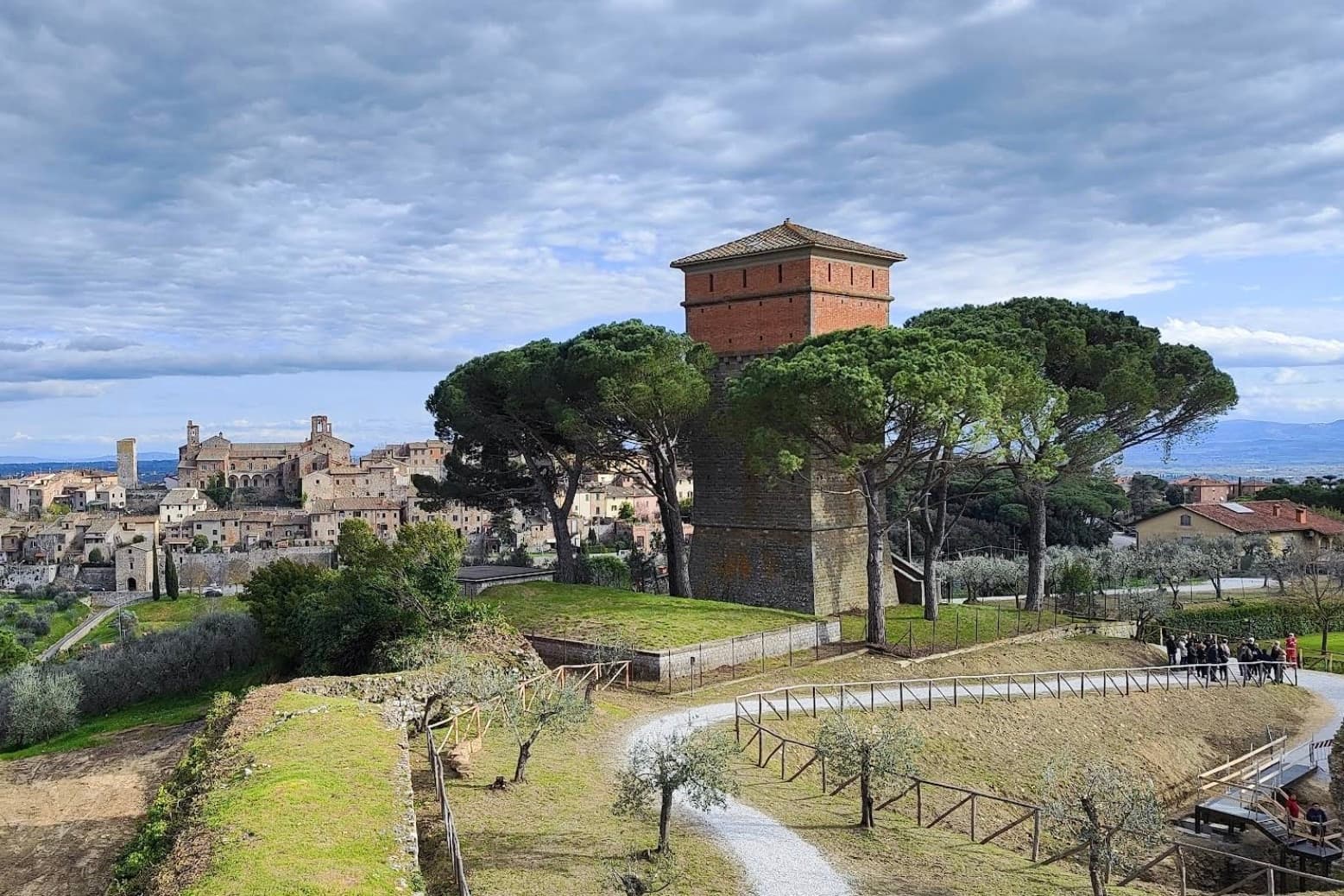 The 7 prettiest villages you can reach by train within 90 minutes of Perugia7 towns, Spello among them.
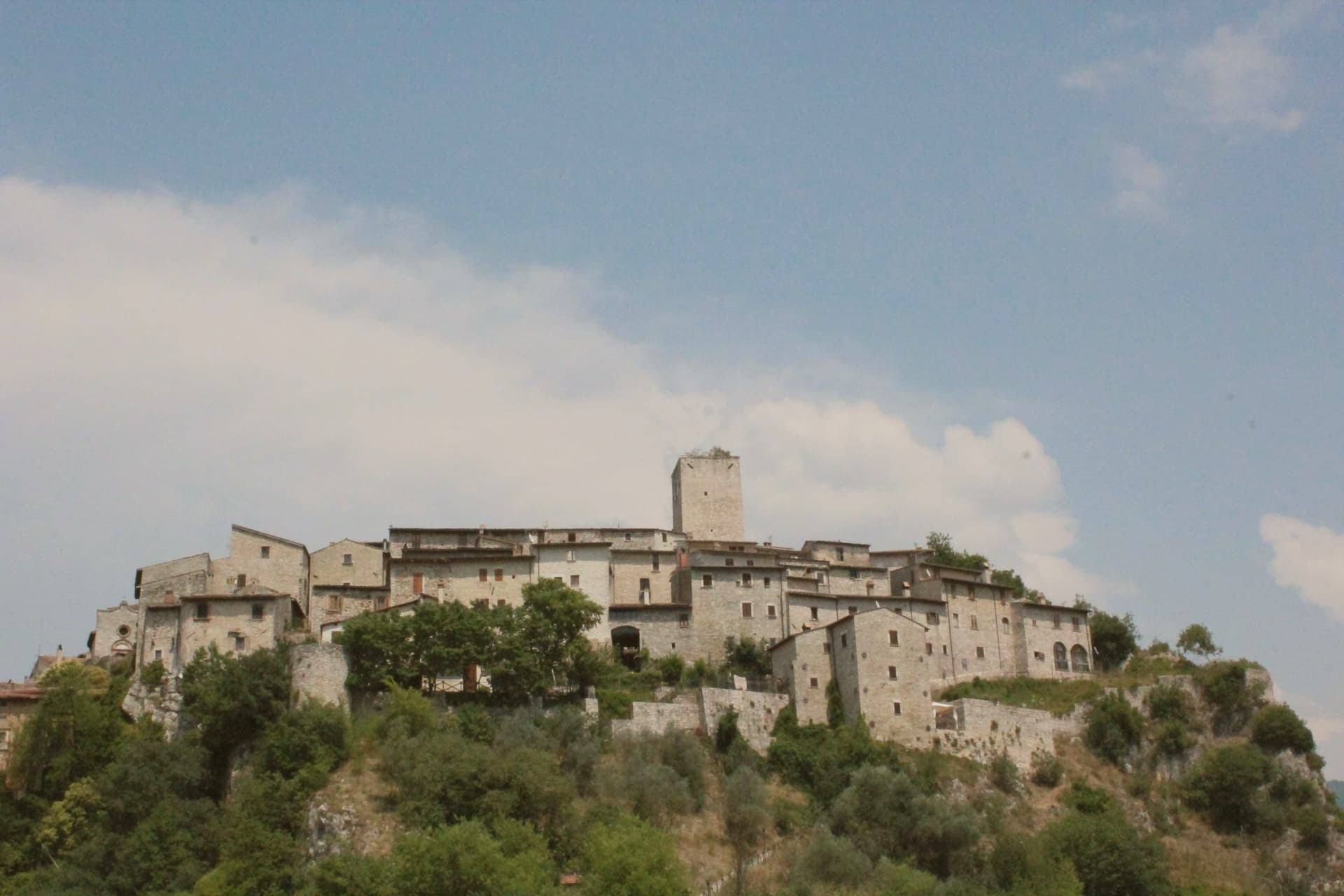 The best hidden olive oil towns that eat well in Umbria7 towns, Spello among them.
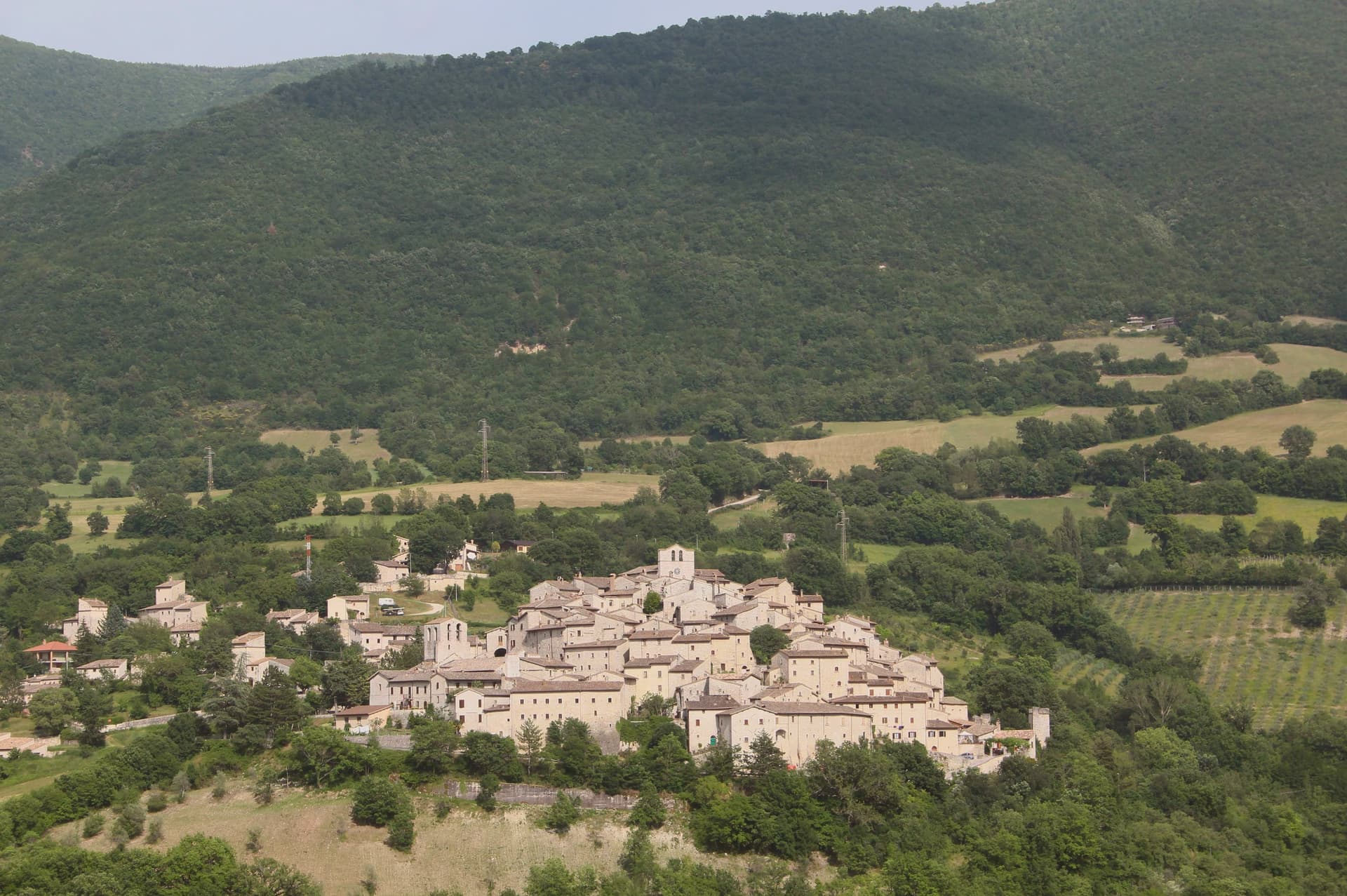 The best olive oil towns you can reach by train in the province of Perugia7 towns, Spello among them.
How to get there
From Ancona / Pescara (AOI), about 1h 43m by car.
Rimini (RMI) is about 2h 50m away.
By car from the centre of Perugia 31 minutes, Siena 2 hours or Ancona 2 hours.
There is a railway station in the comune, so you can arrive without a car.
Coming by train into Perugia? Spello is about 30 minutes away by road.
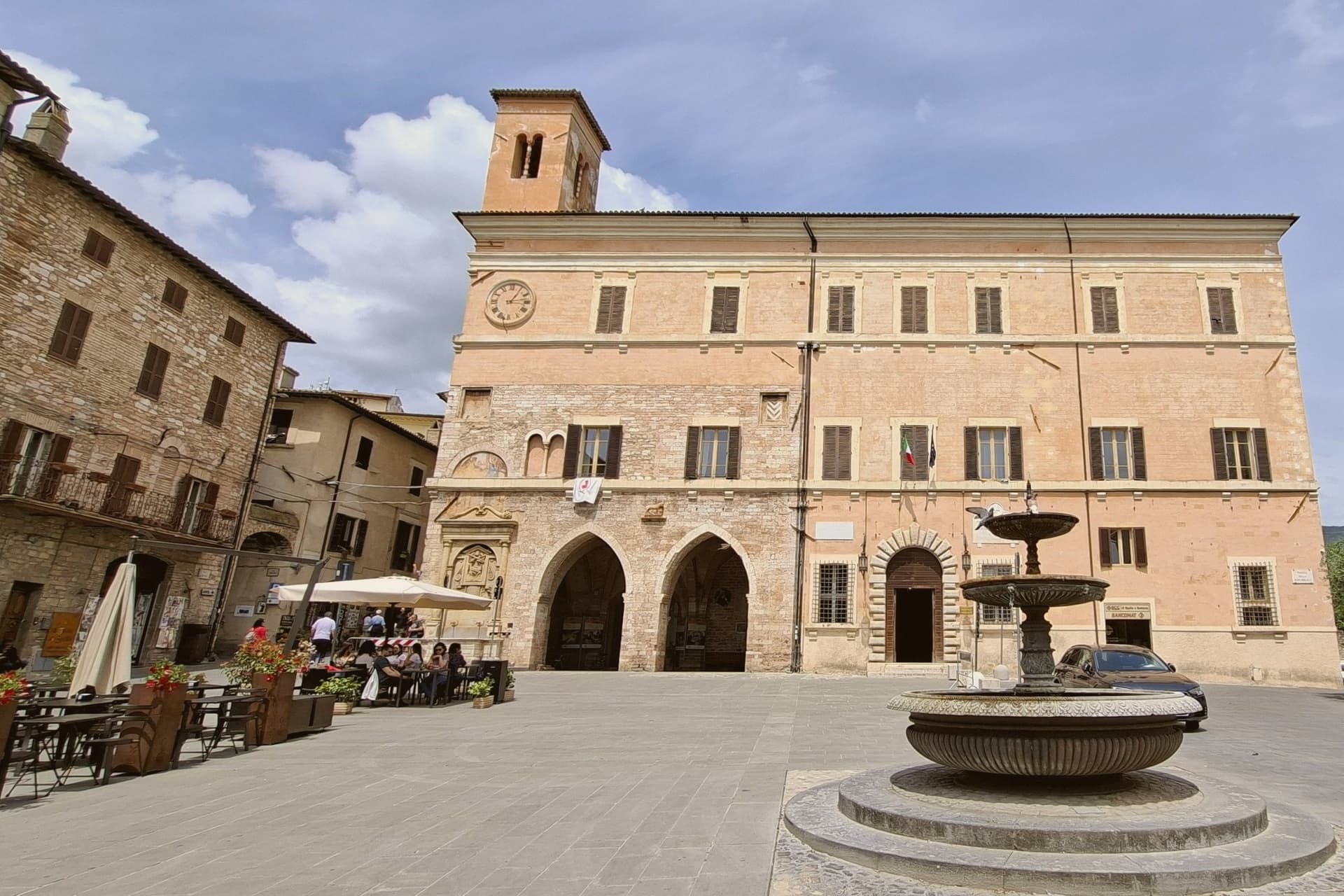
What to see
Cappella Baglioni
The Cappella Bella, commissioned by Troilo Baglioni, with four sibyls ranged across the vault above the painted scenes below.
Santa Maria Maggiore
Twelfth-century church on Piazza Matteotti, its interior built around the fresco cycle and the later panel it houses.
Porta Venere e Torri di Properzio
First-century BC gate flanked by two dodecagonal towers, still standing at close to full height with the stonework legible course by course.
Infiorata di Spello
More than sixty petal pictures laid out Saturday night, the compositions intact for only hours before the Sunday procession passes over them.
Villa dei Mosaici
Roman villa found in 2005, its ten polychrome mosaic floors left in place under a covered walkway rather than moved to a museum.
Sant'Andrea
Romanesque church commissioned by Gentile Baglioni, its Madonna and Child with Saints panel dated 1508.
The slow-trip planner
Building a trip? Find where Spello fits in a slow Italy circuit.
Answer five questions. We will shape a geographically coherent slow trip from the 1,000 Italian towns most travelers skip. Yours to save and share.
We recommend
Where to eat
Not our picks, but places the guides put their name to: a Michelin star, a Gambero Rosso fork, a Slow Food snail, a Michelin Key for the hotels. Worth a table, a counter, or a night when you pass through.
La Cantina di SpelloRistorante
La Cantina di Spello has a Slow Food snail to its name.
Through the year
What happens here
Feasts and festivals that come back year after year. We give the month rather than the date, because the date moves and the month rarely does. Check with the source before you plan a journey around one.
Borgo diVino tourpatron saint's feast
usually held in October. TrovaSagre
Living here
- Population 8,264
- Commuter belti
- Pharmacy in town
- High school within a 30-minute drive
- Train station in the comune
- Nearest airport Ancona / Pescara, 1 h 43 min drive
- Regional capital Perugia, 31 min drive
Common questions
- What is Spello known for?
- Augustan Hispellum sits at 280 meters on Monte Subasio, its Roman gates still standing over streets that Pinturicchio once painted a chapel for.
- Where is Spello?
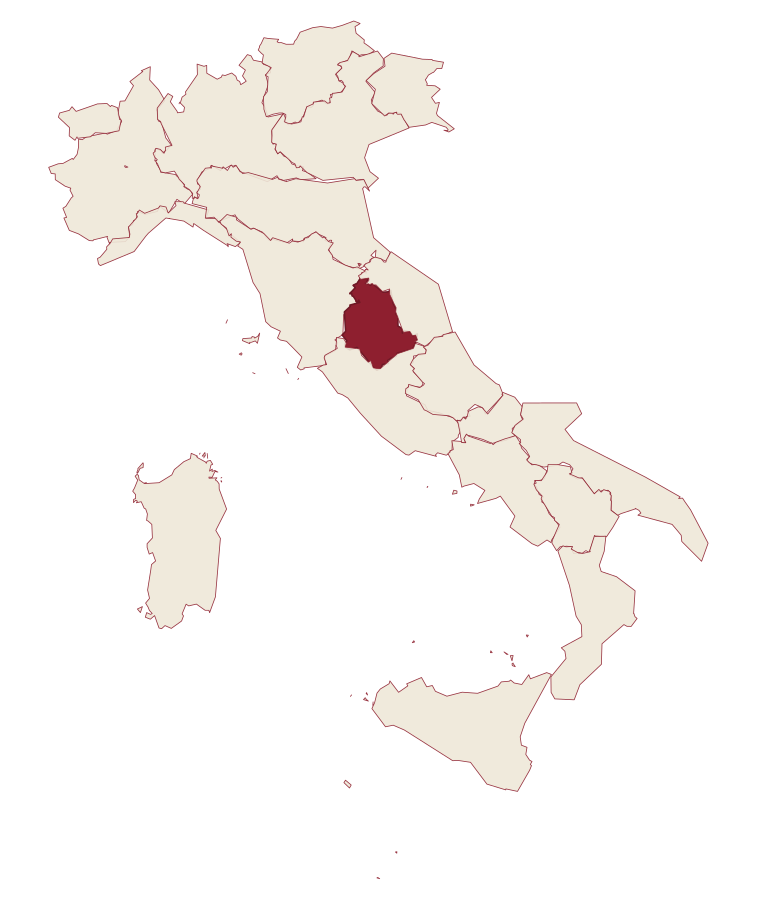
- Spello is a comune in the province of Perugia, in Umbria.
- What is the nearest airport to Spello?
- Ancona / Pescara (AOI), about 1h 43m by car.
- Can you get to Spello without a car?
- Yes. There is a railway station in the comune, so you can arrive by train.
- How long is the drive from Perugia to Spello?
- About 31 minutes by car.
- When is the best time to visit Spello?
- Best in Apr–Oct. July is the warmest month, averaging 32 degrees, and December the wettest, with about 13 rain days.
- Is there a sagra or a festival in Spello?
- Yes. Borgo diVino tour. October is when the first of them falls.
- Which other towns are like Spello?
- Deruta, Trevi and Nocera Umbra.
- How many people live in Spello?
- 8,264 at the 2023 count.
Tags & datadesignations · numbers · sources
Recognised as
The numbers
- Elevation: 280 m
- Population: 8,264
- Surface area: 61.65 km²
These figures were compiled from public directories: ISTAT, OpenStreetMap and Wikidata, and from the official listings of the guides named on this page. Town details change; verify with official sources before you travel.
Similar
Towns like Spello
Deruta
Province: Perugia
both inland, away from the coast · both between 3,000 and 10,000 people
Trevi
Province: Perugia
both inland, away from the coast · both between 3,000 and 10,000 people
Nocera Umbra
Province: Perugia
both inland, away from the coast · both between 3,000 and 10,000 people
Montecosaro
Province: Macerata
both inland, away from the coast · both between 3,000 and 10,000 people
Morrovalle
Province: Macerata
both inland, away from the coast · both between 3,000 and 10,000 people
San Gemini
Province: Terni
both inland, away from the coast · both between 3,000 and 10,000 people
🎨 Borghi più belli d'Italia
More Borghi più belli d'Italia towns in Umbria
Acquasparta
Province: Terni
A hill town at 350 meters above the Naia valley, where a Renaissance duchy briefly became the seat of Europe's first scientific academy.
Allerona
Province: Terni
A stone borgo at 472 meters between the Paglia valley and the Valdichiana, an Orvieto outpost whose Monaldeschi castle fell to Charles V.
Arrone
Province: Terni
Medieval castle village on the left bank of the Nera at 243 meters, upstream from the largest man-made waterfall in the world.
Bettona
Province: Perugia
A hill town at 353 meters between the Topino and Chiascio rivers, the only Etruscan settlement ever built east of the Tiber.
Bevagna
Province: Perugia
Roman Mevania on the Umbrian plain at 225 meters, four medieval quarters that compete every June in a reconstructed market of the 13th century.