
Lazio · Rieti
Labro
A 355-person stone borgo at 628 meters, restored since the 1960s by a Belgian architect and his descendants.
- Best time
- May–Oct
- By car
- 1 h 26 min from Perugia
- Population
- 355
Known for
NOBILI-VITELLESCHI
The same family has held the castle since 956 AD, when King Otto I granted the territory with twelve nearby castles.
VAN MOSSEVELDE
Belgian architect Ivan Van Mossevelde began buying and restoring abandoned houses in the 1960s; his family still owns much of the centro.
PIEDILUCO
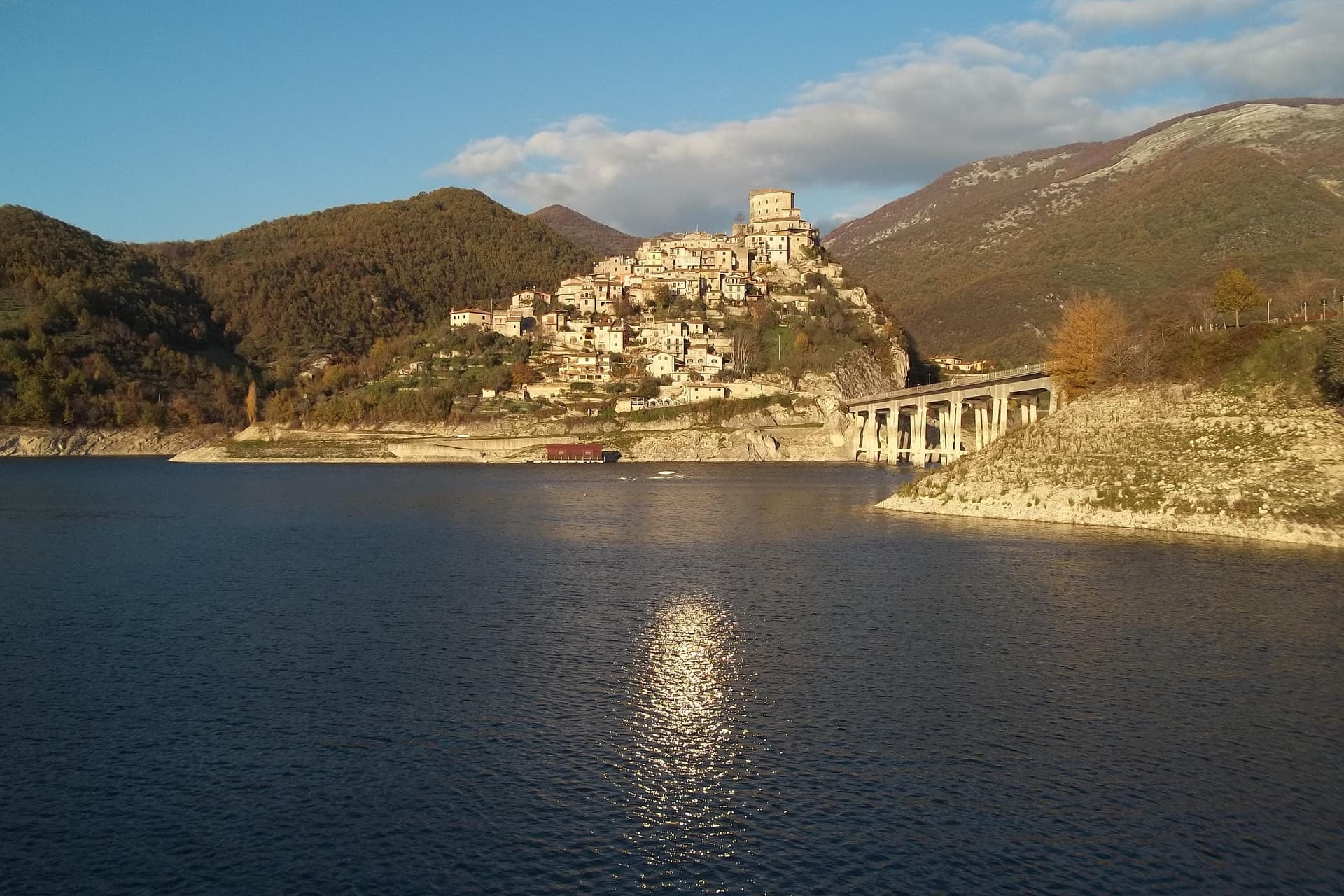
Lake straddling the Lazio-Umbria border 250 meters below the village, used for rowing competitions on its 1.58 square kilometers.
PROSCIUTTO AMATRICIANO
The commune lies inside the Prosciutto Amatriciano IGP production zone.
When to visit
Best · May–Oct
- J9°
- F11°
- M12°
- A15°
- M20°
- J25°
- J30°
- A29°
- S24°
- O19°
- N14°
- D10°
- Best
- Hot or crowded
- Quiet
- Mostly closed
Daytime averages, 2020–2024. Weather data by Open-Meteo.com.
The festa: San Pancrazio, 12 May
Why come
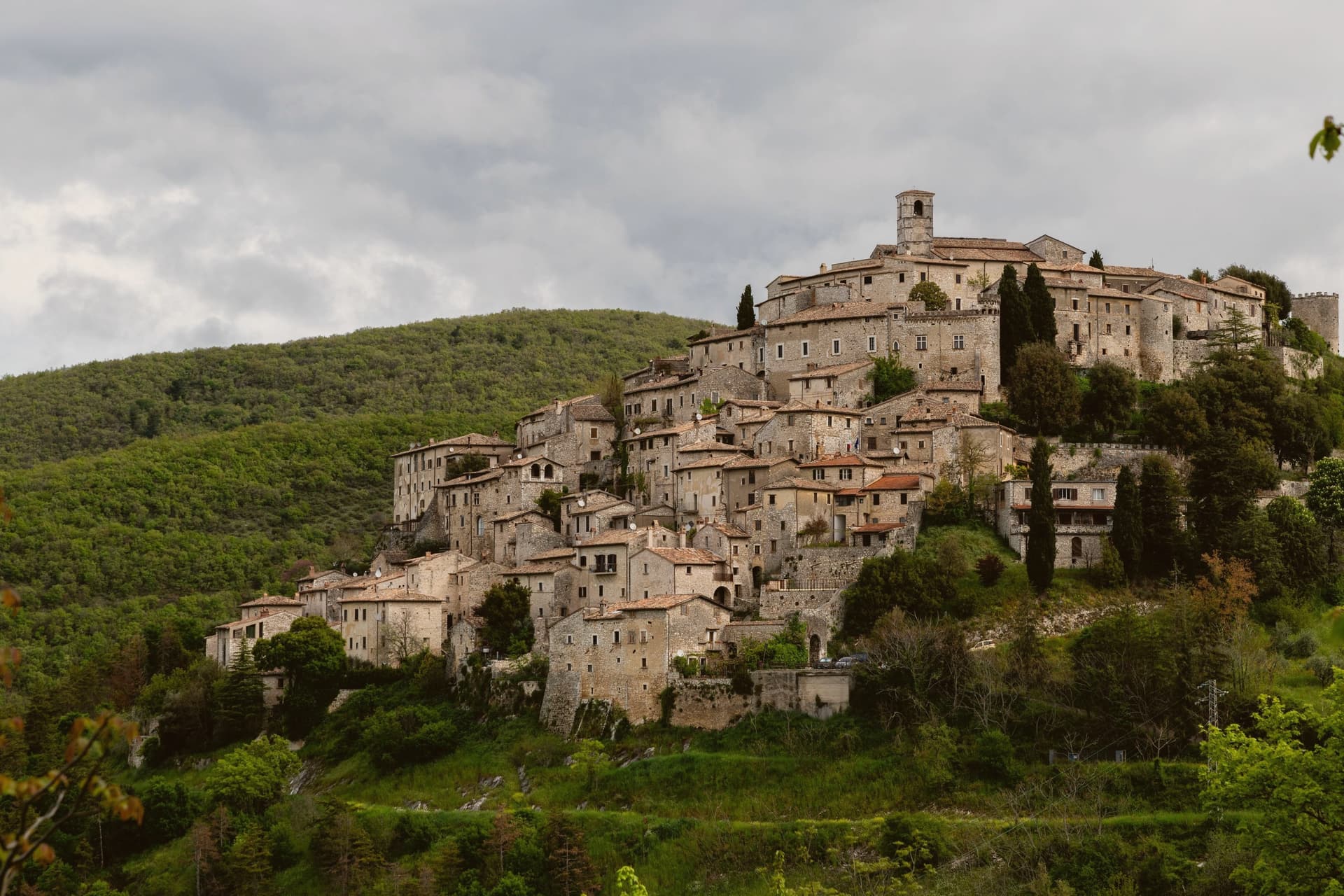
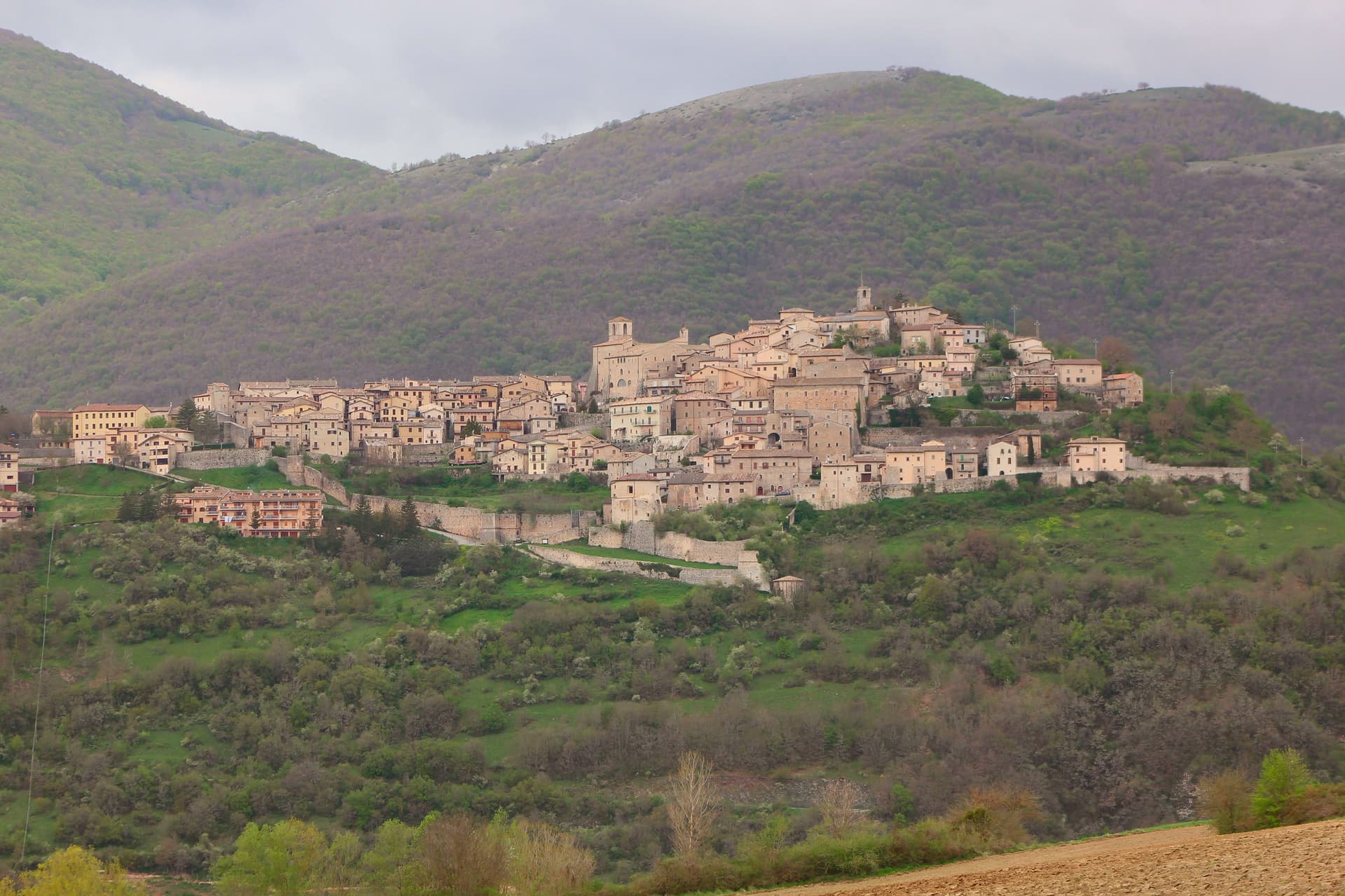
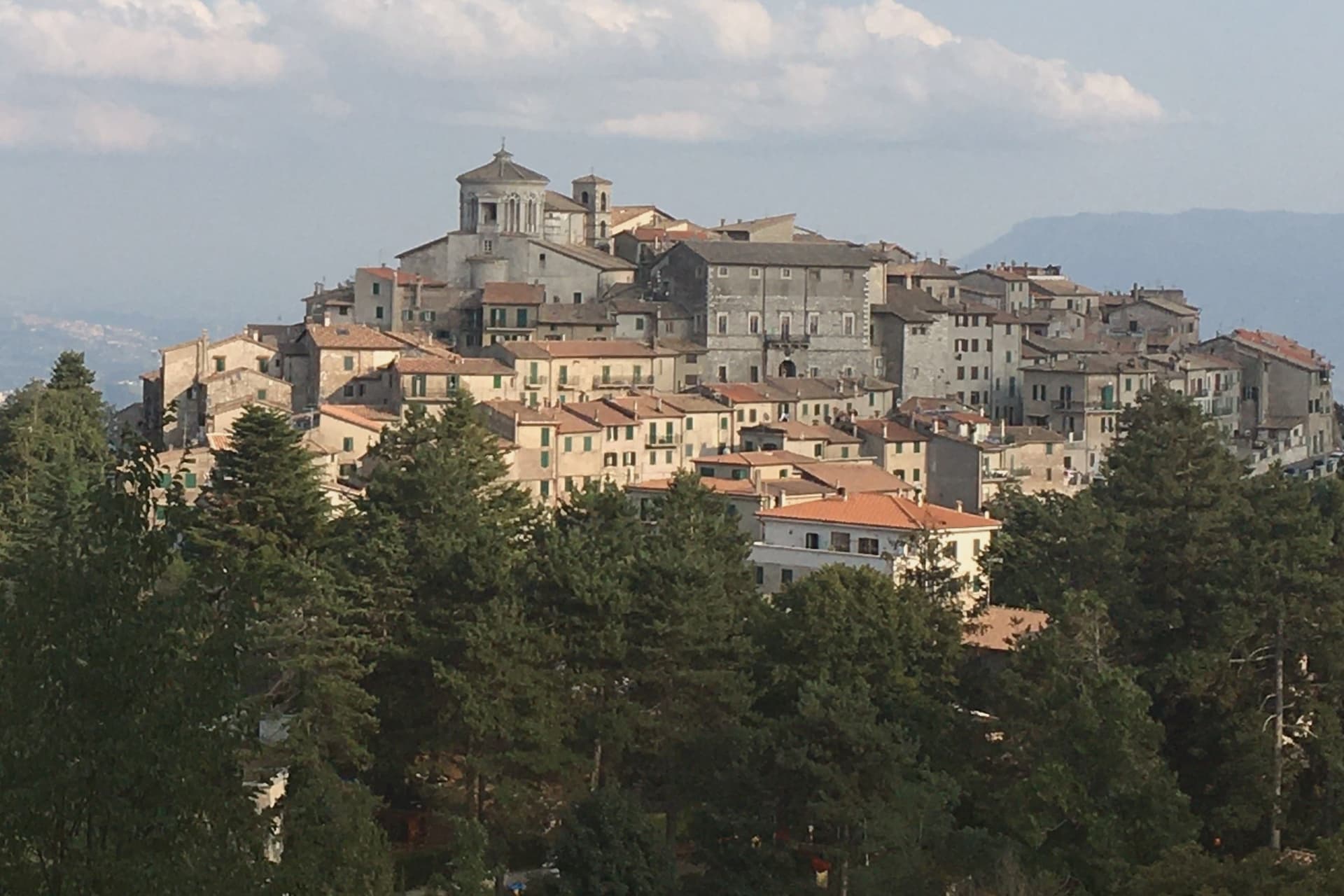
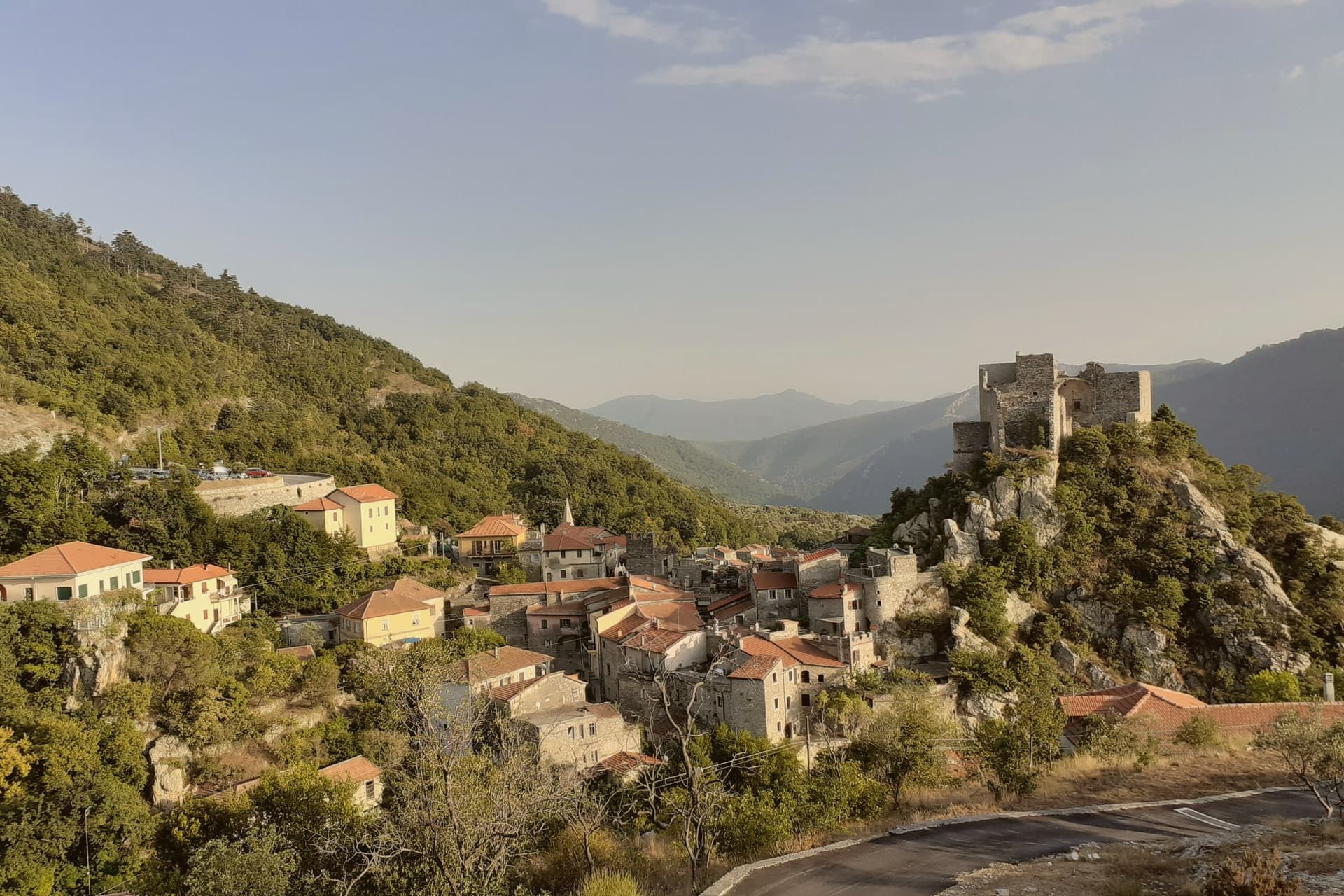
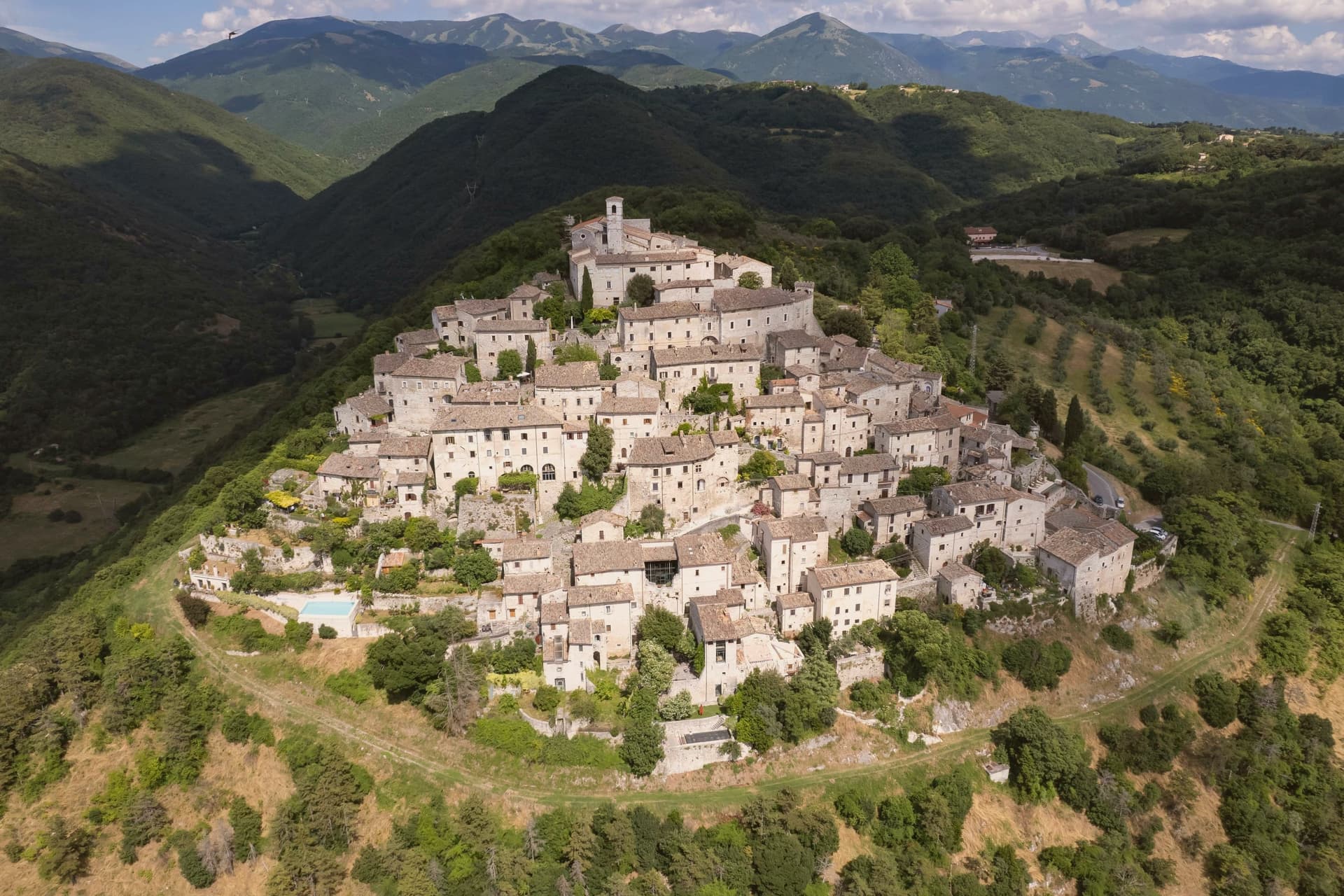
The village sits on the Lazio side of the Umbrian border, its stone houses climbing a slope that faces east over Lake Piediluco and the Reatini mountains. The name descends from the family that has held the central castle for more than a thousand years, an unbroken tenure from a royal grant to the present owners' later dynastic name. That family shaped the top of the village around the castle and the church below it; the rest of the centro storico, some twelve hectares of stone houses, fell empty by the 1960s.
The Belgian architect who began buying and restoring those houses did so with his wife, and the project passed to his children, who still own and run much of the centro. Two families, one holding the summit since the tenth century and one rebuilding the slope since the twentieth, account for nearly all of the village that stands today. Labro survived depopulation not by chance but by becoming, in effect, two long private restorations laid one above the other.
The Sunday letter
Labro is on our list. Its letter is still to come.
We are writing about all 1,000 of these towns, one at a time, in a free letter every Sunday: the photo, the food, the festa. That is our mission. Sign up and you will be there when Labro comes up. By Peter & Sophia, from Pietrasanta.
Read on
Labro in our articles
How to get there
From Rome (FCO), about 2h 16m by car.
Ancona / Pescara (AOI) is about 2h 43m away.
By car from the centre of Perugia 1h 26m or Pescara 2h 23m.
Coming by train into Perugia? Labro is about 1h 26m away by road.
What to see
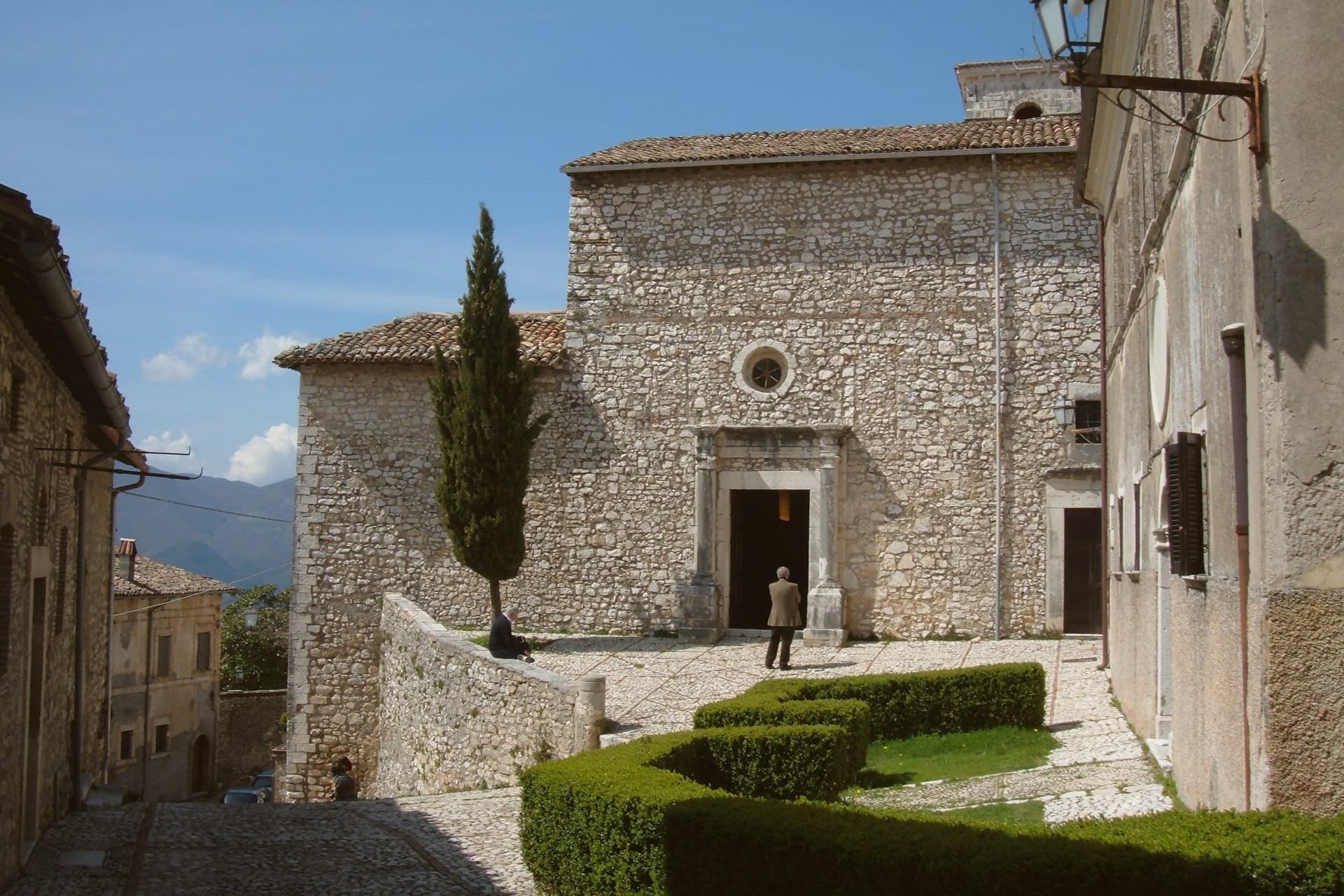
Castello Nobili-Vitelleschi
The castle sits at the top of the village, reached by narrow stone alleys climbing from the lower gate. Still privately owned.
Chiesa di Santa Maria Maggiore
Parish church on the main square of the centro storico, with works of devotional art collected by the family that has long held the castle above it.
Belvedere su Lago di Piediluco
Eastern viewpoint at 628 meters dropping to Lake Piediluco at 375 meters, with the Reatini and Sabini ranges in the background.
Centro storico
Roughly twelve hectares of stone houses along narrow streets, restored since the 1960s under a single coordinated project run by one family.
The slow-trip planner
Building a trip? Find where Labro fits in a slow Italy circuit.
Answer five questions. We will shape a geographically coherent slow trip from the 1,000 Italian towns most travelers skip. Yours to save and share.
Living here
- Population 355
- Commuter belti
- Pharmacy: none mapped
- High school within a 30-minute drive
- Nearest airport Rome, 2 h 16 min drive
- Regional capital Roma, 1 h 41 min drive
Common questions
- What is Labro known for?
- Labro is a 355-person stone borgo at 628 meters, restored since the 1960s by a Belgian architect and his descendants.
- Where is Labro?
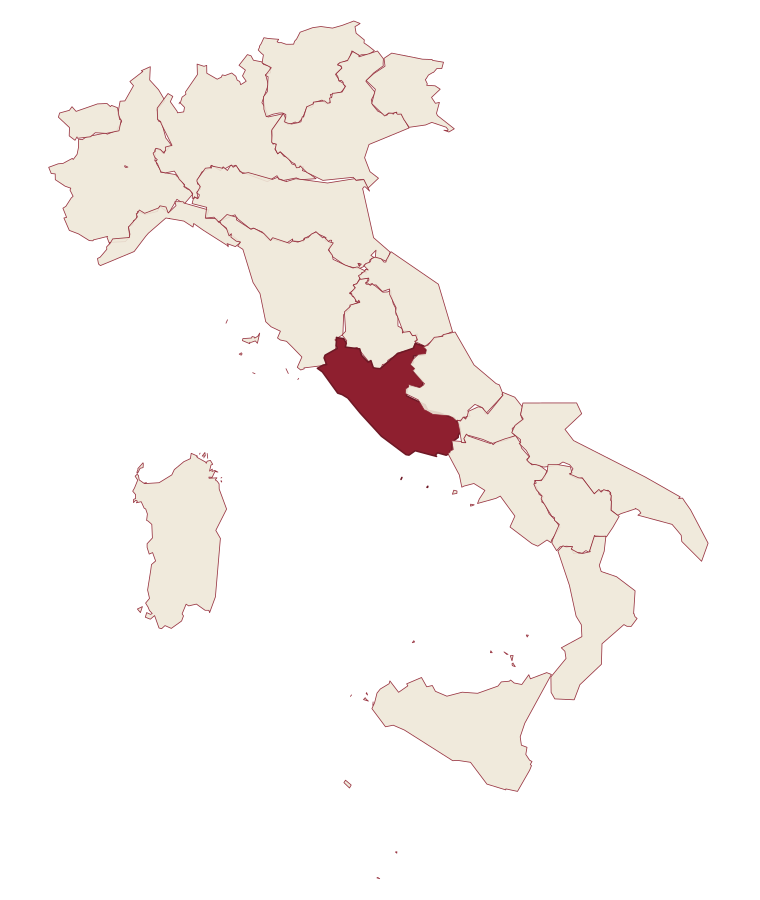
- Labro is a comune in the province of Rieti, in Lazio.
- What is the nearest airport to Labro?
- Rome (FCO), about 2h 16m by car.
- How long is the drive from Perugia to Labro?
- About 1h 26m by car.
- When is the best time to visit Labro?
- Best in May–Oct. July is the warmest month, averaging 30 degrees, and May the wettest, with about 15 rain days.
- Is there a sagra or a festival in Labro?
- The town keeps its patron saint's day: San Pancrazio, 12 May.
- Which other towns are like Labro?
- Castel di Tora, Orvinio and Capranica Prenestina.
- How many people live in Labro?
- 355 at the 2023 count.
Tags & datadesignations · numbers · sources
Recognised as
The numbers
- Elevation: 628 m
- Population: 355
- Surface area: 11.75 km²
These figures were compiled from public directories: ISTAT, OpenStreetMap and Wikidata, and from the official listings of the guides named on this page. Town details change; verify with official sources before you travel.
Similar
Towns like Labro
Castel di Tora
Province: Rieti
both mountain-valley towns · both under 1,000 people
Orvinio
Province: Rieti
both mountain-valley towns · both under 1,000 people
Capranica Prenestina
Province: Roma
both mountain-valley towns · both under 1,000 people
Collalto Sabino
Province: Rieti
both mountain-valley towns · both under 1,000 people
Anversa degli Abruzzi
Province: L'Aquila
both mountain-valley towns · both under 1,000 people
Goriano Sicoli
Province: L'Aquila
both mountain-valley towns · both under 1,000 people
🟠 Bandiera Arancione
More Bandiera Arancione towns in Lazio
Arpino
Province: Frosinone
The Volscian-Roman hill town in the Liri valley that produced Marius and Cicero, with a pre-Roman acropolis above the modern center.
Bassiano
Province: Latina
The highest village in the province of Latina at 562 meters, birthplace of Aldo Manuzio, who shrank the book to pocket size.
Bolsena
Province: Viterbo
A medieval town at 350 meters on the eastern shore of Europe's largest volcanic lake, where a Bohemian priest reported a Eucharistic miracle in 1263.
Bomarzo
Province: Viterbo
The Tuscia village below a garden built by a grieving condottiero for his dead wife, all stone monsters and no apology for it.
Calcata
Province: Viterbo
A tufa-cliff village forty kilometers north of Rome, condemned and abandoned in the 1930s, then occupied by artists and never left.