
Abruzzo · L'Aquila
Anversa degli Abruzzi
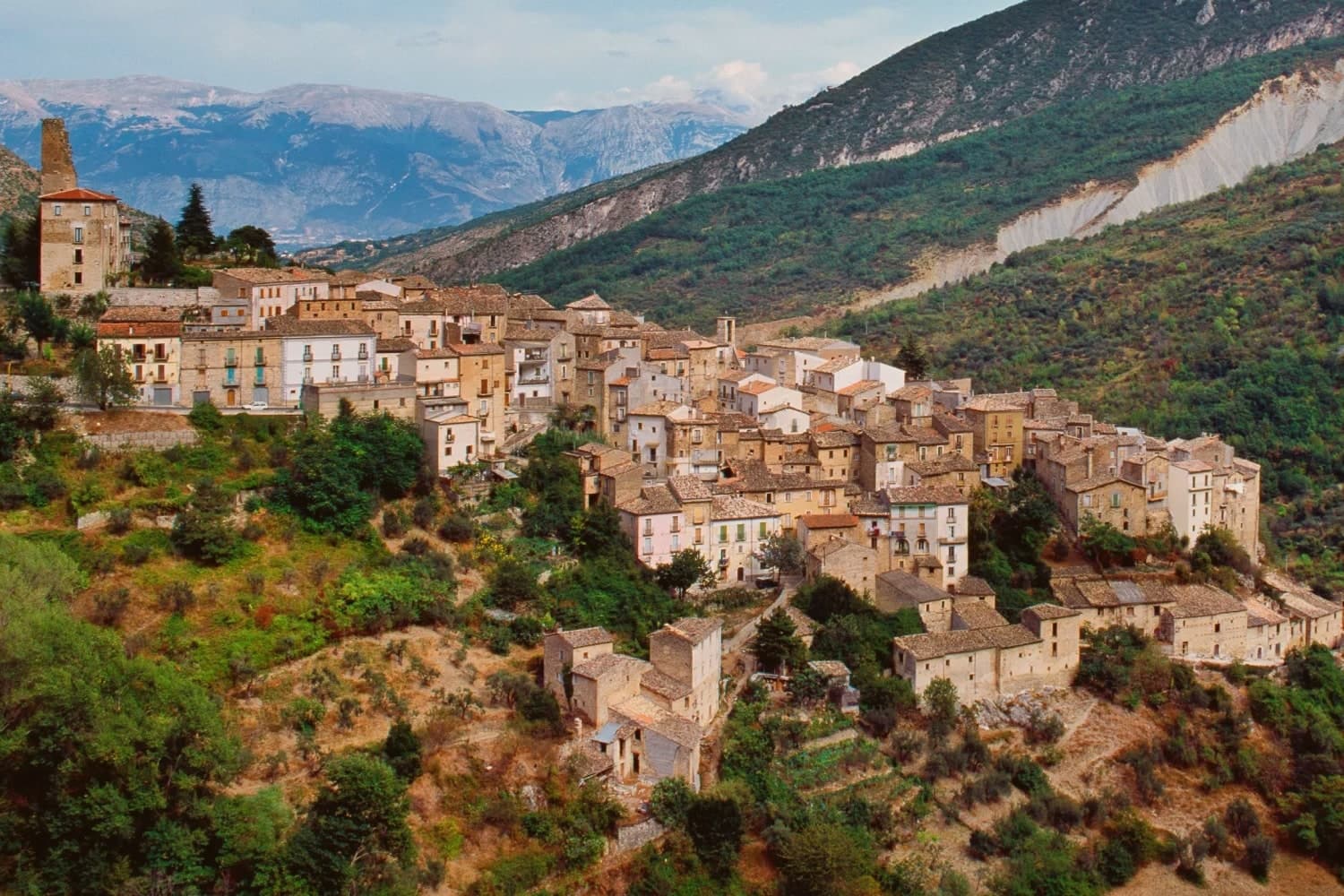
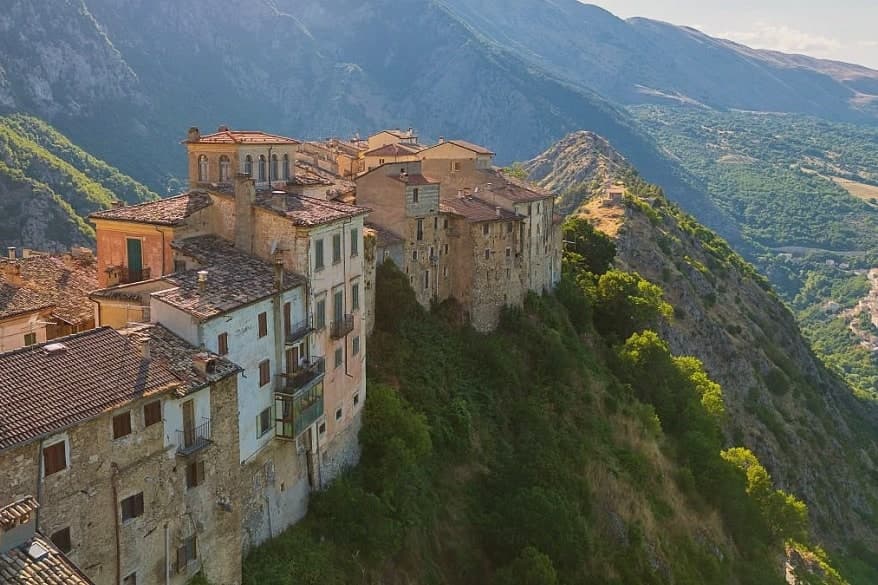
At 604 meters above the Sagittario Gorges, a cliff village built around a Norman castle rebuilt by the Counts of Sangro.
- Best time
- May–Oct
- By car
- 1 h 5 min from Pescara
- By train
- Station in the comune
- Population
- 312
Known for
D'ANNUNZIO
Setting of La Fiaccola sotto il moggio, the 1905 tragedy D'Annunzio called the most perfect of his works, drawn from the Di Sangro family who held the castle here.
CUCÙ E PIGNATA
Ceramic tradition since the 1500s, with the cucù clay whistle and the pignata terracotta cooking pot as town symbols.
SAGITTARIO GORGES
Limestone canyons cut by the Sagittario river, a 400-hectare reserve below the village with wolves and Marsican bears.
When to visit
Best · May–Oct
- J9°
- F12°
- M12°
- A15°
- M21°
- J27°
- J30°
- A30°
- S25°
- O20°
- N14°
- D11°
- Best
- Hot or crowded
- Quiet
- Mostly closed
Daytime averages, 2020–2024. Weather data by Open-Meteo.com.
The festa: papa Marcello I, 16 January
Why come
Anversa degli Abruzzi occupies a spur in the upper Sagittario valley, between the Peligna plain and the national park, with the gorges falling away directly beneath the walls. The Normans built here to hold the southern approach to the plain, and the Counts of Sangro controlled the site from the mid-1100s until the 1400s, when Antonio di Sangro gave the fortification its present form. That same family supplied the material Gabriele D'Annunzio drew on for La Fiaccola sotto il moggio, written in the village in 1905.
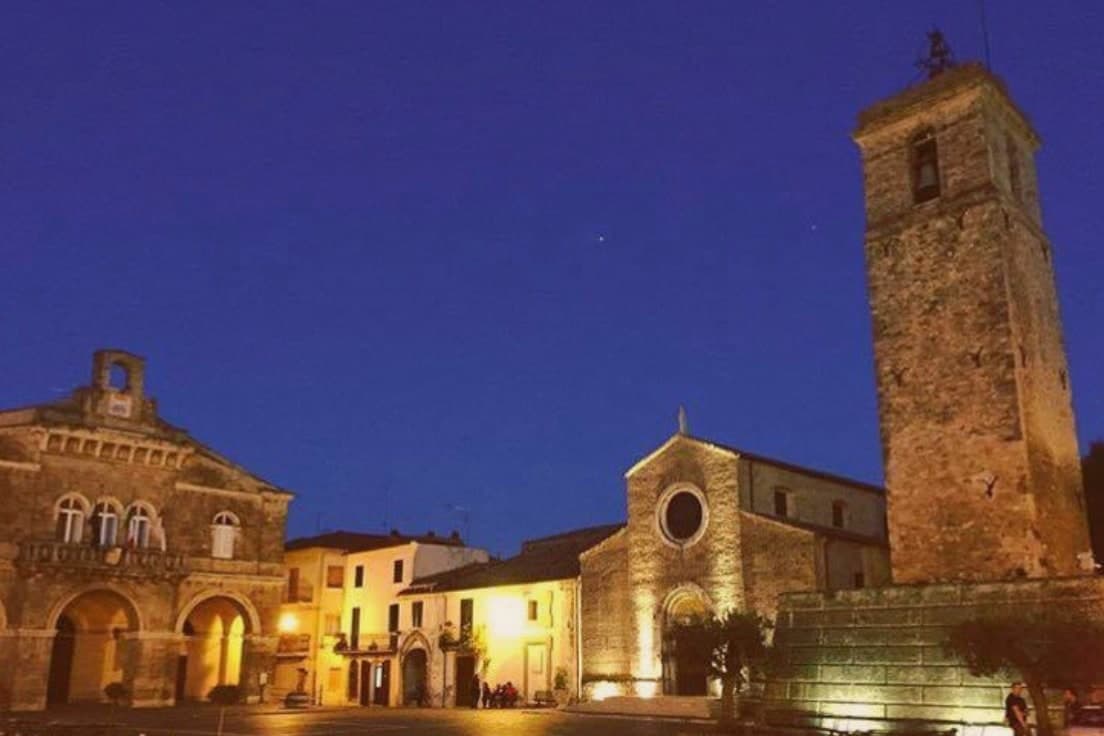
The borgo itself is compact: an outer ring of houses built into the cliff functions as the town wall, stone alleys thread through it on Norman-era foundations, and the church of Santa Maria delle Grazie, with its 1540 portal, sits as the principal religious building above. Below, the 400-hectare reserve protects the limestone canyons cut by the river, sheltering wolves and Marsican bears where the village drops toward the water. Population has fallen from 1,934 in 1901 to about 300, and the ceramic tradition, the pignata and the cucù, persists as one of the few threads still tying the present village to the working town the Sangro family once ruled. A place built for defense, held long enough to enter literature, and now sustained mainly by what it once was.
The Sunday letter
Anversa degli Abruzzi is on our list. Its letter is still to come.
We are writing about all 1,000 of these towns, one at a time, in a free letter every Sunday: the photo, the food, the festa. That is our mission. Sign up and you will be there when Anversa degli Abruzzi comes up. By Peter & Sophia, from Pietrasanta.
Read on
Anversa degli Abruzzi in our articles
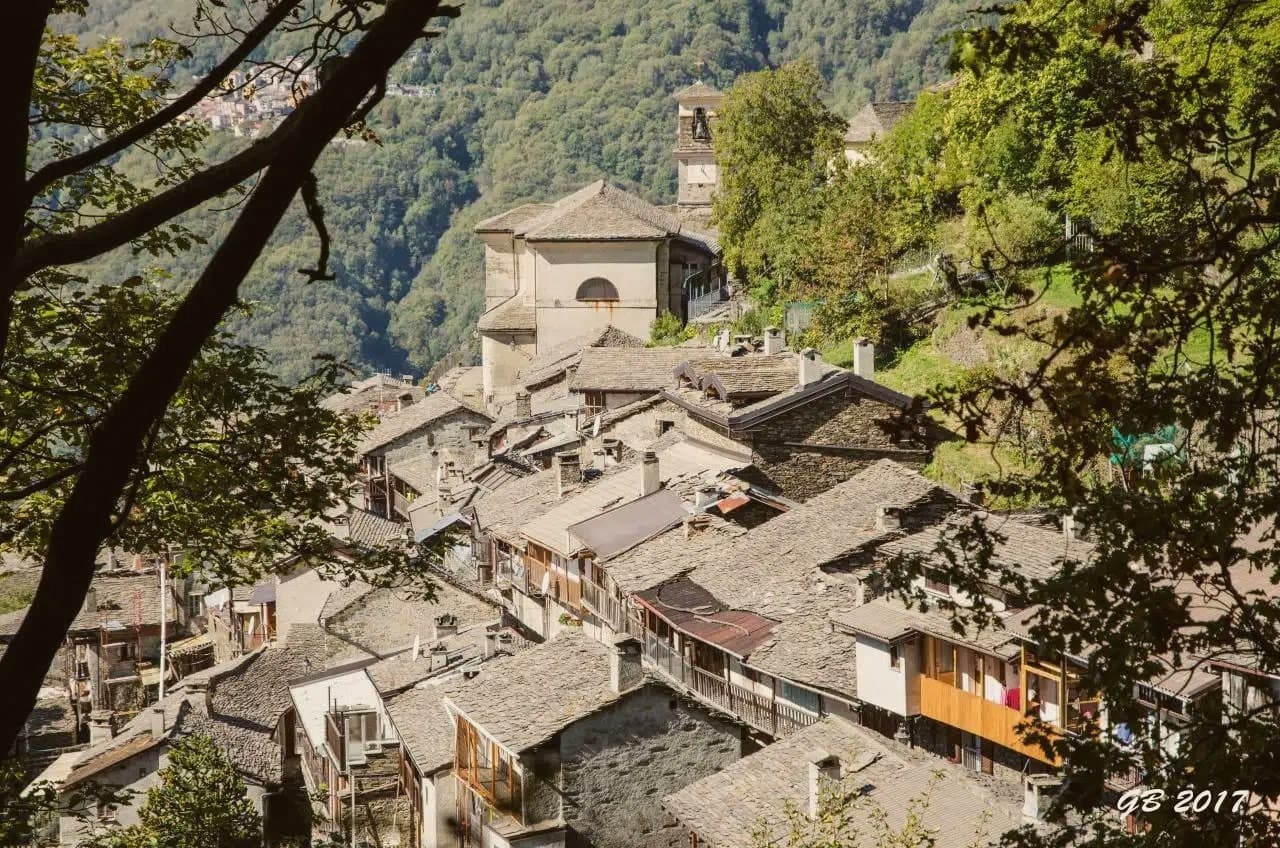
 The prettiest villages you can reach by train within 90 minutes of Pescara6 towns, Anversa degli Abruzzi among them.
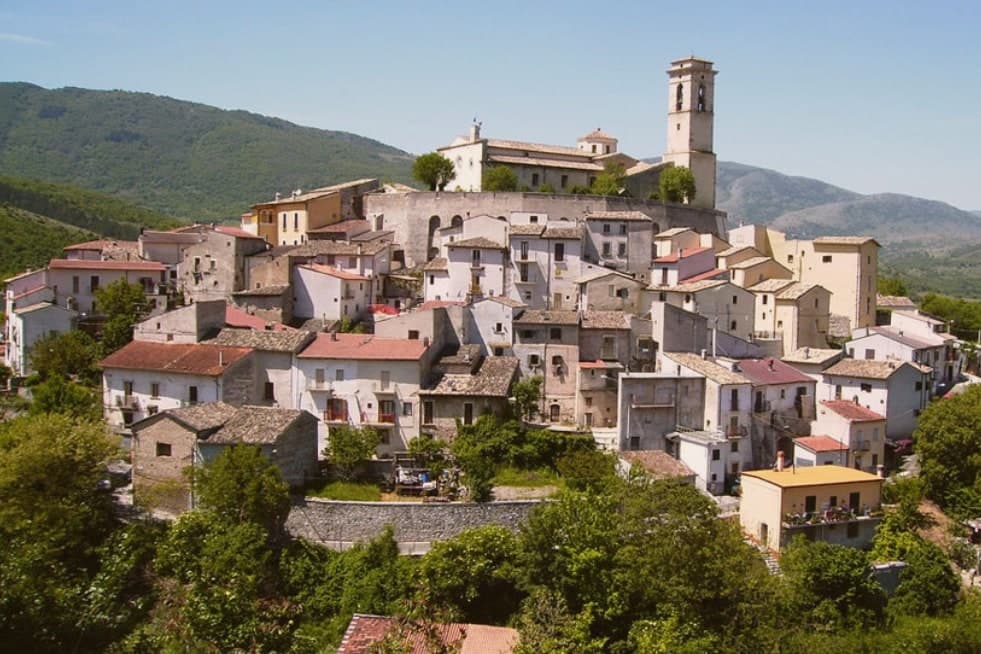
 The towns under 1,000 people, above 500 meters, with a train station7 towns, Anversa degli Abruzzi among them.
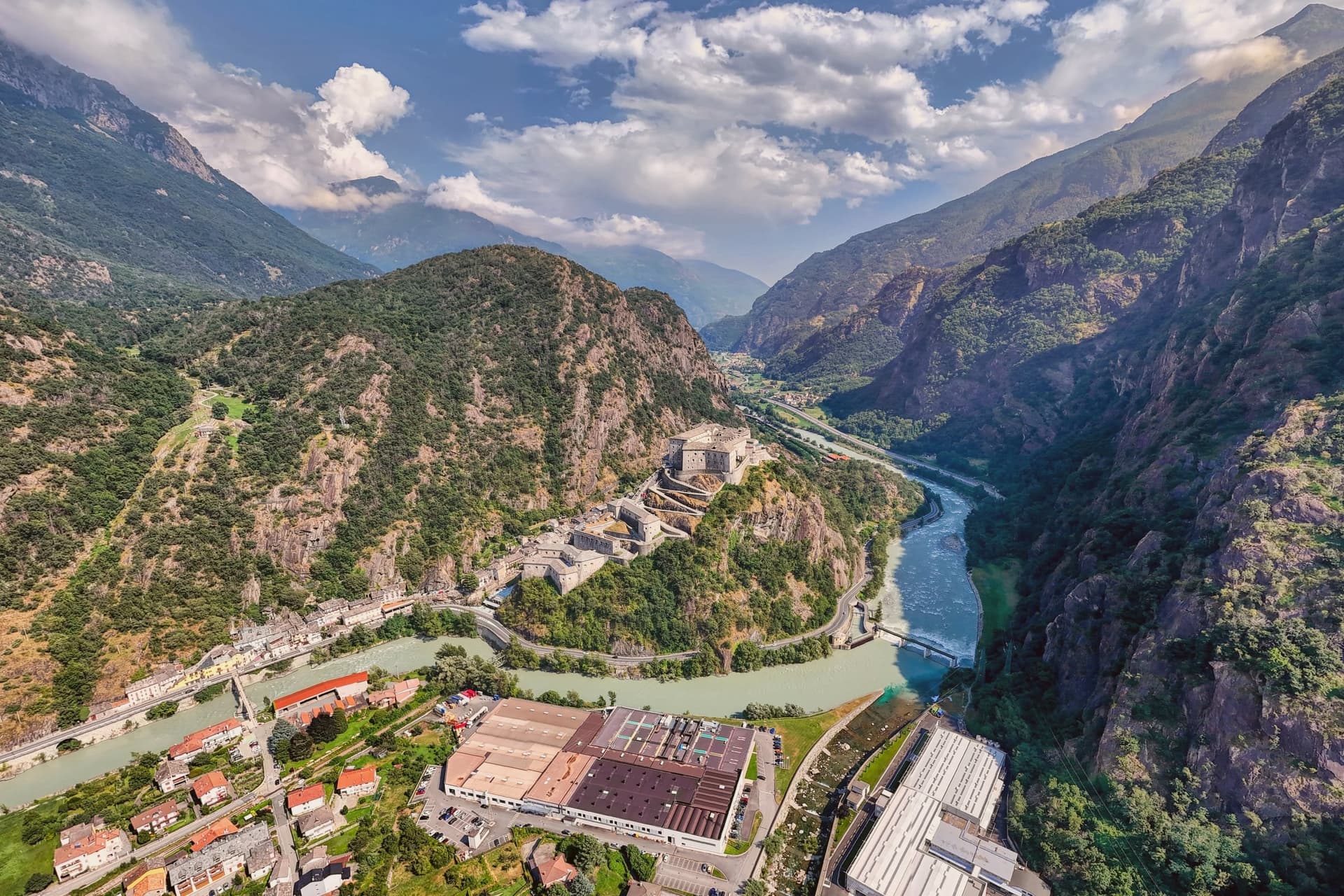
 The 9 best small mountain towns you can reach by train in the province of L'Aquila9 towns, Anversa degli Abruzzi among them.
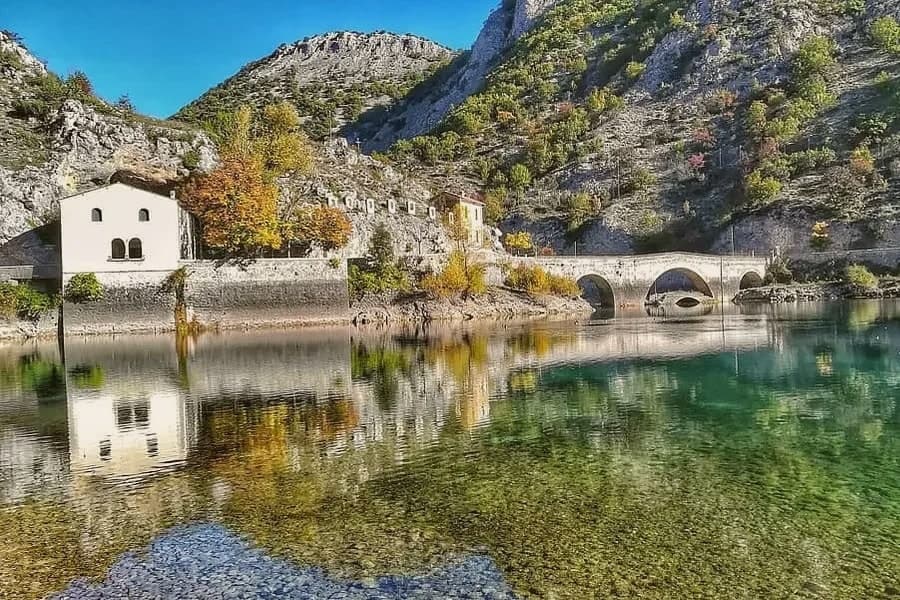
 10 comuni with a station and under 3,000 people10 towns, Anversa degli Abruzzi among them.
How to get there
From Rome (FCO), about 2h 20m by car.
Ancona / Pescara (AOI) is about 2h 40m away.
By car from the centre of Pescara 1 hour or Ancona 2h 35m.
There is a railway station in the comune, so you can arrive without a car.
Coming from Rome?
Coming by train into Pescara Centrale? Anversa degli Abruzzi is about 1 hour away by road.
What to see
Castello Normanno
Rebuilt in the 15th century by Antonio di Sangro on the site of the original Norman fortification, perched on cliffs above the village.
Gole del Sagittario
The reserve's canyons lie directly below the village walls, home to wolves, Marsican bears, dormice, hawks and owls.
Chiesa di Santa Maria delle Grazie
Late medieval church with a Renaissance portal dated 1540, the principal religious building in the upper borgo.
Borgo medievale
Wrapped by an outer wall of houses built directly above the gorge, with stone alleys and Norman-era foundations underlying the later fabric.
Parco Letterario Gabriele d'Annunzio
Literary trail through the village and gorges marking the settings of La Fiaccola sotto il moggio, tracing where the 1905 tragedy was staged in stone.
The slow-trip planner
Building a trip? Find where Anversa degli Abruzzi fits in a slow Italy circuit.
Answer five questions. We will shape a geographically coherent slow trip from the 1,000 Italian towns most travelers skip. Yours to save and share.
Living here
- Population 312
- In-betweeni
- Pharmacy: none mapped
- High school within a 30-minute drive
- Train station in the comune
- Nearest airport Rome, 2 h 20 min drive
- Regional capital L'Aquila, 1 h 4 min drive
Common questions
- What is Anversa degli Abruzzi known for?
- At 604 meters above the Sagittario Gorges, a cliff village built around a Norman castle rebuilt by the Counts of Sangro.
- Where is Anversa degli Abruzzi?
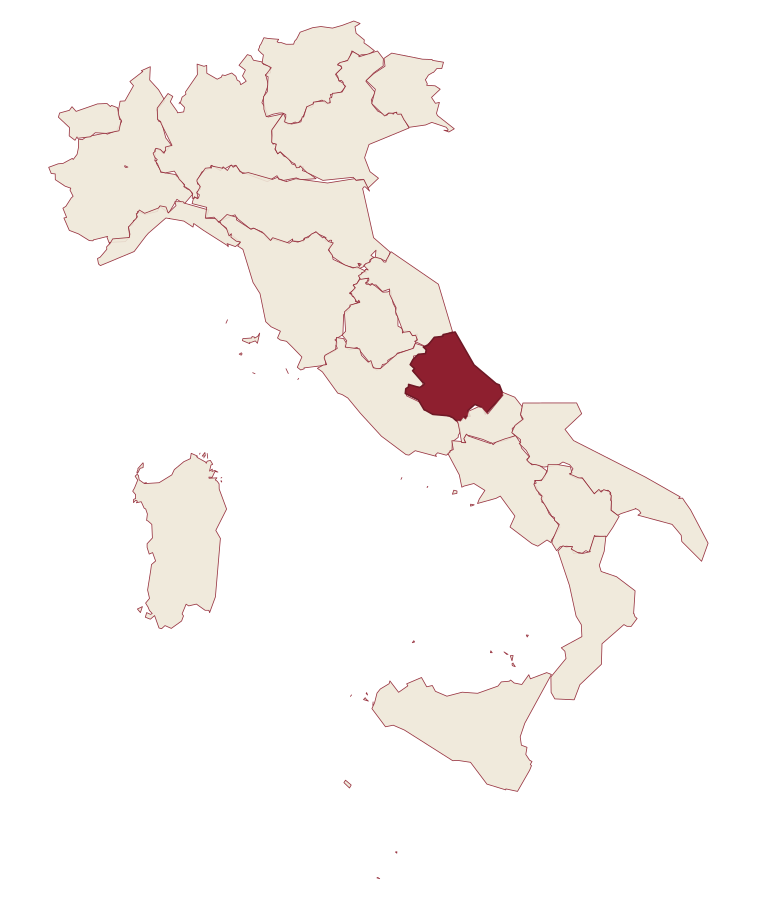
- Anversa degli Abruzzi is a comune in the province of L'Aquila, in Abruzzo.
- What is the nearest airport to Anversa degli Abruzzi?
- Rome (FCO), about 2h 20m by car.
- Can you get to Anversa degli Abruzzi without a car?
- Yes. There is a railway station in the comune, so you can arrive by train.
- How long is the drive from Pescara to Anversa degli Abruzzi?
- About 1 hour by car.
- When is the best time to visit Anversa degli Abruzzi?
- Best in May–Oct. July is the warmest month, averaging 30 degrees, and May the wettest, with about 13 rain days.
- Is there a sagra or a festival in Anversa degli Abruzzi?
- The town keeps its patron saint's day: papa Marcello I, 16 January.
- Which other towns are like Anversa degli Abruzzi?
- Civita d'Antino, Goriano Sicoli and Rocca di Botte.
- How many people live in Anversa degli Abruzzi?
- 312 at the 2023 count.
Tags & datadesignations · numbers · sources
Recognised as
The numbers
- Elevation: 604 m
- Population: 312
- Surface area: 32.43 km²
These figures were compiled from public directories: ISTAT, OpenStreetMap and Wikidata, and from the official listings of the guides named on this page. Town details change; verify with official sources before you travel.
Similar
Towns like Anversa degli Abruzzi
Civita d'Antino
Province: L'Aquila
both mountain-valley towns · both under 1,000 people
Goriano Sicoli
Province: L'Aquila
both mountain-valley towns · both under 1,000 people
Rocca di Botte
Province: L'Aquila
both mountain-valley towns · both under 1,000 people
Castel di Tora
Province: Rieti
both mountain-valley towns · both under 1,000 people
Capranica Prenestina
Province: Roma
both mountain-valley towns · both under 1,000 people
Castel San Pietro Romano
Province: Roma
both mountain-valley towns · both under 1,000 people
🎨 Borghi più belli d'Italia
More Borghi più belli d'Italia towns in Abruzzo
Campli
Province: Teramo
A 393-meter town under the Monti della Laga, held by the Farnese for two centuries, with a Scala Santa carrying papal indulgence.
Caramanico Terme
Province: Pescara
A 650-meter Majella spa village at the confluence of the Orfento and Orta rivers.
Casoli
Province: Chieti
A 378-meter hill town above the Aventino under the Maiella, with a pentagonal Norman tower that once hosted a court of artists.
Castel del Monte
Province: L'Aquila
At 1,346 meters under Monte Bolza facing Rocca Calascio, the capital of shepherds, whose wool reached the Medici and whose witches return each August.
Città Sant'Angelo
Province: Pescara
A hilltop borgo at 320 meters between the Vestina hills and the Adriatic, named for the Archangel and known since 1352 as a Collegiata seat.