
The best hot-spring towns within 90 minutes of Bologna
The land around Bologna is warmer underneath than it looks. Water comes up salt-bromine-iodine on the Adriatic side, sulphurous in the Euganean hills, iron-rich where the Apennines begin to climb, and towns have grown around each source with brick colonnades, plane trees and bathhouses in stucco the colour of weak tea. The season stretches from the first warm weeks of spring through to November, when the mud treatments come into their own and the fog settles over the plain. Between soaks there is the food of Emilia and the Veneto: tortelli, piadina, boiled meats in winter, and wine from vineyards that run right up to the spa gates.
Most people who want to bathe in Italy go further afield, to Tuscany, where Saturnia's terraced falls and the pools at Bagno Vignoni carry the whole country's reputation for thermal water. The cascade at Saturnia is free, photographed constantly and parked solid by mid-morning in summer. It is a long drive from Bologna for water you will share with a coach party.
The same geology sits much closer. Thermal springs surface all across the Po plain and the hills either side of it, in towns that have been treating visitors for generations without ever becoming a day trip from Florence. These are the places within reasonable driving or train distance of Bologna where the water is the reason the town exists, and where the bathhouse is still part of ordinary local life rather than a photo stop.
Of the 36 communes we have mapped in a 90-minute drive of Bologna, 9 qualify as hot-spring towns: each has thermal water a town has been built around. The smallest, Arquà Petrarca, has 1,810 residents.
If you are still choosing, we have also written The best hot-spring towns within two hours of Padua and The best hot spring towns in Emilia-Romagna.
Arquà Petrarca
Why visit Arquà Petrarca
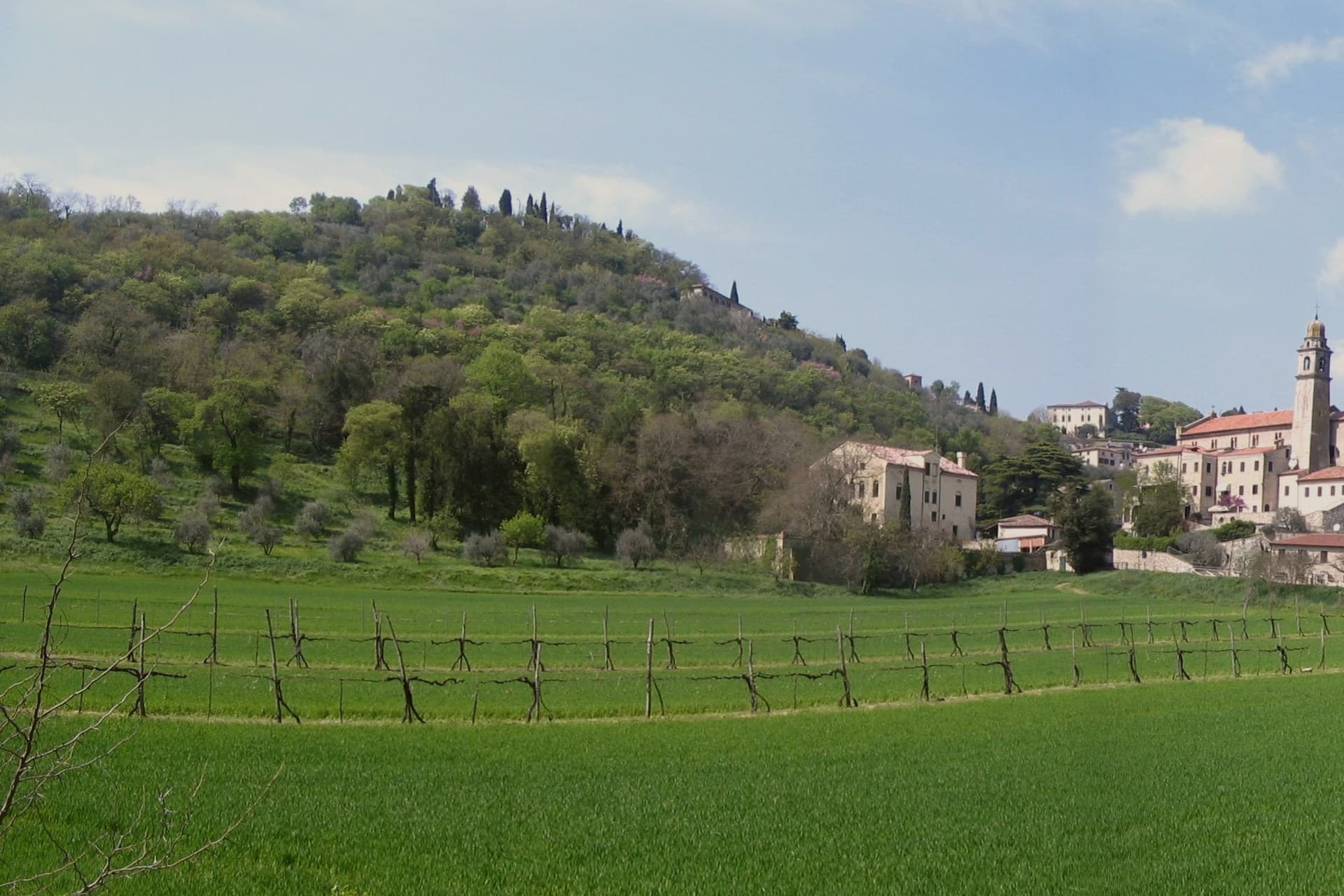
Arquà sits between Monte Ventolone and Monte Castello, in the Euganean Hills south of Padova. The name dates to medieval records; the suffix Petrarca was added in 1868, after the Veneto's annexation to the Kingdom of Italy, as a public homage to the poet who chose to die here.
Francesco Petrarca arrived in 1370 and lived in a thirteenth-century house he renovated himself across two stories, the Casa del Petrarca, now a museum with frescoes from the fifteenth and sixteenth centuries. He died at his desk on the night of 18-19 July 1374.
His tomb, an ark in red Verona marble inspired by Roman sarcophagi, was placed in the churchyard of Santa Maria Assunta in 1380 and reset in 1965. The village kept its medieval layout: two piazzas linked by a stepped path, the Casa above and the church and tomb below.
The hills around it grow Colli Euganei DOC wine, olives, and the giuggiole that go into the local liqueur Brodo di Giuggiole.
What to see in Arquà Petrarca
- Casa di Francesco Petrarca. The poet's thirteenth-century house, renovated by him on two floors and now a museum with frescoes added by later owners in the fifteenth and sixteenth centuries.
- Tomba di Petrarca. Sarcophagus in red Verona marble in the churchyard of Santa Maria Assunta, placed in 1380, six years after the poet's death.
- Chiesa di Santa Maria Assunta. Parish church first documented in 1026, enlarged through the centuries, with frescoes of the Venetian-Byzantine school up to the fifteenth century.
How to get to Arquà Petrarca
There is a railway station in the town, so you can arrive without a car and never need one while you are here. Padova is roughly 28 minutes away by road.
Our tip
April through June and September through October are the months Arquà is built for. The hills are green in spring and gold in autumn; the slope from Piazza Roma down to the church is comfortable walking weather. July and August push past thirty degrees and the village empties between two and six, though Padova day-trippers still arrive in the late afternoon.
Battaglia Terme
Why visit Battaglia Terme
Battaglia Terme sits at 9 meters on the eastern edge of the Euganean Hills, fifteen kilometers south of Padova. The Paduans dug the Battaglia Canal between 1189 and 1201 to link Padova to Monselice, Este and ultimately the Adige and the lagoon; the town grew up at the confluence with the older Bisato Canal from Monselice, completed in 1139.
For seven centuries Battaglia lived from the barge traffic that hauled wheat, marble and wine north and south through the navigable network. The Museo della Navigazione Fluviale, the only river navigation museum in Italy, holds more than four thousand objects from boats and tools to navigation charts and boatmen's diaries.
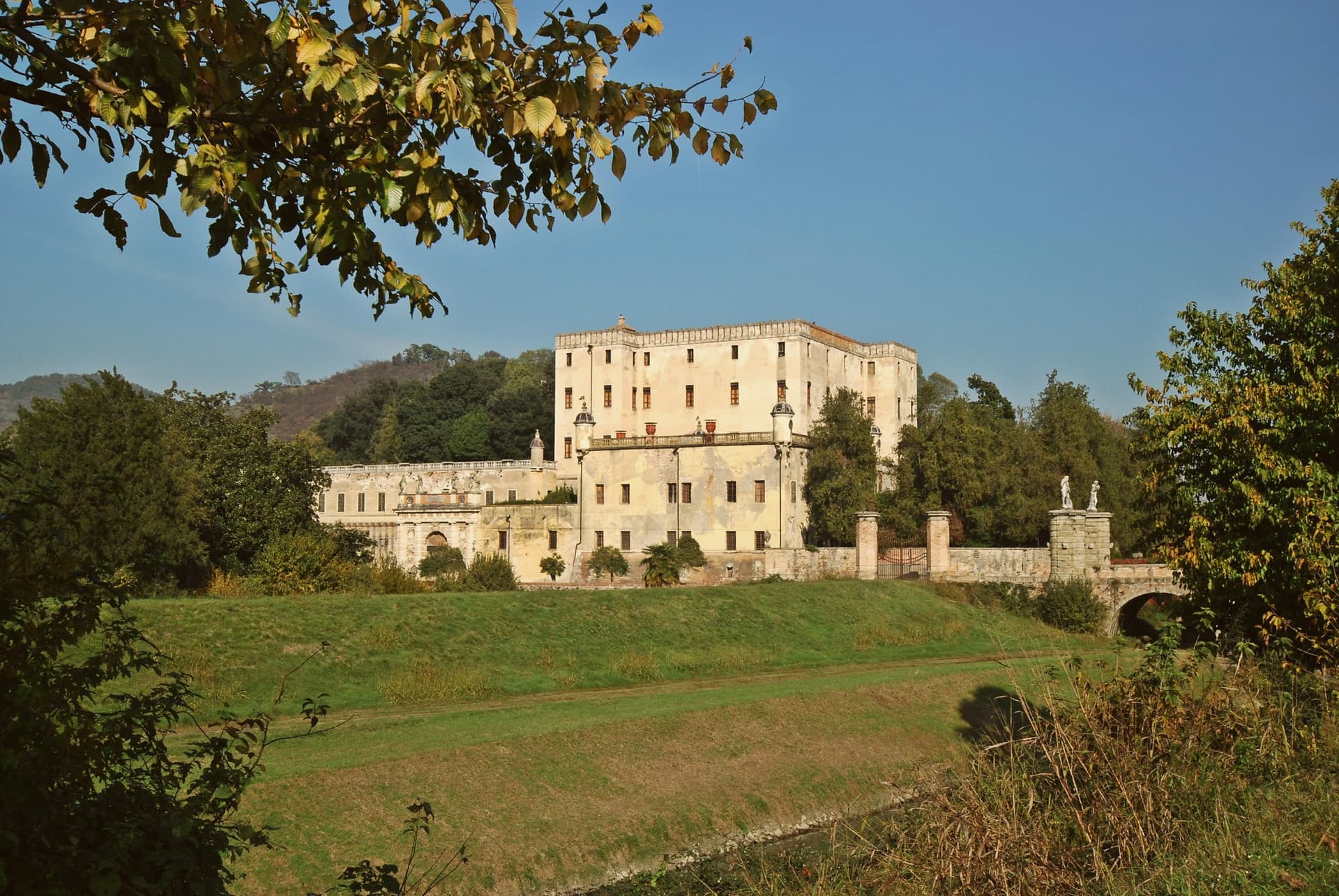
The thermal springs surface here too: warm saline water and a natural vapour grotto known since the Middle Ages, exploited from the eighteenth century at the Terme di Battaglia. Above town stands the Castello del Catajo, built 1570-73 by Pio Aeneas I degli Obizzi to control the canal, with frescoes and Renaissance esoteric symbols across forty rooms.
What to see in Battaglia Terme
- Castello del Catajo. Hilltop castle built 1570-73 by Pio Aeneas I degli Obizzi, with frescoes and esoteric Renaissance symbols across more than forty rooms.
- Museo della Navigazione Fluviale. Italy's only river navigation museum, with over four thousand objects from boats and tools to boatmen's diaries and navigation charts.
- Canale di Battaglia. Canal dug 1189-1201 by the Paduans, still navigable, running through the center of town and crossed by historic bridges.
How to get to Battaglia Terme
There is a railway station in the town, so you can arrive without a car and never need one while you are here. Padova is roughly 21 minutes away by road.
Our tip
Battaglia works year-round through the springs, but the canal-and-castle season runs April through October. Spring and autumn are best for walking the towpaths between Battaglia, Monselice and Este, when the Euganean hills above are green and the canal water is clear. July and August are warm and mosquito-thick along the canal; the spa hotels keep the visitors but the towpaths empty.
Castrocaro Terme e Terra del Sole
Why visit Castrocaro Terme e Terra del Sole
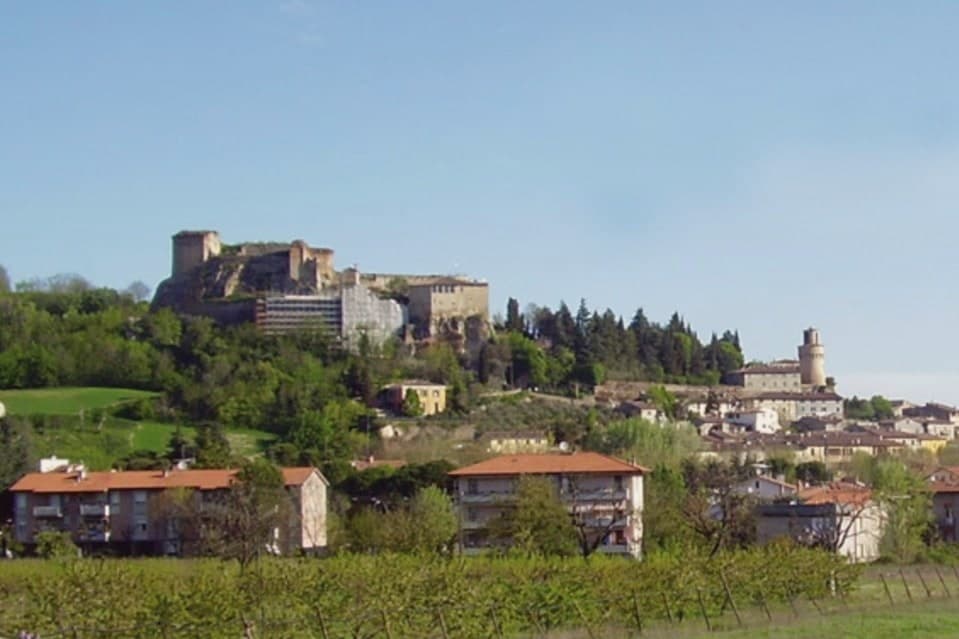
The commune sits at 68 meters on the Montone river, ten kilometers southwest of Forlì in the Apennine foothills, and is the union of two distinct towns rather than one that simply grew. Castrocaro occupies the hill, its castle controlling the valley from above.
The fortress town on the plain below it was built in one campaign to project the authority of the Grand Duchy of Tuscany into Romagna, rather than accumulated over centuries like its neighbor. The Medici governed it until 1923, when the provincial border finally moved and the arrangement ended.
The two halves of the commune read like two different centuries standing next to each other: one shaped by defense over generations, the other stamped out whole by a single ducal decision in 1564. What the pairing adds up to is a rare chance to see, in the space of one small commune, both how a medieval hill fortress evolved and what a Renaissance planner intended a fortress town to look like when built from nothing, a place called Terra del Sole.
What to see in Castrocaro Terme e Terra del Sole
- Rocca di Castrocaro. One of the oldest castles in Italy, standing on the hill above the centro with three concentric defensive rings, built to command the valley below.
- Terra del Sole. Two squares, four gates, and bastioned walls still standing, laid out with the geometric symmetry of a town designed on paper rather than grown over time.
- Palazzo dei Commissari e del Pretorio. On the central square, the residence of the Medici governors of Romagna Fiorentina until 1772, its facade facing the town's planned axis.
How to get to Castrocaro Terme e Terra del Sole
Forlì is roughly 19 minutes away by road.
Our tip
Castrocaro Terme runs all twelve months because the thermal water does. The Terme stay open year-round, with the lowest tariffs from November to March and the most space in spa hotels through mid-week stays in winter. April through June brings green on the Apennine slopes and the gardens around Terra del Sole.
Montechiarugolo
Why visit Montechiarugolo
Montechiarugolo sits ten kilometers southeast of Parma at the edge of the Enza valley, on the historical border between the Duchy of Parma and the Reggio territory. The Sanvitale family raised a first military outpost here in 1121; the current castle, polygonal in plan with walls five meters thick and a thirty-meter ditch, was rebuilt by the Torelli after 1406 and hosted Pope Paul III and Francis I of France during the sixteenth century.
The Kingdom of Italy sold the manor to Antonio Marchi in 1864, and his descendants still own and open it. The surrounding fields run with the middle Enza dairies that produce Parmigiano-Reggiano under the Parma consortium.
The commune extends to the Monticelli spa frazione, the only thermal complex in the province. Beyond Parmigiano and the castle, Montechiarugolo holds two institutional signals: Borghi più belli d'Italia and Comuni Virtuosi for its environmental policy.
What to see in Montechiarugolo
- Castello di Montechiarugolo. Polygonal fourteenth-century fortress on a promontory above the Enza, with five-meter walls, a wide ditch, and frescoed halls; still privately owned by the Marchi family.
- Chiesa di San Quintino. Eighteenth-century parish church on the edge of the centro storico, rebuilt after the older medieval pieve was incorporated into the castle complex.
- Terme di Monticelli. Thermal spa in the Monticelli frazione, drawing on iodine-bromine-salt waters discovered in 1924 during oil exploration in the Enza plain.
How to get to Montechiarugolo
Parma is roughly 24 minutes away by road.
Our tip
April through June and September through October are the working months. The Enza fields turn green in spring and stay that way until the cheese-making cycle quiets in summer. July and August touch thirty-five degrees on the plain and the castle terrace becomes the coolest spot in the borgo.
Abano Terme
Why visit Abano Terme
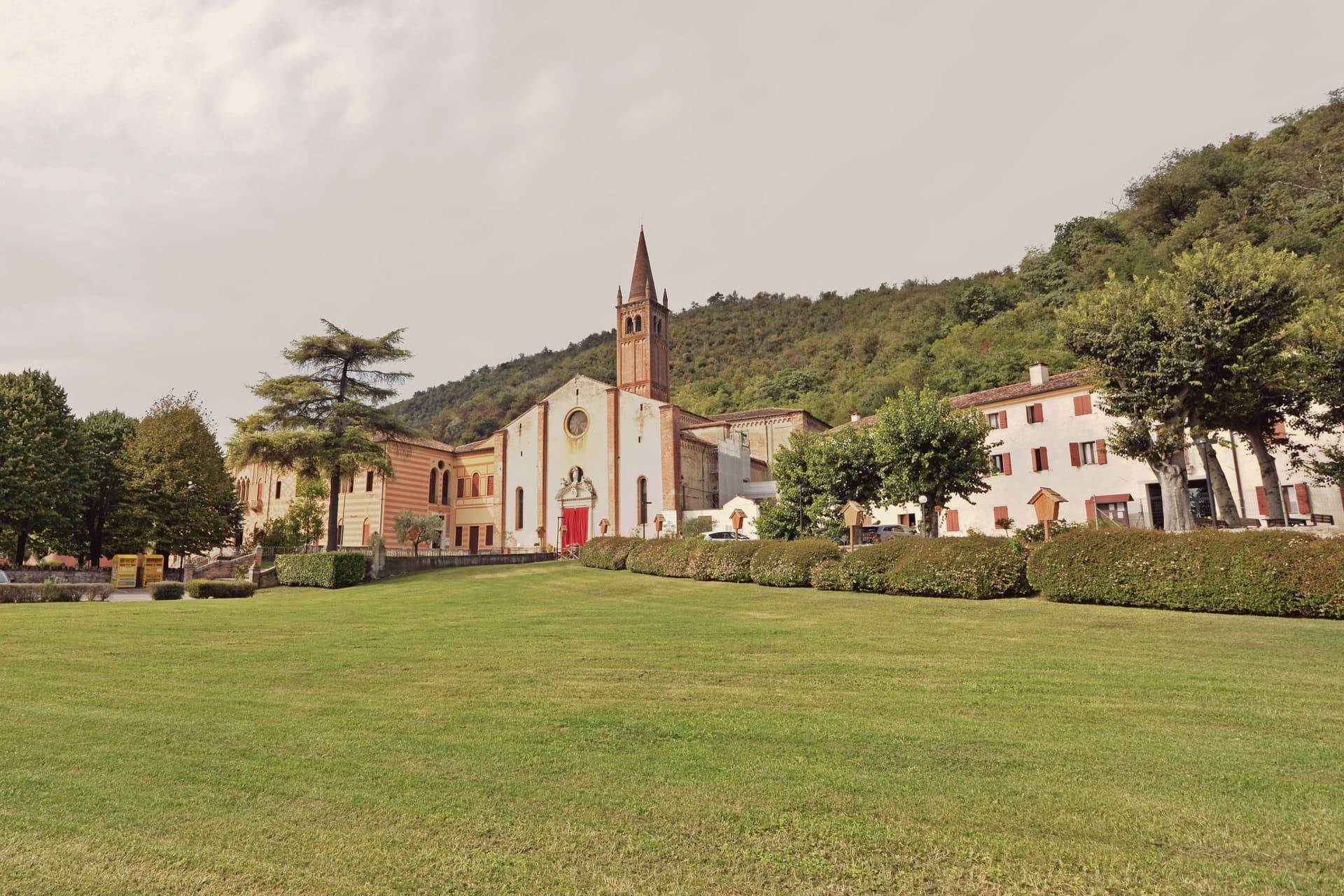
Abano Terme sits at 14 meters on the eastern slope of the Euganean Hills, ten kilometers southwest of Padova. The springs surface at 80°C, classified as hyperthermal bromo-iodine-salt water, and the Veneti were already worshipping them in the eighth century BC.
The Romans built a temple to Aponus here and called the place Aquae Patavinae. The Lombards destroyed the baths in the sixth century.
They were rebuilt when Abano became an autonomous comune in the twelfth, enlarged again in the late fourteenth, and absorbed into the Republic of Venice from 1405 to 1797. The Colle Montirone archaeological site still holds traces of the Roman thermal complex, and the Duomo di San Lorenzo, rebuilt in 1780 over an older church, anchors the historic center.
The contemporary draw is fango-balneotherapy: mineral mud aged for sixty days in the source basins, then applied at body temperature. Most of the 250 hotels in Abano-Montegrotto are spa hotels.
What to see in Abano Terme
- Duomo di San Lorenzo. Cathedral rebuilt in 1780 over a pre-existing church, with a campanile dating to the fourteenth century and a Baroque interior.
- Colle Montirone. Archaeological site on a small thermal hill, with traces of the Roman baths of Aponus and an obelisk erected in the eighteenth century.
- Parco Termale Urbano. Public thermal park threading the centro storico, with footpaths between hotels, gardens and the source pools.
How to get to Abano Terme
There is a railway station in the town, so you can arrive without a car and never need one while you are here. Padova is roughly 15 minutes away by road.
Our tip
Abano works year-round because the heat comes from underground. January through March is peak spa season for residents of northern Italy: the contrast between cold air and hot pools is part of the appeal, and hotel cure programs run twelve days at this time. April through June and September through October bring the hills into play, with walking weather and lighter spa traffic.
Castel San Pietro Terme
Why visit Castel San Pietro Terme
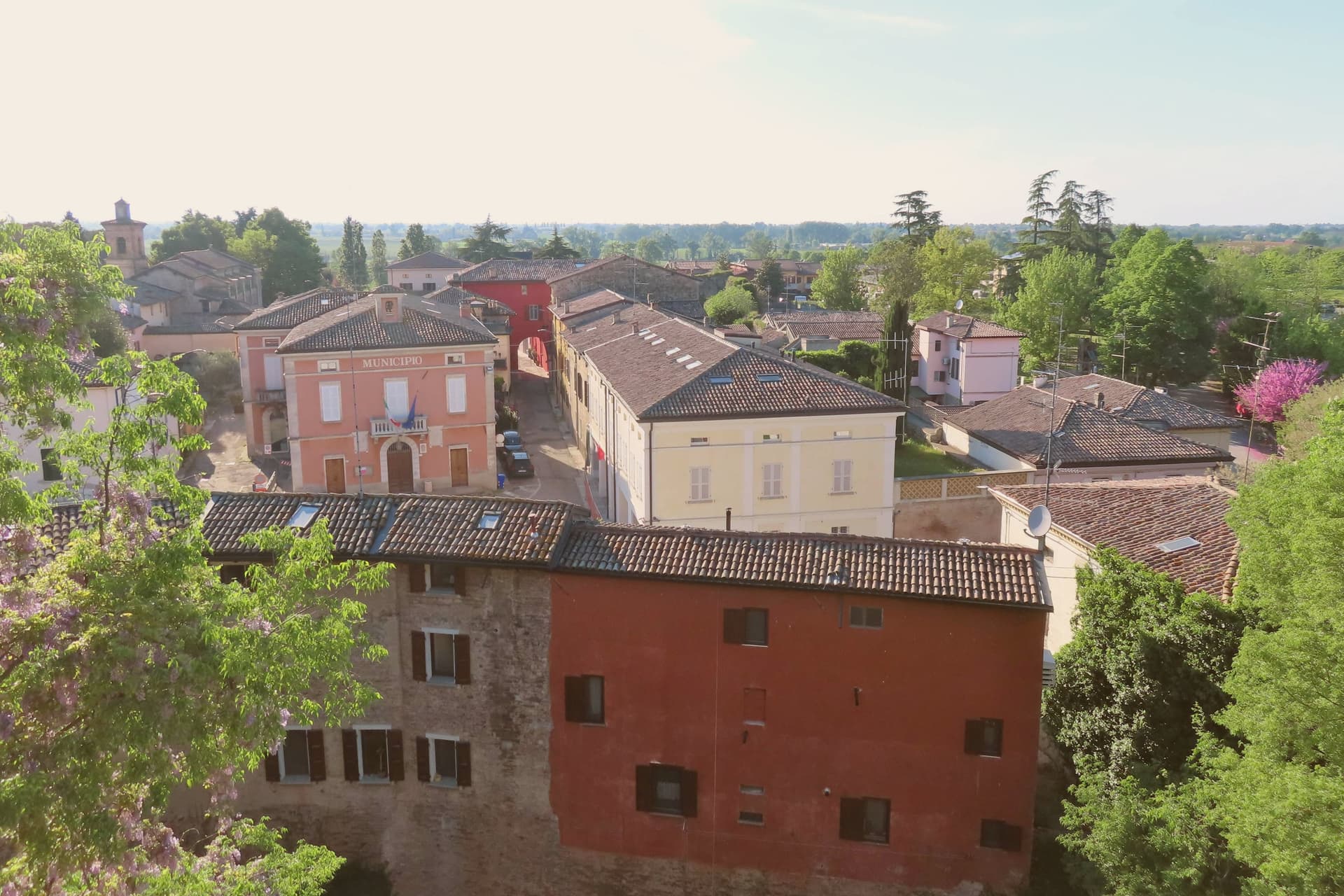
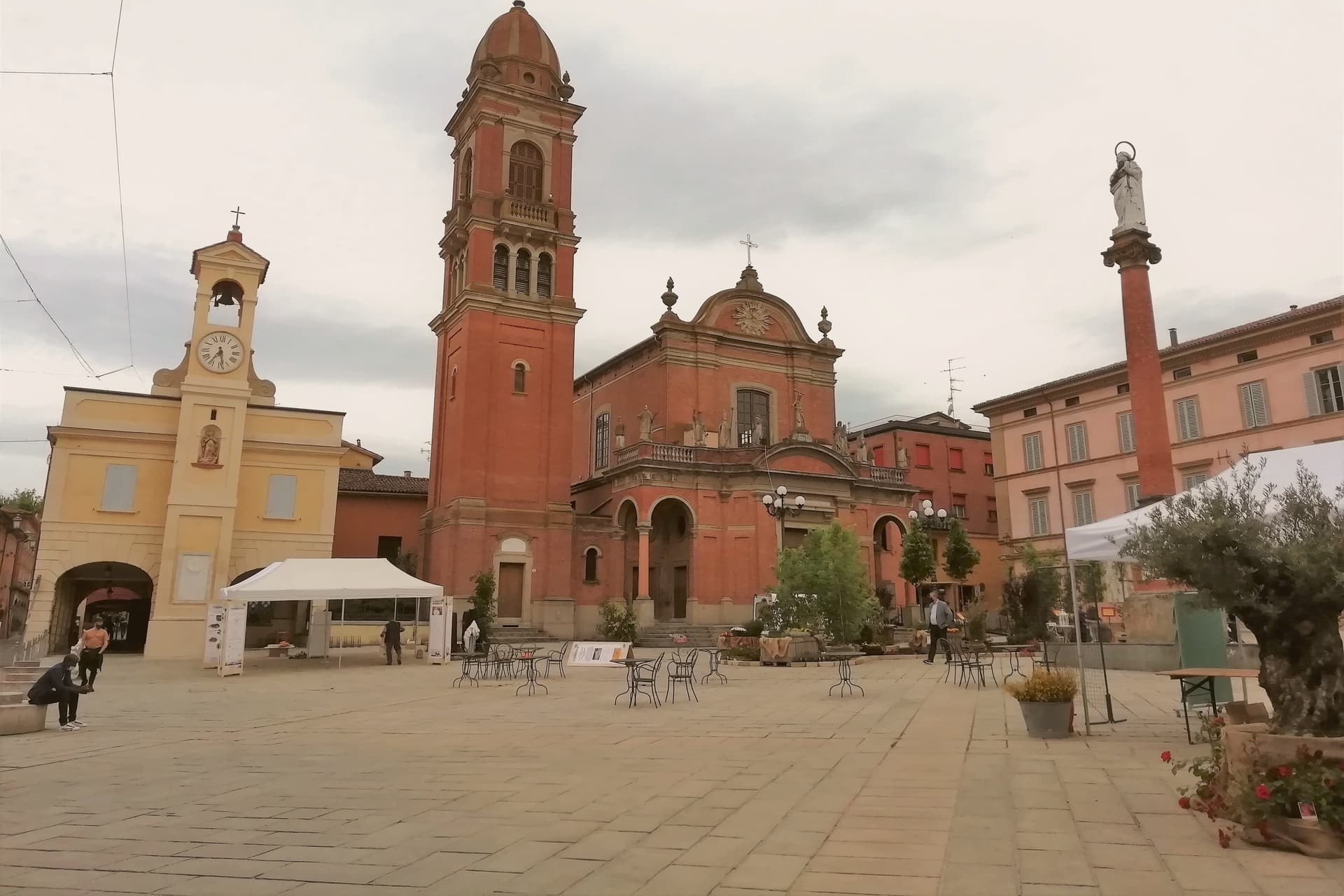
The town sits on the Sillaro river, which marks the historic border between Emilia and Romagna, twenty kilometers east of Bologna on the Via Emilia. It was founded as a Bolognese castrum in 1200, and the walled core still follows that original plan, with the river bridge on one edge and the road toward Imola leading out past the walls to the pilgrimage shrine beyond.
Castel San Pietro also joined the Città dell'Olio network for its hillside olive cultivation, a rural counterpart to the spa and civic life inside the walls. The Conservatorio Santa Caterina, founded in 1741, is one of the older female educational institutions still active in the region, sitting inside the same historic core as the gateway and the town hall.
The town reads as two things held together: a walled medieval seat on a border river, and a spa destination whose waters predate the walls by decades. Both draw on what was already there long before either was built up for visitors.
What to see in Castel San Pietro Terme
- Cassero. The gateway stands at the southern edge of the old walls, its stone face marking what was once the main entry into the castrum. Inside, the civic theater now occupies the space, so the structure that once controlled access to the town now hosts its audiences.
- Terme di Castel San Pietro. The complex draws on sulphurous, ferruginous and salt-bromine-iodide springs, with the first establishment opened in 1870. The waters run year-round from the same sources used centuries before the modern building existed.
- Santuario del Crocifisso del Piratello. Pilgrimage shrine on the Via Emilia toward Imola, built around a fifteenth-century crucifix and decorated by Innocenzo da Imola. It drew pilgrim traffic from across northern Emilia, standing apart from the walled town on the road out toward Romagna.
How to get to Castel San Pietro Terme
There is a railway station in the town, so you can arrive without a car and never need one while you are here. Bologna is roughly 39 minutes away by road.
Our tip
Castel San Pietro Terme runs all twelve months because the thermal water does. Spring and autumn are the easier months for walking the centro storico and the Sillaro valley, with mild light and the olive groves on the hill above town green or harvest-coloured. June through August touches the low thirties and humid, but the spa runs longer hours in summer and the riverside frazione of Osteria Grande stays cool.
Comacchio
Why visit Comacchio
Comacchio sits at sea level fifty kilometers east of Ferrara and forty south of the Adriatic delta proper. The town passed through Etruscan hands, then Byzantine rule under the Exarchate of Ravenna, then the Duchy of Ferrara, then Papal government until unification, a succession that left the centro storico layered rather than uniform.
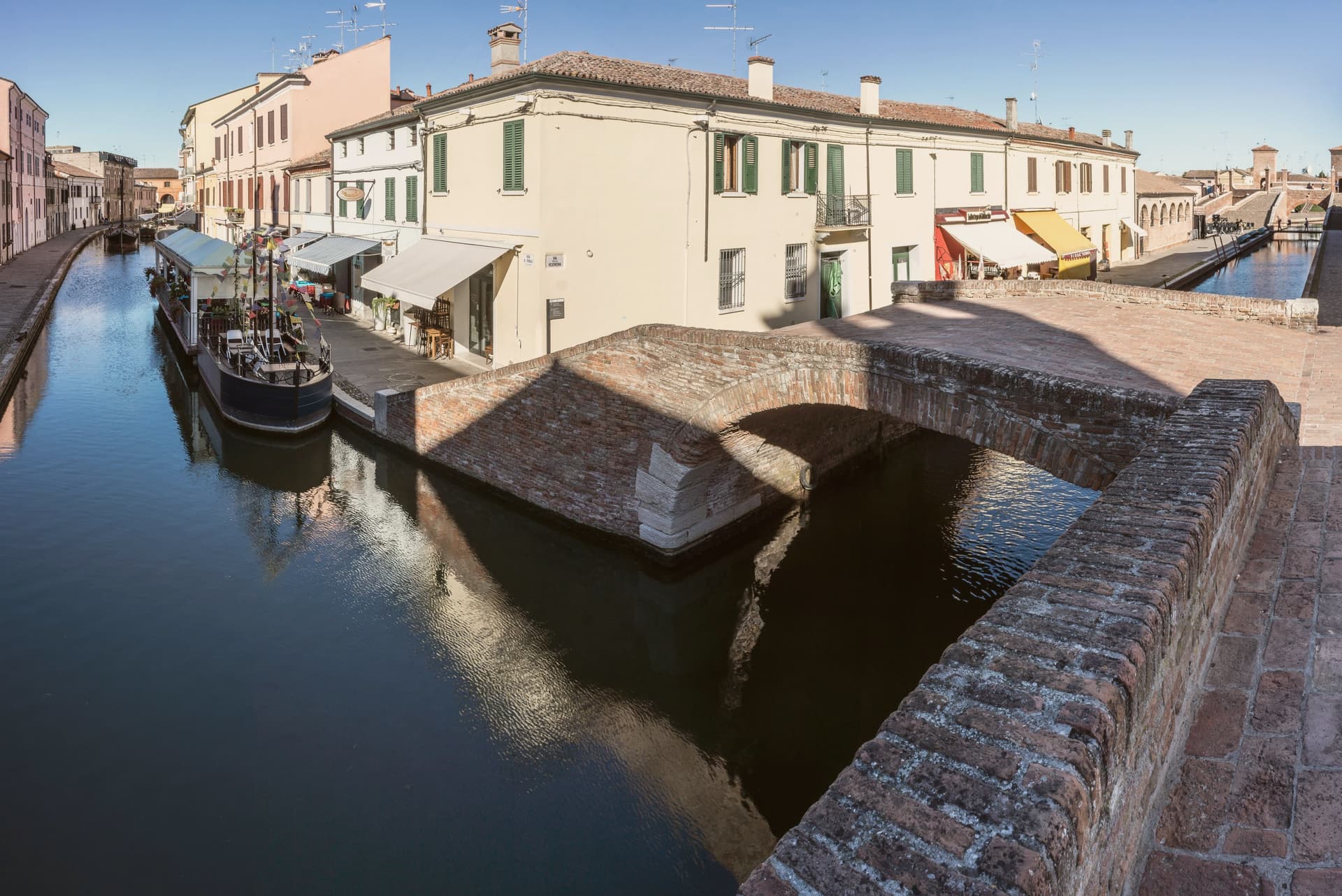
The lagoons that surround it formed from tenth-century subsidence and later silting, and now run as a protected area inside the UNESCO inscription that covers the historic Ferrara plain, linking the town to the wider delta rather than setting it apart. The old town itself is water-built: thirteen islets tied together by bridges, canals threading between the Loggia del Grano and the Loggiato dei Cappuccini, with the bridge acting as the hinge where the inland waterways meet the canal running out toward the sea.
What the layers of rule left behind in stone, the lagoon and the tides have kept in motion around it: a town whose center is inseparable from the water that surrounds it, built up in pieces by whoever governed it at the time.
What to see in Comacchio
- Ponte dei Trepponti. Built around 1638 by Luca Danese of Ravenna, the bridge is the meeting point of three internal canals with the canal Pallotta and the symbol most visible from the water.
- Valli di Comacchio. The lagoon opens flat to the horizon at the edge of the Po Delta, its surface broken by fishing stations and the pink of the resident flamingo colonies.
- Museo Delta Antico. Archaeological museum opened in 2017 inside the eighteenth-century Ospedale degli Infermi, with finds from the Etruscan necropolis of Spina.
How to get to Comacchio
Ravenna is roughly 45 minutes away by road.
Our tip
May through September is the working season for Comacchio. Late May and June are best, when the lagoons hold migrating birds and the heat has not yet pushed visitor numbers into the August peak. The Valli boat tours run from spring to autumn, with flamingos visible all year round on the brackish edges. Festa di San Cassiano falls in August.
Cervia
Why visit Cervia
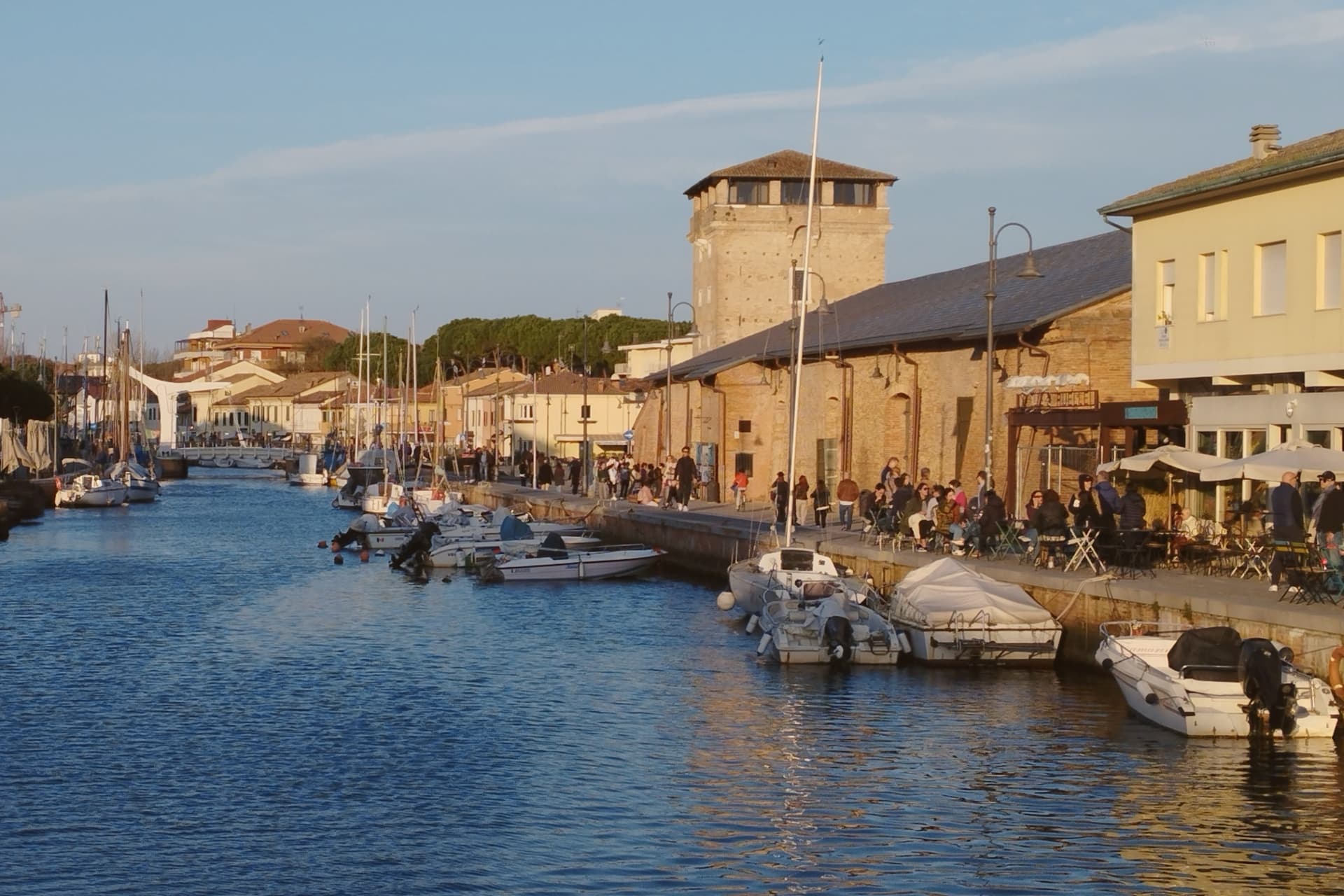
Cervia sits at sea level on the Adriatic, twenty kilometers south of Ravenna, between the pine forest of Milano Marittima and the salt pans that have given the town its identity since Roman times. The original settlement, Ficocle, stood inside the saline itself; the move to the coast in 1697 put the grid of workers' housing where it now stands, closer to the water and to the canal port that the tower on its north side was built to guard.
The two halves of the municipality read as a pairing of extraction and leisure: the saline and the old grid town to the south, worked continuously and still yielding salt by hand at one basin, and the planted pine forest to the north, laid out as a garden-city resort in the following century. The museum inside the old salt warehouse holds two thousand years of the tools and records that connect the two eras.
The beach carries Bandiera Blu recognition along nine kilometers of coast. What holds the town together is that its shape was dictated by salt long before tourism arrived: the grid, the tower, the canal and even the forest to the north all trace back to the working of the saline, with the resort at Milano Marittima grown from land the salt industry had left standing.
What to see in Cervia
- Saline di Cervia. Working salt pans covering 827 hectares, the northernmost in Italy, with the Camillone basin still harvested by hand using nineteenth-century methods.
- Torre San Michele. Defensive tower built in 1691 to protect the salt warehouses and control the canal port, on the north side of the harbor.
- MUSA - Museo del Sale. Salt museum inside the Magazzino del Sale Torre, with tools, documents and photographs gathered from former salt workers.
How to get to Cervia
There is a railway station in the town, so you can arrive without a car and never need one while you are here. Forlì is roughly 29 minutes away by road.
Our tip
May through September is the Cervia season. Late May and June hold the best balance of warm sea and quiet beach, before the Italian holiday peak. July and August bring full beach and full pine forest, with thirty-degree afternoons broken by the evening sea breeze. Festa di San Lorenzo falls in August.
Imola
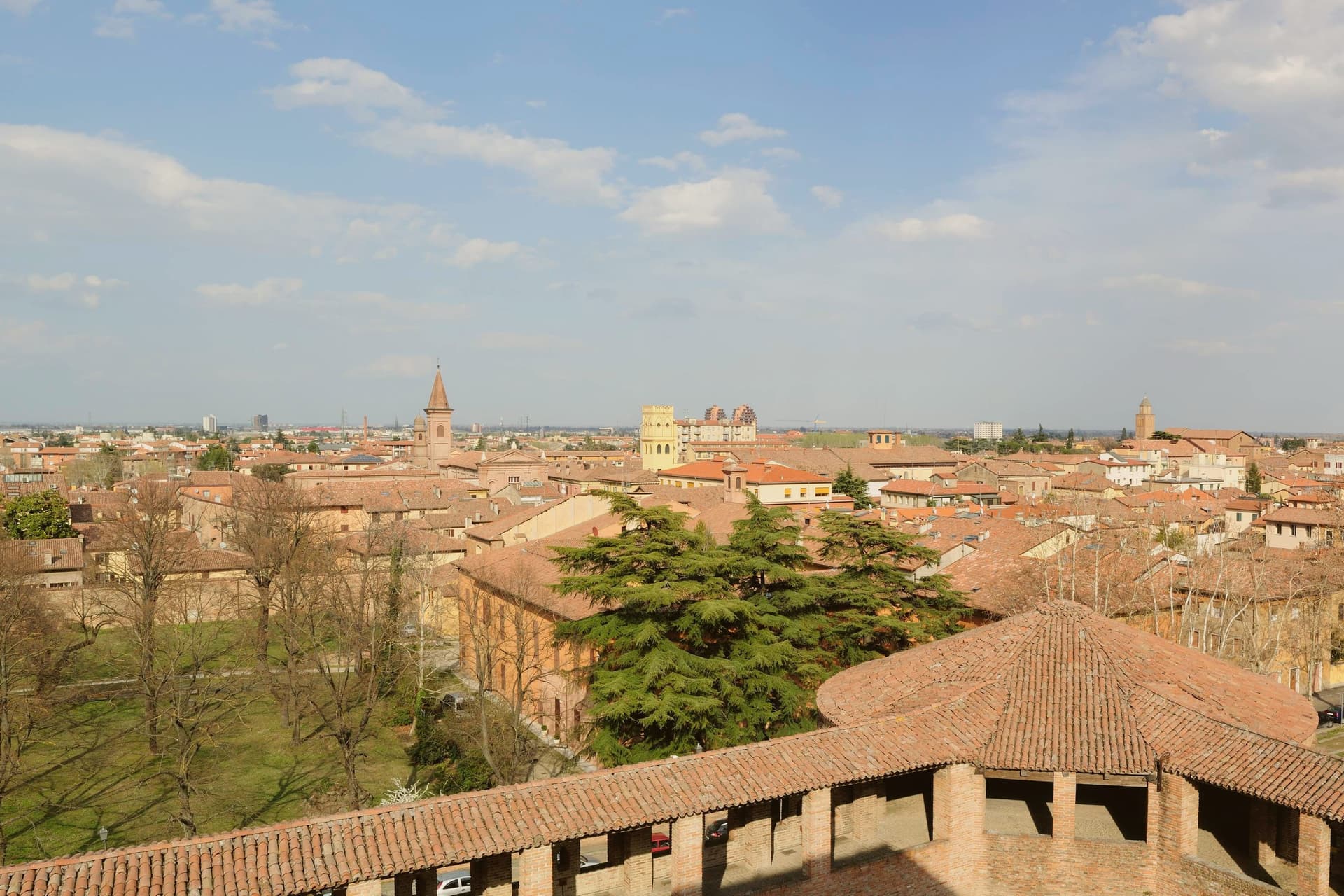
Why visit Imola
Imola is two cities sharing a name. The medieval one is a quietly handsome Romagna brick town 35 km southeast of Bologna along the Via Emilia, with the Rocca Sforzesca (rebuilt by Caterina Sforza in 1473–1499 — the Tigress of Forlì, who held this fortress through the Borgia siege of 1500) anchoring the centro.
The Palazzo Tozzoni museum, the 11th-century Cattedrale di San Cassiano with its crypt of the city's patron, the Palazzo Sersanti on the central piazza, and the medieval grid of porticoed brick streets all read as a smaller-scale Bologna. The OTHER Imola is the Autodromo Enzo e Dino Ferrari — the 4.9-km F1 circuit on the south bank of the Santerno, built 1953 and named for Enzo Ferrari and his son Dino after Dino's death.
It hosted the San Marino Grand Prix every May from 1981 to 2006 (and again 2020–present), and is the circuit where Ayrton Senna died in 1994 at the Tamburello corner — a memorial still stands there. The Emilia Romagna Grand Prix in April–May is the city's biggest tourist event of the year.
Outside race weekends the circuit is a public park; locals jog the track. The food is Romagna: piadina romagnola (the city is Città dell'Olio, and the local Brisighella Nostrana di Brisighella DOP olive oil is what dresses it), passatelli in brodo, cappelletti, Sangiovese di Romagna from the surrounding hills, and the local nocino walnut liqueur made by every grandmother in the foothills.
What to see in Imola
- Rocca Sforzesca. Caterina Sforza's 1499 four-towered brick fortress at the centro's edge — the Tigress of Forlì held it against Cesare Borgia in 1500. Museum of arms and ceramics inside.
- Autodromo Enzo e Dino Ferrari. The 4.9-km F1 circuit on the Santerno. Senna memorial at Tamburello. Open as a public park outside race weekends — locals jog the track.
- Cattedrale di San Cassiano + crypt. 11th-c cathedral with the city patron's crypt; the Madonna del Piratello pilgrimage church just outside the walls is a major regional sanctuary.
How to get to Imola
There is a railway station in the town, so you can arrive without a car and never need one while you are here. Forlì is roughly 34 minutes away by road.
Our tip
Imola is best April–June and September–October. The Emilia Romagna Grand Prix (last weekend April / first weekend May) fills every hotel for 80 km — wonderful if you're going, brutal if you're not. Summer is hot and sticky. Baccanale Imola falls in October.
More from Anywhere Italy
- The best hot-spring towns within two hours of Padua
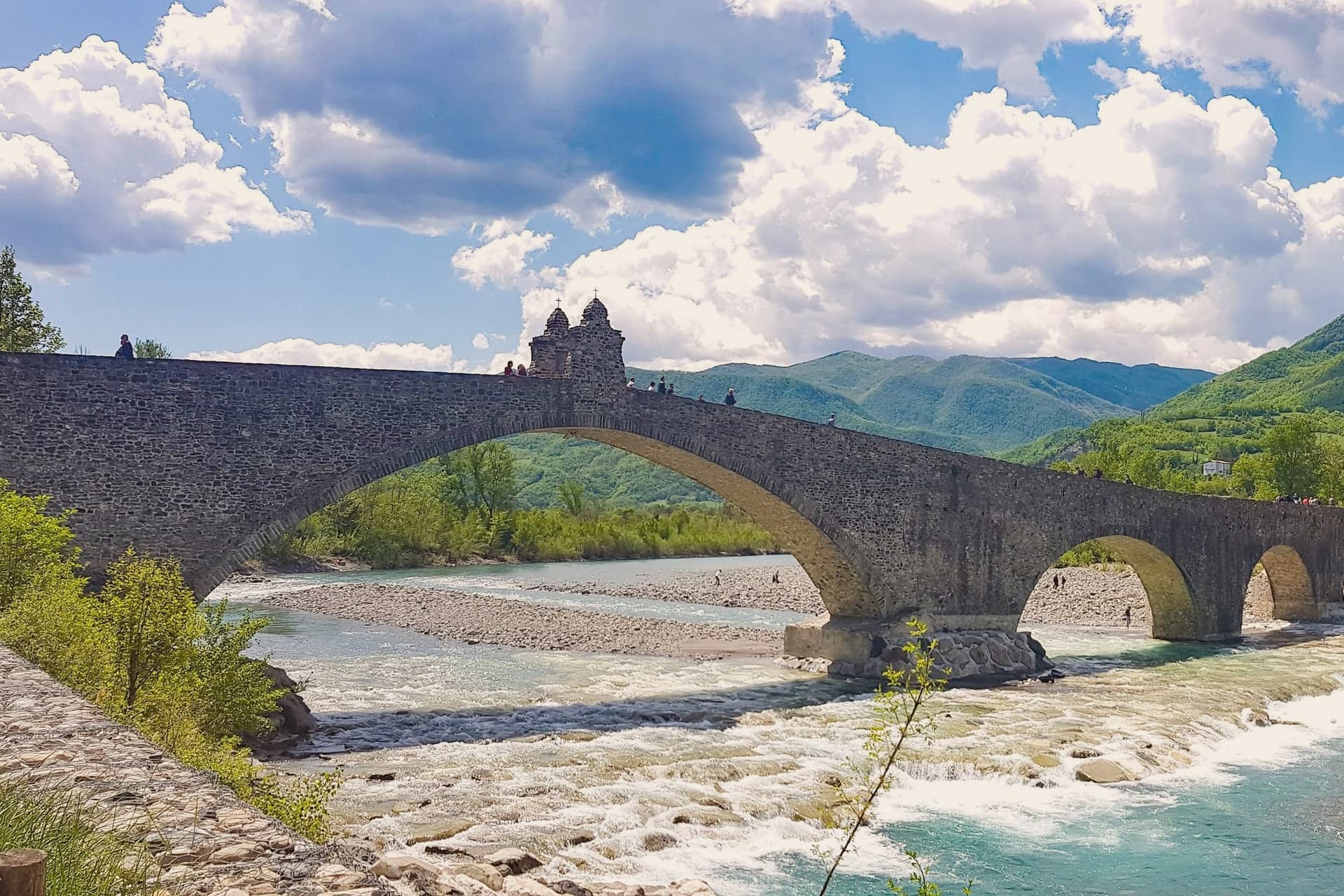 The best hot spring towns in Emilia-Romagna
- The best hot-spring towns within two hours of Verona
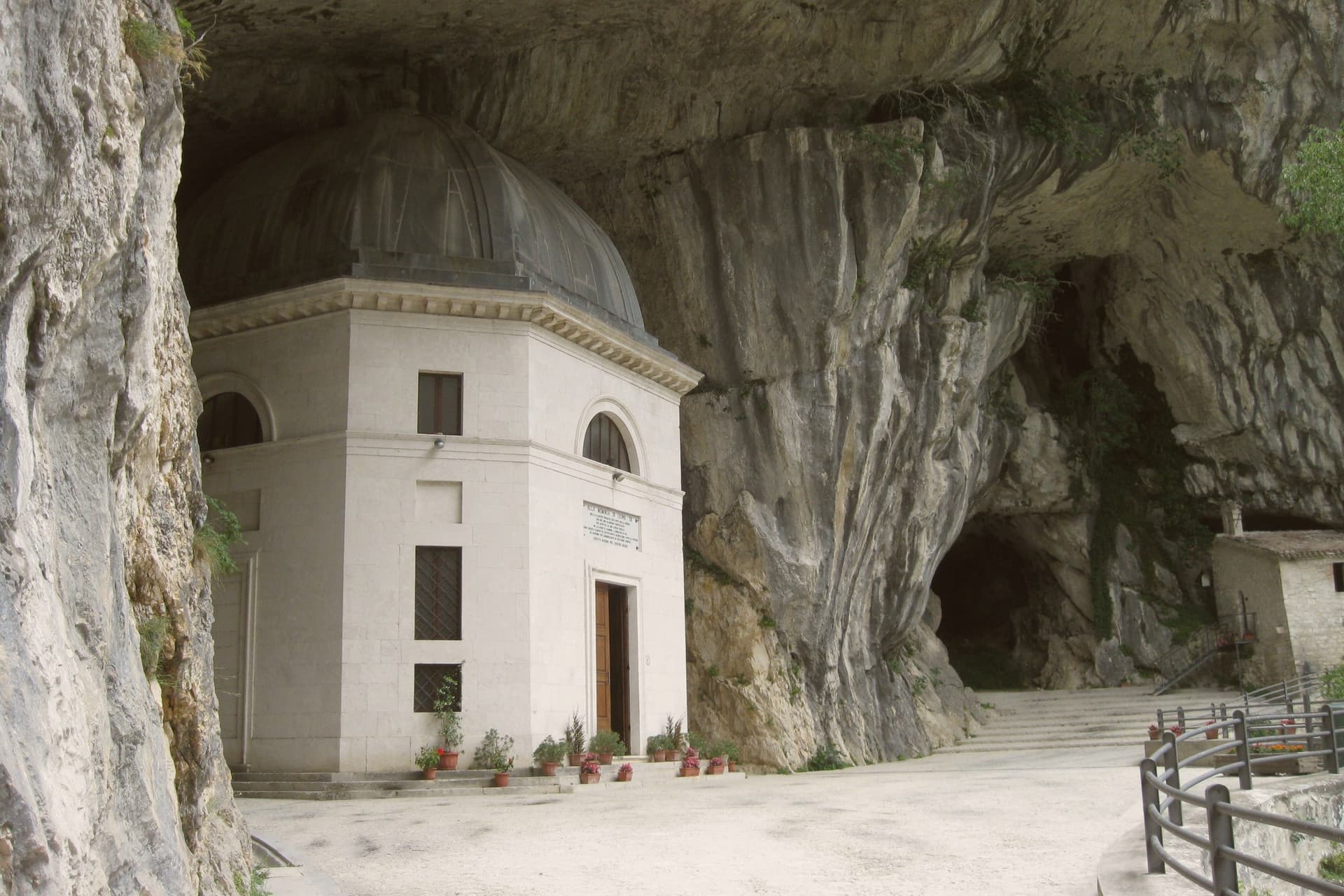 The best hot-spring towns within two hours of Rimini
- The best hot-spring towns within two hours of Brescia
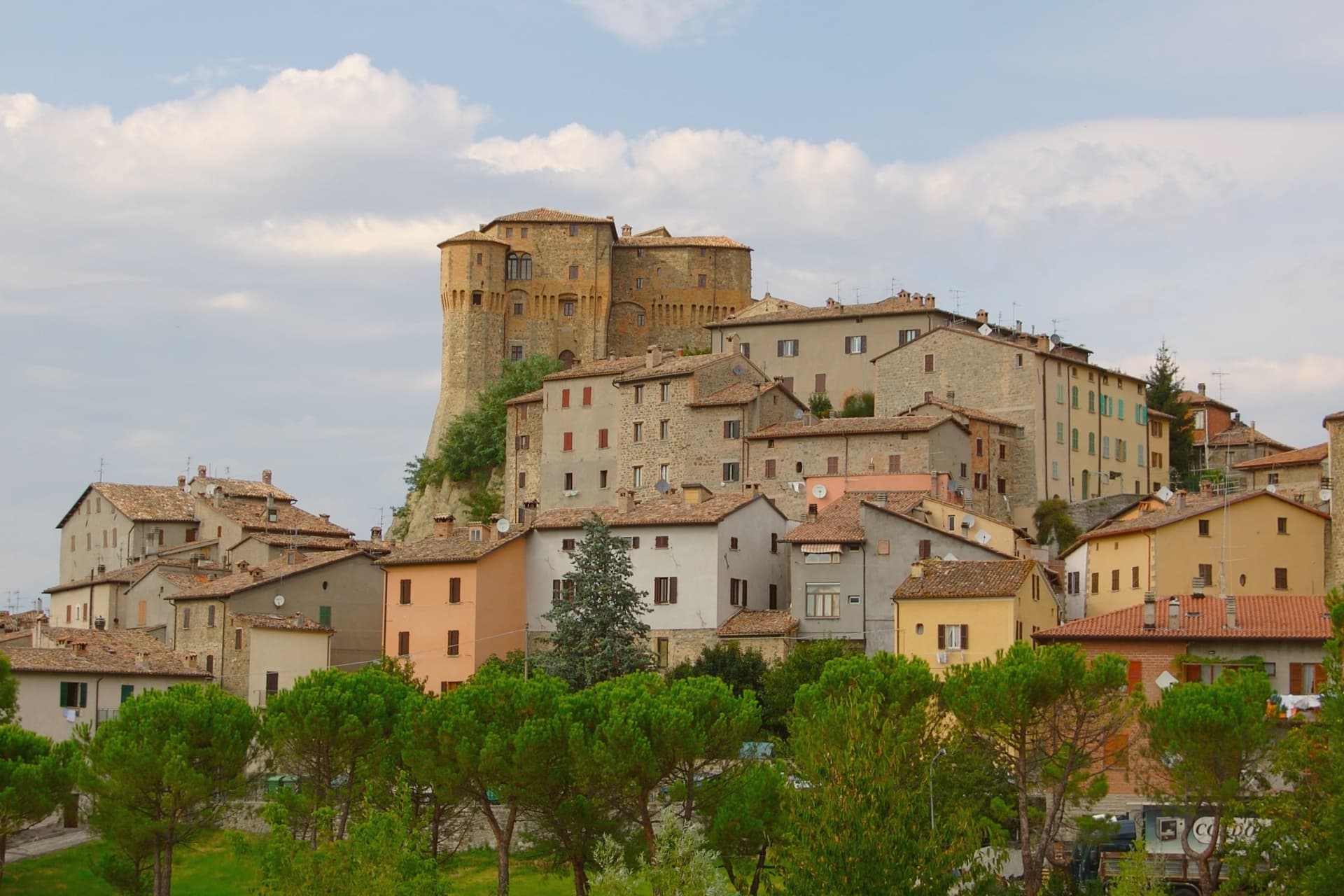 The best cheese towns within two hours of Bologna