
Marche · Ascoli Piceno
Grottammare
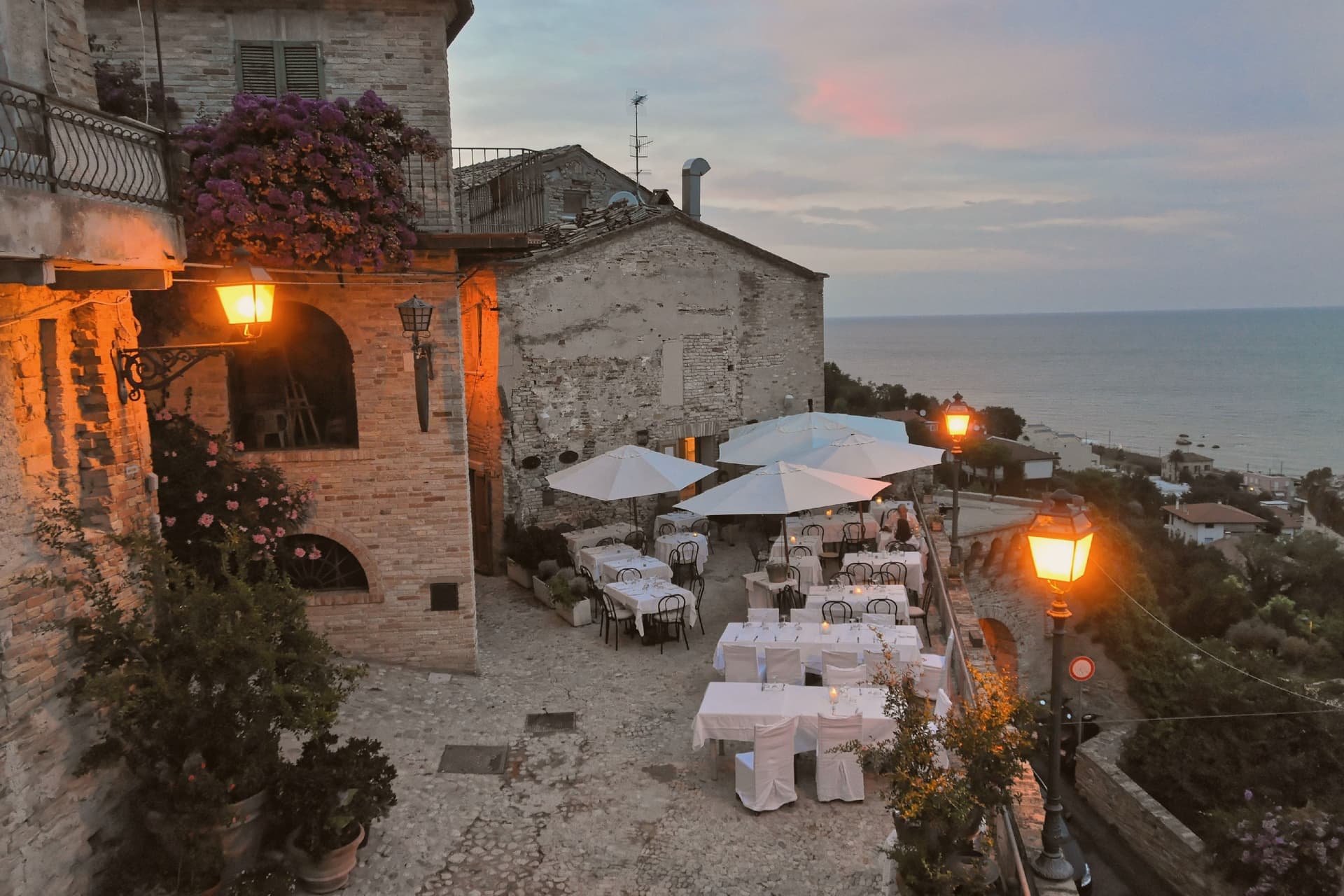
A double town on the Riviera delle Palme, with a palm-lined seafront and a medieval upper borgo where Pope Sixtus V was born.
- Best time
- May–Sep
- By car
- 59 min from Pescara
- By train
- Station in the comune
- Population
- 15,814
Known for
POPE SIXTUS V
Felice Peretti, born in the Paese Alto on 13 December 1521 and elected pope in 1585, rebuilt much of Rome and commissioned two churches in his birthplace.
RIVIERA DELLE PALME
Palm-lined Adriatic seafront with Liberty villas and clean water, holder of both the Bandiera Blu and the Spighe Verdi recognitions.
PAESE ALTO
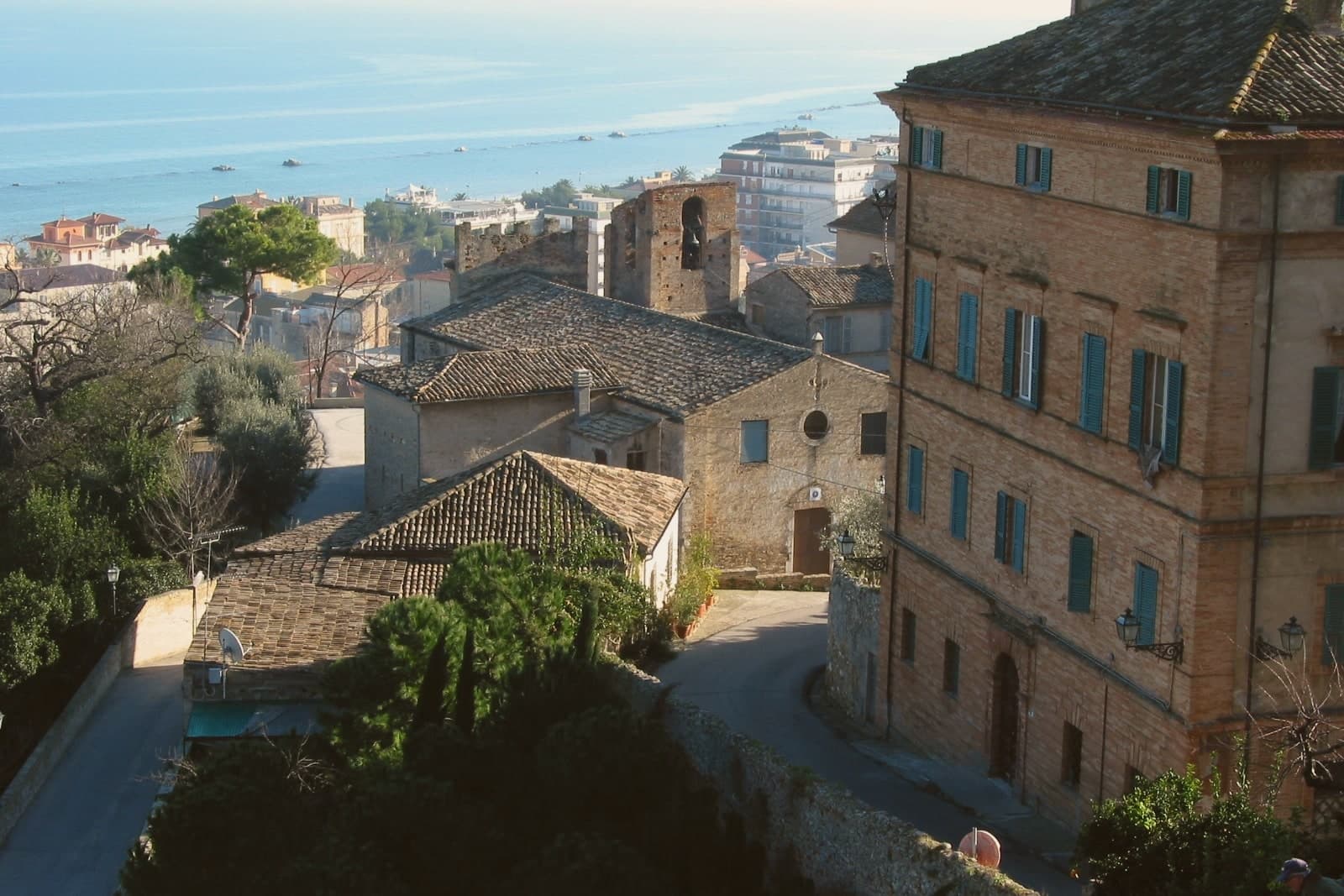
The medieval upper town on the Incasato hill, ranked among the Borghi più belli d'Italia, with eleventh-century walls and brick lanes.
When to visit
Best · May–Sep
- J12°
- F13°
- M14°
- A16°
- M21°
- J26°
- J29°
- A29°
- S25°
- O21°
- N16°
- D13°
- Best
- Hot or crowded
- Quiet
- Mostly closed
Daytime averages, 2020–2024. The sea is warmest in August at 29° and coldest in February at 10°. Weather data by Open-Meteo.com.
The festa: San Paterniano, 10 July
Why come
Grottammare sits on the Ascoli Piceno coast at the mouth of the Tesino. The town splits into two nuclei that never merged: a lungomare on the Adriatic, laid out with palms and Liberty villas in the late nineteenth century, and an older settlement on the hill above, reached by climbing away from the water rather than along it. Felice Peretti was born in that upper settlement on 13 December 1521, in a house on what became the borgo's central square.
He left, rose through the church, and returned as Pope Sixtus V only in monument: two churches he commissioned for his birthplace after 1585, one built beside the house itself and one now holding the collection of objects he sent back from Rome. The upper town still carries its eleventh-century walls and the traces of an earlier fortress on the Incasato spur, and it has been named among the Borghi più belli d'Italia. The coast below has its own separate recognitions, for water quality and for the management of the hills behind it. The two halves read as a single biography split in space: the hill holds the birth and the memory, the shore holds the later invention of the town as a seaside resort, and neither nucleus explains itself without the other.
The Sunday letter
Grottammare is on our list. Its letter is still to come.
We are writing about all 1,000 of these towns, one at a time, in a free letter every Sunday: the photo, the food, the festa. That is our mission. Sign up and you will be there when Grottammare comes up. By Peter & Sophia, from Pietrasanta.
Read on
Grottammare in our articles
 The 6 prettiest villages with a serious restaurant within 90 minutes of Pescara6 towns, Grottammare among them.
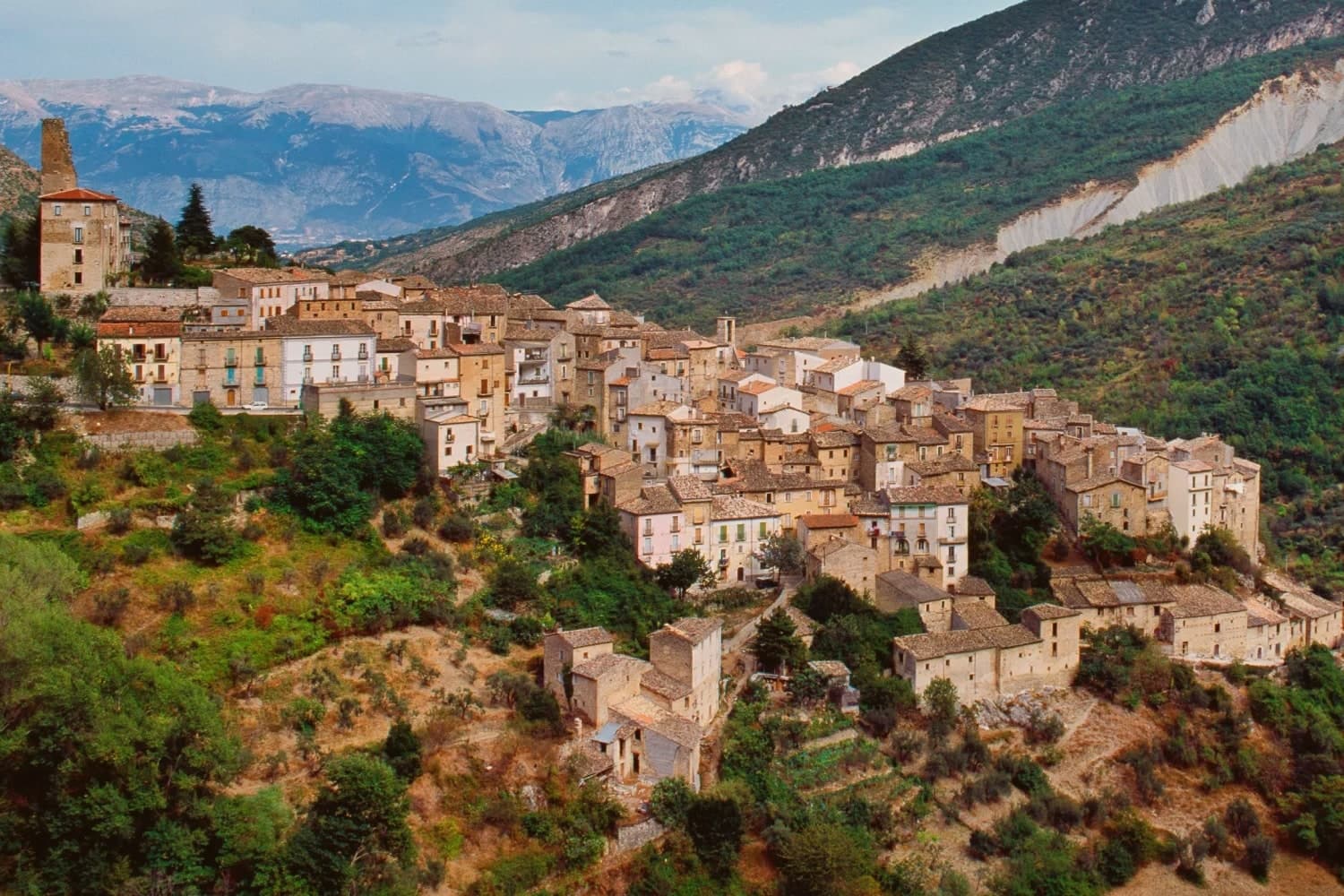 The prettiest villages you can reach by train within 90 minutes of Pescara6 towns, Grottammare among them.
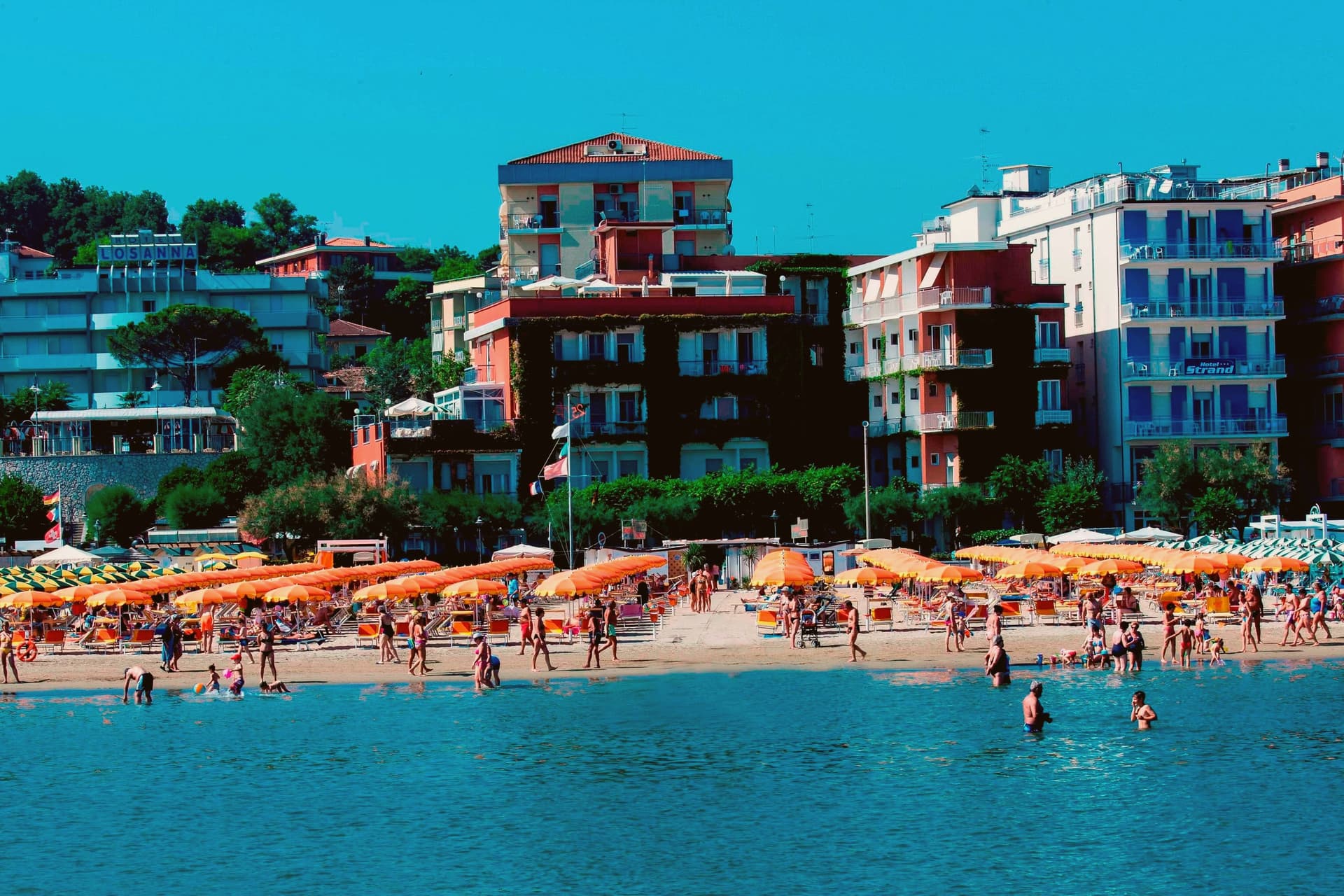 The best coastal towns you can reach by train in Marche7 towns, Grottammare among them.
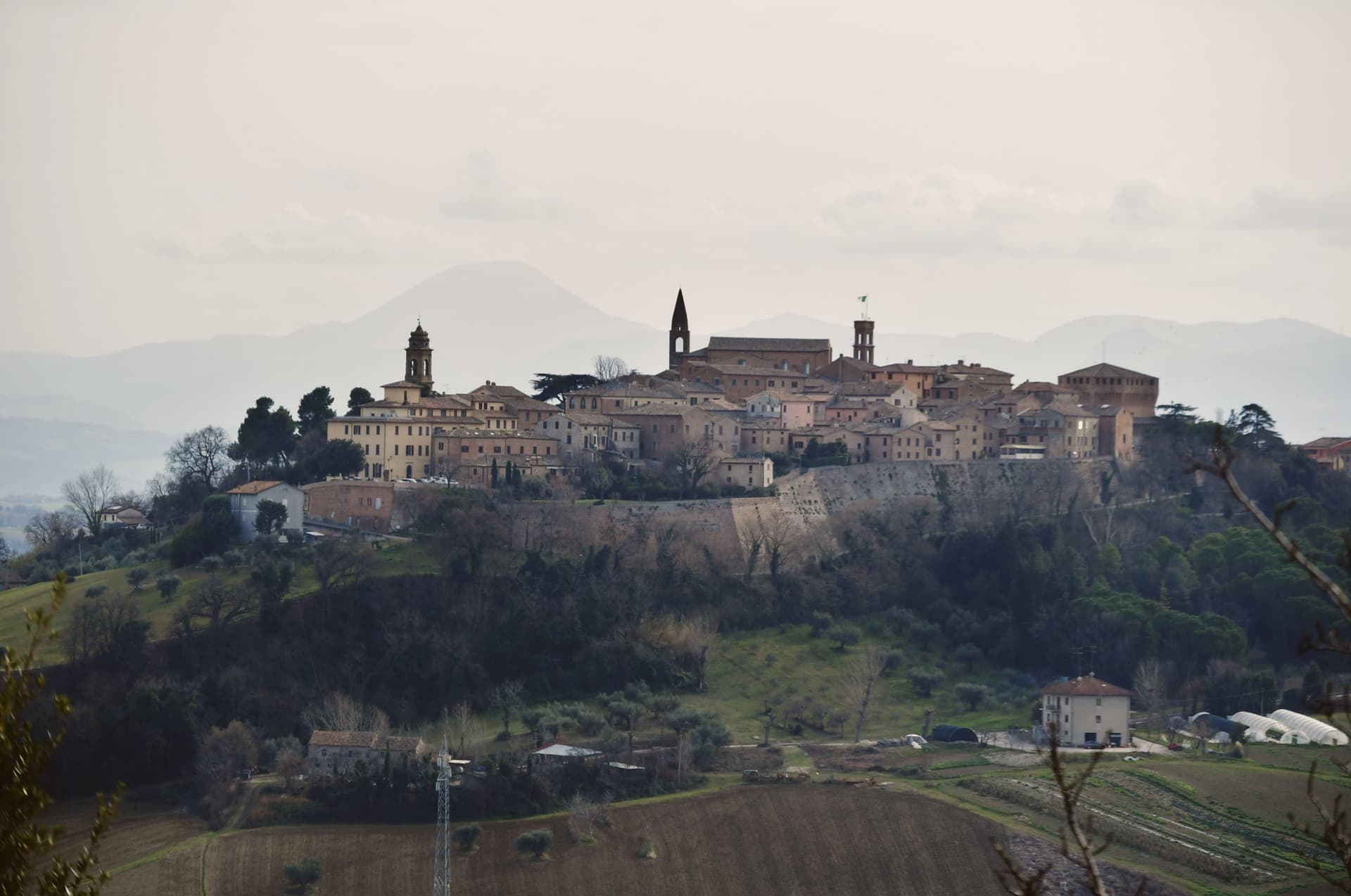 The 8 prettiest villages that eat well in Marche8 towns, Grottammare among them.
How to get there
From Ancona / Pescara (AOI), about 1h 8m by car.
Rimini (RMI) is about 2h 11m away.
By car from the centre of Pescara 59 minutes or Ancona 1 hour.
There is a railway station in the comune, so you can arrive without a car.
Coming by train into Pescara Centrale? Grottammare is about 57 minutes away by road.
What to see
Paese Alto (Borgo Antico)
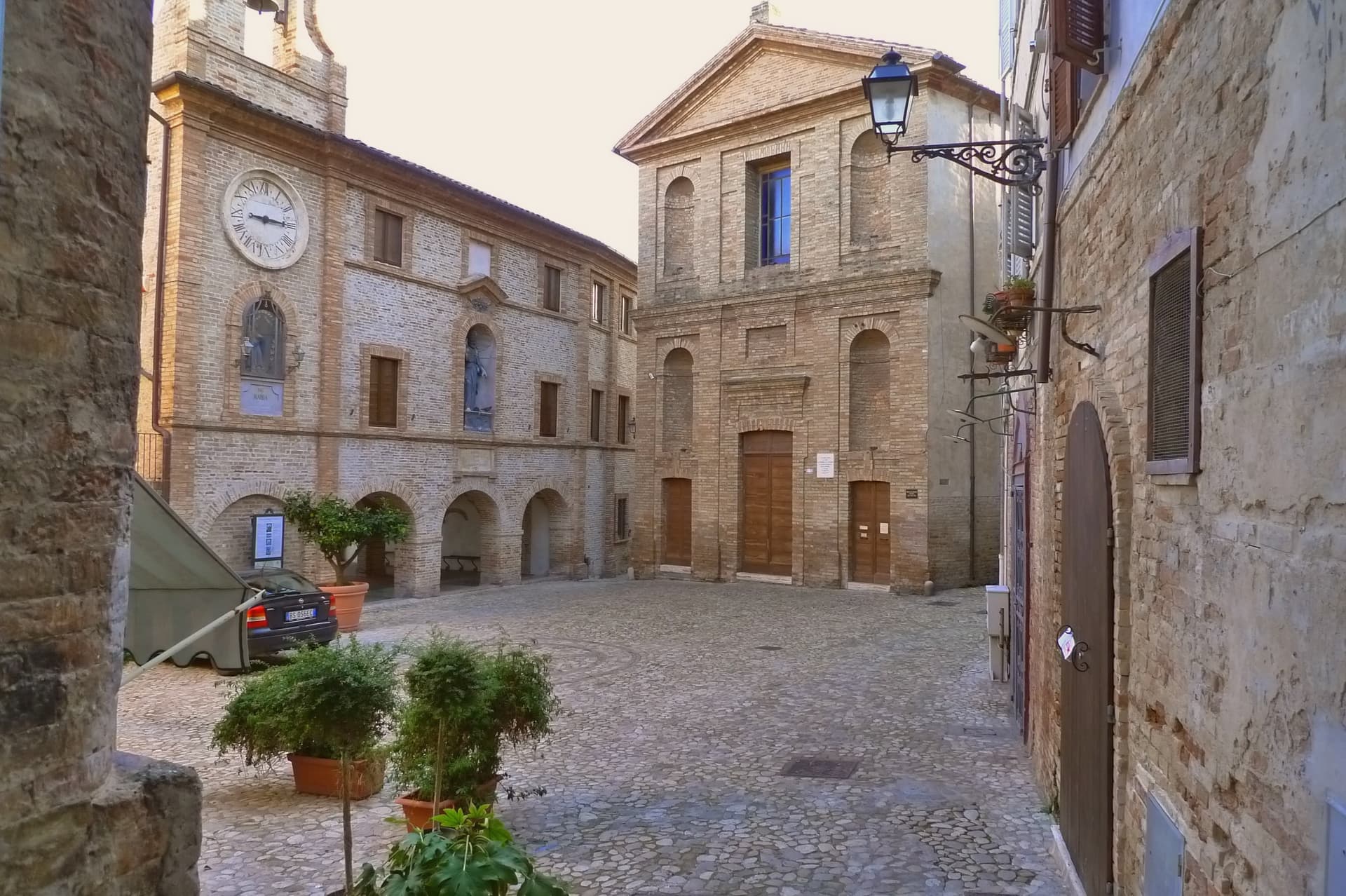
Brick lanes climb the Incasato hill inside the eleventh-century walls, past the remains of a fortified spur that looks down over the seafront below.
Chiesa di Santa Lucia
On the central square of the upper town, next to the house of Peretti's birth, a plain sixteenth-century commission from a native son grown powerful.
Museo Sistino
Inside the Chiesa di San Giovanni Battista, the liturgical objects on display came back to the town only after the local boy had become pope.
Lungomare De Gasperi
The promenade runs beneath rows of palms and the facades of Liberty-era villas, its water carrying the Bandiera Blu designation.
Teatro dell'Arancio
A small nineteenth-century theatre set inside the Palazzo del Comune, named for the orange tree still standing in its courtyard.
The slow-trip planner
Building a trip? Find where Grottammare fits in a slow Italy circuit.
Answer five questions. We will shape a geographically coherent slow trip from the 1,000 Italian towns most travelers skip. Yours to save and share.
We recommend
Where to eat
Not our picks, but places the guides put their name to: a Michelin star, a Gambero Rosso fork, a Slow Food snail, a Michelin Key for the hotels. Worth a table, a counter, or a night when you pass through.
Attico sul MareRistorante
Two Gambero Rosso forks (82/100) for Attico sul Mare, and a spot in the Michelin Guide.
Don DiegoRistorante
Don Diego holds one Gambero Rosso fork (77/100).
Il TopiccoRistorante
Il Topicco carries a Slow Food snail.
La Cantina di Sant'Agustino 1650Trattoria
La Cantina di Sant'Agustino 1650 holds two Gambero Rosso prawns.
Through the year
What happens here
Feasts and festivals that come back year after year. We give the month rather than the date, because the date moves and the month rarely does. Check with the source before you plan a journey around one.
La Fiera di San Martinomarket
usually held in November. sagritaly.com
The Fair of San Martinomarket
usually held in November. sagritaly.com
Living here
- Population 15,814
- Commuter belti
- Pharmacy in town
- High school within a 30-minute drive
- Train station in the comune
- Nearest airport Ancona / Pescara, 1 h 8 min drive
- Regional capital Ancona, 1 h 3 min drive
Common questions
- What is Grottammare known for?
- Grottammare is a double town on the Riviera delle Palme, with a palm-lined seafront and a medieval upper borgo where Pope Sixtus V was born.
- Where is Grottammare?
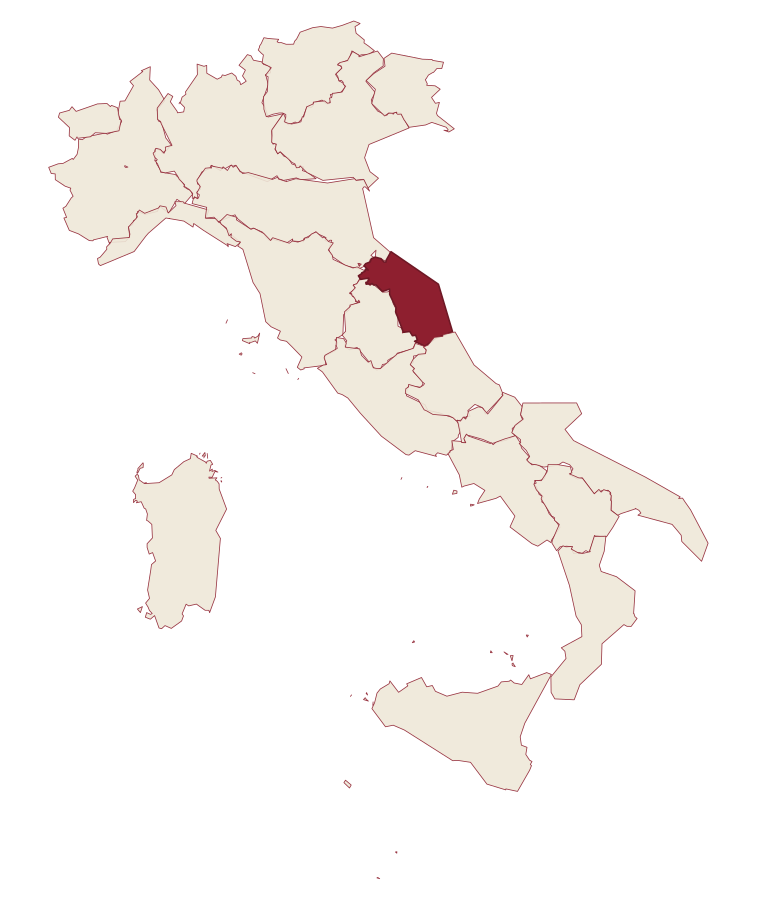
- Grottammare is a comune in the province of Ascoli Piceno, in Marche, at 4 meters above sea level.
- What is the nearest airport to Grottammare?
- Ancona / Pescara (AOI), about 1h 8m by car.
- Can you get to Grottammare without a car?
- Yes. There is a railway station in the comune, so you can arrive by train.
- How long is the drive from Pescara to Grottammare?
- About 59 minutes by car.
- When is the best time to visit Grottammare?
- Best in May–Sep. August is the warmest month, averaging 29 degrees, and November the wettest, with about 11 rain days.
- Is there a sagra or a festival in Grottammare?
- Yes. La Fiera di San Martino and The Fair of San Martino. November is when the first of them falls.
- Which other towns are like Grottammare?
- Mondolfo, Loreto and Alba Adriatica.
- How many people live in Grottammare?
- 15,814 at the 2023 count.
Tags & datadesignations · numbers · sources
The numbers
- Elevation: 4 m
- Population: 15,814
- Surface area: 18 km²
These figures were compiled from public directories: ISTAT, OpenStreetMap and Wikidata, and from the official listings of the guides named on this page. Town details change; verify with official sources before you travel.
Similar
Towns like Grottammare
Mondolfo
Province: Pesaro e Urbino
both on the Adriatic coast · both over 10,000 people
Loreto
Province: Ancona
both on the Adriatic coast · both over 10,000 people
Alba Adriatica
Province: Teramo
both on the Adriatic coast · both over 10,000 people
Giulianova
Province: Teramo
both on the Adriatic coast · both over 10,000 people
Trinitapoli
Province: Barletta-Andria-Trani
both on the Adriatic coast · both over 10,000 people
Giovinazzo
Province: Bari
both on the Adriatic coast · both over 10,000 people
🎨 Borghi più belli d'Italia
More Borghi più belli d'Italia towns in Marche
Arcevia
Province: Ancona
A hilltop borgo at 535 meters above the Misa and Nevola valleys, defended in the Middle Ages by a ring of nine satellite castles.
Cingoli
Province: Macerata
The Balcone delle Marche at 631 meters, a hilltop borgo where on clear days the view runs from the Sibillini to the Croatian coast.
Corinaldo
Province: Ancona
A walled hill borgo at 203 meters, ringed by 912 meters of intact medieval walls, and the birthplace of Saint Maria Goretti.
Esanatoglia
Province: Macerata
A medieval village of seven bell towers at 358 meters on the Marche-Umbria border, sitting at the source of the Esino river.
Fermo
Province: Fermo
The provincial capital on the Sabulo hill at 319 meters, with 2,200 square meters of Augustan Roman cisterns running under the centro storico.