
The best towns with a medieval festival that eat well within 90 minutes of Perugia
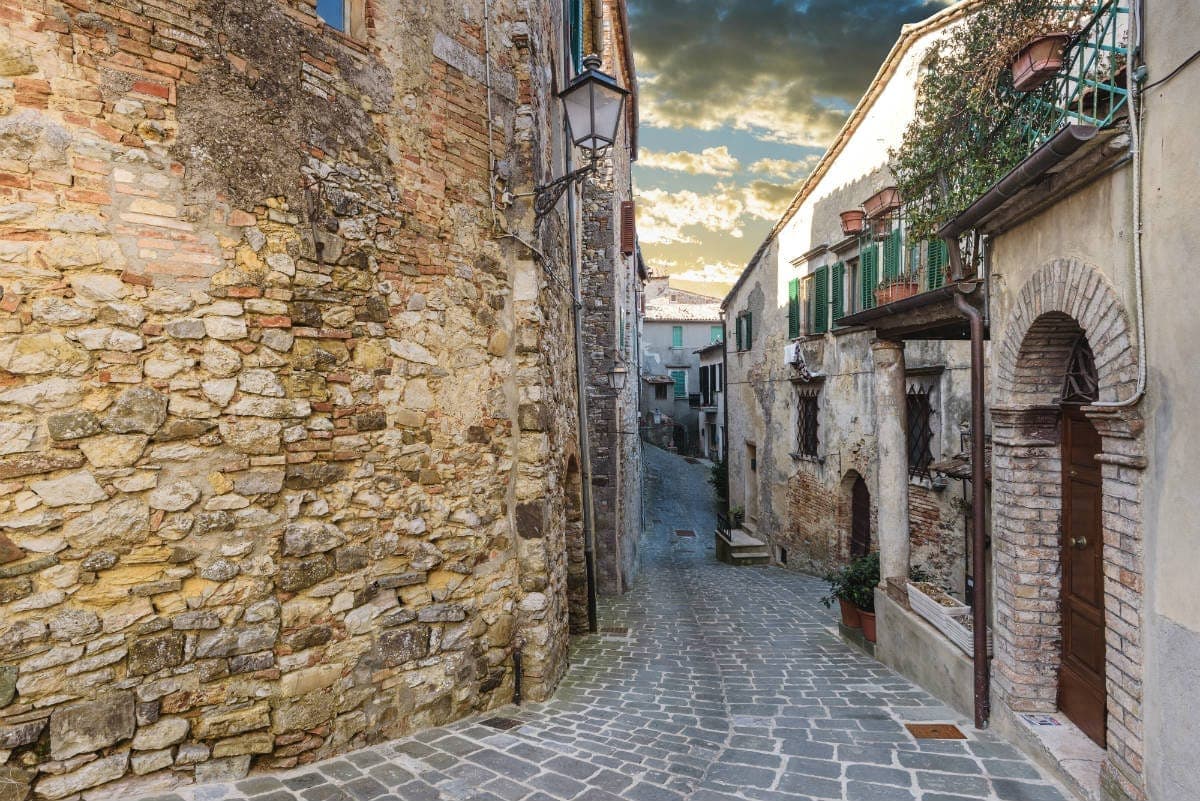
Central Italy in late spring smells of woodsmoke and wild fennel, and the hill towns above the Tiber and Lake Trasimeno turn their old rivalries into public theatre. Streets of grey pietra serena and pinkish local brick fill with drummers, crossbowmen and flag throwers, and the quarter that wins spends the evening eating outdoors at long trestles. The food underneath all this is serious: torchio and umbricelli pasta rolled by hand, pigeon and goose sauces, black truffle grated over eggs from autumn onward, Chianina beef over embers, lentils from the high plains. Every town here has at least one table a dining guide has thought worth naming, which is not something you can say of every festival calendar in Italy.
Most visitors arrive in Umbria for Assisi and Perugia itself, and the calendar concentrates them further. Assisi in particular absorbs coach traffic all year, and the basilica queues run long from Easter through October, when the historic centre can feel more like a corridor than a town. Perugia's Corso Vannucci during the summer festival season is a similar crush. Both are worth the visit, but neither is where the region's medieval pageantry is best watched.
The same limestone hills, the same lake light and the same kitchens carry on well past the famous names, and the towns in this list are where they land. Some are Umbrian, some sit just over the Tuscan line, and all of them are reachable from Perugia in well under two hours. They stage re-enactments their own residents take seriously, and they feed the crowd properly afterwards. Fewer people go, and the tables are easier to get.
Of the 41 communes we have mapped in within 90 minutes of Perugia, 11 qualify as towns with a medieval festival that eat well: each stages a recurring historical re-enactment, and a dining guide has named a table in each. This list is 10 of them. The smallest, San Casciano dei Bagni, has 1,500 residents.
Elsewhere in the catalogue: The best hidden hill towns with a medieval festival within 90 minutes of Perugia and The prettiest villages with a medieval festival within 90 minutes of Perugia.
San Casciano dei Bagni
Why visit San Casciano dei Bagni
San Casciano dei Bagni sits at 582 meters at the southern edge of the province of Siena, above 42 hot springs that average 42 degrees Celsius. The baths were used continuously from Etruscan through Roman times and again from the Renaissance, when visitors came from across Europe.
In 2022, an excavation that began in 2019 at the ancient sanctuary turned up 24 bronze votive statues protected by mud, with around 6,000 coins in gold, silver and bronze. The find was the largest of its kind in fifty years; most surviving Etruscan votive material is terracotta.
The 1,500 residents live on a basalt outcrop above the Roman thermal complex, in a centro storico of stone houses and three small churches. The borgo joined the Borghi più belli network in 2014 and remains one of the smallest communes in Toscana to carry both that label and Bandiera Arancione.
Daniela, Castello di Fighine have been named by a guide.
What to see in San Casciano dei Bagni
- Santuario Ritrovato. Etruscan-Roman thermal sanctuary excavated since 2019, where 24 bronze votives and around 6,000 coins were recovered in 2022.
- Bagno Grande. The principal natural pool of the 42 hot springs, used from the second century BC through the Renaissance and reopened to the public.
- Collegiata di San Leonardo. Romanesque parish church in the centro storico, restored in the seventeenth century, with a baptismal font carved from local travertine.
How to get to San Casciano dei Bagni
Perugia is roughly 68 minutes away by road.
Our tip
The thermal pools make the calendar different here. Winter is the season many visitors prefer, when the 42-degree water steams against cold air and snow occasionally dusts the basalt outcrop. April through June and September into October are the most balanced months: warm hill light, the dry-stone walls of the borgo at their best, the sanctuary excavations open to guided tours. Sagra del Ciaffagnone di San Casciano dei Bagni falls in June.
Cetona
Why visit Cetona
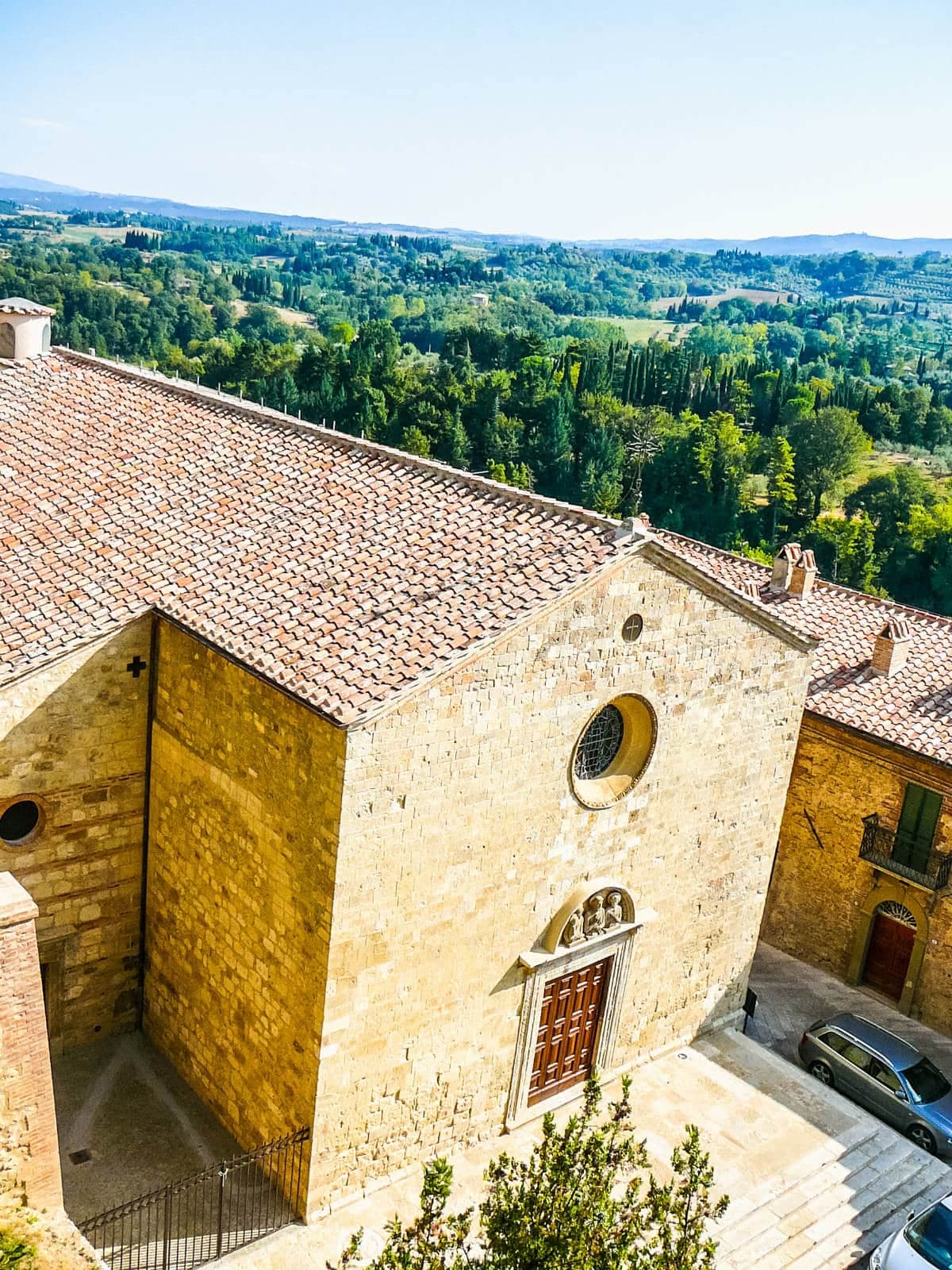
The town sits on the western flank of a ridge at the meeting point of Toscana, Umbria and Lazio, where the mountain divides the Val d'Orcia from the Val di Chiana. The medieval comune passed between Siena, Orvieto and Perugia before falling to Siena in the late fourteenth century, and it was Cosimo I who later sold it whole to a marchese.
The fortress at the top of the grid and the square laid out below it are two halves of the same Renaissance move: a private residence replacing a garrison at the summit, a flat civic stage opened up at the base. Above the town, in the woods, the hermitage and the caves belong to a much older layer, human use of the mountain reaching back to the Mesolithic, long before any comune or marchese laid claim to it.
What the town adds up to is a settlement built in tiers: a prehistoric mountain, a contested medieval center, and a Renaissance overlay that reorganized the base of the hill without touching what stood above it.
Da Nilo, Il Tiglio di Piazza da Nilo have been named by a guide.
What to see in Cetona
- Piazza Garibaldi. Elliptical square at the foot of the medieval grid, flat and open where the streets above it climb steeply. The civic stage of the borgo, still the first thing that orients a visitor.
- Rocca di Cetona. Fortress at the top of the centro storico, its walls and keep still standing though the interior became a private residence rather than a garrison.
- Convento di San Francesco. Franciscan convent below the borgo, founded in 1212, with a single-nave church and a small cloister still in religious use.
How to get to Cetona
Perugia is roughly 78 minutes away by road.
Our tip
April through June and September into October are the months Cetona keeps its calmest pace, the wooded slopes of Monte Cetona green or rust depending on the half. July and August are hot in the centro storico but the mountain trails above 800 meters stay cool. The Mostra del Tartufo, dedicated to the local white truffles, runs the second weekend of November in Piazza Garibaldi. Sagra del Bico di Cetona falls in June.
Bevagna
Why visit Bevagna
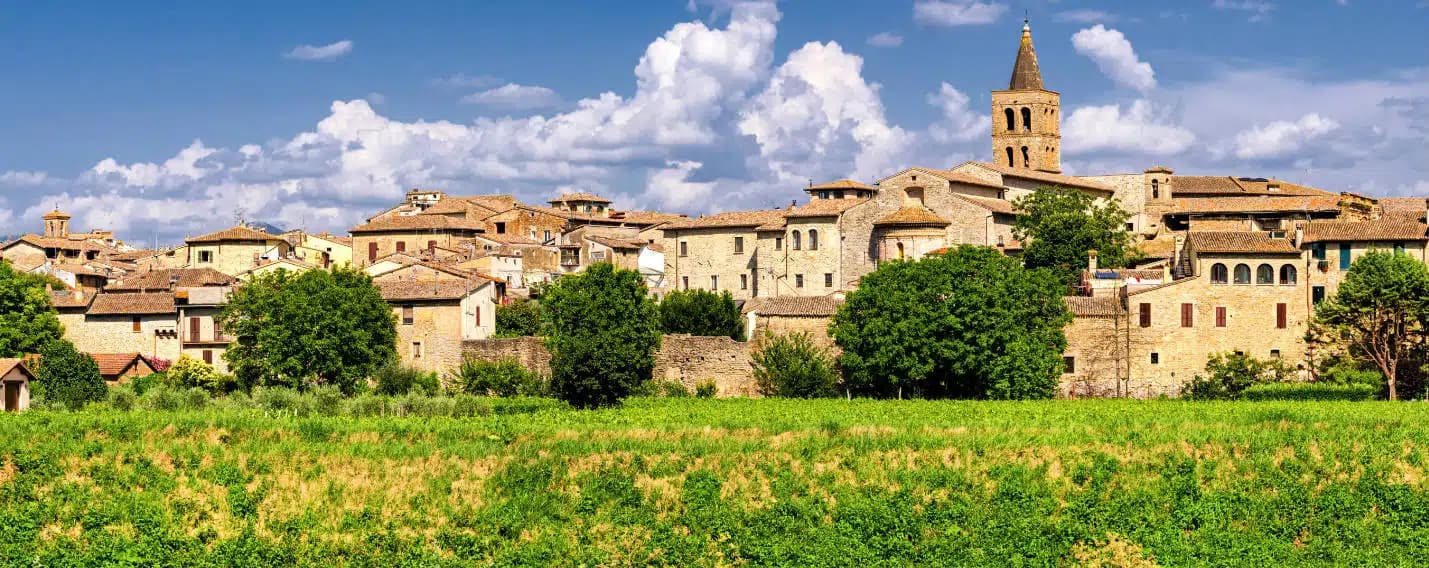
Bevagna sits on the floor of the Umbrian valley at 225 meters, where the Clitunno meets the Timia. Ancient Mevania, the name means she who stands in the middle, was a Roman mansio on the Via Flaminia, listed in the Antonine Itinerary.
A black-and-white mosaic of the 2nd century AD survives almost intact in the frigidarium of the Roman baths, twelve meters by seven, octopuses and dolphins in the center, tritons and sea-horses on the short sides. Piazza Silvestri at the heart of the centro storico holds two Romanesque churches that face each other at odd angles, San Michele Arcangelo and San Silvestro, built within years of each other in the late 12th century.
The Mercato delle Gaite each June turns the town into the year 1300 for ten days, four quarters competing on medieval trades and tavern menus, no anachronisms allowed. The Sagrantino slopes of Montefalco are nine kilometers up the road.
Serpillo, Ottavi Mare have been named by a guide.
What to see in Bevagna
- Piazza Silvestri. Twelfth-century civic square ringed by the Palazzo dei Consoli, the churches of San Silvestro and San Michele, and the fountain of 1896.
- Chiesa di San Michele Arcangelo. Romanesque collegiate church built by Binello and Rodolfo at the end of the 12th century, on the main square.
- Chiesa di San Silvestro. Romanesque parish church across the piazza, signed and dated 1195 by Binello, the same builder as San Michele.
How to get to Bevagna
Perugia is roughly 39 minutes away by road.
Our tip
April through June and September into October are the months for Bevagna. The valley fills with green, the Sagrantino vines run on the slopes above town, and the rose festival fills the gardens around the walls in May. The Mercato delle Gaite runs the second half of June and is the single most concentrated weekend on the Umbrian medieval calendar. Sagra della Lumaca falls in August.
Passignano sul Trasimeno
Why visit Passignano sul Trasimeno
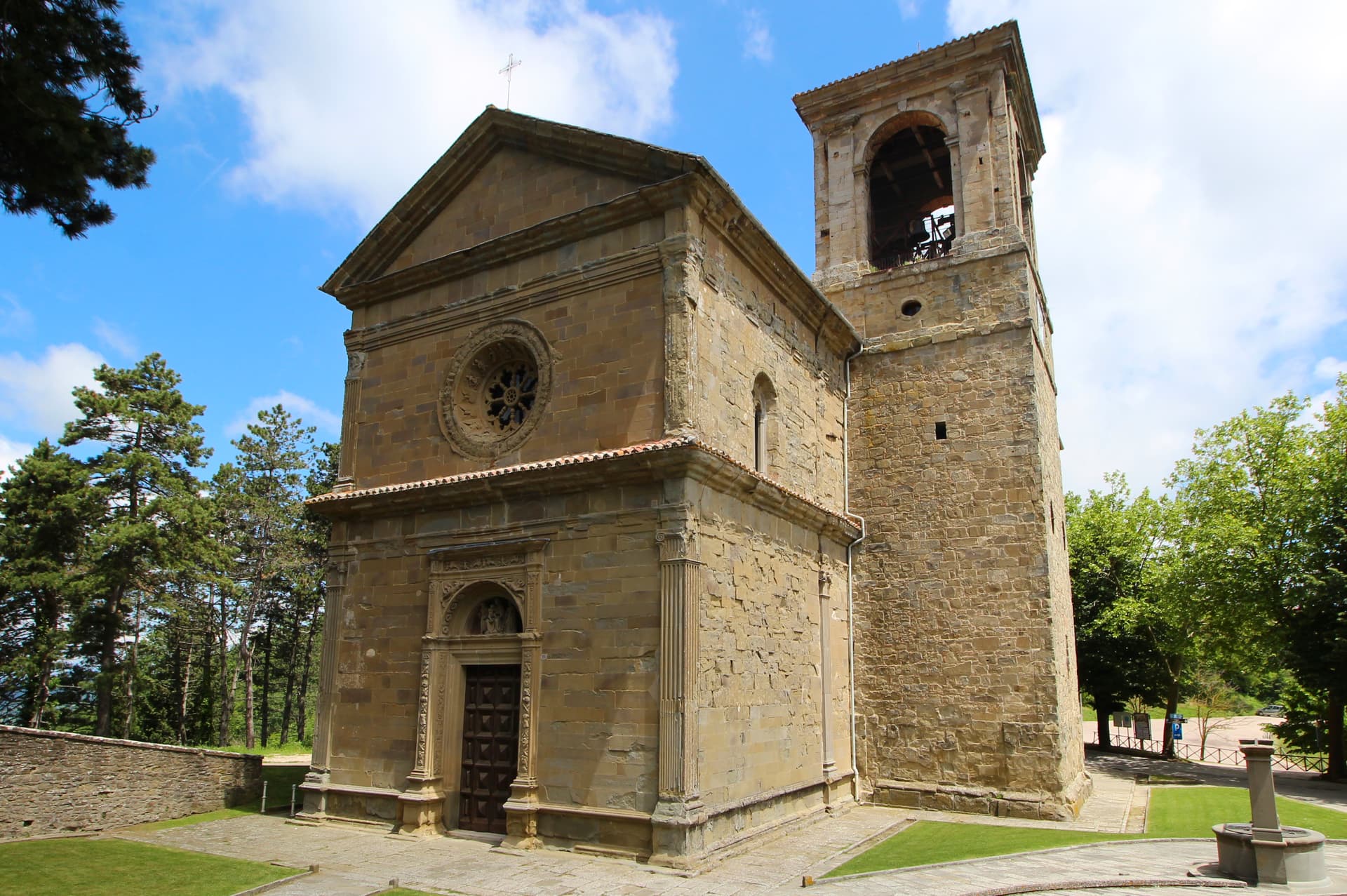
Passignano sul Trasimeno sits on a low promontory on the northern shore of Lake Trasimeno, twenty kilometers northwest of Perugia, separated from the lake only by the road that links Perugia to Tuscany. The Umbri held the ground first, then the Etruscans pushed them east of the Tiber; the Romans turned the spur into a watchtower controlling the pass between northern and central Italy.
In 217 BC Hannibal trapped Gaius Flaminius's army of 25,000 in the narrow road between Tuoro and Passignano, killing about 15,000 Romans in the morning fog of June 21, one of the worst defeats in Roman history. The Rocca, built around 850 by the marquises of Tuscany and conquered by Perugia in 1187, holds a quadrangular plan around a 32-meter keep that survived a 1778 partial demolition.
The Festa della Padella, held in late August, fries lake fish for the village in a four-and-a-half-meter pan on the shore. The Borgo dei Borghi finalist designation arrived in the 2010s.
Da Luciano, Il Molo have been named by a guide.
What to see in Passignano sul Trasimeno
- Rocca di Passignano. Quadrangular fortress built around 850 by the marquises of Tuscany with a 32-meter central keep, partly demolished in 1778.
- Chiesa di San Bernardino. Sixteenth-century church near the Rocca with a Renaissance interior and views down to the lake from its portico.
- Centro di Documentazione Annibale e Battaglia del Trasimeno. Small documentation centre on the Battle of Lake Trasimene of 217 BC and Hannibal's ambush of Gaius Flaminius.
How to get to Passignano sul Trasimeno
There is a railway station in the town, so you can arrive without a car and never need one while you are here. Perugia is roughly 28 minutes away by road.
✷ We have written about Passignano sul Trasimeno
“The lake is like a sanatorium compared to the sea. It’s relaxed. It’s calm. It’s silent. To find this level of almost disturbing quietness, you either go up into the mountains, or you really need to know your way around the sea to find that particular spot not overrun by vacationers and beach people. In Trasimeno, this is easy. Even the most popular towns like Castiglione or Passignano sit in quiet harmony with the stillness of the water.”
Read our piece on Passignano sul Trasimeno →Lago Trasimeno | Never Compete with the Sea
Our tip
April through June and September into October are the months the lake works. The water warms enough by late May for swimming off the Lido and the ferry to Isola Maggiore runs to a steady schedule. July and August are crowded; the Festa della Padella in late August is the loudest weekend of the year. Festa dei Barbari - Castel Rigone falls in July.
Montepulciano
Why visit Montepulciano
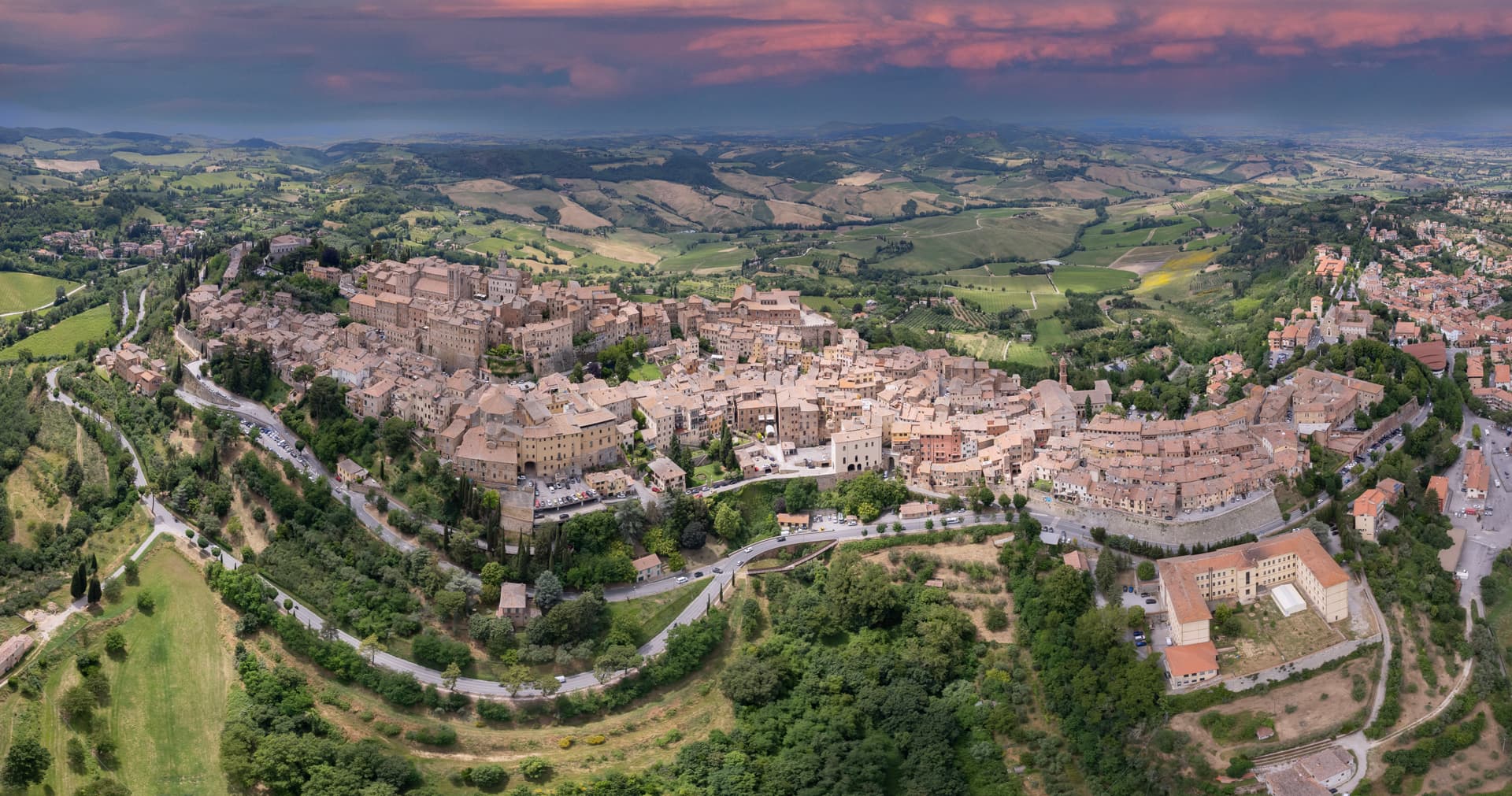
The ridge runs between the Val di Chiana and the Val d'Orcia, 70 kilometers southeast of Siena, and the town follows its spine uphill: streets climb from the gates toward the high point, where the main square sits ringed by the buildings that define the skyline from below. The origin predates the Renaissance fabric by centuries.
Etruscan tombs survive in the surrounding hills, though almost nothing of that period shows in the centro storico itself, which was rebuilt wholesale in the fifteenth and sixteenth centuries over whatever came before. The wine and the festival both use the climb as their setting rather than their subject: the cellars are cut into the rock beneath the palazzi, keeping a constant temperature for aging, and the barrel race each August sends two men from each of the eight contrade hauling an eighty-kilogram cask up the same gradient that every visitor covers on foot, only slower.
The steepness that shaped the defensive site nine centuries ago is still what a person feels first, in the legs, before the buildings register at all.
Ristorante Caffè Pasticceria Poliziano, Osmosi, Le Logge del Vignola and 3 more have been named by a guide.
What to see in Montepulciano
- Tempio di San Biagio. A 13-meter dome and travertine façade standing alone outside the walls, the ground falling away below it so the building reads as a single volume against the hillside.
- Piazza Grande. The high piazza at the top of the ridge, ringed by the Duomo, the Palazzo Comunale and the Palazzo Tarugi, all rebuilt in the fifteenth and sixteenth centuries.
- Palazzo Comunale. Town hall designed by Michelozzo in the fifteenth century, its tower offering a view over the Val di Chiana and Val d'Orcia.
How to get to Montepulciano
There is a railway station in the town, so you can arrive without a car and never need one while you are here. Perugia is roughly 57 minutes away by road.
✷ We have written about Montepulciano
“Now, the postcard itself, the towns, and here I have less to say than you would expect, because Pienza and Montepulciano have become, and I mean this precisely, the canteens of a theme park. They are where you go to park, walk a pretty street, use the toilet, refill the water, eat a plate of something, and buy a thing to take home. They are the food court between the rides.”
Read our piece on Montepulciano →Val d'Orcia | The Postcard Is Constructed
Our tip
April through June and September into October are the working months on the ridge: vine work in the surrounding hills, mild days, evening light that lingers over the Val d'Orcia. July and August push into the low thirties and the climb to Piazza Grande slows even the residents. The Bravìo delle Botti runs the last Sunday of August and fills the town. Calici di Stelle falls in July.
Anghiari
Why visit Anghiari
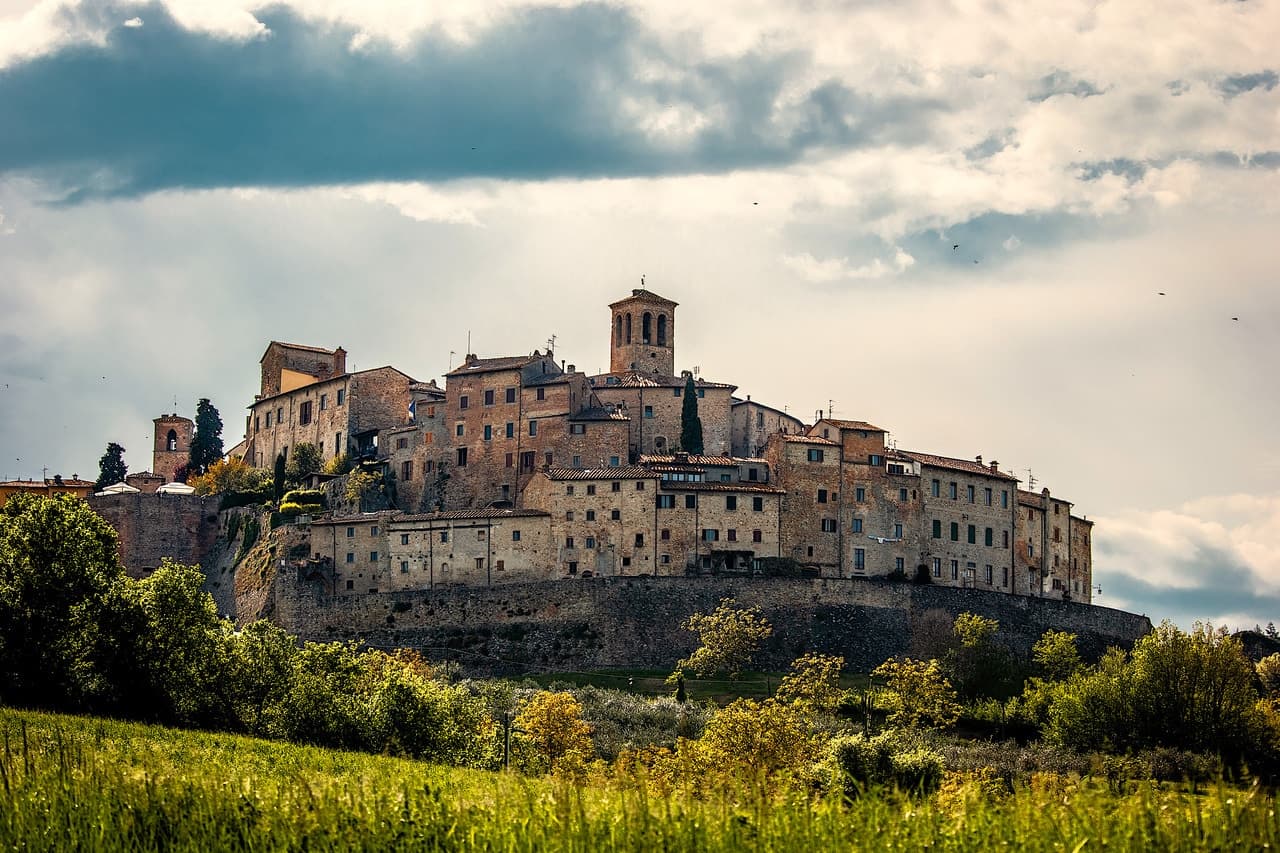
Anghiari sits at 430 meters on a spur above the upper Tiber valley, the Valtiberina, between Arezzo and the Umbrian border. The walled centro storico is intact, the streets running steeply from the Porta Sant'Angelo up to the Castello.
On 29 June 1440 the Florentine army defeated a Milanese force under Niccolò Piccinino in the plain below town, a battle that secured Florence's hold over central Italy and gave Leonardo da Vinci the commission for the Palazzo Vecchio fresco he started in 1505 and never finished. The painting, the Lost Leonardo, is presumed still to be hidden behind a Vasari wall in Florence.
Palazzo Taglieschi in the centro storico holds a polychrome wooden Madonna by Jacopo della Quercia and a working sixteenth-century table organ. The Mostra Mercato dell'Artigianato della Valtiberina has filled the streets with craft producers every spring since 1976, a working continuation of the textile and woodwork traditions that supported the town through the twentieth century.
Da Alighiero, Il Cappello di Paglia have been named by a guide.
What to see in Anghiari
- Palazzo Taglieschi. Sixteenth-century palace in the centro storico, now the Museo Statale di Palazzo Taglieschi, with a wooden Madonna by Jacopo della Quercia and a working table organ.
- Castello di Anghiari. Medieval fortified core at the top of the town, walls and gates still intact, the visual anchor of the silhouette from the valley below.
- Campo della Battaglia. The plain at the foot of the walls where Florence defeated Milan on 29 June 1440, the battle that inspired Leonardo's lost Palazzo Vecchio fresco.
How to get to Anghiari
Perugia is roughly 82 minutes away by road.
Our tip
April through June and September into October are the working months in the Valtiberina: dry days, low cloud over the upper Tiber, the surrounding farmland green or gold by season. The Mostra Mercato dell'Artigianato runs the last week of April and the first week of May, filling the streets with artisans from across the valley. Late June marks the anniversary of the 1440 battle, with reenactments below the walls. Palio della Vittoria di Anghiari falls in June.
Chiusi
Why visit Chiusi
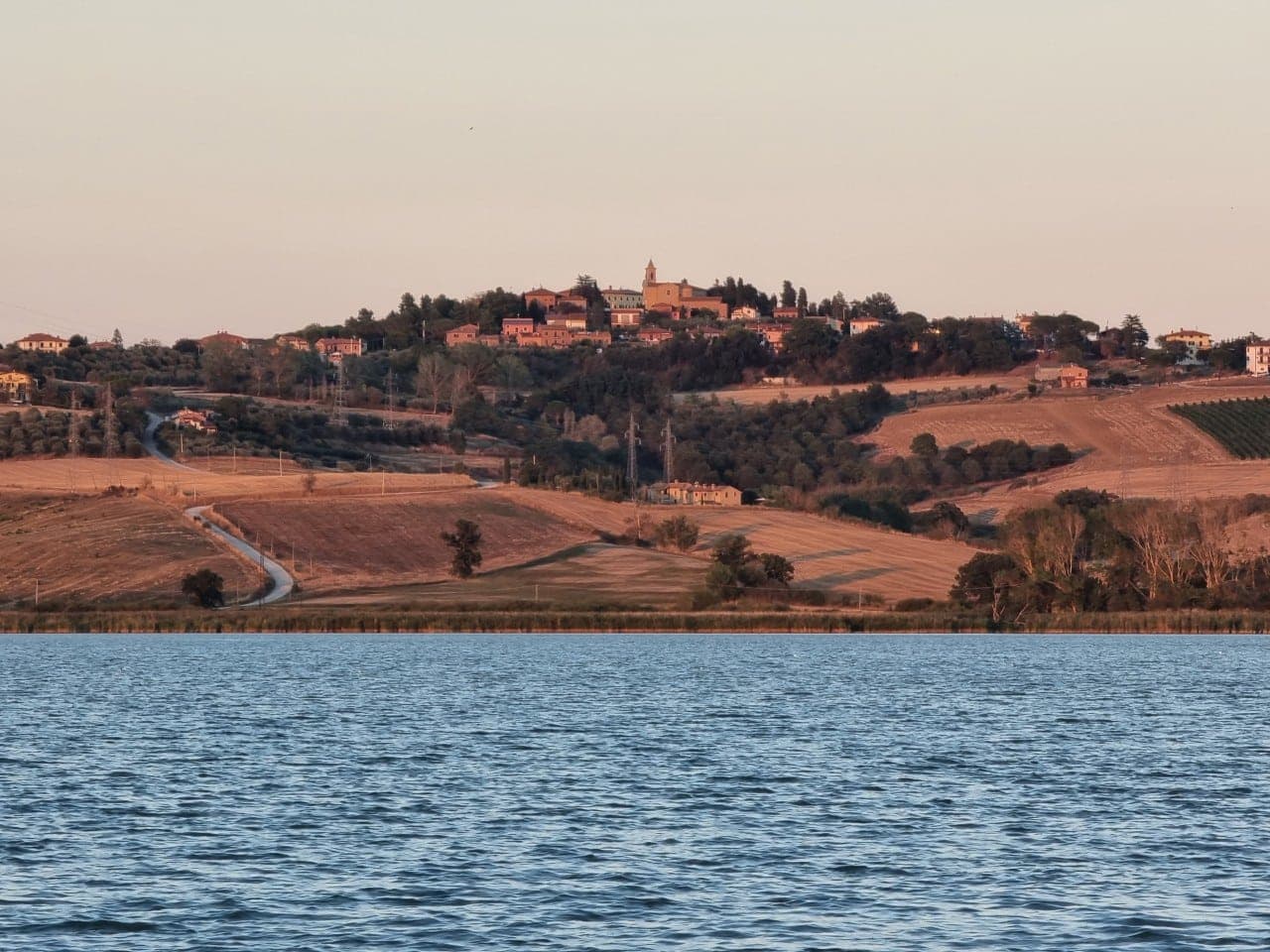
The hilltop stands above the Val di Chiana, the valley floor visible from the town at a height that made it defensible and gave it command of the surrounding farmland. The cathedral, the museums and the tunnel network are close enough to walk between within the old center, while the painted necropolis and the lake lie outside it, a few kilometers apart in different directions, one inland toward the tombs and the other north toward open water.
The tunnels themselves connect the upper town to what lies beneath it: built as drainage, later folded into legend by Pliny the Elder, who took them for part of a king's tomb. The cathedral's own columns, lifted from earlier Roman buildings, make the same point in stone that the tombs make in paint and the museum makes in bucchero and alabaster: this is a town built repeatedly on top of itself, each layer reusing what the last one left behind.
I Salotti, Il Grillo è Buoncantore, La Solita Zuppa have been named by a guide.
What to see in Chiusi
- Museo Nazionale Etrusco. Holds canopic urns, alabaster sarcophagi, bucchero pottery and grave goods pulled from the necropolises around the town.
- Duomo di San Secondiano. Cathedral built around 560 AD over an earlier basilica, renovated in the thirteenth century, nave and two aisles on antique marble columns from Roman buildings.
- Labirinto di Porsenna. Visited from the Museo della Cattedrale, the tunnels run beneath the streets at a scale that still reads as engineering rather than legend, whatever Pliny made of them.
How to get to Chiusi
There is a railway station in the town, so you can arrive without a car and never need one while you are here. Perugia is roughly 58 minutes away by road.
Our tip
April through June and September into October are the working months on the Val di Chiana edge: mild days, evening light over the lake, the wine and olive cycles below town. The Frittellata of San Giuseppe in mid-March and the Festa di San Mustiola in early June fill the centro storico with traditional kitchens. July and August push past thirty degrees and the basin below town holds the heat; the museums and the Labirinto stay cool. Tria Turris Medioevo e Palio delle Torri di Chiusi falls in June.
Cortona
Why visit Cortona
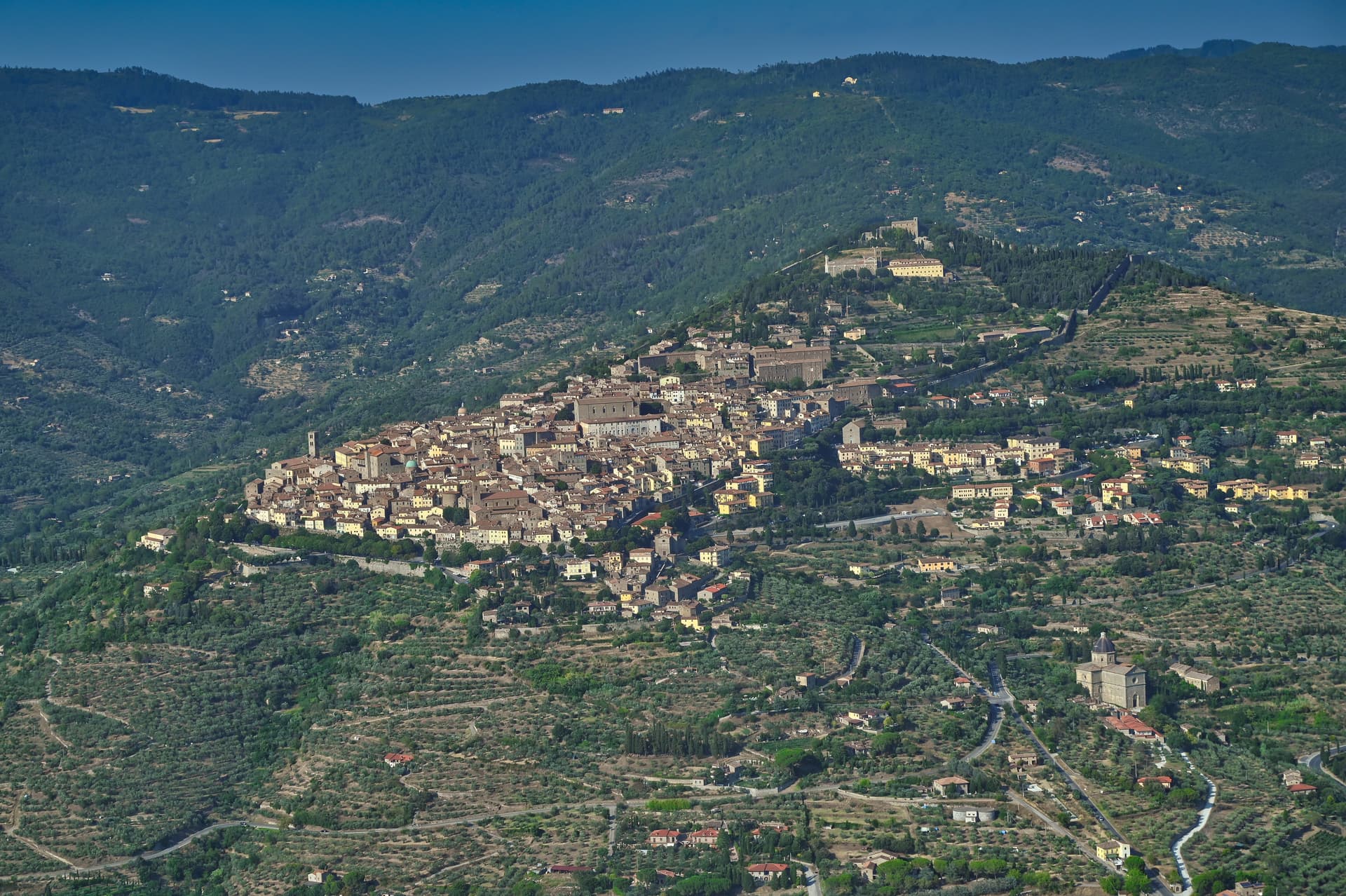
Cortona stands on the southern flank of the Val di Chiana, looking across to Lake Trasimeno: a position that put it in sight of both the plain it governed and the water beyond it. The Etruscan name Curtun survives fixed in stone, and the city that carried it was built in tiers up the hillside, walls and fortress at the crown, church and convent lower down at the edges of the slope, houses and squares filling the ground between.
The bishop granted Francis of Assisi a place for retreat in 1211, and what resulted was built into a narrow valley below the town rather than within its walls, a retreat kept apart from the civic center even as it stayed within reach. Santa Margherita, the city's patron, is held on the ridge above the streets she once walked.
The painters Luca Signorelli and Pietro da Cortona were born inside the walls that still define the town's shape. Frances Mayes published her memoir in 1996, and the town has not been quiet since.
What emerges is a hill town whose Etruscan skeleton, medieval faith, and modern fame sit stacked on the same slope, each layer visible without erasing the one beneath it.
Il Falconiere, La Bucaccia, Osteria del Teatro and 4 more have been named by a guide.
What to see in Cortona
- Mura etrusche. The walls still ring the city entire, the foundation under every later layer of building, Roman and medieval alike.
- MAEC. Museum of the Etruscan Academy in Palazzo Casali, holding the bronze plaque and the lampadario di Cortona.
- Museo Diocesano. Collection in the former Chiesa del Gesù with Beato Angelico's Annunciation of 1430 and works by Luca Signorelli.
How to get to Cortona
There is a railway station in the town, so you can arrive without a car and never need one while you are here. Perugia is roughly 45 minutes away by road.
Our tip
April through June brings green hills, cool evenings and the longest hours in the Diocesano without a queue. September and October are the dry, gold months, light coming in low across Lake Trasimeno and the olive harvest running until November. July and August are the difficult months. Giostra dell'Archidado di Cortona falls in June.
Gubbio
Why visit Gubbio
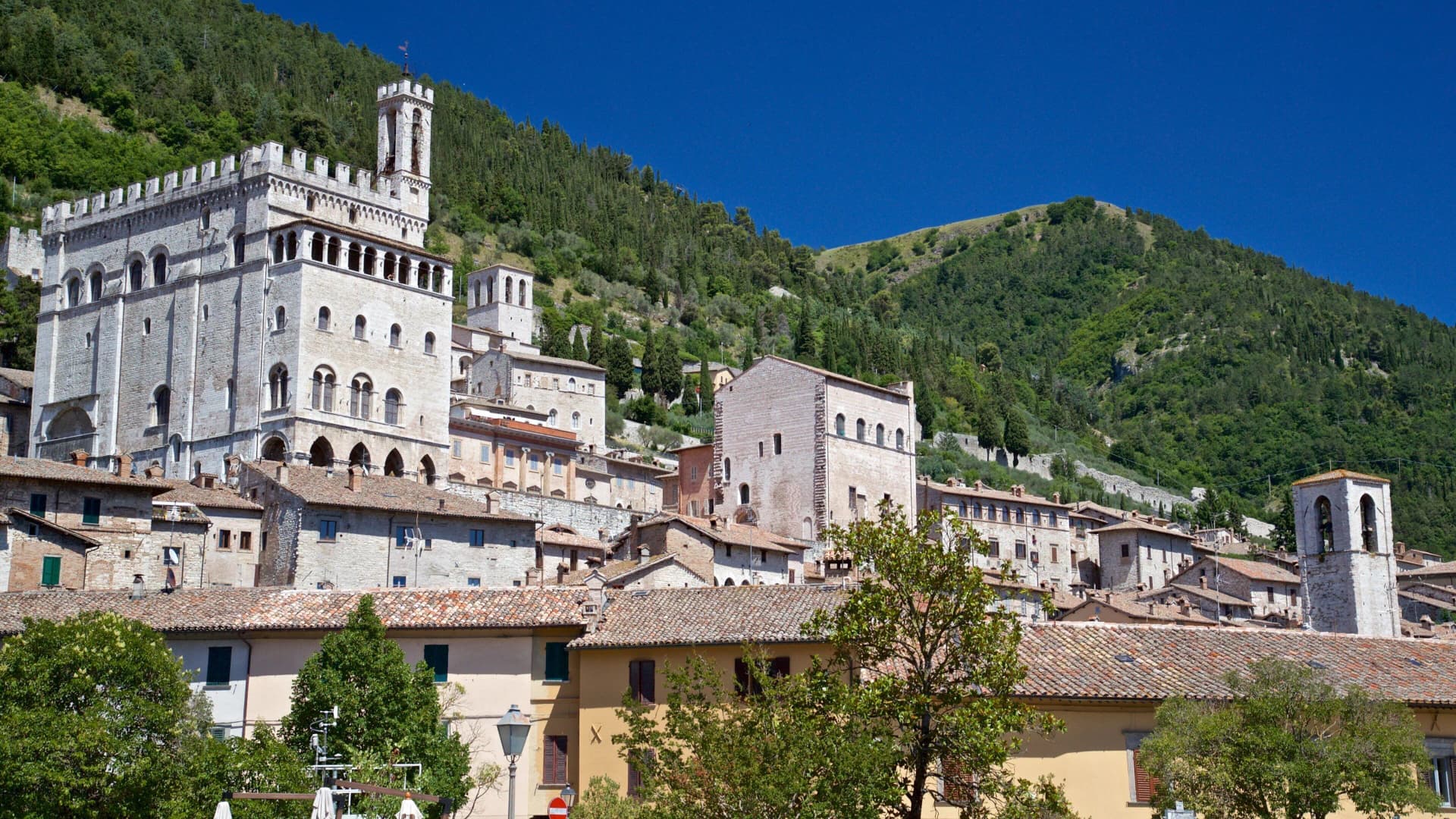
Gubbio sits at 522 meters on the lower slope of the mountain, the old town stacked in four parallel terraces against it. The settlement was Ikuvium, one of the most important towns of the Umbri before Rome arrived.
In 1444 a peasant woman named Presentina found the bronze tablets in the area of the Roman theater and sold them to the commune in 1456 for 40 florins, a transaction that kept them in the town where they were unearthed rather than scattered to a museum elsewhere. The terraces order the town's life by elevation: the Roman theater and lower ground below, the civic square and cathedral stacked on the upper terraces of the centro storico, the patron saint's basilica set apart on the summit above all of it.
The Corsa dei Ceri each 15 May draws that vertical order into motion, three teams carrying wooden statues of Sant'Ubaldo, San Giorgio and Sant'Antonio Abate from the square at the town's center up to the basilica at its height, filling the town from dawn to dusk. The layout is not incidental: a settlement that predates Rome, a civic archive kept where it was found, and a race that each year retraces the climb from town to summit all point to the same fact, that Gubbio's history has stayed stacked on its own mountain rather than dispersed from it.
Ristorante Taverna del Lupo, Tenuta Borgo Santa Cecilia, La Fornace di Mastro Giorgio and 1 more have been named by a guide.
What to see in Gubbio
- Palazzo dei Consoli. Built 1332-1349 by Angelo da Orvieto and Matteo Gattapone, the Gothic civic palace holds the Tavole Iguvine and the civic museum, its vertical pilasters dividing the façade across the square.
- Tavole Iguvine. Displayed on the ground floor of the palazzo, the tablets were recovered near the Roman theater and record the religious rites of the pre-Roman western world in detail.
- Piazza Grande. Suspended civic square between Palazzo dei Consoli and Palazzo Pretorio, hanging on substructures against the slope of the mountain.
How to get to Gubbio
Perugia is roughly 51 minutes away by road.
Our tip
April through June and September into October are the months for Gubbio. The slopes of Monte Ingino are walkable, the Cammino di San Francesco passes through, and the air at 522 meters holds the Apennine clarity. The Corsa dei Ceri on 15 May is the single most concentrated day in town; book months ahead. Sagra della Polenta e Salsicce falls in July.
Foligno
Why visit Foligno
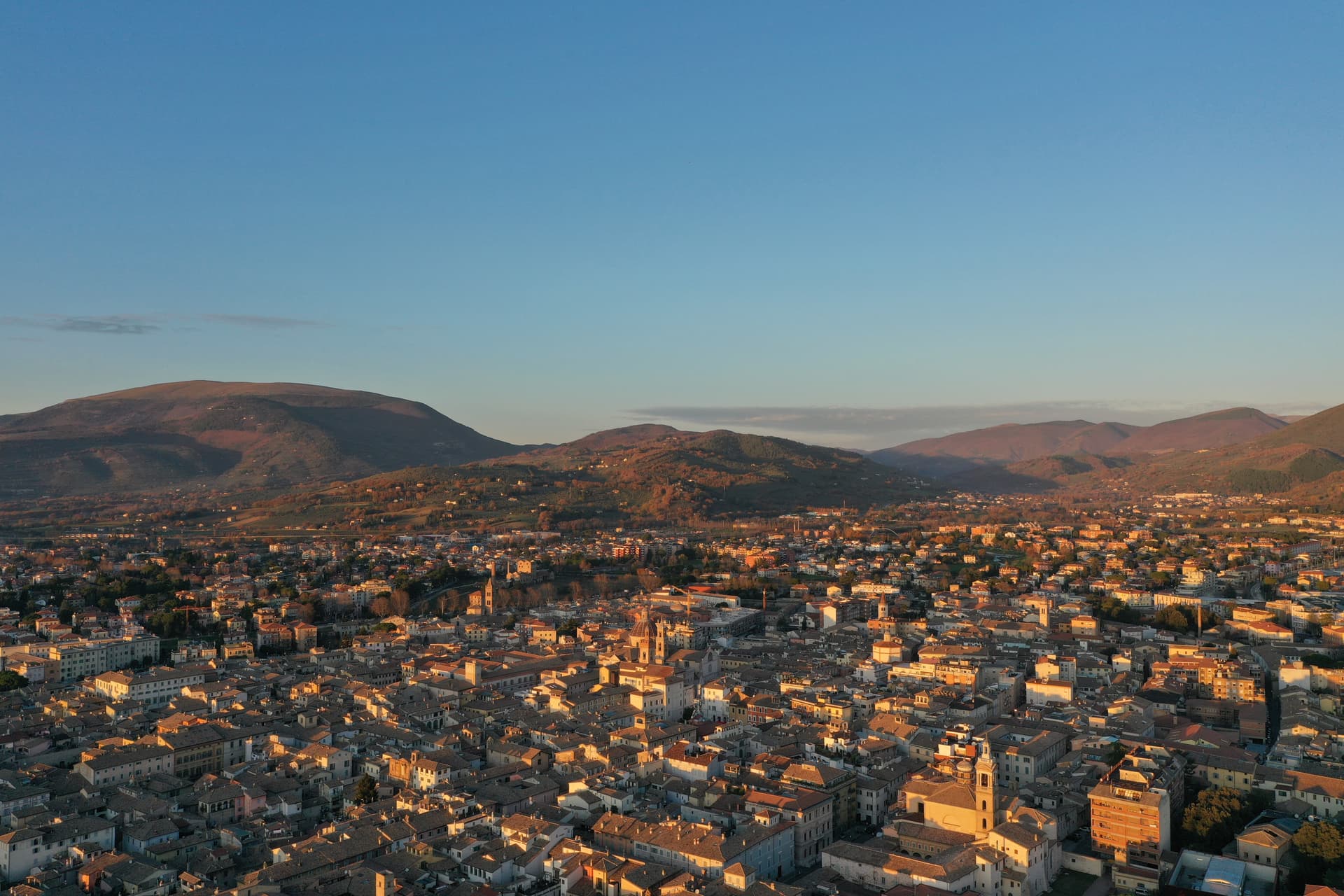
Foligno sits on the left bank of the Topino where the river leaves the Apennines and meets the plain of the Clitunno, the point at which the mountains give way to the Umbrian Valley. The town was called Fulginium in antiquity, and Cicero mentions the prefecture in two surviving fragments.
The Trinci ruled the town from 1305 to 1439, and the palace that carries their name still stands at its center, with the cathedral facing the same square where the town's tournament has run twice a year since its revival. The city's oldest church predates the Trinci period by centuries, its site going back to an 8th-century chapel, while the abbey in the hills above town was founded still earlier, in 1084, its cloister finished in 1229.
Between the ancient prefecture, the medieval abbey, the Trinci court, and the print workshop that put Dante into type, Foligno reads as a valley crossing point where successive centuries each left a building rather than displacing what came before.
Une, Osteria Bacerotti, Cucinaa and 2 more have been named by a guide.
What to see in Foligno
- Palazzo Trinci. Seat of the Trinci signoria 1305-1439, frescoed by Gentile da Fabriano and Jacopo Bellini, now holding the Pinacoteca and archaeological museum.
- Cattedrale di San Feliciano. Romanesque cathedral on Piazza della Repubblica, built over the tomb of the bishop-martyr buried here in 251 AD.
- Basilica di Santa Maria Infraportas. Oldest church in the city on the site of an 8th-century chapel, frescoes by Nelli, Ugolino di Gisberto, Alunno and Mezzastris.
How to get to Foligno
There is a railway station in the town, so you can arrive without a car and never need one while you are here. Perugia is roughly 42 minutes away by road.
Our tip
April through June and September into October are the months locals prefer. The Quintana runs twice a year, the June and September editions filling the rioni for a week each. April through October is also the season for the Topino river paths and the climb up to Sassovivo. Festevolezze falls in July.
More from Anywhere Italy
- The best hidden hill towns with a medieval festival within 90 minutes of Perugia
- The prettiest villages with a medieval festival within 90 minutes of Perugia
- The 9 best wine towns that eat well within 90 minutes of Perugia
 The best hidden hill towns with a serious restaurant within 90 minutes of Perugia
- The prettiest hidden villages with a serious restaurant within 90 minutes of Perugia
- The best towns worth staying overnight that eat well within 90 minutes of Perugia