
Umbria · Perugia
Bevagna
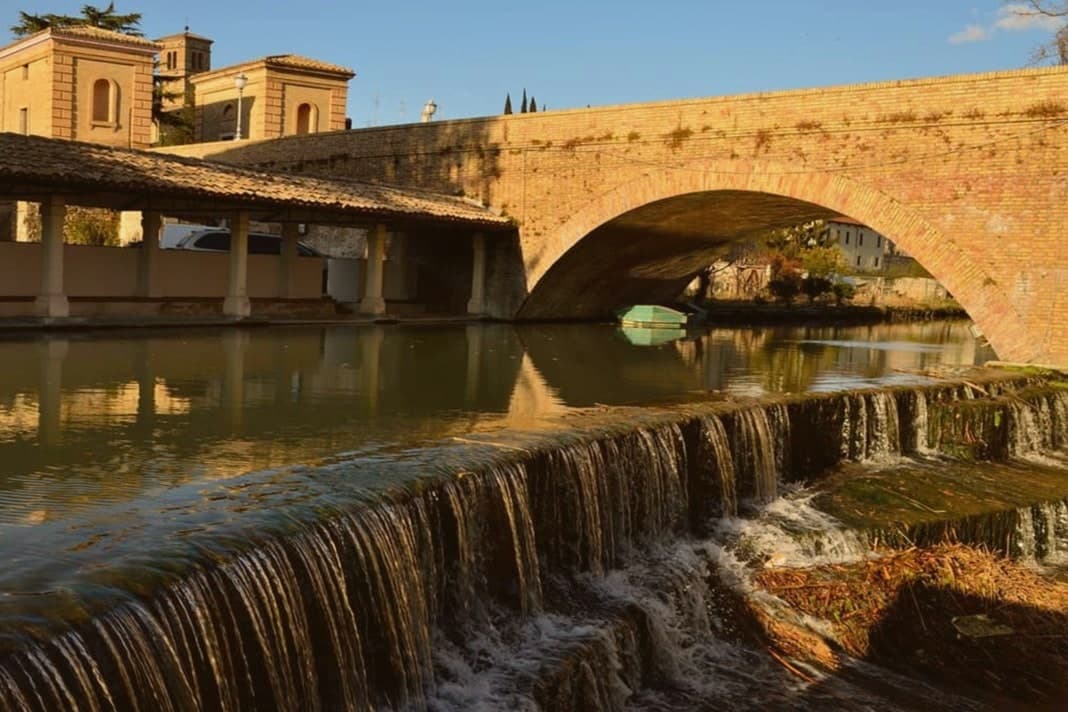
Roman Mevania on the Umbrian plain, four medieval quarters that compete every June in a reconstructed market of the 13th century.
Picked by Peter Benei
Letter to come
Why Bevagna is on our list
It holds Borghi più belli d'Italia, Bandiera Arancione and Città del Vino.
The nearest town with a letter is Foligno, No. 79, 12 min by car.
Subscribe and you get Bevagna's letter the day it comes out.
Visiting
- Best time
- Apr–Oct
- By car
- 37 min from Perugia
- Population
- 4,747
- J10°
- F13°
- M15°
- A18°
- M24°
- J29°
- J34°
- A33°
- S27°
- O22°
- N15°
- D12°
- Best
- Hot or crowded
- Quiet
- Mostly closed
Daytime air temperature, averages for 2020–2024. Weather data by Open-Meteo.com.
Why come
Bevagna sits on the floor of the Umbrian valley, where the Clitunno meets the Timia. Ancient Mevania, the name means she who stands in the middle, was a Roman mansio on the Via Flaminia, listed in the Antonine Itinerary. A black-and-white mosaic of the 2nd century AD survives almost intact in the frigidarium of the Roman baths, twelve meters by seven, octopuses and dolphins in the center, tritons and sea-horses on the short sides.
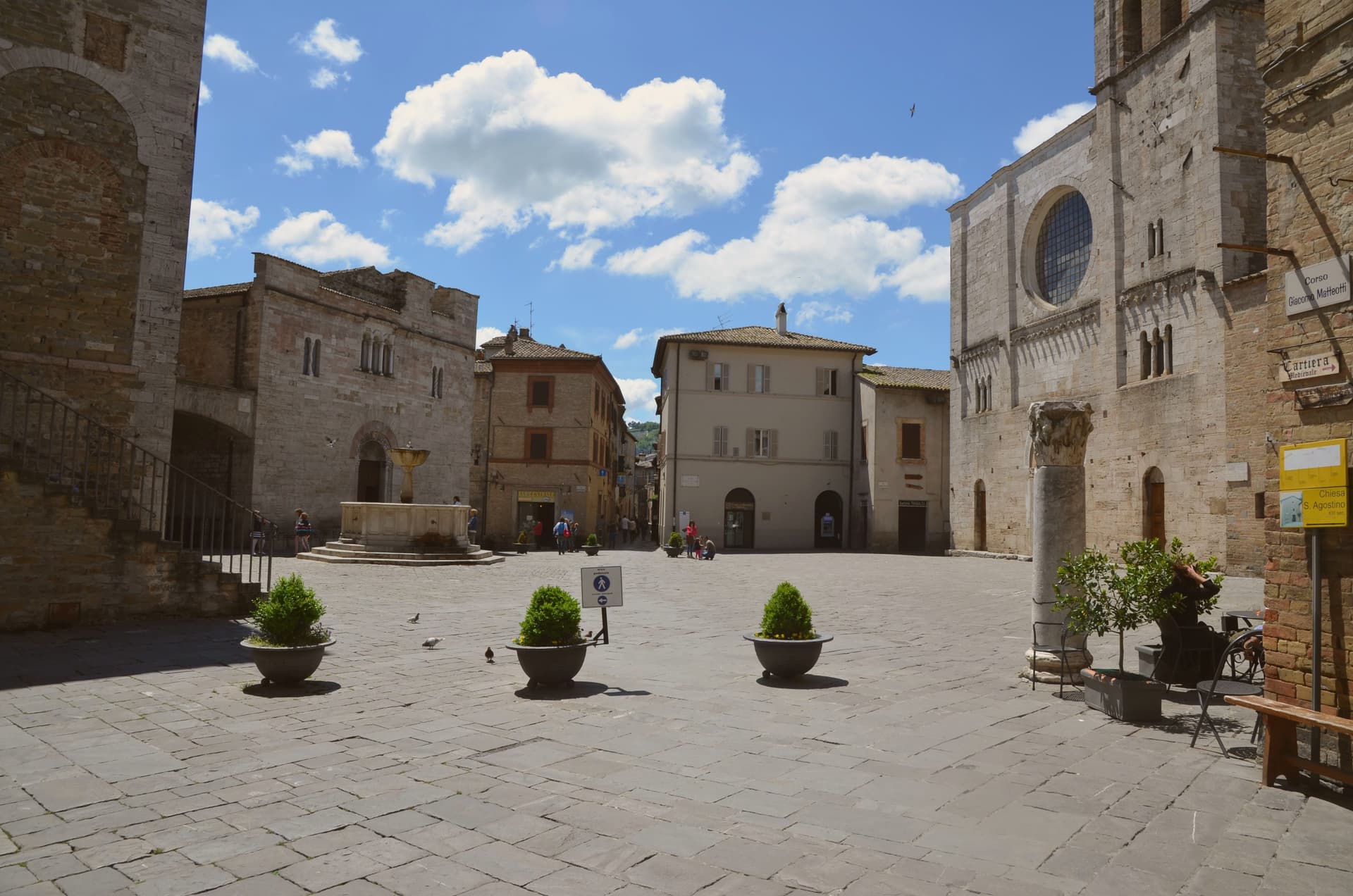
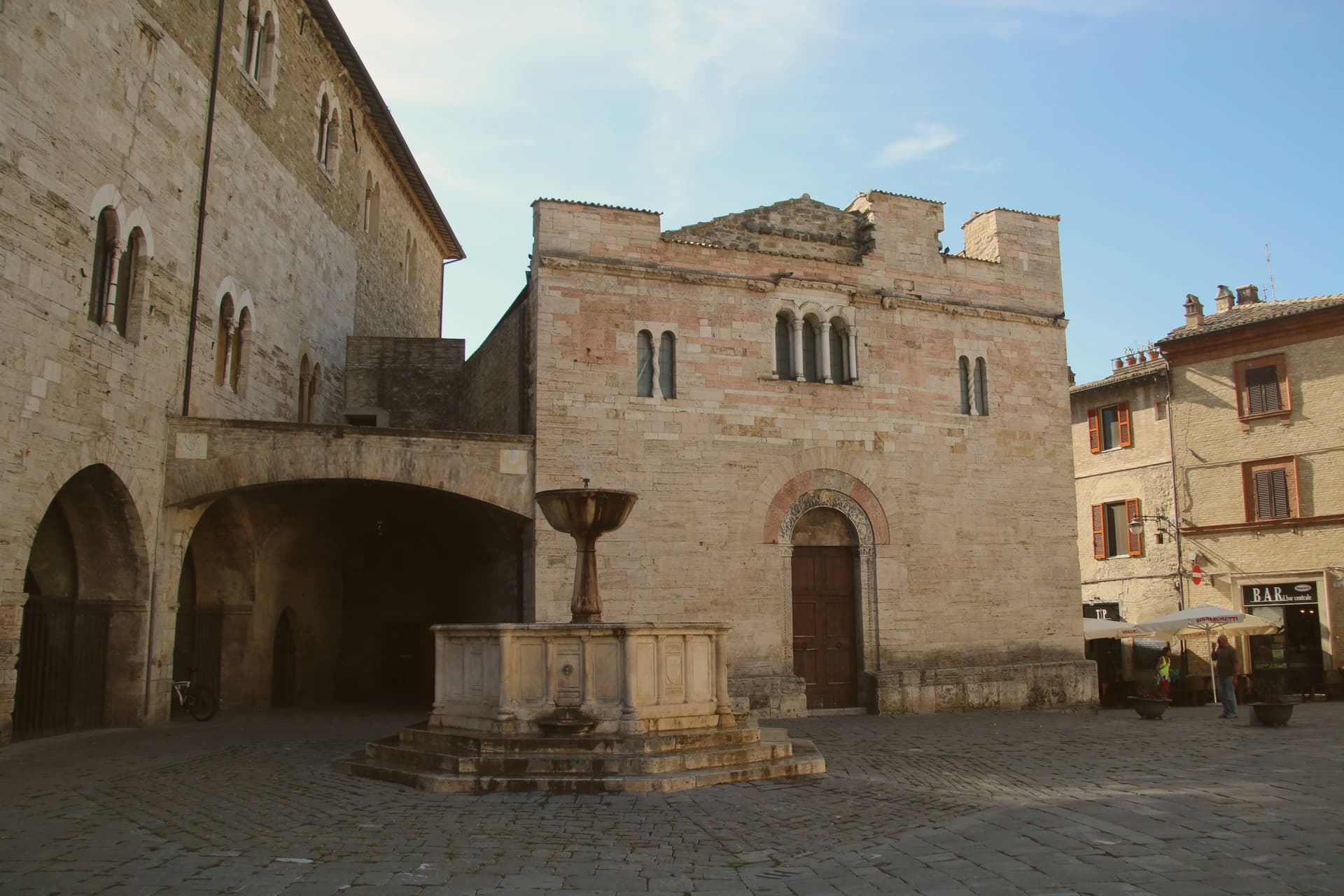
Piazza Silvestri at the heart of the centro storico holds two Romanesque churches that face each other at odd angles, San Michele Arcangelo and San Silvestro, built within years of each other in the late 12th century. The Mercato delle Gaite each June turns the town into the year 1300 for ten days, four quarters competing on medieval trades and tavern menus, no anachronisms allowed. The Sagrantino slopes of Montefalco are nine kilometers up the road.
How to get there
From Ancona (AOI), about 1 h 48 min by car.
Rome Fiumicino (FCO) is about 2 h 21 min away.
By car from the center of Perugia 37 min, Ancona 1 h 59 min or Siena 2 h.
Coming by train into Perugia? Bevagna is about 37 min away by road.
Every town within reach of Ancona airport.
First time driving in Italy? Read our complete manual.
What to see
Piazza Silvestri
Twelfth-century civic square ringed by the Palazzo dei Consoli, the churches of San Silvestro and San Michele, and the fountain of 1896.
Chiesa di San Michele Arcangelo
Romanesque collegiate church built by Binello and Rodolfo at the end of the 12th century, on the main square.
Chiesa di San Silvestro
Romanesque parish church across the piazza, signed and dated 1195 by Binello, the same builder as San Michele.
Mosaico Romano delle Terme
Black and white floor mosaic of the frigidarium, 2nd century AD, twelve by seven meters, marine creatures arranged symmetrically across the bath room.
Teatro Francesco Torti
Nineteenth-century neoclassical theater inside the Palazzo dei Consoli, 350 seats, in continuous use for prose and music seasons.
From the guides
Where to eat
Not our picks, but places the guides put their name to: a Michelin star, a Gambero Rosso fork, a Slow Food snail, a Michelin Key for the hotels. Worth a table, a counter, or a night when you pass through.
Ottavi MareRistorante
Ottavi Mare carries two Gambero Rosso forks (82/100), a place in L'Espresso's Top 300, plus a spot in the Michelin Guide.
SerpilloRistorante
Serpillo has a spot in the Michelin Guide to its name.
Before you sit down: how to order at a restaurant, how to spot a tourist trap, what aperitivo is and how the Italian bar works.
Living here
Could you live here?
Bevagna is at the end of the road.
- A village of 4,747. The nearest town of 5,000 people, Montefalco, is 21 min away: past our 15-minute rule, which makes this the end of the road.
- Foligno, a city of 55,303, is 12 min by car. Closer than our 30 to 60 minutes: handy for everything, so check the town still keeps a life of its own.
The rules come from our series Where to Move in Italy, written from the places we have lived: Part 1, The End of the Road · Part 2, The Small Town · Part 3, The City · Part 4, The Postcard · Part 5, The Other Half. The towns we would pick are in Part 6, The Best Towns.
- Population 4,747, down 7.3% since 2015
- Nearest city Foligno, 12 min drive
- Nearest national health service hospital Foligno, 16 km as the crow flies · how healthcare works in Italy
- Homes in the center: €640 to €960 per m² to buy, €2.30 to €3.30 per m² a month to rent
All the numbers Common questions, designations, lists and sources.
More about living here
- Commuter belt
- Pharmacy in town
- High school within a 30-minute drive
- Full fibre reaches 86% of homes
- Primary school in the comune
- Earthquake zone 2, medium hazard
- Perugia airport (PEG), 30 min drive, the nearest with scheduled flights
- Regional capital Perugia, 37 min drive
If you are moving here
Who lives here
6% of residents are foreign citizens, most often from Romania, Morocco and Ukraine, against 9% across Italy. 38 of them come from English-speaking countries or western and northern Europe, mostly the United Kingdom and the United States. There are 272 people over 65 for every 100 children under 15, against 216 across Italy. 31% of homes have no resident, holiday homes and empty ones counted together, against 27% across Italy. Perugia province ranks 37th of 107 in Il Sole 24 Ore's quality of life ranking for 2025.
Health and schools
The nearest emergency room is in Foligno, 16 km as the crow flies. The nearest major one is in Perugia, 29 km away. The nearest IB school is Viterbo International School, 71 km as the crow flies. The nearest school listed as international is Assisi International School, 13 km away.
Information, not medical advice. Confirm with a professional.
Taxes
A home that is not your main one pays 1.06% a year in property tax, charged on the cadastral value rather than the price. A main home pays none unless it is in a luxury category. The town adds 0.8% to your income tax. 7% pensioner tax: this town is not in a qualifying area.
Information, not tax advice. Confirm with a professional.
What it costs
The average household in Umbria spends about €2,310 a month, €550 of it on food, against about €2,170 across Italy. A family of three pays about €677 a year for water, on the Umbria average. In Perugia, the provincial capital, in September 2026, an espresso cost €1.23, a meal in a pizzeria €12.04 and a man's haircut €20.47.
Climate and risk
It is in climate zone D, on a scale from A, the warmest, to F, the coldest, and heating may run from November 1 to April 15, up to 12 hours a day, unless the mayor changes it. 14% of residents live in a zone the national maps rate high for floods, 21% in a high or medium one. 2% live in a zone rated high or very high for landslides.
These shares cover the whole comune, not any one street. Check an address on IdroGEO.
Moving from abroad? Which visa you need. Sources: ISTAT, the Ministry of Health, ISPRA, the Finance Ministry, the Ministry of Enterprise, Poste Italiane, the comuni, the IB, International Schools Database, Il Sole 24 Ore, Cittadinanzattiva.
Known for
MERCATO DELLE GAITE
Each June the four quarters of San Giorgio, San Giovanni, San Pietro and Santa Maria reconstruct the daily life of Bevagna between 1250 and 1350.
ROMAN MOSAIC
Black and white frigidarium mosaic of the 2nd century AD, twelve by seven meters, the most intact Roman work in Umbria.
PIAZZA SILVESTRI
Two Romanesque churches face each other across the medieval civic square, both signed by the builder Binello in the late 12th century.
MONTEFALCO SAGRANTINO
The commune lies inside the Montefalco Sagrantino DOCG production zone.
Common questions
- What is Bevagna known for?
- Roman Mevania on the Umbrian plain at 225 meters, four medieval quarters that compete every June in a reconstructed market of the 13th century.
- Where is Bevagna?
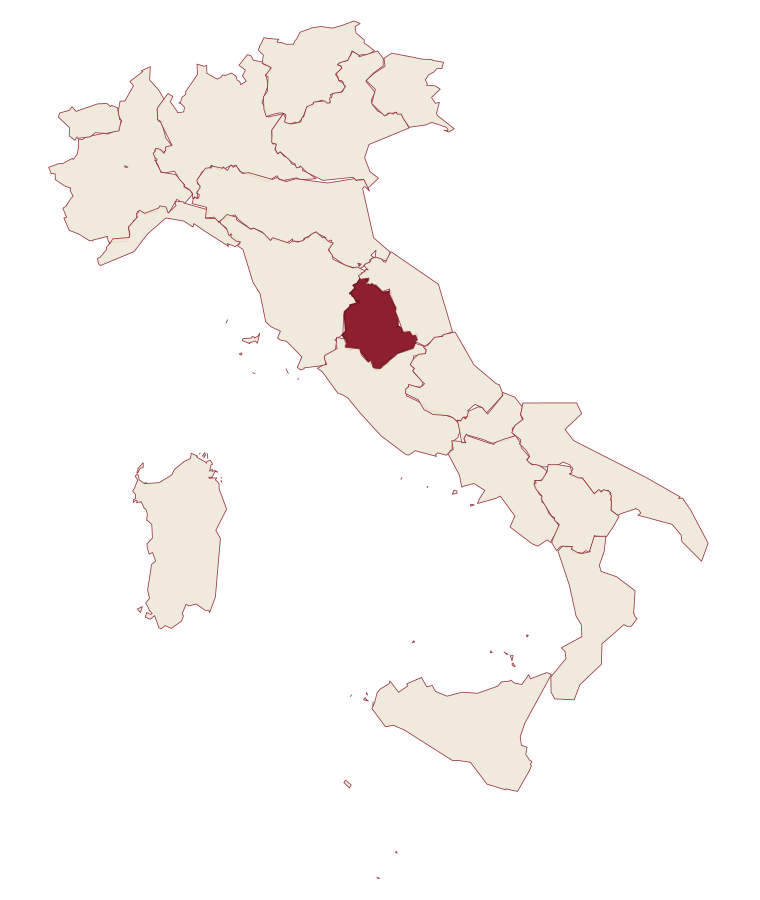
- Bevagna is a comune in the province of Perugia, in Umbria.
- What is the nearest airport to Bevagna?
- The nearest airport with scheduled flights is Perugia (PEG), about 30 min by car.
- How long is the drive from Perugia to Bevagna?
- About 37 min by car.
- When is the best time to visit Bevagna?
- Best in Apr–Oct. July is the warmest month, averaging 34 degrees, and December the wettest, with about 11 rain days.
- Which other towns are like Bevagna?
- Torgiano, Bettona and Deruta.
- How many people live in Bevagna?
- 4,747 residents, by ISTAT's count on 1 January 2025.
- Is Bevagna a good place to live?
- By the rules in our Where to Move in Italy series, Bevagna is at the end of the road: the nearest town of 5,000 people, Montefalco, is 21 min away. The nearest city, Foligno, is 12 min away by car. The nearest national health service hospital is in Foligno, 16 km as the crow flies. Full fibre reaches 86% of homes.
Tags & data designations · numbers · sources
Recognized as
Landscape
The numbers
- Elevation: 225 m
- Population: 4,747
- Surface area: 56.22 km²
These figures were compiled from public directories: ISTAT, OpenStreetMap and Wikidata, and from the official listings of the guides named on this page. Town details change; verify with official sources before you travel.
The ranked lists
Lists Bevagna appears in
- The 6 best small towns that eat well in the province of PerugiaPerugia provinceeats wellsmall6 towns · smallest 686 residents
- The best small olive oil towns in the province of PerugiaPerugia provinceolive oilsmall6 towns · smallest 334 residents
- The best hidden olive oil towns that eat well in UmbriaUmbriaolive oileats wellhidden7 towns · smallest 2,493 residents
- The best hidden towns with a serious restaurant in the province of PerugiaPerugia provinceserious restauranthidden7 towns · smallest 1,537 residents
- The best small olive oil towns within 90 minutes of PerugiaNear Perugiaolive oilwithin 90 minsmall7 towns · smallest 937 residents · closest 27 min away
- The best wine towns in the province of PerugiaPerugia provincewine7 towns · smallest 3,636 residents
Near here, with a letter
- Written about. No. 79.
Foligno
Province: Perugia
A valley town at 235 meters on the Topino, where Dante's Divine Comedy was first printed in 1472.
12 min by car
- Written about. No. 81.
Montefalco
Province: Perugia
The hilltop wine capital of Umbria at 472 meters, where Sagrantino is grown almost nowhere else.
21 min by car
- Written about. No. 76.
Bettona
Province: Perugia
A hill town at 353 meters between the Topino and Chiascio rivers, the only Etruscan settlement ever built east of the Tiber.
21 min by car
Our guide
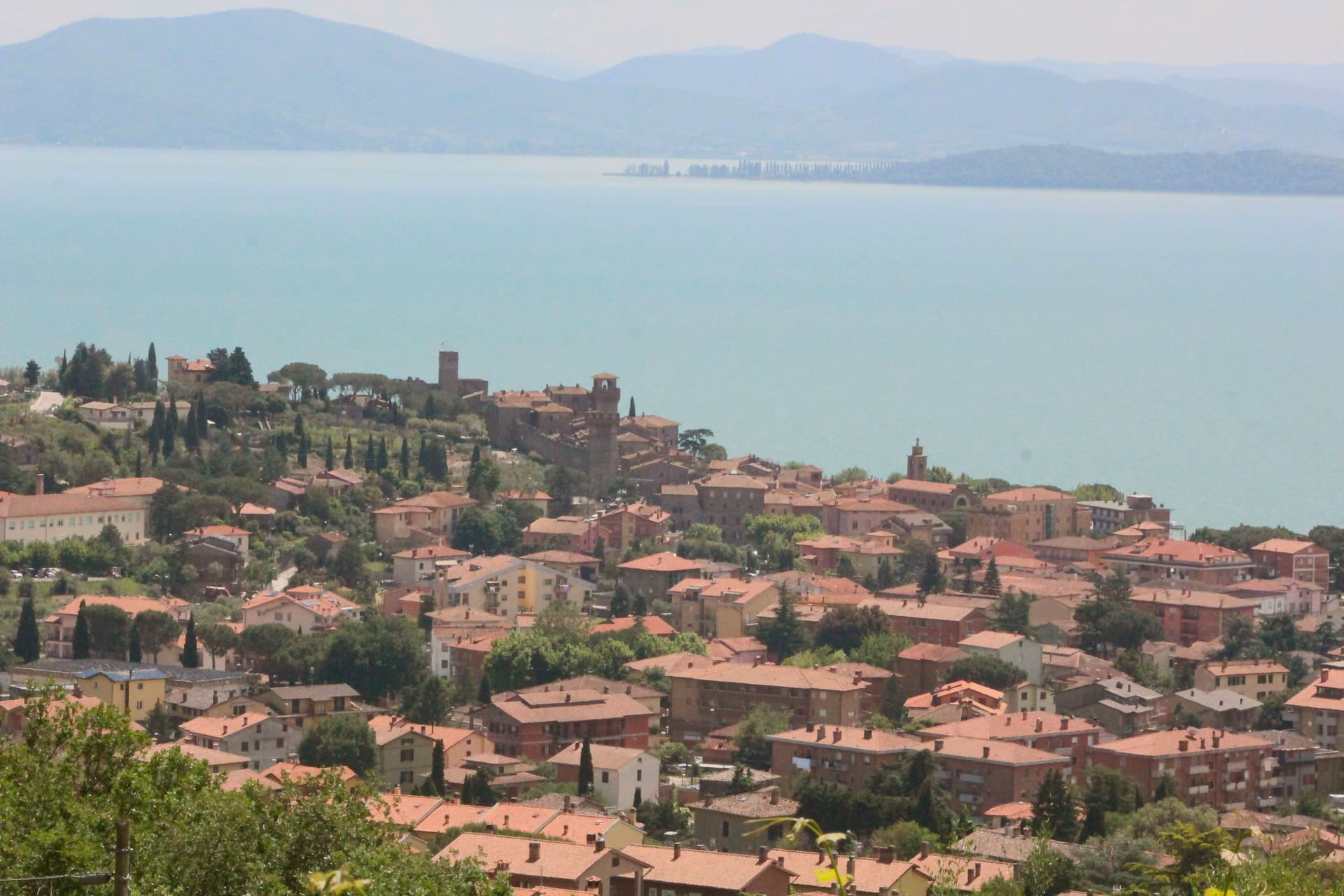
Our nearest guide, 40 km away
Umbria: the towns, when to go, how to get there
The Umbria guide came out of the letter. Letters from the towns we visit. Free.
Read the guide: Two banks, no sea. 21 towns, the drive and train times, the months, where to eat and sleep.
Paid plans, the moving year and the books are on the membership page.