
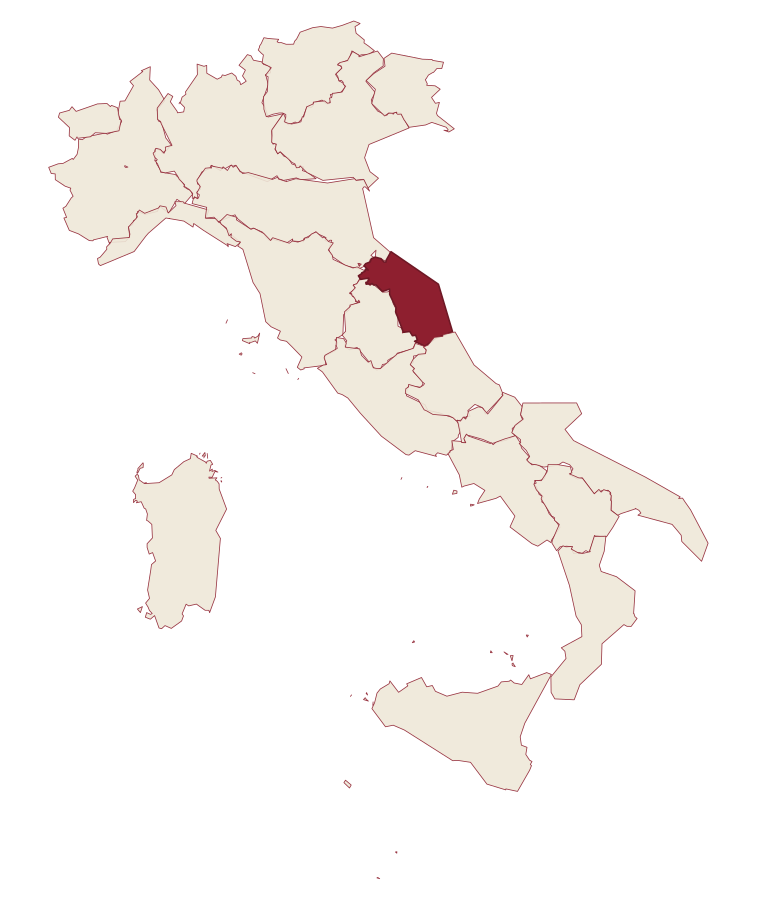
Marche · Ancona
Senigallia
Thirteen kilometers of fine sand on the Adriatic, hometown to a chef and a photographer whose names carry beyond the region.
- Best time
- May–Sep
- By car
- 41 min from Ancona
- By train
- Station in the comune
- Population
- 44,019
Known for
SPIAGGIA DI VELLUTO
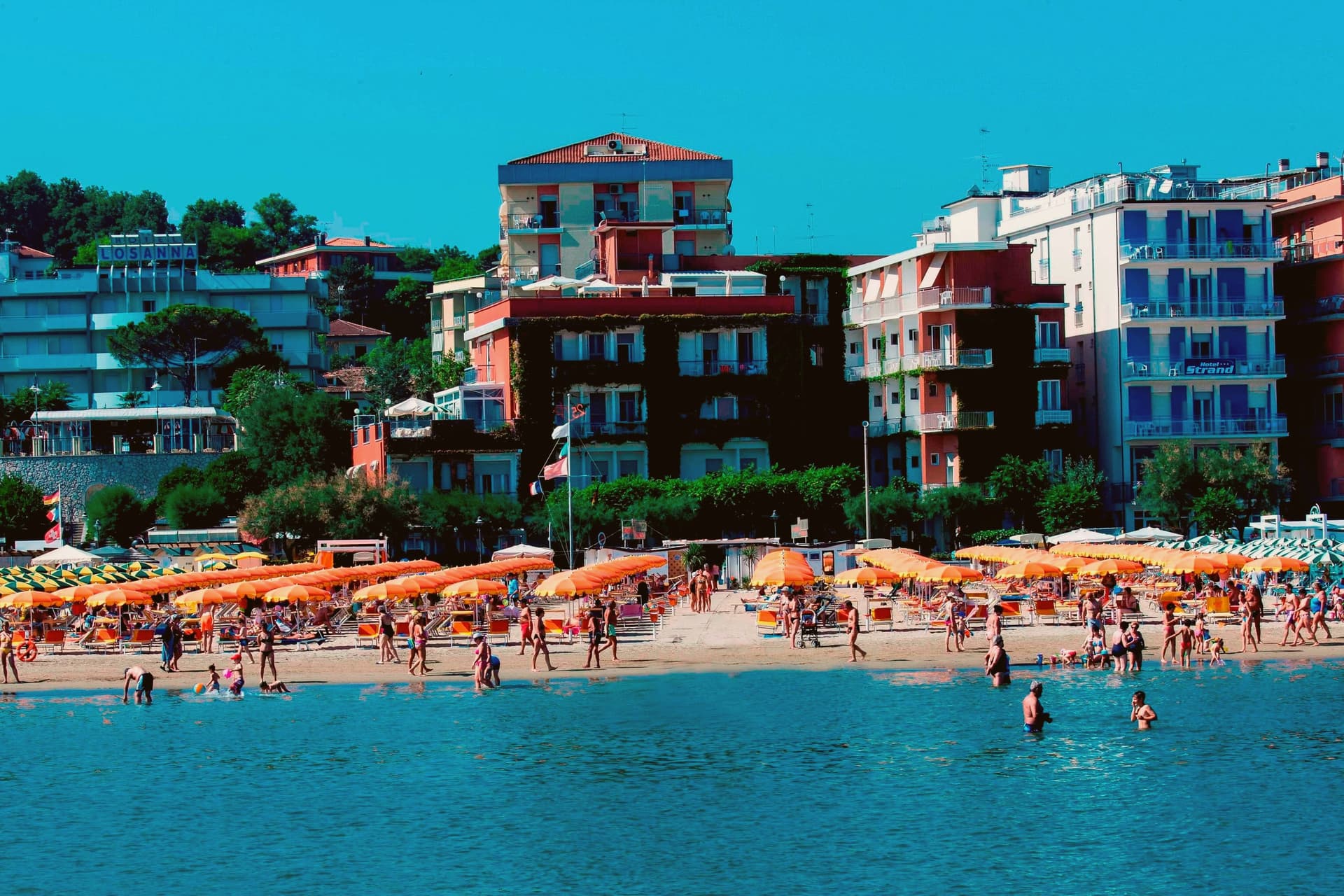
Thirteen kilometers of fine sand along the Adriatic, awarded Bandiera Blu, named for the velvet softness of the grain.
MARIO GIACOMELLI
Born here in 1925, one of the great photographers of the twentieth century; the Palazzo del Duca holds his permanent section.
ULIASSI
Three-Michelin-star restaurant on the southern beach, founded 1990 by Mauro and Catia Uliassi, ranked among the world's top fifteen.
When to visit
Best · May–Sep
- J11°
- F13°
- M14°
- A17°
- M22°
- J28°
- J30°
- A30°
- S25°
- O21°
- N15°
- D12°
- Best
- Hot or crowded
- Quiet
- Mostly closed
Daytime averages, 2020–2024. The sea is warmest in August at 29° and coldest in February at 10°. Weather data by Open-Meteo.com.
The festa: Paolino di Nola, 4 May
Why come
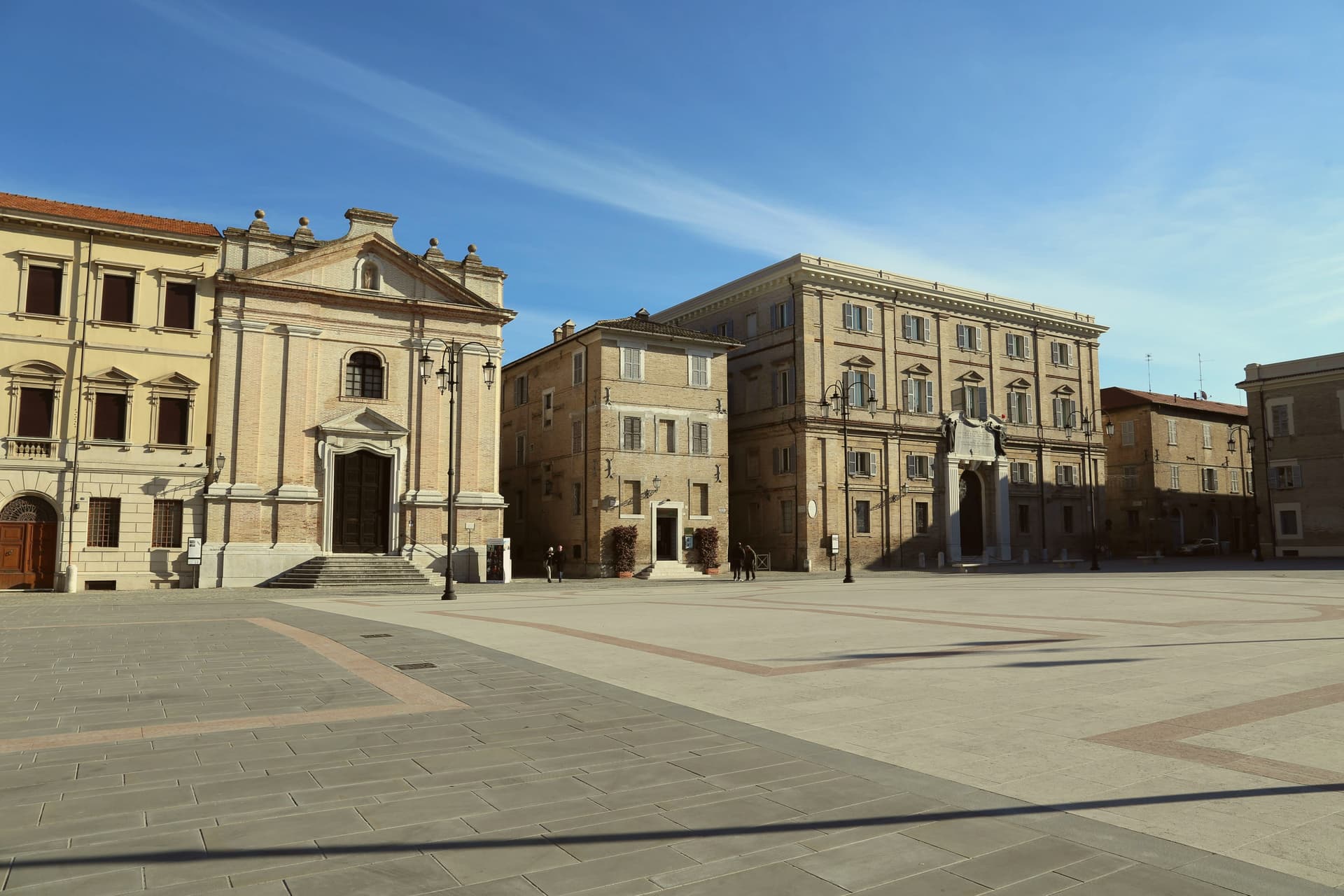
Senigallia sits at the mouth of the Misa river on the Adriatic, twenty-five kilometers north of Ancona. The centro storico gathers along the river's right bank, where the arcades face the water, while the fortress stands apart as the town's layered military record, built up over two centuries by successive rulers rather than in one campaign. The beach runs south from this old core as a separate register of the town entirely, thirteen kilometers of it, with the pier pavilion marking the center of that beachfront and the restaurant anchoring its southern end.
The photographer worked in the town all his life, and the permanent section of his prints sits inland in the Palazzo del Duca rather than anywhere near the coast he might have photographed. The market arcade, built in the nineteenth century, still does the ordinary work of feeding the town between the historic river frontage and the modern beach economy. Senigallia reads, then, as three towns joined at the river mouth: a fortified old center, a nineteenth-century civic one, and a twentieth-century coastline, each still doing the job it was built for.
The Sunday letter
Senigallia is on our list. Its letter is still to come.
We are writing about all 1,000 of these towns, one at a time, in a free letter every Sunday: the photo, the food, the festa. That is our mission. Sign up and you will be there when Senigallia comes up. By Peter & Sophia, from Pietrasanta.
The button takes you to the letter's own page on Substack, where you leave your email. About the letter
Read on
Senigallia in our articles
 The 6 best towns that eat well in the province of Ancona6 towns, Senigallia among them.
 The best coastal towns within 90 minutes of Ancona6 towns, Senigallia among them.
 The best coastal towns you can reach by train in Marche7 towns, Senigallia among them.
 The 8 best towns you can reach by train that eat well within 90 minutes of Ancona8 towns, Senigallia among them.
How to get there
From Ancona / Pescara (AOI), about 28 minutes by car.
Rimini (RMI) is about 1h 9m away.
By car from the centre of Ancona 41 minutes or Perugia 2 hours.
There is a railway station in the comune, so you can arrive without a car.
Coming from Bologna?
Coming by train into Rimini? Senigallia is about 53 minutes away by road.
What to see
Spiaggia di Velluto
The Bandiera Blu beach, working spine of the town's summer, its sand fine enough underfoot to explain the name.
Rocca Roveresca
Layered fortress combining Albornoz's fourteenth-century Rocchetta, the 1450 Malatesta keep and the Della Rovere completion by Laurana and Pontelli.
Rotonda a Mare
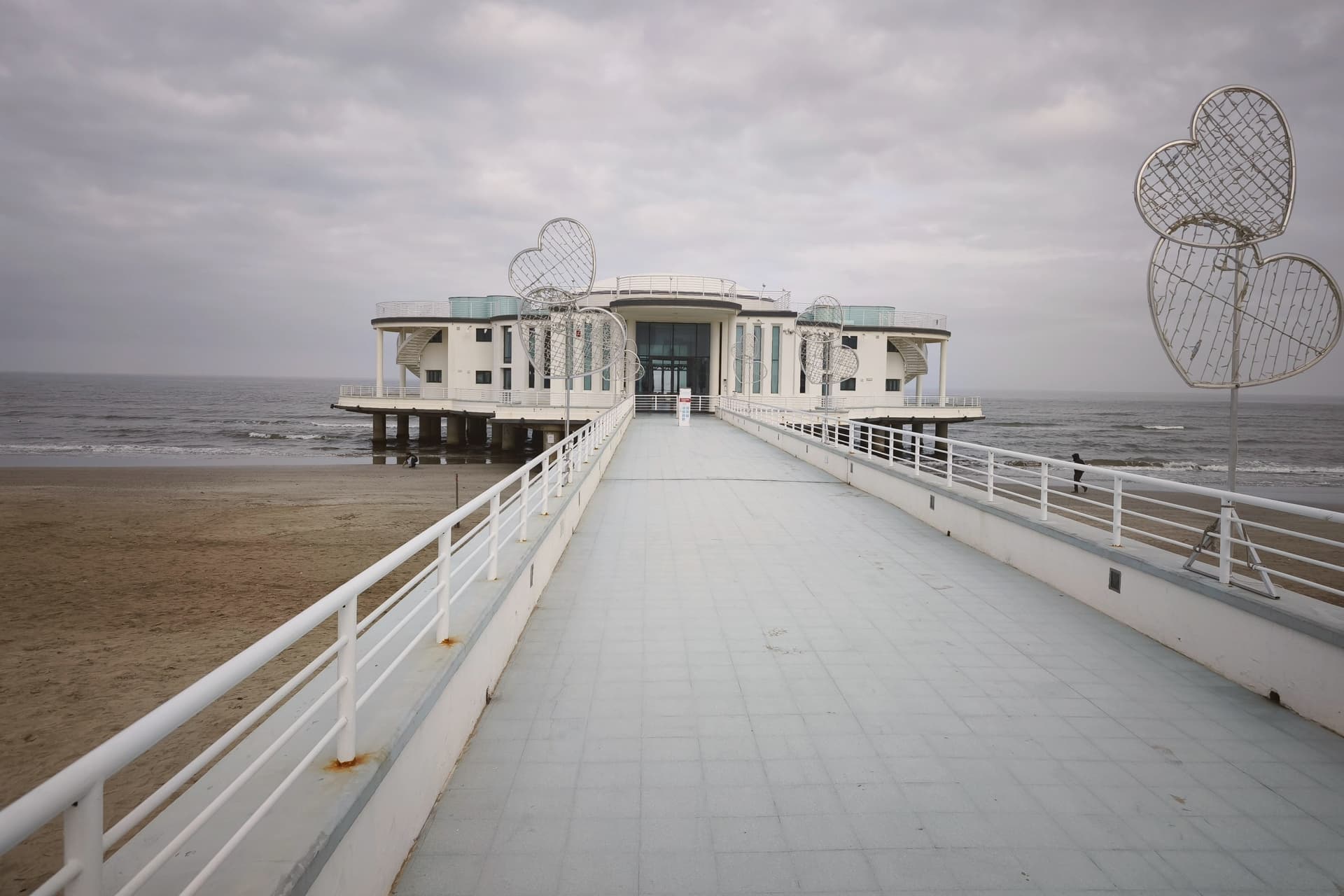
Art-deco pier pavilion completed 1933, set on iron piles above the water at the center of the beachfront, restored and used for exhibitions and weddings.
Mario Giacomelli section, Palazzo del Duca
Permanent display of prints by the photographer, including the Scanno series and the seminary priests in snow.
Foro Annonario
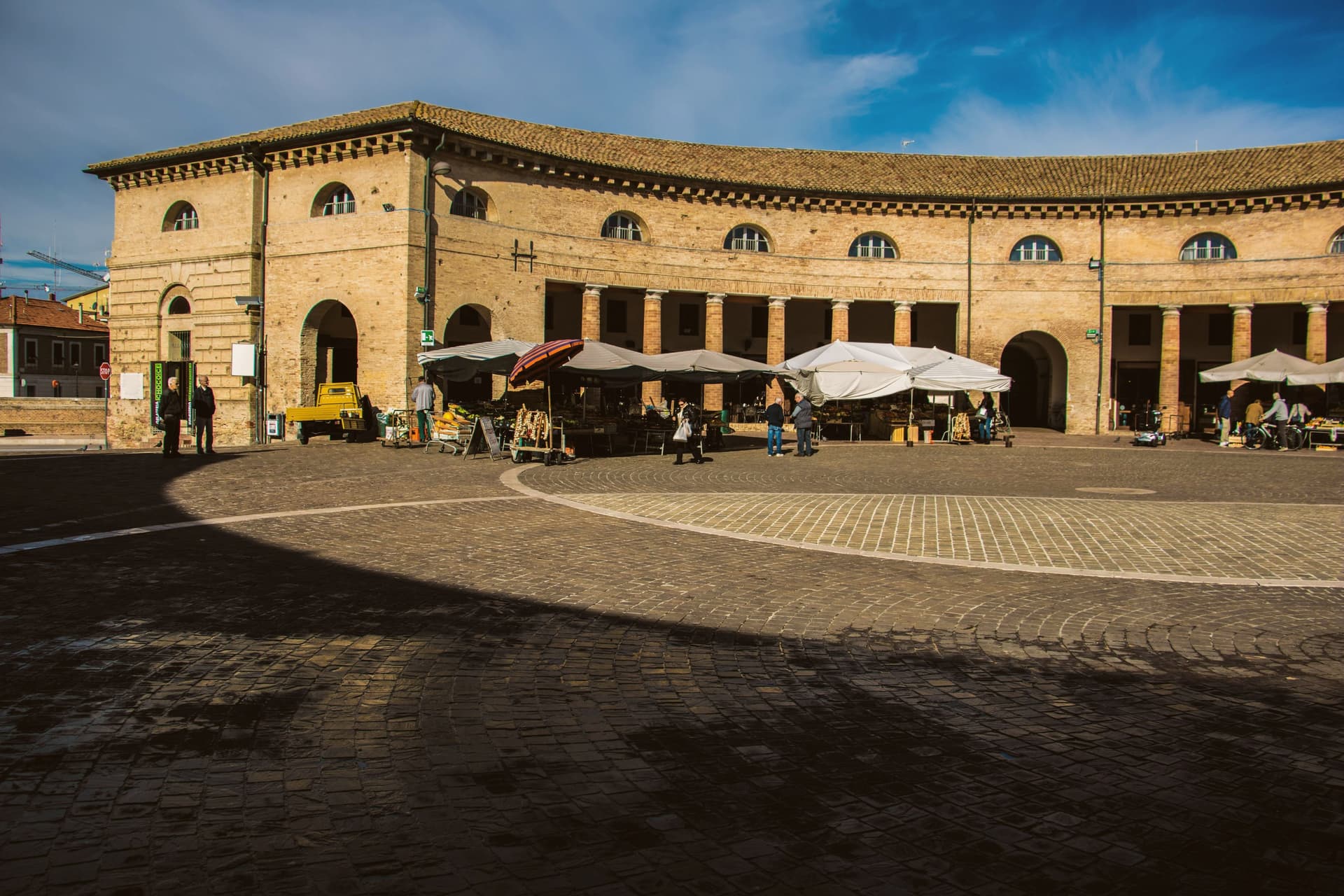
Neoclassical circular market arcade built 1834 by Pietro Ghinelli, still used as the central food market of the town.
Portici Ercolani
Twenty-six arcades in white Istrian stone running along the right bank of the Misa river in the centro storico, built mid-eighteenth century.
The slow-trip planner
Building a trip? Find where Senigallia fits in a slow Italy circuit.
Answer five questions. We will shape a geographically coherent slow trip from the 1,000 Italian towns most travelers skip. Yours to save and share.
We recommend
Where to eat
Not our picks, but places the guides put their name to: a Michelin star, a Gambero Rosso fork, a Slow Food snail, a Michelin Key for the hotels. Worth a table, a counter, or a night when you pass through.
UliassiRistorante
Uliassi has the number 43 spot on the World's 50 Best, three Michelin stars and three Gambero Rosso forks (95/100), among other nods.
Madonnina del PescatoreRistorante
Madonnina del Pescatore has two Michelin stars, three Gambero Rosso forks (94/100) and a place in L'Espresso's Top 300, among other nods.
Vino e CiboTrattoria
Vino e Cibo carries three Gambero Rosso prawns, a Slow Food snail, plus a place in L'Espresso's Top 300.
Mercato Trattoria PopTrattoria
Mercato Trattoria Pop carries two Gambero Rosso prawns, plus a Slow Food snail.
Sepia by NikoRistorante
Sepia by Niko carries two Gambero Rosso forks (80/100), plus a place in L'Espresso's Top 300.
Cuoco di BordoRistorante
A spot in the Michelin Guide, at Cuoco di Bordo.
Nana Piccolo BistròBistrot
Nana Piccolo Bistrò holds three Gambero Rosso tables.
Through the year
What happens here
Feasts and festivals that come back year after year. We give the month rather than the date, because the date moves and the month rarely does. Check with the source before you plan a journey around one.
Festa Castellanapatron saint's feast
usually held across July and August. lemarche.it
Sagra Paesanafood festival
usually held in August. lemarche.it
Festa delle Champagnefood festival
usually held in October. TrovaSagre
Our Breadfood festival
usually held in October. sagritaly.com
Pane Nostrumfood festival
usually held in October. lemarche.it
Living here
- Population 44,019
- A local hubi
- Pharmacy in town
- High school within a 30-minute drive
- Train station in the comune
- Nearest airport Ancona / Pescara, 28 min drive
- Regional capital Ancona, 41 min drive
Common questions
- What is Senigallia known for?
- Thirteen kilometers of fine sand on the Adriatic, hometown to a chef and a photographer whose names carry beyond the region.
- Where is Senigallia?
- Senigallia is a comune in the province of Ancona, in Marche, at 5 meters above sea level.
- What is the nearest airport to Senigallia?
- Ancona / Pescara (AOI), about 28 minutes by car.
- Can you get to Senigallia without a car?
- Yes. There is a railway station in the comune, so you can arrive by train.
- How long is the drive from Ancona to Senigallia?
- About 41 minutes by car.
- When is the best time to visit Senigallia?
- Best in May–Sep. July is the warmest month, averaging 30 degrees, and May the wettest, with about 11 rain days.
- Is there a sagra or a festival in Senigallia?
- Yes. Festa Castellana, Sagra Paesana and Festa delle Champagne, and 2 more we hold a source for. July is when the first of them falls.
- Which other towns are like Senigallia?
- Pesaro, Ravenna and Trieste.
- How many people live in Senigallia?
- 44,019 at the 2023 count.
Tags & datadesignations · numbers · sources
The numbers
- Elevation: 5 m
- Population: 44,019
- Surface area: 117.77 km²
These figures were compiled from public directories: ISTAT, OpenStreetMap and Wikidata, and from the official listings of the guides named on this page. Town details change; verify with official sources before you travel.
Similar
Towns like Senigallia
Pesaro
Province: Pesaro e Urbino
both on the Adriatic coast · both over 10,000 people
Ravenna
Province: Ravenna
both on the Adriatic coast · both over 10,000 people
Trieste
Province: Trieste
both on the Adriatic coast · both over 10,000 people
Grottammare
Province: Ascoli Piceno
both on the Adriatic coast · both over 10,000 people
Porto San Giorgio
Province: Fermo
both on the Adriatic coast · both over 10,000 people
Mondolfo
Province: Pesaro e Urbino
both on the Adriatic coast · both over 10,000 people
🟦 Bandiera Blu
More Bandiera Blu towns in Marche
Fermo
Province: Fermo
The provincial capital on the Sabulo hill at 319 meters, with 2,200 square meters of Augustan Roman cisterns running under the centro storico.
Gabicce Mare
Province: Pesaro e Urbino
The northernmost Marche seaside on the Adriatic, where the coast meets the cliffs of the Parco del San Bartolo at the Romagna border.
Grottammare
Province: Ascoli Piceno
A double town on the Riviera delle Palme, with a palm-lined seafront and a medieval upper borgo where Pope Sixtus V was born.
Mondolfo
Province: Pesaro e Urbino
A walled hill borgo at 144 meters above the Adriatic, with the frazione of Marotta and its beach below.
Numana
Province: Ancona
A Conero coastal town at 56 meters above its port, the Picene harbour that traded with Greek ships from the sixth century BC.