
The 6 best towns that eat well in the province of Ancona
The province of Ancona feeds itself from two directions at once. From the sea come brodetto thickened with tomato and vinegar, moscioli (the wild mussels that grow on the rocks under Monte Conero), sardines, cuttlefish and the fried anchovies that appear on every summer terrace. From the hills come Verdicchio in its green bottles, vincisgrassi layered with offal and béchamel, ciauscolo salami soft enough to spread, and pork cooked slowly in autumn when the truffle men come down from the Apennines. The houses are pale brick and travertine, the piazzas open onto olive terraces, and spring and early autumn are when the kitchens are at their most interesting.
Most people who eat in this province eat in Ancona, at the fish restaurants near the port and along the Passetto, or else they keep driving to Rimini and the Romagna coast where the restaurants are lined up in ranks. Ancona is a working port with real cooking in it, and the guides say so, but the tables fill with ferry passengers and conference traffic, and in August the queues along the seafront are long enough to eat an evening. The Riviera del Conero gets the overflow, mostly in the space of six weeks.
The same vines, the same boats and the same butchers carry on past the city limits. Inland, towns built on ridges above the Esino and the Musone keep restaurants that a national or international dining guide has named, working with local pork, hill truffles and Verdicchio grown within sight of the dining room. On the coast, smaller places hold onto their fishing boats and cook what comes off them. These are the towns in this list, and they are worth the detour more than the port is.
Of the 13 communes we have mapped in the province of Ancona, 6 qualify as towns that eat well: a national or international dining guide has named a table in each. The smallest, Staffolo, has 2,087 residents.
If you are still choosing, we have also written The best towns with a serious restaurant that eat well within 90 minutes of Ancona and The best coastal towns within 90 minutes of Ancona.
Staffolo
Why visit Staffolo
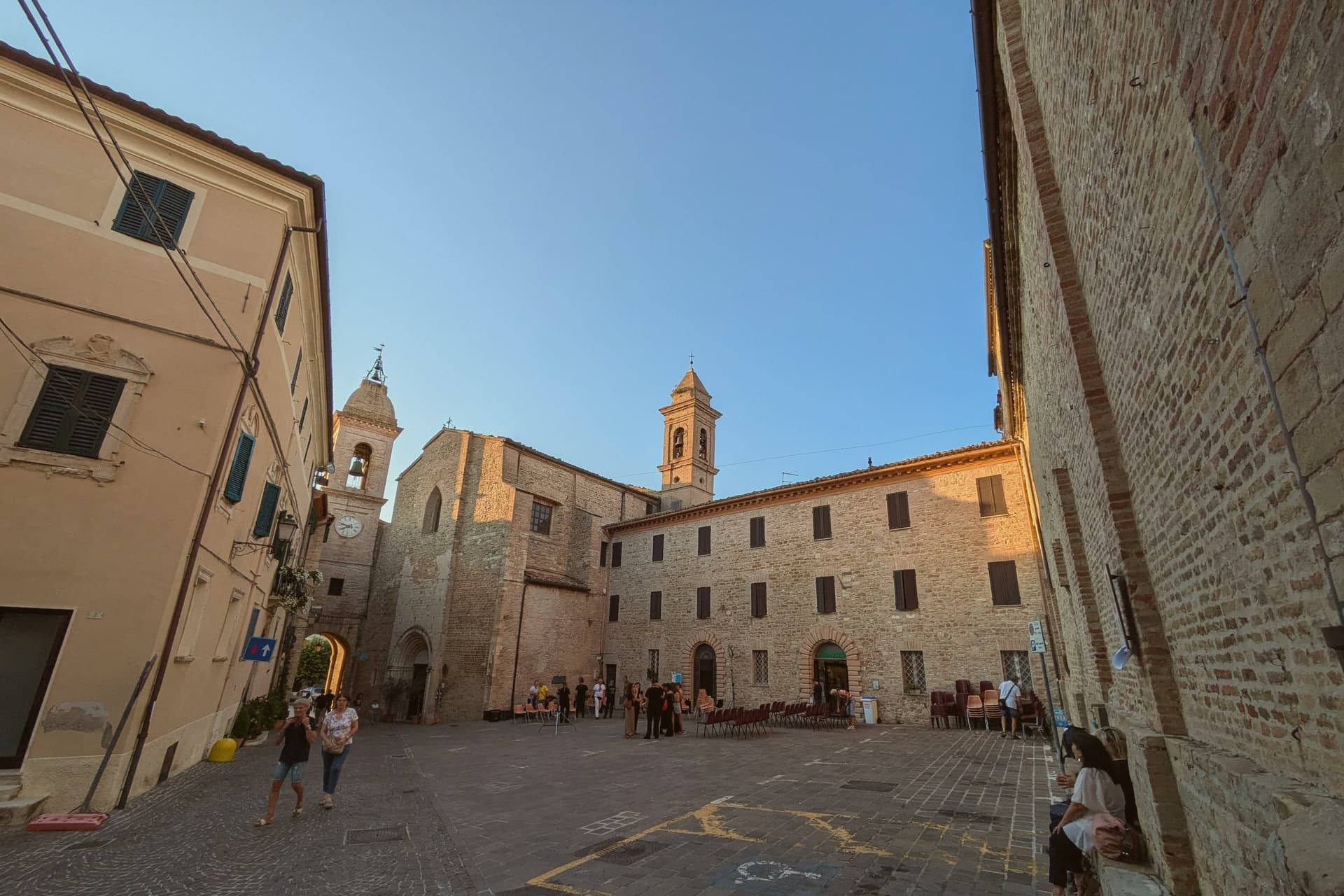
Staffolo rises to 442 meters on a hill between the Esino, Misa and Musone valleys, thirty-five kilometers from Ancona. The town calls itself the Balcone della Vallesina for the panoramic ridge it stands on, and Colle del Verdicchio for the vines that cover the south-facing slopes around it.
Verdicchio cultivation here is documented from 1569; the surrounding Castelli di Jesi DOCG zone draws from south-facing parcels between 220 and 500 meters of altitude. The centro storico is almost circular, walled with partly original ramparts and entered through two opposing gates; the fourteenth-century Albornoz tower rises above the walls.
The Museo dell'Arte del Vino, carved into rooms inside the walls themselves, holds an oak press from 1695 and the working tools of the local cellars, with an enoteca attached. Three churches anchor the village: Sant'Egidio with a fifteenth-century Master of Staffolo polyptych, San Francesco with a 1769 Callido organ, and the baroque Santa Maria di Castellaretta built by survivors of the Battle of Lepanto.
Osteria Vino e Cucina have been named by a guide.
What to see in Staffolo
- Centro storico. Almost circular walled medieval nucleus with partly original ramparts, two opposing gates and the fourteenth-century Torre Albornoz rising above the circuit.
- Museo dell'Arte del Vino. Wine museum carved into rooms inside the walls themselves, holding an oak grape press from 1695 and the working tools of the Staffolo cellars, with attached enoteca.
- Chiesa di Sant'Egidio. Parish church on the ridge, holding a fifteenth-century polyptych by the anonymous Master of Staffolo of the Fabrianese school.
How to get to Staffolo
Ancona is roughly 42 minutes away by road.
Our tip
April through June and September into October are the best months for Staffolo. The ridge stays cooler than the valleys below, the vineyards turn green by April and gold from late September, and the views to the Adriatic and the Apennines run cleanest in the dry weeks. July and August can touch the high twenties at 442 meters, but the breeze along the Vallesina ridge moves through town most afternoons. Verdicchio Festival falls in August.
Numana
Why visit Numana
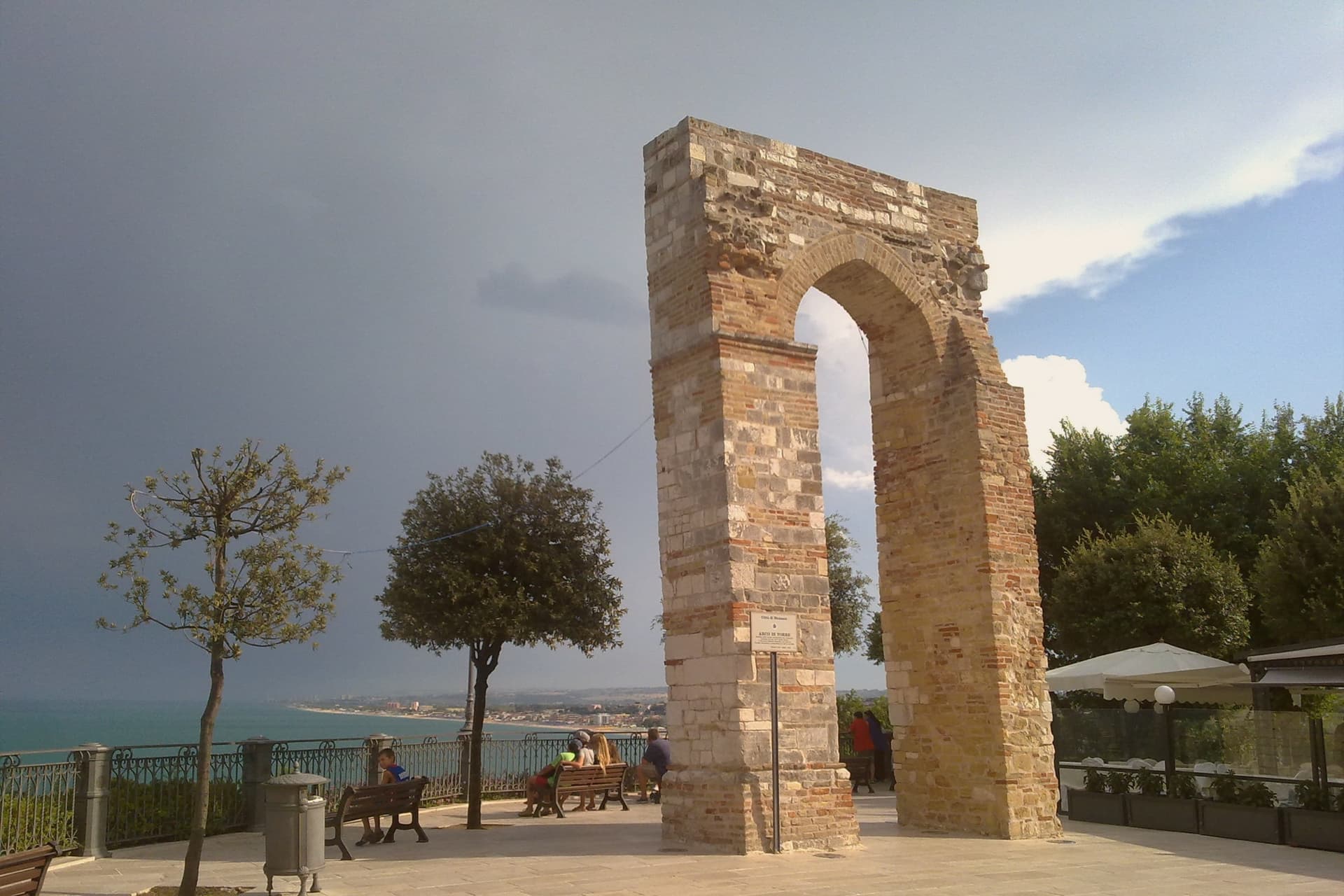
Numana sits fifteen kilometers south of Ancona, on a cliff overlooking the Adriatic at the foot of the promontory that shapes this stretch of coast. The old town, Numana alta, runs along the ridge in continuity with Sirolo, while Numana bassa wraps around the port below, so the visitor moves between two settlements joined by a single slope rather than one town with two names.
The place was a Picene harbour that traded with Greek and Etruscan ships from the sixth century BC, and a major centre of pre-Roman Italy before the rise of Ancona pushed it into decline around 500 BC. That decline is what left the burial grounds undisturbed long enough to be excavated centuries later, and it is also why the town's oldest identity is archaeological rather than architectural: a harbour that mattered, stopped mattering, and was rediscovered through what it buried.
In Riva a Numana, Casa Rapisarda, Riva Restaurant del View Place Hotel and 1 more have been named by a guide.
What to see in Numana
- Antiquarium Statale di Numana. Opened 1974, holding more than five hundred Picene burials from the Conero necropolises, plus a sixth-century BC limestone warrior's head found on a Numana beach in 1892.
- Santuario del Crocifisso. Rebuilt in 1969 on a 1566 foundation, the current structure standing on a sanctuary site with roots three centuries older than the rebuild itself.
- Porto di Numana. Working fishing and pleasure port at the foot of the cliff, with daily boat services along the Conero cliffs to the otherwise inaccessible Due Sorelle beach.
How to get to Numana
Ancona is roughly 30 minutes away by road.
Our tip
May through September are the months for Numana. The Conero water clears from late May and stays warm through September, with the port's daily boats running to Due Sorelle and the other Conero cliff beaches. July and August are the busiest weeks of the Marche coast: parking is metered into the late evening and the Numana bassa restaurants book ahead.
Sirolo
Why visit Sirolo
Sirolo sits at 125 meters, twenty kilometers from Ancona, on ground that belonged to the Conti Cortesi family. The medieval village kept one of the two original castle towers, folded now into the parish church, and the belvedere above Piazza Vittorio Veneto looks out across the bay.
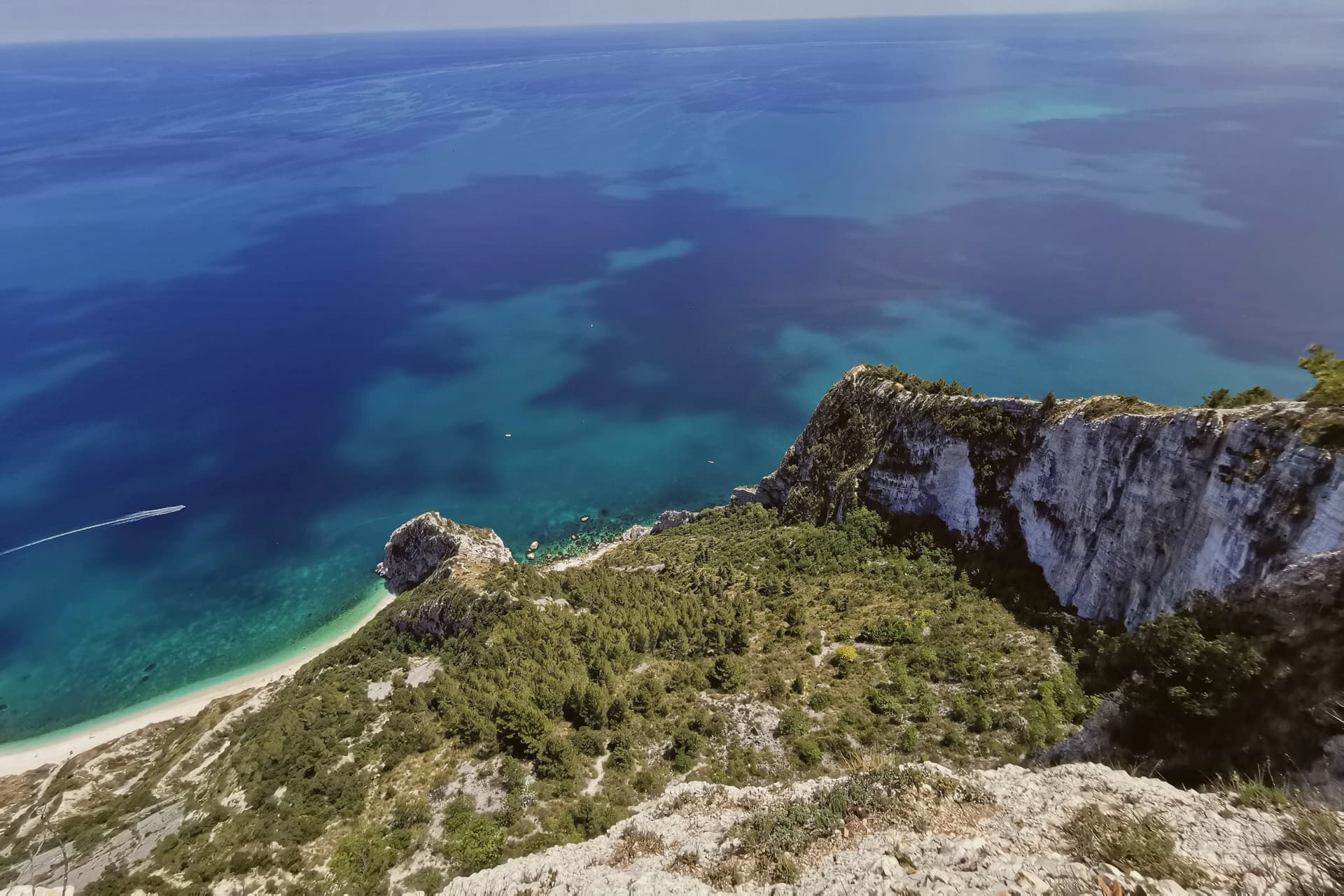
Below town, the ridge drops toward the Picene necropolis of I Pini, and further down still toward the water. The mountain above the village and the water below it are the same geology: limestone that falls straight into the sea rather than tapering through a coastal plain, which is why the village sits on a clifftop rather than a shoreline.
Upper Sirolo is the castle, the church and the theatre, all cut from the same pale stone. Lower Sirolo is reached by boat or by trail, down through the park to the cove where the sea stacks stand.
The grave goods from the necropolis have left town entirely, kept at the Antiquarium in neighbouring Numana, so what remains above ground here is the tomb site itself rather than its contents. The town doubles in summer and empties again in October: a place shaped less by what happens in it than by the drop between its two levels, the built one and the wild one.
Lofficina, Convivio have been named by a guide.
What to see in Sirolo
- Centro storico. Medieval village on the clifftop with the Arco Gotico from around the year 1000, the Piazzetta and a belvedere looking out across the Adriatic.
- Chiesa di San Nicolò di Bari. Eighteenth-century parish church built over a thirteenth-century structure, incorporating one of the two surviving towers of the medieval Sirolo castle.
- Teatro Cortesi. Municipal theatre inaugurated in 1875, built in white Conero stone, restored and reopened in 1989.
How to get to Sirolo
Ancona is roughly 31 minutes away by road.
Our tip
May through September is the window for Sirolo. The water warms enough for the Conero beaches from late May, the boat shuttle to the Due Sorelle runs daily through summer, and the belvedere stays cool when the Adriatic plain below is hot. July and August are the busiest weeks: parking limits in the centro storico, queues for Spiaggia Urbani and Sassi Neri, evening passeggiate spilling out of every trattoria.
Loreto
Why visit Loreto
Loreto sits at 127 meters on the right bank of the Musone, twenty-two kilometers southeast of Ancona and four from the Adriatic. According to tradition, on the night between 9 and 10 December 1294 angels carried the Holy House of the Virgin from Nazareth to a laurel grove on this hill, after a brief stop in Illyria following the Crusader expulsion of 1291.
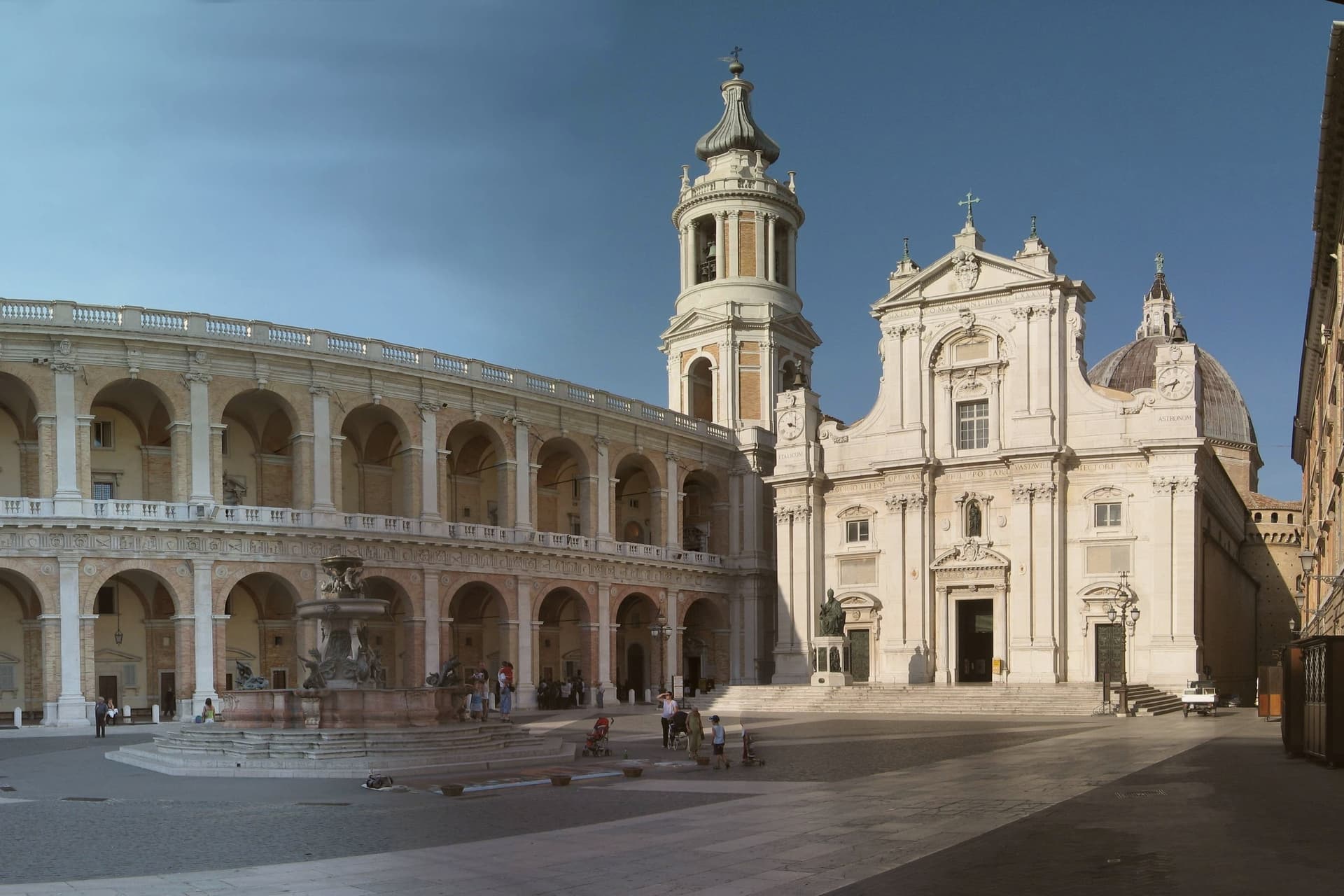
Historical sources note that the Angeli were a Despot family of Epirus who organized the translation by sea. The three stone walls of the Santa Casa, 9.5 by 4 meters, stand at the heart of the Basilica della Santa Casa, built between 1469 and 1587 over and around them.
Bramante designed the marble revetment that wraps the house; Sansovino, Sangallo and Antonio da Sangallo il Giovane all worked on the building. Around four million pilgrims arrive each year, making Loreto one of the principal Marian sanctuaries in Catholic Europe and the source of the Litany of Loreto.
Andreina, GastroBi have been named by a guide.
What to see in Loreto
- Basilica della Santa Casa. Built between 1469 and 1587 around the three walls of the Holy House from Nazareth, with contributions from Bramante, Sansovino and the Sangallo family.
- Santa Casa. The 9.5 by 4 meter stone house of Mary at the heart of the basilica, wrapped in Bramante's marble revetment, focus of pilgrimage since 1294.
- Piazza della Madonna. The main square in front of the basilica, enclosed by the Palazzo Apostolico of Bramante and Sansovino, holds the Fontana Maggiore of Carlo Maderno.
How to get to Loreto
There is a railway station in the town, so you can arrive without a car and never need one while you are here. Ancona is roughly 28 minutes away by road.
Our tip
May through September is the main pilgrim season at Loreto. The basilica is open every day, the train link from Ancona runs hourly, and the Adriatic four kilometers below stays cool enough for an afternoon trip. Two dates anchor the year: 25 March, the Annunciation, draws a major liturgy in the basilica, and 10 December, the anniversary of the translation, brings night-time fires across the surrounding hills under the name Venuta. Festa della Birra di Altötting falls in September.
Fabriano
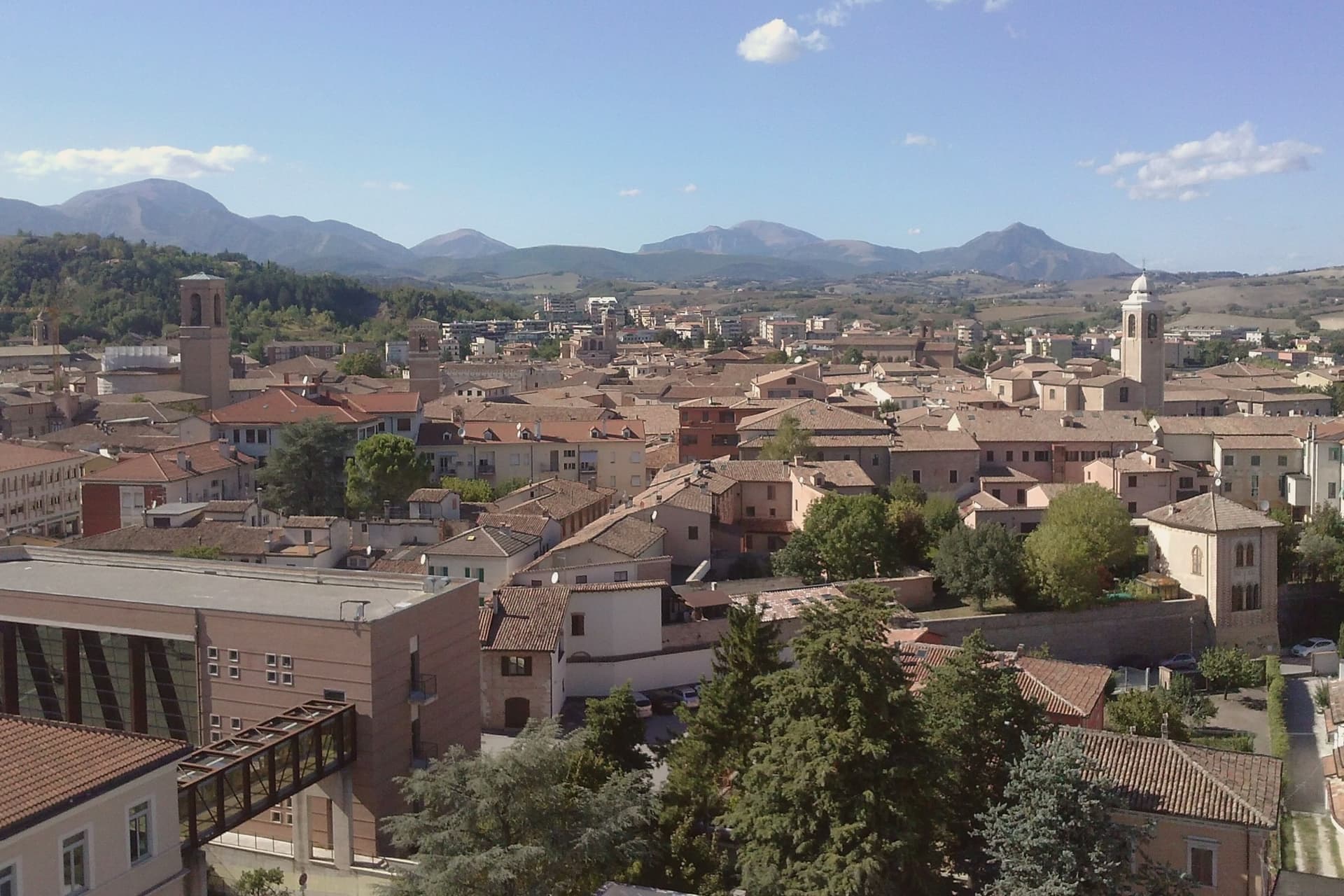
Why visit Fabriano
Fabriano sits at 325 meters on the Apennine watershed in inland Ancona province, fifty kilometers from Perugia and the Umbrian border. An Amalfi-style document held today in Matelica records paper production here from 1264, and by 1276 Fabriano was one of the earliest centers of European paper.
Its status as a UNESCO Creative City of Crafts and Folk Art rests on that continuous tradition rather than on any single building. The town's medieval wealth shows in the stone of its square, where the civic palace and fountain were both built in white Vallemontagnana stone within thirty years of each other, and in the cathedral, begun in the thirteenth century and carried through a seventeenth-century rebuilding without losing its fourteenth-century fresco cycle.
Paper, stone and paint all trace back to the same span of medieval prosperity, and what remains in Fabriano today is less a single monument than the accumulated evidence of one town's long specialization in making things by hand.
Osteria San Biagio, Marchese del Grillo, Osteria SanBiagio have been named by a guide.
What to see in Fabriano
- Museo della Carta e della Filigrana. Paper and watermark museum in a former convent, with reproduced medieval workshops, working vats and the largest documented watermark collection.
- Piazza del Comune. Main square where the civic palace and the stone fountain still stand together as laid out in the thirteenth century.
- Cattedrale di San Venanzio. Thirteenth-century cathedral rebuilt 1607 to 1617, preserving the Cappella di San Lorenzo frescoes from the 1360s.
How to get to Fabriano
There is a railway station in the town, so you can arrive without a car and never need one while you are here. Perugia is roughly 58 minutes away by road.
Our tip
April through June and September into October are the months for Fabriano. The Apennine valley around the town runs green into May, the paper museum and pinacoteca are open without queues, and the surrounding mountains hold their snow into late spring at higher altitudes. July and August touch the high twenties in the valley; the centro storico stays cool in the stone-paved streets. Festa di Castelletta falls in September.
Senigallia
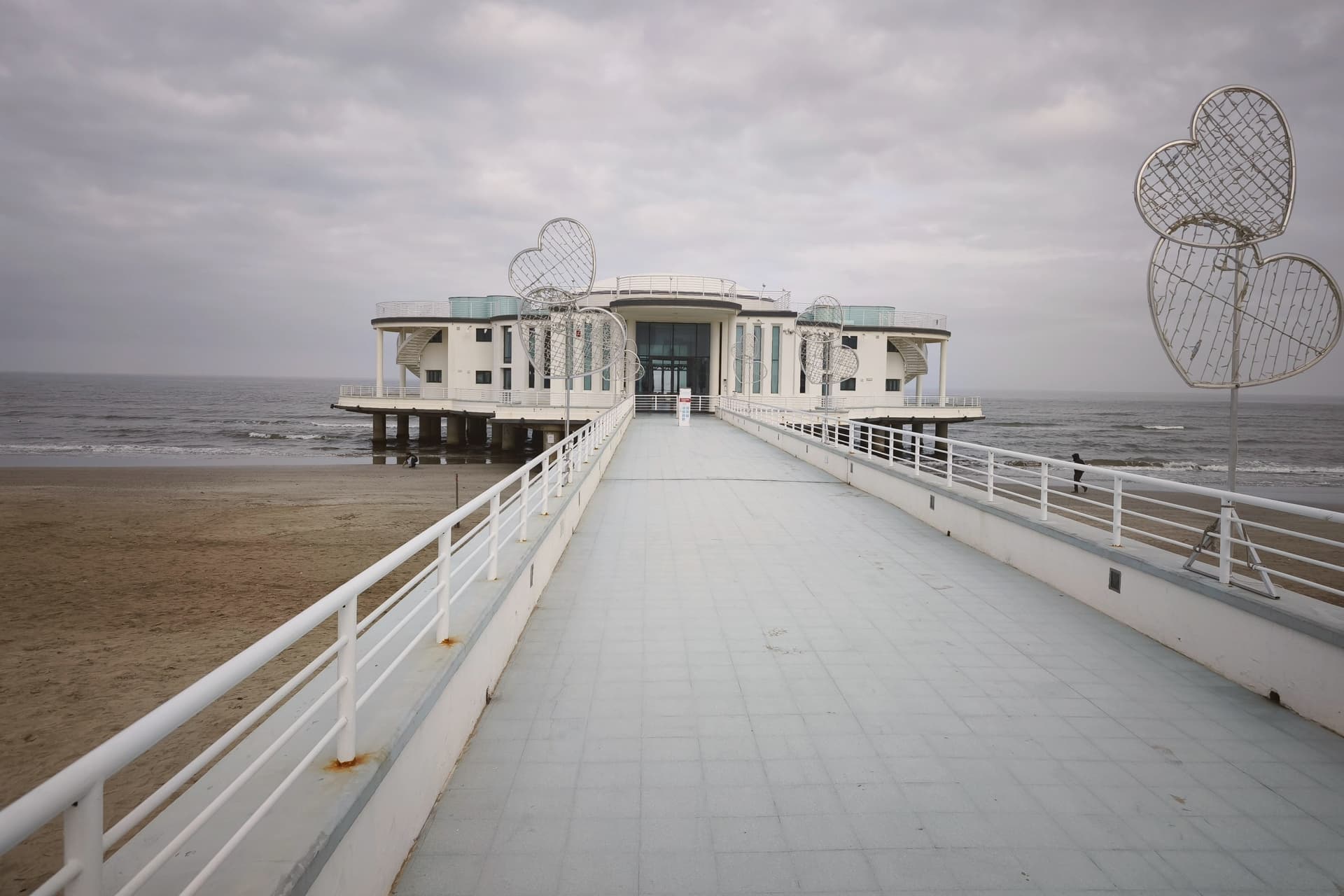
Why visit Senigallia
Senigallia sits at the mouth of the Misa river on the Adriatic, twenty-five kilometers north of Ancona. The centro storico gathers along the river's right bank, where the arcades face the water, while the fortress stands apart as the town's layered military record, built up over two centuries by successive rulers rather than in one campaign.
The beach runs south from this old core as a separate register of the town entirely, thirteen kilometers of it, with the pier pavilion marking the center of that beachfront and the restaurant anchoring its southern end. The photographer worked in the town all his life, and the permanent section of his prints sits inland in the Palazzo del Duca rather than anywhere near the coast he might have photographed.
The market arcade, built in the nineteenth century, still does the ordinary work of feeding the town between the historic river frontage and the modern beach economy. Senigallia reads, then, as three towns joined at the river mouth: a fortified old center, a nineteenth-century civic one, and a twentieth-century coastline, each still doing the job it was built for.
Uliassi, Madonnina del Pescatore, Cuoco di Bordo and 4 more have been named by a guide.
What to see in Senigallia
- Spiaggia di Velluto. The Bandiera Blu beach, working spine of the town's summer, its sand fine enough underfoot to explain the name.
- Rocca Roveresca. Layered fortress combining Albornoz's fourteenth-century Rocchetta, the 1450 Malatesta keep and the Della Rovere completion by Laurana and Pontelli.
- Rotonda a Mare. Art-deco pier pavilion completed 1933, set on iron piles above the water at the center of the beachfront, restored and used for exhibitions and weddings.
How to get to Senigallia
There is a railway station in the town, so you can arrive without a car and never need one while you are here. Ancona is roughly 41 minutes away by road.
Our tip
May through September is the Senigallia window: the beach bagni open from late May, the Caterraduno radio festival fills late June, the Summer Jamboree rockabilly week runs through early August, and the September sea stays warm through the start of school. July and August touch the high twenties with humid Adriatic evenings; the Velvet Beach and the Rotonda a Mare passeggiata pull the largest crowds of the year. April, May and October are quieter, cooler months for the Rocca Roveresca tours and the Giacomelli rooms at Palazzo del Duca. Festa Castellana falls in August.
More from Anywhere Italy
- The best towns with a serious restaurant that eat well within 90 minutes of Ancona
- The best coastal towns within 90 minutes of Ancona
 The best small towns that eat well in Marche
 The 8 best towns you can reach by train that eat well within 90 minutes of Ancona
 The 6 best towns inside a nature park in the province of Ancona
- The best towns with a food festival that eat well in Marche