
The best coastal towns within 90 minutes of Ancona
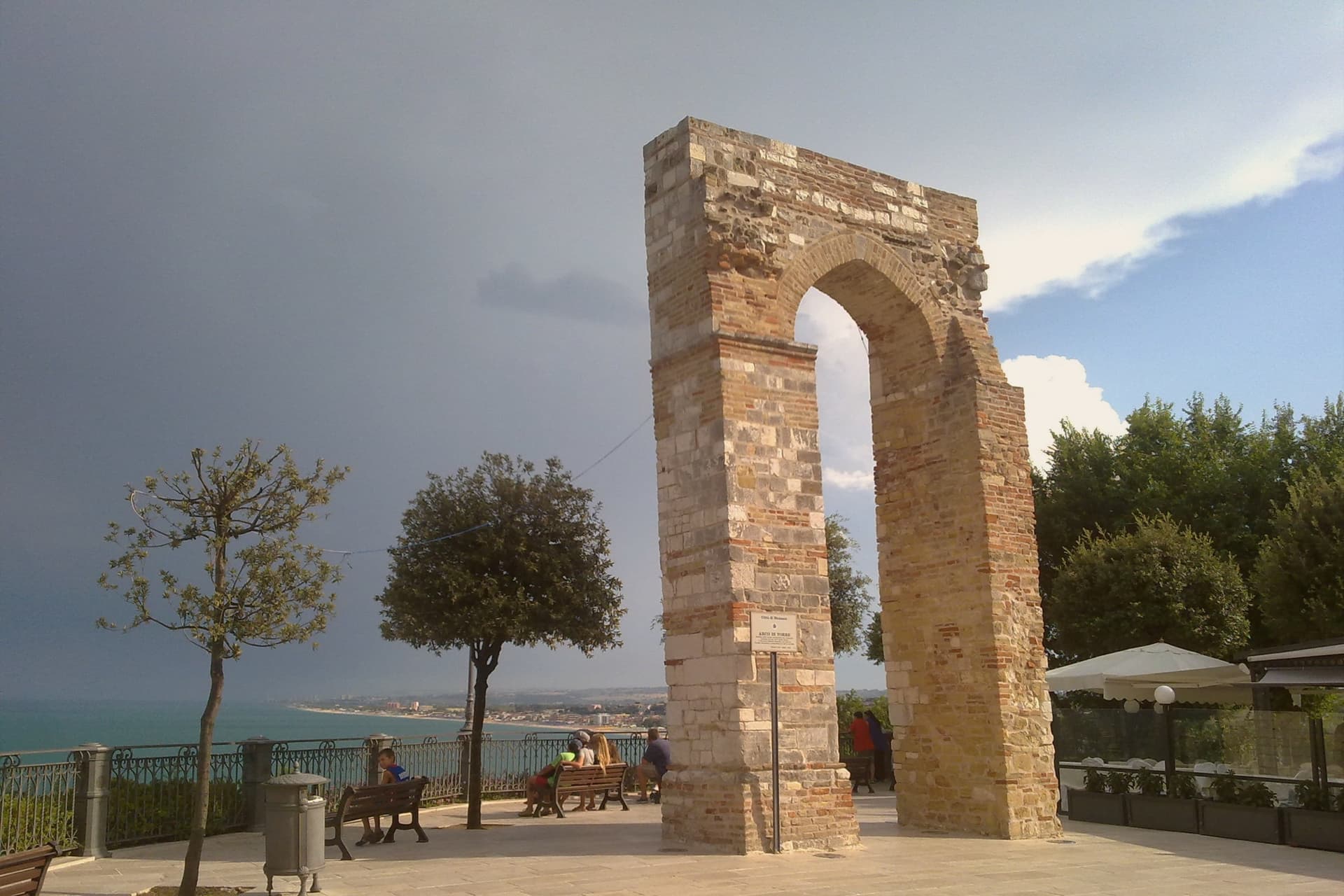
The Marche coast changes character quickly. South of Ancona the land rises into Monte Conero, and the shore turns to white limestone cliffs dropping into water that reads green rather than blue, with pebble coves reachable by boat or a steep path through holm oak and broom. North of the city the same sea meets flat velvet sand, wide and shallow, backed by low brick and stucco houses and rows of bathing huts. Summer here means brodetto thickened with tomato and vinegar, mussels raised on the rocks below the headland, verdicchio poured cold, and a passeggiata that starts when the beach umbrellas come down.
Most people arriving at Ancona are heading for a ferry or for Rimini and the Romagna beach strip an hour to the north, where the resorts run continuously and the sand is rented out in orderly rows from May. It works, and it is easy, and by August it is very full. The Riviera del Conero gets its own crowd too, mainly on the handful of beaches everyone has seen photographed from above.
The coast does not stop at those places. The same limestone, the same fishing fleets and the same fish stew continue up and down the Adriatic in towns that keep working harbours, hilltop old quarters and beaches you can walk to from the station. These are the ones within an easy drive or train ride of Ancona, sitting directly on the sea, worth a detour from the ferry queue.
Of the 35 communes we have mapped within 90 minutes of Ancona, 6 qualify as coastal towns: each sits directly on the sea. The smallest, Numana, has 3,741 residents.
If you are still choosing, we have also written The best towns with a serious restaurant that eat well within 90 minutes of Ancona and The 6 best towns that eat well in the province of Ancona.
Numana
Why visit Numana
Numana sits fifteen kilometers south of Ancona, on a cliff overlooking the Adriatic at the foot of the promontory that shapes this stretch of coast. The old town, Numana alta, runs along the ridge in continuity with Sirolo, while Numana bassa wraps around the port below, so the visitor moves between two settlements joined by a single slope rather than one town with two names.
The place was a Picene harbour that traded with Greek and Etruscan ships from the sixth century BC, and a major centre of pre-Roman Italy before the rise of Ancona pushed it into decline around 500 BC. That decline is what left the burial grounds undisturbed long enough to be excavated centuries later, and it is also why the town's oldest identity is archaeological rather than architectural: a harbour that mattered, stopped mattering, and was rediscovered through what it buried.
The beach here holds the national bathing award, which a comune has to win back every year on water quality, beach management and safety.
What to see in Numana
- Antiquarium Statale di Numana. Opened 1974, holding more than five hundred Picene burials from the Conero necropolises, plus a sixth-century BC limestone warrior's head found on a Numana beach in 1892.
- Santuario del Crocifisso. Rebuilt in 1969 on a 1566 foundation, the current structure standing on a sanctuary site with roots three centuries older than the rebuild itself.
- Porto di Numana. Working fishing and pleasure port at the foot of the cliff, with daily boat services along the Conero cliffs to the otherwise inaccessible Due Sorelle beach.
How to get to Numana
Ancona is roughly 30 minutes away by road.
Our tip
May through September are the months for Numana. The Conero water clears from late May and stays warm through September, with the port's daily boats running to Due Sorelle and the other Conero cliff beaches. July and August are the busiest weeks of the Marche coast: parking is metered into the late evening and the Numana bassa restaurants book ahead.
Sirolo
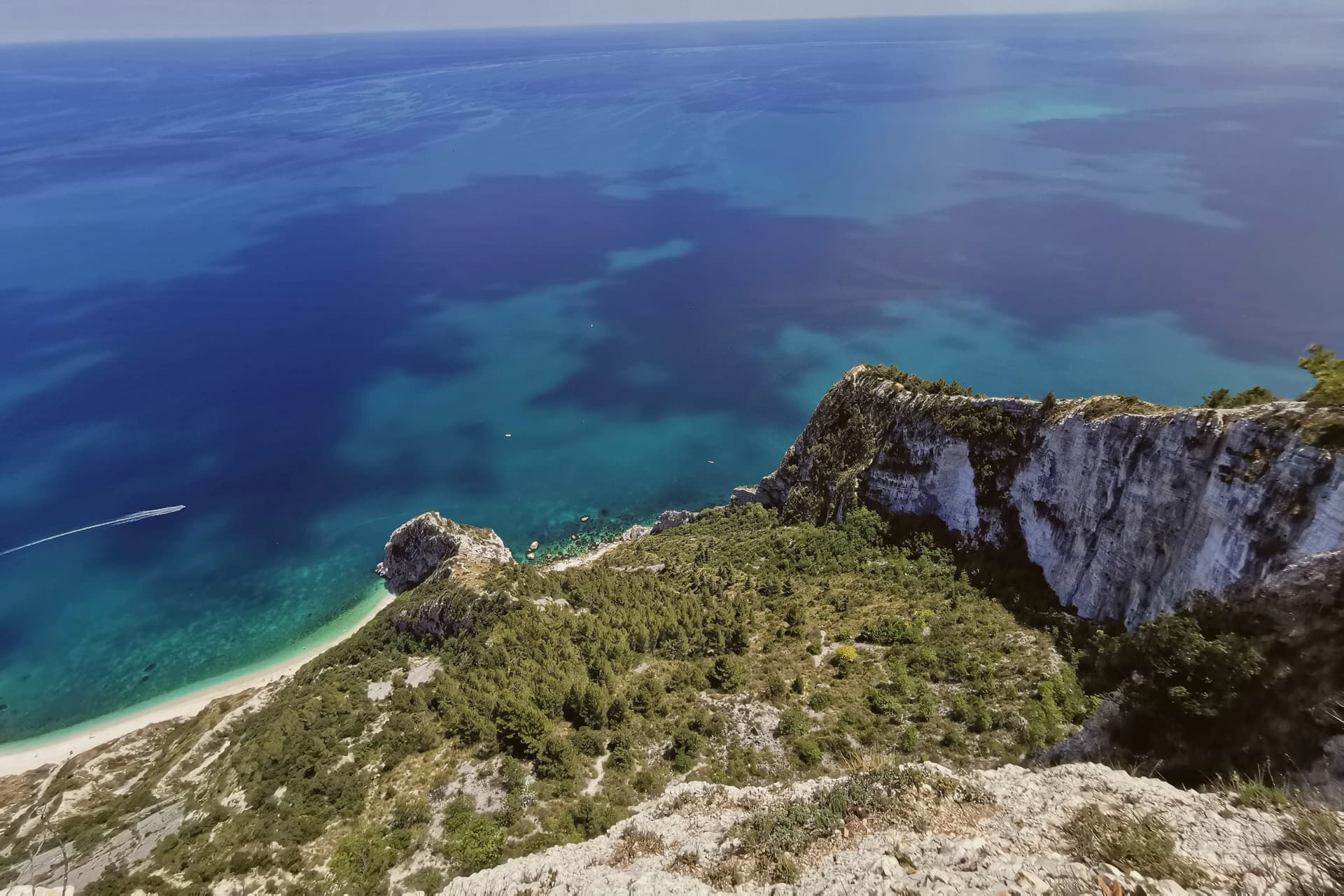
Why visit Sirolo
Sirolo sits at 125 meters, twenty kilometers from Ancona, on ground that belonged to the Conti Cortesi family. The medieval village kept one of the two original castle towers, folded now into the parish church, and the belvedere above Piazza Vittorio Veneto looks out across the bay.
Below town, the ridge drops toward the Picene necropolis of I Pini, and further down still toward the water. The mountain above the village and the water below it are the same geology: limestone that falls straight into the sea rather than tapering through a coastal plain, which is why the village sits on a clifftop rather than a shoreline.
Upper Sirolo is the castle, the church and the theatre, all cut from the same pale stone. Lower Sirolo is reached by boat or by trail, down through the park to the cove where the sea stacks stand.
The grave goods from the necropolis have left town entirely, kept at the Antiquarium in neighbouring Numana, so what remains above ground here is the tomb site itself rather than its contents. The town doubles in summer and empties again in October: a place shaped less by what happens in it than by the drop between its two levels, the built one and the wild one.
The beach here holds the national bathing award, which a comune has to win back every year on water quality, beach management and safety.
What to see in Sirolo
- Centro storico. Medieval village on the clifftop with the Arco Gotico from around the year 1000, the Piazzetta and a belvedere looking out across the Adriatic.
- Chiesa di San Nicolò di Bari. Eighteenth-century parish church built over a thirteenth-century structure, incorporating one of the two surviving towers of the medieval Sirolo castle.
- Teatro Cortesi. Municipal theatre inaugurated in 1875, built in white Conero stone, restored and reopened in 1989.
How to get to Sirolo
Ancona is roughly 31 minutes away by road.
Our tip
May through September is the window for Sirolo. The water warms enough for the Conero beaches from late May, the boat shuttle to the Due Sorelle runs daily through summer, and the belvedere stays cool when the Adriatic plain below is hot. July and August are the busiest weeks: parking limits in the centro storico, queues for Spiaggia Urbani and Sassi Neri, evening passeggiate spilling out of every trattoria.
Loreto
Why visit Loreto
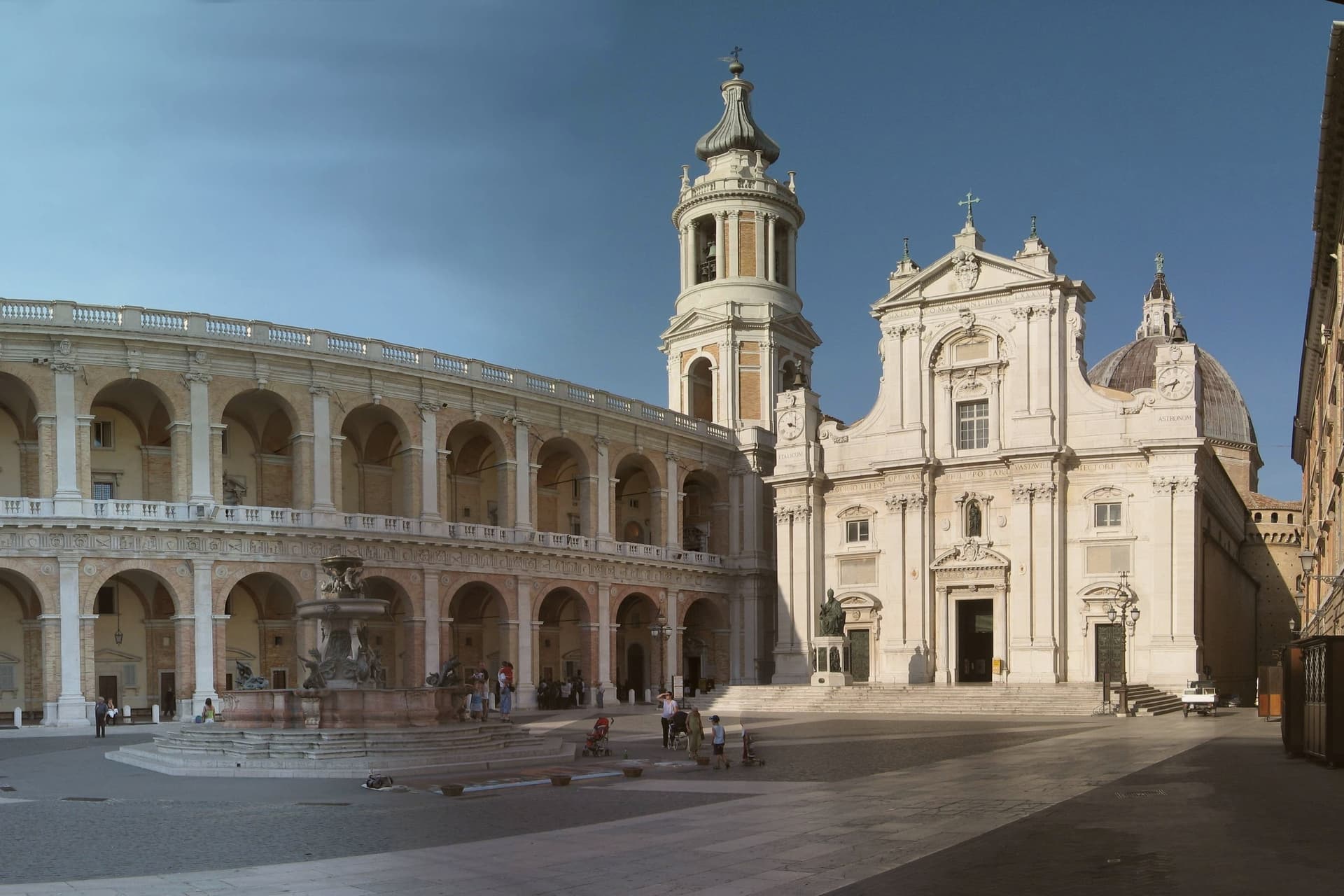
Loreto sits at 127 meters on the right bank of the Musone, twenty-two kilometers southeast of Ancona and four from the Adriatic. According to tradition, on the night between 9 and 10 December 1294 angels carried the Holy House of the Virgin from Nazareth to a laurel grove on this hill, after a brief stop in Illyria following the Crusader expulsion of 1291.
Historical sources note that the Angeli were a Despot family of Epirus who organized the translation by sea. The three stone walls of the Santa Casa, 9.5 by 4 meters, stand at the heart of the Basilica della Santa Casa, built between 1469 and 1587 over and around them.
Bramante designed the marble revetment that wraps the house; Sansovino, Sangallo and Antonio da Sangallo il Giovane all worked on the building. Around four million pilgrims arrive each year, making Loreto one of the principal Marian sanctuaries in Catholic Europe and the source of the Litany of Loreto.
What to see in Loreto
- Basilica della Santa Casa. Built between 1469 and 1587 around the three walls of the Holy House from Nazareth, with contributions from Bramante, Sansovino and the Sangallo family.
- Santa Casa. The 9.5 by 4 meter stone house of Mary at the heart of the basilica, wrapped in Bramante's marble revetment, focus of pilgrimage since 1294.
- Piazza della Madonna. The main square in front of the basilica, enclosed by the Palazzo Apostolico of Bramante and Sansovino, holds the Fontana Maggiore of Carlo Maderno.
How to get to Loreto
There is a railway station in the town, so you can arrive without a car and never need one while you are here. Ancona is roughly 28 minutes away by road.
Our tip
May through September is the main pilgrim season at Loreto. The basilica is open every day, the train link from Ancona runs hourly, and the Adriatic four kilometers below stays cool enough for an afternoon trip. Two dates anchor the year: 25 March, the Annunciation, draws a major liturgy in the basilica, and 10 December, the anniversary of the translation, brings night-time fires across the surrounding hills under the name Venuta. Festa della Birra di Altötting falls in September.
Mondolfo
Why visit Mondolfo
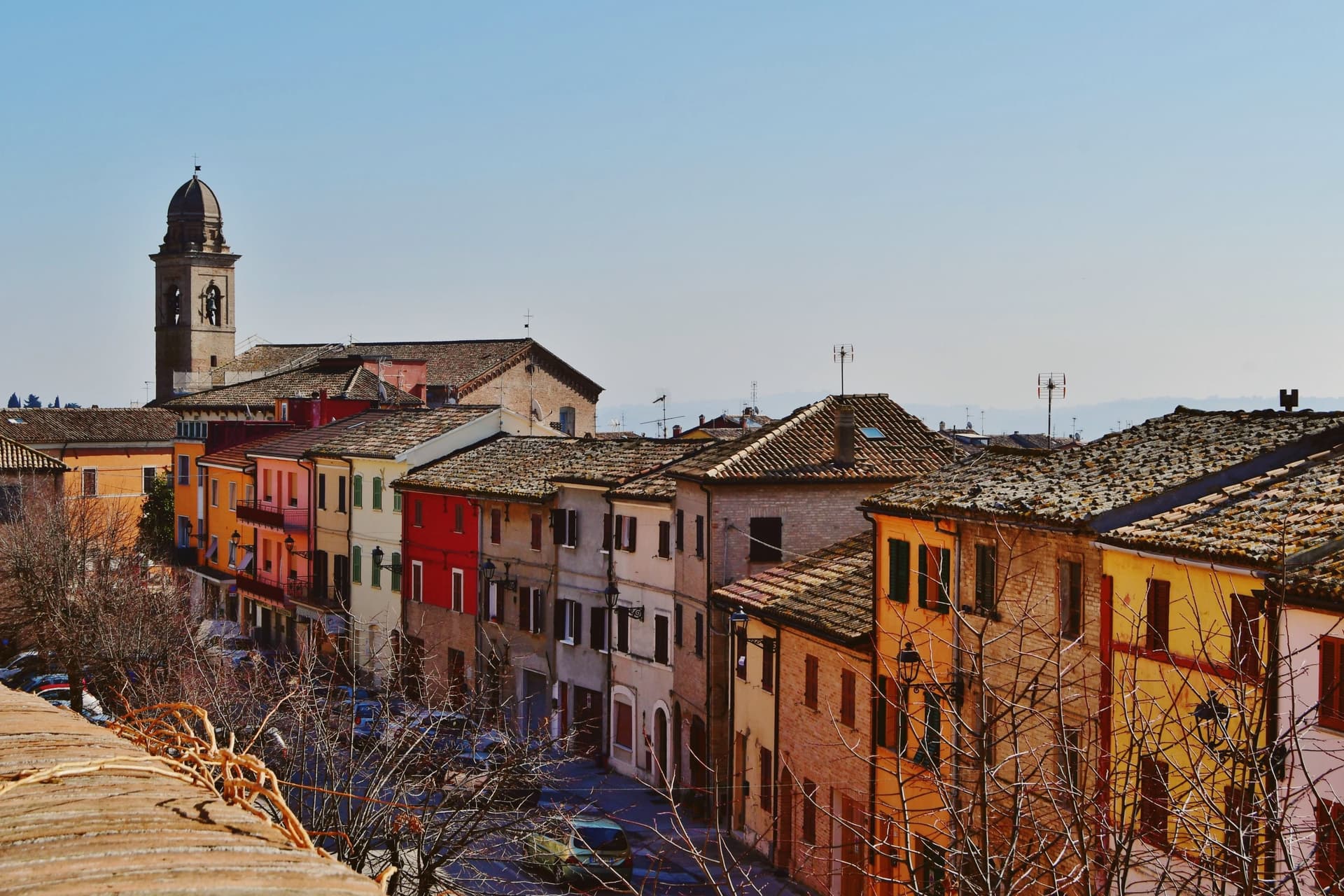
Mondolfo sits at 144 meters on a ridge above the Adriatic between Pesaro and Senigallia, with the coastal frazione on the beach four kilometers below. A Byzantine castle stood here in the sixth and seventh centuries, and the present settlement formed around it in the early eleventh, when the Montoffo feudal family gave the town its name.
The Malatesta took the castle in the fourteenth century, then Sigismondo Pandolfo Malatesta lost it to Pope Pius II in 1463, at which point the walls and bastion that still anchor the southwest corner were rebuilt. The friary and church at the heart of the old town were rebuilt twice, first by Antonio di Pietro da Vercelli in 1466 and again under Domenico da Como in 1593.
Mondolfo joined the Borghi più belli d'Italia and holds recognitions for both its coast and its farmland. The town is a single history in two elevations: the ridge held the castle and later the fortified center, while the shore below, reached across the four kilometers of farmland now recognized for its management, grew into the seafront community that carries the coastal recognitions today.
What began as a Byzantine strongpoint and passed through Malatesta and papal hands still reads as a hill town looking down at its own beach.
The beach here holds the national bathing award, which a comune has to win back every year on water quality, beach management and safety. It is also rated for accessibility, which most of this coast is not.
What to see in Mondolfo
- Mura Roveresche. Roughly 600 meters of fifteenth-century walls and the south-west bastion, redesigned by the Della Rovere for early artillery defense after 1463.
- Complesso Monumentale di Sant'Agostino. Augustinian friary and church from the late thirteenth century, rebuilt in 1466 and again in 1593, now home to the civic museum and the Sant'Agostino complex.
- Centro storico. Walled hill borgo with narrow streets, the Palazzo del Comune and the Chiesa di Santa Giustina at the heart of the perimeter.
How to get to Mondolfo
There is a railway station in the town, so you can arrive without a car and never need one while you are here. Ancona is roughly 44 minutes away by road.
Our tip
May through September is the main window for Mondolfo. The Marotta seafront opens from late spring, the Bandiera Blu lido water clears from June, and the hill borgo above stays a few degrees cooler than the beach. July and August fill the lungomare with the worst of the coast traffic; the walled borgo above keeps quieter. Festa del Mare falls in August.
Porto San Giorgio
Why visit Porto San Giorgio
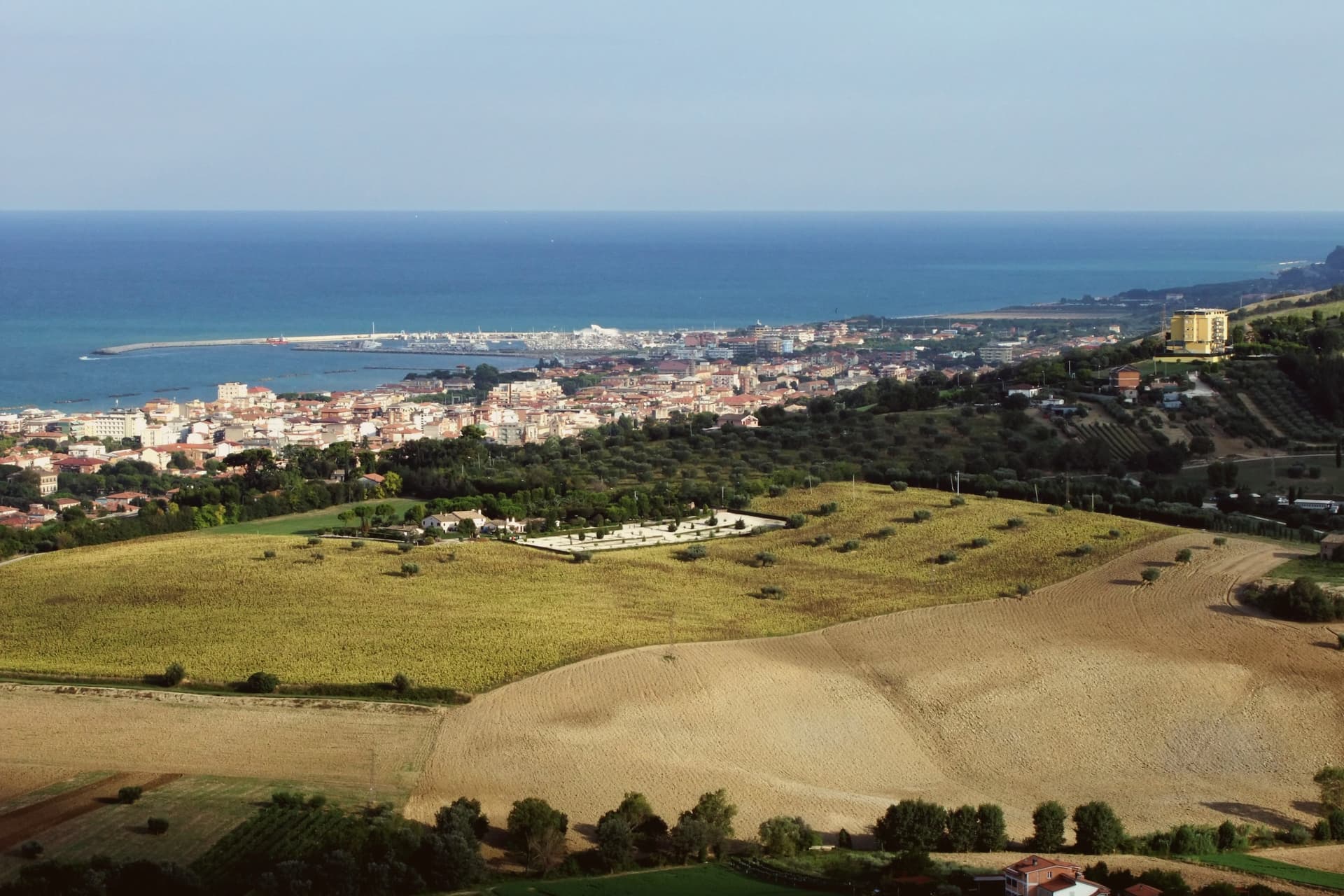
The town sits on the central Adriatic between Ancona and Pescara, the working port and the holiday beach of the Fermo valley. The lower town by the water was settled as the harbour of the older inland Fermo, taken over by Venetian merchants in the 13th century, and the castle that still stands above the harbour dates from that takeover.
The historic centre sits slightly back from the sea, holding the 1818 civic theatre and a small but lively summer calendar of seafood festivals, while the seafront itself runs a different register: marina, beach, and the Liberty-era promenade under date palms and umbrella pines, laid out parallel to the sand behind the row of bathing stations. What the layout adds up to is a town divided cleanly by function rather than by age: an inland-facing historic core that keeps the theatre and the festival calendar, and a shoreline built in layers from the 13th-century defensive castle down through the Liberty-era promenade to the modern marina and beach, each addition sitting seaward of the last.
The beach here holds the national bathing award, which a comune has to win back every year on water quality, beach management and safety. It is also rated for accessibility, which most of this coast is not.
What to see in Porto San Giorgio
- Rocca Tiepolo. Brick castle with a squat profile and surviving towers, built by Lorenzo Tiepolo to defend the port. It stands as the historic anchor of the seafront, the oldest fixed point on a shoreline otherwise given over to modern bathing establishments.
- Spiaggia (Bandiera Blu). The Bandiera Blu beach runs two kilometres of fine sand on a gentle shelf, lined with classic Adriatic stabilimenti balneari. One of the central Adriatic's reliable family beaches.
- Porto turistico. The marina holds moorings alongside a working fishing fleet that still lands its catch at dawn, so pleasure craft and working boats share the same water.
How to get to Porto San Giorgio
There is a railway station in the town, so you can arrive without a car and never need one while you are here. Ancona is roughly 48 minutes away by road.
Our tip
April through October is the season on the central Adriatic. May and September are the best months: warm sea, the beach stabilimenti running but not at capacity, and the seafront promenade comfortable in the afternoon light. July and August are full — Porto San Giorgio is a popular regional beach destination, the marina at capacity, the fishing-festival calendar at full output.
Senigallia
Why visit Senigallia
Senigallia sits at the mouth of the Misa river on the Adriatic, twenty-five kilometers north of Ancona. The centro storico gathers along the river's right bank, where the arcades face the water, while the fortress stands apart as the town's layered military record, built up over two centuries by successive rulers rather than in one campaign.
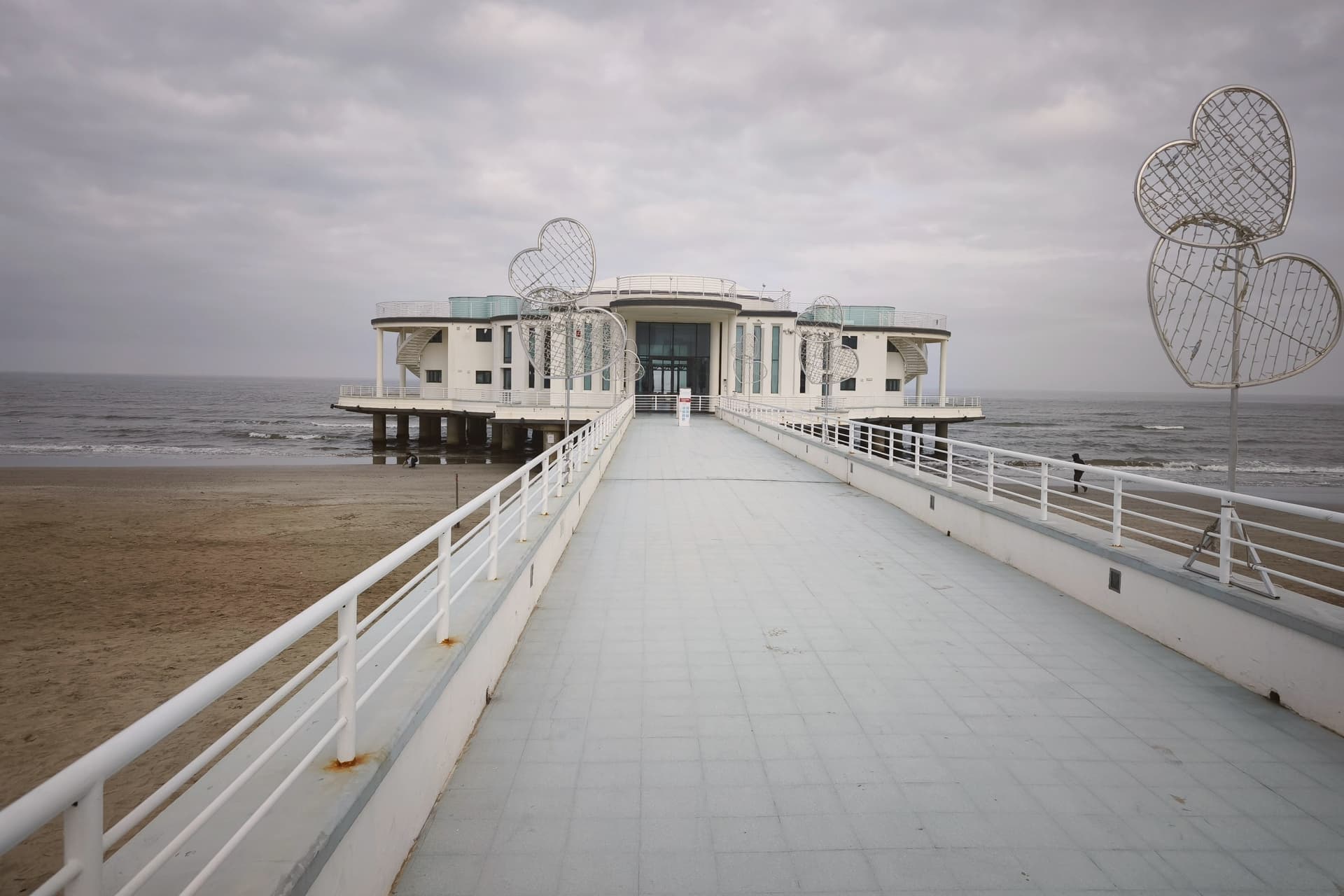
The beach runs south from this old core as a separate register of the town entirely, thirteen kilometers of it, with the pier pavilion marking the center of that beachfront and the restaurant anchoring its southern end. The photographer worked in the town all his life, and the permanent section of his prints sits inland in the Palazzo del Duca rather than anywhere near the coast he might have photographed.
The market arcade, built in the nineteenth century, still does the ordinary work of feeding the town between the historic river frontage and the modern beach economy. Senigallia reads, then, as three towns joined at the river mouth: a fortified old center, a nineteenth-century civic one, and a twentieth-century coastline, each still doing the job it was built for.
The beach here holds the national bathing award, which a comune has to win back every year on water quality, beach management and safety. It is also rated for accessibility, which most of this coast is not.
What to see in Senigallia
- Spiaggia di Velluto. The Bandiera Blu beach, working spine of the town's summer, its sand fine enough underfoot to explain the name.
- Rocca Roveresca. Layered fortress combining Albornoz's fourteenth-century Rocchetta, the 1450 Malatesta keep and the Della Rovere completion by Laurana and Pontelli.
- Rotonda a Mare. Art-deco pier pavilion completed 1933, set on iron piles above the water at the center of the beachfront, restored and used for exhibitions and weddings.
How to get to Senigallia
There is a railway station in the town, so you can arrive without a car and never need one while you are here. Ancona is roughly 41 minutes away by road.
Our tip
May through September is the Senigallia window: the beach bagni open from late May, the Caterraduno radio festival fills late June, the Summer Jamboree rockabilly week runs through early August, and the September sea stays warm through the start of school. July and August touch the high twenties with humid Adriatic evenings; the Velvet Beach and the Rotonda a Mare passeggiata pull the largest crowds of the year. April, May and October are quieter, cooler months for the Rocca Roveresca tours and the Giacomelli rooms at Palazzo del Duca. Festa Castellana falls in August.
More from Anywhere Italy
- The best towns with a serious restaurant that eat well within 90 minutes of Ancona
 The 6 best towns that eat well in the province of Ancona
 The best coastal towns you can reach by train in Marche
- The best hidden coastal towns in Marche
 The 8 best towns you can reach by train that eat well within 90 minutes of Ancona
- The 10 best hidden towns with a serious restaurant in Marche