
Emilia-Romagna · Rimini
Pennabilli
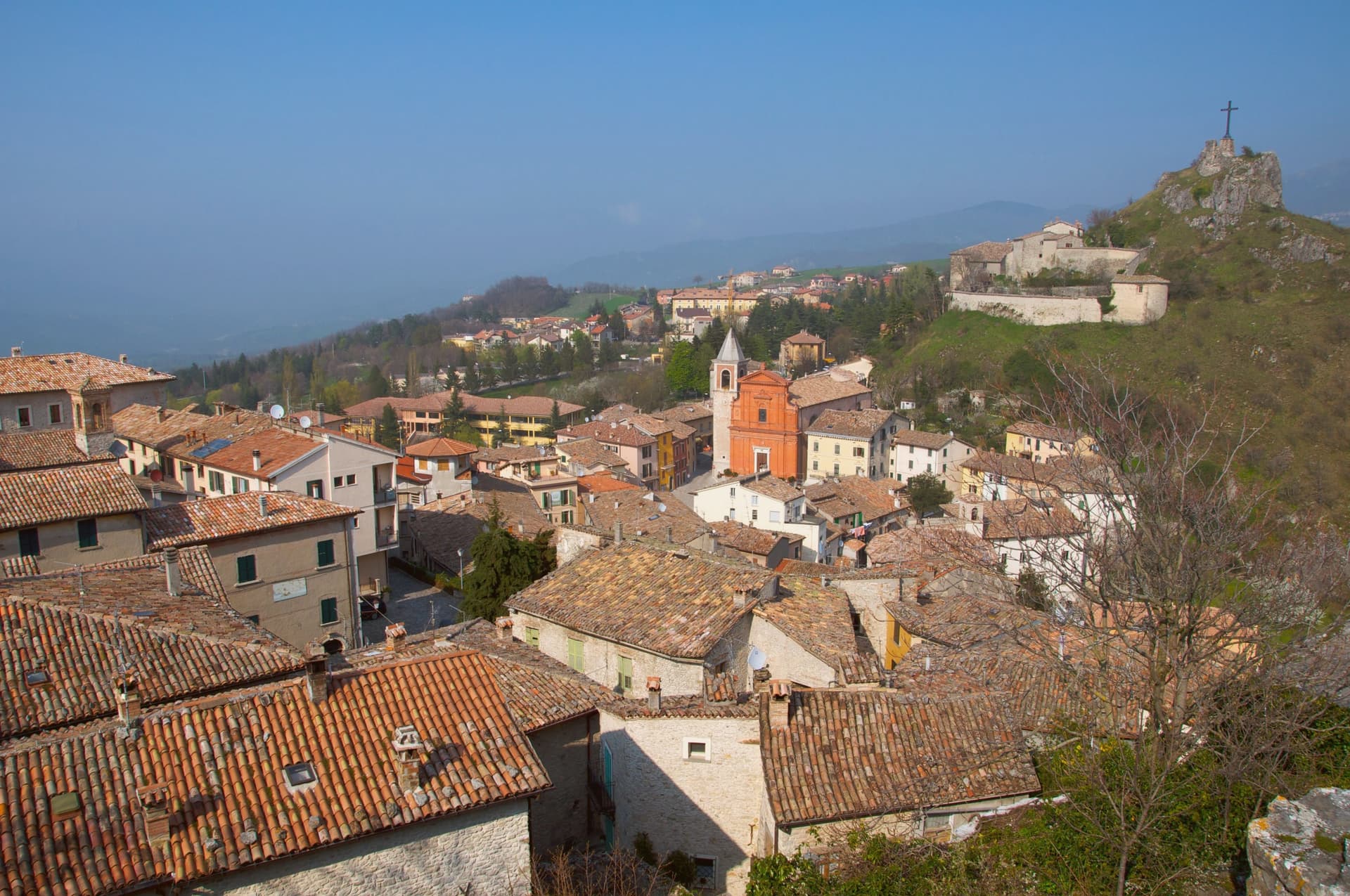
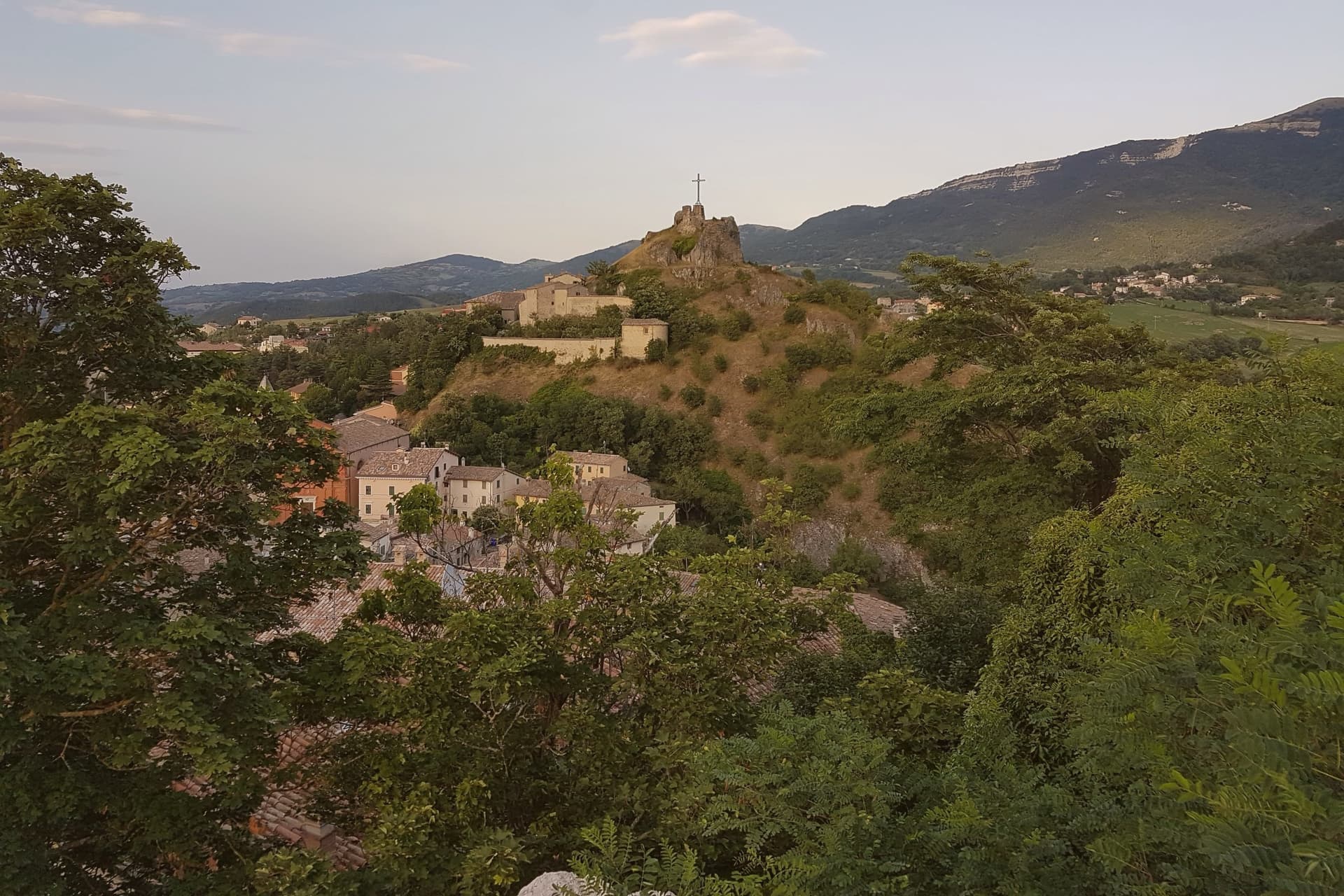
A 629-meter Montefeltro borgo between the Roccione and the Rupe, remade as an open-air museum after 1989.
- Best time
- May–Oct
- By car
- 55 min from Rimini
- Population
- 2,623
Known for
TONINO GUERRA
The poet and screenwriter behind Amarcord and Nostalghia lived here from 1989 and remade the town as an outdoor museum he called the Landscape of the Soul.
FORGOTTEN FRUITS
The Orto dei Frutti Dimenticati, opened in 1990, holds Apennine fruit varieties saved from extinction inside a walled garden below the Roccione.
ANTIQUES FAIR
The Mostra Mercato Nazionale d'Antiquariato has run every July since 1970, bringing dealers from across Italy to the upper Marecchia.
When to visit
Best · May–Oct
- J7°
- F10°
- M11°
- A14°
- M18°
- J24°
- J28°
- A27°
- S22°
- O17°
- N11°
- D8°
- Best
- Hot or crowded
- Quiet
- Mostly closed
Daytime averages, 2020–2024. Weather data by Open-Meteo.com.
The festa: papa Pio V, 5 May
Why come
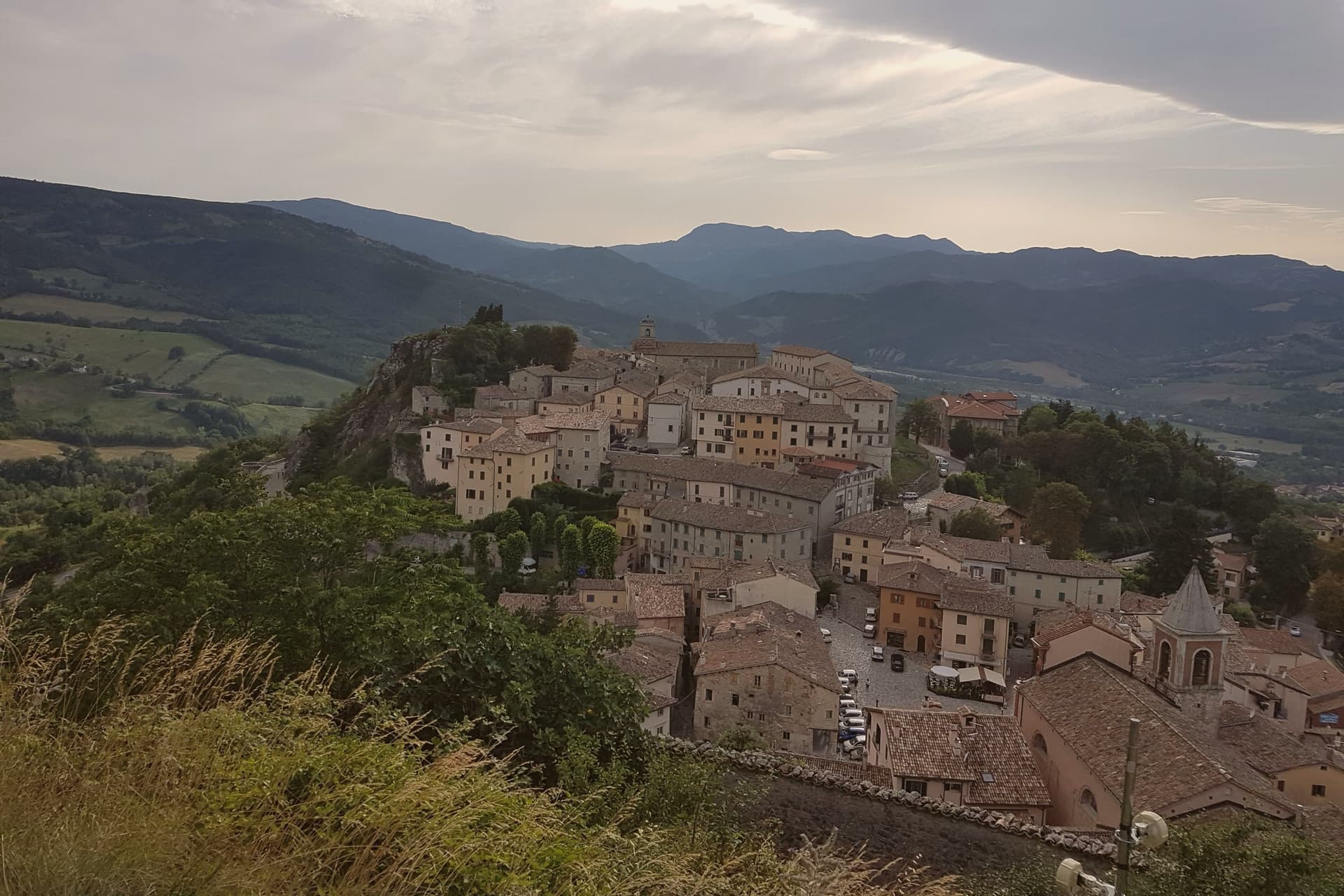
Pennabilli sits at 629 meters on the western slope of Monte Carpegna, at the head of the upper Marecchia valley, forty-five kilometers south of Rimini, inside the historic Montefeltro region. The town grew from the union of two hilltop castles, Penna on the Roccione and Billi on the Rupe, formally joined in 1350 by a stone of peace placed in the marketplace between them. It has been the episcopal seat of the Diocese of Montefeltro since 1572, a status transferred from the older seat of San Leo.
Tonino Guerra, long-time collaborator of Fellini, Antonioni and Tarkovsky, settled here in 1989 and spread his outdoor museum, I Luoghi dell'Anima, across both the town and the valley below it, linking the two former castles and their surroundings into a single walked route. The garden of forgotten fruits opened the following year, and the antiques fair has continued each July since 1970, older than either. What the place adds up to is a town built twice: once by the stone that joined two castles into one commune, and once by the poet who joined the whole valley into a single museum without walls.
The Sunday letter
Pennabilli is on our list. Its letter is still to come.
We are writing about all 1,000 of these towns, one at a time, in a free letter every Sunday: the photo, the food, the festa. That is our mission. Sign up and you will be there when Pennabilli comes up. By Peter & Sophia, from Pietrasanta.
Read on
Pennabilli in our articles
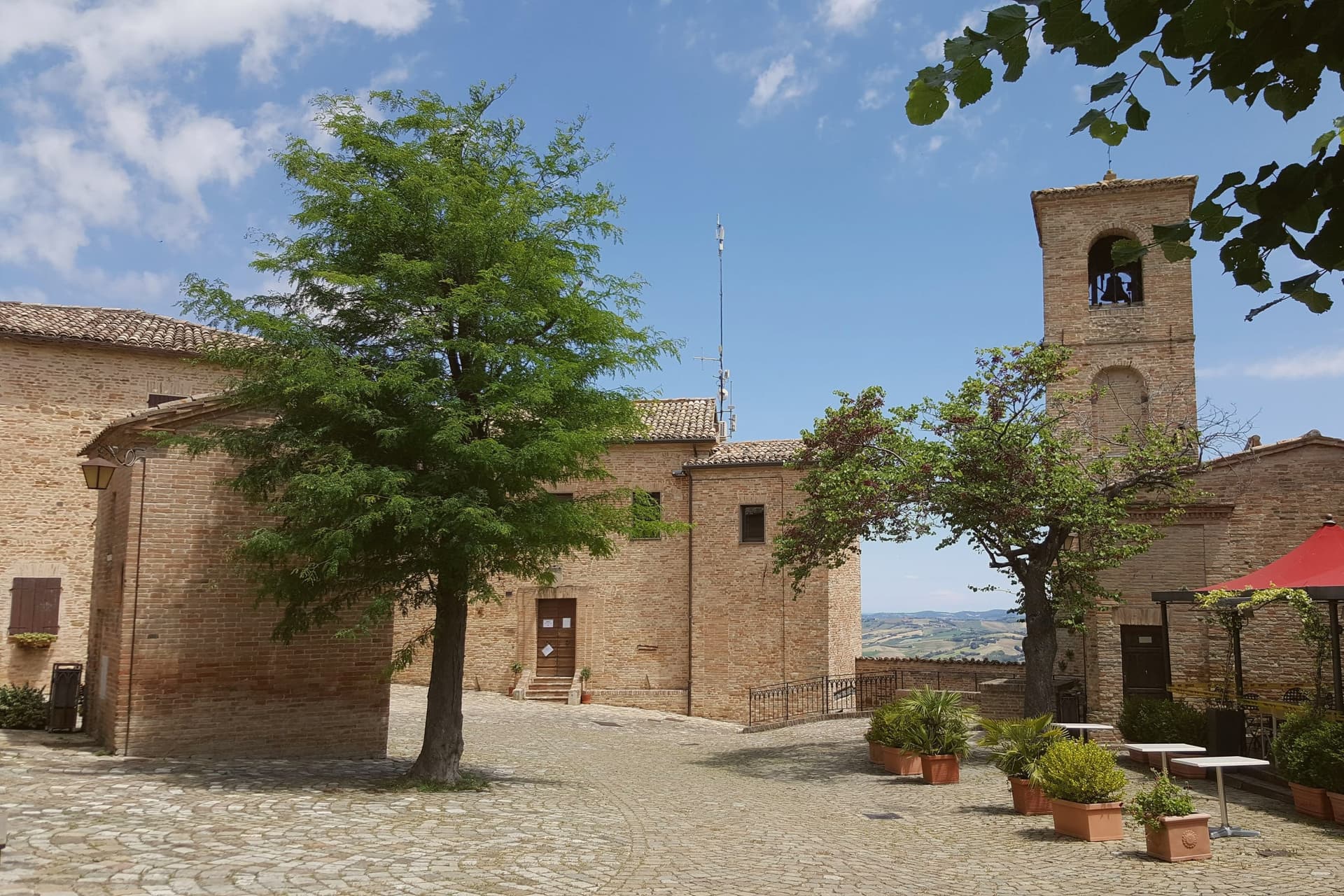
 The best hidden towns with a food festival in Emilia-Romagna7 towns, Pennabilli among them.
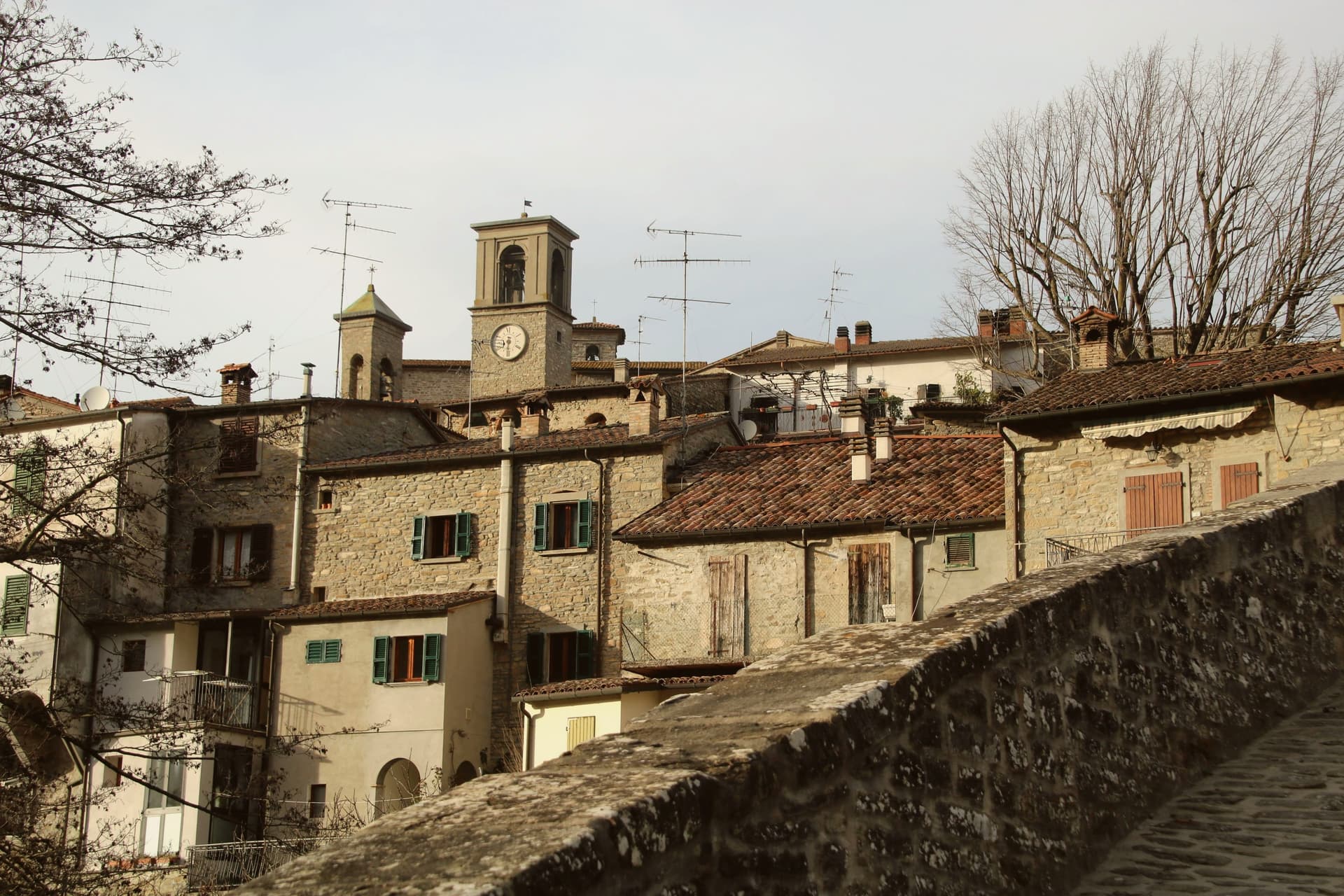
 The best hidden towns with a serious restaurant in Emilia-Romagna7 towns, Pennabilli among them.
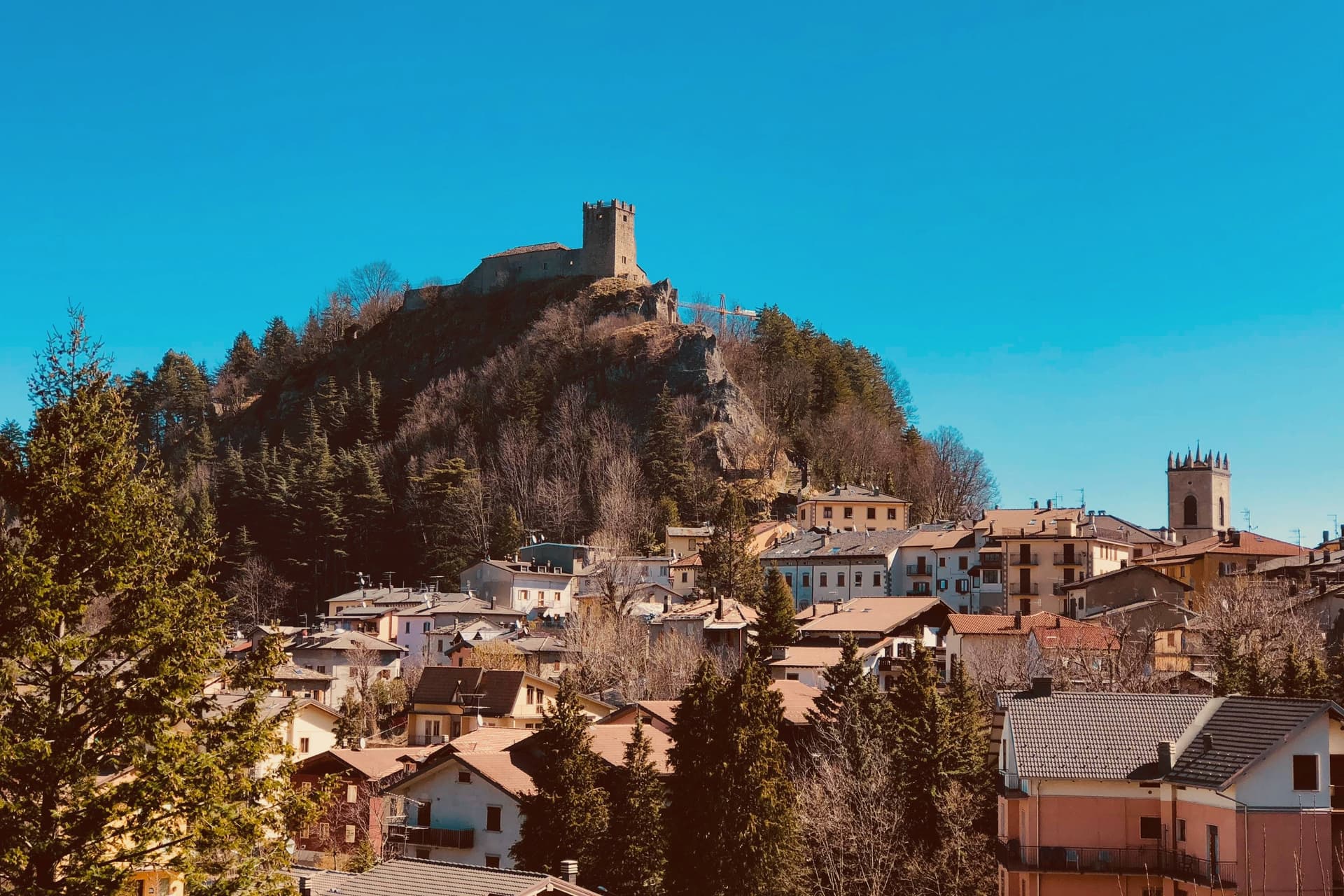
 The best small towns that eat well in Emilia-Romagna7 towns, Pennabilli among them.
 The best towns inside a nature park that eat well in Emilia-Romagna7 towns, Pennabilli among them.
How to get there
From Rimini (RMI), about 1h 17m by car.
Ancona / Pescara (AOI) is about 2 hours away.
By car from the centre of Perugia 1h 47m or Bologna 2 hours.
Coming by train into Rimini? Pennabilli is about 54 minutes away by road.
What to see
Orto dei Frutti Dimenticati
Walled garden below the Roccione, its paths lined with sculptures and installations set among the rescued fruit varieties.
I Luoghi dell'Anima
Network of seven outdoor installations across Pennabilli and the Marecchia valley, conceived by Tonino Guerra between 1989 and 2012.
Roccione and Rupe
Two rocky outcrops that carried the medieval castles of Penna and Billi, joined into a single commune in 1350.
Cattedrale di San Leone
Cathedral of the Diocese of Montefeltro, whose seat was transferred to Pennabilli in 1572 from the older episcopal town of San Leo.
Mostra Mercato Nazionale d'Antiquariato
Held in the centro storico, drawing dealers who set up stalls through the old streets for the duration of the fair.
The slow-trip planner
Building a trip? Find where Pennabilli fits in a slow Italy circuit.
Answer five questions. We will shape a geographically coherent slow trip from the 1,000 Italian towns most travelers skip. Yours to save and share.
We recommend
Where to eat
Not our picks, but places the guides put their name to: a Michelin star, a Gambero Rosso fork, a Slow Food snail, a Michelin Key for the hotels. Worth a table, a counter, or a night when you pass through.
Il PiastrinoRistorante
One Michelin star for Il Piastrino, and two Gambero Rosso forks (86/100).
Through the year
What happens here
Feasts and festivals that come back year after year. We give the month rather than the date, because the date moves and the month rarely does. Check with the source before you plan a journey around one.
Food Gardenfood festival
usually held in August. il Resto del Carlino - Cosa Fare
Living here
- Population 2,623
- Remotei
- Pharmacy: none mapped
- High school within a 30-minute drive
- Nearest airport Rimini, 1 h 17 min drive
- Regional capital Bologna, 2 h 2 min drive
Common questions
- What is Pennabilli known for?
- Pennabilli is a 629-meter Montefeltro borgo between the Roccione and the Rupe, remade as an open-air museum after 1989.
- Where is Pennabilli?
- Pennabilli is a comune in the province of Rimini, in Emilia-Romagna, at 629 meters above sea level.
- What is the nearest airport to Pennabilli?
- Rimini (RMI), about 1h 17m by car.
- How long is the drive from Perugia to Pennabilli?
- About 1h 47m by car.
- When is the best time to visit Pennabilli?
- Best in May–Oct. July is the warmest month, averaging 28 degrees, and May the wettest, with about 15 rain days.
- Is there a sagra or a festival in Pennabilli?
- Yes. Food Garden. August is when the first of them falls.
- Which other towns are like Pennabilli?
- Carpegna, Corniglio and Cascia.
- How many people live in Pennabilli?
- 2,623 at the 2023 count.
Tags & datadesignations · numbers · sources
Recognised as
The numbers
- Elevation: 629 m
- Population: 2,623
- Surface area: 69.8 km²
These figures were compiled from public directories: ISTAT, OpenStreetMap and Wikidata, and from the official listings of the guides named on this page. Town details change; verify with official sources before you travel.
Similar
Towns like Pennabilli
Carpegna
Province: Pesaro e Urbino
both mountain-valley towns · both under 3,000 people
Corniglio
Province: Parma
both mountain-valley towns · both under 3,000 people
Cascia
Province: Perugia
both mountain-valley towns · both under 3,000 people
Santa Fiora
Province: Grosseto
both mountain-valley towns · both under 3,000 people
Introdacqua
Province: L'Aquila
both mountain-valley towns · both under 3,000 people
Gavoi
Province: Nuoro
both mountain-valley towns · both under 3,000 people
🟠 Bandiera Arancione
More Bandiera Arancione towns in Emilia-Romagna
Bagno di Romagna
Province: Forlì-Cesena
A 491-meter thermal town at the head of the Savio valley, drawing on springs that have run at 47 degrees since Roman times.
Bobbio
Province: Piacenza
A 272-meter Trebbia-valley town built around an abbey founded in 614, named Borgo dei Borghi by RAI in 2019.
Brisighella
Province: Ravenna
A Lamone-valley borgo at 115 meters under three selenite hills crowned by a fortress, a clock tower, and a sanctuary.
Busseto
Province: Parma
A 40-meter town where Giuseppe Verdi grew up, with a 300-seat opera house in the Rocca he refused to enter.
Castell'Arquato
Province: Piacenza
A 224-meter hilltop borgo in the Val d'Arda, kept intact since the tenth century and crowned by Luchino Visconti's 1342 fortress.