
The 9 best hill towns that live slowly in Toscana
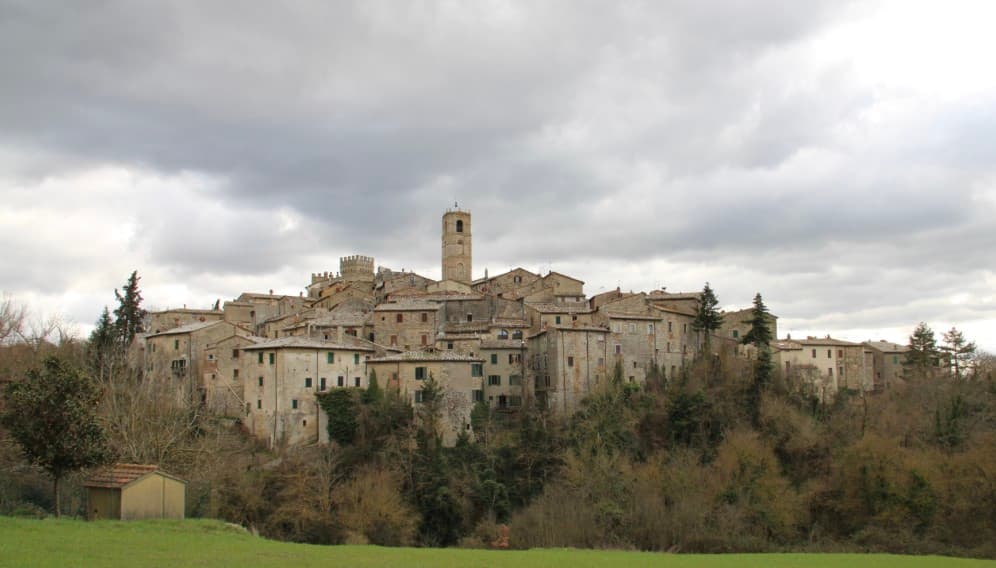
Tuscany inland means stone: pietra serena doorframes, sandstone walls that go gold in late afternoon, a piazza sloped just enough that the tables outside the bar sit on wedges. The hill towns keep the rhythm of the farms below them, so autumn is chestnut flour, new oil in November and the truffle markets that follow, while spring means artichokes and wild asparagus on menus that change without announcement. The food is Chianina beef, ribollita, pici rolled by hand, pecorino at every stage of age. Walk up through the old gate at dusk and the noise is swifts and cutlery.
The famous itinerary runs Florence to Siena and then out to San Gimignano, and by mid-morning in high summer the towers there are ringed with coaches. It is a fine town, which is the problem: everyone has read the same page about it. Val d'Orcia gets the same treatment, its cypress avenue photographed from the same lay-by in a queue.
The hills do not stop at the edge of that circuit. The same stone, the same oil, the same slow lunch continue north into the Garfagnana and Lunigiana, east towards the Valtiberina, west into the Colline Metallifere and the wooded country above the Maremma. Fewer people go, and the towns here have formally committed to keeping their pace, which shows in shorter opening hours and longer conversations.
Of the 84 communes we have mapped in Toscana, 9 qualify as hill towns that live slowly: each is an inland hill settlement, and each has signed the international slow-living charter. The smallest, Mulazzo, has 2,284 residents.
Elsewhere in the catalogue: The best towns with a serious restaurant that live slowly in Toscana and The best olive oil towns that live slowly in Toscana.
Why visit Mulazzo
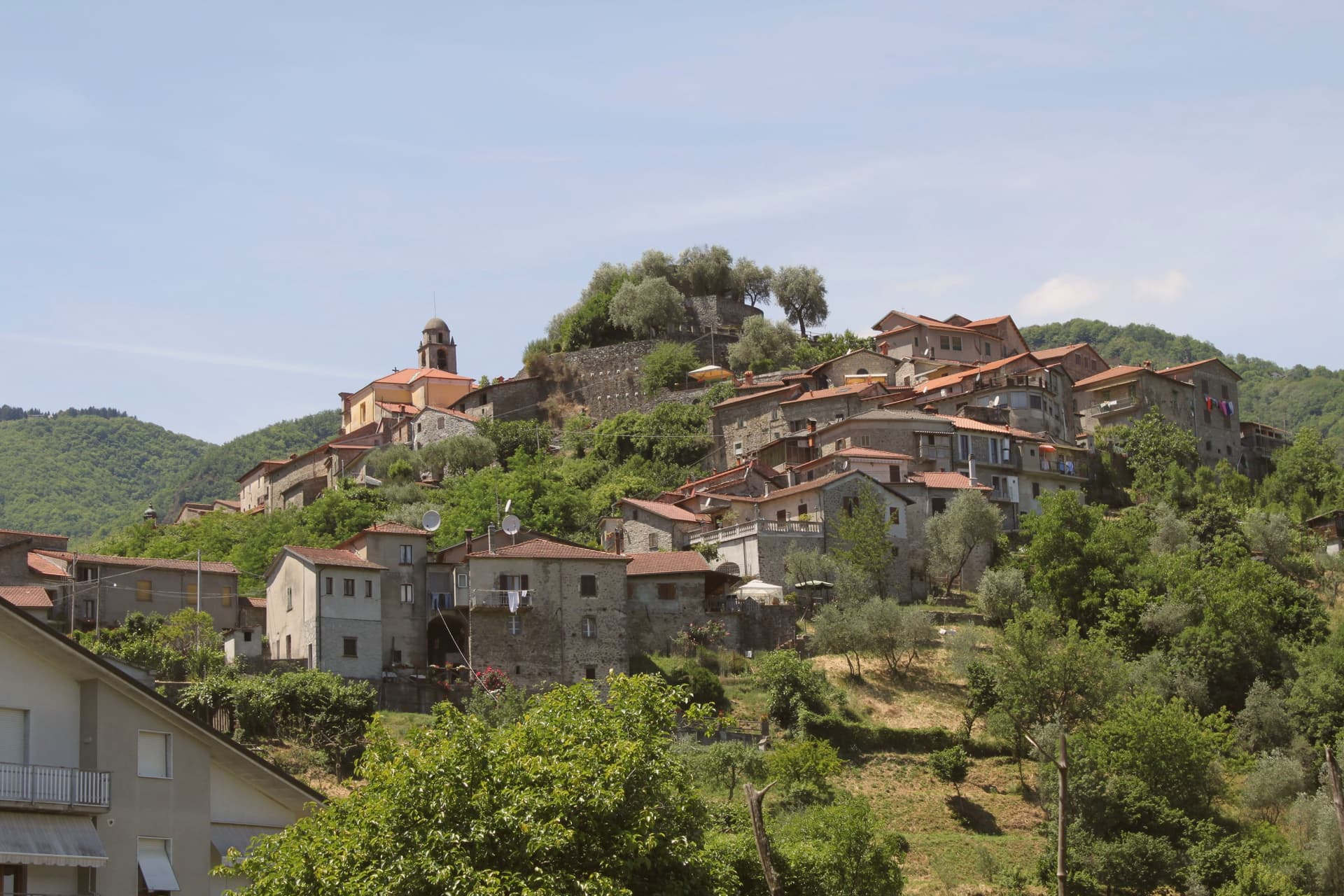
Mulazzo sits at 351 meters in the Lunigiana, the corner of Toscana that bends north toward Liguria and Emilia. The centro storico holds the tower and the parish church at the top of its stepped streets, the marquisate's old seat of power made physical in stone.
Three kilometers up the ridge, reached by climbing further into the hills, sits the frazione where the booksellers once lived, a separate settlement bound to the centro by the same ridge line but carrying its own, later history: villagers who left in the nineteenth century with panniers of books on their backs to sell across central and northern Italy. Ten kilometers off in the other direction, in Castevoli, a ruined castle marks where a separate branch of the family held its own patch of the same fiefdom.
The town's two settlements, the medieval seat and the book-trading frazione, describe a place shaped less by one center than by a hierarchy of them spread along a ridge, each with a distinct trade in memory: rule from above, books carried out on foot, stone left standing here and reduced to rubble there.
What to see in Mulazzo
- Torre di Dante. Medieval tower at the head of the borgo, once six stories and thirty meters. Demolished down to a sixth of its original height around 1750, what stands now is the stump of a much larger structure.
- Montereggio. Frazione three kilometers up the ridge, the only Italian member of the International Organisation of Book Towns, in honor of the village's bookselling diaspora.
- Centro Studi Alessandro Malaspina. Inside the tower, a study centre of documents and materials tracing the navigator's charting of the Pacific coast for the Spanish crown.
How to get to Mulazzo
Parma is roughly 95 minutes away by road.
Our tip
April through June and September into October are the months when the Lunigiana ridge is at its best, with green hills, low cloud, and the chestnut and oak forests turning. July and August stay cooler than the coast thirty kilometers south, but the centro empties around midday. The Montereggio book festival, in late August, is when the bookselling frazione fills again for a weekend with publishers and readers.
Why visit Anghiari
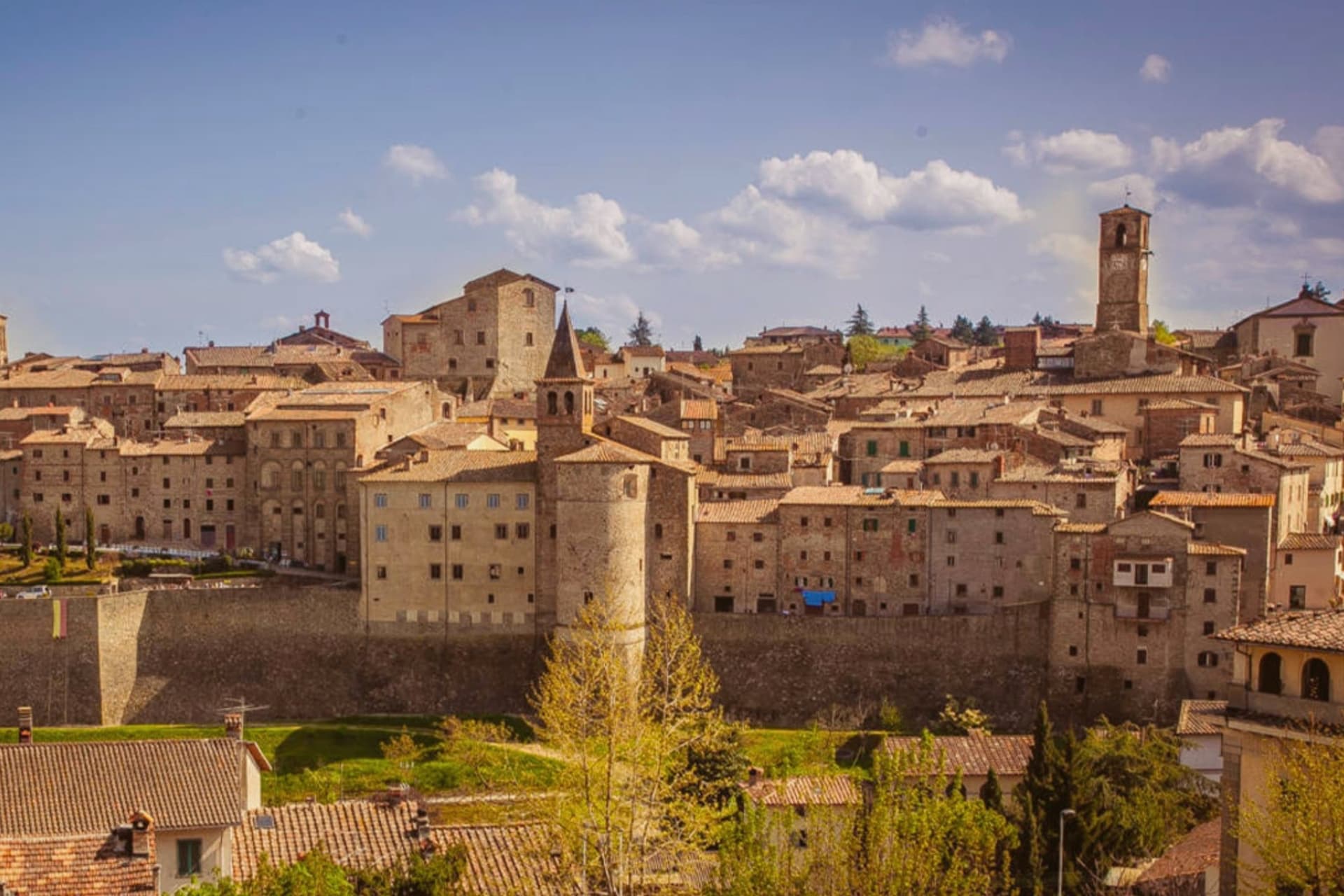
Anghiari sits at 430 meters on a spur above the upper Tiber valley, the Valtiberina, between Arezzo and the Umbrian border. The walled centro storico is intact, the streets running steeply from the Porta Sant'Angelo up to the Castello.
On 29 June 1440 the Florentine army defeated a Milanese force under Niccolò Piccinino in the plain below town, a battle that secured Florence's hold over central Italy and gave Leonardo da Vinci the commission for the Palazzo Vecchio fresco he started in 1505 and never finished. The painting, the Lost Leonardo, is presumed still to be hidden behind a Vasari wall in Florence.
Palazzo Taglieschi in the centro storico holds a polychrome wooden Madonna by Jacopo della Quercia and a working sixteenth-century table organ. The Mostra Mercato dell'Artigianato della Valtiberina has filled the streets with craft producers every spring since 1976, a working continuation of the textile and woodwork traditions that supported the town through the twentieth century.
What to see in Anghiari
- Palazzo Taglieschi. Sixteenth-century palace in the centro storico, now the Museo Statale di Palazzo Taglieschi, with a wooden Madonna by Jacopo della Quercia and a working table organ.
- Castello di Anghiari. Medieval fortified core at the top of the town, walls and gates still intact, the visual anchor of the silhouette from the valley below.
- Campo della Battaglia. The plain at the foot of the walls where Florence defeated Milan on 29 June 1440, the battle that inspired Leonardo's lost Palazzo Vecchio fresco.
How to get to Anghiari
Perugia is roughly 82 minutes away by road.
Our tip
April through June and September into October are the working months in the Valtiberina: dry days, low cloud over the upper Tiber, the surrounding farmland green or gold by season. The Mostra Mercato dell'Artigianato runs the last week of April and the first week of May, filling the streets with artisans from across the valley. Late June marks the anniversary of the 1440 battle, with reenactments below the walls. Palio della Vittoria di Anghiari falls in June.
Why visit Massa Marittima
Massa Marittima sits on an isolated hill in the Colline Metallifere, the Tuscan hills that supplied copper and silver from Etruscan times. Despite the name, the sea is roughly twenty kilometers away.
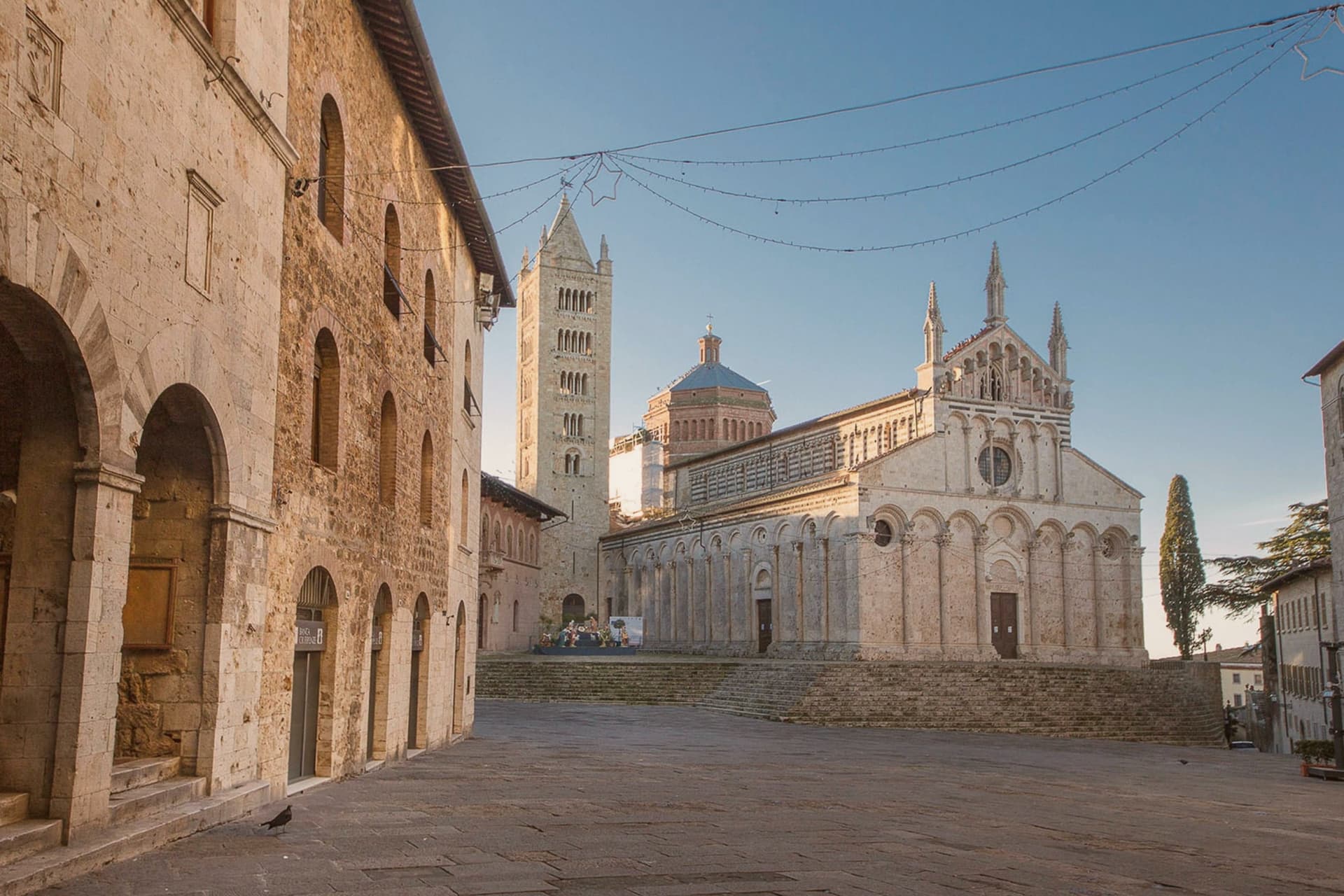
The town's wealth as a free commune was built on that ore, and the buildings on Piazza Garibaldi still date from the century of its independence: the cathedral, the communal palace, the Palazzo Comunale, all raised while the mines were active. The old center keeps a medieval grid, with the Città Nuova rising above it and the watchtower marking the join between the two.
Mining gave way to tourism after the seams ran out, but the layout never had to be redrawn for cars or commerce: what stands today is largely what stood when the terzieri divided the town for its crossbow contest. The hill, the ore beneath it and the thirteenth-century square form one continuous fact: the town's shape was set by what it dug out of the ground, and its history stopped adding new layers once the ground stopped paying.
What to see in Massa Marittima
- Duomo di San Cerbone. Pisan Romanesque cathedral on Piazza Garibaldi, its facade rising in tiers above the square. The Arca inside holds the saint's remains beneath carved marble figures.
- Fonti dell'Abbondanza. The vaulted fountain building where the fresco survives on the interior wall, plaster and pigment exposed after centuries hidden under whitewash.
- Palazzo del Podestà. Communal palace on Piazza Garibaldi, now housing the Museo Archeologico, with the Maestà by Ambrogio Lorenzetti among its rooms.
How to get to Massa Marittima
There is a railway station in the town, so you can arrive without a car and never need one while you are here. Livorno is roughly 95 minutes away by road.
Our tip
April through June and September into October are the months Massa Marittima opens up. The Balestro del Girifalco runs on the fourth Sunday of May and again on the second Sunday of August, and the town fills with archers in costume from the three terzieri. July and August are hot inland and the centro storico thins in the afternoon; the Tyrrhenian beaches at Follonica are half an hour away by car. Balestro del Girifalco di Agosto a Massa Marittima falls in August.
Why visit Suvereto
Suvereto sits at 127 meters on the inland edge of the Val di Cornia, twelve kilometers from the Tyrrhenian coast. The name comes from the Latin suberetum, a wood of cork oaks, and the surrounding forests still hold them.
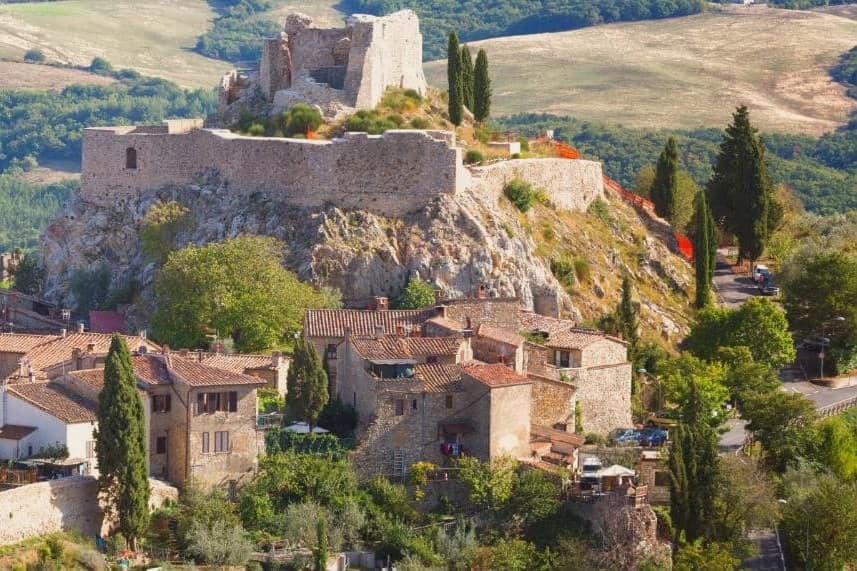
The Rocca Aldobrandesca, first documented in 973, occupies the highest point of the borgo; the Aldobrandeschi family who controlled it also ruled large sections of southern Toscana and the Maremma. The town reached its golden age in the thirteenth century, when Frederick II granted it a charter of freedoms in 1216 and the Palazzo Comunale was built.
The centro storico is a tight grid of stone vicoli that runs uphill from the Romanesque Pieve di San Giusto to the fortress. Suvereto carries five institutional signals at once, a rare combination in the province of Livorno, and the surrounding wine country falls under the Val di Cornia DOC and Suvereto DOCG appellations.
What to see in Suvereto
- Rocca Aldobrandesca. Fortress at the highest point of the borgo, documented from 973, expanded in the twelfth century and partly restored as an open archaeological site.
- Pieve di San Giusto. Eleventh-century Romanesque parish church at the foot of the borgo, with a sandstone façade and a single nave divided by stone columns.
- Palazzo Comunale. Thirteenth-century town hall with a double external staircase and Ghibelline merlons, one of the earliest surviving civic palaces of the Maremma.
How to get to Suvereto
Livorno is roughly 84 minutes away by road.
✷ We have written about Suvereto
“That is the thing the young man on the beach did not see, and the man who lives here cannot stop seeing. This is an industrial coast wearing a beach towel. Run it back far enough and the whole of it, the swamp and the steel and the slag and the white water, is one long story about iron, and the holiday is the costume the story put on after the work ran out.”
Read our piece on Suvereto →The Iron Coast | The Wrong Sea
Our tip
April through June and September into October are the dry months in the Val di Cornia, when the cork forests behind the town hold their light and the wine harvest runs in September. The Sagra del Cinghiale, celebrating the wild boar of the surrounding hills, runs across two weekends in December and draws a different crowd. July and August are hot at 127 meters and most visitors descend to the Tyrrhenian coast in the afternoon. Palio dell'Imperatore falls in August.
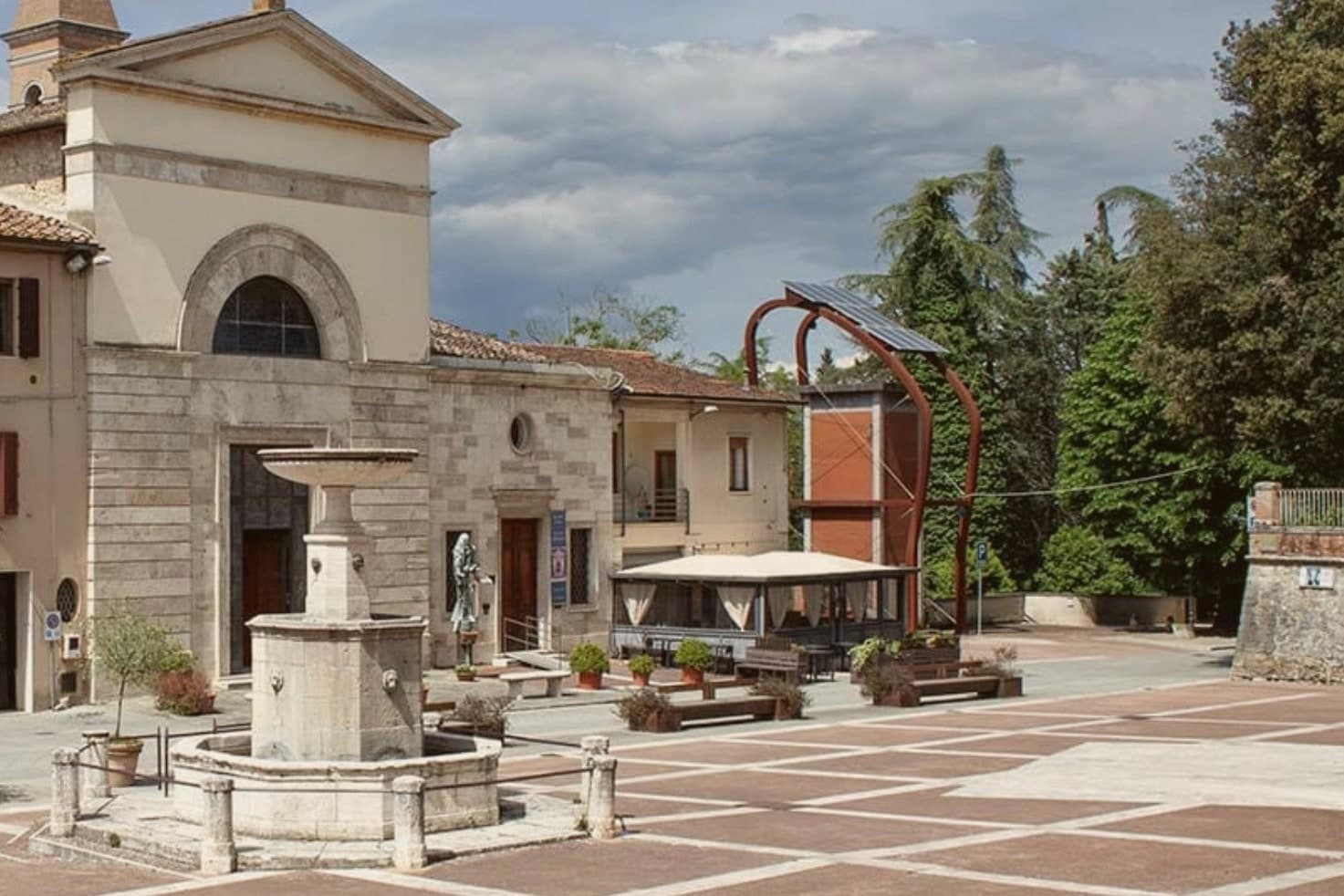
Why visit Castelnuovo Berardenga
The commune sits east of Siena, where the hills give way to the clay swells of the Crete Senesi. The name comes from the Terra Berardinga, the area controlled in the tenth century by a Frankish nobleman named Berardo, and the borgo grew up around the castle walls the Sienese Republic raised against Florence.
The centro storico, the villa and gardens at its heart, and the surrounding zone of vineyards form one continuous pattern rather than separate parts: fortress town above, wine country falling away below it toward the clay hills. Across the wider territory, 13 castles, 70 churches and 200 farms record the medieval pattern of the Sienese contado, a scatter of small fortified points and parish churches administering land rather than one dominant center.
The place reads as a border post that outlived its military purpose and settled into agriculture and the arts, its castle now a clock tower, its noble villa now a music foundation, its walls now overlooking rows of Sangiovese.
What to see in Castelnuovo Berardenga
- Villa Chigi Saracini. Eighteenth-century villa and Italian garden inside the centro storico, its park designed by the Sienese composer Guido Chigi Saracini, whose family foundation still runs the Accademia Musicale Chigiana in Siena.
- Torre dell'Orologio. Surviving tower of the fortress, now bearing the civic clock, the highest visible point of the centro storico.
- Chiesa dei Santi Giusto e Clemente. Eighteenth-century parish church with a neoclassical façade, built on the site of an earlier Romanesque pieve.
How to get to Castelnuovo Berardenga
There is a railway station in the town, so you can arrive without a car and never need one while you are here. Firenze is roughly 77 minutes away by road.
✷ We have written about Castelnuovo Berardenga
“The wine is the whole economy of these hills, every village with its own, the region’s name stamped on the most famous red in Italy. Tuscan food runs to cured and roasted meat, so the wine ran red to meet it, lighter than you expect, almost fruity, easy, made to sit beside a steak and not to be lectured about. Here is the only wine knowledge you need on this road: it is all good.”
Read our piece on Castelnuovo Berardenga →Road to Siena | The Long Way Is the Better Way
Our tip
April through June and September into October are the months Chianti Classico shows best, the green hills moving toward the gold of harvest. The Sagra del Vino runs the second weekend of September. July and August push past thirty and the centro storico empties between two and six; the cellars on the surrounding hills offer cool tastings and longer rentals. Dit'unto – Festival del Mangiar con le Mani falls in the season.
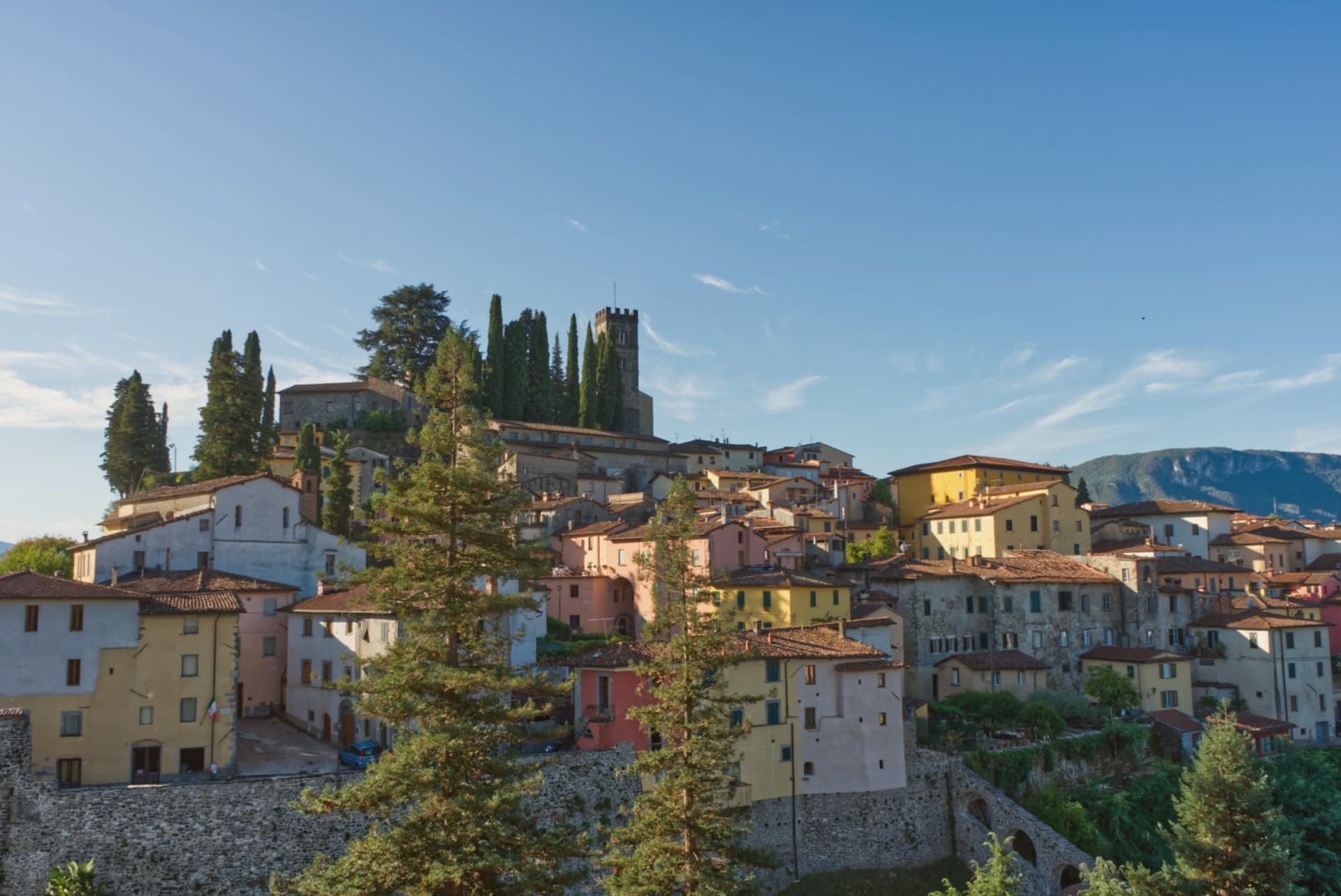
Why visit Barga
The town sits on the Colle Remeggio above the Serchio river, the Apennine ridge rising to the east as a counterpart to the Apuan Alps on the western side of the valley. The walled centro storico climbs the hill from Porta Reale, its stone houses narrowing as the streets rise toward the highest terrace, where the collegiate church stands.
The Colle di Caprona, a separate rise from the walled town itself, holds the house where Pascoli lived out his last years and the chapel where he is buried. The town also carries a Scottish thread: a wave of late nineteenth-century emigration sent generations of Barga families into the chip shop trade in Glasgow, and their descendants' festival now fills the streets every August with fish and chips rather than any dish more expected of the Tuscan hills.
A hill town built in stone around a Romanesque church, with a poet's house on one rise and a Glasgow-born sagra filling its streets each summer, holds more than its size would suggest.
What to see in Barga
- Duomo di San Cristoforo. The church climbs from the eleventh century into the sixteenth, four red marble columns of the pulpit resting on stone lions. It occupies the highest terrace of the town, above the streets that lead up to it.
- Casa Museo Giovanni Pascoli. The house is preserved with its original furnishings and library, the chapel next door holding the poet's tomb.
- Centro storico. Walled medieval town climbing the hill, narrow streets of stone houses leading from Porta Reale up to the church on the highest terrace.
How to get to Barga
There is a railway station in the town, so you can arrive without a car and never need one while you are here. Pisa is roughly 74 minutes away by road.
✷ We have written about Barga
“We were trying to get to Garfagnana. It was July, the coast was unlivable, we pointed the car at the Serchio Valley with a vague idea of chestnut forests and cool air, and somewhere on the road up we took a turn we should not have taken and ended up at the gate of a town I had never heard of. Barga was today's accident.”
Read our piece on Barga →Barga | The Scottish Accent
Our tip
April through June and September into October are the working months in the middle Serchio valley: green pasture, mild days at 410 meters, walking weather to the Apuan ridges. The Opera Barga festival fills the Teatro dei Differenti in July with chamber concerts. The Sagra del Pesce e Patate runs for two weeks in August and brings Glasgow-Barga families home.
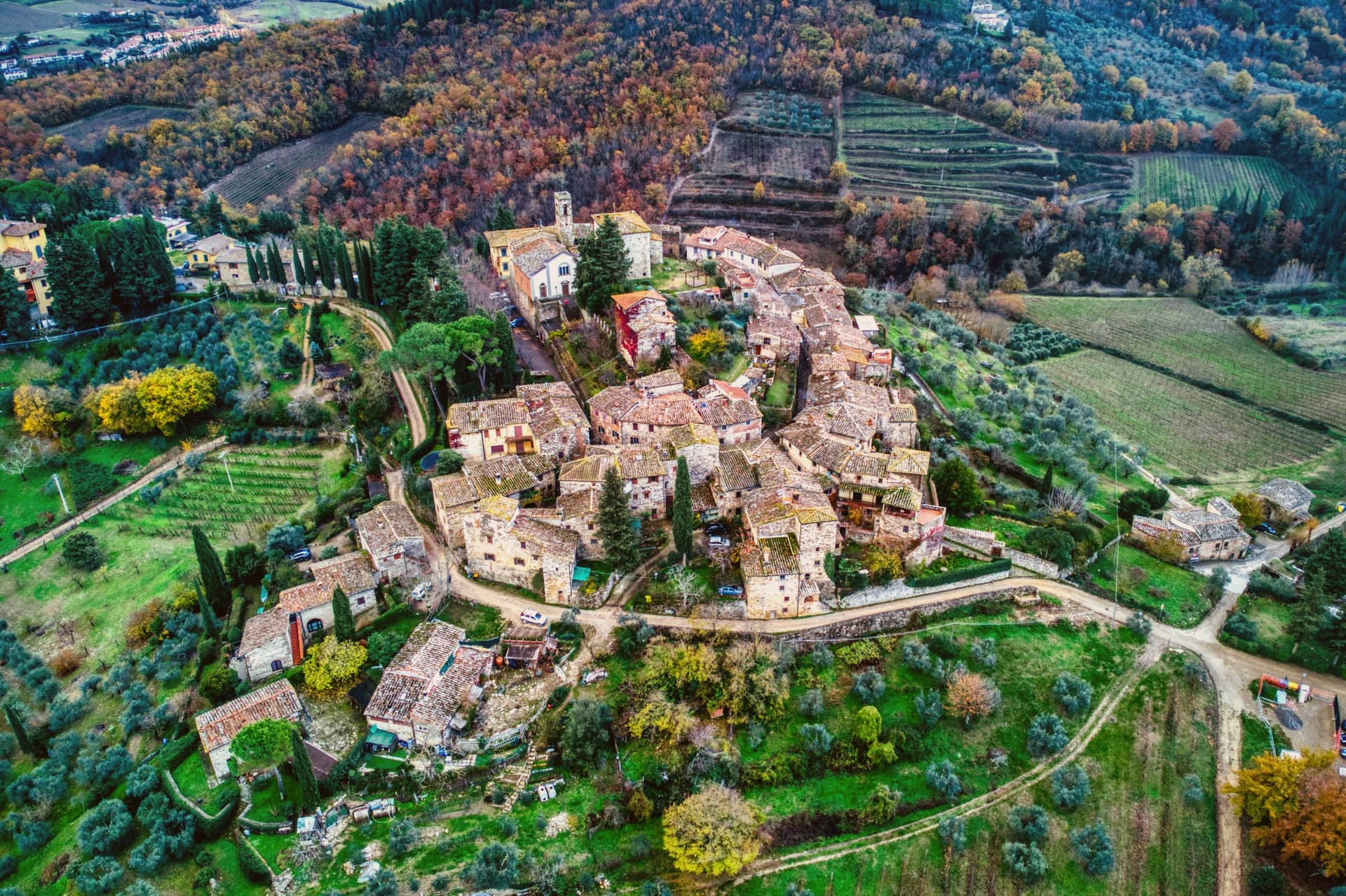
Why visit Greve in Chianti
Greve sits at 236 meters in the Val di Greve, thirty-one kilometers south of Firenze and forty-two north of Siena, on the small fast river that gave the town its name. The valley narrows here enough that the road to Firenze runs past the castle estates on the slopes to the north before dropping into the town itself, and the walled hamlet above Greve looks down on the piazza from its kilometer of higher ground, a settlement some centuries older than the square below it, its tenth-century walls predating the piazza's sixteenth-century arcades.
The piazza is the point around which the rest of the town organizes itself: shops and a market under the arcades, a rebuilt church closing its south end, and the roads out toward the castles and the hamlet all beginning at its edges. The Saturday market fills the piazza.
The wine festival in early September empties the surrounding cellars into glasses for three days. What holds the place together is the geography more than any single monument: a market town at a river crossing, ringed by the vineyard slopes and the older hill settlement that all feed into the same triangular square.
What to see in Greve in Chianti
- Piazza Matteotti. The arcades shelter wine shops, butchers and pasticcerie, wrapped around the irregular triangle of paving with the navigator's bronze figure watching the center.
- Chiesa di Santa Croce. Neoclassical parish church on the south point of the piazza, rebuilt in the nineteenth century after earthquake damage.
- Castello di Verrazzano. Vineyard estate on the hills north of town, producing Chianti Classico on slopes tied to the family name that reached New York Bay.
How to get to Greve in Chianti
Firenze is roughly 44 minutes away by road.
Our tip
April through June and September into October are the months when the Chianti hills are at their best, green or gold depending on the harvest. July and August push past thirty degrees and the piazza empties between two and five. The wine harvest runs late September and the cellars open in turns. Expo Chianti Classico falls in September.
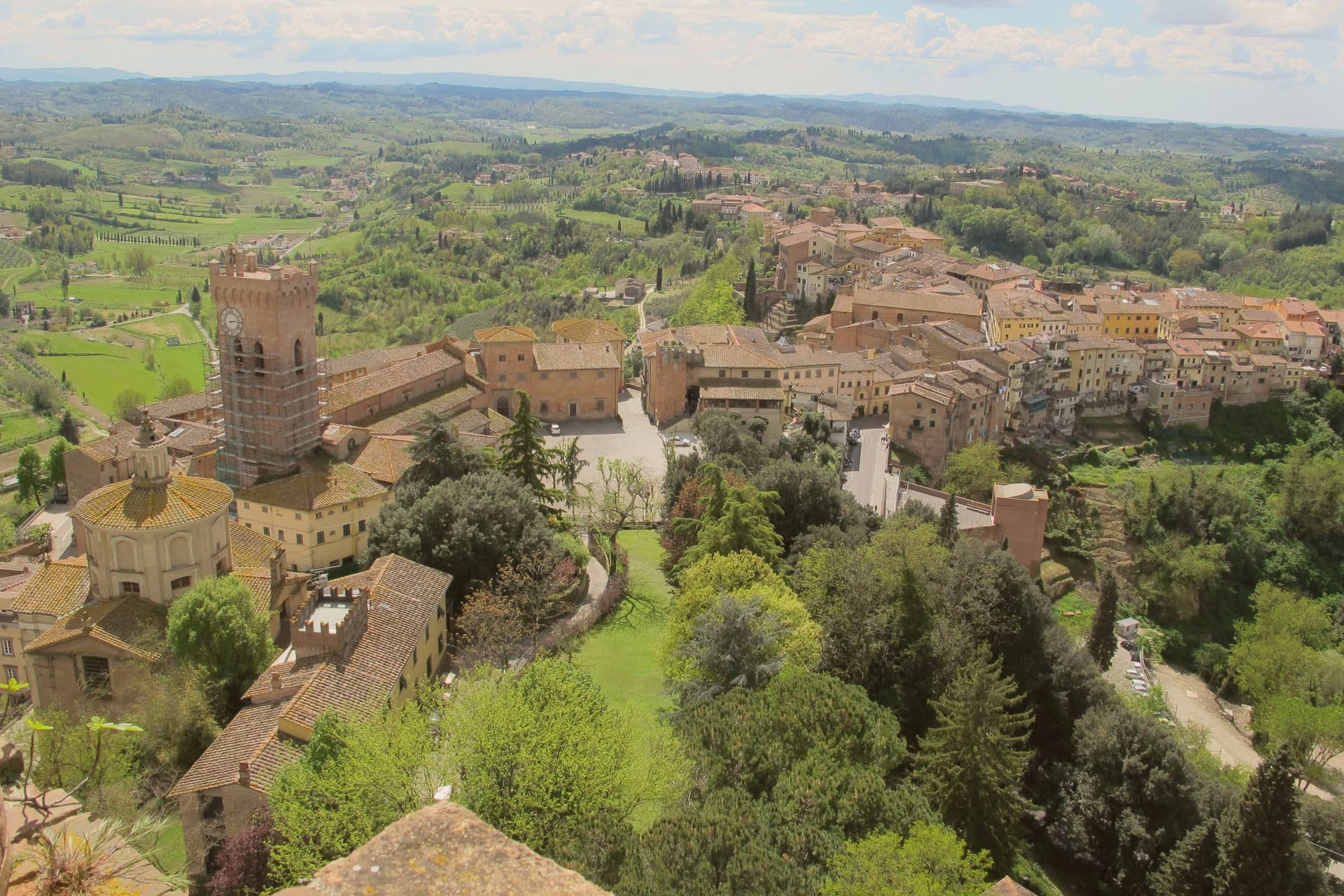
Why visit San Miniato
San Miniato runs along three hills at 150 meters above the lower Arno, halfway between Pisa and Florence. In 962, Otto I of Saxony made it one of the seats of imperial administration in central Italy; in 1218 Frederick II turned it into a tax collection point, and the brick tower he built between 1217 and 1223 still rises above the town, rebuilt in 1958 after the retreating Germans mined it in 1944.
The Via Francigena passes through. The Duomo, dedicated to Sant'Assunta and Santo Genesio, holds the asymmetrical clock tower called the Matilde.
What the town is mainly known for today comes from the woods around it. San Miniato produces roughly a quarter of Tuscany's white truffles, including a tuber of over two kilos found in 1954.
The National White Truffle Exhibition, running through the last three weekends of November, has been held in Piazza del Duomo since 1969.
What to see in San Miniato
- Rocca di Federico II. Thirty-meter brick tower built by Frederick II between 1217 and 1223, destroyed by retreating Germans in 1944 and rebuilt in 1958.
- Duomo di Santa Maria Assunta e San Genesio. Originally Romanesque cathedral with Gothic and Renaissance additions, dedicated to two patrons, with the asymmetrical Matilde clock tower as campanile.
- Palazzo dei Vicari dell'Imperatore. Medieval palace of the imperial vicars who governed San Miniato when it was an imperial administrative seat.
How to get to San Miniato
There is a railway station in the town, so you can arrive without a car and never need one while you are here. Pisa is roughly 49 minutes away by road.
✷ We have written about San Miniato
“And then time passed, which is the part the town doesn’t tell you about, because the town only sees you on the day. The jars sat in the cupboard. We are not people who keep proper white truffle at home; almost nobody is. But we do buy black truffle now and then, and we don’t buy it on a hill behind a closed road. We buy it from a man named Marco who runs a food truck in a supermarket parking lot down on the Marina near us. He digs some of it himself and sells the rest for the farmers around him, and there is no shuttle bus.”
Read our piece on San Miniato →San Miniato | The Truffle I Couldn’t Taste
Our tip
April through June brings the long Tuscan spring, mild on the ridge with views clear to the Apennines. September and October are dry and gold, the same colors painters come for. November is the truffle month: the National White Truffle Exhibition fills Piazza del Duomo across three weekends, hotel rates double, restaurants book out weeks ahead. Fiera Mercato del Tartufo Bianco di Corazzano falls in the season.
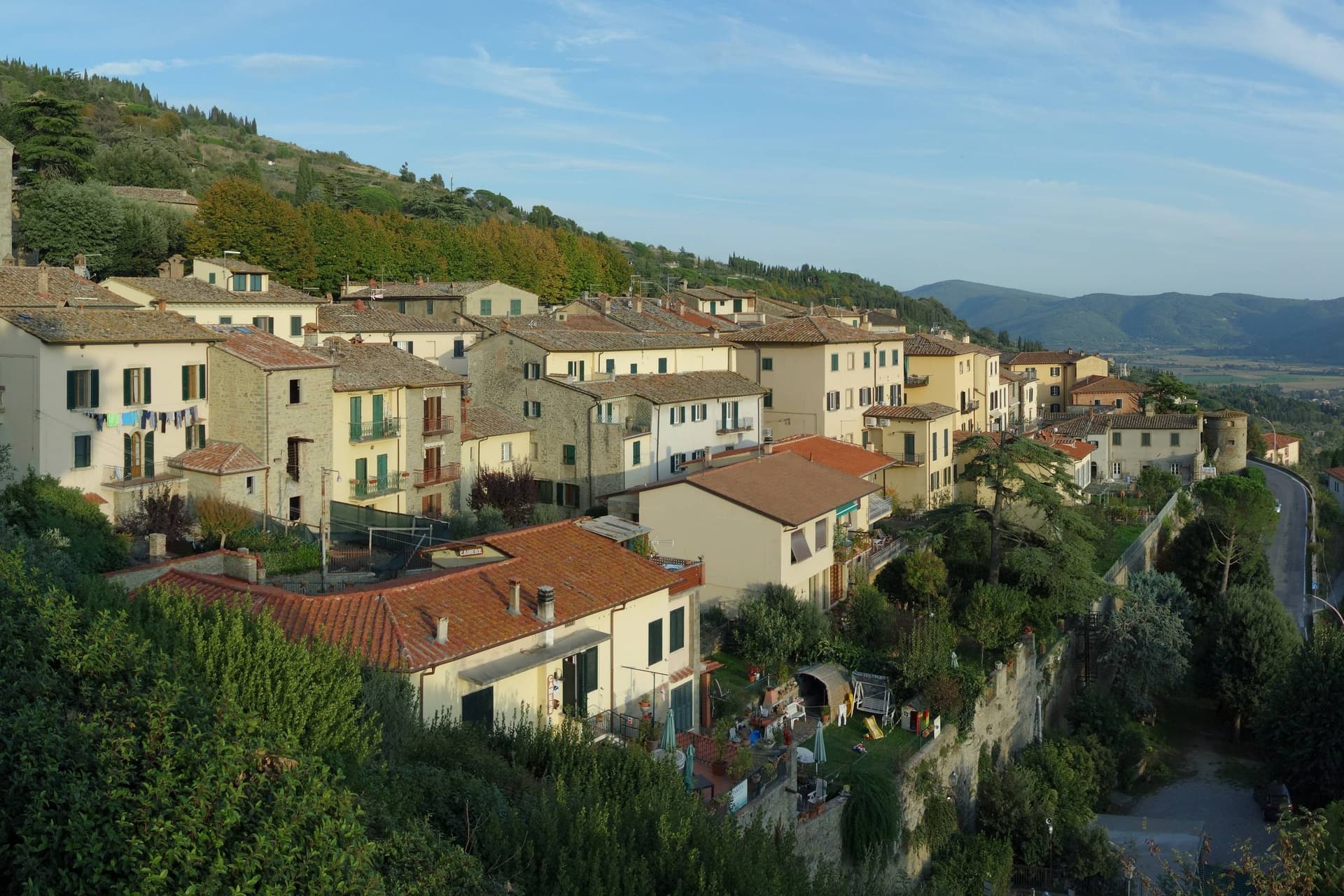
Why visit Cortona
Cortona stands on the southern flank of the Val di Chiana, looking across to Lake Trasimeno: a position that put it in sight of both the plain it governed and the water beyond it. The Etruscan name Curtun survives fixed in stone, and the city that carried it was built in tiers up the hillside, walls and fortress at the crown, church and convent lower down at the edges of the slope, houses and squares filling the ground between.
The bishop granted Francis of Assisi a place for retreat in 1211, and what resulted was built into a narrow valley below the town rather than within its walls, a retreat kept apart from the civic center even as it stayed within reach. Santa Margherita, the city's patron, is held on the ridge above the streets she once walked.
The painters Luca Signorelli and Pietro da Cortona were born inside the walls that still define the town's shape. Frances Mayes published her memoir in 1996, and the town has not been quiet since.
What emerges is a hill town whose Etruscan skeleton, medieval faith, and modern fame sit stacked on the same slope, each layer visible without erasing the one beneath it.
What to see in Cortona
- Mura etrusche. The walls still ring the city entire, the foundation under every later layer of building, Roman and medieval alike.
- MAEC. Museum of the Etruscan Academy in Palazzo Casali, holding the bronze plaque and the lampadario di Cortona.
- Museo Diocesano. Collection in the former Chiesa del Gesù with Beato Angelico's Annunciation of 1430 and works by Luca Signorelli.
How to get to Cortona
There is a railway station in the town, so you can arrive without a car and never need one while you are here. Perugia is roughly 45 minutes away by road.
Our tip
April through June brings green hills, cool evenings and the longest hours in the Diocesano without a queue. September and October are the dry, gold months, light coming in low across Lake Trasimeno and the olive harvest running until November. July and August are the difficult months. ChocoMoments Cortona falls in the season.
More from Anywhere Italy
- The best towns with a serious restaurant that live slowly in Toscana
- The best olive oil towns that live slowly in Toscana
 The best hill towns that live slowly within 90 minutes of Perugia
 The 6 best hidden towns inside a nature park in Toscana
 The best hidden hill towns within 90 minutes of Firenze
 The best hidden wine towns with a medieval festival in Toscana