
Marche · Pesaro e Urbino
Macerata Feltria
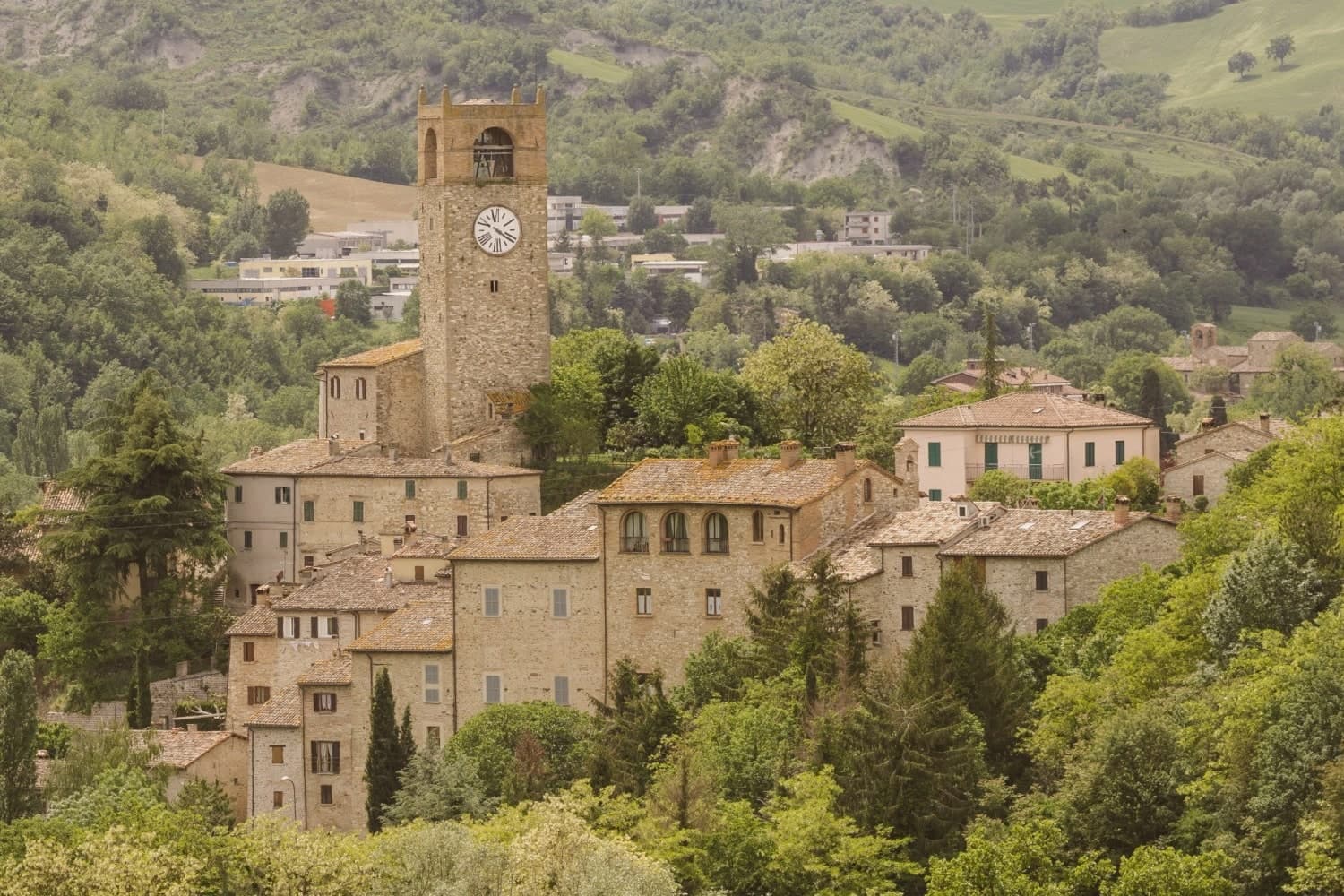
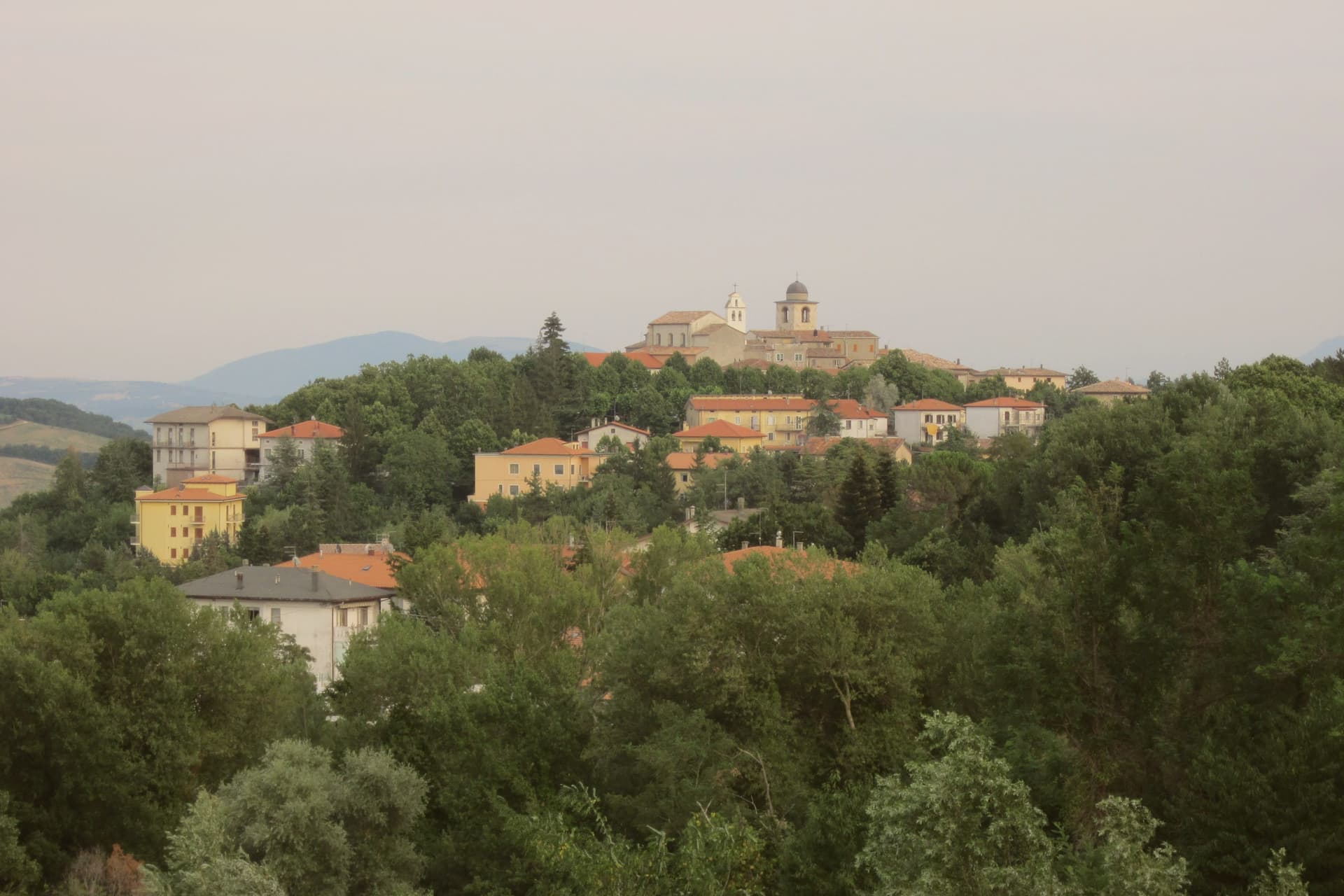
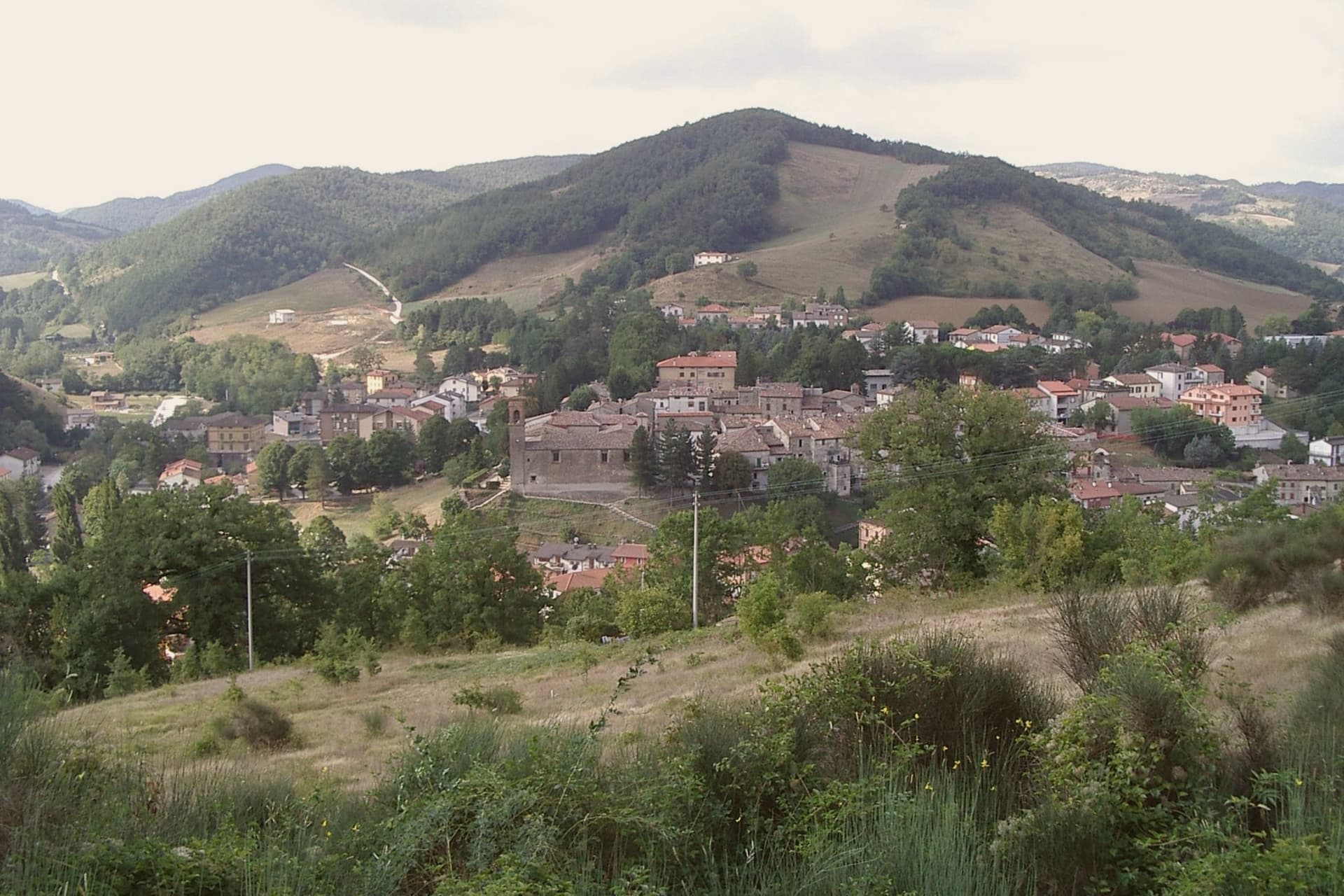
A 1,889-resident Borghi più belli borgo in the Marche side of the Montefeltro, built over the Roman municipium of Pitinum Pisaurense, with a small thermal spa still drawing on the same sulphurous spring water the Romans used.
- Best time
- Apr–Jun, Sep–Oct
- By car
- 1 h from Rimini
- Population
- 1,889
Known for
PITINUM PISAURENSE
Roman municipium 1st c BC, forum, amphitheatre and thermal baths visible in the Archaeological Park. Continuous habitation from Roman times to today.
BORGHI PIÙ BELLI
Officially inscribed small-village quality mark on the Marche side of the Montefeltro borderland.
ROMAN-ROOTED THERMAL SPA
1898 spa building over the same sulphurous mineral springs the Romans used. Continuous operation for digestive and skin conditions.
MONTEFELTRO NEIGHBOURS
San Leo 15 km north (Cagliostro's prison, BPB), Urbino 30 km south (UNESCO ducal town), San Marino 25 km east. Federico da Montefeltro, Duke of Urbino and the condottiero whose profile Piero della Francesca painted, gave the region its name and its defensive network.
When to visit
Best · Apr–Jun, Sep–Oct
- J9°
- F12°
- M13°
- A16°
- M21°
- J27°
- J30°
- A30°
- S25°
- O20°
- N14°
- D10°
- Best
- Hot or crowded
- Quiet
- Mostly closed
Daytime averages, 2020–2024. Weather data by Open-Meteo.com.
The festa: Michele, 29 September
Why come
Macerata Feltria sits in the Montefeltro, the borderland shared by the Marche, Emilia-Romagna and the Republic of San Marino, on the Pesaro side of that territory. The name Pitinum Pisaurense points to its origin as a stop on the Roman road between Pisaurum, now Pesaro, and the upper Tiber, which explains why the excavated forum and baths sit at the edge of today's centro rather than beneath it: the Roman town and the modern one occupy adjoining ground, not the same footprint. After the 8th century the site was rebuilt as a feud under the Montefeltro family, the line that produced Federico da Montefeltro, Duke of Urbino, whose profile in Piero della Francesca's portrait is the standard image of the Renaissance prince.
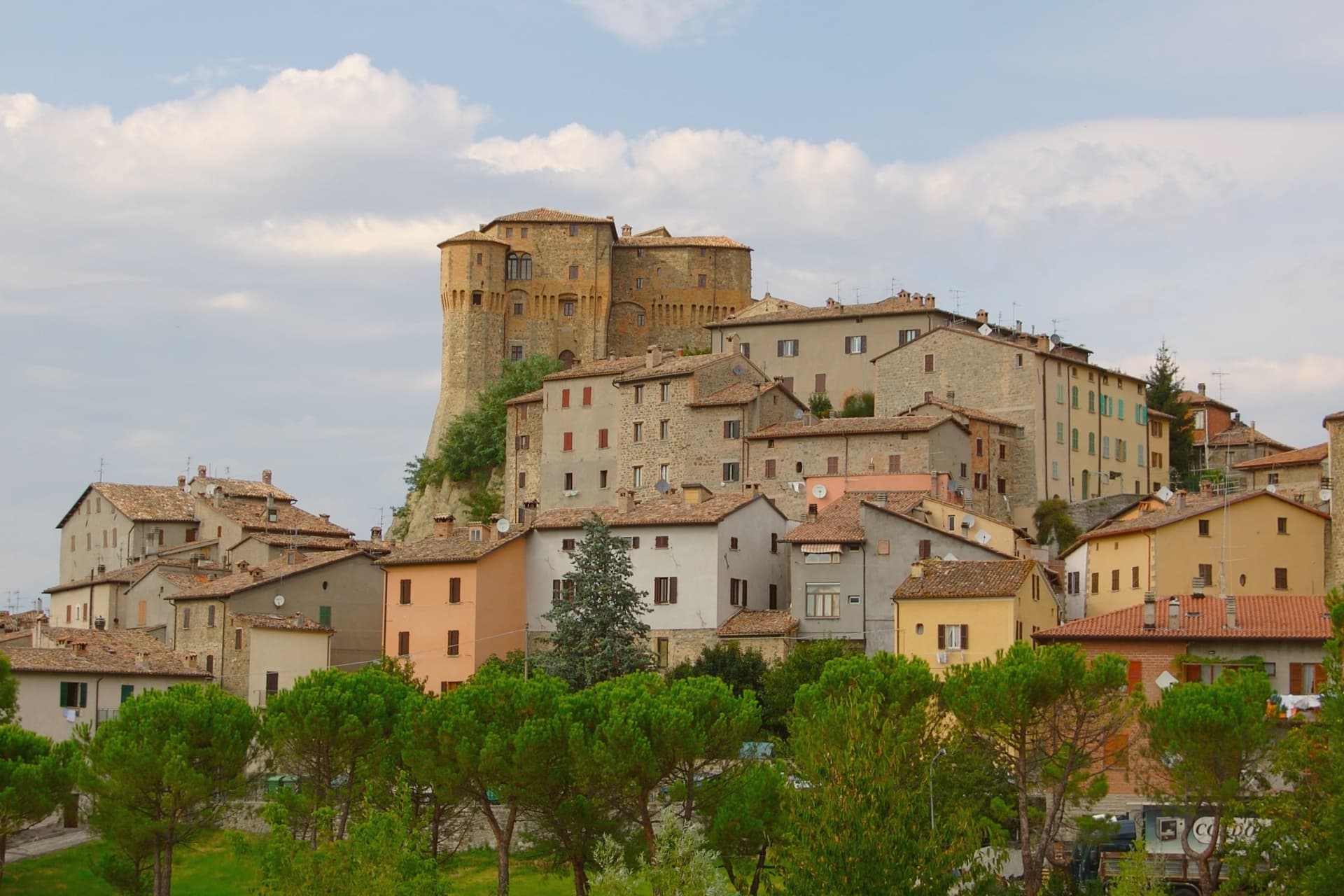
That period left the fortifications in town and the outlying Castello di Pietrarubbia 5 km north, and it was in this same span that the parish church was raised over an earlier basilica, so the building itself is a second layer built on a first. The 19th century added a third: the Roman thermal springs were put back into use, leading to the 1898 spa building, still running on the same sulphurous water. The Montefeltro setting also places the town among better-known neighbours: San Leo 15 km north, Urbino 30 km south, San Marino 25 km east.
Food follows the same regional line, passatelli in brodo, tagliatelle al ragù di lepre, crescia sfogliata, Bianchello del Metauro and Montefeltro Pecorino, with the Festa del Patrono San Cassiano on 13 August as the year's fixed point. Three eras, Roman, Montefeltro and the modern spa town, sit on the same small plot of ground, each one building over rather than replacing the last.
The Sunday letter
Macerata Feltria is on our list. Its letter is still to come.
We are writing about all 1,000 of these towns, one at a time, in a free letter every Sunday: the photo, the food, the festa. That is our mission. Sign up and you will be there when Macerata Feltria comes up. By Peter & Sophia, from Pietrasanta.
Read on
Macerata Feltria in our articles
 The prettiest small villages within 90 minutes of Rimini6 towns, Macerata Feltria among them.
 The best small hill towns in the province of Pesaro e Urbino7 towns, Macerata Feltria among them.
 The 8 prettiest villages in the province of Pesaro e Urbino8 towns, Macerata Feltria among them.
 The best small hill towns within 90 minutes of Rimini8 towns, Macerata Feltria among them.
How to get there
From Rimini (RMI), about 1h 16m by car.
Ancona / Pescara (AOI) is about 1h 39m away.
By car from the centre of Ancona 1h 52m or Perugia 2 hours.
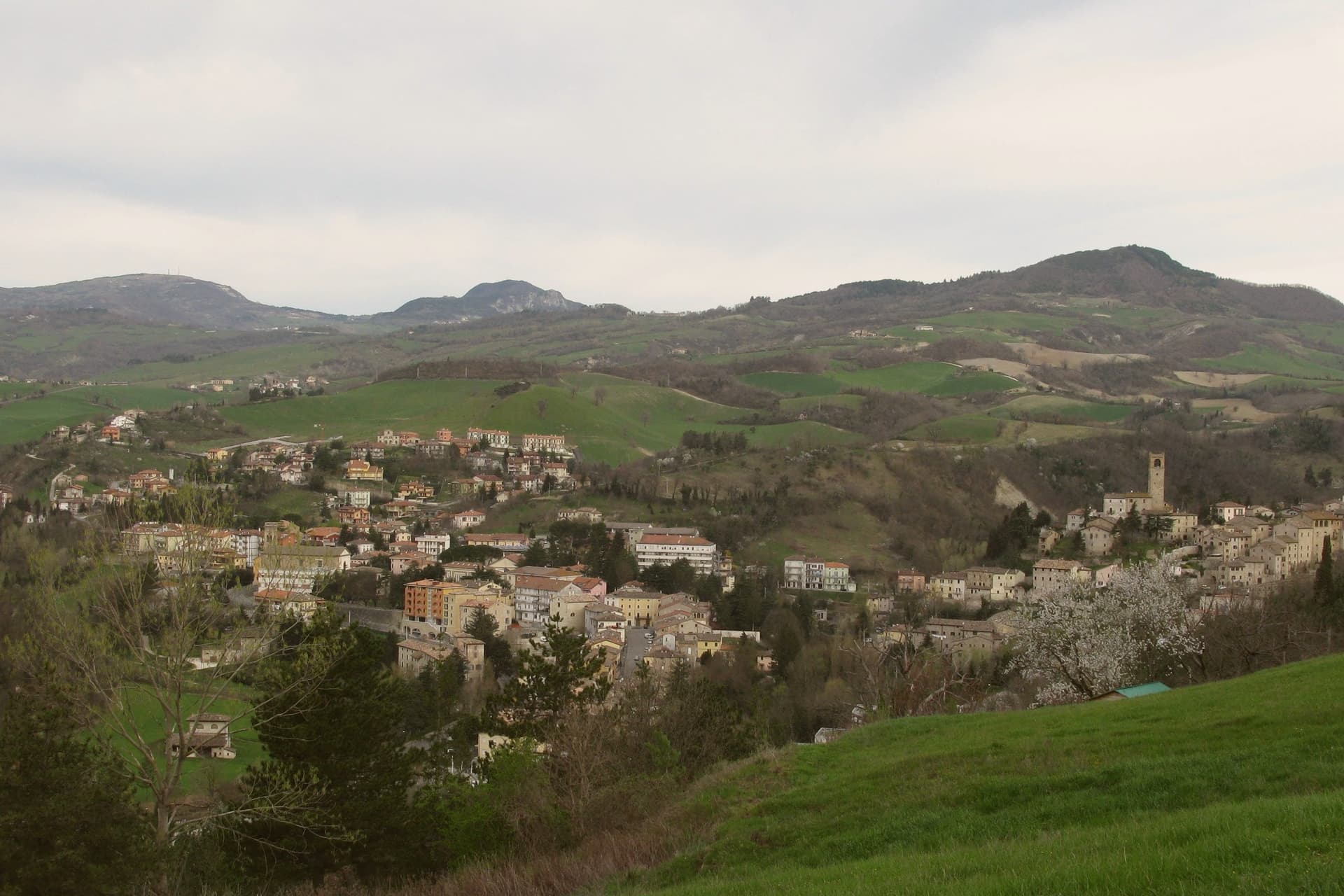
Coming by train into Rimini? Macerata Feltria is about 1 hour away by road.
What to see
Parco Archeologico di Pitinum Pisaurense
The forum, amphitheatre and bath foundations sit on the edge of the modern centro, low walls in open ground rather than a reconstructed ruin. A small site museum stands next to the free excavated area.
Pieve di San Cassiano
Stone and brick exterior largely original, with 14th-c frescoes restored inside. The building stands over an earlier Christian basilica, so the floor plan carries two churches at once.
Terme di Macerata Feltria
A modest single building rather than a resort complex, drawing on mineral water that has been in use since Roman times. Treatment is still limited to digestive and skin conditions.
Montefeltro fortifications + Pietrarubbia
Walls from the Montefeltro defensive era, with the Castello di Pietrarubbia 5 km north forming part of the same system. Little of it is restored for visiting, most is simply standing.
Crescia sfogliata + Bianchello del Metauro
A layered flatbread paired with the Bianchello del Metauro DOC white from the river valley, alongside Montefeltro Pecorino. The Festa di San Cassiano falls on 13 August.
The slow-trip planner
Building a trip? Find where Macerata Feltria fits in a slow Italy circuit.
Answer five questions. We will shape a geographically coherent slow trip from the 1,000 Italian towns most travelers skip. Yours to save and share.
Living here
- Population 1,889
- Remotei
- Pharmacy: none mapped
- High school within a 30-minute drive
- Nearest airport Rimini, 1 h 16 min drive
- Regional capital Ancona, 1 h 52 min drive
Common questions
- What is Macerata Feltria known for?
- Macerata Feltria is a 1,889-resident Borghi più belli borgo at 321m in the Marche side of the Montefeltro, built over the Roman municipium of Pitinum Pisaurense, with a small thermal spa still drawing on the same sulphurous spring water the Romans used.
- Where is Macerata Feltria?
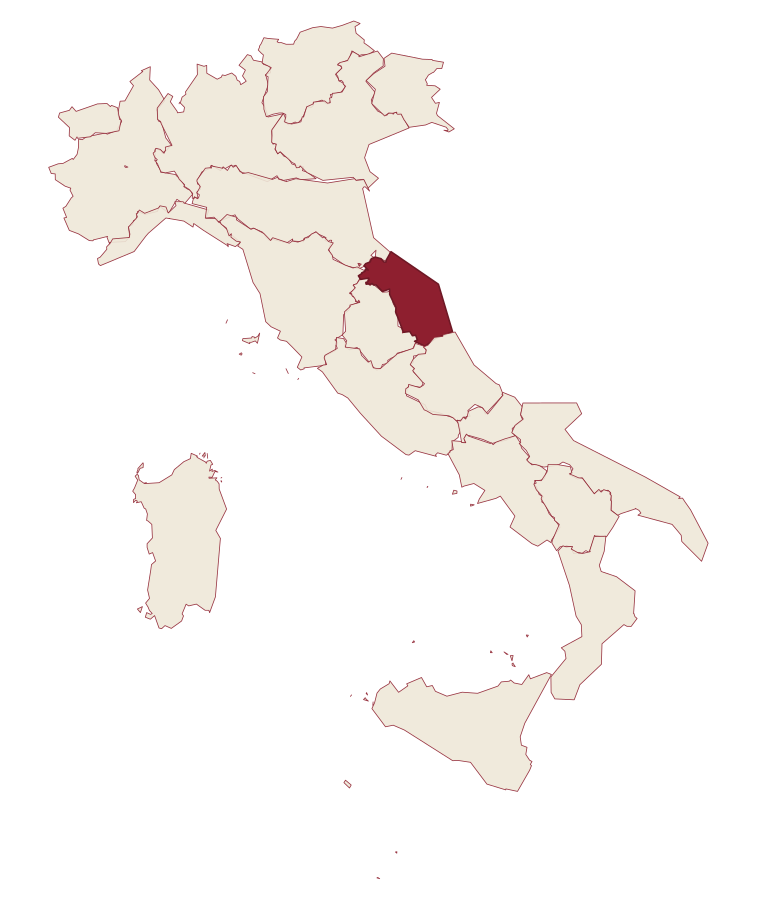
- Macerata Feltria is a comune in the province of Pesaro e Urbino, in Marche.
- What is the nearest airport to Macerata Feltria?
- Rimini (RMI), about 1h 16m by car.
- How long is the drive from Ancona to Macerata Feltria?
- About 1h 52m by car.
- When is the best time to visit Macerata Feltria?
- Best in Apr–Jun, Sep–Oct. July is the warmest month, averaging 30 degrees, and May the wettest, with about 12 rain days.
- Is there a sagra or a festival in Macerata Feltria?
- The town keeps its patron saint's day: Michele, 29 September.
- Which other towns are like Macerata Feltria?
- San Leo, Mercatello sul Metauro and Esanatoglia.
- How many people live in Macerata Feltria?
- 1,889 at the 2023 count.
Tags & datadesignations · numbers · sources
Recognised as
The numbers
- Elevation: 321 m
- Population: 1,889
- Surface area: 40.07 km²
These figures were compiled from public directories: ISTAT, OpenStreetMap and Wikidata, and from the official listings of the guides named on this page. Town details change; verify with official sources before you travel.
Similar
Towns like Macerata Feltria
San Leo
Province: Rimini
both in the Montefeltro · both under 3,000 people
Mercatello sul Metauro
Province: Pesaro e Urbino
both under 3,000 people · both hill towns
Esanatoglia
Province: Macerata
both under 3,000 people · both hill towns
Cantiano
Province: Pesaro e Urbino
both under 3,000 people · both hill towns
Savoca
Province: Messina
both under 3,000 people · both hill towns
Varese Ligure
Province: La Spezia
both under 3,000 people · both hill towns
🎨 Borghi più belli d'Italia
More Borghi più belli d'Italia towns in Marche
Arcevia
Province: Ancona
A hilltop borgo at 535 meters above the Misa and Nevola valleys, defended in the Middle Ages by a ring of nine satellite castles.
Cingoli
Province: Macerata
The Balcone delle Marche at 631 meters, a hilltop borgo where on clear days the view runs from the Sibillini to the Croatian coast.
Corinaldo
Province: Ancona
A walled hill borgo at 203 meters, ringed by 912 meters of intact medieval walls, and the birthplace of Saint Maria Goretti.
Esanatoglia
Province: Macerata
A medieval village of seven bell towers at 358 meters on the Marche-Umbria border, sitting at the source of the Esino river.
Fermo
Province: Fermo
The provincial capital on the Sabulo hill at 319 meters, with 2,200 square meters of Augustan Roman cisterns running under the centro storico.