
Emilia-Romagna · Rimini
San Leo
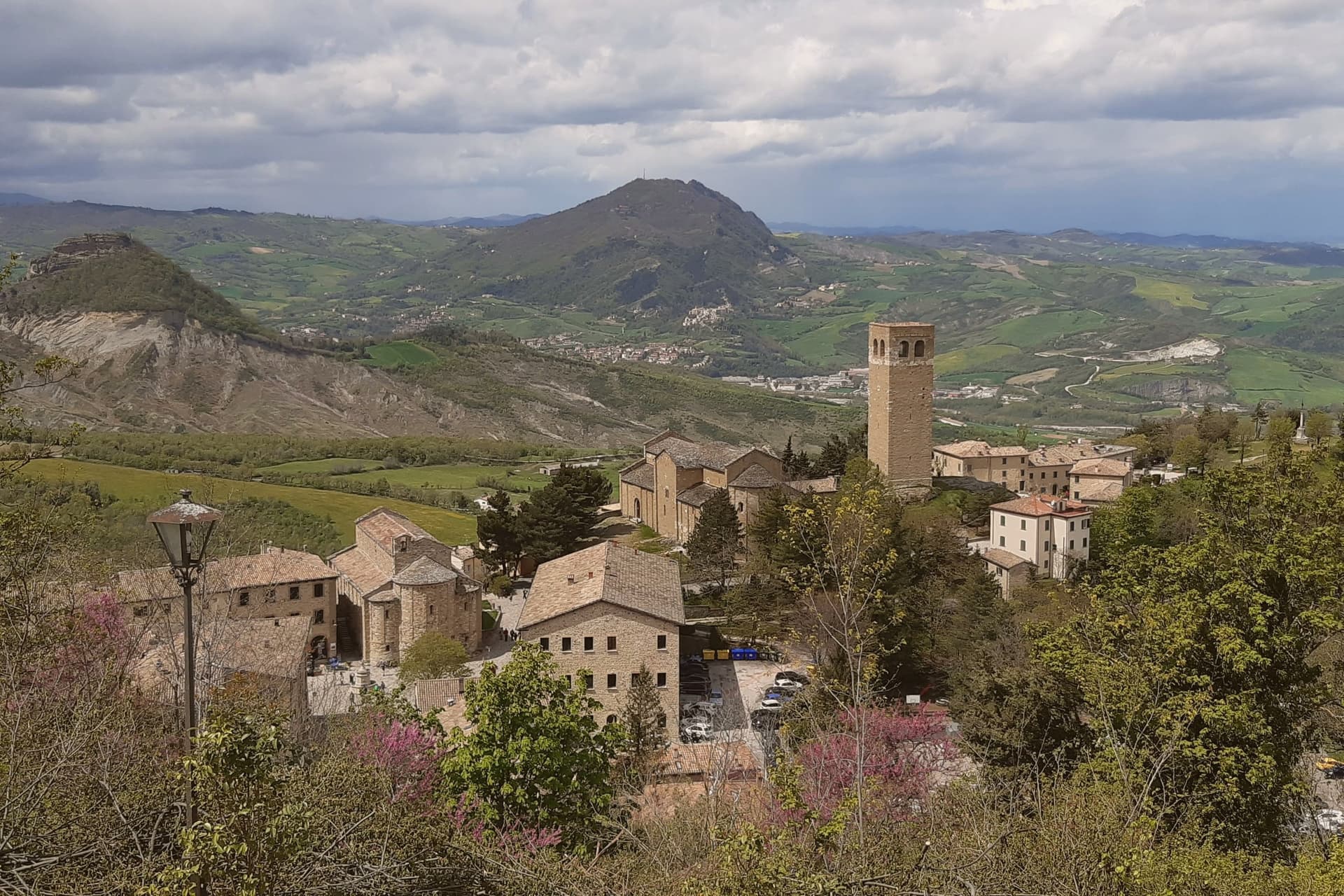
A borgo of 2,820 residents built on a vertical 583m limestone outcrop in the Montefeltro, 35 km from Rimini, with a frontier panorama over Romagna and Marche from every wall.
- Best time
- Apr–Jun, Sep–Oct
- By car
- 36 min from Rimini
- Population
- 2,820
Known for
FORTE DI SAN LEO
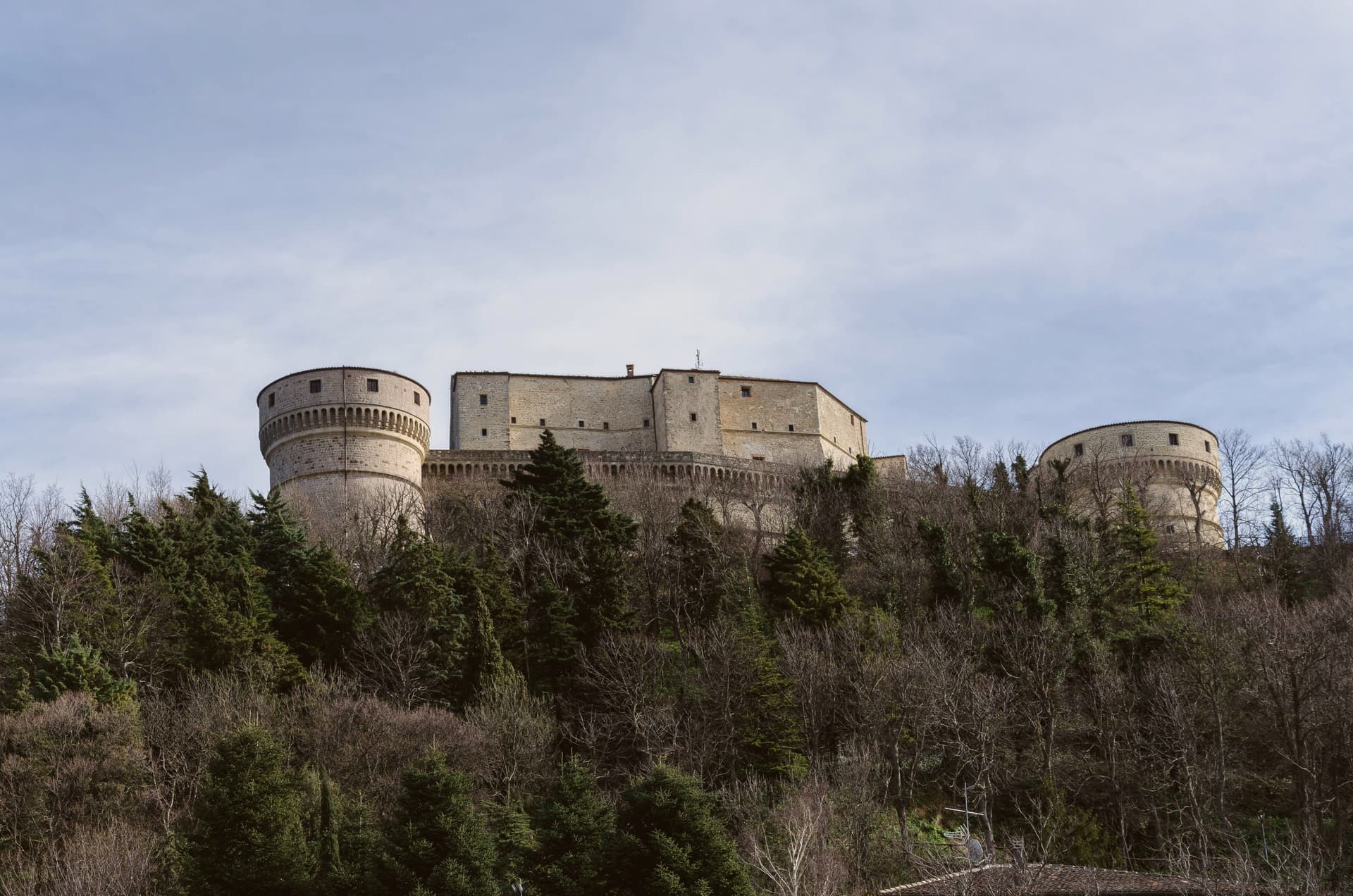
Renaissance fortress on a vertical 583m limestone outcrop. Francesco di Giorgio Martini rebuild, 1479–1502. Dante's canonical impossible-fortress in Purgatorio.
CAGLIOSTRO'S PRISON
Count Cagliostro (the talk of late-Enlightenment Europe) imprisoned here by the Papal States 1791–95, killed in his cell under mysterious circumstances. Cell intact.
BORGHI PIÙ BELLI + BANDIERA ARANCIONE
Both major Italian small-town quality marks, the Borghi più belli d'Italia inscription and the Touring Club's Bandiera Arancione.
OLDEST ROMANESQUE IN ROMAGNA
9th-c Pieve di Santa Maria Assunta with reused Roman columns + adjacent 12th-c sandstone Duomo over a Lombard crypt.
When to visit
Best · Apr–Jun, Sep–Oct
- J8°
- F11°
- M12°
- A14°
- M19°
- J25°
- J29°
- A28°
- S23°
- O18°
- N12°
- D9°
- Best
- Hot or crowded
- Quiet
- Mostly closed
Daytime averages, 2020–2024. Weather data by Open-Meteo.com.
Why come
San Leo does not look quite real from below: a medieval town built on a single limestone outcrop rising straight out of the rolling Montefeltro hills southwest of Rimini, reached by one switchback road carved into the cliff face. The geography is the entire historical reason the town exists in its present form. Saint Francis came in 1213 and received the gift of Mount La Verna from Count Orlando Cattani as a hermitage. The Hohenstaufen rebuilt an earlier fortress on the same rock in the 13th century, before the Renaissance-era rebuild that stands today, the work of Federico da Montefeltro's military architect between 1479 and 1502. The fortress's notoriety came in 1791, when the Papal States turned it into a high-security prison for political dissidents. The most famous of them was an alchemist, occultist and Freemason who was the talk of late-Enlightenment Europe: held here by the Holy Office from 1791, he was dead in his cell by 1795 under circumstances never fully explained, and the cell itself still stands, windowless, with a single opening high above the floor once used to pass in food and remove waste.
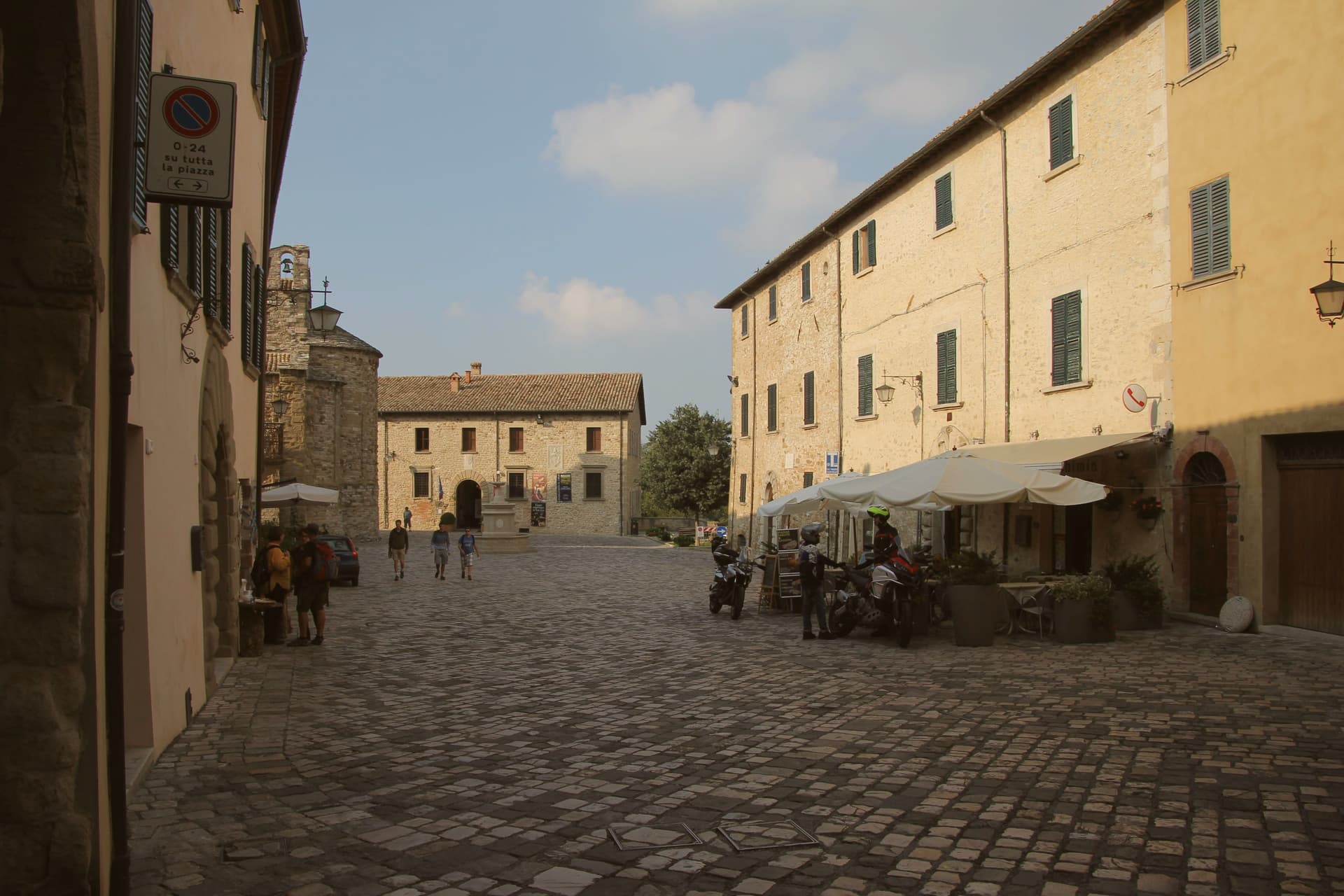
Beyond the fortress on its rock, the town's religious core sits on the central piazza below: a 9th-century parish church, the oldest Romanesque building in Romagna, raised on reused Roman columns, stands beside a 12th-century sandstone Duomo built over a Lombard crypt. Together they anchor the lower town the way the fortress anchors the outcrop above it. A 12th-century bell tower nearby gives the same panoramic sweep the fortress does, across the Montefeltro toward the Adriatic and toward San Marino, 12 km east and visible from both terraces. This is borderland: Emilia-Romagna, Marche and the Republic of San Marino meet here, and the kitchen mixes all three, piadina romagnola, passatelli in brodo, gnocchi al sugo di lepre and cappelletti, washed down with Sangiovese di Romagna or the local Albana DOCG white. The town holds both the Borghi più belli d'Italia inscription and the Bandiera Arancione mark, and as with other hilltop fortress towns, the population has thinned with time, from 5,500 residents in 1951 to 2,820 today. What the rock has always offered, defensibility, isolation, a commanding view, is also what has slowly emptied it: the same vertical geography that made San Leo impossible to take is what makes it hard to keep living in.
The Sunday letter
San Leo is on our list. Its letter is still to come.
We are writing about all 1,000 of these towns, one at a time, in a free letter every Sunday: the photo, the food, the festa. That is our mission. Sign up and you will be there when San Leo comes up. By Peter & Sophia, from Pietrasanta.
Read on
San Leo in our articles
 The best cheese towns within two hours of Bologna6 towns, San Leo among them.
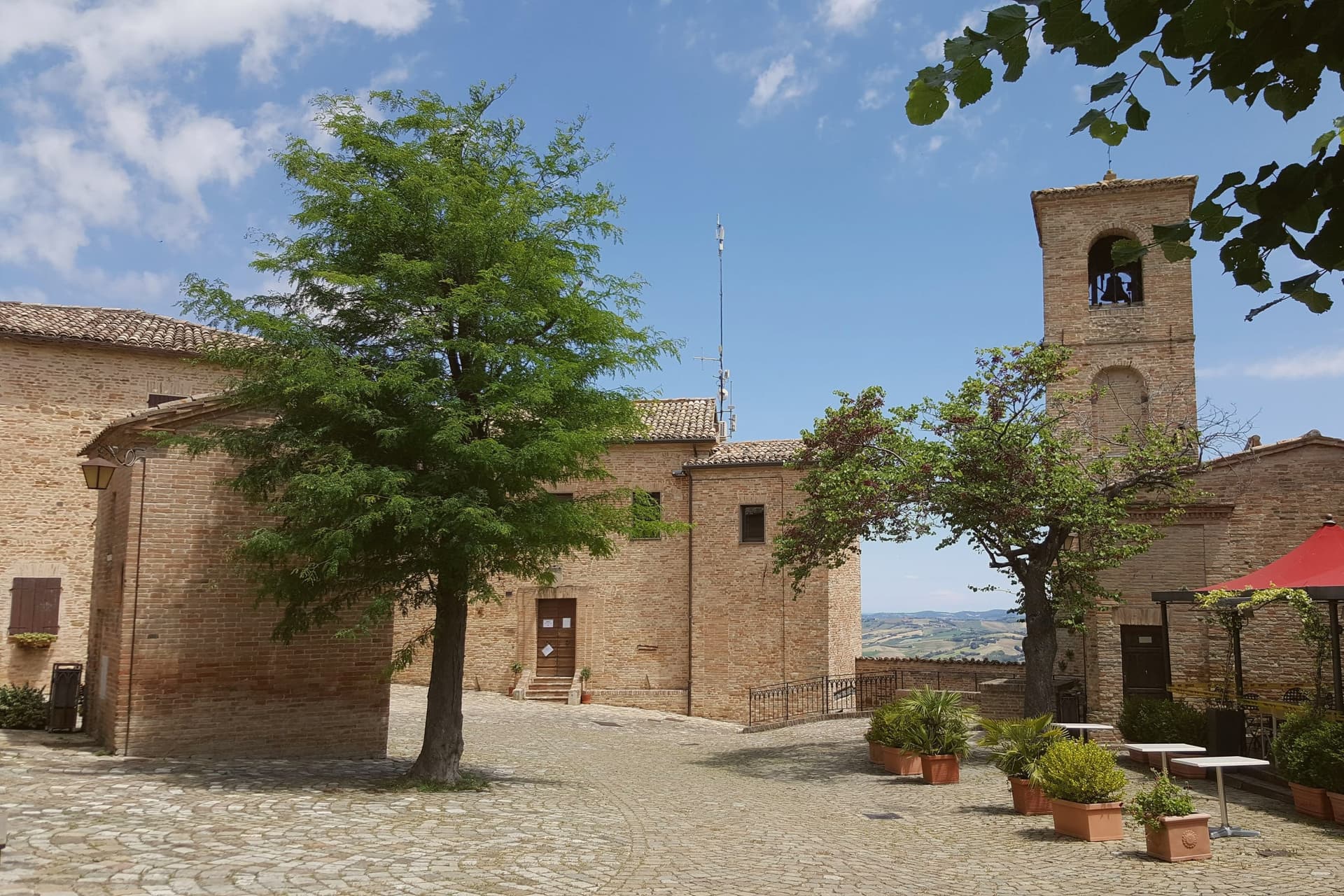 The prettiest small villages within 90 minutes of Rimini6 towns, San Leo among them.
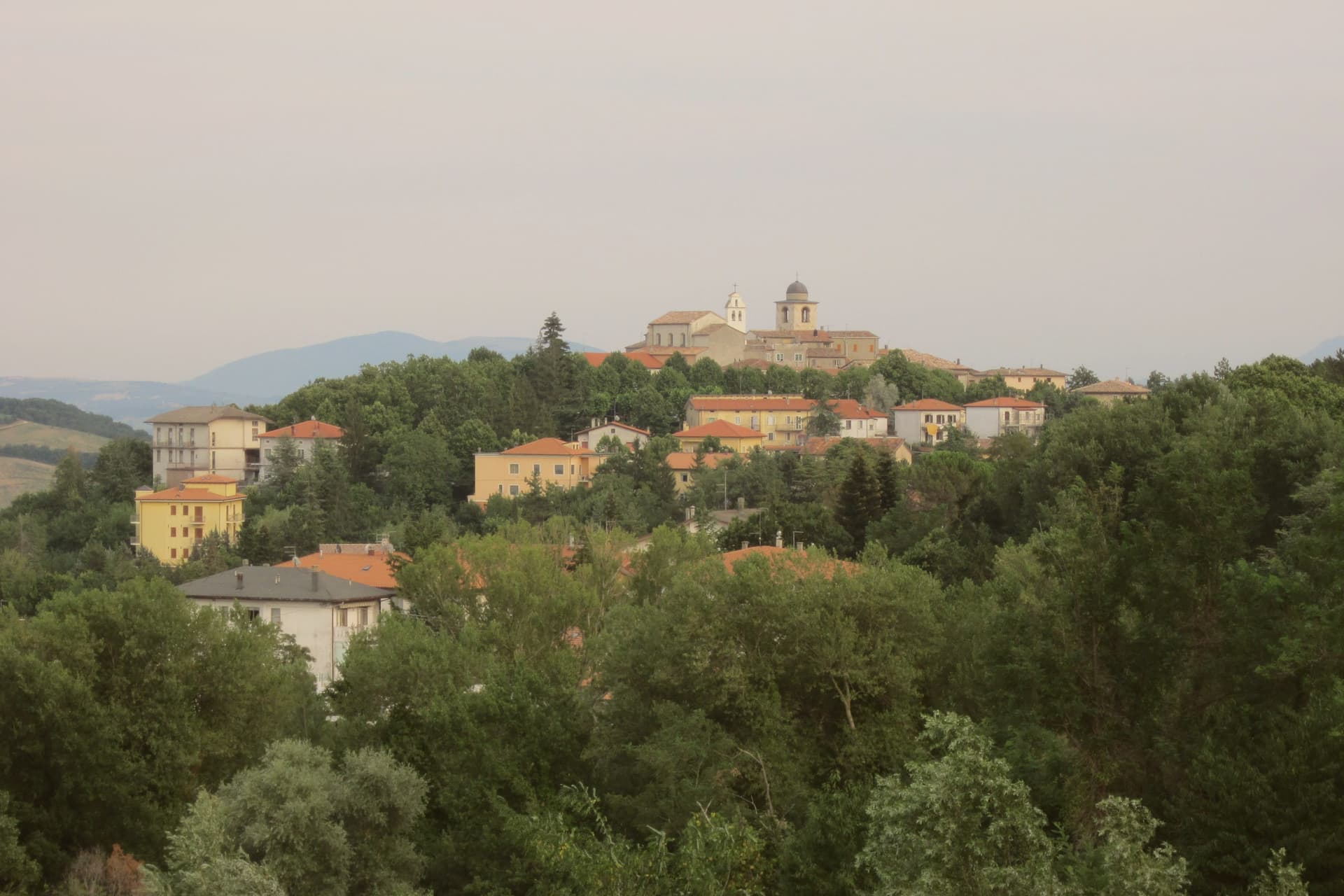 The best small hill towns within 90 minutes of Rimini8 towns, San Leo among them.
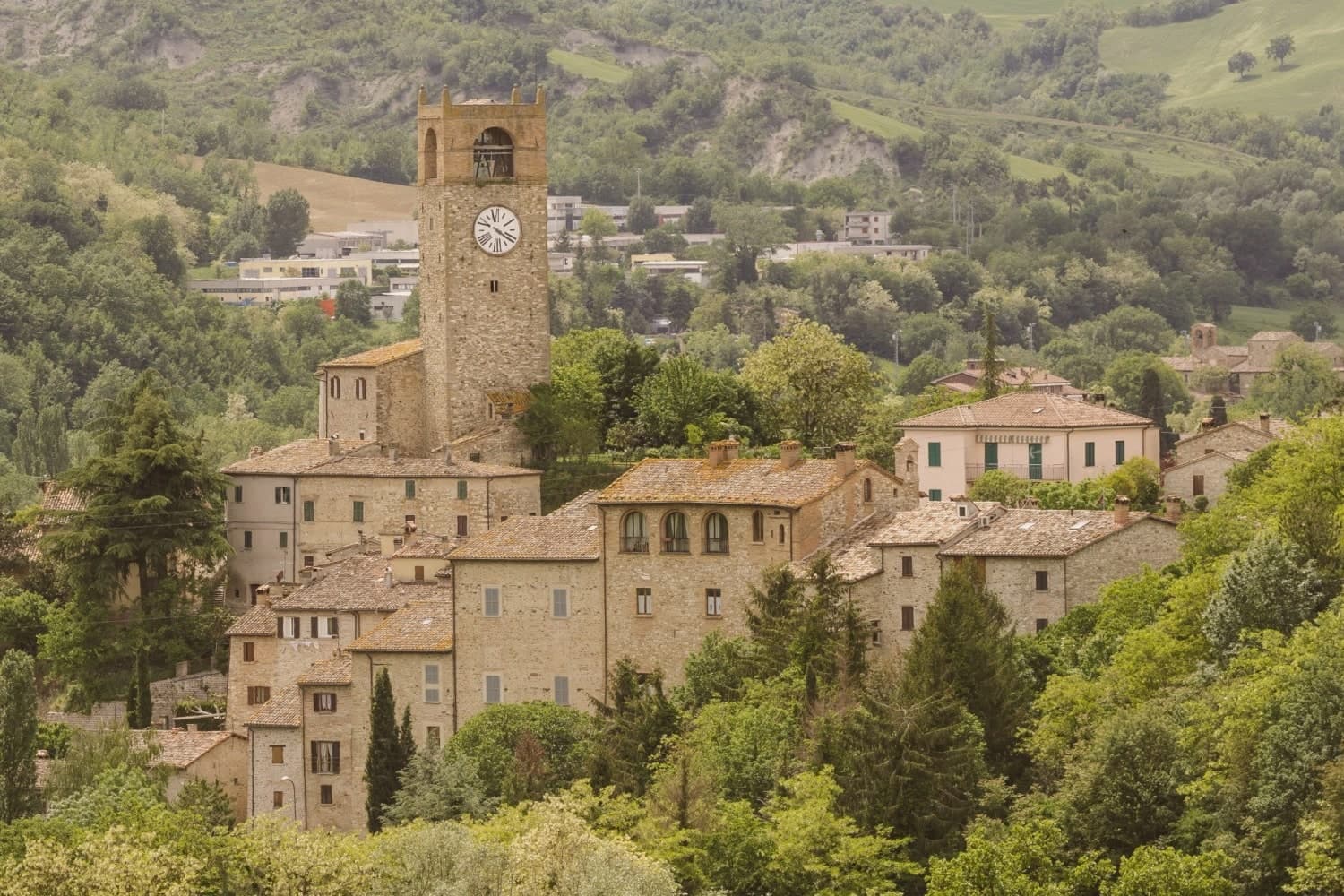 The 9 prettiest villages within 90 minutes of Rimini9 towns, San Leo among them.
How to get there
From Rimini (RMI), about 59 minutes by car.
Ancona / Pescara (AOI) is about 1h 35m away.
By car from the centre of Bologna 1h 46m or Ancona 1h 48m.
Coming by train into Rimini? San Leo is about 36 minutes away by road.
What to see
Forte di San Leo (Francesco di Giorgio Martini, 1479–1502)
Rebuilt by Federico da Montefeltro's military architect directly on top of the outcrop, reached by the single switchback road cut into the cliff. Cagliostro's cell is visitable inside. The defining sight of the town.
Pieve di Santa Maria Assunta + Duomo
The parish church and the adjacent Duomo sit side by side on the central piazza, the older building raised on reused Roman columns, the Duomo built in sandstone over a Lombard crypt with a single nave.
Torre Civica + panorama
12th-c bell tower with the panoramic view across the Montefeltro toward the Adriatic + San Marino (12 km east, visible from the same terrace).
Cagliostro's cell + Forte museum
A windowless cell, roughly four meters on a side, with a single opening six meters above the floor, once used to pass in food and remove waste. The cell survives as the Forte museum's dark-tourism highlight.
Romagna/Marche frontier kitchen
Piadina, passatelli in brodo, gnocchi al sugo di lepre, cappelletti, Sangiovese di Romagna, Albana DOCG white from the Montefeltro hills.
The slow-trip planner
Building a trip? Find where San Leo fits in a slow Italy circuit.
Answer five questions. We will shape a geographically coherent slow trip from the 1,000 Italian towns most travelers skip. Yours to save and share.
Living here
- Population 2,820
- Remotei
- Pharmacy: none mapped
- High school within a 30-minute drive
- Nearest airport Rimini, 59 min drive
- Regional capital Bologna, 1 h 46 min drive
Common questions
- What is San Leo known for?
- San Leo is a borgo of 2,820 residents built on a vertical 583m limestone outcrop in the Montefeltro, 35 km from Rimini, with a frontier panorama over Romagna and Marche from every wall.
- Where is San Leo?
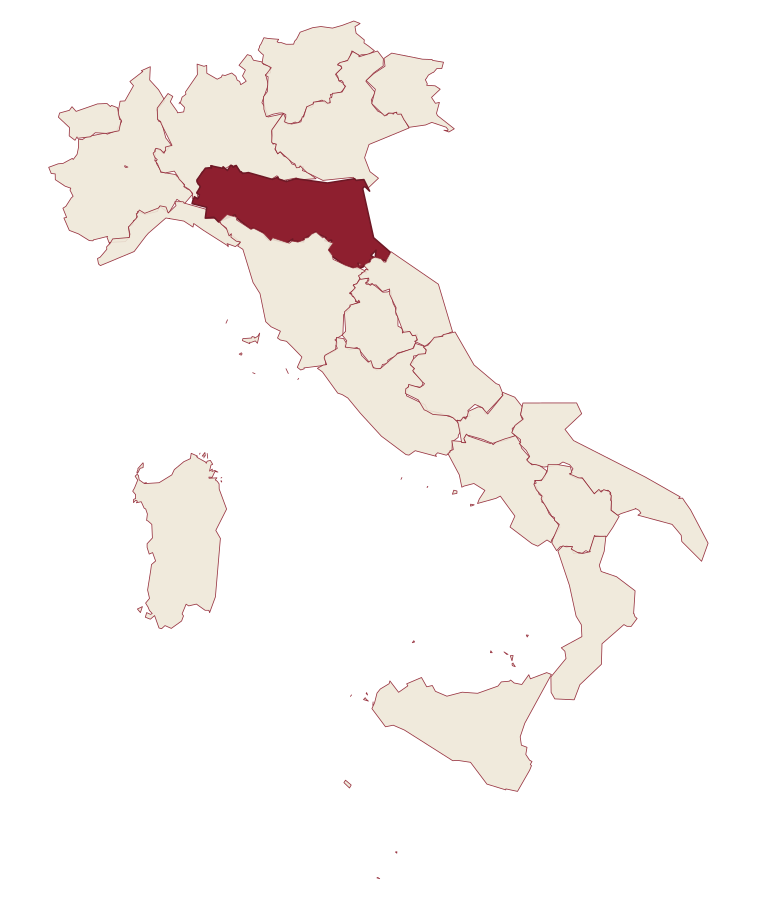
- San Leo is a comune in the province of Rimini, in Emilia-Romagna.
- What is the nearest airport to San Leo?
- Rimini (RMI), about 59 minutes by car.
- How long is the drive from Bologna to San Leo?
- About 1h 46m by car.
- When is the best time to visit San Leo?
- Best in Apr–Jun, Sep–Oct. July is the warmest month, averaging 29 degrees, and May the wettest, with about 13 rain days.
- Which other towns are like San Leo?
- Macerata Feltria, Mercatello sul Metauro and Compiano.
- How many people live in San Leo?
- 2,820 at the 2023 count.
Tags & datadesignations · numbers · sources
Recognised as
The numbers
- Elevation: 583 m
- Population: 2,820
- Surface area: 53.14 km²
These figures were compiled from public directories: ISTAT, OpenStreetMap and Wikidata, and from the official listings of the guides named on this page. Town details change; verify with official sources before you travel.
Similar
Towns like San Leo
Macerata Feltria
Province: Pesaro e Urbino
both in the Montefeltro · both under 3,000 people
Mercatello sul Metauro
Province: Pesaro e Urbino
both under 3,000 people · both hill towns
Compiano
Province: Parma
both under 3,000 people · both hill towns
Rotondella
Province: Matera
both under 3,000 people · both hill towns
Mezzojuso
Province: Palermo
both under 3,000 people · both hill towns
Castelnuovo di Val di Cecina
Province: Pisa
both under 3,000 people · both hill towns
🎨 Borghi più belli d'Italia
More Borghi più belli d'Italia towns in Emilia-Romagna
Bagnara di Romagna
Province: Ravenna
A 22-meter plain commune in the Bassa Romagna, the only fully preserved medieval castrum surviving in the Romagna lowlands.
Bagno di Romagna
Province: Forlì-Cesena
A 491-meter thermal town at the head of the Savio valley, drawing on springs that have run at 47 degrees since Roman times.
Bertinoro
Province: Forlì-Cesena
A 254-meter Romagna-hill borgo above the Via Emilia, with a twelve-ring hospitality column from 1300 and the slopes that grow Albana DOCG.
Bobbio
Province: Piacenza
A 272-meter Trebbia-valley town built around an abbey founded in 614, named Borgo dei Borghi by RAI in 2019.
Brisighella
Province: Ravenna
A Lamone-valley borgo at 115 meters under three selenite hills crowned by a fortress, a clock tower, and a sanctuary.