
Umbria · Perugia
Città di Castello
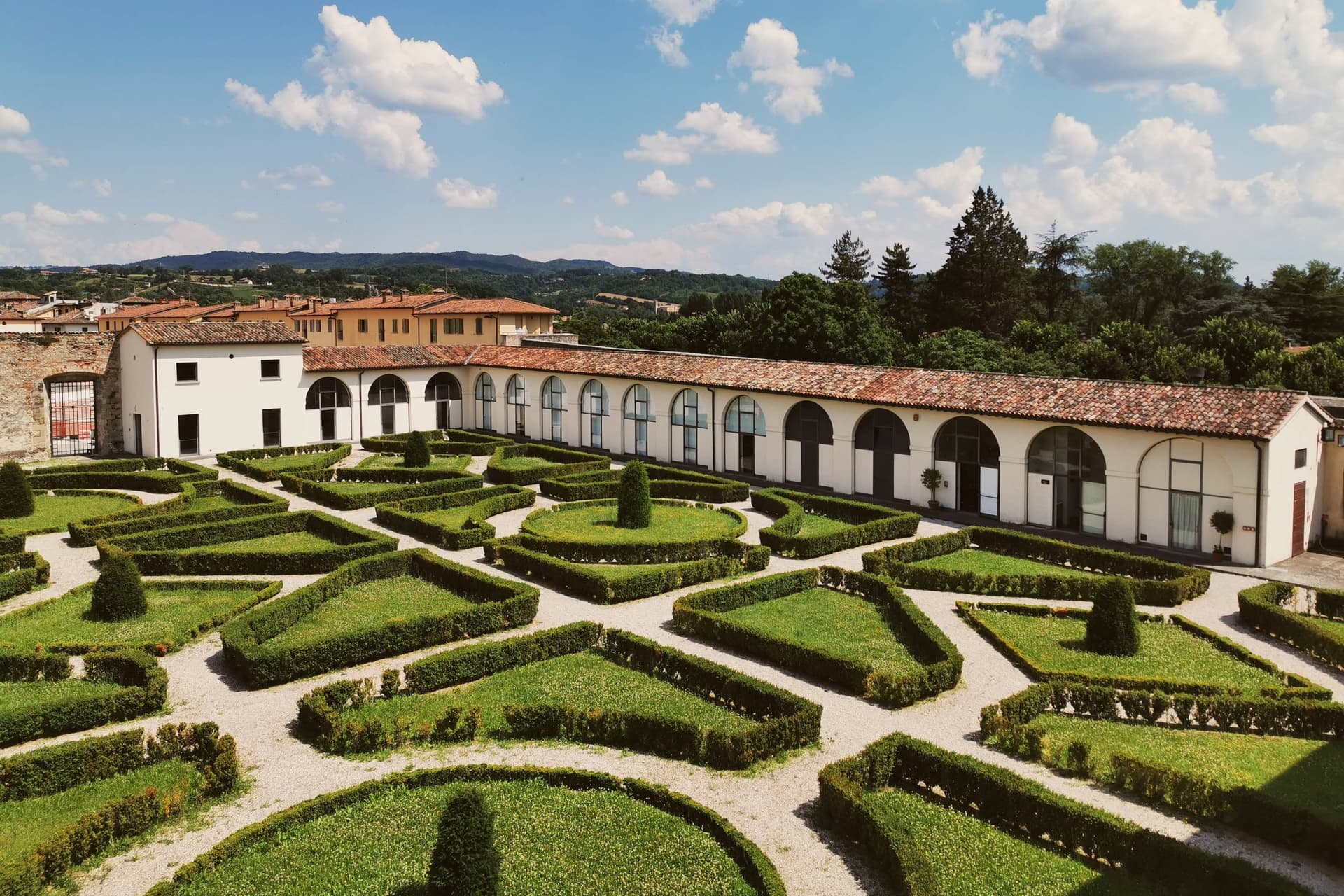
A walled town of 38,000 in the upper Tiber valley where Raphael painted his first independent commissions and the white truffle season is the year's headline food event.
- Best time
- Apr–Jun, Sep–Oct
- By car
- 46 min from Perugia
- By train
- Station in the comune
- Population
- 38,222
Known for
BURRI FOUNDATION
Alberto Burri (1915-95), one of the most influential post-WWII Italian artists, was born here. The foundation named for him runs the world's most complete single-artist museum after Picasso's.
EARLY RAPHAEL
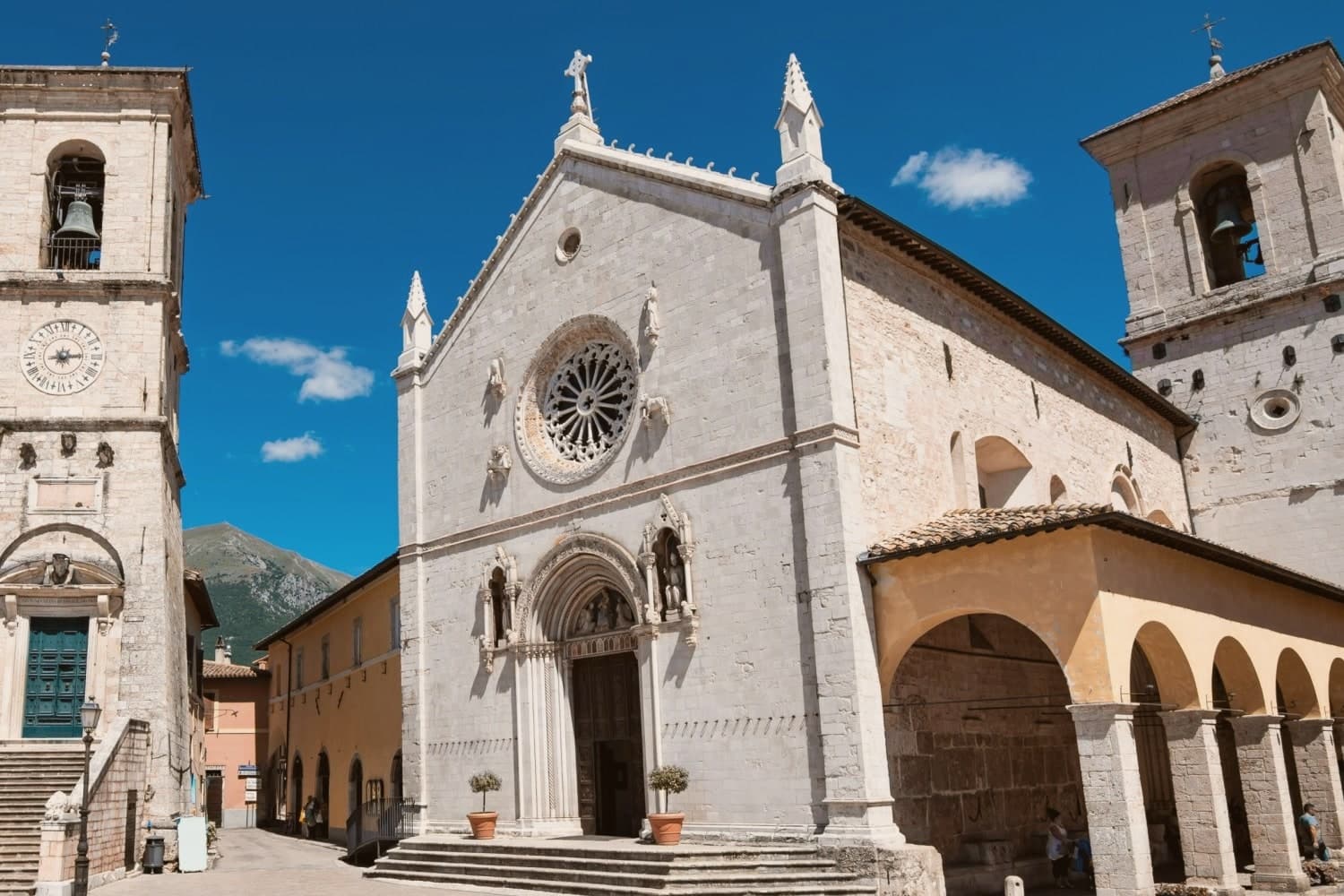
Raphael painted his first independent works here, 1500-04, age 17-21, for the Vitelli family before moving to Rome. Surviving altarpiece in the Pinacoteca.
WHITE TRUFFLE CAPITAL
A Tuber magnatum zone rated among the best in Italy. The Mostra del Tartufo Bianco runs every weekend of November.
CITTÀ DELLA CERAMICA
16th-c maiolica tradition still active in a dozen workshops. Plus the Cammino di San Francesco pilgrim route stop.
When to visit
Best · Apr–Jun, Sep–Oct
- J10°
- F13°
- M14°
- A17°
- M22°
- J28°
- J32°
- A32°
- S26°
- O21°
- N15°
- D11°
- Best
- Hot or crowded
- Quiet
- Mostly closed
Daytime averages, 2020–2024. Weather data by Open-Meteo.com.
The festa: San Florido, 13 November
Why come
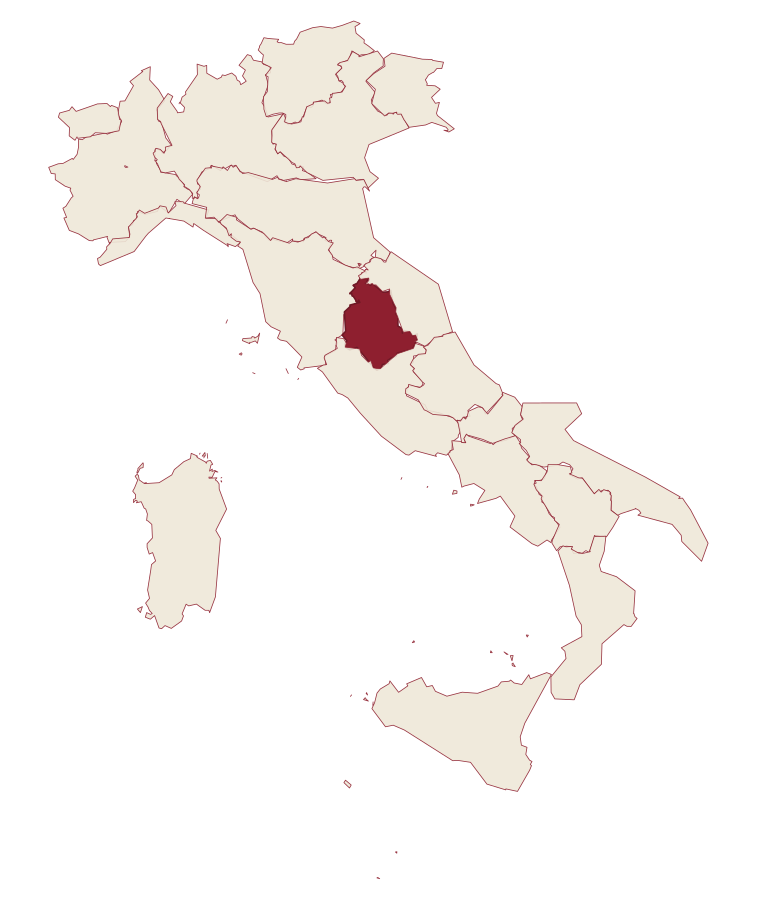
Città di Castello sits at the head of the Alta Valtiberina, the upper Tiber valley, where the river that runs through Rome 250 km south is still a narrow, Tuscany-style stream. It is the largest town in Umbria north of Perugia, 56 km from the regional capital and reachable by the historic Trenino Centrale Umbra line. The town's history sits in three layers.
Roman: founded as Tifernum Tiberinum in the 1st c BC, with Pliny the Younger keeping a villa here and describing the upper Tiber landscape in his letters. Medieval-Renaissance: a walled town run as a signoria by the Vitelli family from the 15th c, whose patronage brought a young painter to the centro to complete his first independent commissions, among them the altarpiece now in the Pinacoteca Comunale, before he left for Rome; the same Pinacoteca, housed in the Vitelli family's own palazzo, also holds works by Signorelli, Ghirlandaio and Della Robbia. Twentieth century: a native-born artist gave his name to a foundation that now runs two sites in the centro, a palazzo holding the earlier period of his work and a former tobacco-drying complex painted black inside and out for the monumental late series, together forming, by the town's own reckoning, the most complete single-artist museum after Picasso's.
Beyond the art, the town carries three Città quality marks: Città del Tartufo for its white truffle zone, which produces some of the best Tuber magnatum in Italy and is marked each November by a weekend market and festival; Città della Ceramica for a maiolica tradition dating to the 16th c and still worked in a dozen workshops across the centro; and a stop on the Cammino di San Francesco, the pilgrim route linking La Verna in Tuscany, where St Francis received the stigmata, to Assisi, his birthplace. There is also a horse fair in early September, the Mostra Nazionale del Cavallo, a Renaissance music festival in July called the Tibernum Festival, and a centro storico whose medieval walls survive in part and can be walked. The food follows the valley: ciaramicola, the local Easter cake, strangozzi with truffle, the Vitellone Bianco dell'Appennino Centrale IGP beef, pecorino, and the local Sangiovese-based Colli Altotiberini DOC red. What the layers add up to is a river town that kept building on itself rather than being replaced: a Roman villa landscape, a Renaissance signoria that imported a major painter, and a modern art foundation occupying old tobacco warehouses, each still visible in the centro rather than paved over by the one that followed it.
The Sunday letter
Città di Castello is on our list. Its letter is still to come.
We are writing about all 1,000 of these towns, one at a time, in a free letter every Sunday: the photo, the food, the festa. That is our mission. Sign up and you will be there when Città di Castello comes up. By Peter & Sophia, from Pietrasanta.
Read on
Città di Castello in our articles
 The best towns on a walking route that eat well in the province of Perugia8 towns, Città di Castello among them.
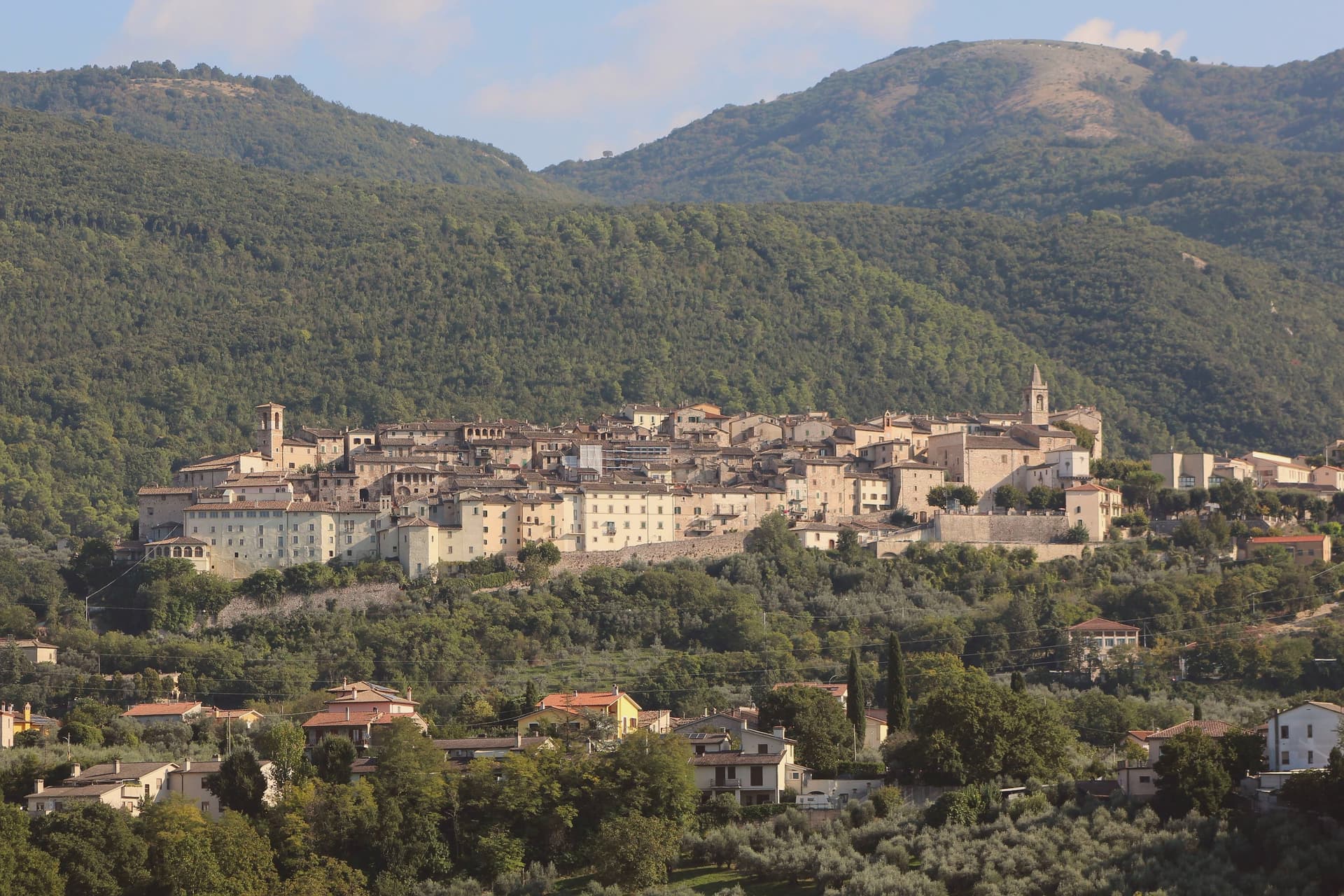 The 9 best towns on a walking route that you can reach by train in Umbria9 towns, Città di Castello among them.
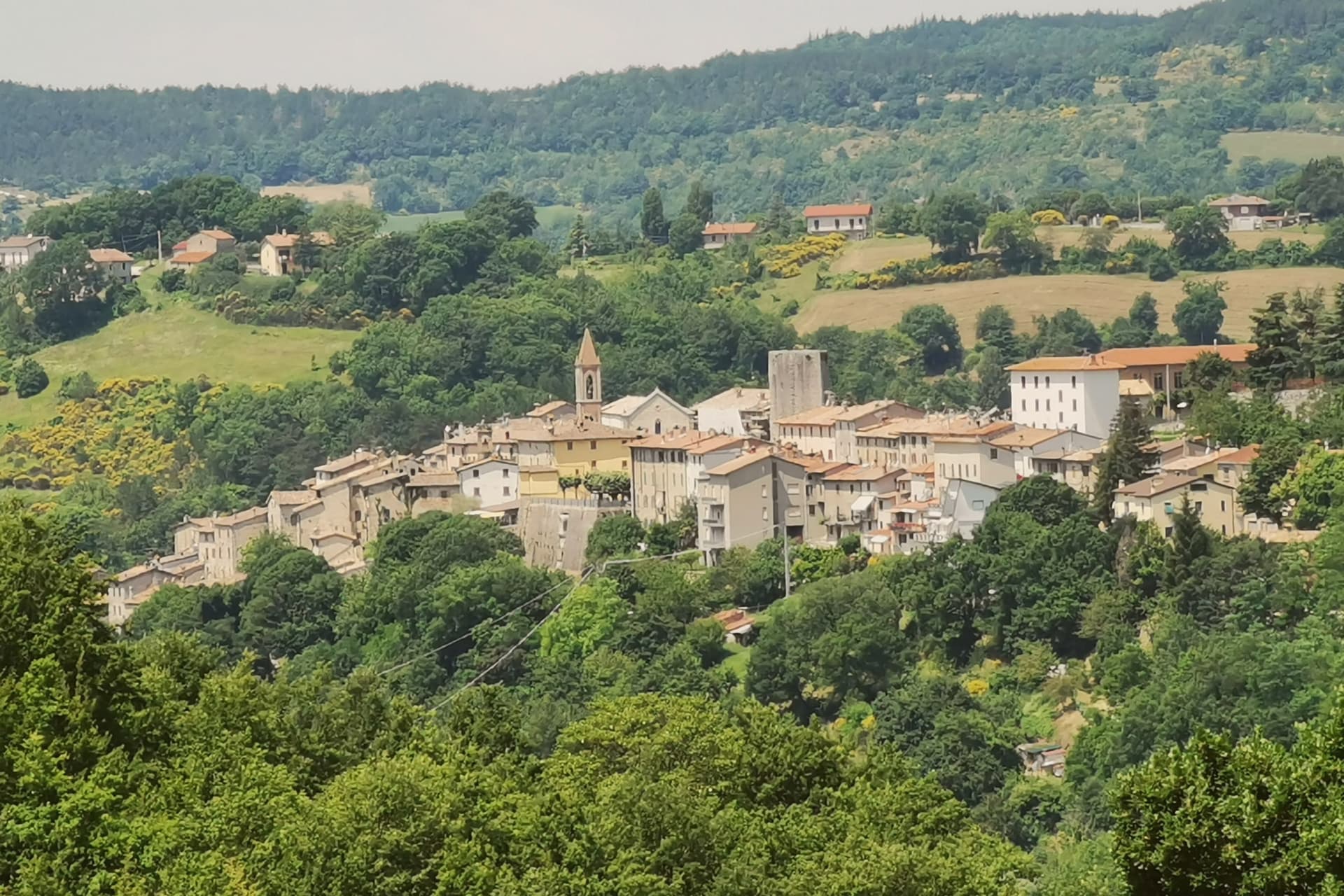 The best hill towns on a walking route within 90 minutes of Perugia9 towns, Città di Castello among them.
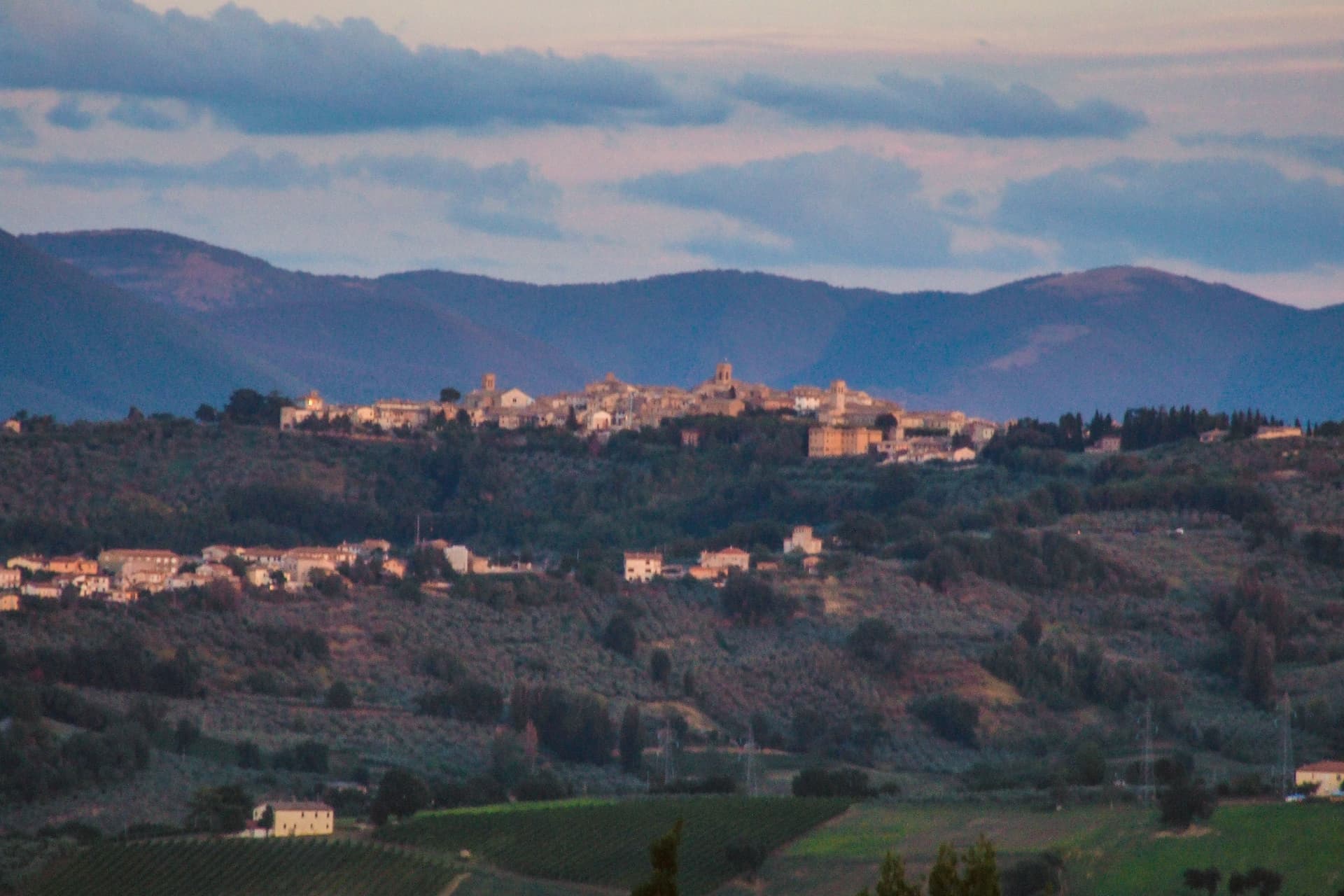 Alternatives to Assisi: every hill town in Umbria, in one list39 towns, Città di Castello among them.
How to get there
From Ancona / Pescara (AOI), about 2h 8m by car.
Rimini (RMI) is about 2h 13m away.
By car from the centre of Perugia 46 minutes, Florence 1h 36m or Siena 1h 45m.
There is a railway station in the comune, so you can arrive without a car.
Coming from Florence?
Coming by train into Perugia? Città di Castello is about 49 minutes away by road.
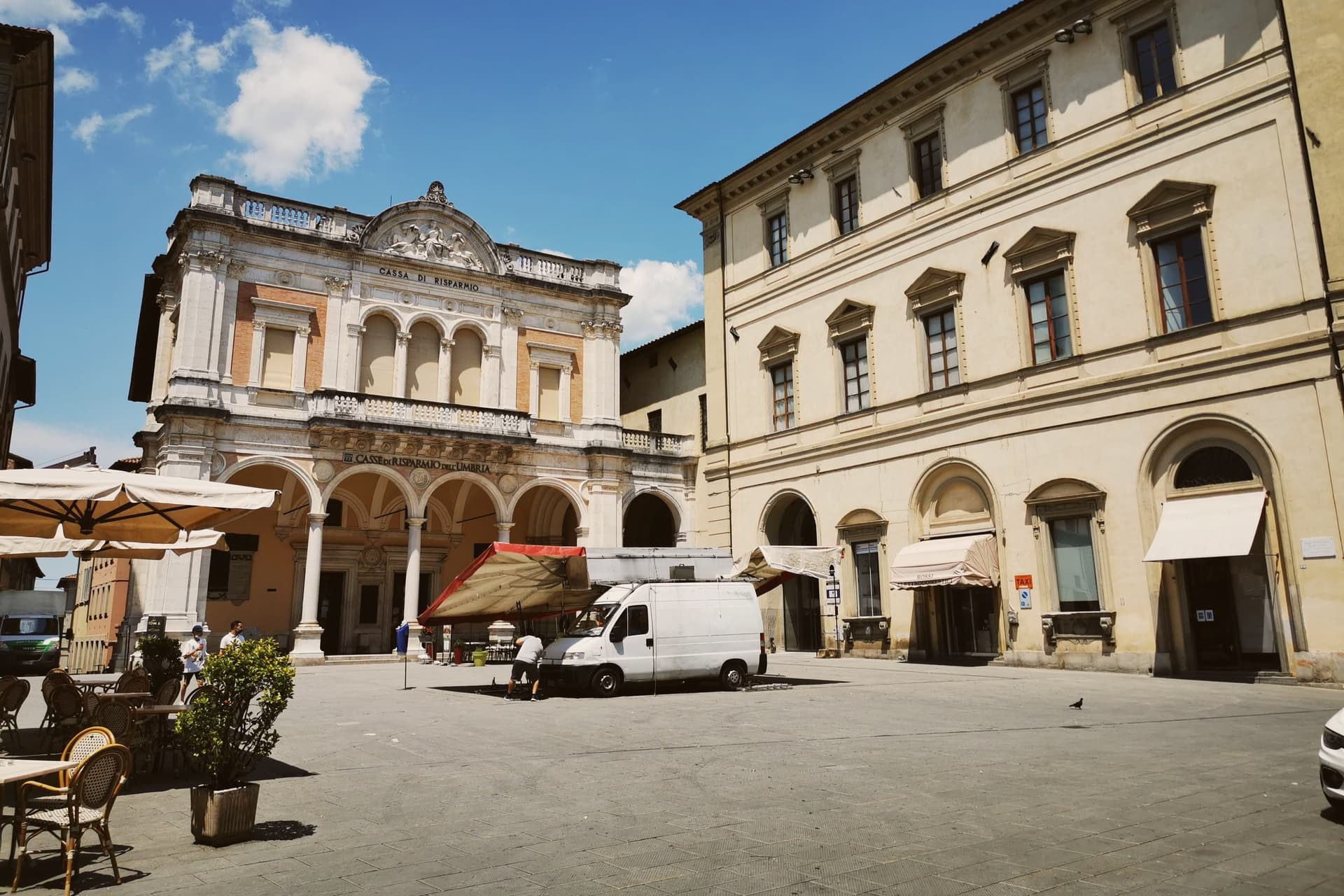
What to see
Fondazione Burri (Palazzo Albizzini + Ex Seccatoi)
Two sites: 200+ works in the centro palazzo, and the monumental late series, including the Grande Cretti, in the black-painted ex-tobacco warehouses of the Alta Valtiberina. The Palazzo Albizzini holds the earlier period; the warehouses were painted black inside and out by Burri himself for the later cycle.
Pinacoteca Comunale (Palazzo Vitelli)
The surviving early altarpiece, painted for the Vitelli family before the move to Rome, hangs alongside Signorelli, Ghirlandaio, Della Robbia and other Vitelli commissions.
Mostra del Tartufo Bianco (every November weekend)
A market and festival held every weekend of November in the Alta Valtiberina, drawing producers and restaurants for tastings around some of the best Tuber magnatum in Italy.
Ceramica maiolica workshops
Local 16th-c maiolica tradition still active in a dozen workshops across the centro. Città della Ceramica designation, regular open studios.
Cammino di San Francesco + medieval walls
Stop on the pilgrim route from La Verna in Tuscany, where St Francis received the stigmata, to Assisi, his birthplace. The medieval centro walls are partially intact and walkable.
The slow-trip planner
Building a trip? Find where Città di Castello fits in a slow Italy circuit.
Answer five questions. We will shape a geographically coherent slow trip from the 1,000 Italian towns most travelers skip. Yours to save and share.
We recommend
Where to eat
Not our picks, but places the guides put their name to: a Michelin star, a Gambero Rosso fork, a Slow Food snail, a Michelin Key for the hotels. Worth a table, a counter, or a night when you pass through.
La Miniera di GalparinoRistorante
La Miniera di Galparino holds a Slow Food snail.
Living here
- Population 38,222
- Remotei
- Pharmacy in town
- High school within a 30-minute drive
- Train station in the comune
- Nearest airport Ancona / Pescara, 2 h 8 min drive
- Regional capital Perugia, 46 min drive
Common questions
- What is Città di Castello known for?
- Città di Castello is a walled town of 38,000 in the upper Tiber valley where Raphael painted his first independent commissions and the white truffle season is the year's headline food event.
- Where is Città di Castello?
- Città di Castello is a comune in the province of Perugia, in Umbria, at 288 meters above sea level.
- What is the nearest airport to Città di Castello?
- Ancona / Pescara (AOI), about 2h 8m by car.
- Can you get to Città di Castello without a car?
- Yes. There is a railway station in the comune, so you can arrive by train.
- How long is the drive from Perugia to Città di Castello?
- About 46 minutes by car.
- When is the best time to visit Città di Castello?
- Best in Apr–Jun, Sep–Oct. July is the warmest month, averaging 32 degrees, and May the wettest, with about 13 rain days.
- Is there a sagra or a festival in Città di Castello?
- The town keeps its patron saint's day: San Florido, 13 November.
- Which other towns are like Città di Castello?
- Narni, Fabriano and Cortona.
- How many people live in Città di Castello?
- 38,222 at the 2023 count.
Tags & datadesignations · numbers · sources
The numbers
- Elevation: 288 m
- Population: 38,222
- Surface area: 387.32 km²
These figures were compiled from public directories: ISTAT, OpenStreetMap and Wikidata, and from the official listings of the guides named on this page. Town details change; verify with official sources before you travel.
Similar
Towns like Città di Castello
Narni
Province: Terni
both in central Umbria · both over 10,000 people
Fabriano
Province: Ancona
both over 10,000 people · both hill towns
Cortona
Province: Arezzo
both over 10,000 people · both hill towns
Gravina in Puglia
Province: Bari
both over 10,000 people · both hill towns
Bracciano
Province: Roma
both over 10,000 people · both hill towns
Sulmona
Province: L'Aquila
both over 10,000 people · both hill towns
👣 Cammino di San Francesco
More Cammino di San Francesco towns in Umbria
Arrone
Province: Terni
Medieval castle village on the left bank of the Nera at 243 meters, upstream from the largest man-made waterfall in the world.
Assisi
Province: Perugia
A pink limestone town at 424 meters on the western flank of a mountain above the plain, the birthplace of Francis and a UNESCO site since 2000.
Citerna
Province: Perugia
A medieval borgo at 480 meters above the upper Tiber valley, holding the only sculpture by Donatello in Umbria.
Foligno
Province: Perugia
A valley town at 235 meters on the Topino, where Dante's Divine Comedy was first printed in 1472.
Gubbio
Province: Perugia
Pre-Roman Ikuvium of the Umbri, where seven bronze tablets carry the longest text of the Umbrian language.