
The 9 best towns on a walking route that you can reach by train in Umbria
Umbria walks well because the distances between towns are human ones. Paths climb through olive terraces and holm oak, cross the flat drained bed of the old lake below Foligno, then rise again to walls built from pink and white Subasio limestone that turns apricot in late afternoon. Spring brings wild asparagus and broad beans with pecorino; autumn brings new oil, still green and peppery, poured over grilled bread in places where the mill is a short walk from the table. The regional railway runs down the same valley the walkers do, which means a stage can end at a station rather than a car park.
Most visitors to Umbria arrive in Perugia, take the escalators up through the Rocca Paolina, and spend the day between Corso Vannucci and the Galleria Nazionale before moving on. It is a serious city and it earns the attention, but in high summer the centre absorbs coach groups, language students and day trippers from Tuscany all at once, and the queues for the fountain photograph say the rest. Umbria's reputation as the green heart of Italy sends everyone to the same handful of streets.
The paths carry on past all of that. The same stone, the same oil, the same Romanesque churches with carved lions at the door continue north towards the upper Tiber and south into the Valnerina, and the towns along those stretches see fewer people arrive on foot than you would expect. These are the stages where the walking and the timetable line up.
Of the 48 communes we have mapped in Umbria, 9 qualify as towns on a walking route you can reach by train: each is a stage on one of the long historic walking routes, and we have confirmed each is reachable without a car. The smallest, Stroncone, has 4,629 residents.
Elsewhere in the catalogue: The best hill towns on a walking route within 90 minutes of Perugia and The best towns on a walking route that eat well in the province of Perugia.
Stroncone
Why visit Stroncone
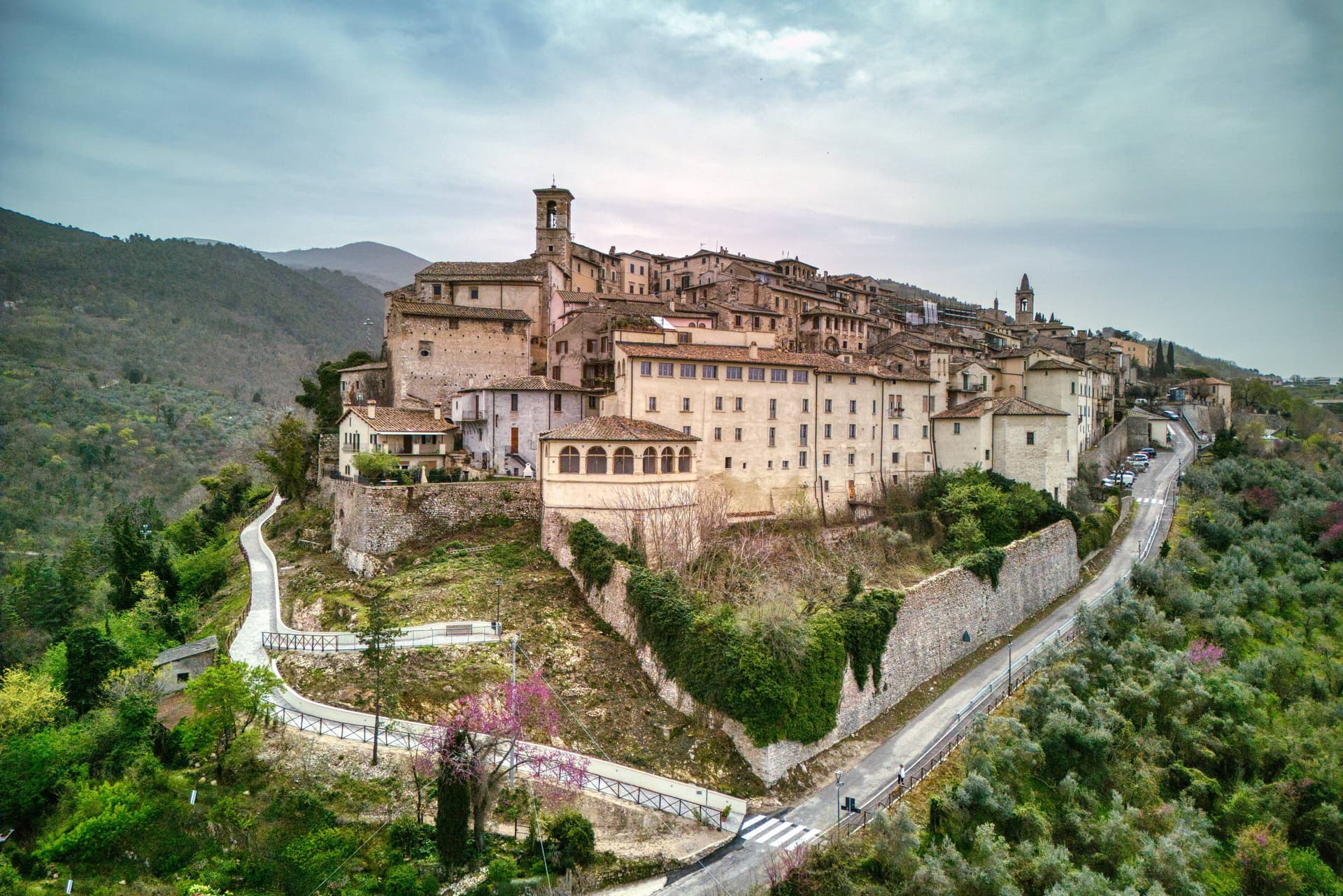
Stroncone sits at 451 meters on an olive-covered hill eight kilometers south of Terni, in the Conca Ternana on the western slope of the Apennine. The name traces to Duke Ugone of Spoleto, whose castrum Hugonis evolved through Castrugone and Strungone to the present form.
A group settled here around the tenth century and built a castle; Stroncone first appears in documents in 1012, when Giovanni di Pietro made a donation to the monastery of San Simeone. Pope Innocent III granted municipal self-rule in 1215.
The Convento di San Francesco, south of the walls, is one of the older Franciscan foundations in Umbria, founded by tradition by Francis himself in 1213, two years before papal recognition of the order. The medieval circuit walls remain almost complete, with the original gates framing a network of stepped lanes that climb to the small main square.
The Cammino di San Francesco passes through, picking up walkers between Rieti and Assisi.
We confirmed you can reach this one by train.
What to see in Stroncone
- Convento di San Francesco. Franciscan convent south of the walls, founded by tradition by Saint Francis in 1213, two years before papal recognition of the order.
- Centro storico. Walled medieval core with original gates intact, climbing through stepped lanes to the small main square at the top of the hill.
- Chiesa di San Giovanni Decollato. Main parish church at the heart of the borgo, with frescoed interior and a Renaissance baptismal font.
How to get to Stroncone
There is a railway station in the town, so you can arrive without a car and never need one while you are here. Terni is roughly 18 minutes away by road.
Our tip
April through June and September into October are the months for Stroncone. Olive harvest carries the autumn rhythm into late November, and the frantoi work into the evening through October and November. July and August are warm in the Conca Ternana but the hill is high enough that nights cool quickly. Sagra De u Cecu Maritu falls in July.
Trevi
Why visit Trevi
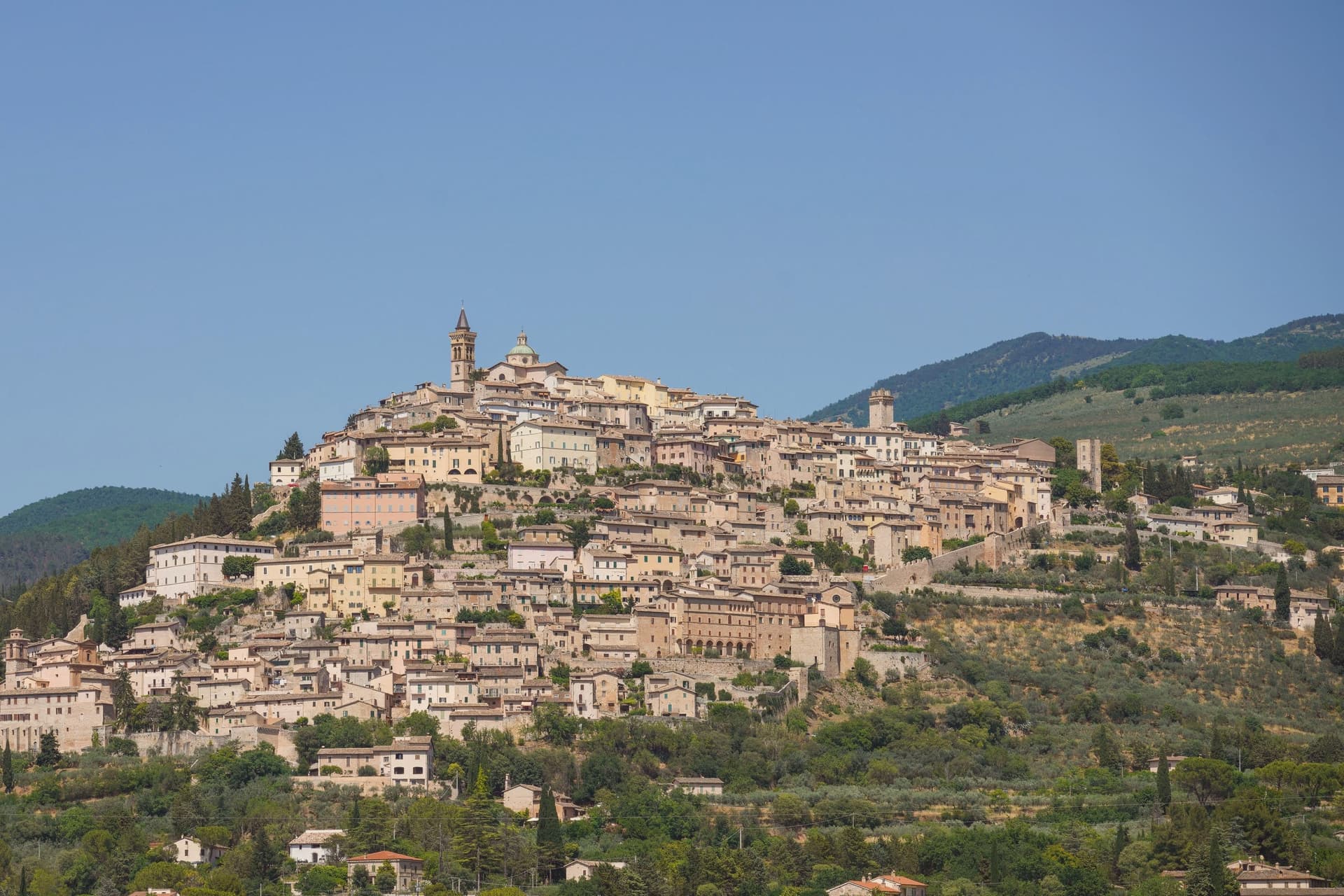
Trevi sits at 412 meters on a conical hill above the Spoleto valley, the centro storico still inside the Roman walls of the 1st century BC. The town stood on the Via Flaminia, the consular road from Rome to the Adriatic, and grew into a Guelph commune by the 12th century.
Olive oil is what people come for. Over 200,000 trees blanket the slopes below the walls on near-ideal calcareous, well-drained soils, and the Olivo di Sant'Emiliano near the abbey of the same name is about 1,700 years old, identified with the tree the bishop of Trevi was tied to in 304 before his martyrdom.
The Santuario della Madonna delle Lacrime, built in 1487 to mark a miracle, holds a fresco by Pietro Perugino. The centro storico runs in concentric rings up the hill, each ring older than the last, with the Palazzo Comunale and the Pinacoteca holding works by Lo Spagna at the top.
We confirmed you can reach this one by train.
What to see in Trevi
- Santuario della Madonna delle Lacrime. Built in 1487 after a Marian apparition wept tears of blood in 1485, with a fresco by Perugino in the Cappella dell'Adorazione.
- Chiesa di Sant'Emiliano. Romanesque parish church at the top of the centro storico, dedicated to the bishop martyred in 304, the patron saint of the town.
- Olivo di Sant'Emiliano. About 1,700-year-old olive tree near the eponymous church, nine meters tall, traditionally the tree to which the bishop was tied before martyrdom.
How to get to Trevi
There is a railway station in the town, so you can arrive without a car and never need one while you are here. Perugia is roughly 47 minutes away by road.
Our tip
April through June and September into October are the months for Trevi. The olive groves are in leaf or in harvest, the hill is green or silver-gold depending on the half, and the valley below holds the morning light. The Festa di Sant'Emiliano runs the last week of January with the Palio dei Terzieri, when the three quarters of the town compete.
Spello
Why visit Spello
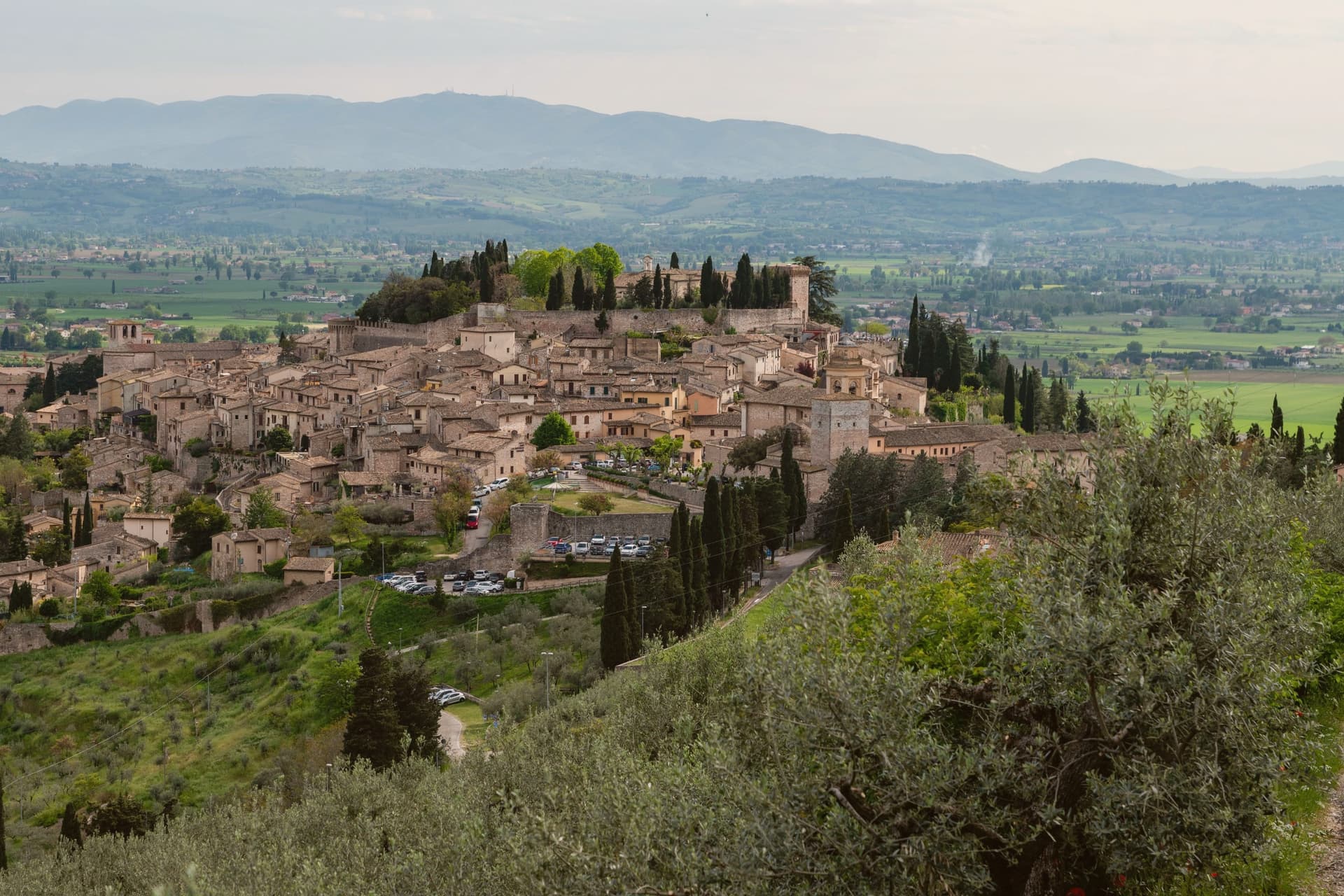
The centro storico climbs the lower southern flank of Monte Subasio, still contained within the circuit of walls raised when the town was renamed Splendidissima Colonia Julia by Augustus. Before that it was Hispellum under the Umbrians.
The Roman gates and stretches of wall from the Augustan period were not rebuilt over, so the line of the ancient town is still readable in the streets that climb from them today. The same streets carry the Infiorata each June and the fresco Pinturicchio completed for the chapel he painted in Santa Maria Maggiore, two things separated by roughly fifteen centuries but occupying the same short stretch of the old town: the chapel's Annunciation, Nativity and Christ Among the Doctors sit near the piazza the petal pictures are laid across.
A Roman villa with ten mosaic floors, found only in 2005 and left in place under cover, adds a third layer beneath the town that is still being uncovered rather than one that was always on view. The town's Roman skeleton, its painted chapel, and a floor uncovered within living memory all sit within the same small radius, which is unusual: most places show one era at a time, Spello keeps three in view at once.
We confirmed you can reach this one by train.
What to see in Spello
- Cappella Baglioni. The Cappella Bella, commissioned by Troilo Baglioni, with four sibyls ranged across the vault above the painted scenes below.
- Santa Maria Maggiore. Twelfth-century church on Piazza Matteotti, its interior built around the fresco cycle and the later panel it houses.
- Porta Venere e Torri di Properzio. First-century BC gate flanked by two dodecagonal towers, still standing at close to full height with the stonework legible course by course.
How to get to Spello
There is a railway station in the town, so you can arrive without a car and never need one while you are here. Perugia is roughly 33 minutes away by road.
Our tip
April through June and September into October are the months for Spello. The slopes of Monte Subasio above town carry wildflowers, Cammino di San Francesco walkers pass through, and the Infiorata weekend on Corpus Domini in late May or June is the most concentrated day on the calendar. July and August touch the mid-thirties on the valley floor; the centro storico at 280 meters stays a few degrees cooler in the upper streets, but most visitors come early or wait until after seven. Borgo diVino tour falls in October.
Assisi
Why visit Assisi
Assisi sits on a terraced spur twenty kilometers east of Perugia, the town built into the western flank of Monte Subasio where it drops toward the plain below. The Umbri settled the site before the Romans came, and the municipium of Asisium grew up around what is now Piazza del Comune, the square that still forms the civic center of the medieval town.
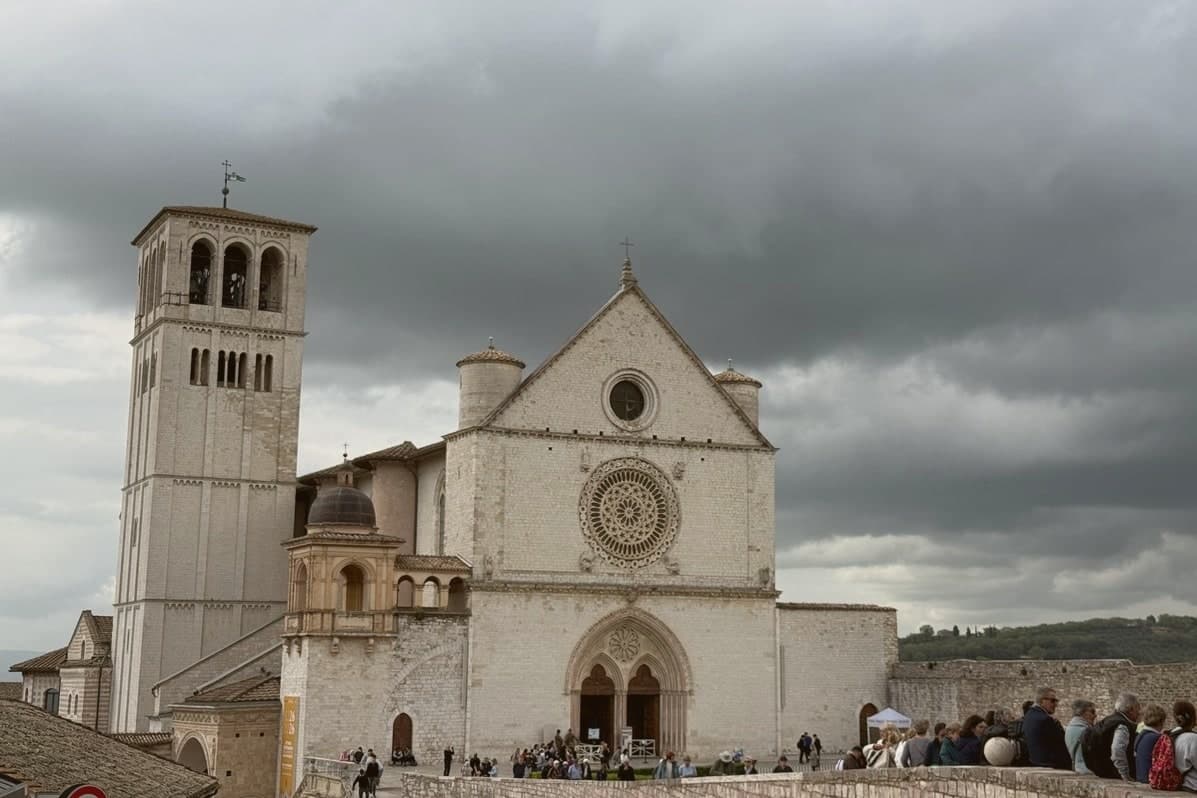
The centro storico runs between two poles: the basilica holding Francis's tomb at one end and the church holding Clare's relics at the other, with the Roman square and its temple facade sitting between them as the oldest layer beneath the medieval one. Below the town, on the plain, stands the basilica built around the chapel where Francis founded his order and died.
Further up the mountain, past the town walls, the hermitage occupies a beech wood where Francis and his companions withdrew from all of it. The layout traces the life it commemorates: birth and burial at the center, founding and death on the plain below, retreat in the wood above.
The town has arranged itself, over centuries, around the geography of one man's biography.
We confirmed you can reach this one by train.
What to see in Assisi
- Basilica di San Francesco. Two superimposed churches over the saint's tomb, frescoed by Cimabue, Giotto, Simone Martini and Pietro Lorenzetti.
- Basilica di Santa Chiara. Church at the eastern end of the centro storico, holding the relics of Saint Clare and the San Damiano Crucifix.
- Tempio di Minerva. Roman temple on Piazza del Comune, six Corinthian columns intact, one of the best-preserved temple façades in the country, converted to a church in 1539.
How to get to Assisi
There is a railway station in the town, so you can arrive without a car and never need one while you are here. Perugia is roughly 35 minutes away by road.
✷ We have written about Assisi
“The basilica is grand, and it is grand from a distance, which is the harder trick. You see it from the valley road as a long horizontal weight along the end of the ridge, held up on arches, wider than the town it belongs to. In front of it there is a huge sloping field, stone, which functions as a piazza sort-of.”
Read our piece on Assisi →Assisi | The Church He Would Have Chosen
Our tip
April through June and September into October are the months Assisi was built for. The hills around Monte Subasio turn green in spring and gold in autumn, and the pilgrim traffic spreads thinly enough that the centro storico keeps its silence in the early morning. October 3 and 4 are the Festa di San Francesco, when delegations from every Italian region process to the basilica. Festa di Sant'Anna falls in July.
Orvieto
Why visit Orvieto
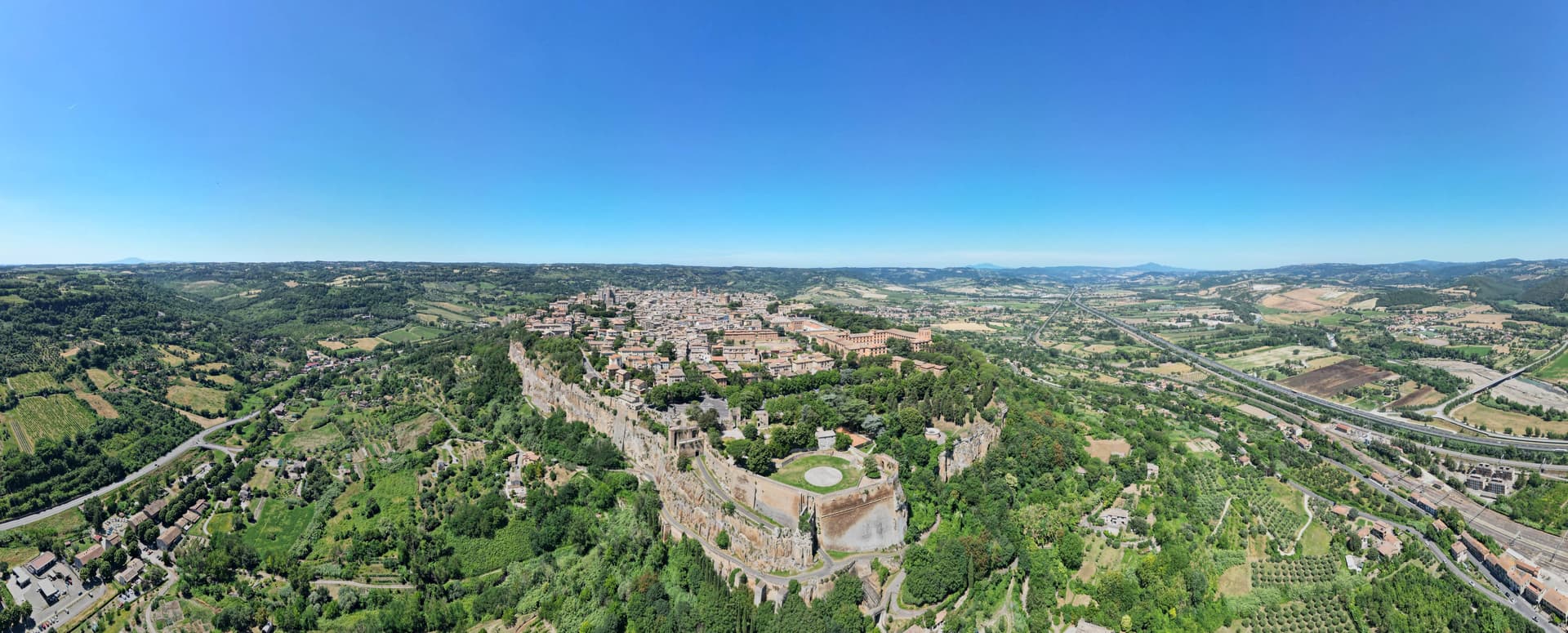
Orvieto sits on a flat-topped butte of volcanic tuff at 325 meters, the cliffs 195 meters above the surrounding plain. The town began as Velzna, a flourishing Etruscan metropolis, and the Romans destroyed it in 264 BC.
The medieval town that replaced it on the same plateau became a papal refuge in the 13th century, when popes left Rome for the safety of the height. The town's layers sit one below the other rather than side by side: the cliff face is honeycombed with Etruscan and medieval cavities, cisterns and pigeon roosts cut into the same tuff that the necropolis at its foot was carved into during the 6th century BC, while the cathedral and its chapel occupy the surface above, and the well descends back down through the rock to reach water.
What looks from a distance like a single stone crown is in fact three towns stacked in the same column of tuff: the dead below, the popes and their cathedral on top, and a passage cut straight through the middle to keep the town supplied.
We confirmed you can reach this one by train.
What to see in Orvieto
- Duomo di Orvieto. The polychrome marble façade rises in tiers of mosaic and sculpture, the decorative Gothic worked into bands of color rather than left plain stone.
- Cappella di San Brizio. The Last Judgment fills the chapel wall to wall, figures twisting and falling across the vault and lunettes inside the cathedral.
- Pozzo di San Patrizio. Sunk for Pope Clement VII, the shaft drops 53 meters, lit by windows cut into the walls of the two ramps so the descent is never dark. Antonio da Sangallo the Younger designed it to move water and mules at once, without either crossing the other's path.
How to get to Orvieto
There is a railway station in the town, so you can arrive without a car and never need one while you are here. Terni is roughly 56 minutes away by road.
Our tip
April through June and September into October are the months for Orvieto. The plateau holds the long light, the Paglia valley below is green or gold, and the white wine of the surrounding vineyards is poured at every osteria. Umbria Jazz Winter runs around New Year and fills the Teatro Mancinelli; the Corpus Domini procession on the second Sunday after Pentecost is the most concentrated religious event of the year. Sagra del Bosco falls in September.
Spoleto
Why visit Spoleto
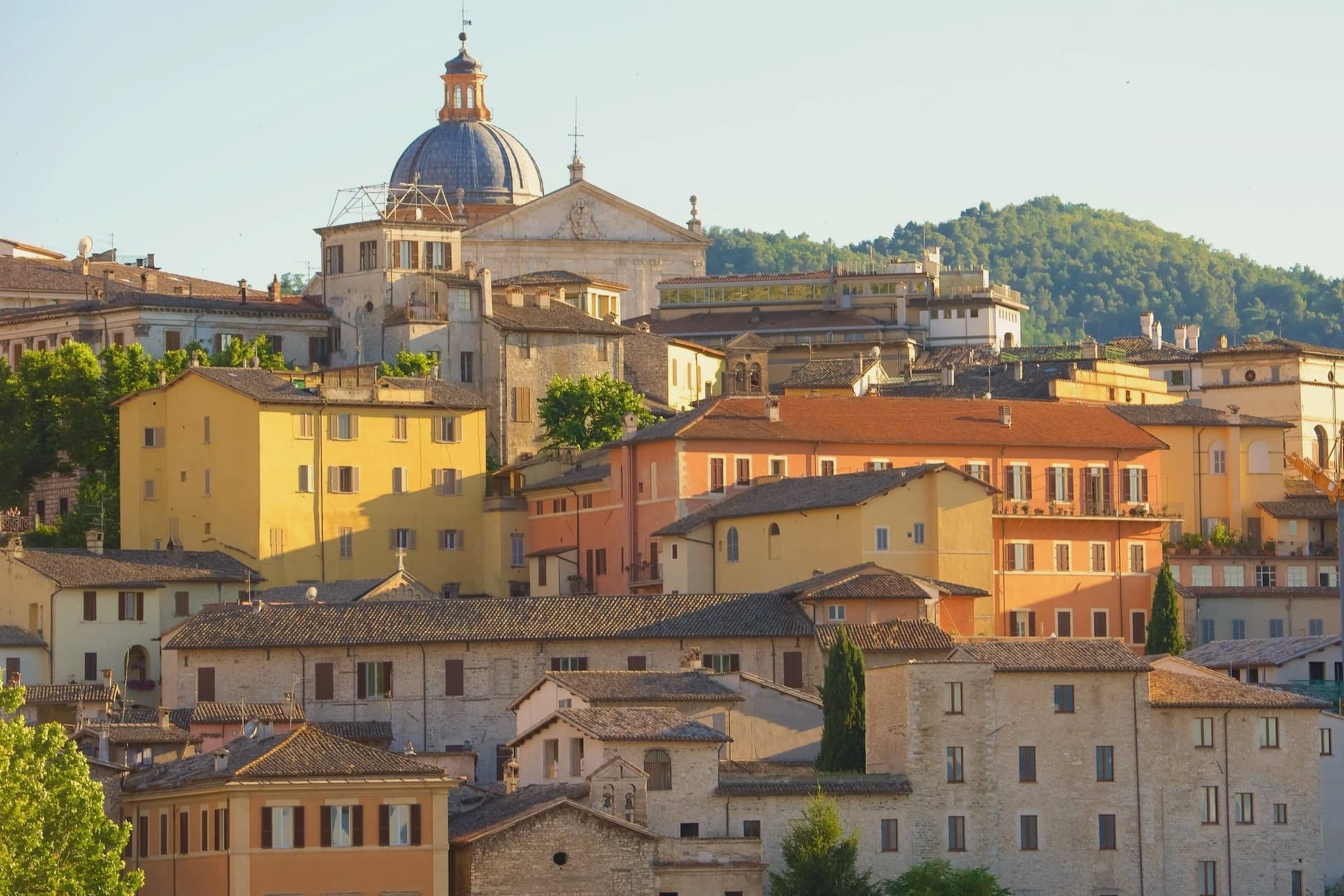
Spoleto sits at 396 meters at the southern edge of the Valle Umbra, the Apennines rising behind it toward Monteluco. The town was Roman Spoletium from 241 BC, then capital of one of the two great Lombard duchies of Italy from 576, controlling Umbria, Sabina, Picenum and the Pescara valley for more than five centuries.
The Rocca Albornoziana on the Colle Sant'Elia was built between 1363 and 1367 by Matteo Gattapone for Cardinal Albornoz, both a papal fortress and a residence, now the Museo Nazionale del Ducato. From the Rocca the Ponte delle Torri, 230 meters long and 80 meters high, crosses the Tessino gorge to Monteluco, an aqueduct of the 13th century built over Roman foundations.
The Duomo holds a Byzantine mosaic of 1207 across its façade and Filippo Lippi's last fresco cycle in the apse. Gian Carlo Menotti founded the Festival dei Due Mondi in 1958; the Roman theater, the Rocca courtyard and Piazza del Duomo still carry the program each year from late June into mid-July.
We confirmed you can reach this one by train.
What to see in Spoleto
- Rocca Albornoziana. Papal fortress built 1363-1367 by Matteo Gattapone for Cardinal Albornoz, now the Museo Nazionale del Ducato di Spoleto.
- Ponte delle Torri. Aqueduct bridge 230 meters long and 80 meters high, crossing the Tessino gorge to Monteluco, 13th-14th century on Roman foundations.
- Duomo di Santa Maria Assunta. Twelfth-century Romanesque cathedral with Byzantine mosaic of 1207 on the façade, Renaissance portico, and Filippo Lippi frescoes in the apse.
How to get to Spoleto
There is a railway station in the town, so you can arrive without a car and never need one while you are here. Terni is roughly 41 minutes away by road.
Our tip
April through June and September into October are the months for Spoleto. The town opens its gardens, the Rocca courtyard fills with sun, and the long walks along the Giro dei Condotti above the Ponte delle Torri become bearable again. The Festival dei Due Mondi runs from late June into mid-July, when Spoleto doubles in population and the Roman theater carries opera into the small hours. Sagra dell'Anguilla e del Gambero di Fiume falls in August.
Città di Castello
Why visit Città di Castello
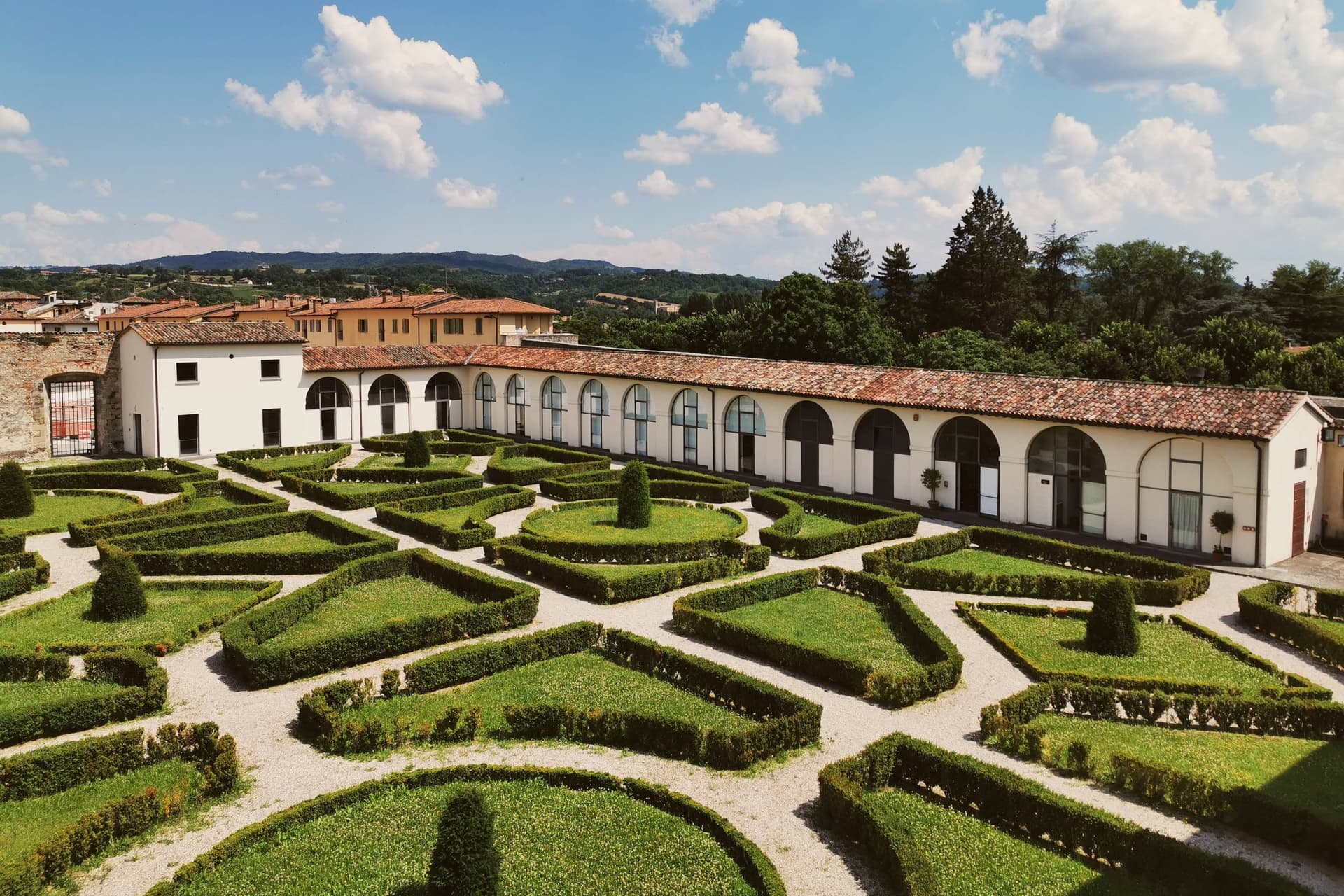
Città di Castello sits at the head of the Alta Valtiberina, the upper Tiber valley, where the river that runs through Rome 250 km south is still a narrow, Tuscany-style stream. It is the largest town in Umbria north of Perugia, 56 km from the regional capital and reachable by the historic Trenino Centrale Umbra line.
The town's history sits in three layers. Roman: founded as Tifernum Tiberinum in the 1st c BC, with Pliny the Younger keeping a villa here and describing the upper Tiber landscape in his letters.
Medieval-Renaissance: a walled town run as a signoria by the Vitelli family from the 15th c, whose patronage brought a young painter to the centro to complete his first independent commissions, among them the altarpiece now in the Pinacoteca Comunale, before he left for Rome; the same Pinacoteca, housed in the Vitelli family's own palazzo, also holds works by Signorelli, Ghirlandaio and Della Robbia. Twentieth century: a native-born artist gave his name to a foundation that now runs two sites in the centro, a palazzo holding the earlier period of his work and a former tobacco-drying complex painted black inside and out for the monumental late series, together forming, by the town's own reckoning, the most complete single-artist museum after Picasso's.
Beyond the art, the town carries three Città quality marks: Città del Tartufo for its white truffle zone, which produces some of the best Tuber magnatum in Italy and is marked each November by a weekend market and festival; Città della Ceramica for a maiolica tradition dating to the 16th c and still worked in a dozen workshops across the centro; and a stop on the Cammino di San Francesco, the pilgrim route linking La Verna in Tuscany, where St Francis received the stigmata, to Assisi, his birthplace. There is also a horse fair in early September, the Mostra Nazionale del Cavallo, a Renaissance music festival in July called the Tibernum Festival, and a centro storico whose medieval walls survive in part and can be walked.
The food follows the valley: ciaramicola, the local Easter cake, strangozzi with truffle, the Vitellone Bianco dell'Appennino Centrale IGP beef, pecorino, and the local Sangiovese-based Colli Altotiberini DOC red. What the layers add up to is a river town that kept building on itself rather than being replaced: a Roman villa landscape, a Renaissance signoria that imported a major painter, and a modern art foundation occupying old tobacco warehouses, each still visible in the centro rather than paved over by the one that followed it.
We confirmed you can reach this one by train.
What to see in Città di Castello
- Fondazione Burri (Palazzo Albizzini + Ex Seccatoi). Two sites: 200+ works in the centro palazzo, and the monumental late series, including the Grande Cretti, in the black-painted ex-tobacco warehouses of the Alta Valtiberina. The Palazzo Albizzini holds the earlier period; the warehouses were painted black inside and out by Burri himself for the later cycle.
- Pinacoteca Comunale (Palazzo Vitelli). The surviving early altarpiece, painted for the Vitelli family before the move to Rome, hangs alongside Signorelli, Ghirlandaio, Della Robbia and other Vitelli commissions.
- Mostra del Tartufo Bianco (every November weekend). A market and festival held every weekend of November in the Alta Valtiberina, drawing producers and restaurants for tastings around some of the best Tuber magnatum in Italy.
How to get to Città di Castello
There is a railway station in the town, so you can arrive without a car and never need one while you are here. Perugia is roughly 51 minutes away by road.
Our tip
Città di Castello is best April–June and September–November. The Mostra del Tartufo Bianco every November weekend is the year's culinary headline. The Mostra Nazionale del Cavallo (early September) is the regional horse fair.
Foligno
Why visit Foligno
Foligno sits on the left bank of the Topino where the river leaves the Apennines and meets the plain of the Clitunno, the point at which the mountains give way to the Umbrian Valley. The town was called Fulginium in antiquity, and Cicero mentions the prefecture in two surviving fragments.
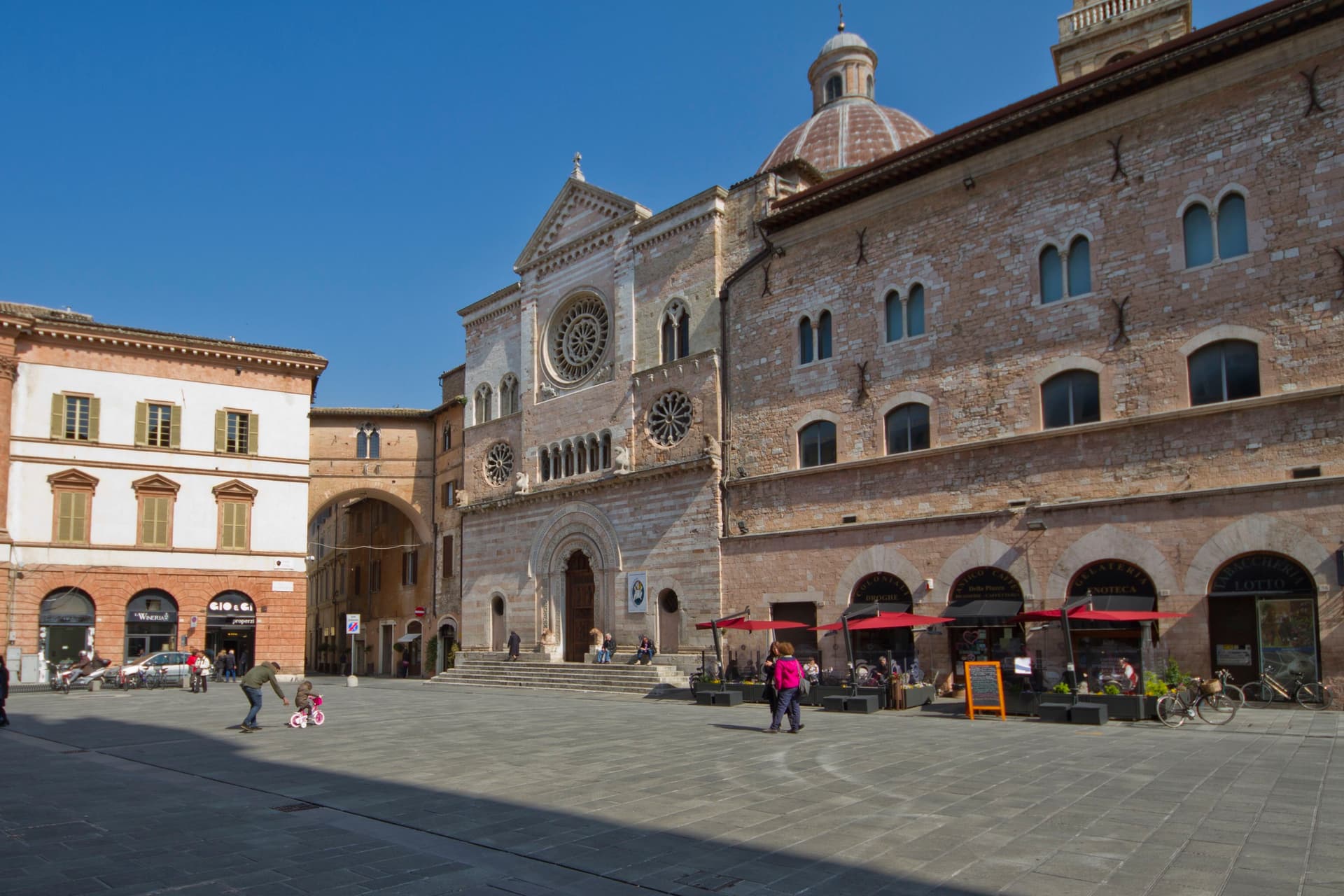
The Trinci ruled the town from 1305 to 1439, and the palace that carries their name still stands at its center, with the cathedral facing the same square where the town's tournament has run twice a year since its revival. The city's oldest church predates the Trinci period by centuries, its site going back to an 8th-century chapel, while the abbey in the hills above town was founded still earlier, in 1084, its cloister finished in 1229.
Between the ancient prefecture, the medieval abbey, the Trinci court, and the print workshop that put Dante into type, Foligno reads as a valley crossing point where successive centuries each left a building rather than displacing what came before.
We confirmed you can reach this one by train.
What to see in Foligno
- Palazzo Trinci. Seat of the Trinci signoria 1305-1439, frescoed by Gentile da Fabriano and Jacopo Bellini, now holding the Pinacoteca and archaeological museum.
- Cattedrale di San Feliciano. Romanesque cathedral on Piazza della Repubblica, built over the tomb of the bishop-martyr buried here in 251 AD.
- Basilica di Santa Maria Infraportas. Oldest church in the city on the site of an 8th-century chapel, frescoes by Nelli, Ugolino di Gisberto, Alunno and Mezzastris.
How to get to Foligno
There is a railway station in the town, so you can arrive without a car and never need one while you are here. Perugia is roughly 42 minutes away by road.
Our tip
April through June and September into October are the months locals prefer. The Quintana runs twice a year, the June and September editions filling the rioni for a week each. April through October is also the season for the Topino river paths and the climb up to Sassovivo. Festevolezze falls in July.
Terni
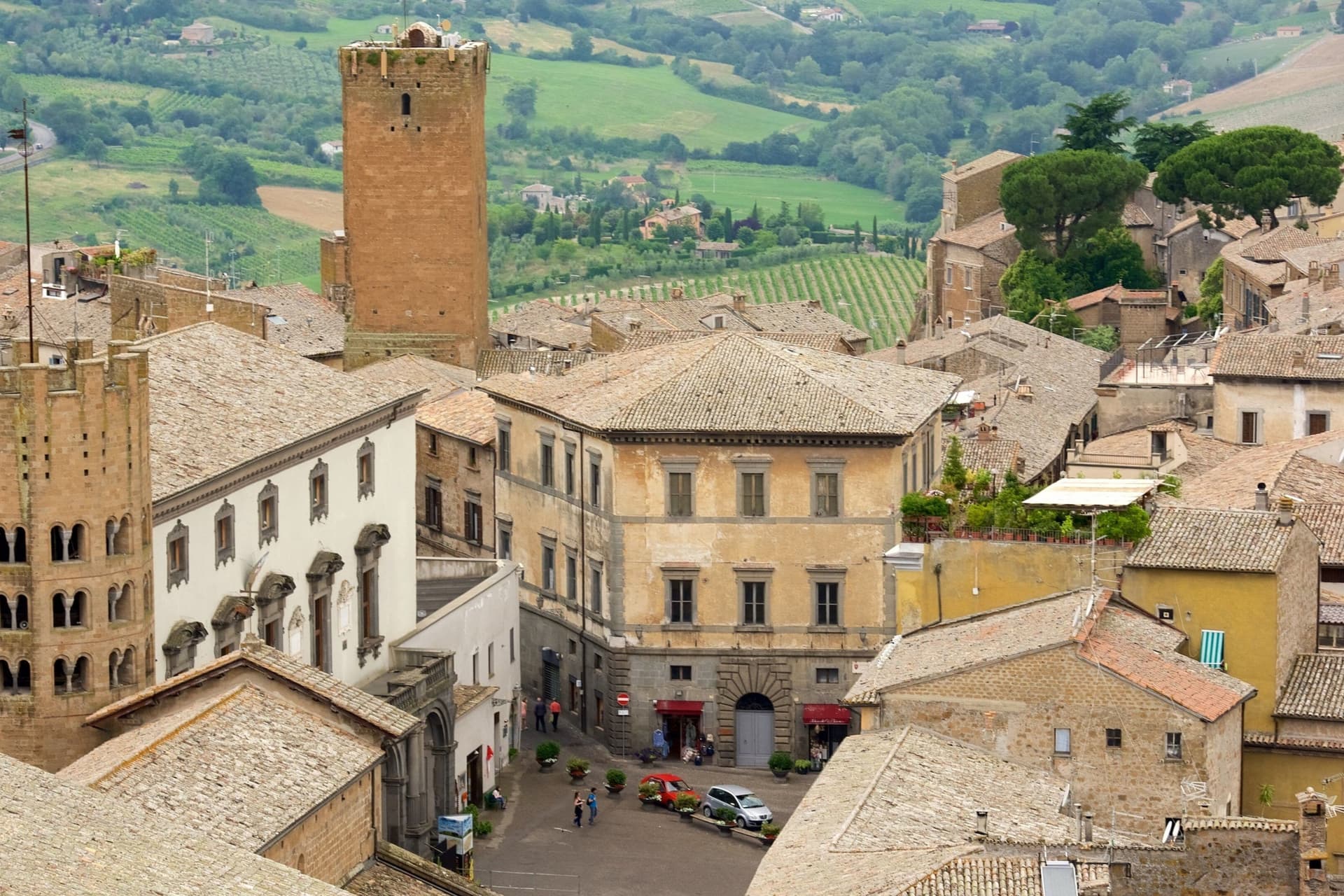
Why visit Terni
Terni is the Roman Interamna, the town between two rivers, and it shows its history in layers. The Anfiteatro Fausto of 32 AD sits in the city park, the Duomo keeps a sixth-century crypt, and Palazzo Spada, the town hall, may be the last work of Antonio da Sangallo the Younger.
From the nineteenth century the water of the Nera drove steelworks, arms factories and jute mills, and that made Terni a target: Allied raids from August 1943 destroyed or damaged 40 percent of its buildings. The 12,000-ton steel press in Piazza Dante is the city's own monument to that past.
Terni is also the city of Saint Valentine, its third-century bishop, whose basilica on the edge of town holds his remains. Seven kilometers up the Valnerina, the Romans cut a channel through the cliff at Marmore in the third century BC and made a waterfall of 165 meters.
Lake Piediluco lies just beyond it, and the ruins of Carsulae sit on the Via Flaminia to the north.
We confirmed you can reach this one by train.
What to see in Terni
- Cascata delle Marmore. Falls of 165 meters made by the Romans to drain the Rieti plain. The water is released on a timetable, so check the opening hours before going.
- Basilica di San Valentino. Built on the hill where followers buried the town's bishop after his martyrdom in 273; the present church dates from 1618 and keeps his remains.
- Anfiteatro Fausto. Roman amphitheater of 32 AD in the park of La Passeggiata, with walls of two-tone reticulated stonework.
How to get to Terni
There is a railway station in the town, so you can arrive without a car and never need one while you are here. Perugia is roughly 69 minutes away by road.
Our tip
Terni works in any season. February is the city's month: the feast of San Valentino on the 14th fills the basilica and the streets around it. Spring and summer are when the Cascata delle Marmore runs most often, since the water is released on a timetable, and on 1 May the Cantamaggio parades decorated floats through the center to welcome the season.
More from Anywhere Italy
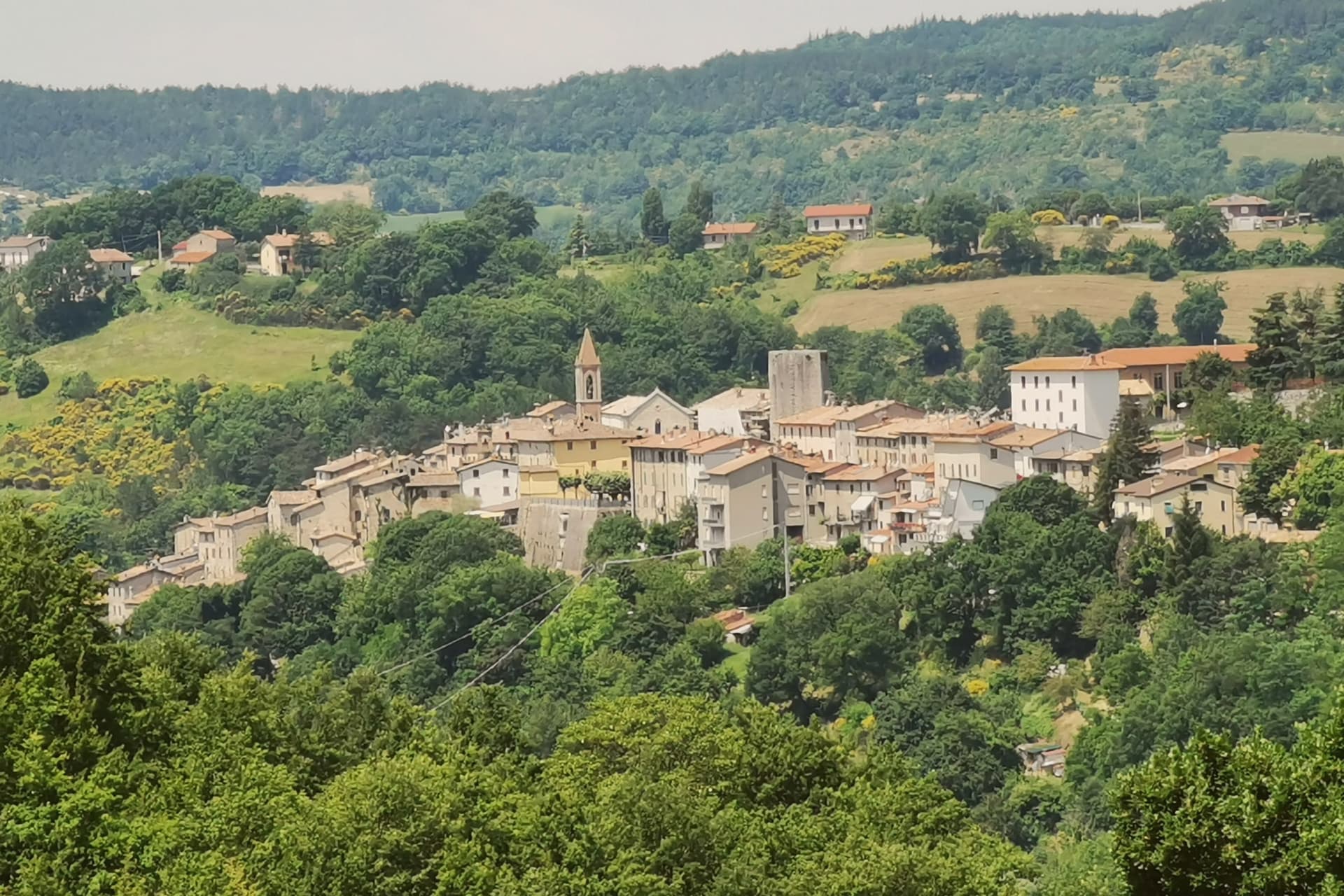 The best hill towns on a walking route within 90 minutes of Perugia
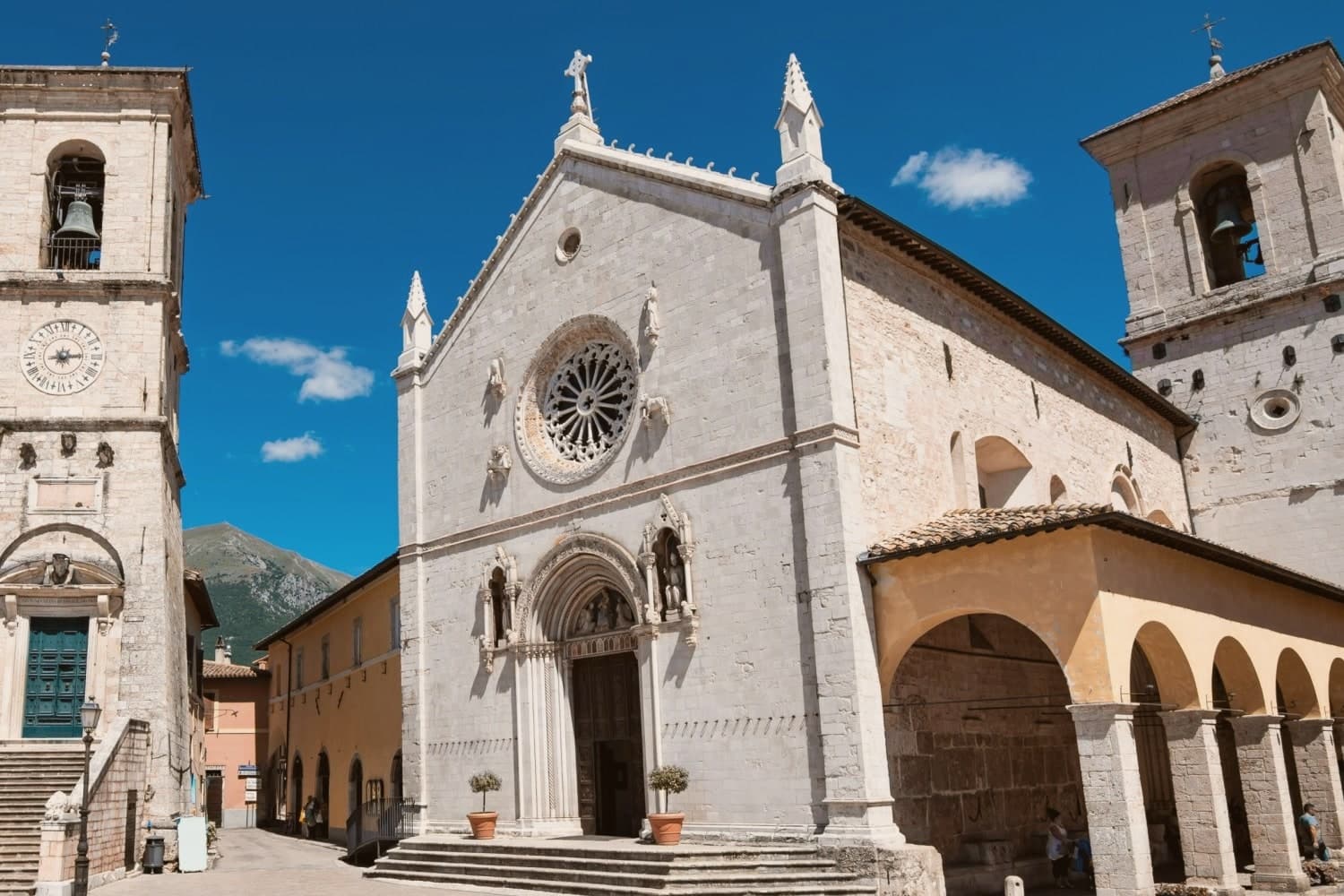 The best towns on a walking route that eat well in the province of Perugia
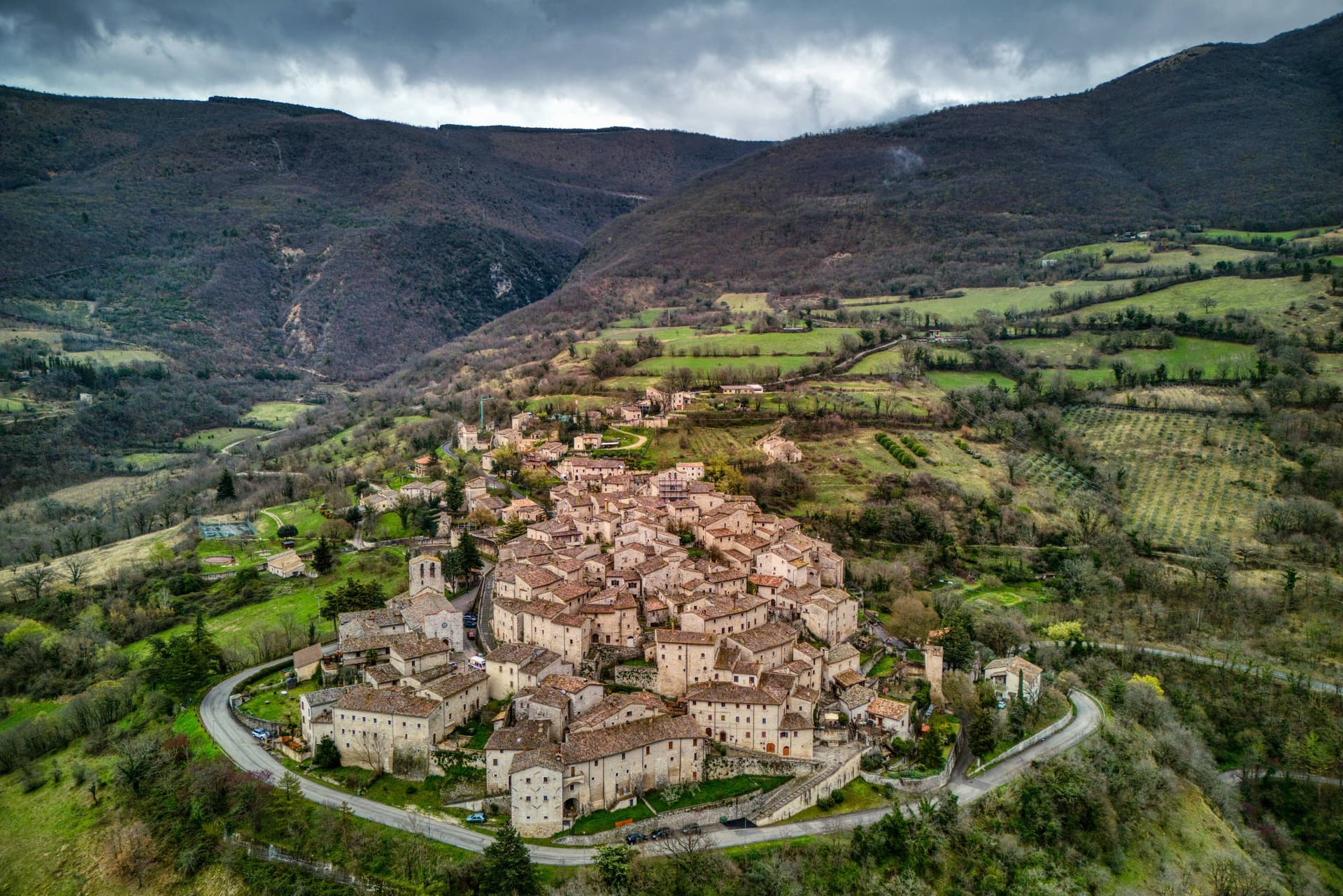 The best olive oil towns you can reach by train in the province of Perugia
 The 8 best hill towns on a walking route within 90 minutes of Terni
- The 10 prettiest hidden villages you can reach by train in Umbria
 The best olive oil towns that eat well in the province of Perugia