
Emilia-Romagna · Forlì-Cesena
Cesenatico
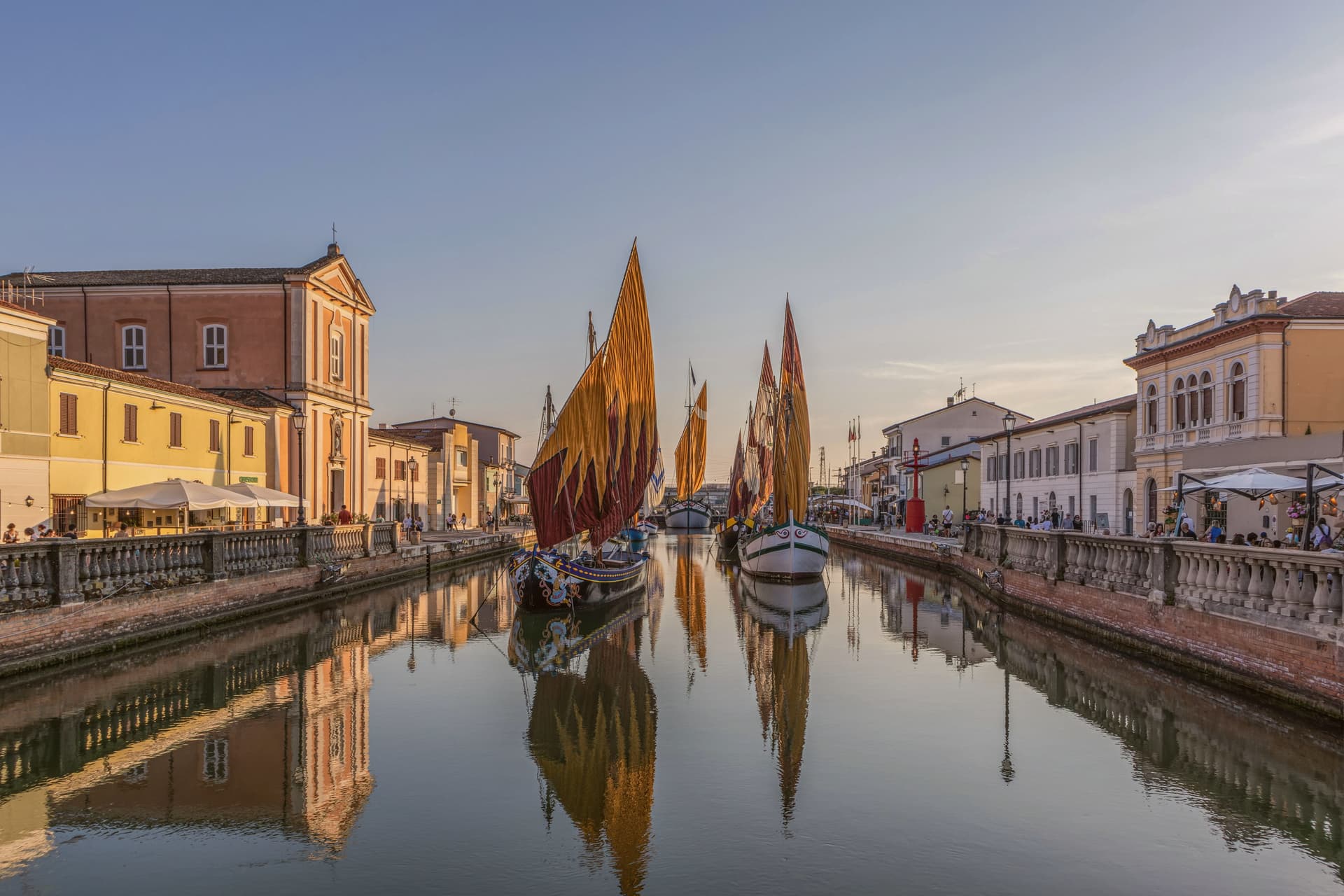
An Adriatic fishing port whose canal was redrawn on commission from a Borgia patron, with ten historic sailboats moored as a floating museum.
- Best time
- May–Sep
- By car
- 28 min from Rimini
- By train
- Station in the comune
- Population
- 25,921
Known for
LEONARDO'S CANAL
The Porto Canale was redrawn by Leonardo da Vinci in 1502 on commission from Cesare Borgia, with his sketch preserved in the Codex L of the Institut de France.
MARCO PANTANI
Pantani was born and is buried in Cesenatico; the annual Nove Colli ride in May covers nine of his training climbs in the Apennine foothills.
MARINERIA
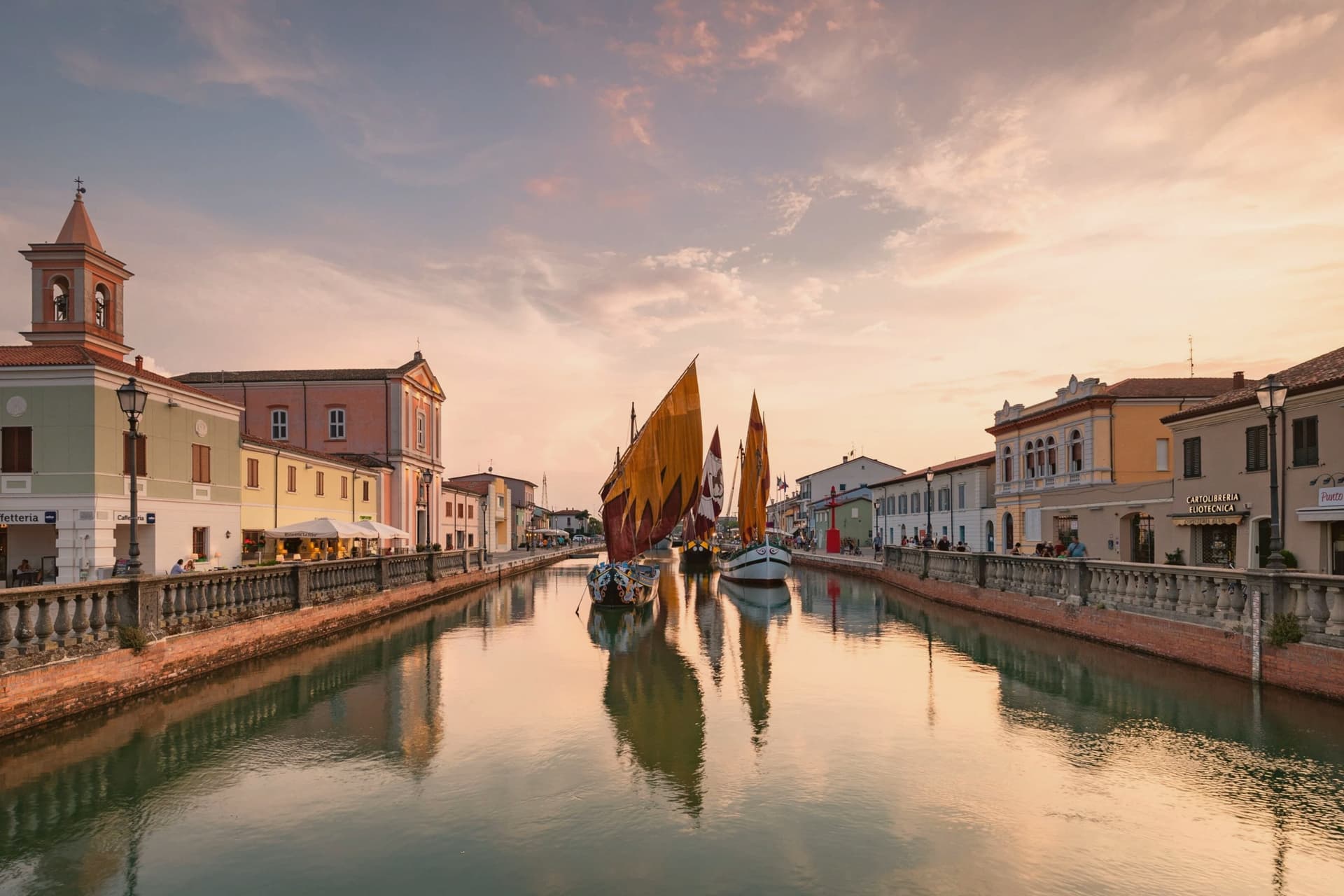
The Museo della Marineria moors ten historic Adriatic sailboats in the canal, hoisting their patched coloured sails through the summer.
PESCA E NETTARINA DI ROMAGNA
The commune lies inside the Pesca e Nettarina di Romagna IGP production zone.
When to visit
Best · May–Sep
- J9°
- F13°
- M15°
- A17°
- M22°
- J28°
- J31°
- A30°
- S26°
- O21°
- N14°
- D10°
- Best
- Hot or crowded
- Quiet
- Mostly closed
Daytime averages, 2020–2024. The sea is warmest in August at 29° and coldest in January at 8°. Weather data by Open-Meteo.com.
The festa: Giacomo il Maggiore, 25 July
Why come
Cesenatico sits at three meters on the Adriatic, fifteen kilometers east of Cesena. The town grew around a canal port begun in 1302 by the Malatesta of Cesena to give the inland city its outlet to the sea, and the canal still runs through the centro storico as the town's working spine. Leonardo da Vinci arrived in 1502 at the request of a Borgia patron to survey and redraw the port; his sketch, preserved in the Codex L, corresponds to the harbor layout today.
Garibaldi embarked from this port in August 1849, fleeing the failed Roman Republic on commandeered fishing boats with about two hundred followers. The canal separates and joins the two halves of the old town, its banks lined with the pastel facades of fishermen's houses, and it is this same stretch of water that carries the floating section of the Museo della Marineria, sails hoisted through the summer. Cesenatico is also the home town of the cyclist Marco Pantani, marked inland by the Nove Colli ride each May.
The beach carries Bandiera Blu. What holds the town together is the canal itself: a fifteenth-century engineering commission that outlasted the port's original purpose and became the frame for everything Cesenatico later added, from Garibaldi's escape to the moored boats of the maritime museum.
The Sunday letter
Cesenatico is on our list. Its letter is still to come.
We are writing about all 1,000 of these towns, one at a time, in a free letter every Sunday: the photo, the food, the festa. That is our mission. Sign up and you will be there when Cesenatico comes up. By Peter & Sophia, from Pietrasanta.
Read on
Cesenatico in our articles
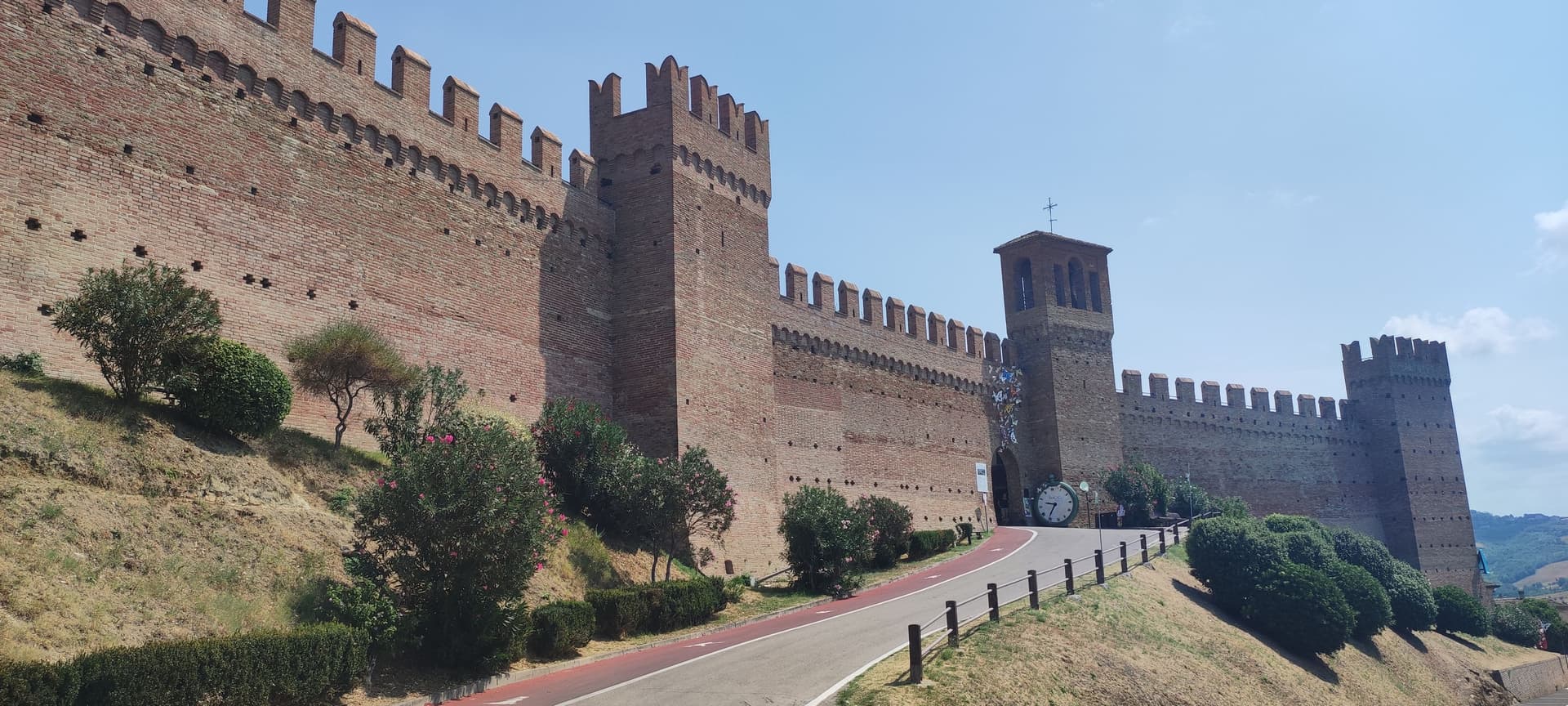
 The best towns you can reach by train within 45 minutes of Rimini8 towns, Cesenatico among them.
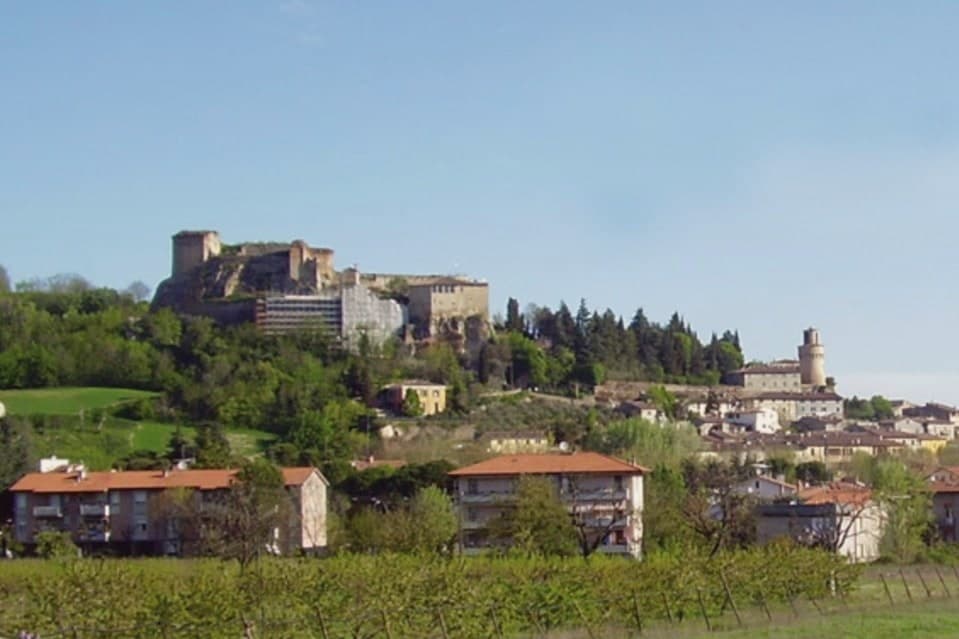
 The best coastal towns within two hours of Bologna9 towns, Cesenatico among them.
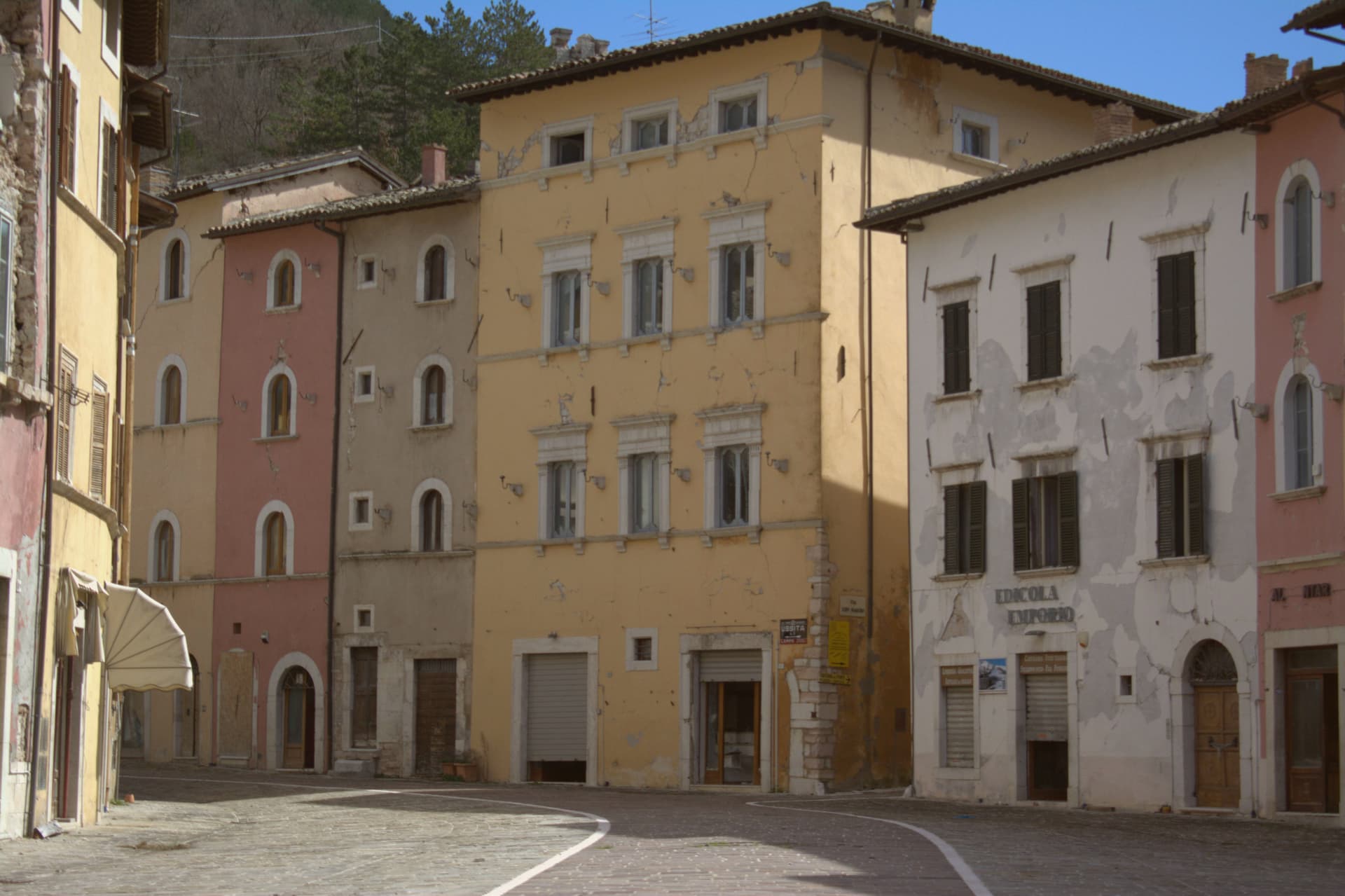
 The best towns known for what they grow within an hour of Rimini9 towns, Cesenatico among them.
 The best towns known for what they grow within two hours of Ancona9 towns, Cesenatico among them.
How to get there
From Rimini (RMI), about 52 minutes by car.
Bologna (BLQ) is about 1h 18m away.
By car from the centre of Ancona 1h 39m.
There is a railway station in the comune, so you can arrive without a car.
Coming from Bologna or Florence?
Coming by train into Rimini? Cesenatico is about 28 minutes away by road.
What to see
Porto Canale Leonardesco
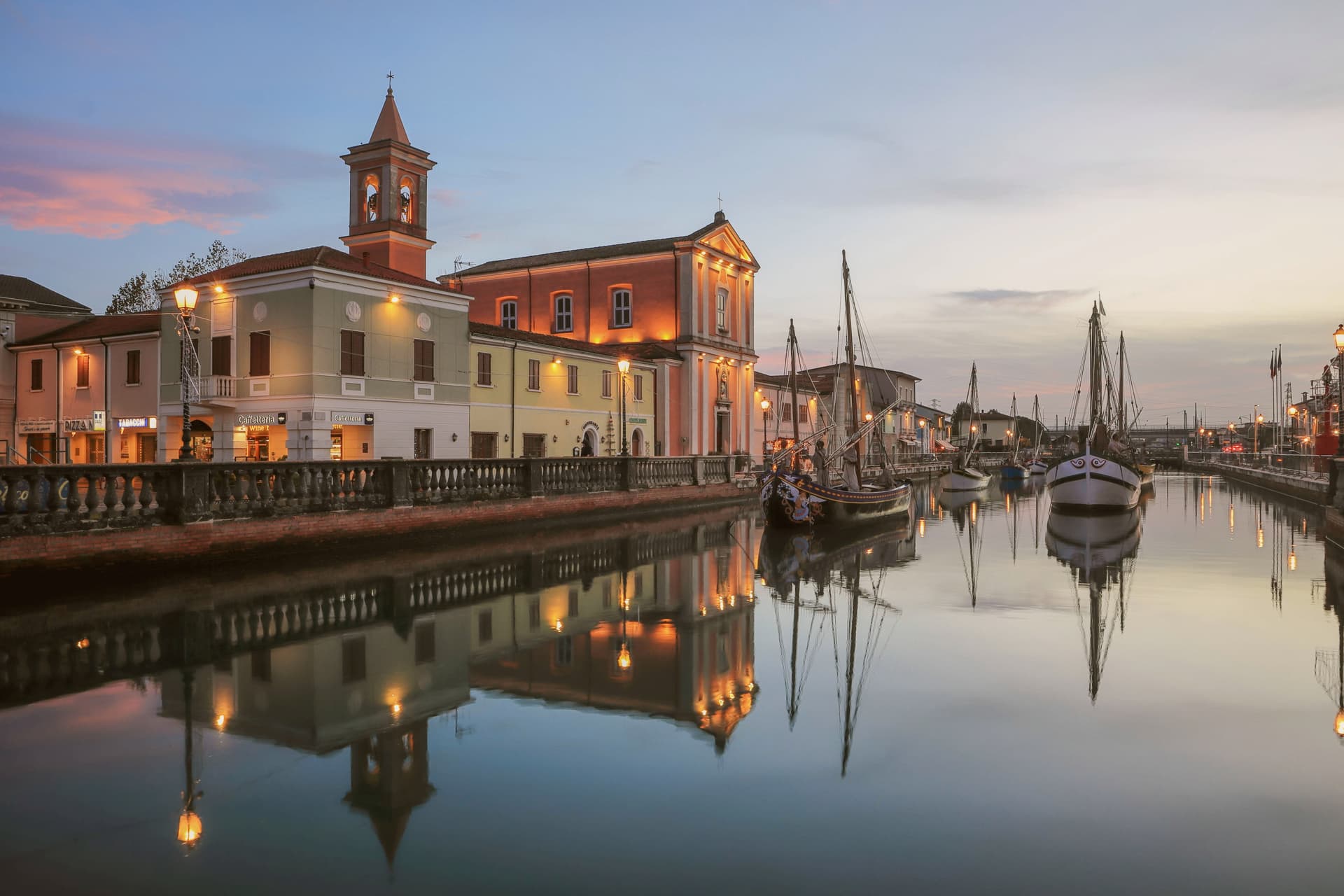
Canal port begun in 1302 by the Malatesta, running through the centro storico and lined with the pastel facades of fishermen's houses. Leonardo da Vinci's redrawn layout from 1502 still corresponds to the harbor as it stands.
Museo della Marineria
Maritime museum with a floating section of historic Adriatic sailboats moored in the canal, their sails hoisted daily in summer.
Spazio Pantani
Museum near the railway station dedicated to the cyclist, tracing his career including the 1998 Giro and Tour double.
Spiaggia di Cesenatico
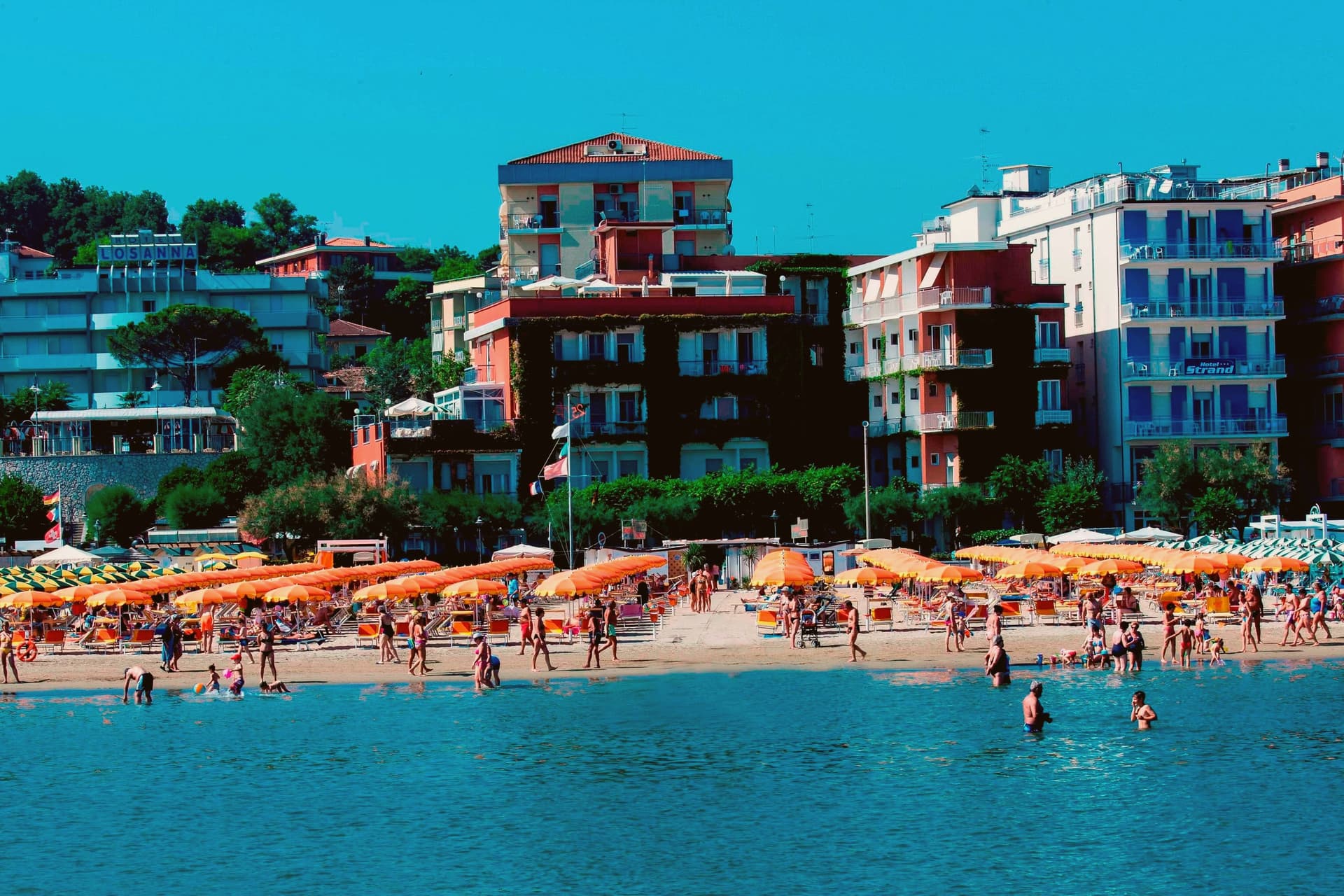
Bandiera Blu beach running seven kilometers from Valverde to Zadina, with the canal opening at the centre.
Chiesa di San Giacomo
Eighteenth-century parish church on the canal port, with the bell tower visible from the moored sailboats.
The slow-trip planner
Building a trip? Find where Cesenatico fits in a slow Italy circuit.
Answer five questions. We will shape a geographically coherent slow trip from the 1,000 Italian towns most travelers skip. Yours to save and share.
We recommend
Where to eat
Not our picks, but places the guides put their name to: a Michelin star, a Gambero Rosso fork, a Slow Food snail, a Michelin Key for the hotels. Worth a table, a counter, or a night when you pass through.
La BucaRistorante
One Michelin star for La Buca, along with two Gambero Rosso forks (83/100) and a place in L'Espresso's Top 300.
AncòraRistorante
Ancòra has one Michelin star and two Gambero Rosso forks (82/100).
MaréRistorante
Maré has two Gambero Rosso forks (80/100) and a spot in the Michelin Guide.
VerandaRistorante
Veranda carries two Gambero Rosso forks (80/100), plus a spot in the Michelin Guide.
MagnoliaRistorante
Magnolia holds a La Liste score of 87.5.
Osteria BartoliniRistorante
A Michelin Bib Gourmand, at Osteria Bartolini.
Osteria ErbaluceRistorante
Osteria Erbaluce has a spot in the Michelin Guide to its name.
TracinaRistorante
Tracina holds one Gambero Rosso fork (78/100).
Living here
- Population 25,921
- Commuter belti
- Pharmacy in town
- High school within a 30-minute drive
- Train station in the comune
- Nearest airport Rimini, 52 min drive
- Regional capital Bologna, 1 h 20 min drive
Common questions
- What is Cesenatico known for?
- Cesenatico is an Adriatic fishing port whose canal was redrawn on commission from a Borgia patron, with ten historic sailboats moored as a floating museum.
- Where is Cesenatico?
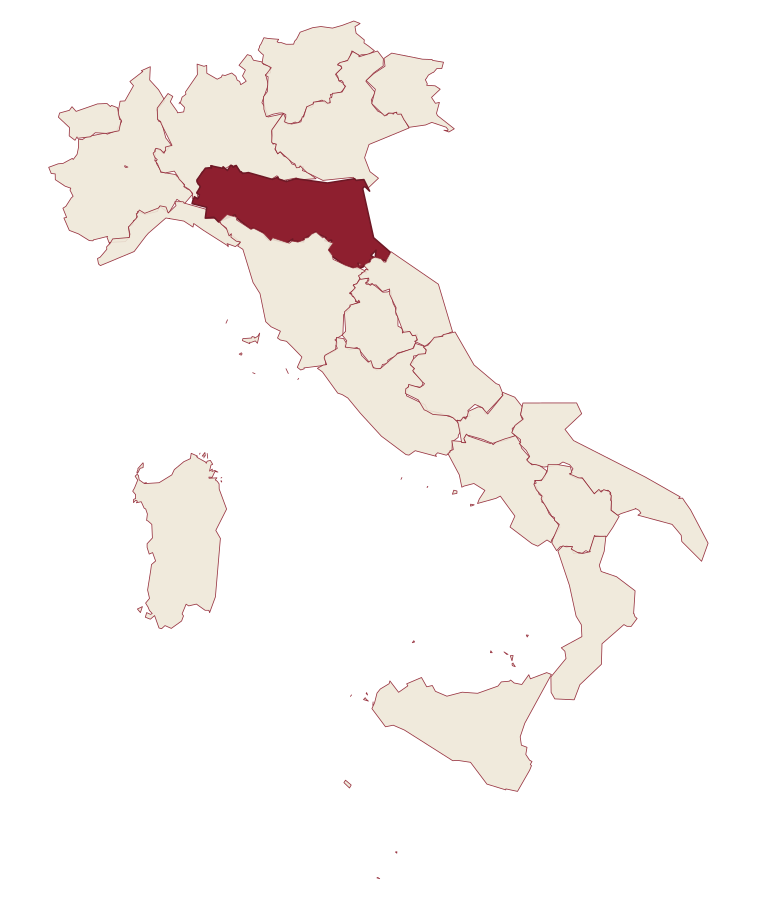
- Cesenatico is a comune in the province of Forlì-Cesena, in Emilia-Romagna, at 3 meters above sea level.
- What is the nearest airport to Cesenatico?
- Rimini (RMI), about 52 minutes by car.
- Can you get to Cesenatico without a car?
- Yes. There is a railway station in the comune, so you can arrive by train.
- How long is the drive from Ancona to Cesenatico?
- About 1h 39m by car.
- When is the best time to visit Cesenatico?
- Best in May–Sep. July is the warmest month, averaging 31 degrees, and May the wettest, with about 11 rain days.
- Is there a sagra or a festival in Cesenatico?
- The town keeps its patron saint's day: Giacomo il Maggiore, 25 July.
- Which other towns are like Cesenatico?
- Cervia, Giulianova and Giovinazzo.
- How many people live in Cesenatico?
- 25,921 at the 2023 count.
Tags & datadesignations · numbers · sources
Recognised as
The numbers
- Elevation: 3 m
- Population: 25,921
- Surface area: 45.16 km²
These figures were compiled from public directories: ISTAT, OpenStreetMap and Wikidata, and from the official listings of the guides named on this page. Town details change; verify with official sources before you travel.
Featured on
Cesenatico appears on this themed pick from our Collections:
Similar
Towns like Cesenatico
Cervia
Province: Ravenna
both on the Adriatic coast · both over 10,000 people
Giulianova
Province: Teramo
both on the Adriatic coast · both over 10,000 people
Giovinazzo
Province: Bari
both on the Adriatic coast · both over 10,000 people
Grottammare
Province: Ascoli Piceno
both on the Adriatic coast · both over 10,000 people
Trinitapoli
Province: Barletta-Andria-Trani
both on the Adriatic coast · both over 10,000 people
Alba Adriatica
Province: Teramo
both on the Adriatic coast · both over 10,000 people
🟦 Bandiera Blu
More Bandiera Blu towns in Emilia-Romagna
Cervia
Province: Ravenna
The Adriatic salt town with 827 hectares of working saline, planned in 1697 around a grid of salt workers' houses.
Comacchio
Province: Ferrara
A canal town on thirteen islets, with brackish lagoons that hold three hundred bird species.
Ravenna
Province: Ravenna
A 4-meter coastal capital of three successive empires, with eight UNESCO mosaic monuments from the fifth and sixth centuries.