
Themed picks · Florence · Food
10 hidden food towns near Florence
Ten towns: what each is best for, what a home costs, and the catch. In Florence's center a square meter costs €3,100 to €5,600; here it starts at €980, in Lucignano.
10 comuni · within 90 minutes of Florence · drive times by road from the city center
Tuscany sells most of its food through three Florence postcards: the bistecca, the pici cacio e pepe, the Chianti bottle on the white tablecloth. What the postcards skip is that the produce on those plates is shipped in, often from less than ninety minutes away, from comuni most visitors never name. The oil comes from the hills behind Lucca. The white truffle comes from San Miniato. The pecorino comes from Pienza but the harder, sharper version comes from the small ridge towns around it.
These are the ten towns we keep going back to when we want the source, not the showroom. Each sits inside a ninety-minute radius of Florence, every one of them named on at least one of the official Italian food trails (Città dell'Olio, Città del Vino, Città del Tartufo) or carrying a DOP or DOCG product that anchors its kitchen. None of them is famous for the wrong reasons, the way San Gimignano now is, but none of them is invented either: they are working comuni with a sagra, a co-op or consortium, and at least one trattoria that has been pouring the same oil for thirty years.
We have ranked them by how many of the food trails and protected products each one carries, and by how close it is, not by population or beauty. The drive times are by road from the center of Florence, with no toll-shaving or Sunday-morning optimism. Read this as a series of day trips you can string together from a single base in Florence, or as a route you peel off into a longer slow trip through Tuscany.
The towns
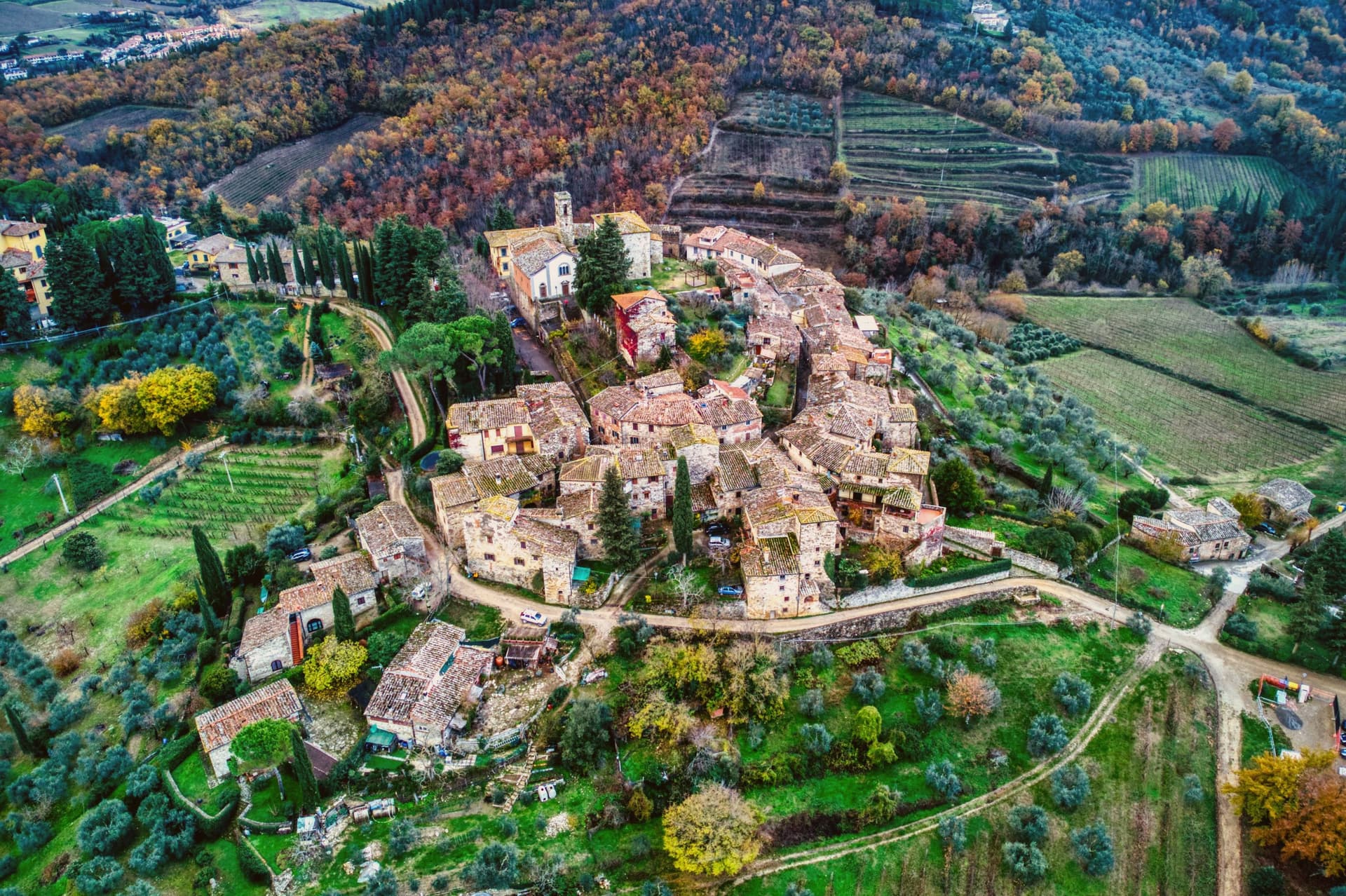
- 1
Firenze · Tuscany · 44 min from Florence
Greve in Chianti
Best for a walk through the old town. It is on the list of Italy's most beautiful villages.
homes €1,500 to €2,100 a m² in the center · 13,381 people
The market town on the Greve river, with a triangular piazza arcaded since the sixteenth century.
Sangiovese-dominant; one of nine Chianti Classico communes between Florence and Siena.
Signature product: Chianti Classico DOCG.
 2
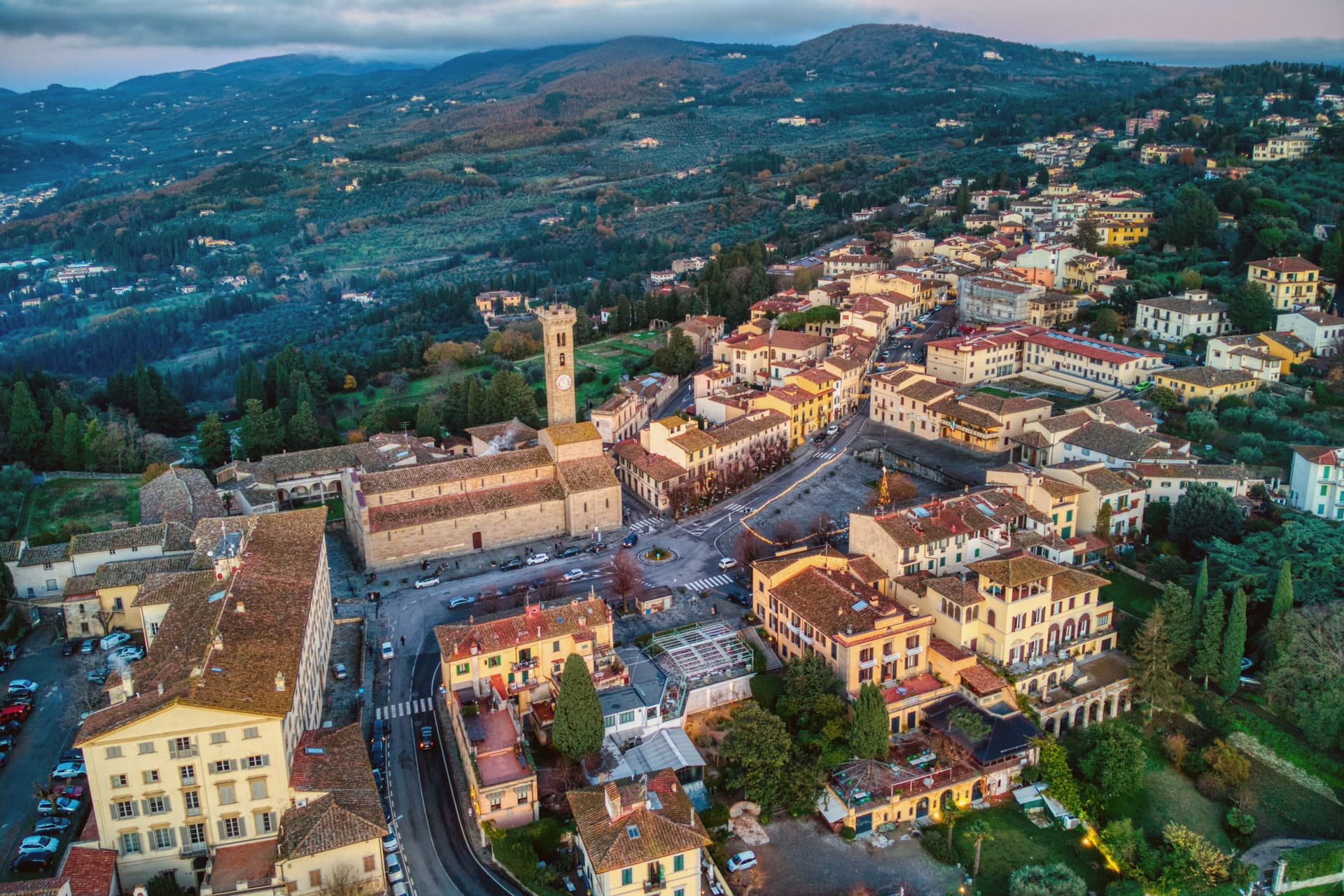
Firenze · Tuscany · 24 min from Florence
Fiesole
Best for a trip without a car. The train stops in the commune.
homes €2,250 to €3,400 a m² in the center · 13,809 people
An Etruscan hilltop above Florence, still looking down on what later replaced it.
Founded in the ninth century BC, a member of the Etruscan confederacy, with surviving polygonal walls on the north flank.
Olive oil country, on the Città dell'Olio trail.
 3
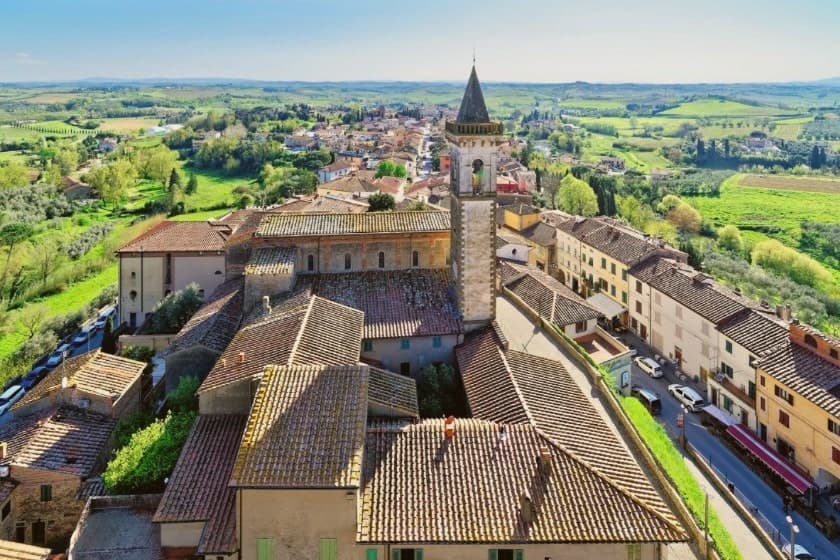
Firenze · Tuscany · 50 min from Florence
Vinci
Best for a slow weekend. The Touring Club gives it its orange flag for small inland towns.
homes €1,100 to €1,650 a m² in the center · 14,587 people
The hill town on Montalbano where Leonardo was born in 1452, with a ship-shaped castle that now holds his machines.
Born 15 April 1452 at Anchiano, raised in Vinci, baptized in Santa Croce; the town carries his name for the Museo Leonardiano.
Named on the Città del Vino wine-territory trail.
 4
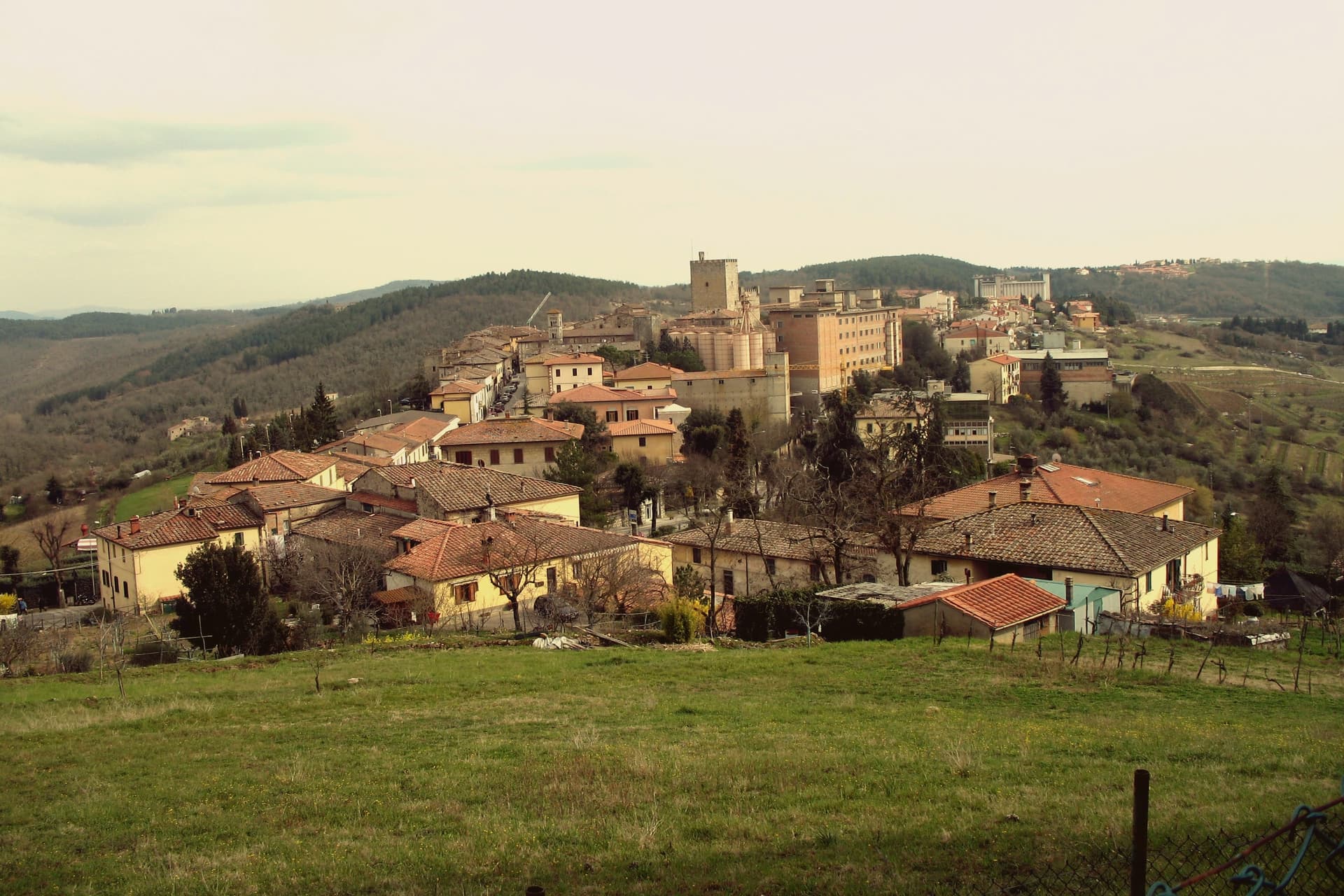
Siena · Tuscany · 1 h 3 min from Florence
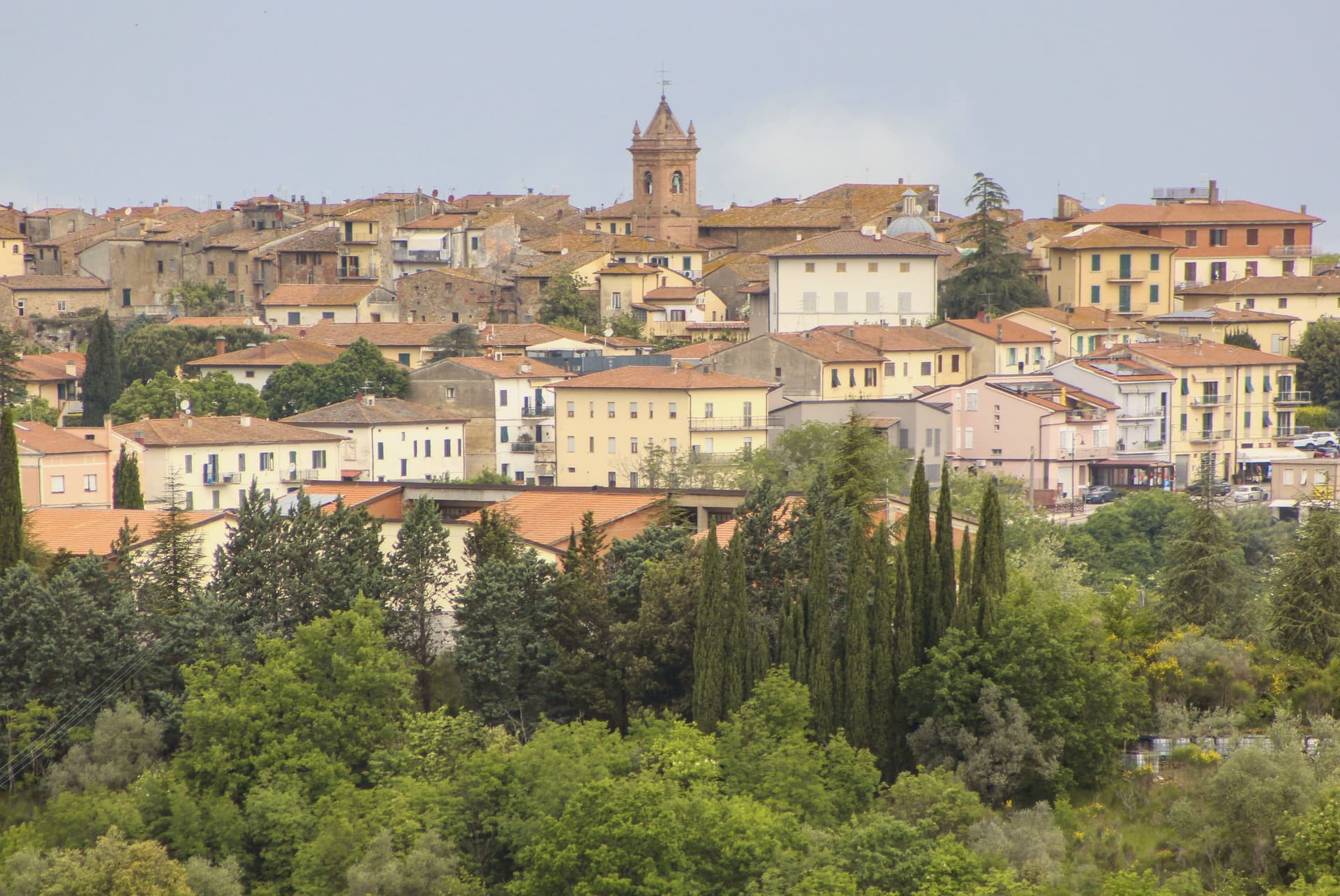
Castellina in Chianti
Best for Chianti Classico DOCG. The town gives its name to Chianti Classico DOCG.
homes €1,300 to €1,900 a m² in the center · 2,605 people
A Chianti hill town at 578 meters on the watershed between the Arno and the Ombrone, with an Etruscan tumulus, a Brunelleschi-reinforced wall and a covered medieval walkway around its edge.
One of the founding Chianti Classico communes; central, on the watershed between the Arno and the Ombrone.
 5
Firenze · Tuscany · 1 h 7 min from Florence
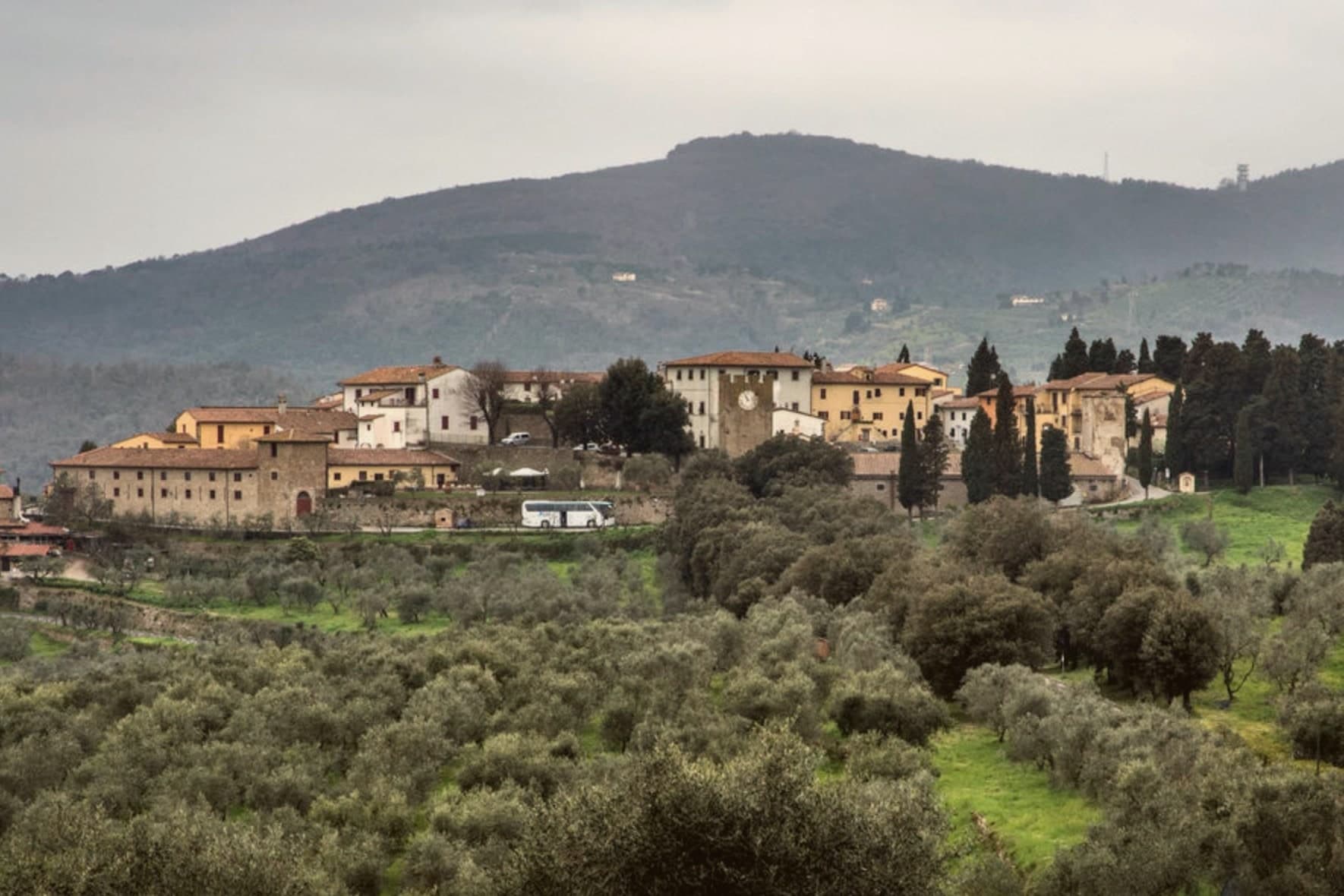
Montaione
Best for a soak. The comune has thermal baths.
homes €1,000 to €1,500 a m² in the center · 3,438 people
A medieval glassmaking and truffle borgo at 341 meters above the Valdelsa, with a Franciscan replica of Jerusalem in the woods nearby.
Franciscan Sacro Monte built between 1500 and 1515 as a topographical replica of the holy sites of Jerusalem, seventeen chapels in oak woods.
 6
Prato · Tuscany · 39 min from Florence
Carmignano
Best for a World Heritage site. UNESCO lists a site in the comune.
homes €1,800 to €2,150 a m² in the center · 14,540 people
A Medici village at 189 meters on the Montalbano slopes, where Etruscan tumuli sit below the Renaissance villas.
The Visitation, painted 1528-1529, hangs in the parish church of San Michele e San Francesco, one of the major works of late Florentine Mannerism.
 7
Pisa · Tuscany · 50 min from Florence
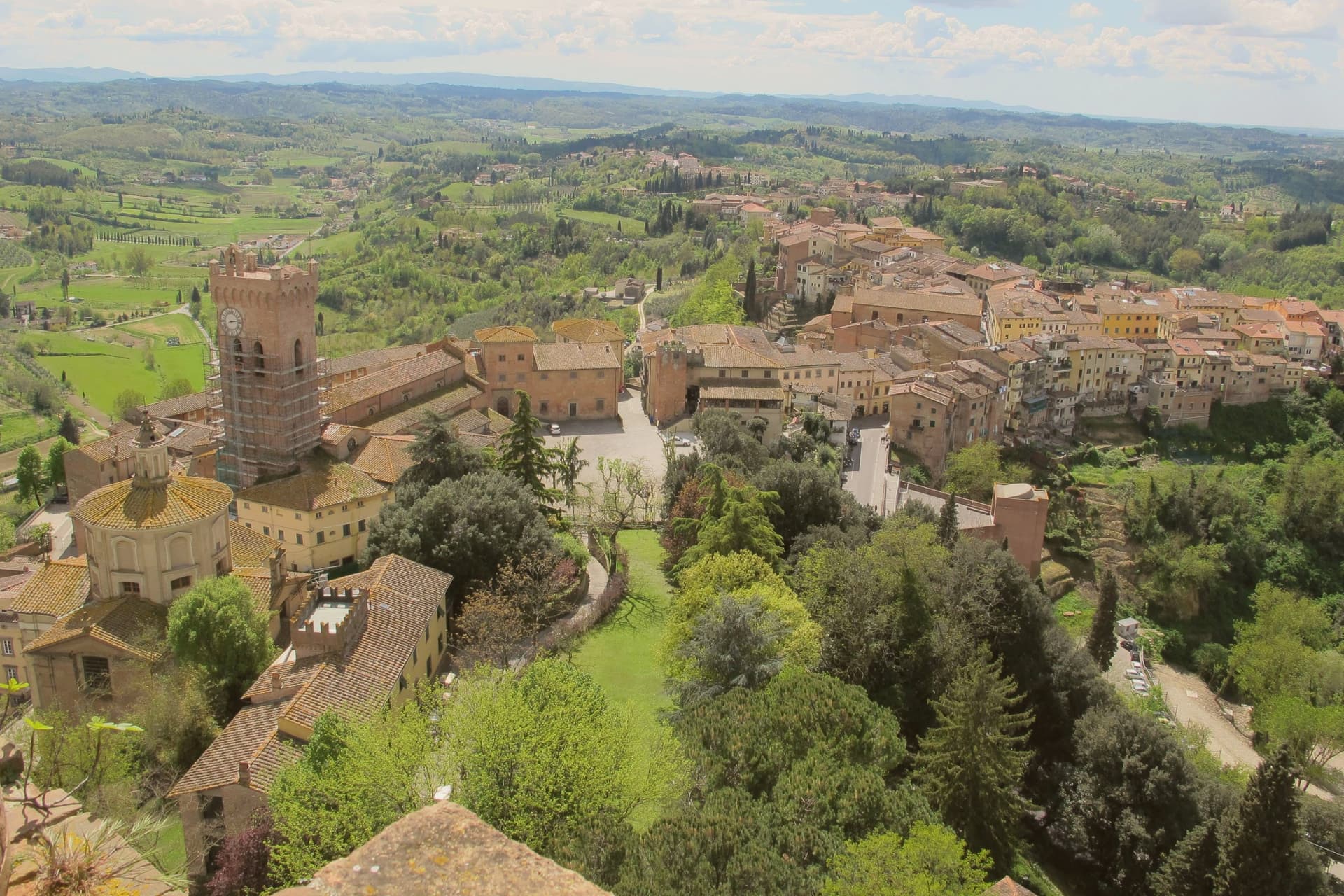
San Miniato
Best for a stage of a long walk. The Via Francigena passes through.
homes €1,150 to €1,800 a m² in the center · 27,831 people
The hilltop town between Pisa and Florence that produces a quarter of Tuscany's white truffles and once held the imperial seat of Otto I.
Tuber magnatum from the surrounding woods, a quarter of Tuscany's annual crop, celebrated each November in Piazza del Duomo since 1969.
Truffle country, on the Città del Tartufo trail.
 8
Siena · Tuscany · 1 h 17 min from Florence
Castelnuovo Berardenga
Best for everyday life on foot. Nine of the ten everyday services we look for are mapped within 500 meters of the center.
homes €1,000 to €1,500 a m² in the center · 8,851 people
A commune of 351 meters, the last castle Siena built against Florence, in 1366.
Southernmost Chianti Classico commune, reaching almost to the gates of Siena.
 9
Lucca · Tuscany · 53 min from Florence
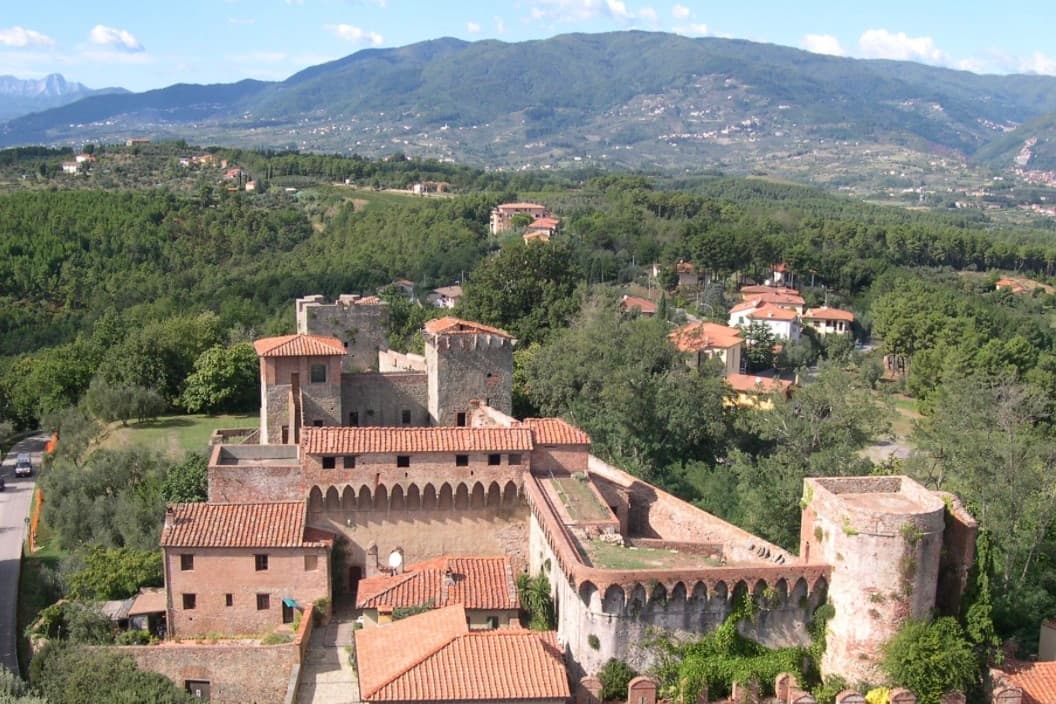
Montecarlo
Best for a wine weekend. It belongs to the national association of wine towns.
homes €1,050 to €1,500 a m² in the center · 4,402 people
A walled hill village at 163 meters above the Lucca plain, founded by Emperor Charles IV in 1333 and named for him, surrounded by twenty wineries.
1969 DOC for a Trebbiano-French white blend and a Sangiovese-led red, with around twenty wineries inside the commune.
 10
Arezzo · Tuscany · 1 h 9 min from Florence
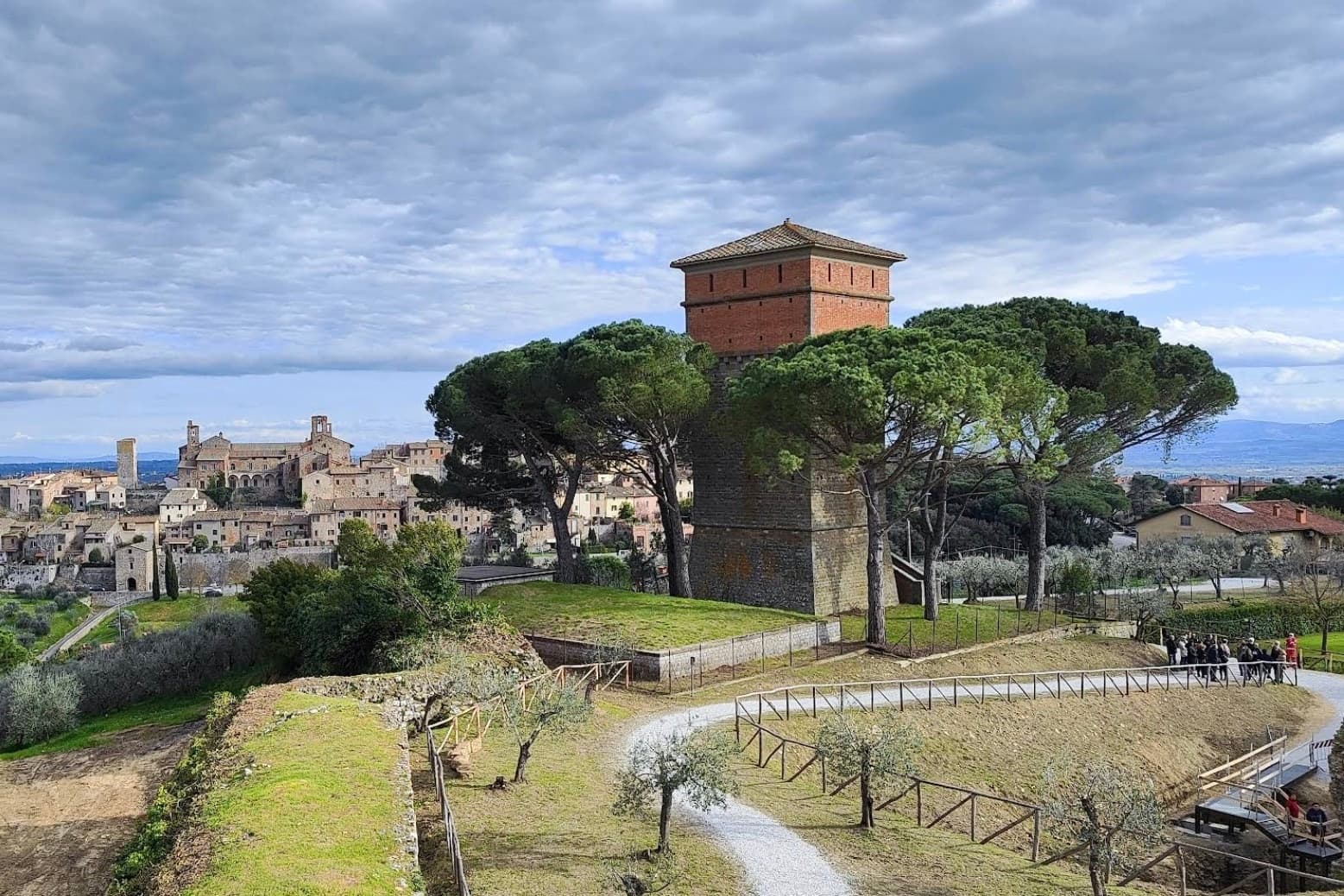
Lucignano
Best for olive oil. It belongs to the national association of olive oil towns.
homes €980 to €1,250 a m² in the center · 3,442 people
A walled elliptical hill town at 400 meters between Siena and Arezzo, planned in medieval concentric rings around the goldsmith's reliquary called the Tree of Life.
Gothic goldsmith's reliquary in the Museo Civico, 260 cm tall, called the Tree of Love by tradition and considered a marriage charm.
We write about towns like these one town at a time, with the photo, the food, the festa. Free, from Turin.
Why Florence is the base
Florence is the only Tuscan city with a Centrale-grade rail station, three motorways converging on it, and an airport (FLR) plus a second within an hour (PSA). Most visitors over-index on its center; the food work happens at the edges. From a single hotel in Firenze you can reach the Garfagnana, the Chianti hills, the Mugello, San Miniato's truffle ridge and the lower Lunigiana on separate day trips, eat your way through each, and be back for dinner in a city that still rewards a long walk after dark.
When to go
Late April through early June and again from late September through November. Spring brings new oil from the previous October's harvest still tasting green, asparagus in the markets, and the first artichokes from the coastal plain. Autumn is the heavier season: porcini in the Mugello, white truffle in San Miniato (the sagra runs the last three weekends of November), new wine in the Chianti hills. Avoid July and August unless you are committed to lunch indoors with the air conditioning on.
Questions people ask
- What is the closest food-trail town to Florence?
- Fiesole, on the hill above the city, under half an hour from the center and on the Città dell'Olio trail. Greve in Chianti, about 45 minutes south, is the gateway town for the Chianti Classico designation, with the Saturday morning oil and wine market in Piazza Matteotti from October through May.
- Where do Florence chefs source their olive oil?
- Most serious restaurants buy their cooking oil from the larger frantoi in the Mugello or the Chianti hills, and reserve a higher-grade finishing oil from a single producer in towns like Bagno a Ripoli or Reggello, both inside this list's radius.
- Is San Miniato worth the drive for truffle season?
- Yes, if you go in November. The Mostra Mercato del Tartufo Bianco runs the last three weekends of the month, and the surrounding ridge towns (Montopoli Val d'Arno, Palaia, Peccioli) all hold smaller sagre in the same window. Outside November, San Miniato is calmer but the truffle bars and shops stay open year-round.
- Can I do these as day trips from Florence by train?
- Some. Fiesole, San Miniato and Montecarlo each have a railway station in the comune; the Chianti towns on this list are a drive. Each town's page says whether it has a station.
How we picked these · We started with every town in our catalogue within 90 minutes of Florence by car (40 of them), kept the 22 that are on the Città dell'Olio, Città del Vino or Città del Tartufo trail or carry a signature DOP, IGP, DOC or DOCG product, then ranked them by how many of those they hold and how close they are. San Gimignano qualifies and is left off on purpose; it heads our list of Tuscan wine towns instead.
Keep browsing
Five more picks like this one
- 10 Tuscan wine towns near FlorenceNear Florence
 10 towns within an hour of Florence, without the crowds of FlorenceDrive time
- 10 olive oil towns within two hours of FlorenceFood designations
- 10 towns that make Florence a day trip, not a baseQuieter bases
 The towns between Pisa airport and anywhere betterDrive time