
The best hill towns that live slowly within 90 minutes of Perugia
The hills between Perugia and the Tuscan border are terraced with olives and vines, and the towns that sit on top of them are built from the local stone, pale travertine in some places, warm red brick in others. Autumn is the season that rewards the drive: the frantoi open, new oil comes out green and peppery on unsalted bread, and the Sagrantino harvest colours the vineyards below the walls. Winter brings fog in the valley and clear air on the ridges, and lentils, farro soup and wood-fired pork on the table. The streets are steep, the passeggiata starts around dusk, and most of what is worth seeing is within a short walk of one piazza.
Most visitors to this part of Italy point themselves at Assisi, and it earns the traffic, with the Basilica of San Francesco and the frescoes that changed European painting. Coaches stack up below the town from spring onwards, and the main street can feel like a queue with shopfronts. Perugia itself fills up too, particularly during the summer festivals. None of this is a reason to stay away, but it does mean the busiest hours of the day rarely feel like the countryside you drove through to get there.
The same hills, the same oil, the same Romanesque churches and the same view down to the Tiber continue for miles past the famous stops. These towns sit within a comfortable drive of Perugia, and each has formally committed to the international slow-living charter, which in practice means limits on traffic, protection of local producers and a working town centre rather than a stage set. Fewer people go, so the bars still serve locals in the morning, and lunch takes as long as it takes.
Of the 41 communes we have mapped within 90 minutes of Perugia, 6 qualify as hill towns that live slowly: each is an inland hill settlement, and each has signed the international slow-living charter. The smallest, Monte Castello di Vibio, has 1,429 residents.
Two more lists worth reading alongside this one: The best hill towns that live slowly in Umbria and The best towns that live slowly in the province of Perugia.
Monte Castello di Vibio
Why visit Monte Castello di Vibio
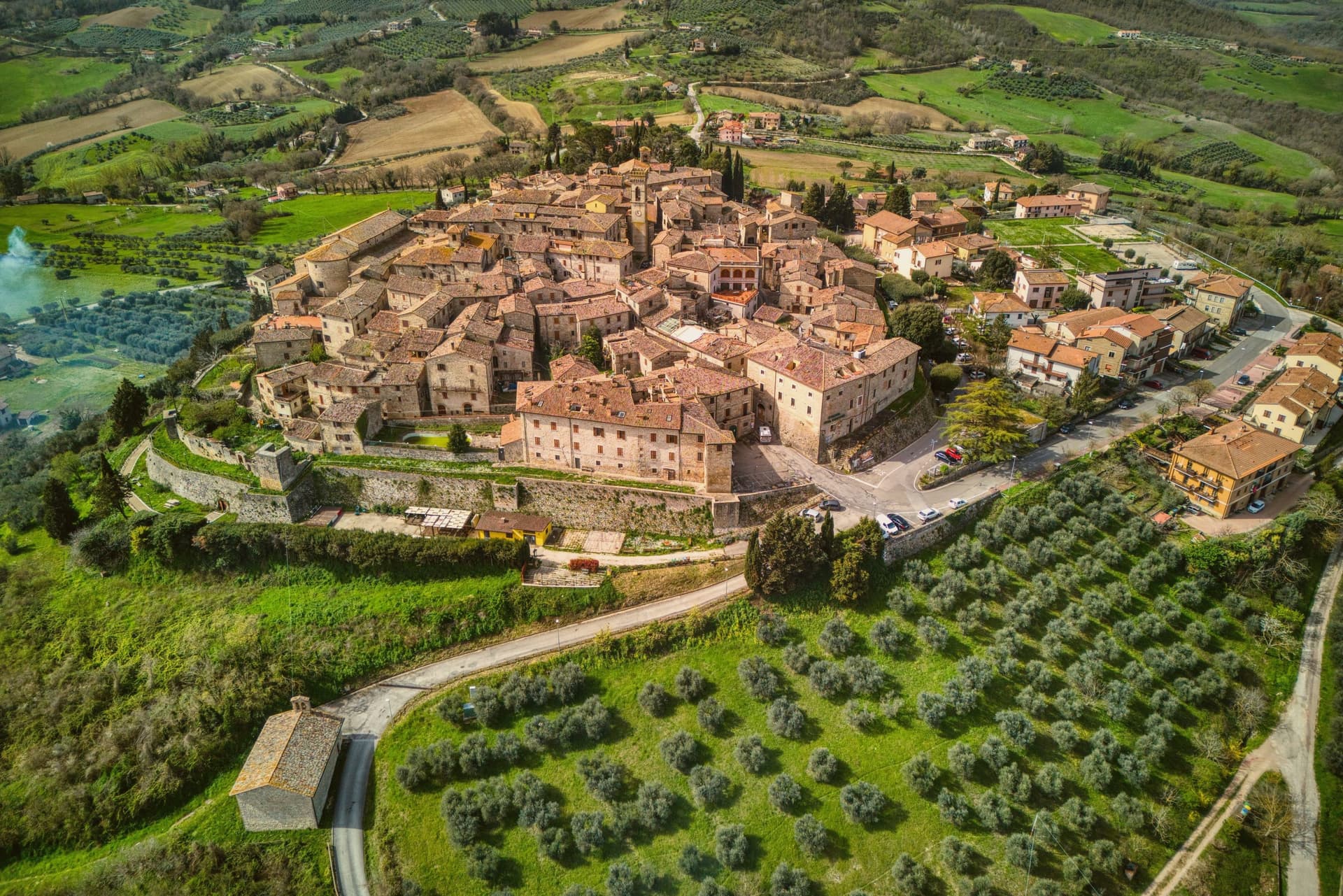
Monte Castello di Vibio sits at 422 meters on a ridge above the Tiber valley, eight kilometers north of Todi and thirty south of Perugia. The town is a walled fifteenth-century borgo on a slope of cultivated Umbrian hills, and its later name carries the trace of an old Perugian Roman family, the Vibii, attached to it in 1863 to distinguish the place from other Monte Castello communes.
The Teatro della Concordia, built in 1808 by nine wealthy families in the spirit of the French Revolution's ideals of liberty, equality and fraternity, is the smallest theatre all'italiana in the world: 99 seats, 62 in four tiers of boxes and 37 in the stalls, an auditorium of 68 square meters in a bell-shaped plan, a stage of 50. The theatre closed in 1951 after wartime damage and reopened in 1993 after restoration.
The Chiesa dei Santi Filippo e Giacomo, built in 1851 on the main square, replaced an older parish on the same footprint. The Madonna delle Grazie, an older stone church from 1505, holds frescoed walls.
What to see in Monte Castello di Vibio
- Teatro della Concordia. The smallest all'italiana theatre in the world: 99 seats, built in 1808 in a bell-shaped plan, closed in 1951 and reopened in 1993.
- Chiesa dei Santi Filippo e Giacomo. Main parish church on the central square, built in 1851 on the footprint of an earlier and smaller church.
- Madonna delle Grazie. Stone church of 1505 on the edge of the borgo, with frescoed interior walls dating to the early sixteenth century.
How to get to Monte Castello di Vibio
Perugia is roughly 50 minutes away by road.
Our tip
April through June and September into October are the months the borgo opens. The Teatro della Concordia runs a season of opera, concerts and theatre from spring through autumn, with extra performances around the August holidays. July and August are warm, and visitors thin in midafternoon; the centro storico is small enough that the heat passes quickly with a glass of water in the main square.
Montefalco
Why visit Montefalco
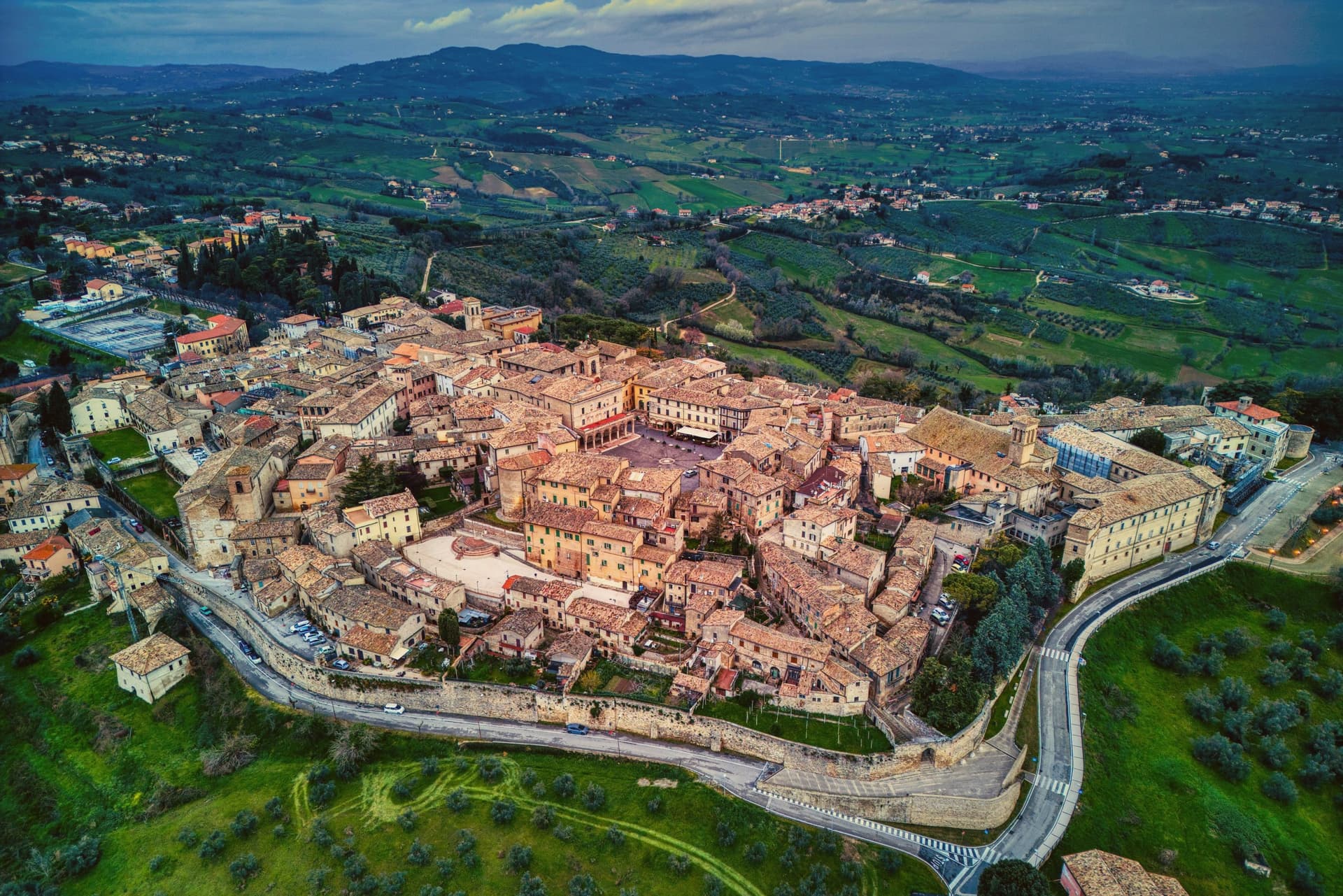
Montefalco sits on a hill above the Umbrian valley, its walls laid out in two concentric medieval circuits with five gates, the inner ring still complete and the outer ring added in the 14th century by the Trinci. At the top, the circular Piazza del Comune gathers four converging streets around the Palazzo Comunale, the high point from which the rest of the town falls away toward the walls and the vineyards beyond them.
The name Sagrantino belongs to the slopes right around those walls, where the grape has been traced back to the 1st century AD, and three of the largest producers, Caprai, Antonelli and Adanti, keep cellars within four kilometers of the centro storico. The harvest runs late September into October.
The fresco cycle Gozzoli painted in the apse of the former church of San Francesco is counted among his most complete surviving works, and the town's own name for itself, the railing of Umbria, describes the same eastern walls where the belvedere gathers seven hill towns into one view. Wine on the slopes, frescoes in the old church, a view of the valley from the walls: a hill town whose economy, art and setting all sit within walking distance of each other.
What to see in Montefalco
- Museo Civico di San Francesco. Former Franciscan church holding Benozzo Gozzoli's fresco cycle, plus works of the Umbrian school, in a building that has stood as the town's museum since deconsecration.
- Piazza del Comune. Circular medieval square at the top of the hill, ringed by the Palazzo Comunale, the Oratorio di Santa Maria di Piazza and four converging streets.
- Belvedere of Umbria. Panoramic walk on the eastern walls that takes in Perugia, Assisi, Spello, Foligno, Trevi, Spoleto and Todi from a single viewpoint.
How to get to Montefalco
Perugia is roughly 54 minutes away by road.
Our tip
April through June and September into October are the months for Montefalco. The vineyards run their full work cycle, the harvest of Sagrantino starts in the last week of September, and the railing belvedere holds the long Umbrian light. Settimana Enologica in mid-September brings producers from across the territory onto Piazza del Comune. Enologica Montefalco falls in September.
Anghiari
Why visit Anghiari
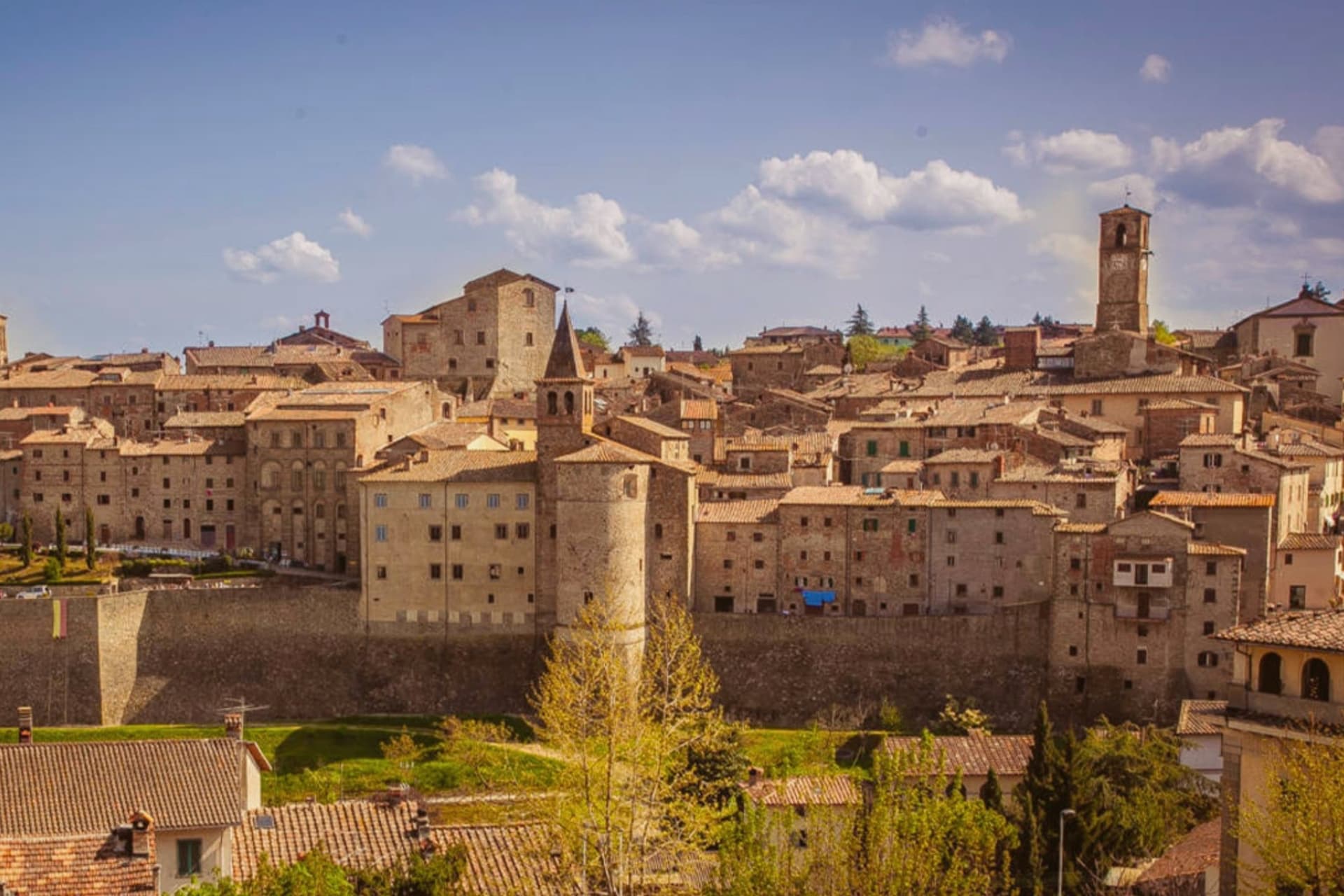
Anghiari sits at 430 meters on a spur above the upper Tiber valley, the Valtiberina, between Arezzo and the Umbrian border. The walled centro storico is intact, the streets running steeply from the Porta Sant'Angelo up to the Castello.
On 29 June 1440 the Florentine army defeated a Milanese force under Niccolò Piccinino in the plain below town, a battle that secured Florence's hold over central Italy and gave Leonardo da Vinci the commission for the Palazzo Vecchio fresco he started in 1505 and never finished. The painting, the Lost Leonardo, is presumed still to be hidden behind a Vasari wall in Florence.
Palazzo Taglieschi in the centro storico holds a polychrome wooden Madonna by Jacopo della Quercia and a working sixteenth-century table organ. The Mostra Mercato dell'Artigianato della Valtiberina has filled the streets with craft producers every spring since 1976, a working continuation of the textile and woodwork traditions that supported the town through the twentieth century.
What to see in Anghiari
- Palazzo Taglieschi. Sixteenth-century palace in the centro storico, now the Museo Statale di Palazzo Taglieschi, with a wooden Madonna by Jacopo della Quercia and a working table organ.
- Castello di Anghiari. Medieval fortified core at the top of the town, walls and gates still intact, the visual anchor of the silhouette from the valley below.
- Campo della Battaglia. The plain at the foot of the walls where Florence defeated Milan on 29 June 1440, the battle that inspired Leonardo's lost Palazzo Vecchio fresco.
How to get to Anghiari
Perugia is roughly 82 minutes away by road.
Our tip
April through June and September into October are the working months in the Valtiberina: dry days, low cloud over the upper Tiber, the surrounding farmland green or gold by season. The Mostra Mercato dell'Artigianato runs the last week of April and the first week of May, filling the streets with artisans from across the valley. Late June marks the anniversary of the 1440 battle, with reenactments below the walls. Palio della Vittoria di Anghiari falls in June.
Città della Pieve
Why visit Città della Pieve
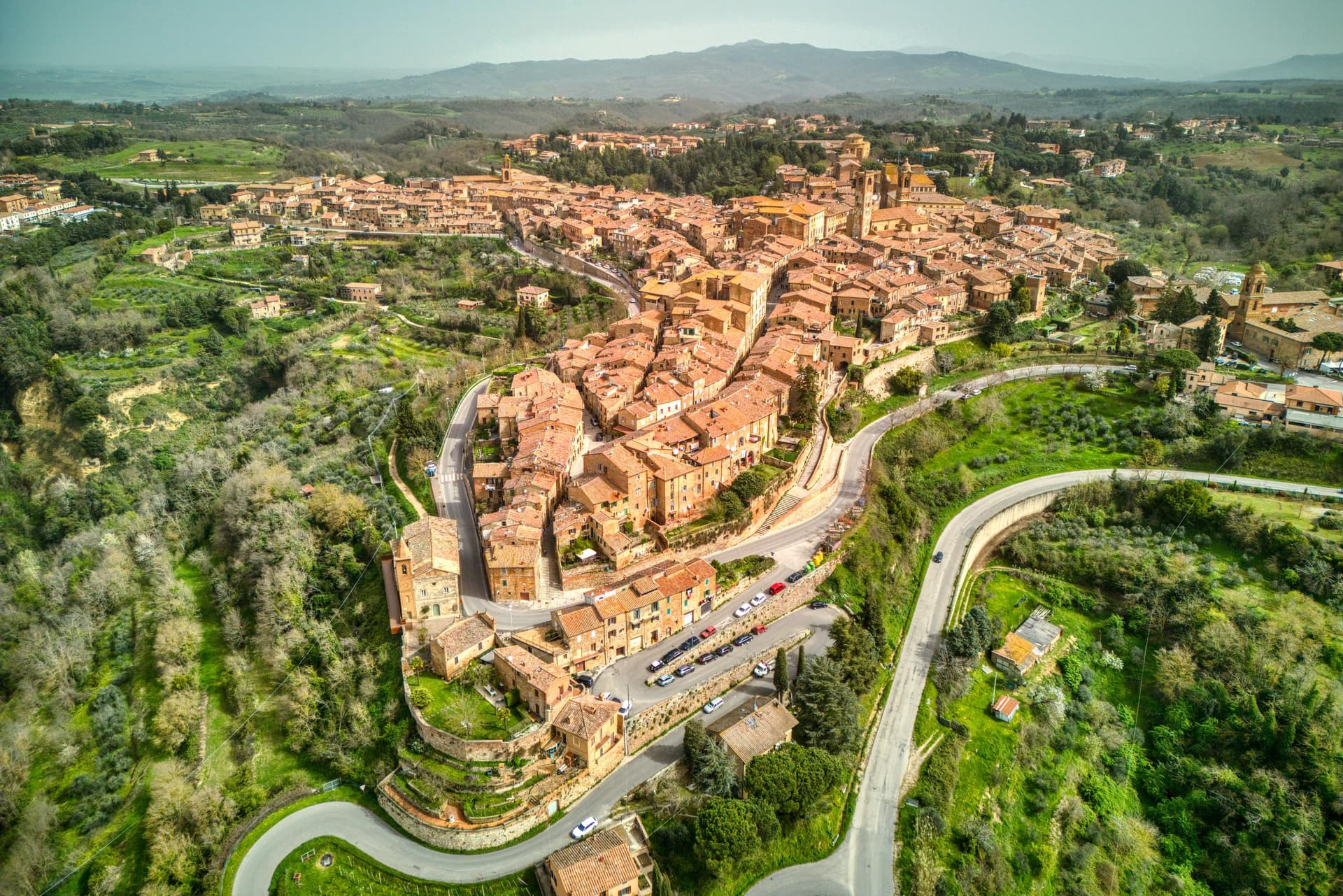
Città della Pieve sits on a hill at 508 meters between Umbria and Tuscany, about 260 meters above the Valdichiana and within sight of Lake Trasimeno. The town is built almost entirely of the local red brick that has been fired here since the Middle Ages, which gives the centro storico a uniform terracotta color.
Pietro Vannucci, known as Perugino, was born here around 1448 and returned in 1504 to fresco the Adoration of the Magi inside the Oratorio di Santa Maria dei Bianchi, one of the largest works he ever painted. The Cathedral of San Gervasio holds two more Perugino panels from 1510 and 1514.
Pope Clement VIII elevated the town from Castel della Pieve in 1600, restoring its episcopal seat. Vicolo Baciadonne, eighty centimeters wide, threads between two brick walls and is regularly cited as the narrowest alley in Italy.
What to see in Città della Pieve
- Cattedrale dei Santi Gervasio e Protasio. Cathedral on the main piazza with two Perugino panels, the Madonna and Child with Saints of 1514 and the Baptism of Christ of 1510.
- Oratorio di Santa Maria dei Bianchi. Confraternity oratory holding Perugino's Adoration of the Magi, frescoed in 1504 and considered one of his largest single works.
- Torre del Pubblico. Twelfth-century civic tower in Lombard Romanesque style, thirty-nine meters tall, set next to the cathedral on Piazza Plebiscito.
How to get to Città della Pieve
There is a railway station in the town, so you can arrive without a car and never need one while you are here. Perugia is roughly 47 minutes away by road.
Our tip
April through June and September into October are the months locals prefer. The Valdichiana below stays green or gold depending on the half, and the brick of the centro storico holds the late light well. The Infiorata in June covers the main streets in petal carpets for Corpus Domini, drawing the year's largest crowd. Palio dei Terzieri falls in August.
Trevi
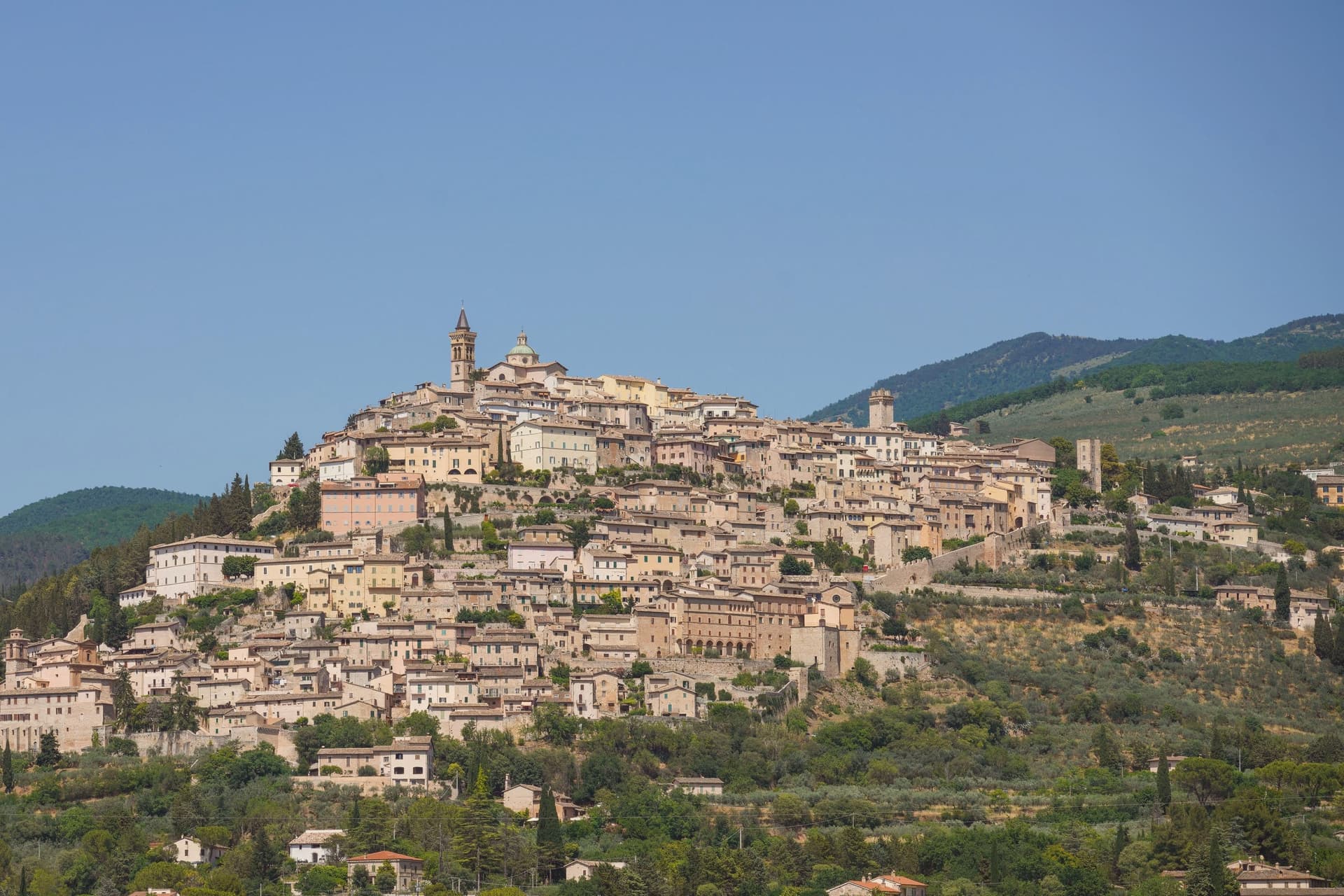
Why visit Trevi
Trevi sits at 412 meters on a conical hill above the Spoleto valley, the centro storico still inside the Roman walls of the 1st century BC. The town stood on the Via Flaminia, the consular road from Rome to the Adriatic, and grew into a Guelph commune by the 12th century.
Olive oil is what people come for. Over 200,000 trees blanket the slopes below the walls on near-ideal calcareous, well-drained soils, and the Olivo di Sant'Emiliano near the abbey of the same name is about 1,700 years old, identified with the tree the bishop of Trevi was tied to in 304 before his martyrdom.
The Santuario della Madonna delle Lacrime, built in 1487 to mark a miracle, holds a fresco by Pietro Perugino. The centro storico runs in concentric rings up the hill, each ring older than the last, with the Palazzo Comunale and the Pinacoteca holding works by Lo Spagna at the top.
What to see in Trevi
- Santuario della Madonna delle Lacrime. Built in 1487 after a Marian apparition wept tears of blood in 1485, with a fresco by Perugino in the Cappella dell'Adorazione.
- Chiesa di Sant'Emiliano. Romanesque parish church at the top of the centro storico, dedicated to the bishop martyred in 304, the patron saint of the town.
- Olivo di Sant'Emiliano. About 1,700-year-old olive tree near the eponymous church, nine meters tall, traditionally the tree to which the bishop was tied before martyrdom.
How to get to Trevi
There is a railway station in the town, so you can arrive without a car and never need one while you are here. Perugia is roughly 47 minutes away by road.
Our tip
April through June and September into October are the months for Trevi. The olive groves are in leaf or in harvest, the hill is green or silver-gold depending on the half, and the valley below holds the morning light. The Festa di Sant'Emiliano runs the last week of January with the Palio dei Terzieri, when the three quarters of the town compete.
Cortona
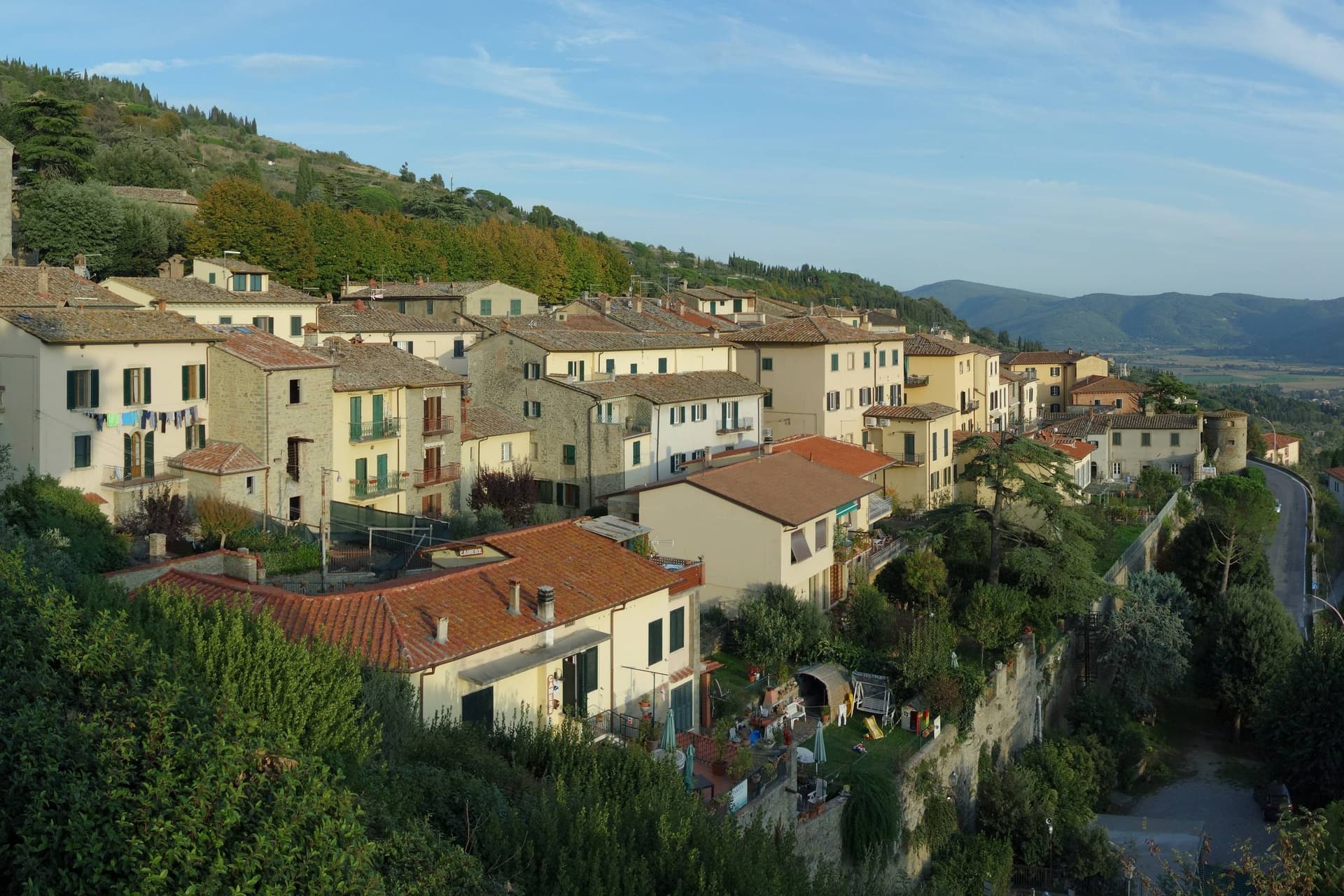
Why visit Cortona
Cortona stands on the southern flank of the Val di Chiana, looking across to Lake Trasimeno: a position that put it in sight of both the plain it governed and the water beyond it. The Etruscan name Curtun survives fixed in stone, and the city that carried it was built in tiers up the hillside, walls and fortress at the crown, church and convent lower down at the edges of the slope, houses and squares filling the ground between.
The bishop granted Francis of Assisi a place for retreat in 1211, and what resulted was built into a narrow valley below the town rather than within its walls, a retreat kept apart from the civic center even as it stayed within reach. Santa Margherita, the city's patron, is held on the ridge above the streets she once walked.
The painters Luca Signorelli and Pietro da Cortona were born inside the walls that still define the town's shape. Frances Mayes published her memoir in 1996, and the town has not been quiet since.
What emerges is a hill town whose Etruscan skeleton, medieval faith, and modern fame sit stacked on the same slope, each layer visible without erasing the one beneath it.
What to see in Cortona
- Mura etrusche. The walls still ring the city entire, the foundation under every later layer of building, Roman and medieval alike.
- MAEC. Museum of the Etruscan Academy in Palazzo Casali, holding the bronze plaque and the lampadario di Cortona.
- Museo Diocesano. Collection in the former Chiesa del Gesù with Beato Angelico's Annunciation of 1430 and works by Luca Signorelli.
How to get to Cortona
There is a railway station in the town, so you can arrive without a car and never need one while you are here. Perugia is roughly 45 minutes away by road.
Our tip
April through June brings green hills, cool evenings and the longest hours in the Diocesano without a queue. September and October are the dry, gold months, light coming in low across Lake Trasimeno and the olive harvest running until November. July and August are the difficult months. Giostra dell'Archidado di Cortona falls in June.
More from Anywhere Italy
- The best hill towns that live slowly in Umbria
 The best towns that live slowly in the province of Perugia
 The 9 best hill towns that live slowly in Toscana
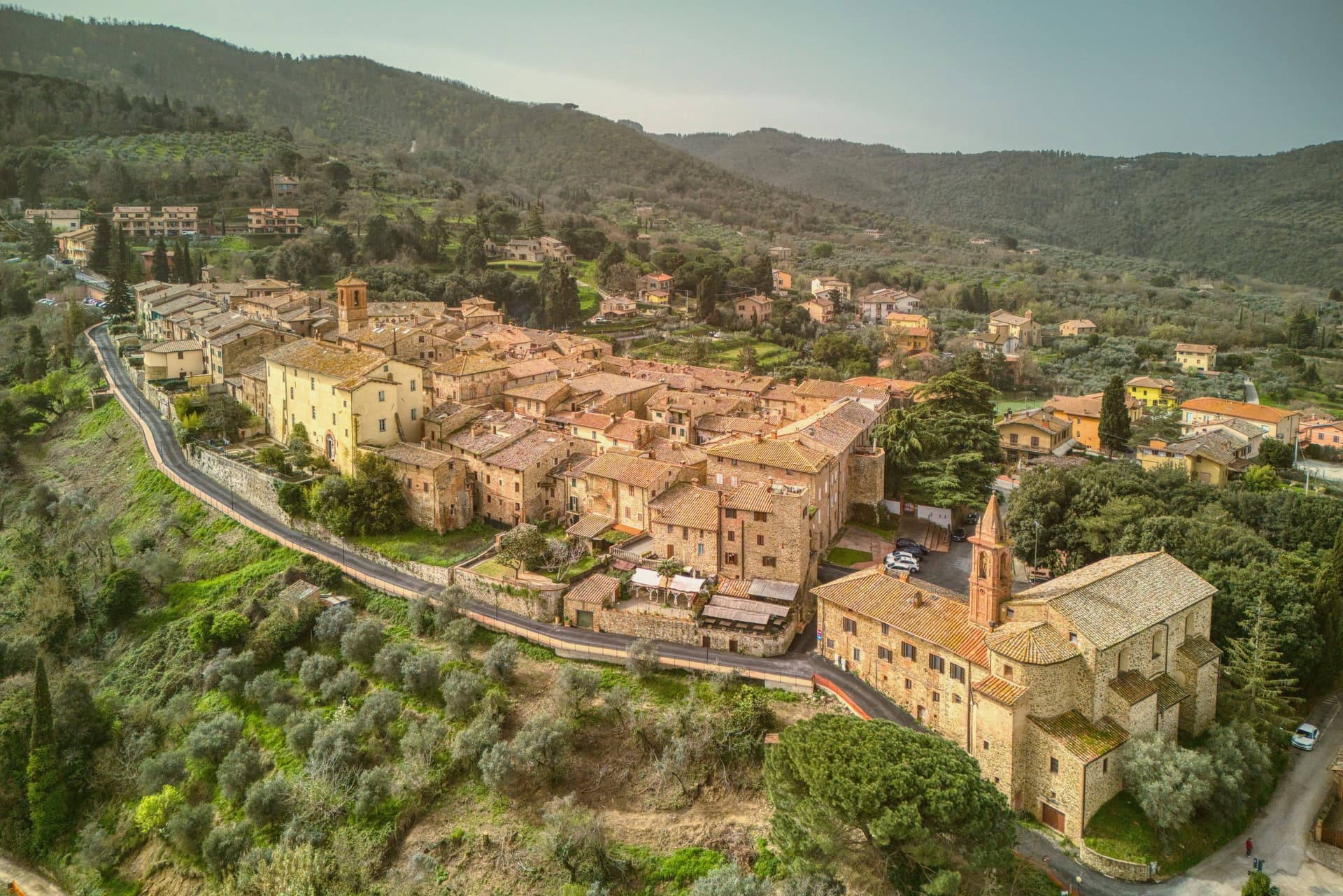 The best hidden hill towns with a food festival within 90 minutes of Perugia
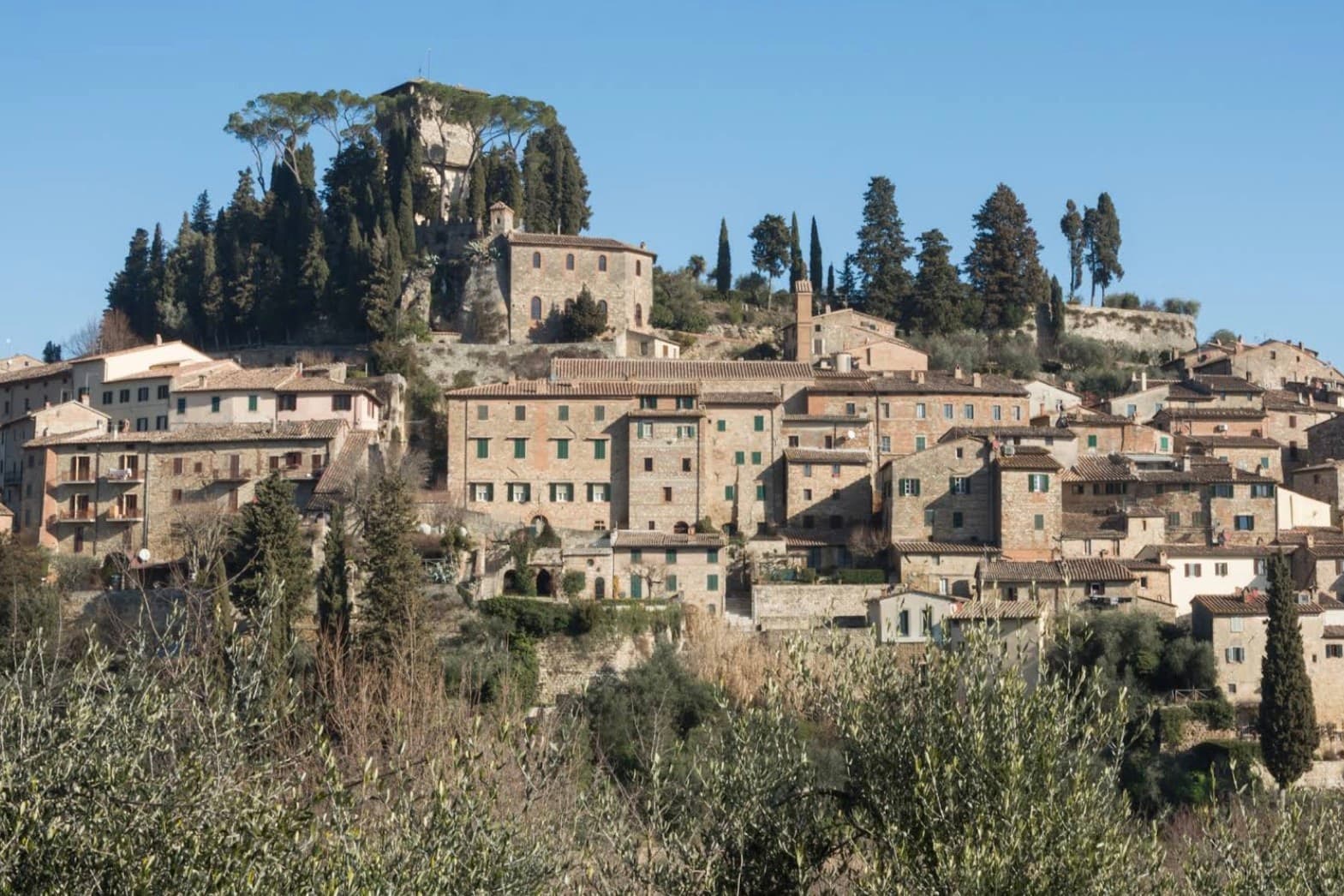 The best hidden hill towns with a medieval festival within 90 minutes of Perugia
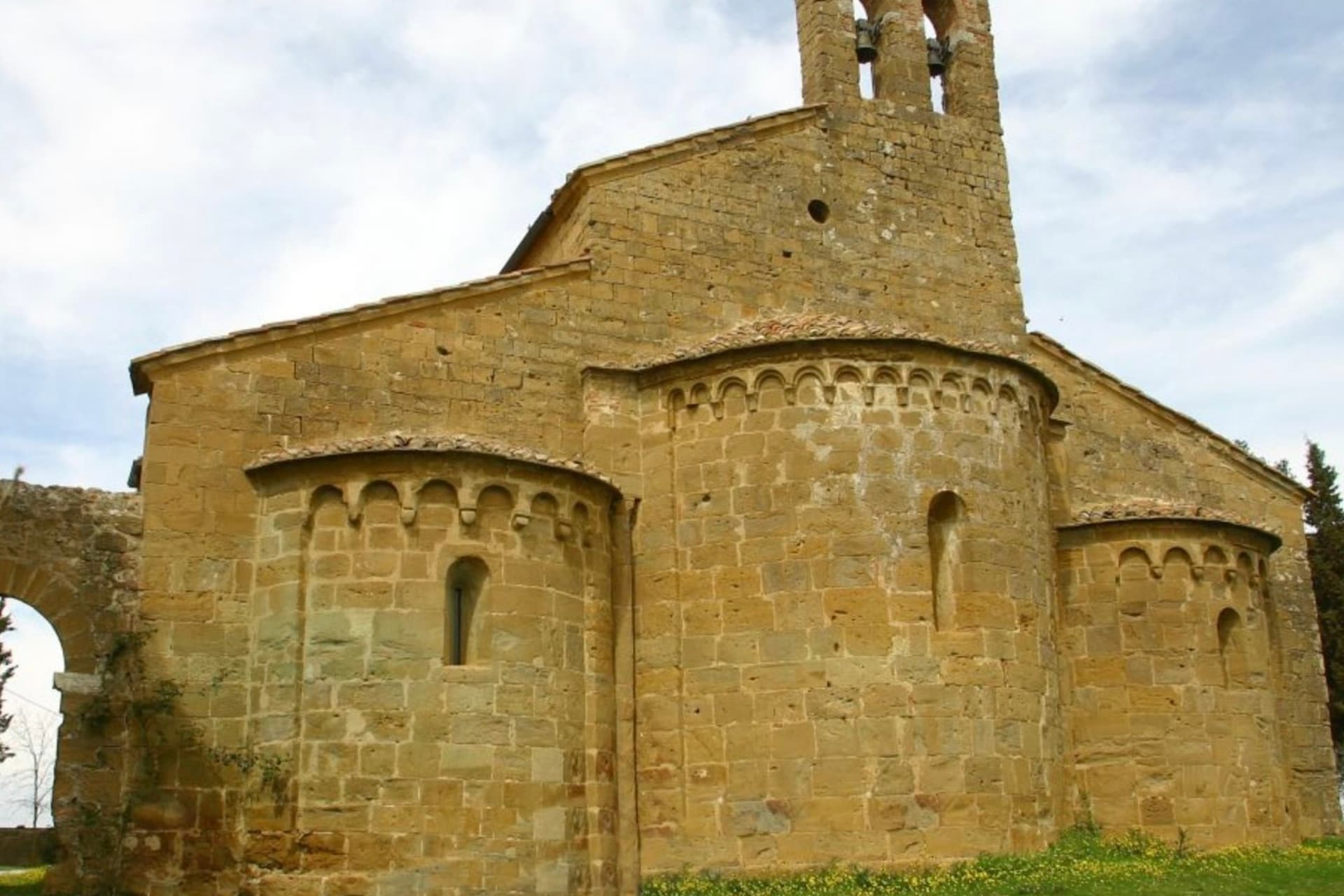 The best hidden hill towns with a serious restaurant within 90 minutes of Perugia