
Veneto · Vicenza
Marostica
The walled chess town below Vicenza, where two castles linked by a hill rampart stage a costumed reenactment of a 1454 match every two years.
- Best time
- Apr–Oct
- By car
- 1 h from Padua
- Population
- 13,940
Known for
LIVING CHESS
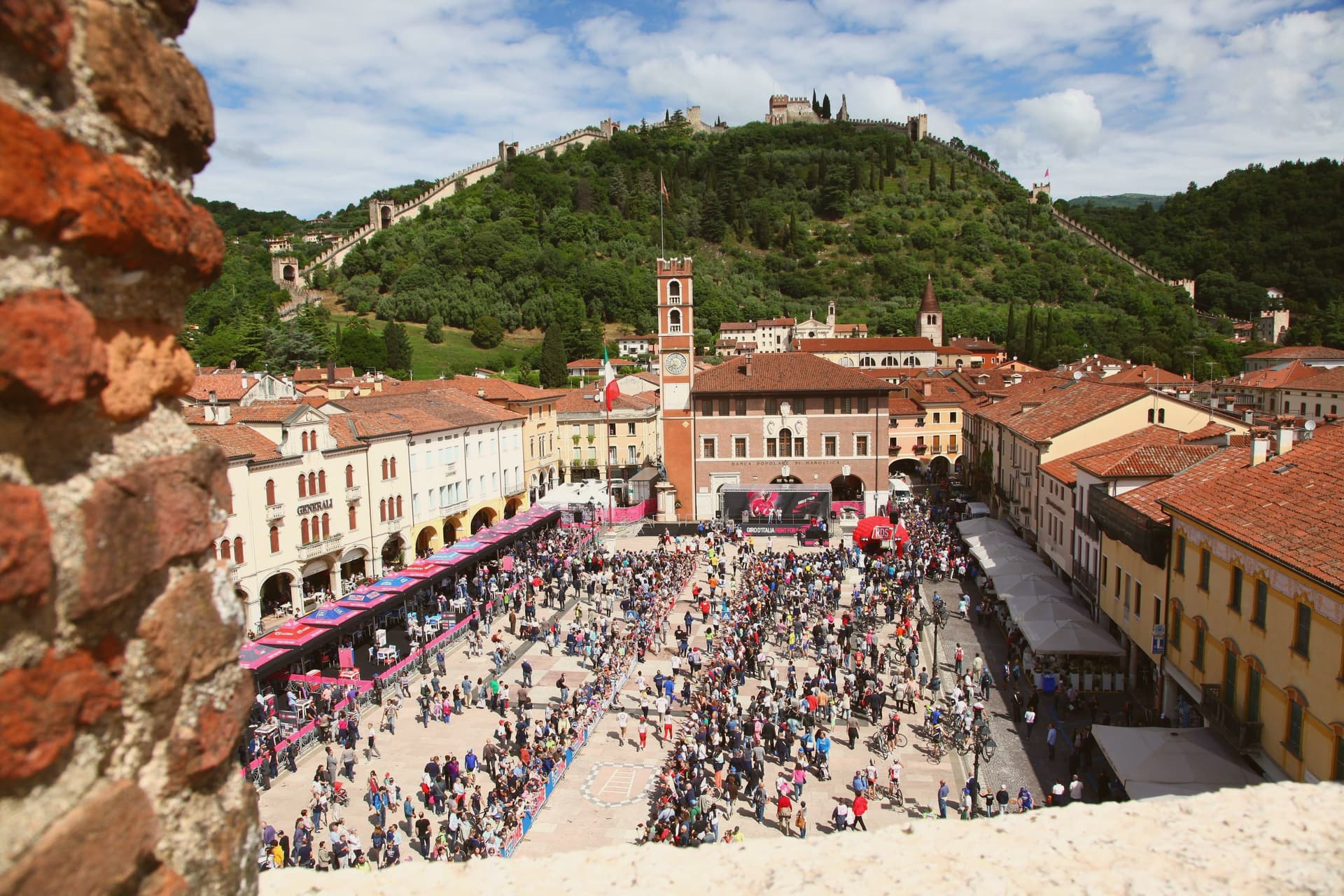
The Partita a Scacchi, played on the square between the two castles every even-numbered September, reenacts the 1454 duel-by-chess for Lionora Parisio.
TWO CASTLES
Cangrande della Scala's lower fortress on the plain and the upper ruin on Monte Pausolino, linked by two kilometers of wall and twenty-four towers.
CILIEGIA IGP
Ciliegia di Marostica, first Italian cherry granted IGP status in 2002, grown on the slopes north of the walls and used in the local cherry crostata.
When to visit
Best · Apr–Oct
- J7°
- F10°
- M13°
- A16°
- M21°
- J26°
- J28°
- A28°
- S23°
- O18°
- N12°
- D8°
- Best
- Hot or crowded
- Quiet
- Mostly closed
Daytime averages, 2020–2024. Weather data by Open-Meteo.com.
Why come
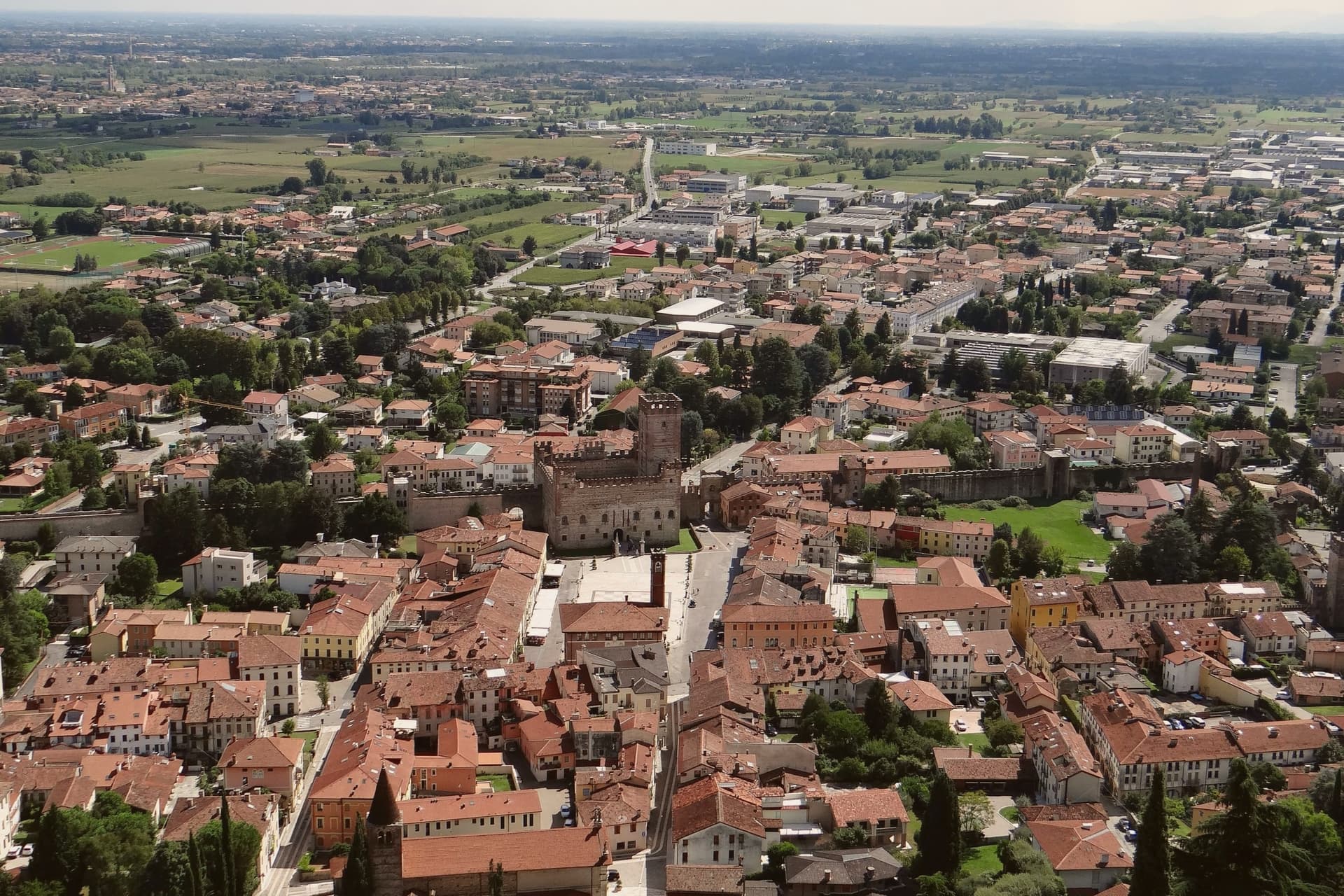
Marostica sits at the foot of the Asolan hills, forty-five kilometers northwest of Padova. Cangrande della Scala took the town in 1311, building his lower fortress on the plain and a second stronghold on the hill above it, then joining the two with a wall long enough to carry two dozen towers and four gates between them. The arrangement is unusual: most walled towns fortify a single point, but here the defense runs uphill, turning the slope itself into the connecting structure between plain and ridge.
The upper stronghold did not survive the artillery of the War of the League of Cambrai in 1510 and has stood as a ruin since, while the lower one remained inhabited and working, which is why the town's public life, its square, its church, its chess board, still gathers at the base of the hill rather than at its summit. The cherries grown on the slopes to the north, since given IGP status, are the one product of the surrounding land that made it into the local kitchen as the crostata. What the town amounts to is a fortification that never stopped being a town: the walls did not seal Marostica off from its hillside, they organized it, and the square where the chess is played twice a decade sits exactly where the two castles' lines of sight once met.
The Sunday letter
Marostica is on our list. Its letter is still to come.
We are writing about all 1,000 of these towns, one at a time, in a free letter every Sunday: the photo, the food, the festa. That is our mission. Sign up and you will be there when Marostica comes up. By Peter & Sophia, from Pietrasanta.
Read on
Marostica in our articles
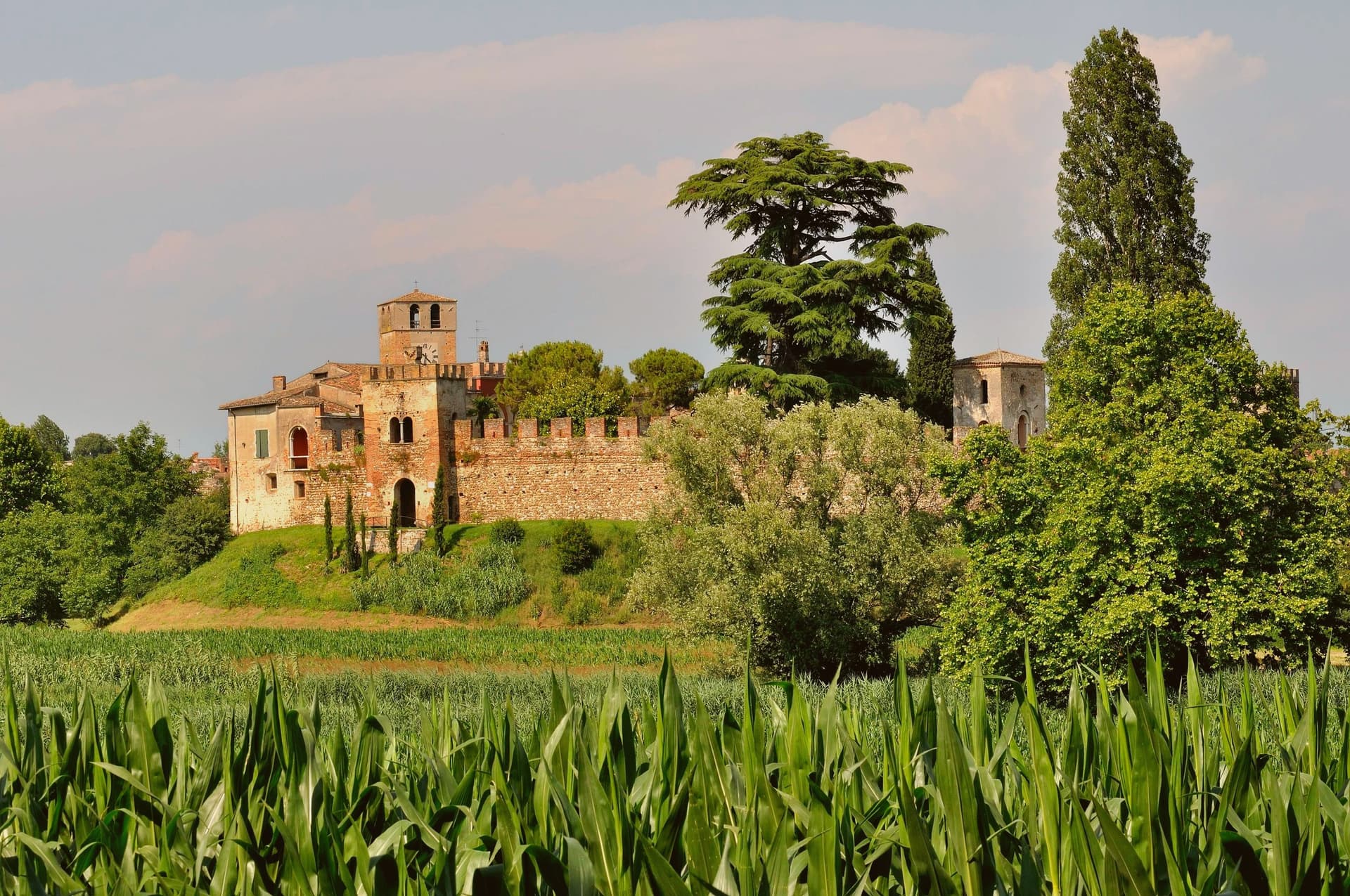
 The best towns known for what they grow within 75 minutes of Padua6 towns, Marostica among them.
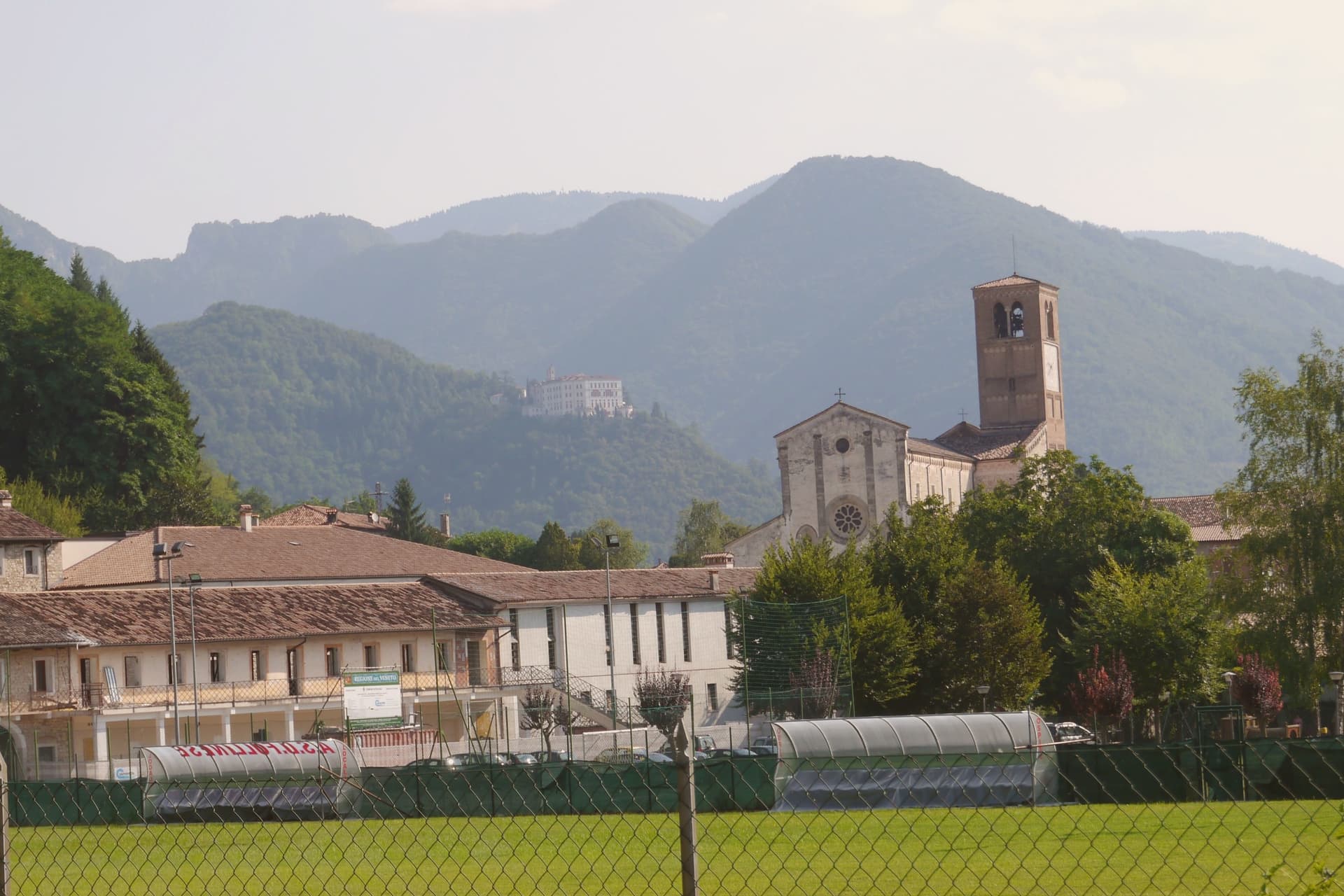
 The best hill towns within 75 minutes of Verona7 towns, Marostica among them.
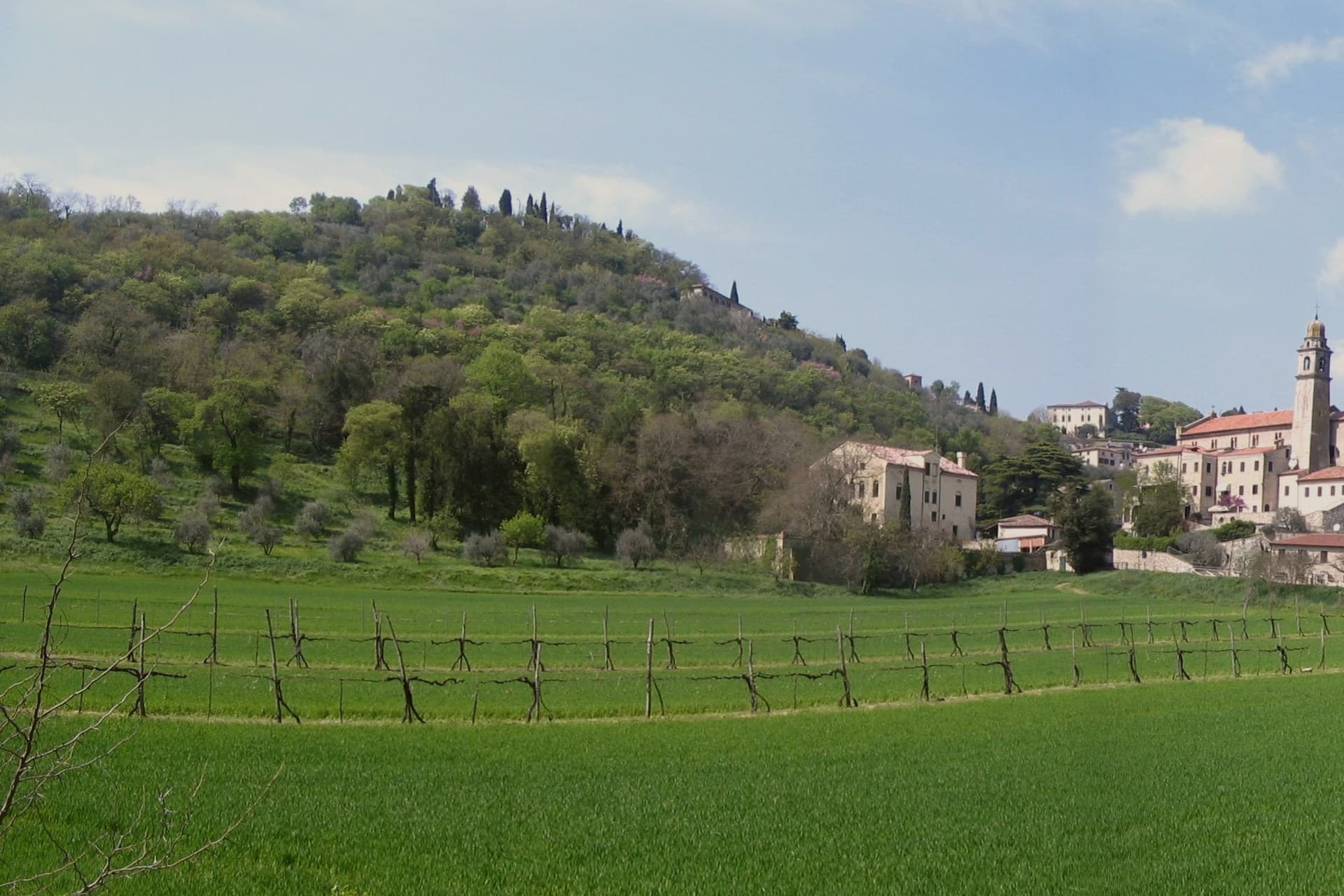
 The best hill towns with a serious restaurant in Veneto8 towns, Marostica among them.
 The 9 best hidden hill towns in Veneto9 towns, Marostica among them.
How to get there
From Venice (TSF), about 1h 9m by car.
Verona (VRN) is about 1h 28m away.
By car from the centre of Padua 1 hour.
Coming by train into Vicenza? Marostica is about 44 minutes away by road.
What to see
Castello Inferiore
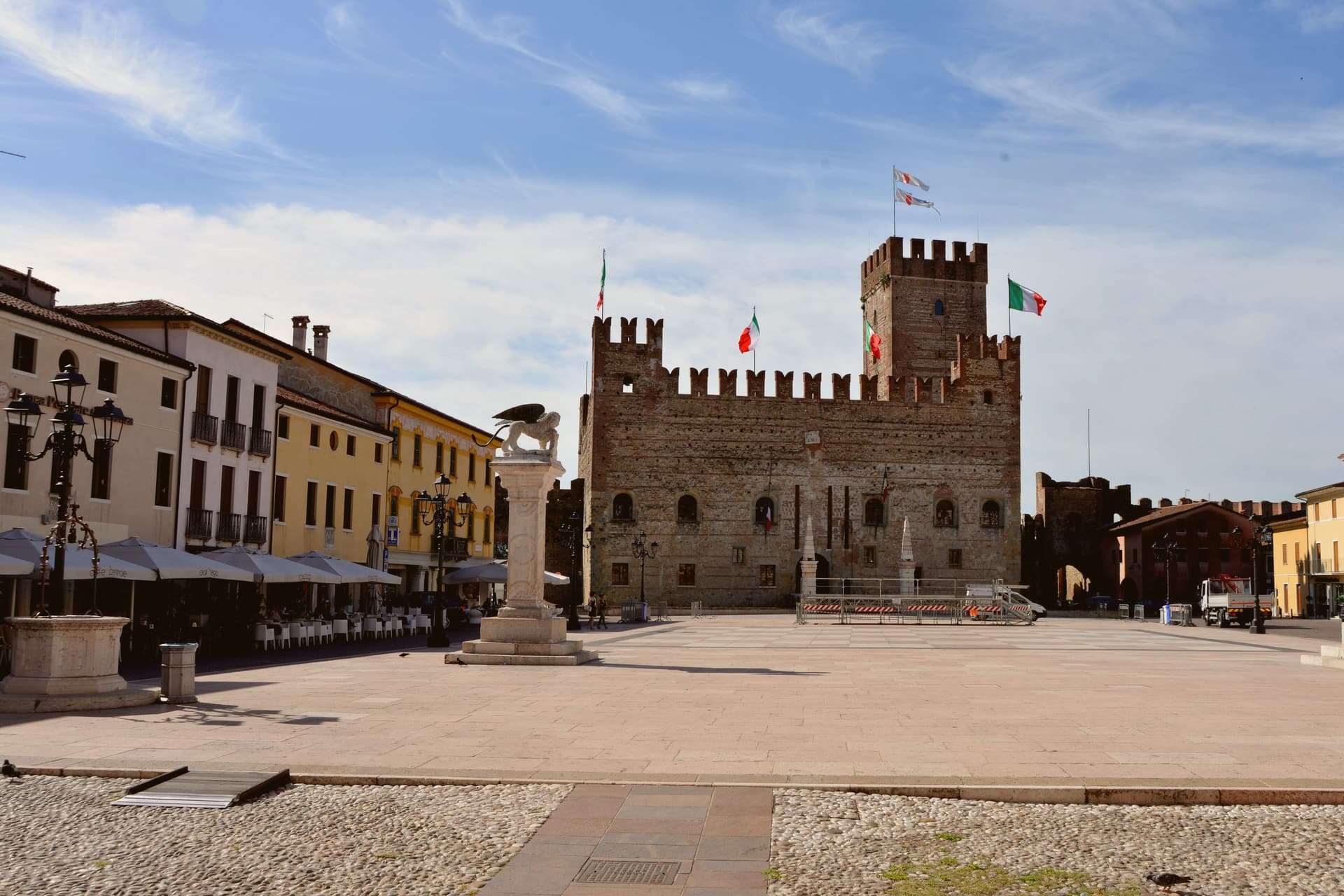
Built from 1311 on Piazza Castello, its keep rising 44 meters over the square, with a museum inside on the chess match traditions.
Castello Superiore
Ruined by Venetian artillery in 1510, standing on Monte Pausolino and reached by a footpath through the walls, with views over the Brenta valley.
Mura di Marostica
Fourteenth-century walls running two kilometers between the two castles, with twenty-four towers and four gates; the parapet walk is open to the public.
Piazza Castello
Main square between the lower castle and the parish church, paved with a permanent chess board where the biennial match is staged the second weekend of September.
Partita a Scacchi
Costumed reenactment of a 1454 chess match between Vieri da Vallonara and Rinaldo d'Angarano, staged with five hundred performers in Renaissance dress on even-numbered years.
The slow-trip planner
Building a trip? Find where Marostica fits in a slow Italy circuit.
Answer five questions. We will shape a geographically coherent slow trip from the 1,000 Italian towns most travelers skip. Yours to save and share.
We recommend
Where to eat
Not our picks, but places the guides put their name to: a Michelin star, a Gambero Rosso fork, a Slow Food snail, a Michelin Key for the hotels. Worth a table, a counter, or a night when you pass through.
MadonnettaRistorante
A Michelin Bib Gourmand for Madonnetta, and a Slow Food snail.
La RosinaRistorante
La Rosina holds a spot in the Michelin Guide.
Living here
- Population 13,940
- Commuter belti
- Pharmacy in town
- High school within a 30-minute drive
- Nearest airport Venice, 1 h 9 min drive
- Regional capital Venezia, 1 h 19 min drive
Common questions
- What is Marostica known for?
- Marostica is the walled chess town below Vicenza, where two castles linked by a hill rampart stage a costumed reenactment of a 1454 match every two years.
- Where is Marostica?
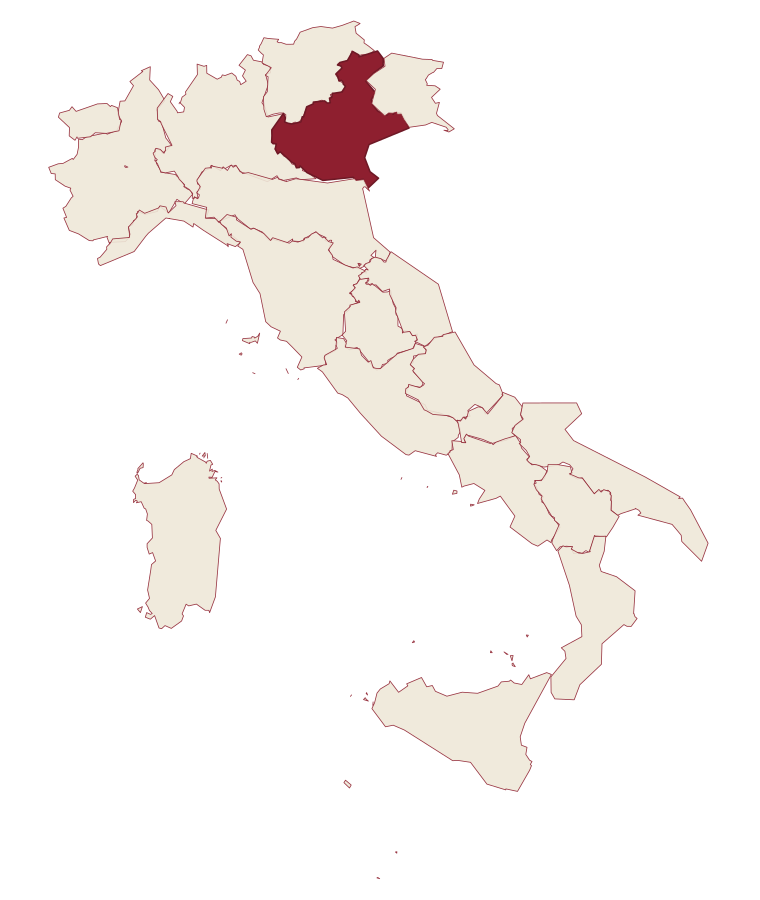
- Marostica is a comune in the province of Vicenza, in Veneto, at 103 meters above sea level.
- What is the nearest airport to Marostica?
- Venice (TSF), about 1h 9m by car.
- How long is the drive from Padua to Marostica?
- About 1 hour by car.
- When is the best time to visit Marostica?
- Best in Apr–Oct. July is the warmest month, averaging 28 degrees, and May the wettest, with about 16 rain days.
- Which other towns are like Marostica?
- Pieve di Soligo, Vittorio Veneto and Spilimbergo.
- How many people live in Marostica?
- 13,940 at the 2023 count.
Tags & datadesignations · numbers · sources
Recognised as
The numbers
- Elevation: 103 m
- Population: 13,940
- Surface area: 36.53 km²
These figures were compiled from public directories: ISTAT, OpenStreetMap and Wikidata, and from the official listings of the guides named on this page. Town details change; verify with official sources before you travel.
Similar
Towns like Marostica
Pieve di Soligo
Province: Treviso
both inland, away from the coast · both over 10,000 people
Vittorio Veneto
Province: Treviso
both inland, away from the coast · both over 10,000 people
Spilimbergo
Province: Pordenone
both inland, away from the coast · both over 10,000 people
Vinci
Province: Firenze
both inland, away from the coast · both over 10,000 people
Tarquinia
Province: Viterbo
both inland, away from the coast · both over 10,000 people
Carmignano
Province: Prato
both inland, away from the coast · both over 10,000 people
🟠 Bandiera Arancione
More Bandiera Arancione towns in Veneto
Arquà Petrarca
Province: Padova
The Euganean Hills village where Francesco Petrarca spent his last four years and died in 1374, renamed in his honor in 1868.
Asolo
Province: Treviso
A walled hill town at 205 meters that Caterina Cornaro ran as her court after trading Cyprus to Venice in 1489.
Borgo Valbelluna
Province: Belluno
Veneto's youngest comune, a 13,410-resident fusion of three lower-Belluno towns formed in 2019, wrapped around an old borgo in the pre-Dolomite Piave valley.
Cison di Valmarino
Province: Treviso
A Prosecco hills borgo at 261 meters under the dolomite rock of CastelBrando, the largest inhabited castle complex in Europe.
Follina
Province: Treviso
A Prosecco-hills borgo at 191 meters around the Cistercian Abbey of Santa Maria, with a cloister finished in 1268.