
Emilia-Romagna · Ferrara
Ferrara
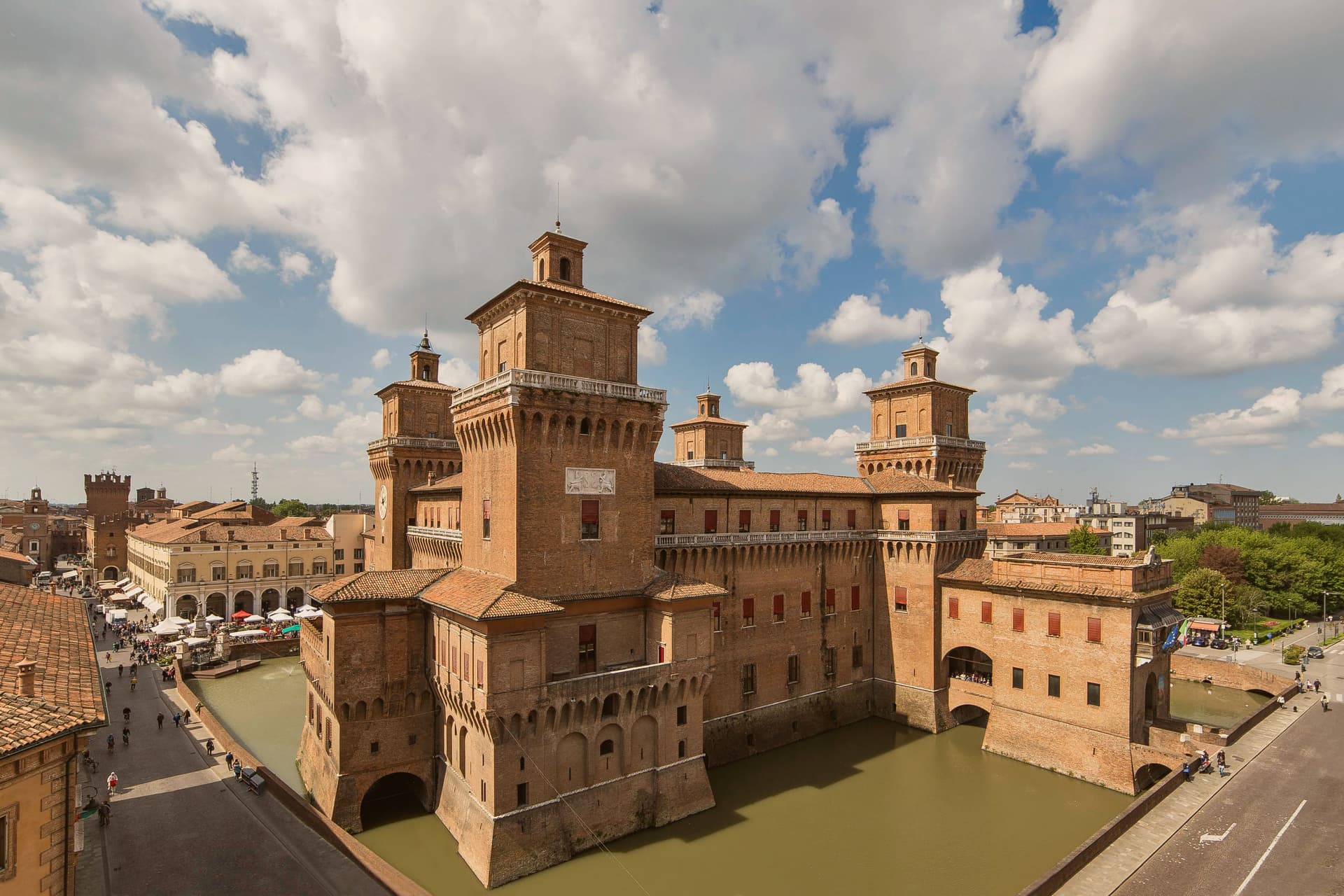
A Renaissance capital planned on a grid rather than grown by accident, small enough to cross by bicycle in twenty minutes, and ringed by walls that still stand whole.
- Best time
- Apr–Jun, Sep–Oct
- By car
- 48 min from Bologna
- By train
- Station in the comune
- Population
- 129,340
Known for
EUROPE'S FIRST MODERN CITY
UNESCO 1995. Biagio Rossetti's 1492 Addizione Erculea was the first rationally planned urban expansion in European history.
ITALY'S BIKE CAPITAL
One bike per resident; cars effectively excluded from the medieval quarter; the 9-km Renaissance walls double as a cycling path.
ESTE COURT CITY
Two centuries of one of Europe's most refined courts, based at the Castello Estense: Ariosto, Cosmè Tura, Palazzo Schifanoia.
PAMPEPATO + CAPPELLACCI
Città del Pane registered tradition. Dense chocolate-and-spice Christmas cake; pumpkin-stuffed pasta in butter and sage.
When to visit
Best · Apr–Jun, Sep–Oct
- J8°
- F12°
- M15°
- A19°
- M23°
- J29°
- J32°
- A31°
- S26°
- O21°
- N13°
- D9°
- Best
- Hot or crowded
- Quiet
- Mostly closed
Daytime averages, 2020–2024. Weather data by Open-Meteo.com.
The festa: San Giorgio, 23 April
Why come
Ferrara is the city the Este family built and that the Po built around. For two centuries, from 1264 to 1598, the Este dukes ran their court from a moated brick fortress at the centre of town: Ariosto wrote the Orlando Furioso here, and the Ferrara school of painting flowered under Cosmè Tura. In 1492, Duke Ercole I commissioned Biagio Rossetti to lay out a new quarter on a rational grid, with engineered perspectives and zoned districts, grafted onto the older medieval core rather than replacing it.
That layering is still legible on the ground. The old quarter, narrow and irregular, sits against Rossetti's planned extension, wide and gridded, and the two are stitched together inside a single ring of walls nine kilometres around. The scale is small enough that the whole centro can be crossed by bicycle in twenty minutes, and locals do: Ferrara has close to one bike per resident, and the medieval streets are narrow enough to keep cars mostly out.
The food carries its own local character apart from any of this: cappellacci di zucca, salama da sugo, pampepato at Christmas, and a Trebbiano-based wine grown on coastal sand dunes to the east. The Comacchio lagoons and the eel-fishing villages of the Po Delta are an easy half-day from the city, which served as the gateway to that whole territory. What the plan and the walls add up to is a city that grew twice, once organically and once by design, and kept both versions intact side by side rather than letting one erase the other.
The Sunday letter
Ferrara is on our list. Its letter is still to come.
We are writing about all 1,000 of these towns, one at a time, in a free letter every Sunday: the photo, the food, the festa. That is our mission. Sign up and you will be there when Ferrara comes up. By Peter & Sophia, from Pietrasanta.
Read on
Ferrara in our articles
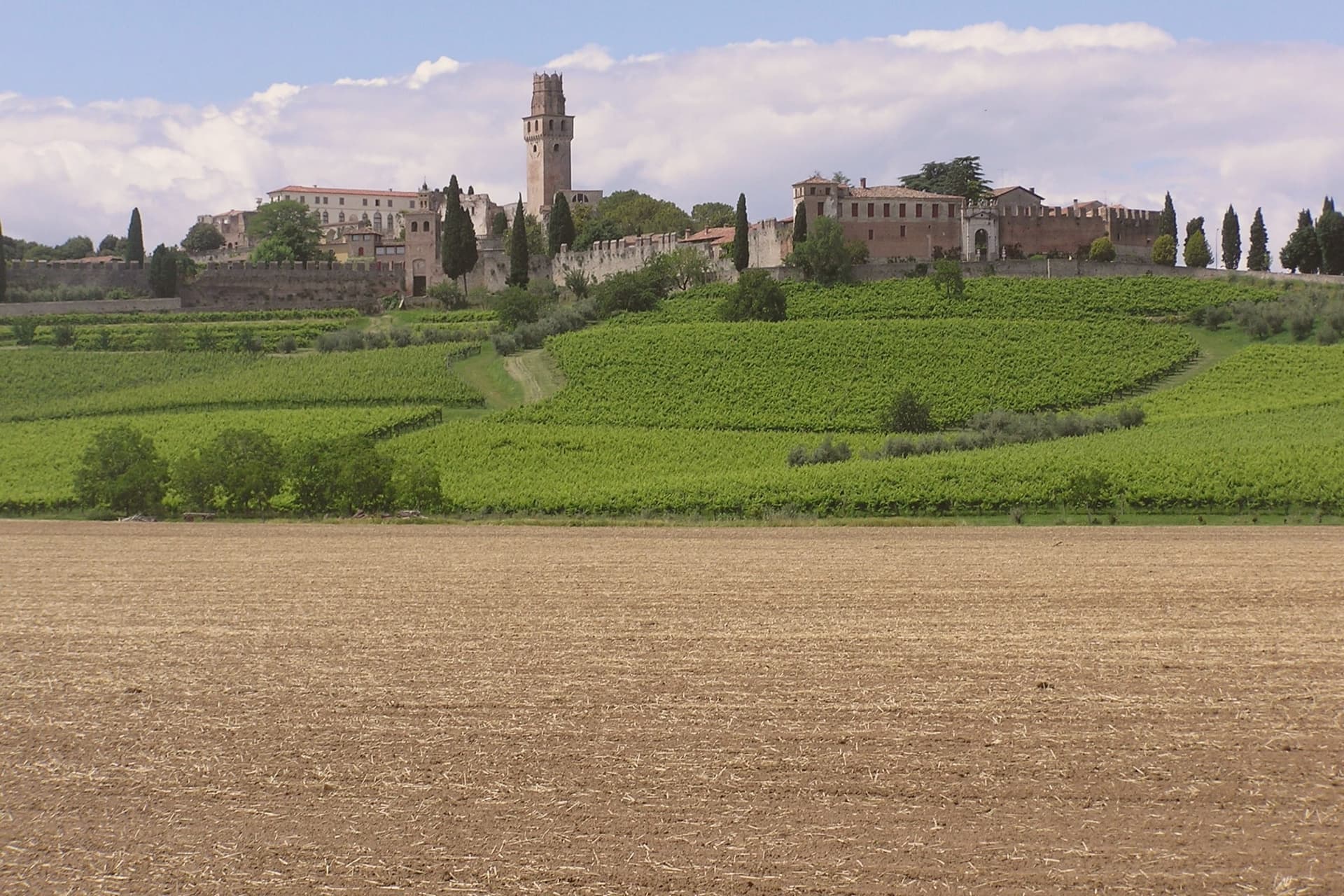
 The best towns known for what they grow within 75 minutes of Padua6 towns, Ferrara among them.
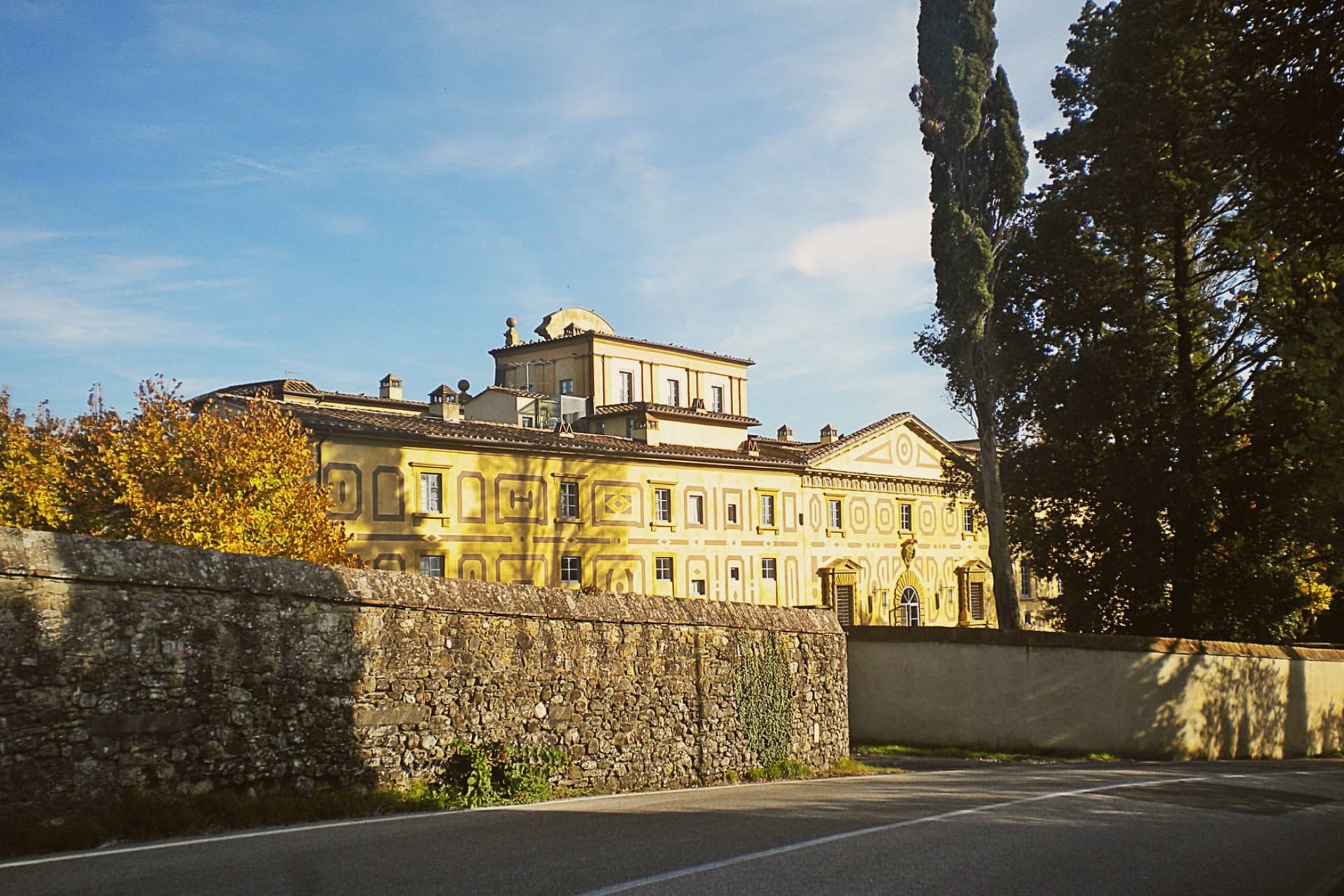
 The best towns with a World Heritage site within 75 minutes of Padua6 towns, Ferrara among them.
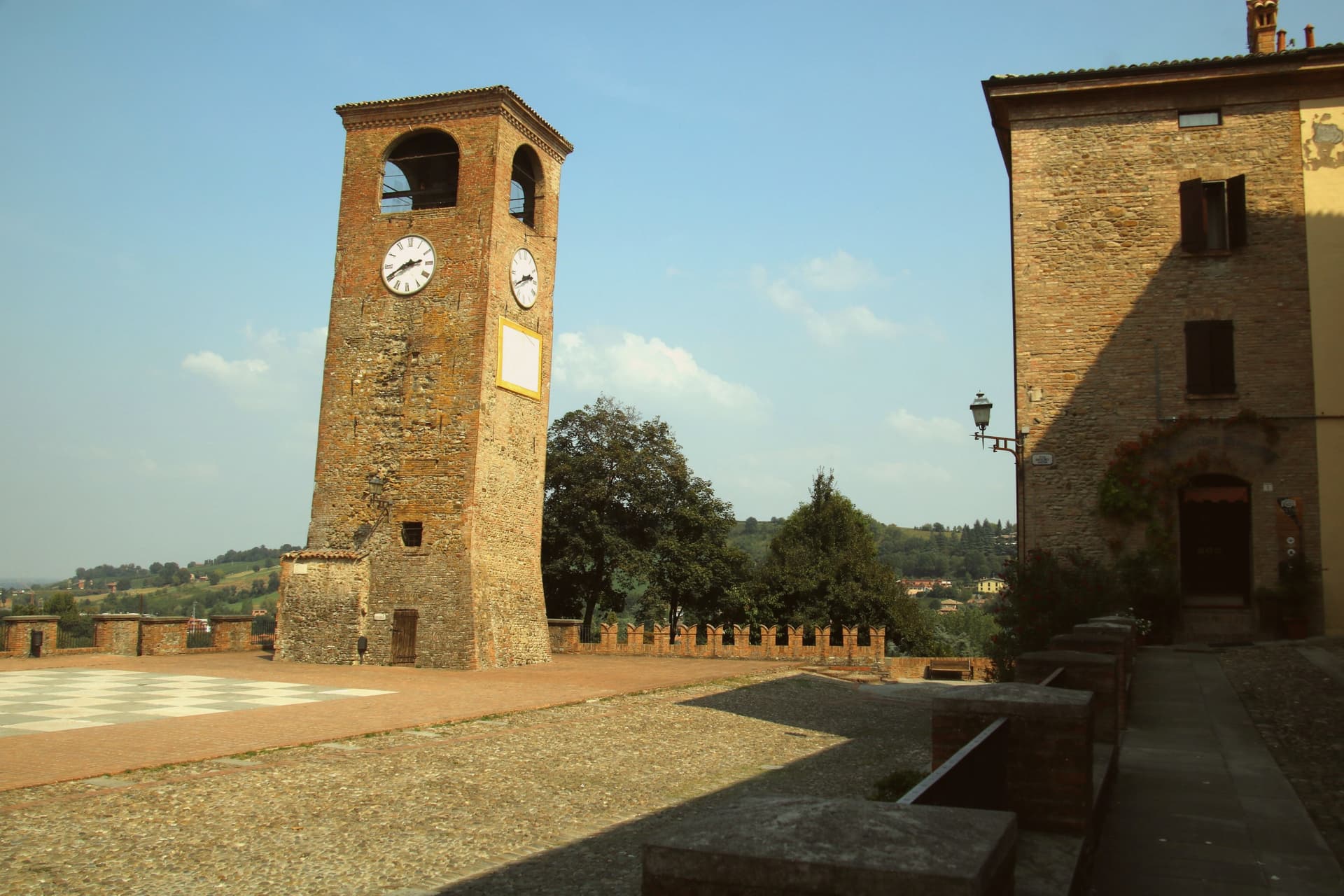
 The best towns with a World Heritage site within 90 minutes of Bologna6 towns, Ferrara among them.
 The best towns that eat well within an hour of Bologna7 towns, Ferrara among them.
How to get there
From Bologna (BLQ), about 45 minutes by car.
Venice (TSF) is about 1h 37m away.
By car from the centre of Padua 1 hour.
There is a railway station in the comune, so you can arrive without a car.
Coming from Bologna, Venice or Verona?
Coming by train into Ferrara? Ferrara is about 9 minutes away by road.
What to see
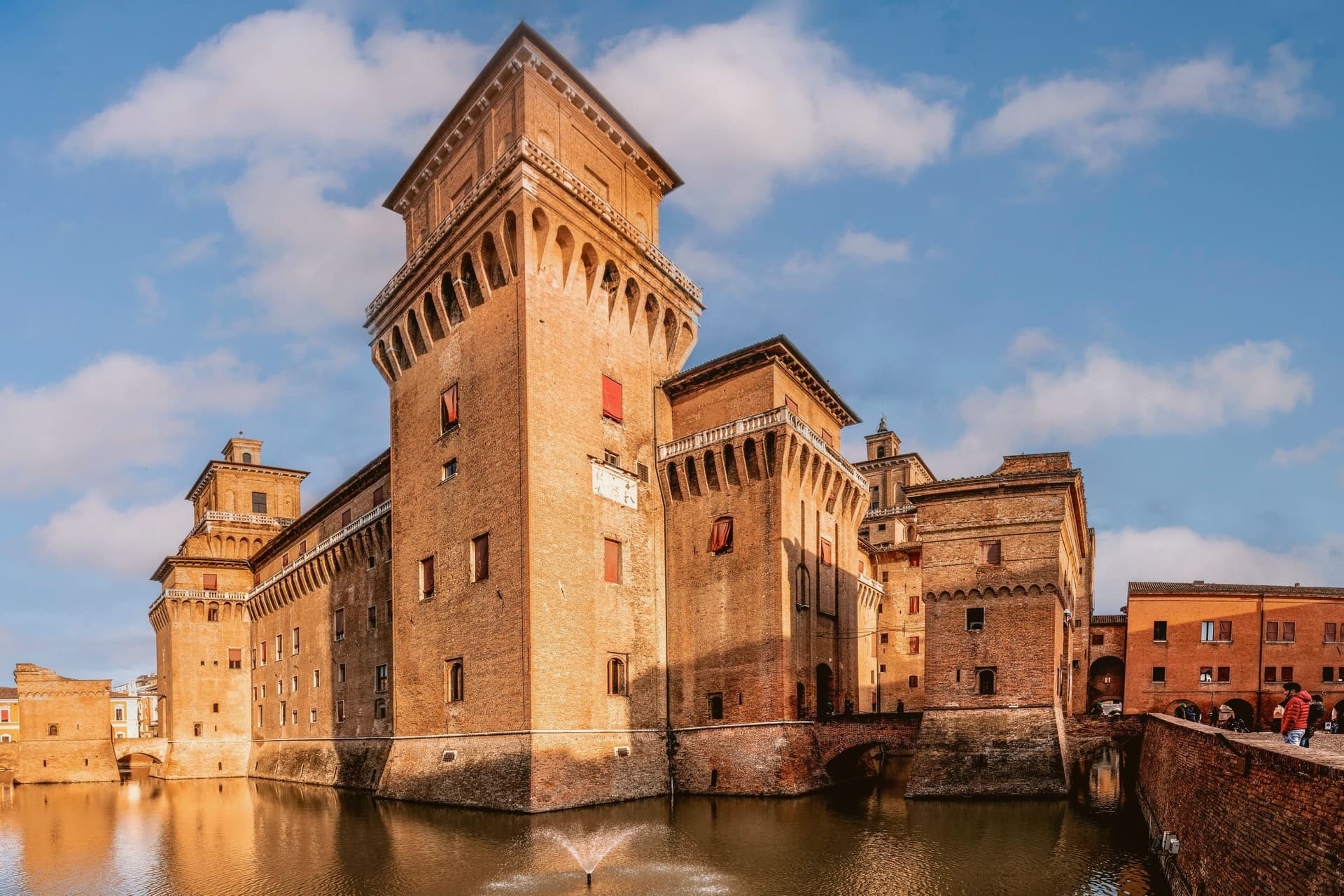
Castello Estense
1385 moated brick fortress at the very centre, the Este dukes' palace. The moat is still water-filled and the four corner towers are still walkable.
Palazzo dei Diamanti
Rossetti's 1493 anchor of the new quarter, faced with 8,500 white-marble pyramid blocks. Now hosts major art exhibitions.
9 km of intact brick walls
The Renaissance ramparts ring the entire centro, and the top is a continuous cycling path with views over the moat and the Po valley.
Cattedrale + Palazzo Schifanoia
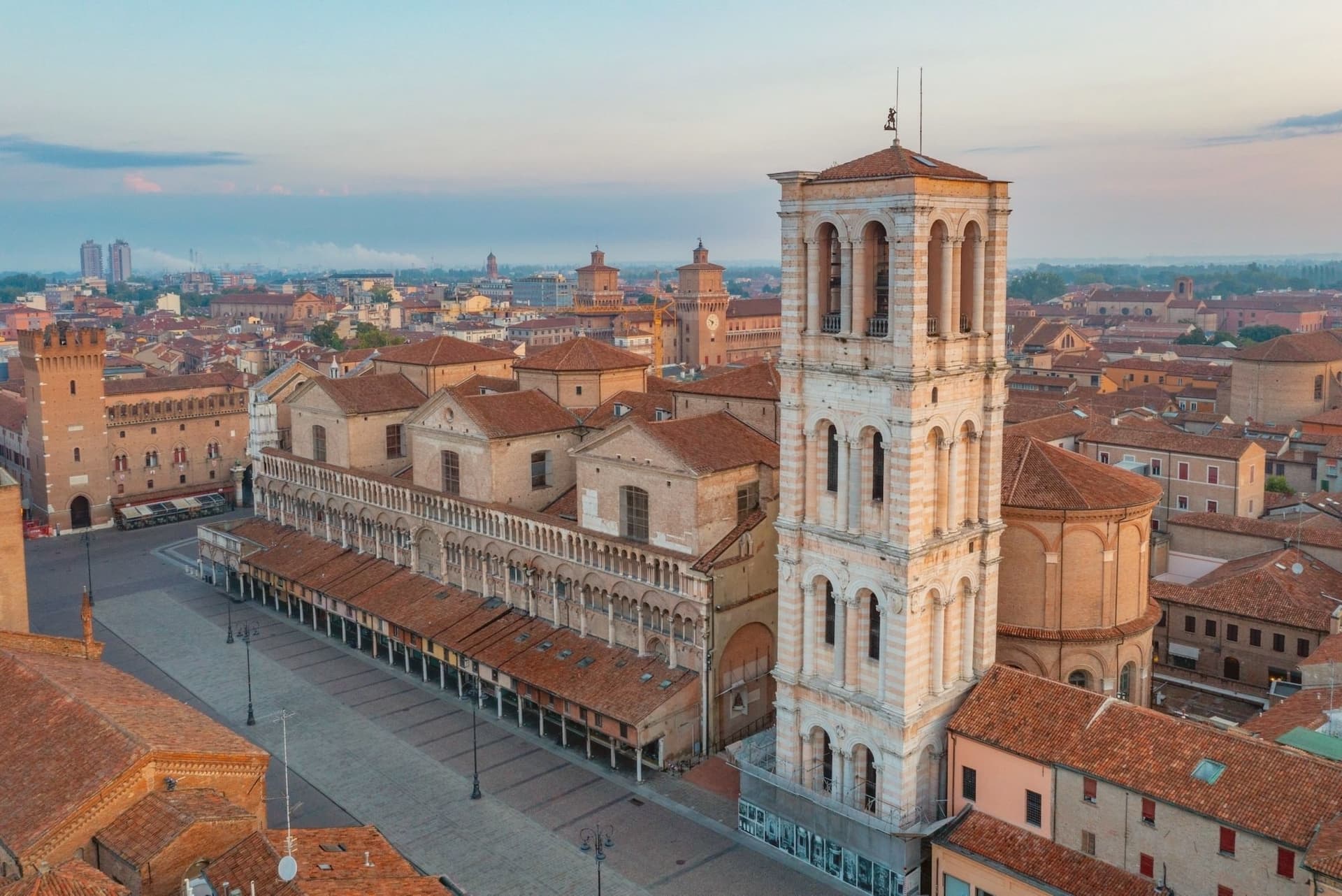
Pink-and-white 12th-century cathedral on Piazza Trento e Trieste; Schifanoia's 'Hall of the Months' has Cosmè Tura's 1470 astrological fresco cycle, a Ferrara school masterpiece.
Cappellacci + Salama da Sugo
The Ferrarese kitchen: pumpkin-filled pasta in butter, slow-cooked spiced sausage over mash, pampepato Christmas cake. Trattoria Da Noemi is the institution.
The slow-trip planner
Building a trip? Find where Ferrara fits in a slow Italy circuit.
Answer five questions. We will shape a geographically coherent slow trip from the 1,000 Italian towns most travelers skip. Yours to save and share.
We recommend
Where to eat
Not our picks, but places the guides put their name to: a Michelin star, a Gambero Rosso fork, a Slow Food snail, a Michelin Key for the hotels. Worth a table, a counter, or a night when you pass through.
MakorèRistorante
Two Gambero Rosso forks (84/100) for Makorè, along with a place in L'Espresso's Top 300 and a spot in the Michelin Guide.
Cucina BacilieriRistorante
Cucina Bacilieri holds two Gambero Rosso forks (82/100) and a spot in the Michelin Guide.
Da NoemiRistorante
Da Noemi holds a Slow Food snail and a spot in the Michelin Guide.
Quel Fantastico GiovedìRistorante
Quel Fantastico Giovedì holds one Gambero Rosso fork (78/100) and a spot in the Michelin Guide.
Ca' d'FraraRistorante
A Michelin Bib Gourmand, at Ca' d'Frara.
Casa RizzieriBistrot
Two Gambero Rosso tables, at Casa Rizzieri.
Il SorpassoTrattoria
Il Sorpasso holds two Gambero Rosso prawns.
L'Antico GiardinoRistorante
L'Antico Giardino carries a spot in the Michelin Guide.
Le Due ComariRistorante
A Gambero Rosso listing, at Le Due Comari.
Osteria Enoteca Al BrindisiRistorante
Osteria Enoteca Al Brindisi has a place on Italy's historic-locali register to its name.
Trattoria LanzagalloRistorante
Trattoria Lanzagallo has a Michelin Bib Gourmand to its name.
Through the year
What happens here
Feasts and festivals that come back year after year. We give the month rather than the date, because the date moves and the month rarely does. Check with the source before you plan a journey around one.
Sagra Di San Lorenzo A Baurafood festival
usually held in July. TrovaSagre
Fiera di San Bartolomeofood festival
usually held in August. TrovaSagre
Sagra del Pinzino e dell'Arrosticinofood festival
usually held across August and September. Viaggi e Sagre
Sagra della Zucca e del suo Cappellaccio Ferrarese I.G.P.food festival
usually held in August. TrovaSagre
Sagra della salamina da sugo al cucchiaiofood festival
usually held in September. TrovaSagre
Ferrara Food Festivalfood festival
usually held across October and November. sagritaly.com
Living here
- Population 129,340
- A local hubi
- Pharmacy in town
- High school within a 30-minute drive
- Train station in the comune
- Nearest airport Bologna, 45 min drive
- Market day Monday, Tuesday, Wednesday, Thursday, Friday and Saturday
- Regional capital Bologna, 48 min drive
Common questions
- What is Ferrara known for?
- Ferrara is a Renaissance capital planned on a grid rather than grown by accident, small enough to cross by bicycle in twenty minutes, and ringed by walls that still stand whole.
- Where is Ferrara?
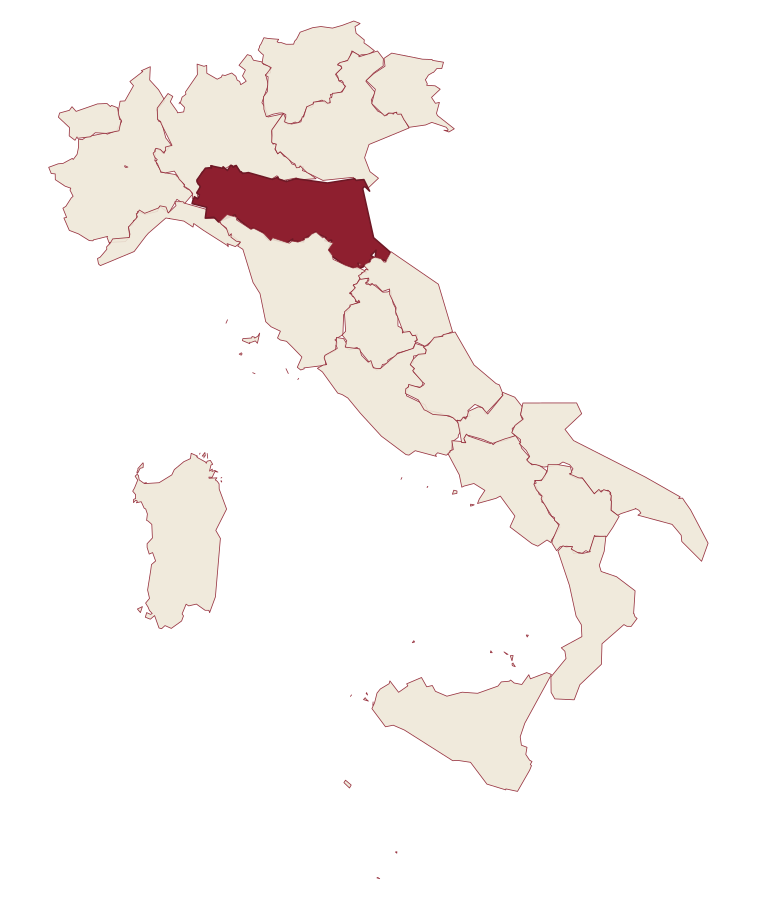
- Ferrara is a comune in the province of Ferrara, in Emilia-Romagna, at 9 meters above sea level.
- What is the nearest airport to Ferrara?
- Bologna (BLQ), about 45 minutes by car.
- Can you get to Ferrara without a car?
- Yes. There is a railway station in the comune, so you can arrive by train.
- How long is the drive from Padua to Ferrara?
- About 1 hour by car.
- When is the best time to visit Ferrara?
- Best in Apr–Jun, Sep–Oct. July is the warmest month, averaging 32 degrees, and May the wettest, with about 12 rain days.
- Is there a sagra or a festival in Ferrara?
- Yes. Sagra Di San Lorenzo A Baura, Fiera di San Bartolomeo and Sagra del Pinzino e dell'Arrosticino, and 3 more we hold a source for. July is when the first of them falls.
- Which other towns are like Ferrara?
- Parma, Imola and Faenza.
- How many people live in Ferrara?
- 129,340 at the 2023 count.
Tags & datadesignations · numbers · sources
Recognised as
The numbers
- Elevation: 9 m
- Population: 129,340
- Surface area: 405.16 km²
These figures were compiled from public directories: ISTAT, OpenStreetMap and Wikidata, and from the official listings of the guides named on this page. Town details change; verify with official sources before you travel.
Similar
Towns like Ferrara
Parma
Province: Parma
both in the Po valley · both over 10,000 people
Imola
Province: Bologna
both in the Po valley · both over 10,000 people
Faenza
Province: Ravenna
both in the Po valley · both over 10,000 people
Treviso
Province: Treviso
both in the Po valley · both over 10,000 people
Mantova
Province: Mantova
both in the Po valley · both over 10,000 people
Bassano del Grappa
Province: Vicenza
both in the Po valley · both over 10,000 people
🏛️ UNESCO
More UNESCO towns
Matera
Province: Matera
Cave dwellings carved into limestone since the Paleolithic, called the shame of Italy in the 1950s and made European Capital of Culture in 2019.
Amalfi
Province: Salerno
The first Italian maritime republic and the coast it named, six meters above the sea between cliffs that close around the duomo's steps.
Ascea
Province: Salerno
Two villages, a hilltown at 230 meters and a Cilento marina, with Parmenides and Zeno's Eleatic school in the ruins of Greek Velia below.
Atrani
Province: Salerno
The smallest commune in Italy by area, twelve hectares of stacked houses where the Amalfi Coast pinches shut around a single piazza.
Benevento
Province: Benevento
Sannio capital at the Calore-Sabato confluence, with a 114 AD Trajan arch and a Lombard rotunda on the UNESCO list.